← Marketplace Morning Report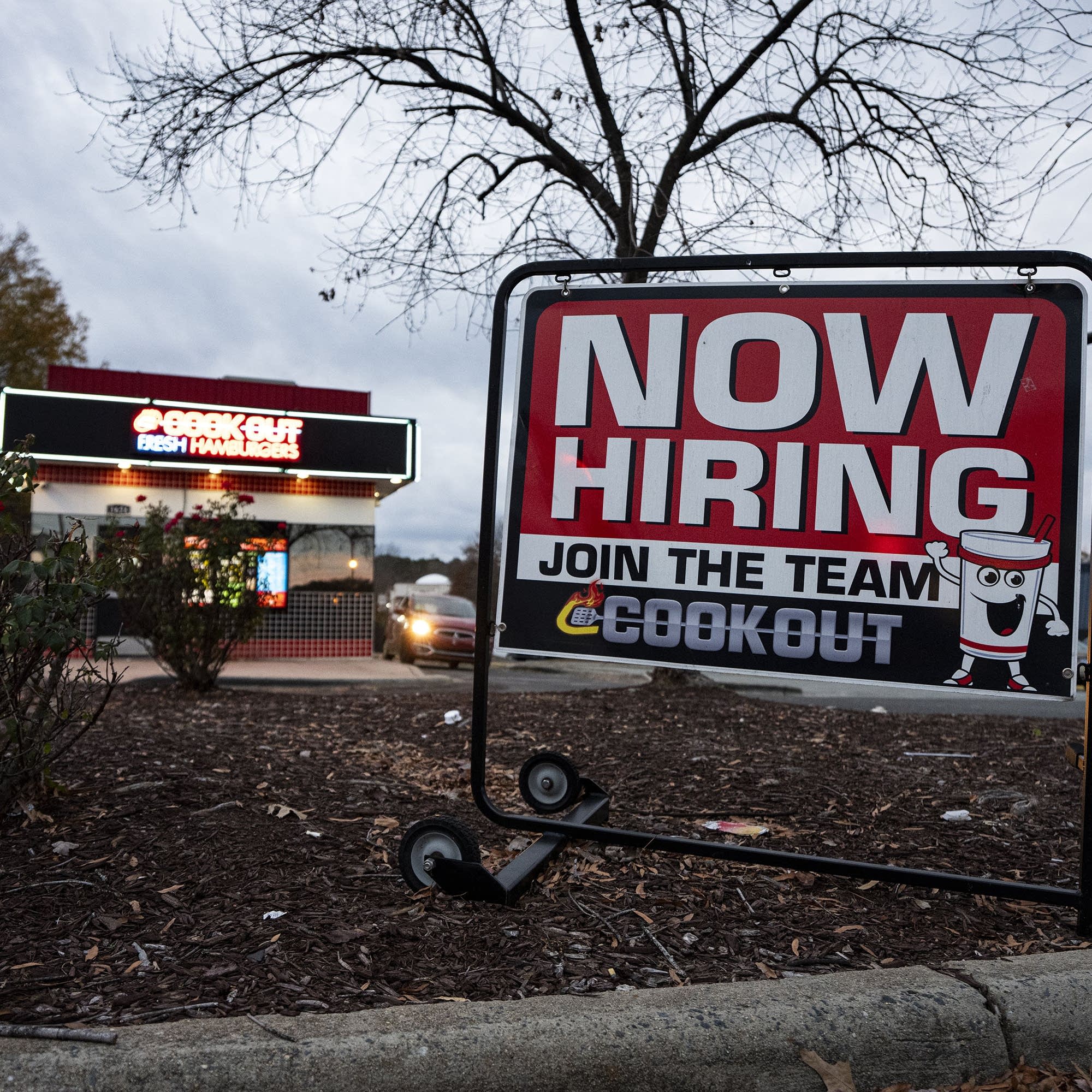
Marketplace Morning Report
When the job market is a "complicated, unusual, difficult situation"
00:07:02
Loading summary
Transcript31 lines
- [00:00]
Dell Commercial Narrator
Introducing your new Dell PC with the Intel Core Ultra processor. It helps you handle a lot, even when your holiday to do list gets to be a lot like organizing your holiday shopping and searching for great holiday deals and customer questions and customers requesting custom things. Plus planning the perfect holiday dinner for vegans, vegetarians, pescatarians and Uncle Mike's carnivore diet. Luckily, you can get a PC with all day battery life to help you get it all done. That's the power of a Dell PC with Intel inside, backed by Dell's price match guarantee. Get yours today@dell.com holiday terms and conditions apply. See dell.com for details.
- [00:30]
Marketplace Host/Announcer
This Marketplace podcast is supported by Wealth Enhancement who ask do you have a blueprint for your money? Wealth Enhancement can help you build the right blueprint for investing, retirement, tax and more. With offices nationwide, there's an advisor who's.
- [00:45]
Marketplace Promo Voice
Ready to listen and craft a blueprint for your future.
- [00:48]
Marketplace Host/Announcer
Find out more@wealthenhancement.com build.
- [00:55]
Sabri Ben-Asher
The labor market Might be a Lot Weaker than We Thought From Marketplace, I'm Sabri Bennish, in for David Brancaccio. The Federal Reserve decided to cut interest rates again at its meeting yesterday. One reason it decided to do that is because Fed officials think the labor market, which we already knew is cooling, is actually a lot weaker than it appears. Marketplace's Nancy Marshall Genser has that.
- [01:21]
Nancy Marshall Genser
Fed Chair Jerome Powell says the Fed is facing, quote, a complicated, unusual, difficult situation because the Bureau of Labor Statistics could be overestimating the number of jobs being created by about 60,000amonth. Powell says the actual number could be negative, a loss of 20,000 jobs per month. The Fed chair says this kind of forecasting is tough.
- [01:42]
Marketplace Host/Announcer
It's very difficult to estimate job growth in real time. They don't count everybody. They have a survey and there's been something of a systematic overcount. And so we expected and they correct it twice a year.
- [01:55]
Nancy Marshall Genser
The BLS is going to change its modeling a bit that could make the numbers more accurate starting this February. But in the meantime, Powell says we're.
- [02:03]
Marketplace Host/Announcer
In a situation where job creation may actually be negative. Now. Supply of workers has also gone way down, so the unemployment rate hasn't moved.
- [02:11]
Nancy Marshall Genser
That much, which could be giving workers a false sense of security. The BLS is scheduled to release the November jobs numbers next week. Jobs data from this fall is late and in some cases incomplete because of the government shutdown. I'm Nancy Marshall Genser for Marketplace.
- [02:27]
Sabri Ben-Asher
Something else Fed Chair Jerome Powell mentioned yesterday was tariff inflation. He said import taxes should be just a one time bump in inflation. Diane Swonk is chief economist at KPMG and joins us for more. Hey, Diane. Diane So if tariffs are a one time deal, are, are we past tariff inflation yet?
- [02:48]
Diane Swonk / Stacey Pettijohn / Ksenia Kalmus (various experts)
Well, first of all, we're not past it, and he didn't say we are past it yet. But an important issue is that's at the heart of the debate at the Fed is tariffs are typically a one time bump in prices. And so that is historically what you would count on. But that assumes that the tariffs occur all at once. Of course, they've been moved out in waves and it also assumes they don't on the heels of a pandemic induced inflation that's persisted for nearly five years now. And so the debate at the Fed is some people saying, listen, this should be over soon, we'll get through it. And we can sort of look through it a bit and try to stimulate the labor market in the interim between those people who are worried that maybe this is a more entrenched bout of inflation that isn't as easily sort of resolving on itself. And that's the heart of this sort of very intense debate we see within the Fed.
- [03:38]
Sabri Ben-Asher
You know, if tariff inflation is tariffs on particular goods that we import, how does that spread any further than that?
- [03:46]
Diane Swonk / Stacey Pettijohn / Ksenia Kalmus (various experts)
Well, there's oftentimes what we call opportunistic pricing, and that is areas that are protected by tariffs. Even if they're not specifically feeling tariffs, they can raise their prices too. We saw that back in the trade war with China where, you know, the price of washers were tariffs, the price of dryers were not. Yet they both went up by the same amount because they tend to be sold together. And so we know that there is contagion from tariffs as well. We also know that tariffs actually feed into service sector prices. A lot of medical equipment and, you know, personal protection equipment that was so important during the pandemic, a lot of that is heavily tariffed at the moment.
- [04:24]
Sabri Ben-Asher
Diane Swonk, chief economist at kpmg, thank you so much.
- [04:42]
Marketplace Host/Announcer
If you're a maintenance supervisor for a commercial property, you've had to deal with everything from leaky faucets to flickering light bulbs. But nothing's worse than that ancient boiler that's lived in the building since the day it was built 50 years ago. It's enough to make anyone lose their cool. That's where Grainger comes in. With industrial grade products and dependable, fast delivery, Grainger can help with any challenge, from worn out components to everyday necessities. Call clickgranger.com or just stop by Grainger for the ones who get it done.
- [05:12]
Marketplace Promo Voice
Want to make a difference in your community, but not sure how? Go to GoFundMe.com right now and start a GoFundMe. Seriously. Your next fundraiser doesn't have to start in a school parking lot or a church basement. You can start a GoFundMe today in just minutes. Fundraise for yourself, a friend or family member or an organization. All that matters is that you care about them. GoFundMe is the trusted place to fundraise for what you care about. With no pressure to hit your fundraising goal, but tons of tools to help you reach it, you can confidently start fundraising right now. Whether it's creative, local or critical, your cause matters and there's a reason why. GoFundMe is backed by millions and chosen by fundraisers everywhere. It works and it matters. GoFundMe helps you make a real difference. Start your GoFundMe today at gofundme.com that's gofundme.com G-O F-U-N-M E.com this is a commercial message brought to you by GoFundMe.
- [06:12]
Sabri Ben-Asher
Russia's war on Ukraine continues. Central to this fight is drone warfare and the industry that makes it possible. The BBC's Gideon Long filed this report.
- [06:28]
Marketplace Host/Announcer
In a clearing in a forest in Ukraine, a soldier sends a drone high into the air. It's a small device, maybe 30cm across with rotor blades on each corner. A standard commercial drone. The kind of thing you might use to take aerial footage at your wedding or birthday party. But strap a bomb to it and it becomes a deadly weapon. The Russians and Ukrainians have used them to devastating effects. Before Russia's full scale invasion in 2022, there were just a handful of companies in Ukraine making drones. Now there are hundreds. Stacy Pettijohn is Director of the Defence Program at the center for a New American Security in Washington and the author of several reports on drone warfare.
- [07:10]
Diane Swonk / Stacey Pettijohn / Ksenia Kalmus (various experts)
This has been the first full blown drone war in Ukraine. You found that there are a million small startups. There are a ton of mom and pop shops where people are making drones and assembling them in their apart in their garages and donating them to the forces in addition to establish industries.
- [07:31]
Marketplace Host/Announcer
Ksenia Kalmus is one of those mom and pop drone producers. Before the war she was a floral artist with a flower shop in kyiv. But after 2022 she set up a company called Clin Drones.
- [07:43]
Diane Swonk / Stacey Pettijohn / Ksenia Kalmus (various experts)
It was just obvious decision for me. I just wanted to help my country, help my people and military. I helped them with different stuff. And at that moment I realized that all the requests were for drones.
- [07:59]
Marketplace Host/Announcer
And where do you get the parts for the drones from? Do you have to buy them in the frames or are you producing them yourselves using 3D printers? Where do you get the parts?
- [08:08]
Diane Swonk / Stacey Pettijohn / Ksenia Kalmus (various experts)
We are focused on Ukrainian components mostly. We don't want to give money to China, so we buy components In Ukraine.
- [08:17]
Marketplace Host/Announcer
Ksenia's company relies on donations, but elsewhere, drones are big business. US company AeroVironment has seen its share price soar over 500% since the invasion of Ukraine. Portugal's Tekava is valued at over a billion dollars, and Germany's Stark is also expanding its operations. So what are the likely next developments in drone warfare? At the moment, many drones have to be guided to their targets by an operator, an actual human being with a remote control panel standing within rang of the drone and therefore often in danger. But Stacey Pettijohn at the Centre for a New American Security says that will evolve.
- [08:56]
Diane Swonk / Stacey Pettijohn / Ksenia Kalmus (various experts)
I do think there are going to be further changes in the future as autonomy advances. That's going to be the next real shift.
- [09:04]
Marketplace Host/Announcer
In the meantime, back in Kyiv, former floral artist Ksenia Kalamus says she will continue to assemble small, cheap drones for use on the front line.
- [09:14]
Sabri Ben-Asher
That's getting long. With the BBC in New York, I'm Sabri Ben Asure with the Marketplace Morning.
- [09:21]
Marketplace Host/Announcer
Report.
- [09:23]
Sabri Ben-Asher
From APM American Public Media.
- [09:27]
Dell Commercial Narrator
Dear Listener, this week only you can get your very own Marketplace hoodie for half the price. Yes, it's officially half price hoodie week. They say it's soft, it's cozy, and it's our way of saying thanks when you make your year end donation a little early. Well, don't wait though. The deal ends on Friday and once it's gone, it is gone. Give now@marketplace.org or click the link in the show notes.