Loading summary
Transcript33 lines
- [00:00]
Monica Nicholsburg
This Marketplace podcast is supported by Palo Alto Networks. Listen to threatvector, the Palo Alto Networks podcast, for in depth discussions with industry leaders and experts, providing crucial insights for security decision makers. Whether you're looking to stay ahead of the curve with innovative solutions or understand the evolving cybersecurity landscape, ThreatVector equips you with the knowledge needed to safeguard your organization. Tune in and subscribe to threatvector wherever you get your podcasts.
- [00:30]
Joshua McNichols
Here in Seattle, we're building the technologies.
- [00:32]
David Brancaccio
Of the future, from AI to clean energy.
- [00:36]
Monica Nicholsburg
But we're also dealing with some of today's biggest challenges, like the housing crisis and the skyrocketing cost of living.
- [00:42]
Joshua McNichols
We're here to break it all down for you. I'm Joshua McNichols.
- [00:46]
Monica Nicholsburg
And I'm Monica Nicholsburg. Join us on Booming, a weekly podcast from KUOW about the economic forces shaping our lives here in the Pacific Northwest.
- [00:55]
Joshua McNichols
Listen on the KUOW app or wherever you get your podcasts.
- [01:00]
David Brancaccio
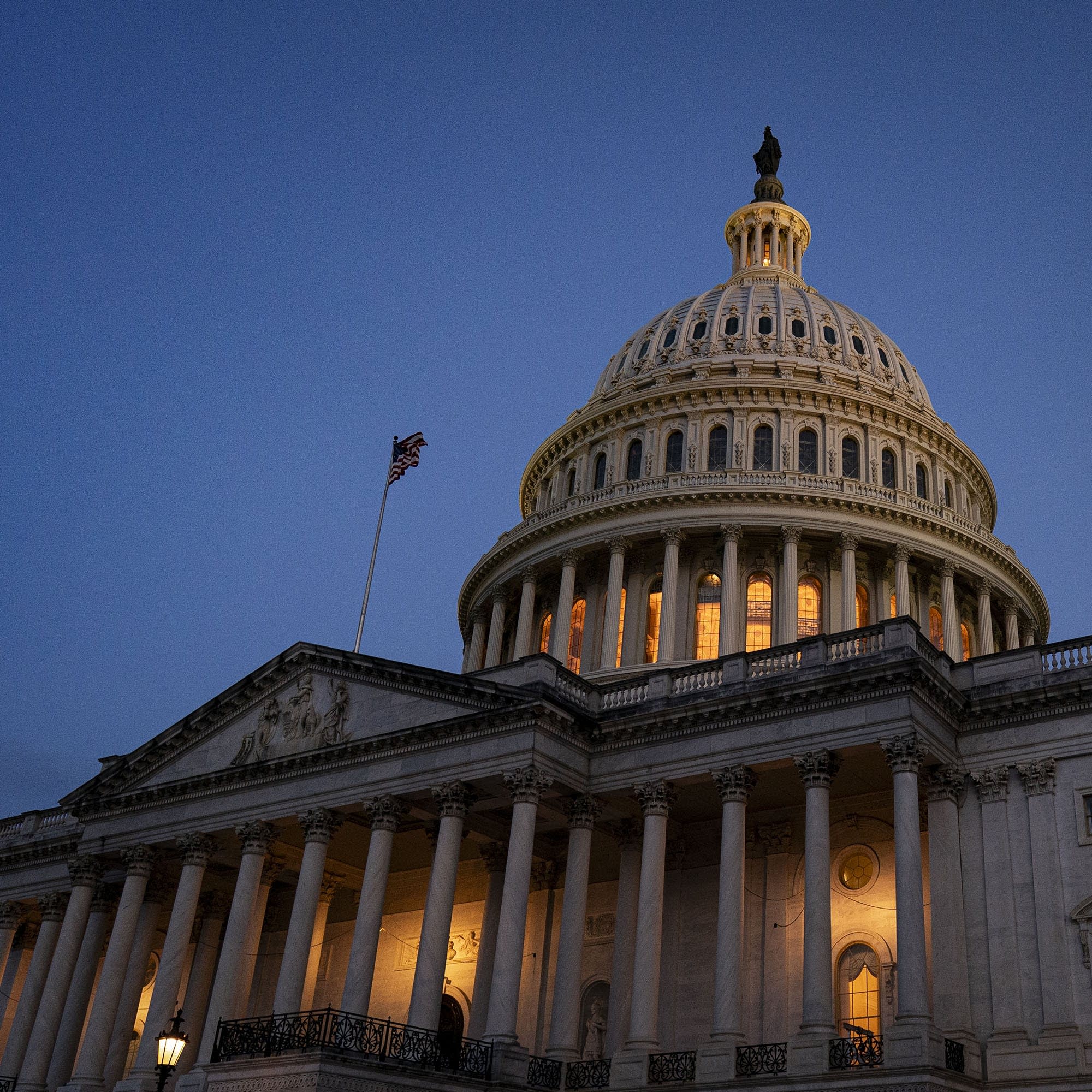
On this Tuesday morning, no big vote yet in the Senate on that whopper of a tax cut and spending bill. I'm David Brancaccio in Los Angeles. In the Senate, they've been churning through amendments like short order cooks and a 24 hour greasy spoon. Marketplace's senior Washington correspondent Kimberly Adams is following all this. Good morning.
- [01:20]
Joshua McNichols
Good morning, David.
- [01:21]
David Brancaccio
Again, Voto Rama. What have our senators been doing all night?
- [01:27]
Joshua McNichols
So, as part of the rules of reconciliation, which is what's letting the GOP pass this bill without Democratic votes, Senators can offer unlimited amendments, but the debate on each one is really short, like 10 minutes. So this gives senators a chance to change components of the bill, but it's also used as a messaging tool.
- [01:44]
David Brancaccio
All right, so like speed dating, but with implications for 30 and 40 years. What are some of the amendments that have come up? Kimberly?
- [01:53]
Joshua McNichols
Democratic senators have been very clear that they're offering amendments that even if they know they're going to fail, they will highlight components of the bill that they think are harmful, especially cuts to social programs like Medicaid and snap. But some Republicans offered amendments as well. For example, Maine Senator Susan Collins had a failed amendment that would have increased the size of a proposed rural hospital fund and pay for it by raising taxes on higher incomes. But one successful Amendment that passed 99 to 1 this morning was removes a provision in the bill that would have banned states from regulating AI for a decade.
- [02:27]
David Brancaccio
Okay, so AI and Republicans have the potential to pass the legislation without any votes from Democrats, but can only lose three votes in the Senate. What are some of the key sticking points that we're all watching for from GOP senators.
- [02:44]
Joshua McNichols
Yeah, some senators are really worried about those Medicaid cuts. The Congressional Budget Office estimates the Senate version of the bill would result in almost 12 million people losing insurance over about a decade. And Senator Thom Tillis of North Carolina has already said he'll vote no because of that. Kentucky Senator Rand Paul says he'll vote no because of how much the bill would add to the deficit. And there are holdouts on other issues that could turn out to be that third vote.
- [03:09]
David Brancaccio
Now, even if the Senate does go for this, many issues already causing problems with the House of Representatives, but especially the deficit.
- [03:19]
Joshua McNichols
Right. The Senate GOP used some, shall we say, unique accounting measures to reduce the cost on paper of this bill from more than $4 trillion to about $440 billion. And fiscal hawks in the House are very much not on board with that. So it's definitely going to be an issue even if the Senate Republicans can get this passed. House Republicans are also worried about the Senate's more severe cuts to Medicaid than their version, as well as harsher rollbacks of green energy tax credits.
- [03:48]
David Brancaccio
All right, green tax credits, Medicaid, a lot more. Marketplace's senior Washington correspondent, Kimberly Adams, thank you.
- [03:56]
Joshua McNichols
You're welcome.
- [03:58]
David Brancaccio
The S&P 500 stock index ended up 10.6% for the March to June quarter just ended. The Nasdaq went up 17.7% during all the tariff changes and inflation and recession talk. The U.S. dollar index is down 11.8% in the first half of the year. Marketplace's Nancy Marshall Genzer has more.
- [04:18]
Nancy Marshall Genzer
Oxford Economics says the dollar is down around 10% since January and it expects the greenback to continue losing value next year and in 2027. Oxford says talk of the dollar losing its status as the world's reserve currency is premature. Still, investors are cautious amid all the uncertainty caused by President Trump's trade war. There are fears that import taxes could drive up inflation, causing the Fed to keep interest rates higher for longer and slowing the economy. The S and P and Nasdaq on the other hand, closed at record highs yesterday. Investors are happy that tariffs haven't caused inflation to spike yet. Tech stocks are gaining ground as traders bet on advances in AI. All eyes will be on this week's jobs report on Thursday as traders look for signs that the job market is still healthy. I'm Nancy Marshall Genser for Marketplace.
- [05:12]
David Brancaccio
And the New York Times shopping advice outlet called Wirecutter has been looking for the effect of tariffs on tariffs off on 40 of the products they've evaluated. The upshot is a lot of prices have not changed yet. An Asics cheapo laptop got 7% more expensive and a Cuisinart kettle went up 20. But an Ikea sofa stayed flat as did Graza olive oil and Earth rated doggie poop bags. A strange one was a South Korean made LG French door fridge. Wirecutter found the list price went up 39% but its retail sale price stayed flat. Note that the comparison was mid April to mid June and we may need to check back in late summer for medium term tariff to consumer effects.
- [06:12]
Rima Reyes
Your wealth makes you an irresistible target to online criminals. According to Salt as wealth, 41% of high net worth individuals report having been victims of financial crime. Unfortunately, off the shelf digital security solutions aren't robust enough to protect high profile individuals like you. So what can you do? Rely on Concierge Digital Security from Reputation Defender Concierge Digital Security is not just another app to install. It's a team of experts working in the background to protect you and your family behind the scenes. Reputation Defender bundles a suite of best in class security solutions covering virtually every aspect of your digital life from digital identity to online privacy, identity fraud, insurance and home device protection. Your Concierge health manage all of these for you? Visit reputationdefender.com success to learn more or schedule your private consultation. That's reputationdefender.com success.
- [07:12]
David Brancaccio
Today we'll get figures for new vehicle sales covering June as the Senate works on pulling federal tax credits for electric cars and a surprise proposal to raise the tax on new wind and solar projects. It is an uncertain time for electric vehicle buyers and makers. That said, a firm called Quantumscape, backed by Volkswagen, announced what it says is a major breakthrough in battery production. Solid State Marketplace's Megan McCarty Carino explains.
- [07:39]
Sam Abuelsamid
Batteries need electrolytes to move ions between two electrodes, and in current EV batteries, those electrolytes are liquid or gel.
- [07:47]
David Brancaccio
The material that is used as that electrolyte contains oxygen and it's combustible.
- [07:53]
Sam Abuelsamid
Sam Abuelsamid at automotive market research firm Telemetry says even though EVs ignite less often than gas cars, the fires are harder to put out. Solid state batteries significantly reduce that risk. They're also more energy dense.
- [08:08]
David Brancaccio
You can have double the capacity, double the range.
- [08:12]
Sam Abuelsamid
Sounds pretty great, right? So why haven't we switched? Well, solid electrolytes present some manufacturing challenges, says Armagam Menteeram, an engineering professor at UT Austin.
- [08:23]
Monica Nicholsburg
The solid electrolytes are all ceramic. They are very brittle. They are not flexible. They can crack.
- [08:30]
Sam Abuelsamid
Building large ceramic pieces that are thin, flat and uniform is tough at scale. But Quantumscape says it's improved its process to make these ceramic parts and plans to start selling solid state batteries to companies like Volkswagen by next year. I'm Megan McCarty Carino for Marketplace.
- [08:49]
David Brancaccio
Our producers are Ariana Rosas and Erica Soderstrom. Our senior producer is Alex Schroeder. Our supervising senior producer is Meredith Garrettson Morgan. In Los Angeles, I'm David Brancaccio. Marketplace Morning Report from APM American Public Media.
- [09:09]
Monica Nicholsburg
Hey, everyone. I'm Rima Reyes and I'm excited to join Kimberly Adams on Make Me Smart. Together we'll unpack the day's news, whether it's a tariff switch up, the latest on Trump's immigration policy, or the future of clean energy. Join us each weekday so we can make sense of it all together because none of us is as smart as all of us. Listen to Make Me Smart. Wherever you get your podcasts.