Loading summary
Transcript22 lines
- [00:00]
David Brancaccio
This Marketplace podcast is supported by Viking, committed to exploring the world in comfort. Journey through the heart of Europe on an elegant Viking longship with thoughtful service, destination focused dining and cultural enrichment on board and on shore. And every Viking voyage is all inclusive with no children and no casinos.
- [00:20]
Marketplace Announcer
Discover more@viking.com this podcast is supported by Odoo. Some say Odoo business management software is like fertilizer for businesses because the simple, efficient software promotes growth. Others say Odoo is like a magic beanstalk because it scales with you and is magically affordable. And some describe Odoo's programs for manufacturing, accounting and more as building blocks for creating a custom software suite. So Odoo is fertilizer magic Beanstalk building blocks for business. Odoo exactly what businesses need. Sign up@odoo.com that's o d o o.com.
- [00:55]
David Brancaccio
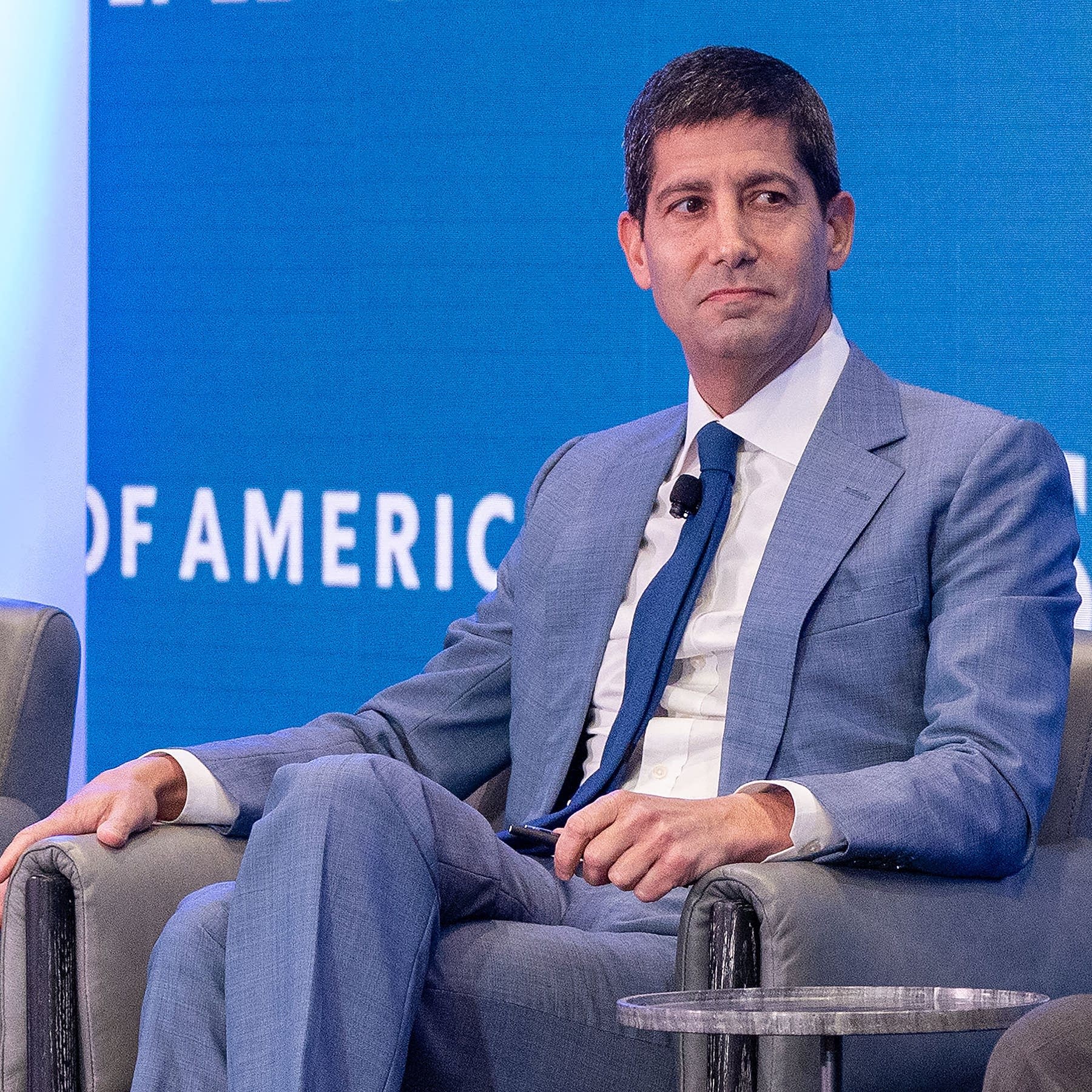
The President has chosen his nominee for second most powerful economic policy position in the country. David I'm David Brancaccio in Los Angeles this morning, President Trump revealed his choice to lead the Federal Reserve. It is Kevin Warsh, a former Fed governor and more recent Fed critic. If confirmed by the Senate, Warsh would replace Jerome Powell, whose term expires in May. Warsh had called for, quote, regime change at the Fed Marketplace's Nova Safo reports.
- [01:22]
Nova Safo
Kevin Warsh served as fed governor from 2006 until 2011, a timespan that included the financial crisis and the Federal Reserve's efforts to stabilize Wall Street. He's a visiting fellow at Stanford's Hoover Institution, a conservative leaning think tank. Warsh has recently criticized the Federal Reserve, saying that it has not done enough in the past to fight inflation. Here he is speaking at the Hoover Institution.
- [01:46]
Marketplace Announcer
The central bank can hit any price level that it wants, any inflation level that it wants. We might not like how they do it, but the idea that is they should be blaming someone else strikes me as quite antithetical to good economic history.
- [02:01]
Nova Safo
Warsh believes the Fed now should lower interest rates more, something President Trump has called for. Walsh says doing so won't trigger more inflation because artificial intelligence and its advancements will boost productivity. Higher productivity has historically been a deflationary force. Warsh also wants less intervention in financial markets and a more hands off approach at the Fed toward bank regulation. I'm Nova Safa for Marketplace.
- [02:29]
David Brancaccio
With electricity hungry artificial intelligence, there's concern about power shortages, higher bills for consumers and environmental degradation. Some big companies are paying to restart nuclear plants on a different scale. There's Redwood Materials, a startup that takes used electric vehicle batteries to help power a data center in, for instance, Nevada. Colin Campbell is Chief Technology Officer at Redwood Materials. What that is is 60 megawatt hours.
- [02:56]
Marketplace Announcer
And 12 megawatts of reused electric vehicle batteries powering a data center completely disconnected from the grid. It only took us four months to build.
- [03:08]
David Brancaccio
That's just a slice from our series from my colleagues Megan McCarty Carino and Kai Rysdal on this AI boom. Among the angles comparing similarities and differences between AI fever now and the dot com bubble and bust from the turn of the century Marketplace Tech Marketplace's half hour program and us here in the Morning have parts of that. This Marketplace podcast is supported by Viking, committed to exploring the world in comfort. Journey through the heart of Europe on an elegant Viking longship with thoughtful service, destination focused dining and cultural enrichment on board and onshore. And every Viking voyage is all inclusive with no children and no casinos.
- [04:02]
Marketplace Announcer / Fundrise Advertiser
Discover more@viking.com this Marketplace podcast is supported by Fundrise. Billion dollar investors don't typically park their cash in high yield savings accounts, and instead they often use one of the premier strategies for institutional investors, private credit. Now the same passive income strategy is available to investors of all sizes thanks to the Fundrise Income Fund, which has more than $600 million invested and a 7.97% distribution rate. With traditional savings yields falling, it's no wonder private credit has grown to be a trillion dollar asset class. Learn more@fundrise.com Marketplace the fund's total return in 2025 was 8% and the average annual total return since inception is 7.8%. Past performance does not guarantee future results. Current distribution rate as of 12312025 carefully consider the investment material before investing, including objectives, risks, charges and expenses. This and other information can be found in the Income funds prospectus@fundrise.com income. This is a paid advertisement now in.
- [05:06]
David Brancaccio
Malagasy, the language of Madagascar. AHU knew Miraca Malagashi Ratsi Bey. That means I speak Malagasy really badly. But I can at least say that because I lived in Madagascar from my ninth grade. Long story why? But among the many things I can tell you about that island nation off of East Africa, it really has lemurs. Its economy is challenged and the ruts on its red earth roads could swallow a Volkswagen. So when our colleagues at the BBC pitched a story about Madagascar opening its first stretch of modern highway, I was especially interested in the economic, ecological and cultural impacts. Here's reporter Andre Lombard.
- [05:48]
Andre Lombard
Life in the driving seat isn't always easy in Madagascar. Twice a week, Reika makes the long return journey between the capital, Antananarivo, and the country's biggest port, Toro Messina. A trip he says can take up to 16 hours. All this in a country the IMF says has some of the worst roads on the continent. The current road is really bad. It's very narrow and there are loads of trucks. It makes me very worried. But that could all be about to change. The first 8km of a new highway that links the two cities together has been inaugurated. Eventually it will stretch 240km, budgeted to cost a billion dollars. Some of that money will be recouped in tolls, but it's hoped the main payday will come through the increased trade the road will bring. Journey times are predicted to reduce to around two and a half hours. And certainly, as we turn onto the new road, its smooth tarmac is a big change from the rough and ready current road. So we've just stopped off after going onto the new highway. And if it sounds very quiet, that's because it is. We've only seen a few cars passing as we stand here. We venture further into the countryside, off the main roads and onto hilly, rugged tracks that seriously test our 4x4. Salama. Nice to meet you.
- [07:14]
Marketplace Announcer / Fundrise Advertiser
How are you?
- [07:15]
Andre Lombard
We're here to meet Nenny Farah. The 70 year old has farmed rice and pineapples here all her life, with her family owning the land for generations. But now that could all change. She shows me towards a red post that appeared near her land overnight, which marks the route the new highway will take. It hurts me. I feel like I've been stabbed in the back.
- [07:39]
Marketplace Announcer / Fundrise Advertiser
It's hard because no one has been in touch with us about the proposition of the highway.
- [07:44]
Andre Lombard
The highway was initially approved by the presidency of Andrii Rajelina, who was deposed in a military coup in October. The new government has said it will continue with the motorway project. The Environment Minister at the time of the start of the highway construction was 29 year old max Fontaine. He tells me that the country is getting the balance of protecting its heritage and environment with its economic development. Right. It changes everything for the agriculture, for.
- [08:11]
Marketplace Announcer / Fundrise Advertiser
The water, for the transport, for everything.
- [08:14]
Andre Lombard
It's certainly true that economic progress is sorely needed here. Three quarters of people live in poverty. However, environmental campaigners say it will actually do the opposite. Opening access to illegal mining and logging, leading to food and water insecurity for locals. Whatever the rights and wrongs, it does look like the road will go ahead, changing the face of this unique country forever.
- [08:39]
David Brancaccio
Andre Lombard is with our newsroom partners at the BBC in Los Angeles, I'm David Brancaccio to the Marketplace Morning Report from apm American Public Media.
- [08:52]
Marketplace Announcer
Ready to make the most of your money? Sign up to receive weekly tips from Marketplace designed to help you make smarter financial decisions. Plus, you'll also be the first to.
- [09:02]
David Brancaccio
Know about exclusive Marketplace merchandise and local events.
- [09:06]
Marketplace Announcer
Text Marketplace to 80568 to sign up.