Loading summary
Transcript30 lines
- [00:00]
Dell Advertisement
This Marketplace podcast is supported by Dell introducing the new Dell AI PC Powered by Intel Core Ultra processor. It helps do your busy work for you so you can fast forward through editing images, designing presentations, generating code, debugging code, summarizing meeting notes, finding files, managing your schedule, responding to long emails, leaving all the time in the world for the things you actually want to do. Get a new Dell AI PC starting at $699.99 at Dell.com AI PC how those ahead Stay ahead so you've got.
- [00:32]
Wix Advertisement
A business, but what about a brand? The difference More of you Wix gives you the freedom to create your website, own your brand and do it on your own exactly how you envisioned it. Experience limitless customization. Boost your creativity and efficiency with AI tools for every part of your business journey. Scale up with built in SEO, E comm and scheduling features. Put more of you in your business. Go to wix.com and do it all yourself.
- [01:02]
Sabri Benishore
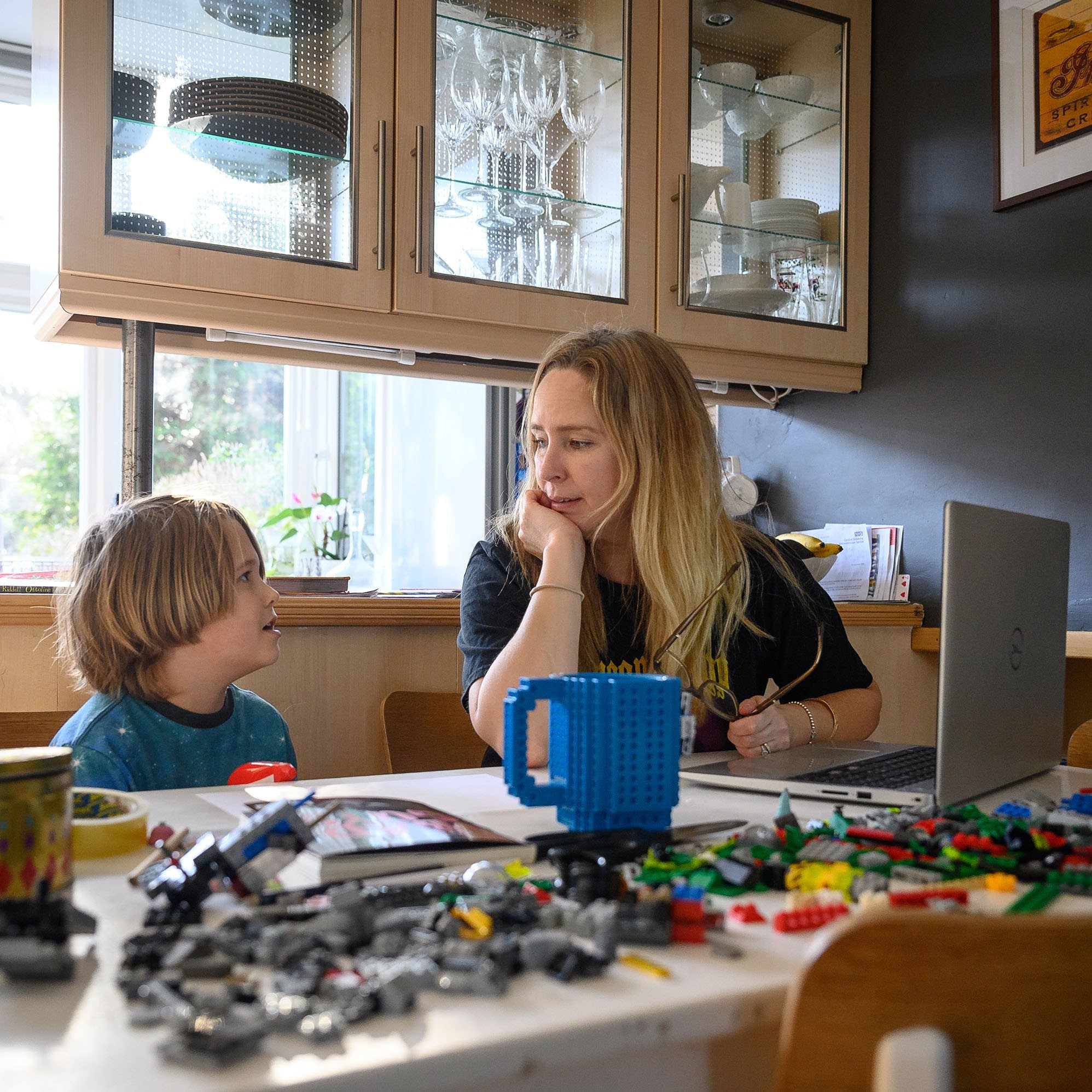
Who is going back to the office and who is not? From Marketplace, I'm Sabri Benishore, in for David Brancaccio. Starbucks is the latest employer to call workers back to the office. We're talking corporate workers here. The coffee chain is requiring them to be physically at work four days a week starting in October. Meanwhile, more than five years after many people were forced to start working from home, we're learning more about who is coming back in person and who isn't. The latest labor department survey shows 29% of men work from home. That is down from 34% two years ago. But the number of women working from home has stayed flat at 36%. Marketplace's Kristen Schwab has more.
- [01:45]
Wen Fan
The thing about these stats from the Labor Department is they don't come with a lot of context. For instance, more men back at work could have something to do with the kind of work or roles they're in. Wen Fan, who studies the future of work at Boston College, says men are more likely to be managers.
- [02:03]
Jerry Jacobs
And we know that managers are far more likely to go back to office compared with non managers.
- [02:09]
Wen Fan
The disparity could also have something to do with family and gender dynamics. Fan says women are expected to shoulder more of the responsibility of home and child care.
- [02:19]
Jerry Jacobs
Meanwhile, men are still expected to climb up the career ladder to, you know, show that they are highly committed to their job. And one way to demonstrate that is by showing their loyalty to the organization to go back to the office.
- [02:34]
Wen Fan
It's hard to characterize this dynamic of fewer women working in person as good or bad.
- [02:40]
Jerry Jacobs
It's really a double edged sword.
- [02:43]
Wen Fan
For one, surveys show managers prefer their employees in office, says Jerry Jacobs, president of the Work and Family Researchers Network Network instead of working from home.
- [02:54]
Sabri Benishore
There's a concern that if you take advantage of that, you're going to be seen as being on the mommy track.
- [03:00]
Wen Fan
And even when bosses don't have this bias, remote workers can still be left.
- [03:05]
Sabri Benishore
Behind, you know, out of sight, out.
- [03:07]
Wen Fan
Of mind, passed over for new opportunities, recognition and promotions, which in the long run could mean a less diverse workforce, especially in the upper ranks. At the same time, remote work allows more women to work and in some cases earn more money. Kathleen Gerson, a sociology professor at nyu, says women in the before times, if.
- [03:30]
Susan Schmidt
They found a better opportunity somewhere else, they couldn't necessarily take it if they had a partner who couldn't move because.
- [03:37]
Wen Fan
If the husband earned more, their job would be the priority. With remote work, the job pool widens. Ultimately, Gerson believes gender disparities in remote and in person work can work. As long as we all work at.
- [03:52]
Susan Schmidt
It, how do we rethink what equity means for workers?
- [03:58]
Wen Fan
She says it's on employers to figure it out. I'm Kristen Schwab.
- [04:02]
Sabri Benishore
For marketplace prices from the perspective of wholesalers and suppliers appear to be unchanged in June. That is different from what we learned yesterday happened at the consumer level. Inflation for consumers accelerated, so why might prices be flat at the wholesale level? Let's get into this with Susan Schmidt, portfolio manager at Exchange Capital Resources. Hey Susan, Good morning. So prices at the wholesale level, why would they not be rising when prices that we consumers see have been so.
- [04:34]
Susan Schmidt
Producer price indexes haven't gone up yet, but producers are anticipating that they will go up. So those supplies coming in, many of them still have yet to be impacted by tariffs. Remember that the tariffs have just been set for some countries. Not all those goods coming in that will be assembled to make that final product sold to consumers are just coming in now. We haven't seen the impact of the tariffs yet.
- [05:01]
Sabri Benishore
The Federal Reserve is also watching all of these numbers. It has to figure out what to do about interest rates. Keep them high to fight inflation. Lower them to help out the economy. Does this provide any clarity whatsoever about what the Fed should be doing?
- [05:17]
Susan Schmidt
The Consumer Price Index CPI which was released yesterday again was positive, whereas the PPI Producer Price Index today was zero percent change. That doesn't help the Fed seeking clarity because it's showing two very different results. Their next meeting is at the end of July. This will prompt a lot of discussion, but right now investors don't think it's going to change the Fed's actions.
- [05:43]
Sabri Benishore
Susan Schmidt, portfolio manager at Exchange Capital Resources. Thank you so much.
- [05:48]
Susan Schmidt
Thank you.
- [05:49]
Sabri Benishore
The Consumer Financial Protection Bureau under the Biden administration was working to remove medical debt from people's credit reports. But a U.S. district Court judge in Texas has now ruled the CFPB cannot do that, saying it doesn't have the authority. Taking out medical debt from credit reports was expected to raise credit scores by an average of 20 points for millions of families.
- [06:25]
Wix Advertisement
No offense, but your brain is a terrible place to keep your big idea. It belongs in the world. But you know that already. You have a calling, a voice that says, this is what I'm meant to do. Create the website your big idea deserves. With wix, make it your own with top to bottom customization, AI to help realize your vision and built in business tools to turn your daydream into your dream job. WIX supports every stage of the business journey except one. Your decision to begin. Ready?
- [06:56]
Sabri Benishore
Go to Wix.com the White House is launching an investigation into unfair trade practices by Brazil, marking an escalation by President Trump after he criticized the country's quote unquote witch hunt against former President Jair Bolsonaro. Last week, Trump threatened a 50% tax on goods from Brazil, something Brazil's president said he would reciprocate. The BBC's Katie Silver has more.
- [07:20]
Katie Silver
The US says Brazil has for decades engaged in unfair trade practices harming American companies. It says it's going to investigate the country under section 301, separating it from the so called Liberation Day tariffs that are being considered by the courts in the U.S. the probe will look into aspects including digital trade, intellectual property, access for US Ethanol to the Brazilian market, and illegal deforestation.
- [07:45]
Sabri Benishore
That was Katie Silver there with the BBC in New York. I'm Sabri Benishore with the Marketplace Morning Report Foreign Public Media.
- [08:08]
Rima Reis
Hey everyone. I'm Rima Reis and I'm excited to join Kimberly Adams on Make Me Smart. Together we'll unpack the day's news, whether it's a tariff switch up, the latest on Trump's immigration policy, or the future of clean energy. Join us each weekday so we can make sense of it all together because none of us is as smart as all of us. Listen to Make Me Smart. Wherever you get your podcasts.