Loading summary
Transcript34 lines
- [00:02]
Sabri Benashore
The US China trade truce is extended. But if you're a business, that does not make it a whole lot easier to plan. From marketplace, I'm Sabri Ben, ashore in for David Brancaccio. Today was supposed to be the day when US Tariffs on Chinese goods were going to go back to sky high rates of 145%. But President Trump has now extended the truce for yet another 90 days as the US and China continue to hammer out a deal. That means Chinese goods get a 30% tariff here and US goods in China face a tariff of 10% there. We've got China correspondent Jennifer Pak in Shanghai on the line. Hi, Jennifer.
- [00:37]
Jennifer Pak
Hi, Sabri.
- [00:38]
Sabri Benashore
You've been following US manufacturers one in particular. Since tariffs peaked at 145% in May and then have come down. What is his reaction to the news?
- [00:49]
Jennifer Pak
Well, confusion. 90 days is just too short to plan. This company called Isotherm is based in Texas and it manufactures equipment for chicken plants, commercial fisheries, basically any industry that requires cooling. Here's the company's founder, Zahid Ayub.
- [01:05]
Zahid Ayub
90 days mean nothing? Actually, our deliveries are more than 90 days fabrication and shipment.
- [01:13]
Jennifer Pak
Add on the time it takes to get their key material, which is titanium, that they get all from China, that's another month or so. So that makes it very hard for them to put a price on things because it could be different from when they quoted it to when it arrives at their customer's place.
- [01:29]
Sabri Benashore
When you first spoke to him in Shanghai during a trade show, he told you he was thinking of moving operations out of the US Why and to where?
- [01:39]
Jennifer Pak
He was thinking of Mexico or China. He did this because of the tariffs. The key raw material is titanium and he can't get that anywhere else. So he thought he would keep his Texas factory for his US Clients, but then for his export market, he was thinking of having his products made entirely in China or China and Mexico.
- [02:01]
Sabri Benashore
So moving production out of the US that is the opposite of what President Trump had in mind. You know, he wanted to bring back manufacturing to the US could he not just switch suppliers?
- [02:13]
Jennifer Pak
Mr. Ayoub says he can't find the titanium tubes and plates that he needs in the US Right now. It takes years to get those certifications and his Chinese supplier has it.
- [02:24]
Sabri Benashore
How's his business doing right now amid all this sort of flux?
- [02:28]
Jennifer Pak
Mr. Ayub says that he's still importing as usual the titanium from China. He's mostly absorbing the extra costs, which he says is doable because he had pretty high profit margins. I asked Mr. Ayub what it's been like for him these past 90 days.
- [02:44]
Zahid Ayub
Honestly, I'm not even paying any more attention to the tariffs and all those things. It's so uncertain. And plus, what can we do? We cannot do much.
- [02:54]
Jennifer Pak
So for now, he says it's still a wait and see approach.
- [02:58]
Sabri Benashore
So still lots of uncertainty. All right, thank you, Jennifer. Thank you so much.
- [03:02]
Jennifer Pak
Thanks for having me.
- [03:03]
Sabri Benashore
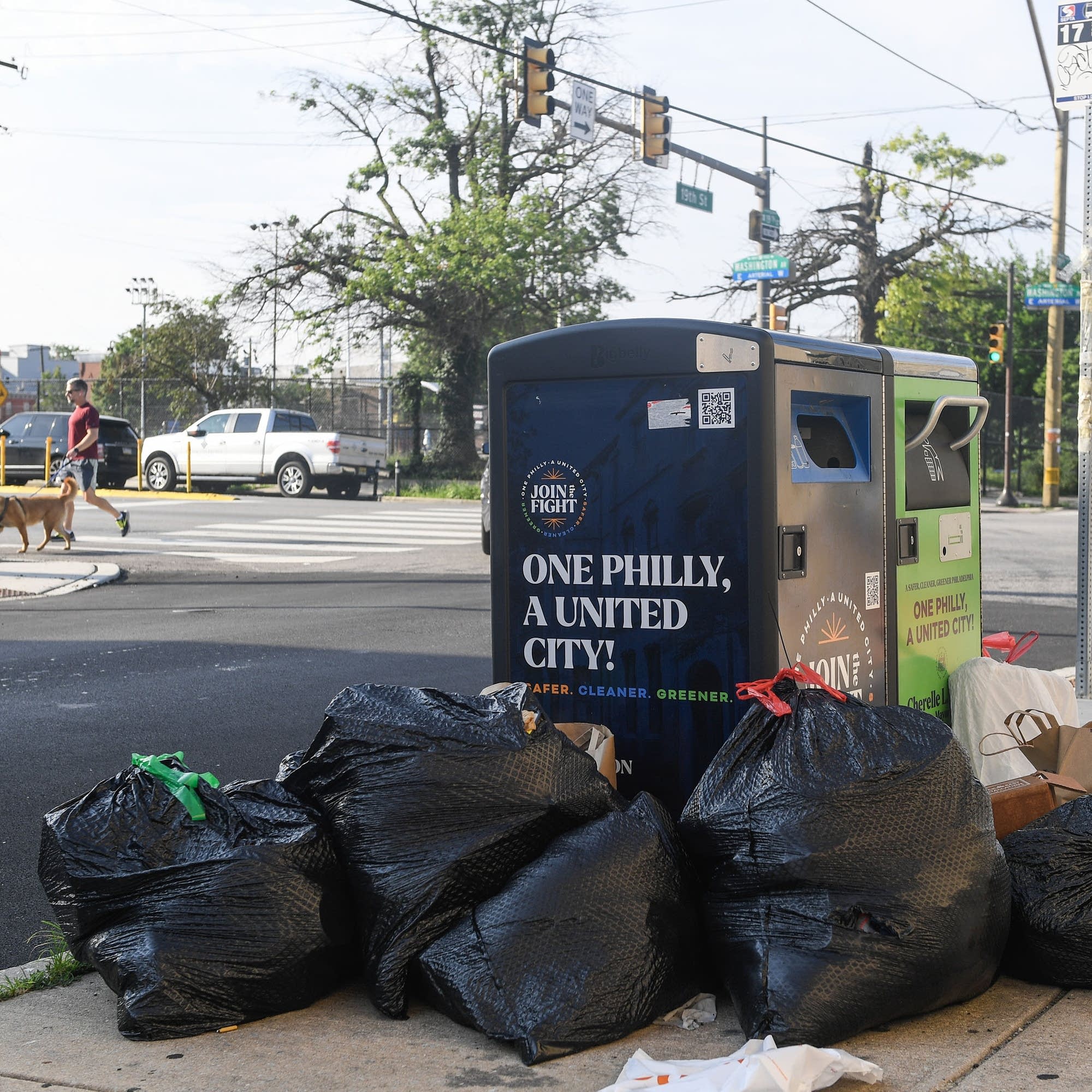
Inflation in the US is at 2.7% year over year, same as it was last month. Core inflation, when you take out food and energy, that's up to 3.1%. Over the course of the summer, several US cities, including Philadelphia, Boston and Seattle have been gripped by trash collection strikes. At the peak of these strikes, more than 2,000 workers coast to coast walked off the job after contract talks stalled. The Teamsters union representing the workers says members deserve a pay raise and better health care benefits. The BBC's Robin Levinson King reports from Boston, where a trash strike is ongoing.
- [03:50]
Robin Levinson King
I'm here outside a commercial dumpster where there is just piles of garbage that hasn't been collected. There's recycling. It's hot, it's starting to smell. The flies are buzzing.
- [04:02]
Klacy Dos Santos
My name is Klacy Dos Santos, and I'm a local coffee shop owner here in Malden.
- [04:07]
Robin Levinson King
Tell me about what the trash strike has been like for local businesses.
- [04:10]
Klacy Dos Santos
Oh, it's been horrible. I can't describe how.
- [04:14]
Zahid Ayub
How.
- [04:14]
Klacy Dos Santos
I don't know how to explain how frustrating it is. And then I call every day because I'm concerned, because my dumpster is full, very full. Over full.
- [04:22]
Robin Levinson King
The standoff began a month ago in the Boston area, a fight between Teamsters union members and a private waste management company called Republic Services. The strike has now expanded to other towns across the country, and even more workers have refused to show up in solidarity. Effectively, that means that during the strike's peak, workers, over 2,000 workers weren't showing up for the job. The union says workers deserve better wages and benefits like health care. They say their employer, a Fortune 500 company partly owned by Bill Gates, can afford to pay better. On the picket line outside of Boston, I spoke to Mike Ortiz, who's worked in the industry for 17 years.
- [05:00]
Mike Ortiz
The strike about right now is wages, health care. Republic Services have not been budging. We've been budging on wages. The impact in the communities is devastating. I walk through my neighborhood and there's just trash all over the place. And I'm from the city of Malden.
- [05:15]
Robin Levinson King
How long are you guys prepared to stay out here?
- [05:17]
Mike Ortiz
Well, we're going to be prepared for as long as it takes. I'd rather die on my feet than beg on my knees.
- [05:23]
Robin Levinson King
In a statement, Republic Services told the BBC it had made significant offers to improve wages and health care. Meanwhile, several communities in the Boston area have sued the company for breaching their contracts. Gloucester Mayor Greg Varga says that they've been left holding the proverbial garbage bag.
- [05:40]
Greg Varga
Negotiations between Republic and Teamsters weren't going so well. They had reached out to the cities and towns in early June to indicate there may be an issue. But when they were talking to us before the strike, they said, don't worry about it. We're a national company. We'll have people in place and take care of everything. That has not been delivered on since day one. Our DPW workers, as I mentioned, have been filling in, but that's not their typical task. So every second that they're spending picking up trash or recycling is time they're not cutting grass or doing other things they do around the city.
- [06:12]
Robin Levinson King
And it is summer.
- [06:12]
Jennifer Pak
Yes.
- [06:13]
Greg Varga
I mean, if this were going on in, you know, November, December, it wouldn't be as noticeable, the smell of it. We here on the coast, we also have an issue of seagulls. So bags that lay around even for a day or two beyond their normal pickup are potential targets for seagulls.
- [06:30]
Robin Levinson King
There are signs that things may soon settle down. Strikers outside of Seattle say that national pressure helped them reach a fair deal with the company offering some signs that the two sides can come to terms. But until then, millions of Americans will be left wondering who's going to take out the trash.
- [06:46]
Sabri Benashore
That's Robin Levinson King there with the BBC, reporting from Boston. In New York, I'm Sabri Benashore with the Marketplace morning Report from 8pM American Public Media.