Loading summary
Transcript38 lines
- [00:00]
Mackenzie
My name is Mackenzie and I started a GoFundMe for the adoptive mother of a nonverbal autistic child. The mother had lost her job because she wasn't able to find adequate care for this autistic child. So she really needed some help with living expenses, paying some back bills. So I launched a GoFundMe to help support them during this crisis and we raised about $10,000 within just a couple of months. I think that the surprising thing was by telling a clear story and just like really being very clear about what we needed, we had some really generous donations from people who were really moved by the situation that this family was struggling with.
- [00:47]
Marketplace Host
GoFundMe is the world's number one fundraising platform, trusted by over 200 million people. Start your GoFundMe today at gofundme.com that's gofundme.com gofundme.com this podcast is supported by GoFundMe. LifeLock how can I help?
- [01:02]
Guest Expert / Interviewee
The IRS said I filed my return.
- [01:04]
LifeLock Representative
But I haven't One in four tax paying Americans has paid the price of identity fraud.
- [01:08]
Guest Expert / Interviewee
What do I do?
- [01:09]
Economist / Analyst
My refund though.
- [01:10]
Guest Expert / Interviewee
I'm freaking out.
- [01:11]
Marketplace Host
Don't worry, I can fix this.
- [01:12]
LifeLock Representative
LifeLock fixes identity theft, guaranteed, and gets your money back with up to $3 million in coverage.
- [01:18]
Guest Expert / Interviewee
I'm so relieved.
- [01:19]
Marketplace Reporter / David Brancaccio
No problem.
- [01:19]
Marketplace Host
I'll be with you every step of the way.
- [01:21]
LifeLock Representative
One in four was a fraud paying American not anymore. Save up to 40% your first year. Visit lifelock.com Special offer terms apply Curbing.
- [01:32]
Marketplace Reporter / David Brancaccio
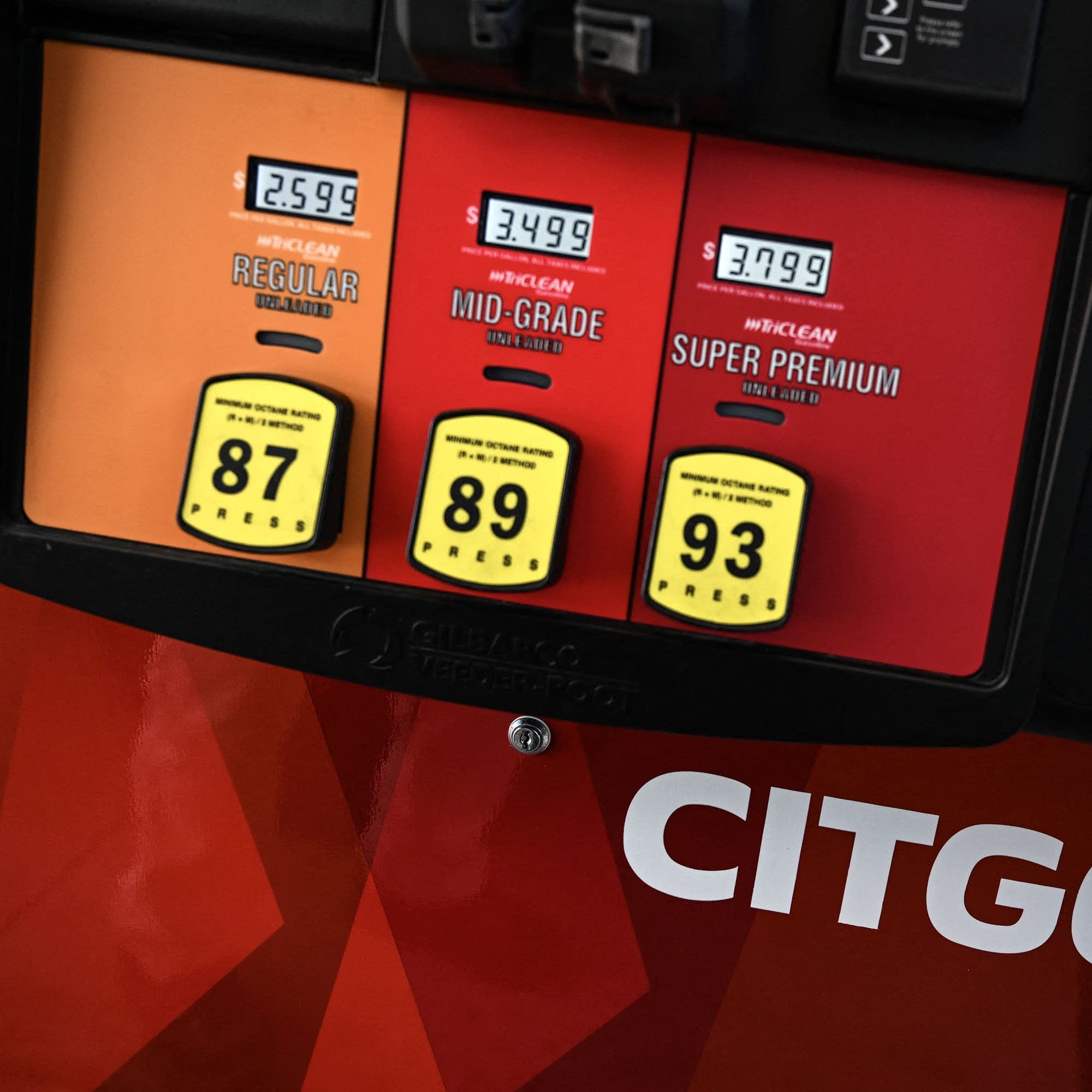
Inflation doesn't make things cheaper, but a few things are cheaper. Inflation is moderating. Last week we saw the Consumer Price index going up 2.4% in a year versus 2.7% as calculated a month earlier. So prices are still going up, and we often figure nothing ever actually goes down in price. And an exception is gasoline down 7 1/2% in a year. Not by a lot. 20 cents a gallon on average, but enough to buy yourself a king size bag of Peanut M and Ms. On a typical fill up. Marketplace's Mitchell Hartman has more Prices are.
- [02:06]
Marketplace Host
Still rising on most consumer goods, more than the Fed wants. By contrast, says nationwide economist Kathy gasoline.
- [02:14]
Marketplace Reporter / David Brancaccio
Prices have been deflating. Regular now is below $3 a gallon.
- [02:20]
Marketplace Host
The reason is basic economics, says Gernot Wagner at Columbia Business School.
- [02:25]
Guest Expert / Interviewee
Supply up, demand down, prices go down.
- [02:29]
Marketplace Host
OPEC is boosting oil production while the US plans to flood the world market with Venezuelan crude. Meanwhile, as electric vehicle adoption spreads globally, it throttles gasoline demand. All of which translates to lower gas prices for US Consumers. Here's Stephen Cates at Bankrate.
- [02:48]
Guest Expert / Interviewee
I think the impact is very much mental for most people. Talking to my father, he said, wow, gas prices are so low now. This is great.
- [02:57]
Marketplace Host
But that positive sentiment might not boost overall consumer confidence or spending much, says Johnny Sawyer at polling firm Ipsos.
- [03:05]
Guest Expert / Interviewee
Even though gas prices are down year over year, their prices are up.
- [03:09]
Marketplace Host
You know, housing, groceries, Also electricity up 6% and natural gas up nearly 10% since last year. So while it's cheaper to drive to and from work these days, it's more expensive to heat and light your house once you get there. I'm Mitchell Hartman for Marketplace.
- [03:28]
Marketplace Reporter / David Brancaccio
I saw one calculation that televisions are 99.4% lower in 2026 compared to the inflation adjusted price in 1950. That's not the trend for college tuition, healthcare services or housing or childcare. Better stop there now. The goal can be to stick a soft landing, calm prices down without falling into a pit. David Kelly is chief global strategist at JP Morgan Funds. He says that he's gone through all the data and concludes things are nicely balanced out for now.
- [03:59]
Economist / Analyst
That's right. You end up in an economy that's pretty stable, about 2% growth, no recession really on the horizon. I think the inflation rate will eventually later this year come down to 2%. I think the unemployment rate, if anything, will end up up lower than it is now. So maybe at 4% by the end of the year. It's not brilliant, but it's certainly not bad. I think a fairly stable, moderate economy is where we are.
- [04:21]
Marketplace Reporter / David Brancaccio
What was Winston Churchill's warning about governing? Something about events, dear boy. Events. We don't know what's going to happen tomorrow, but barring something bad. Right.
- [04:31]
Economist / Analyst
I think the history of the 21st century is Beware of the shock around the corner because it's probably something you never even considered. I think we're seeing so much frenzy in AI spending and AI infrastructure that there's some risk from that and then there's geopolitical risk. So there's plenty of things that could go wrong. But really what I worry about for investors is not so much the economy is going to do something terrible to them, it's just that something does go wrong. They could get pretty badly hurt.
- [05:13]
LifeLock Representative
Life Experience is an excellent teacher. It's time you get the recognition you deserve for those hard earned lessons. Purdue Global Values the experience working adults bring to the table. Whether you're interested in a rapidly growing field like cybersecurity, business, nursing or any of Purdue Global's other 170 programs earning the credentials you need may be faster than you think. Try our experience calculator to see if you could be eligible for course credit and start your comeback today at purdueglobal.
- [05:41]
Marketplace Reporter / David Brancaccio
Edu. We have a new approach now to the affordable housing crisis. It is a way to build more homes quicker given the thousands of different sets of rules governing how you build, rules which vary by county and town. This is one of the companies we discovered reporting a one hour special called Building Tomorrow from Marketplace and this old house radio hour at Reframe Systems in Andover, Massachusetts. They can dial in local building codes when making houses in factories. Reframe's co founder is Felipe Polito.
- [06:14]
Guest Expert / Interviewee
In the United States, There are over 30,000 zoning jurisdictions. Every single project has to be built custom to meet the demands for that site. You cannot build a single product repeatedly in a factory because you need to get this variation outcome.
- [06:28]
Marketplace Reporter / David Brancaccio
Reframe is trying to scale housing by spreading a network of small factories across the country. Keeping labor local while standardizing everything else.
- [06:37]
Guest Expert / Interviewee
What that lets us do is have the local labor work on the houses in our communities. So our electrician or plumber who are working in the factory are the same ones that are wrapping up the work on site. Which means that we as Reframe are going all the way to the finish and delivering that home from end to end. So you imagine a world where you can type in an address and get a house that is compliant to that local with the ready price and time frame for it to be built.
- [07:06]
Marketplace Reporter / David Brancaccio
The philosophy goes beyond automation. It's about structuring work by turning construction into a clear step by step process. Almost paint by numbers.
- [07:15]
Guest Expert / Interviewee
Behind you over here is a smart saw. This machine feeds lumber and cuts it automatically while printing onto the material. And what we get here then is that this is a kit that then will be assembled into a wall. But as somebody assembling it, all you need to know is that 18 goes to 18, 16 goes to 16, 14 goes to 14. And very much like an IKEA kit, you're just assembling it the way it's supposed to be.
- [07:42]
Marketplace Reporter / David Brancaccio
By shifting the work into a controlled factory and guiding each step with software, Reframe streamlines requirements so more people can do precision work without sacrificing quality.
- [07:54]
Guest Expert / Interviewee
What is interesting is that today actually we have much wider pool of operators than you would get on the field. We can have folks that otherwise would not be doing construction actually doing these tasks.
- [08:08]
Marketplace Reporter / David Brancaccio
Felipe Polito of Reframed Systems. We have lots of new ways to build houses in faster, more resilient and energy efficient ways in our special called Building the Future of American Housing, which I co host with Jen Largess from this Old House Radio Hour. It's at the top of this Old House feed wherever you get your podcasts. In Los Angeles, I'm David Brancaccio. This is the Marketplace Morning Report. From APM American Public Media.
- [08:43]
Marketplace Host
Ready to make the most of your money? Sign up to receive weekly tips from Marketplace designed to help you make smarter financial decisions. Plus, you'll also be the first to know about exclusive Marketplace merchandise and local events. Text Marketplace to 80568 to sign up.