← Marketplace Morning Report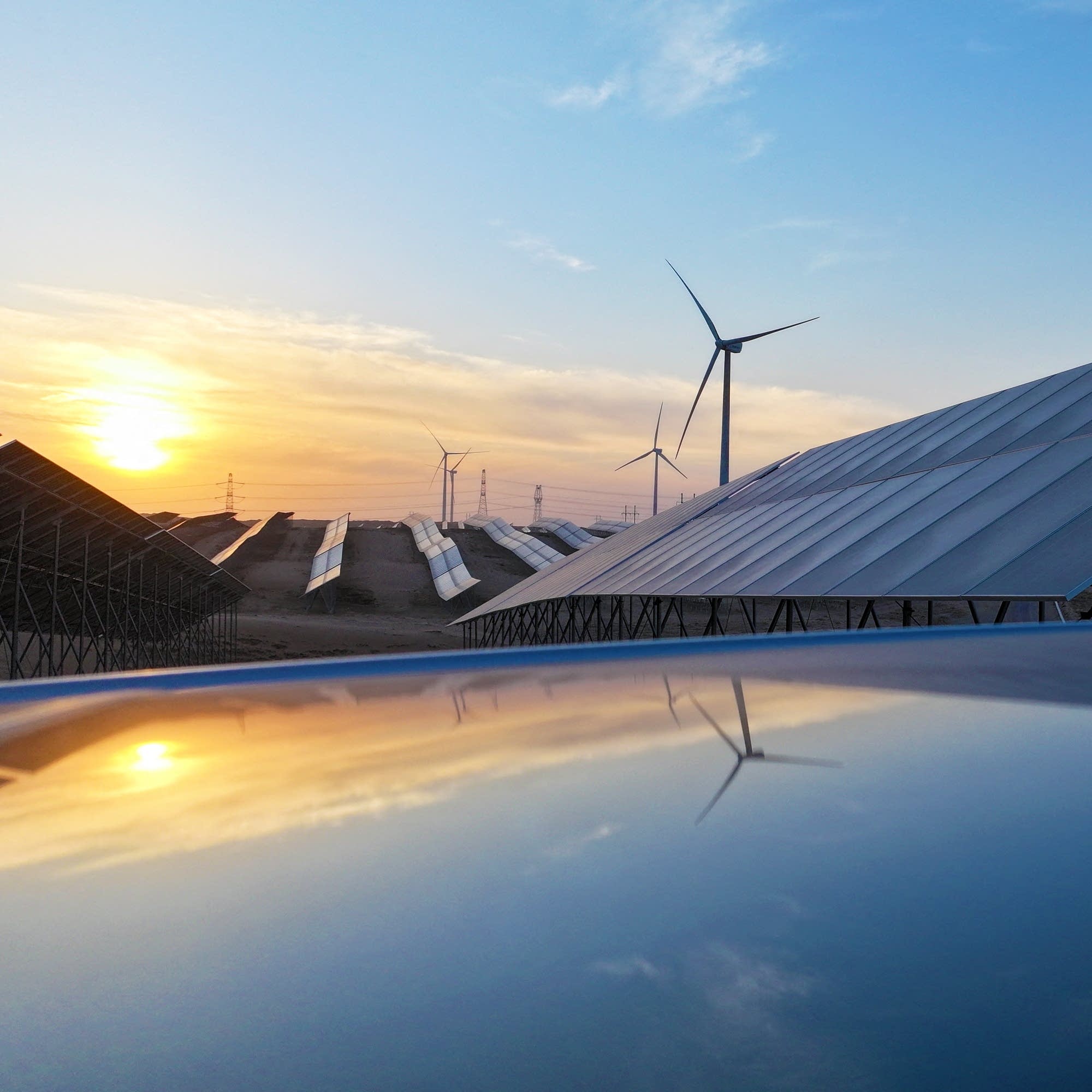
Loading summary
Transcript31 lines
- [00:00]
Marketplace Sponsor Announcer
Running a business is hard enough, so why make it harder with a dozen different apps that don't talk to each other? Introducing Odoo, the only business software you'll ever need. It's an all in one fully integrated platform that makes your work easier from CRM, accounting, inventory, e commerce, and more. And the best part? Odoo replaces multiple expensive platforms for a fraction of the cost. This is why over thousands of businesses have made the switch. So why not you try Odoo for free@odoo.com that's o d o o.com this
- [00:31]
Marketplace podcast is supported by Viking, committed to exploring the world in comfort. Journey through the heart of Europe on an elegant Viking longship with thoughtful service, destination focused dining and cultural enrichment on board and on shore. And every Viking voyage is all inclusive with no children and no casinos. Discover more@viking.com
- [00:55]
Sabri Benishour
will this oil shock push the world further towards renewables or back towards coal? From Marketplace, I'm Sabri Benishour in for David Brancaccio. The US has reportedly sent Iran a 15 point plan to end the war in the Middle East. It sent the plan through Pakistan, according to Reuters. Iran has yet to respond. Oil is down a little from yesterday on that news, just below a hundred dollars a barrel. The disruptions from this conflict have made it very, very clear just how much the world is still dependent on fossil fuels. And one question emerging from it all is will this push countries to become less dependent on these fuels? For more on that, we are joined now by Jason Bordoff, Founding Director of the center on Global Energy Policy at Columbia University. Good morning.
- [01:43]
Jason Bordoff
Good morning. Thanks for having me on.
- [01:45]
Sabri Benishour
Fossil fuels are clearly and notoriously vulnerable to geopolitical shocks. Does this shock in particular strengthen the case for renewable energy?
- [01:57]
Jason Bordoff
I think this shock today is a reminder that oil and gas is priced in a global market. And one of the best things that you can do to insulate your economy to volatile oil and gas prices that are exposed to geopolitical risk is to reduce how much you use in the first place. And one way to do that is to electrify more of your economy and then reduce try to produce more of that electricity with domestic sources. Renewables could be nuclear power and for some parts of the world it's coal.
- [02:24]
Sabri Benishour
Are renewables actually more secure than fossil fuels or do they just come with a different set of geopolitical risks?
- [02:30]
Jason Bordoff
The eventual economy that might have a lot more low carbon energy comes with a different set of geopolitical risks. That doesn't mean we shouldn't have a transition, but we need to anticipate what those risks are and try to mitigate them. And one of the most significant is the fact that so many of the technologies you need for, for renewables and other forms of low carbon energy, China has a 70, 80, 90% dominant position in many of those technologies.
- [02:54]
Sabri Benishour
What do we do about that? I mean, how do we deal with that?
- [02:58]
Jason Bordoff
Try to diversify. That's always been the hallmark of energy security policies. To build more domestic capacity, which both sides of the aisle have put in place, industrial policy to do, and then buffers and resilience. The Trump administration has just announced it's going to try to build a strategic stockpile of critical minerals the way we have for oil. And depending on how that's done, that could be a useful thing to do.
- [03:19]
Sabri Benishour
After Russia's invasion of Ukraine in 2022, the EU sped up investment in renewable energy. Do you think we will see something like that happen again this time?
- [03:30]
Jason Bordoff
I think we probably should and might see something more significant to really take a transition toward a more electrified economy and to do much more with energy efficiency. We should remember that the largest reduction in fossil fuels as a share of the economy came in the decade after the Arab oil embargo, not in the decade after Paris agreement. And sometimes national security and energy security concerns can be a more powerful driver of policy action than environmental ones.
- [03:55]
Sabri Benishour
Yeah. On the flip side, some European countries responded to that 2022 energy crisis by turning back to coal rather than clean energy. Could we see more of that?
- [04:08]
Jason Bordoff
I think we will see more of that, particularly in Asia. And I think there's a time frame, there's a temporal dimension to this. In the near term, you got to do what you need to do to make sure that energy is available to people. You can homes. Lives are at risk if we don't have energy. And emergency responses may include coal and may need to include coal. The question is the longer term lessons we take. I think lots of countries are going to look to reduce their imports of energy and reduce their exposure to volatile oil and gas markets that come with geopolitical risk.
- [04:37]
Sabri Benishour
Jason Bordoff is founding director of the center on Global Energy Policy at Columbia University. Thank you so much.
- [04:44]
Jason Bordoff
Thank you.
- [04:45]
Sabri Benishour
Meta has been ordered to pay $375 million in penalties. A New Mexico jury found the company violated state law by misleading users about the safety of Facebook, Instagram and WhatsApp and of enabling child sexual exploitation on those platforms. The verdict marks the first time a jury has ruled on these kinds of claims. Against Meta. The company is facing a wave of lawsuits over how its platforms affect young people's mental health. Meta says it will appeal.
- [05:27]
Marketplace Sponsor Announcer
Are you looking to invest in municipal bonds? For extra protection, buy bonds insured by Assured guarantee. It guarantees 100% of your principal and interest will be paid when due. Assured Guaranty has demonstrated its reliability and financial strength for nearly four decades. That's why the bonds they back are one of the safest investments you can make. Visit assuredguaranty.com assured guarantee a stronger Bond
- [05:54]
this Marketplace podcast is supported by Fundrise. Billion dollar investors don't typically park their cash in high yield savings accounts. Instead, they often use one of the premier strategies for institutional investors, private credit. Now the same passive income strategy is available to investors of all sizes thanks to the Fundrise Income Fund, which has more than $600 million invested and a 7.97% distribution rate. With traditional savings yields falling, it's no wonder private credit has grown to be a trillion dollar asset class. Learn more@fundrise.com Marketplace the fund's total return in 2025 was 8%, and the average annual total return since inception is 7.8%. Past performance does not guarant current distribution rate as of 1231 2025. Carefully consider the investment material before investing, including objectives, risks, charges and expenses. This and other information can be found in the Income Funds prospectus@fundrise.com Income this is a paid advertisement.
- [06:55]
Sabri Benishour
Here is another data point from Inflation World that is not great for consumers. Rents edged up nationwide this month, according to rental marketplace Zumper. It wasn't a big jump 2.10of a percent in March for one bedrooms, a tenth of a percent for two bedrooms. But still it reverses the TRE over the past year or so, when Zumper's national rent index was falling month after month, led by rent deflation in regions like the south and West. Marketplace's Mitchell Hartman has more.
- [07:24]
Mitchell Hartman
Let's start with where rents are up sharply. That's dense coastal cities where there's not much new housing supply or room to build, says Zumper's Crystal Chen.
- [07:33]
Rema Grace
Like San Francisco, rents are hitting all
- [07:35]
Mitchell Hartman
time highs $37.90 a month for a typical one bedroom. Tech stocks might be struggling, but as a driver of the rental market, tech is riding high.
- [07:45]
Rema Grace
AI related hiring bringing high income renters back stronger return to office expectations bringing people to city centers.
- [07:52]
Mitchell Hartman
Rents are still down sharply in the Sun Belt from Florida to Texas and Arizona, where a wave of migration after the pandemic led to a lot of new apartments getting built and flooding the market going forward. Robert Dietz at the national association of Home Builders expects more multifamily housing in
- [08:11]
Jason Bordoff
lower density markets, secondary and tertiary cities, places like the Carolinas, Columbus, Ohio, Indianapolis.
- [08:19]
Mitchell Hartman
Rental demand is likely to stay strong because buying a house is so unaffordable.
- [08:25]
Marketplace Sponsor Announcer
That means some people are going to
- [08:26]
Mitchell Hartman
rent longer, particularly those younger households who are worried about the stagnant job market and getting saddled with a mortgage payment they can't afford. I'm Mitchell Hartman for Marketplace, and in
- [08:38]
Sabri Benishour
New York, I'm Sabri Ben, ashore with the Marketplace morning report. From 8:00pm American Public Media.
- [08:54]
Rema Grace
I'm Rema Grace. And this week on my podcast, this is Uncomfortable, we're looking at the rise of prediction markets where you can bet on everything from sports and pop culture to political headlines. A multi billion dollar industry that's growing at a time when more Americans are questioning the traditional paths to wealth. I feel like the kind of quote, unquote, American dream is sort of breaking down. Like, how could I possibly, you know, buy a home, be able to afford having a family? And then they're also going online and seeing people that are claiming to make all this money doing these alternative paths to wealth. Be sure to listen to this week's episode of this Is Uncomfortable on your favorite podcast app.