Loading summary
Transcript21 lines
- [00:00]
Podcast Host
This Marketplace podcast is supported by Wealth Enhancement, who ask do you have a blueprint for your money? Wealth Enhancement can help you build the right blueprint for investing, retirement, tax and more. With offices nationwide, there's an advisor who's ready to listen and craft a blueprint for your future. Find out more@wealthenhancement.com Build this Podcast is supported by Odoo. Some say Odoo business management software is like fertilizer for businesses because the simple, efficient software promotes growth. Others say Odoo is like a magic beanstalk because it scales with you and is magically affordable. And some describe Odoo's programs for manufacturing, accounting and more as building blocks for creating a custom software suite. So Odoo is fertilizer Magic Beanstalk building blocks for business Odoo exactly what businesses need. Sign up@odoo.com that's o d o o.com.
- [00:55]
William Lee Adams
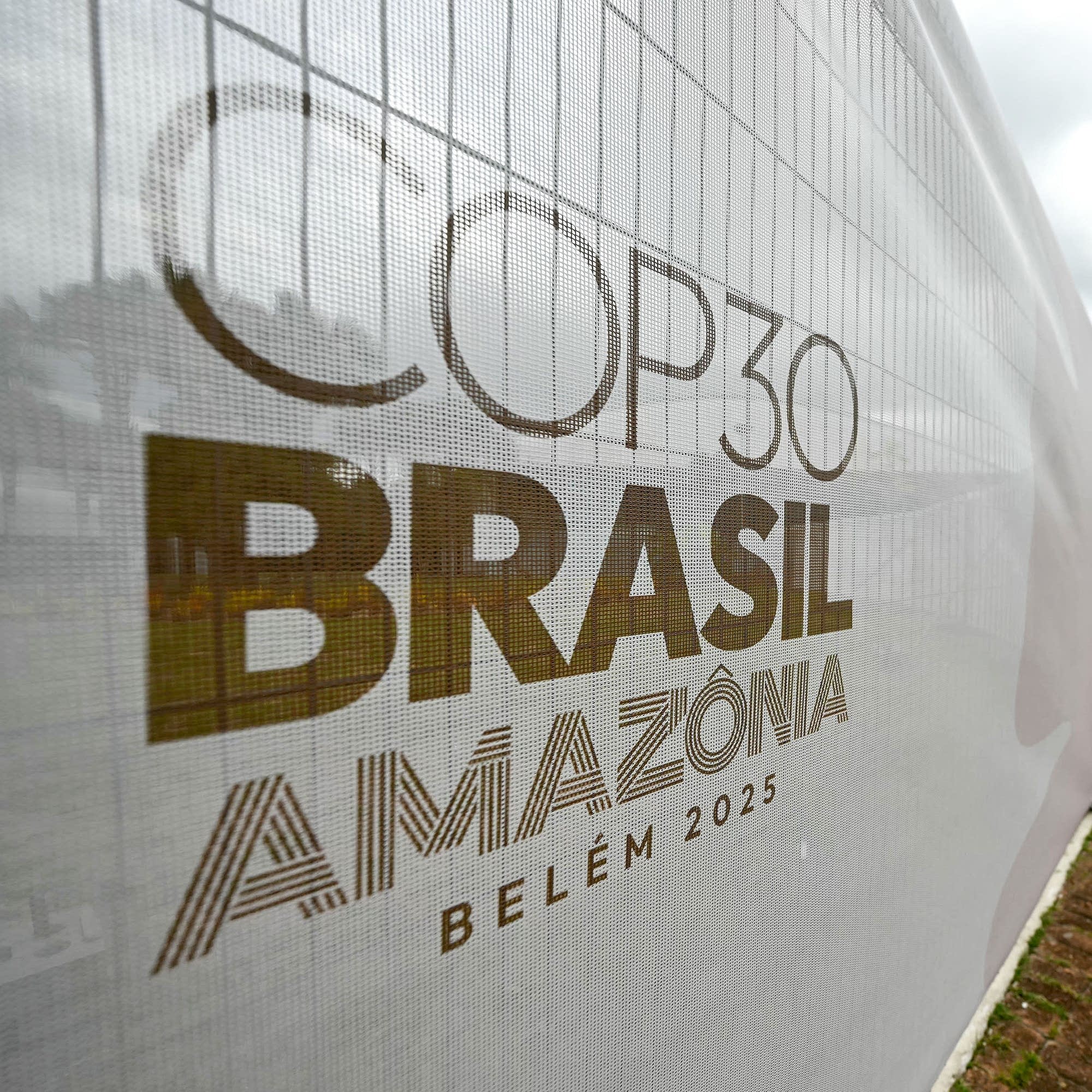
World leaders arrive in Brazil for the climate summit but how green are the host's credentials? Live from the uk, this is the Marketplace Morning Report from the BBC World Service. I'm William Lee Adams. Good morning. World leaders are gathering in Brazil ahead of the United Nations COP30 climate conference. It's part of an effort to show that climate change remains a top priority. As the BBC's Justin Rollette explains, faith.
- [01:19]
Justin Rollette
In the UN climate process is at a low. Only a few dozen heads of state are expected to attend today's summit. The leaders of China, India and the United States, together responsible for roughly half of global emissions, will not be present. The US is withdrawing from the Paris agreement entirely. Yet there are glimmers of progress. Renewable energy technologies are being deployed around the world faster than anyone anticipated a decade ago, and the Global rise in CO2 emissions has nearly levelled off.
- [01:52]
William Lee Adams
Justin Rolatt the meeting is happening just as Brazil has given its state oil firm a license to conduct exploratory oil drilling in the sea off the Amazon, despite environmental concerns about the project. The BBC's Georgina Reynard has more. Georgina Hai hello. How do leaders reconcile that reality with Brazil hosting this global climate summit?
- [02:14]
Georgina Reynard
This contrasts somewhat with the expectation and the hope that many people expressed three years ago when it was said this conference would be in the Amazon. At that time, I remember President Luna saying, you know, Brazil is back, back on the climate stage. And just this week I read a quote by him where he said, I never said I was an environmental leader. And it's true that Lula has always been a champion for fighting poverty. And that tension is playing out in many different Countries, we see that in India, in Indonesia and South Africa. So Brazil is trying to weaken some environmental laws and just last week permitted this drilling near the mouth of the Amazon. Lula's defended it, saying it's necessary for development, but certainly it's not a good look on the eve of these climate talks. And he has been quite heavily criticized within the country.
- [02:59]
William Lee Adams
So when COP gets underway next week, the leaders of China, India and the US win. Those countries, of course, account for around half of global emissions. What can the conference achieve without them?
- [03:11]
Georgina Reynard
Yeah, it is such a big question. We've had such a change in global politics. Earlier this year we had President Donald Trump calling climate change a con. And I think that's really casting a shadow over these talks. Brazil is doing its best to kind of still rally people. They're going to announce a special fund for the rainforest that they hoped would kind of galvanize countries and generate up to $25 million of money to protect rainforest globally. Although unfortunately already the UK for example, has said that they won't be contributing to that fund. I think a lot of it could be about appeasement, really. So how can the countries get through these talks without doing anything to enrage some of the countries like the US who may, if they see something happening that they would consider an imposition on their country, they may actually decide to turn up to the talks and perhaps derail them, which has happened to other global talks this year, including on plastics and shipping.
- [04:05]
William Lee Adams
Georgina, thanks for joining us on Marketplace.
- [04:07]
Georgina Reynard
Thank you.
- [04:08]
William Lee Adams
Let's do the numbers. Nissan Motor posted a 61% rise in second quarter operating profit from a year earlier, driven by strong sales in North America and efforts to reduce costs. Meanwhile, shipping giant Maersk raised its full year operating profit forecast to between 9 and $9.5 billion after better than expected third quarter results. China has announced its easing tariffs and export controls on US firms following last week's seemingly productive between Presidents Xi Jinping and Donald Trump. In Shanghai, foreign businesses are being welcomed to a major trade import expo. To promote China as an investment partner, the BBC's Stephen McDonnell went along.
- [04:51]
Stephen McDonnell
With the US China tariff war on pause, the Chinese government is using this expo to tell the world that it's not only open for business, but that this country wants to buy your stuff. And certainly when you walk around here, you see plenty of big name brands, from car companies to mining to banking. And in theory, this should be a great time for them to be diving into the local Chinese market because of this detente. But is it really the American soybean industry has been at the pointy end of the dispute between the Trump administration and the Chinese government. Scott Gaffner is here not only as a soybean farmer, but as a representative of the U.S. soybean Export Council.
- [05:38]
Scott Gaffner
Trade agreements are very important, but let's make sure those trade agreements are first of all followed, and they're long enough that we can plan ahead. And just a couple years is not enough. We need to have agreements that go farther out so that we can be assured we have trading partners to continue to move our pile of soybeans with.
- [05:58]
Stephen McDonnell
The high tech sector has also been hit hard by the trade war between China and the US Especially when it comes to the supply of microchips and advanced software. You've got the likes of Qualcomm and Micron here. Neither of those companies wanted to be interviewed by us, but one of their media people said that right now it's just too sensitive a time for them to be going on the record. And when you speak to American companies at the Expo, many of them say that they are more optimistic, but that more needs to be done for them to have the certainty to really invest in China. Sean Stein is the president of the US China Business Council.
- [06:35]
Podcast Host
This is a great start, but can they hold onto it until April? And if they can, April is when President Trump says he wants to go to Beijing. If it makes it that long, I think there'll be some real optimism that this is a durable base that people can grow from. Until then, cautious optimism, but that's what it is.
- [06:52]
Stephen McDonnell
Following considerable geopolitical tensions, it's not a great time to be a company wanting to invest in global trade. But the reason so many of them are here at this Expo is that they know that in China, with its 1.4 billion people, if they can bump up their sales by just a little bit, it can mean an awful lot of money for them. In China, I'm the BBC's Stephen McDonnell.
- [07:17]
William Lee Adams
For Marketplace, and in the UK, I'm William Lee Adams with the Marketplace morning report from the BBC World Service. Thanks for listening.
- [07:33]
Bridget
Hey, everyone, it's Bridget, host of Million Bazillion, a podcast from Marketplace. You've probably heard about the government shutdown, but if you're anything like our young caller Esme, whose dad is a federal worker, you might still have questions.
- [07:47]
William Lee Adams
I've noticed that my dad hasn't been.
- [07:49]
Georgina Reynard
Going to work and I don't know when the government shutdown will stop and my dad can go back to work.
- [07:56]
Bridget
We can help tune into our recent episode where we explain what you and the young ones in your life need to know about government shutdowns. Listen to million Bazillion on your favorite podcast.
- [08:06]
William Lee Adams
Applause.