Loading summary
Transcript31 lines
- [00:00]
LifeLock Advertiser
The holidays mean more travel, more shopping, more time online, and more personal info in more places that could expose you more to identity theft. But LifeLock monitors millions of data points per second. If your identity is stolen, our US Based restoration specialists will fix it, guaranteed your money back. Don't face drained accounts, fraudulent loans or financial losses alone. Get more holiday fun and less Holiday worry with LifeLock. Save up to 40% your first year. Visit LifeLock.com SpecialOffer Terms Apply Think of.
- [00:32]
David Brancaccio
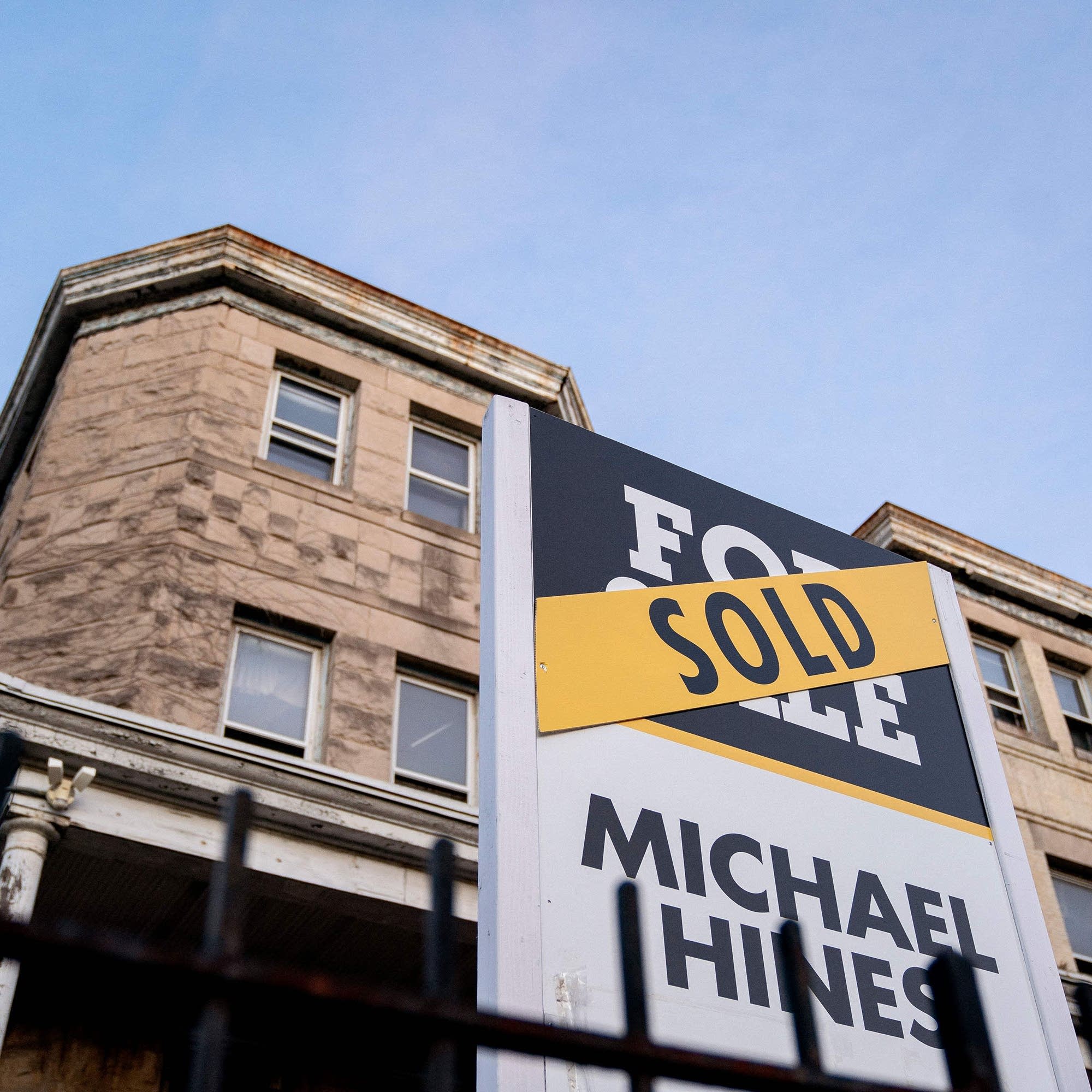
A home loan due on Stardate 2075 I'm David Brancaccio in Los Angeles. President Trump and Federal Housing Finance Agency director Bill Pulte are floating the idea of home loans that take 50 years to pay back instead of the usual, say, 30 or 15 monthly payments could be lower. But there's a catch. Some will use the phrase trade off marketplaces. Carla Javier has some of the math.
- [00:57]
Carla Javier
The interest rates on longer loans would be higher because they're riskier and buyers would ultimately owe lenders more money, says realtor.com's Joel Berner.
- [01:07]
Joel Berner
Over the life of the loan, a 50 year mortgage is about 86% more interest than a 30 year loan, and that's just a lot of money that's going to the bank, he says.
- [01:16]
Carla Javier
Another potential drawback is that home buyers would build equity more slowly if home.
- [01:21]
Joel Berner
Prices fell after, you know, a couple years on a mortgage. A 30 year mortgage might still be in a position where the value value of the home is high enough to keep the buyer from being underwater. But over the first 10 years or so of payments on a 50 year mortgage, it's almost all interest.
- [01:39]
Carla Javier
Though longer mortgages could offer buyers more flexibility, says Robert Van Order, formerly of Freddie Mac, now at George Washington University.
- [01:49]
Robert Van Order
If you think 50 years is too long, you can always send in extra.
- [01:53]
Carla Javier
Payments which go towards the principal.
- [01:55]
Robert Van Order
And then if you need some better cash flow, you can just stop doing that for a while.
- [02:00]
Carla Javier
But actually, getting one of these long loans could be tricky. In a statement, the Mortgage Bankers association said such mortgages wouldn't be considered qualified for purchase by Freddie Mac and Fannie Mae, and lenders might be less likely to offer them. I'm Carla Javier for MarketPL.
- [02:34]
Downy Advertiser
Every now and then I rinse it out and I need downy rinse tonight and I need it more. My kid wears a bed and the smell never leaves. I don't know what to do. I'm always in the dark. The sweat and dead short smells like a dark.
- [02:56]
Sabri Benishour
Downy rinse fights stubborn odors in just one wash when impossible Odors get stuck in.
- [03:04]
David Brancaccio
Now to a teachable moment embedded in the closely watched Supreme Court case now testing whether a president can increase tariffs, import taxes by calling a trade deficit an emergency. One of the friend of the Court or amicus curie. Contributions to the high court's understanding came from a group of 47 economists from across the ideological spectrum, including four Nobel laureates in economics, two former Fed chiefs, and one treasury secretary. Let's learn more by bringing in my colleague, Marketplace's Sabri Benishour. Hey, Sabri.
- [03:36]
Sabri Benishour
Hi, David.
- [03:37]
David Brancaccio
All right, sum it up. What is the basic argument that this group of hotshots are making?
- [03:42]
Sabri Benishour
They are basically trying to take down the economic rationale for these tariffs. In order for the president to exercise these powers under the International Emergency Economic Powers act, there has to be an emergency, something that is an unusual and extraordinary threat to national security or a threat to the US Economy. The emergency given by the White House, one of them is trade deficits. And these economists say that is not an emergency, it is not unusual and it is not a threat.
- [04:12]
David Brancaccio
But the administration argues, Right, Sabri, that trade deficits have hollowed out US Manufacturing. The idea that we import so much and that cuts out demand for US Made goods and people lose jobs in the US and our factories decline.
- [04:28]
Sabri Benishour
Trade deficits, these economists argue, do not have anything to do with that. Do not have anything to do with a country's manufacturing base. If you replaced every single import with a US made good right now, the size of the US manufacturing base as a percent of GDP would still be half of its peak from the 50s. And they point out that the US doesn't actually manufacture less than it used to. It just does it a lot more efficiently and with fewer jobs.
- [04:56]
David Brancaccio
A big portion of the president's tariffs were based originally on the size of the particular trade deficit with a given country. Is this group of economists and a Treasury secretary and Nobelists, they're saying that those two things are not connected.
- [05:11]
Sabri Benishour
Yeah. The level of tariffs that we have on other countries or that other countries have on us completely divorced in the data from the trade deficit.
- [05:21]
David Brancaccio
Just so it's clear, because maybe it seems somehow dangerous to send money out of the US to buy imports, more money than some foreign countries send to the US for made in the USA goods and services. Isn't that something that's broken that a president should fix?
- [05:38]
Sabri Benishour
Yeah, it sounds like it. Right. But there's a quote from Nobel Prize winner Robert Solow that these economists refer to. He said, I have a chronic deficit with my barber who doesn't buy a darn thing from me. They say that to demonstrate it is okay to have a trade deficit with countries. It's normal. The specific reason it is okay is that all that extra money we spend to buy stuff from the world, we get it back. That money comes back to the US in the form of investment in US Companies, in US Treasuries and other things. So a trade deficit is actually another way of saying the world is investing a lot in the US We've been.
- [06:23]
David Brancaccio
Talking about this group of famous economists and so forth who are lending their 2 cents to the case. Do you think these arguments might make their way into the Supreme Court's eventual decision?
- [06:37]
Sabri Benishour
Well, I am not a constitutional lawyer, but the administration argues that its rationale for declaring an emergency is just not reviewable. And even Justice Sotomayor conceded that declaring an emergency would be an area where the administration gets a lot of deference. I would just add that this brief is basically implying that nearly the entirety of this tariff policy is based on a misunderstanding of international economics.
- [07:04]
David Brancaccio
All right, Marketplaces. Sabri Benishore, thank you for helping us with this. I appreciate it.
- [07:09]
Sabri Benishour
Very welcome.
- [07:11]
David Brancaccio
Also, following the unresolved mystery of exactly when government workers start getting paid again and when food stamp beneficiaries start seeing their EBT cards getting value put on, these aren't instant. Even after President Trump signs to get the government reopened, perhaps today, soon is the best we have at this point. In Los Angeles, I'm David Brancaccio, Marketplace Morning Report from apm, American Public Media.
- [07:39]
Amy Scott
Imagine a future where chocolate and coffee are rare and expensive, where cheap nutritional staples like corn and wheat are threatened. Sounds unpleasant, doesn't it? Well, we could be heading there if we don't recognize that the climate crisis is also a food crisis.
- [07:58]
David Brancaccio
I've seen yields drop because of drought, and believe me, boy, have I seen them drop. We have had dry spells that have lasted years.
- [08:09]
Amy Scott
I'm Amy Scott. This season on How We Survive. We investigate how the climate crisis is threatening our most vital food systems and how scientists are racing to develop alternatives that will shape the future of food. Listen to this season of How We Survive on your favorite podcast app.