Loading summary
Transcript16 lines
- [00:02]
A
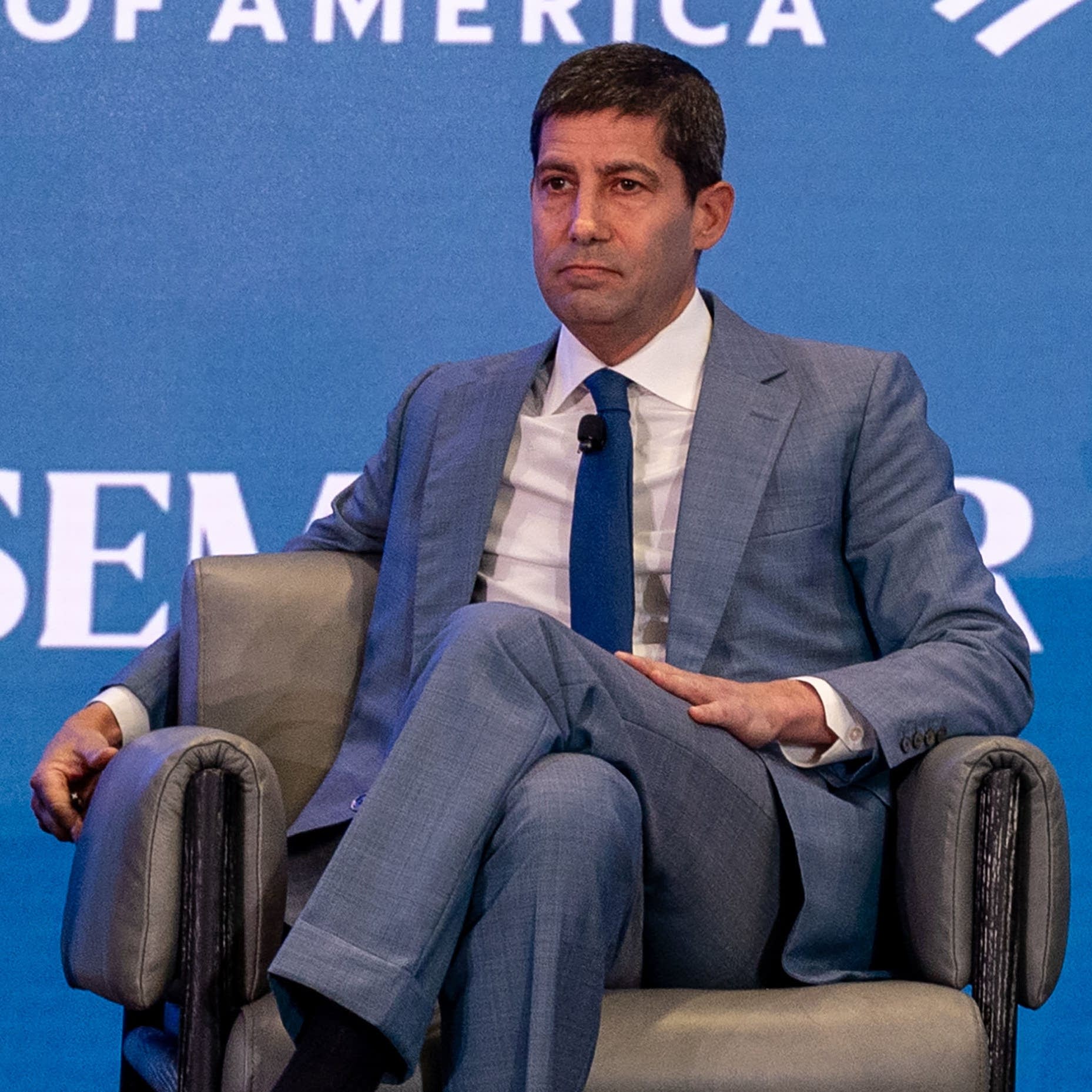
A key question for market players, what would Kevin do? I'm David Brancaccio in Los Angeles. Good morning to you. Investors are trying to figure out what kind of Federal Reserve we would see under Kevin Warsh, President Trump's nominee. Would the central bank stay independent? Is Warsh really an inflation dove as advertised? Marketplace's Nancy Marshall Genzer reports.
- [00:23]
B
Kevin Warsh has already worked as a Fed governor. He played a key role in helping the Fed create bailout plans for faltering financial giants during the financial crisis. And he earned a reputation as an inflation hawk, someone who prefers higher interest rates to keep inflation in check. Now he thinks the Fed should cut rates. Here he is on CNBC back in July. AI is going to make almost everything cost less and the US can be a big winner. Wersh says productivity gains from AI will tamp down inflation. So the Fed can and should cut rates to keep the AI boom going. Claudia Somm is chief economist at New Century Advisors. She's also a former Fed Econom. She worked with Warsh when he was there. She believes Warsh would be independent in favor of raising rates in the future if that were appropriate. Because Fed chairs can agree with a president at first, but then once the Fed chair is put in place, then the world could change and then you have to back up and the Fed chair could go in a different direction. President Trump knows this and mentioned it in his speech at Davos, Switzerland, last month.
- [01:31]
C
It's amazing how people change once they have the job, but it's too bad sort of disloyalty, but they got to do what they think is right.
- [01:40]
B
It may be a while before we know what kind of chair Warsh would be. He still has to be confirmed by the Senate. Before that, he has to get the nod from the Senate Banking Committee. It hasn't even scheduled his nomination hearing yet. Republican Senator Thom Tillis of North Carolina says he'll oppose all of President Trump's nominees until a Justice Department investigation of current chair Jerome Powell is resolved. I'm Nancy Marshall Genser for Marketplace.
- [02:24]
A
Venezuela's acting president Delsey Rodriguez signed a law last week opening the oil industry there to private ownership, a reversal for a sector that's been state run for about 20 years now. This was a key demand of the Trump administration since the US Military attack in Caracas to seize Venezuela's President Nicolas Maduro. The BBC's Norberto Paredes has a report now from Venezuela's oil country.
- [02:48]
C
Maracaibo used to be the wealthy heart of Venezuela's oil boom. But decades of mismanagement have hit it hard. People here are desperate for the investment to bring Maracaibo back to life. Getting ready for a trip out on the city's lake. These fishermen are being hit by both the economic downturn and the pollution caused by the decaying oil industry. Carlos used to be able to pull in big catches. It's getting worse every day. I see it getting worse and worse. Green, black, oily, less fish. Despite the removal of its president by Donald Trump, he's ready for American investment and the oil to start flowing once more. It would be good because it would create jobs and our children wouldn't have to work in the fishing industry anymore. In a nearby neighborhood, 93 year old hoser, he's talking about his old job at the state owned oil company.
- [04:01]
B
Everything has changed. Things have become more difficult.
- [04:05]
A
In the past, things were easier.
- [04:07]
B
We had more comforts.
- [04:09]
C
International oil companies, many with US links, built whole neighborhoods for the workers. There were schools, hospitals, clubs and security. But today, many of these houses stand empty and some have been looted. Many of the people who still live here survive on pensions that barely cover the basics. Turning things around won't be easy. Analysts say it could take tens of billions of dollars and potentially a decade to restore Venezuela's oil output to where it once was. Juan Romero is a local member of parliament for the governing Socialist Party. He says there is still anger over the US sanctions and military action that have hit the country.
- [04:59]
D
Look at what we Venezuelans are suffering. The events of January 3rd were a physical act of aggression. But the attacks haven't stopped since President Trump announced the start of a firm blockade on the country. There is a lot of theatricality and little reality. Truths are mixed with lies.
- [05:18]
C
For many people here, unlocking the country's vast oil wealth still feels a long way off.
- [05:25]
A
Norberto Paredes is with our newsroom partners, the BBC. And stock in the big data, government contractor Palantir is up 5% now after its profits and revenue for last quarter beat expectations. Sales up 70% from a year earlier. The Pentagon has embraced Palantir's offerings. But some Palantir employees and elected officials are criticizing the company's work to track immigrants for deportation. The company's co founder, Alex Karp said last year his company has zero competition. It's a marketplace Morning report from APM American Public Media.
- [06:02]
E
For second and third generation kids, holding on to your family's culture can be difficult and expensive. I'm Reema Reyes and this week on this is Uncomfortable. I talk with author and journalist Ayman Ismail about how passing down his Egyptian roots to his kids has become a line item in his monthly budget.
- [06:20]
F
I don't want to have kids who can't speak Arabic or read Arabic. This is the only chance I get to do this right when they're really, really young. I won't get another chance to help guide them and, like, help them learn Arabic for the sake of them being connected to this massive heritage that they're inheriting.
- [06:39]
E
Listen to this is Uncomfortable on your favorite podcast app.