Loading summary
Transcript19 lines
- [00:00]
Host or Announcer
This Marketplace podcast is supported by Palo Alto Networks. Listen to threatvector, the Palo Alto Networks podcast, for in depth discussions with industry leaders and experts providing crucial insights for security decision makers. Whether you're looking to stay ahead of the curve with innovative solutions or understand the evolving cybersecurity landscape, ThreatVector equips you with the knowledge needed to safeguard your organization. Tune in and subscribe to threatvector wherever you get your podcasts.
- [00:29]
LHH Representative
This podcast is brought to you by lhh, the global talent solutions and advisory company. What does work really mean? For many it's just transactional, functional. But LHH believes it can be more. Work isn't just about tasks and deadlines. It's about passion, people and possibilities. With the right guidance and vision, incredible things can happen at work. Finding the perfect hire, Nurturing talent. Making the ordinary extraordinary. LHH doesn't just find beautiful moments at work. LHH creates them. Recruitment, development, career transition. LH a beautiful working world. Learn more at lhh.com Beautiful teens in.
- [01:14]
Liana Burn
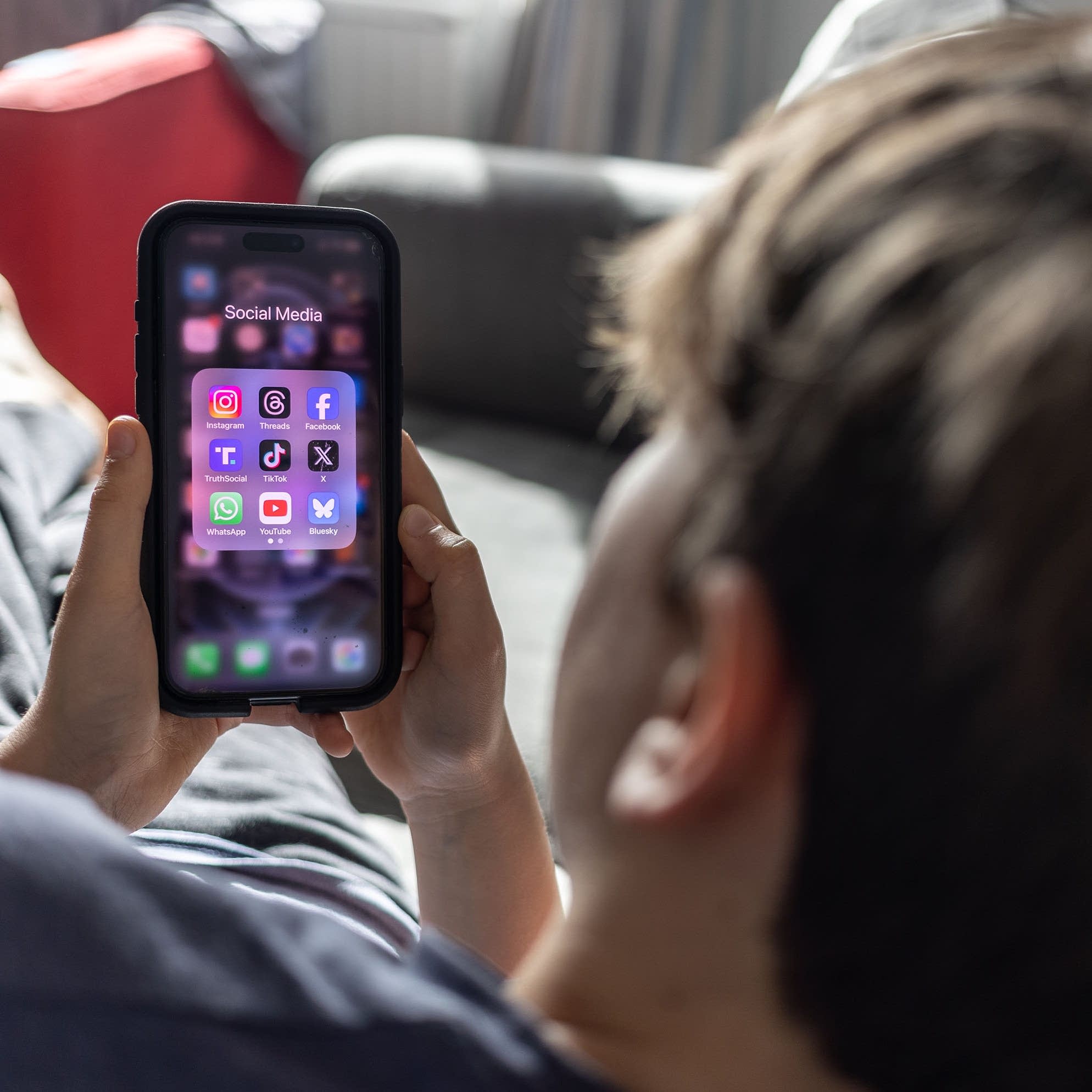
Australia are facing a YouTube ban live from the UK, this is the Marketplace Morning Report from the BBC World Service on Liana Burn. So Australia is expanding its second plan, its planned social media ban for children under 16 to include YouTube accounts. The platform was originally set to be exempt from the restrictions, but will now be Limited alongside TikTok, Instagram, Facebook x and Snapchat. From December it comes as the UK's media regulator says YouTube is now Britain's second most watched media service behind only the BBC. Report from Ofcom says YouTube was the most popular platform for children aged 4 to 15. The BBC's Katie Silver has more on the Australian government's decision.
- [01:56]
Katie Silver
This ban is due to come into force in December and it's part of a wider ban against many social media platforms. Previously, of course, YouTube had been exempted, but that decision has been reversed. That's despite the company threatening legal actions. I've heard from Australia's Communications Minister Annika Wells, who said that young people need to be protected from predatory algorithms and she said that we can't control the ocean, but we can police the sharks. The interesting thing about this law is that in of it is going to be down to the social media giants themselves. The bans are very, very hefty in the millions of dollars and so if they don't find ways of preventing that circumnavigation, they potentially face repercussions. So you know, if users can find ways around that, it's going to be on the social media giants then to potentially pay the bill. Now, one of the exemptions on this is YouTube Kids, which is of course a slightly different platform within YouTube and under 16s will still be able to use that. It does have tighter controls, although it must be said currently YouTube Kids, it doesn't distinguish between AI generated content and content that has been organically grown. And so there are a lot of questions as well about Whether or not YouTube kid moderation is adequate enough.
- [03:05]
Liana Burn
That was Katie Silver reporting. Now let's see the numbers. It's been a tough morning for some big European names. HSBC shares slipped after Europe's biggest bank reported a 26% drop in first half profits down to $15.8 billion. Novo Nordisk, the maker of Ozempic and Wegovy, saw its value plunge by more than $67 billion after warning growth will be slower than expected as rival weight loss drugs bite over in luxury cars. Porsche profits have collapsed 67% to $1.1 billion. And Adidas has warned higher prices could be on the way, saying that US tariffs could add $231 million to costs. Now a UN environmental expert has warned that Brazil's new law to fast track major infrastructure projects could lead to even more deforestation, as should Puente. Reanio says the legislation marks a major rollback of environmental protections threatening the Amazon rainforest and indigenous communities. Here's the BBC's Ione Wells.
- [04:08]
Ione Wells
It can sometimes take years for some of these big projects to be approved, but some in particular have raised concerns among some of the UN experts that I've been speaking to, in particular about the idea that for some smaller projects, developers would be able to essentially self declare the environmental impact. They worry this could mean that there wouldn't be sort of independent impact assessments of some big projects. They are also worried about a new measure in this bill that would allow the automatic renewal of some licenses if there hadn't been significant changes.
- [04:41]
Liana Burn
Ione Wells reporting South Africa's struggled with power cuts for more than 15 years. Wealthier households have been going off grid for ages, installing expensive solar systems and their own water supplies within their homes. Now companies are introducing pay as you go backup power systems which allow less affluent communities to do the same. Here's the BBC's Pomza Fleetlani.
- [05:06]
Pomza Fleetlani
We're in Krugerstock, west of Johannesburg. Power cuts have badly affected small businesses. Many of the shops in this area have shut down. I counted three on the drive into this township. We're here to meet with Julius Kwebiteng, who runs a small grocery shop.
- [05:25]
Julius Kwebiteng
It was affecting us directly. The Fridges need to run every day. If you don't have electricity, you can't even sell the frozen.
- [05:34]
Liana Burn
With stage six load shedding announced, South.
- [05:37]
Pomza Fleetlani
Africa's power crisis grew so severe that in 2023, President Cyril Ramaphosa appointed the country's first electricity minister to try and end the blackouts. And while some progress has been made, poor communities still face what Eskom now calls load reduction. It's essentially the same cuts with a different name. Julius Solar System is from Witility, a local startup offering pay as you go plans and solar systems built specifically for township businesses and also accessible to lower income households. Vincent Maposa, a former energy analyst, is one of the founders of this six year old business.
- [06:21]
Julius Kwebiteng
We had to look at the market across the different segments and start to create products that are fit for purpose and are affordable for that part of the market. Because part of our mission is to make sure that as many homeowners and small businesses have access to power.
- [06:34]
Pomza Fleetlani
Back in Julius shop, the fridge hums steadily. Now customers drop by for sweets, cold drinks and even to charge their phones when the power is out. In another part of town east of Johannesburg, we visit Benoni to meet Mark Moodley. He made the switch to solar not to save a business, but to save a life. His 81 year old mother, Sarjarini, relies on an oxygen machine to breathe.
- [07:01]
Julius Kwebiteng
What was happening is that we're having power cuts and my mum is on an oxygen concentrator and we couldn't do anything else because it was going off for sometimes six hours.
- [07:12]
Pomza Fleetlani
Last year, Sajarini spent three weeks in intensive care. Back then, doctors said she might not survive the year, but the steady power supply has given them more time together.
- [07:23]
Julius Kwebiteng
It's been a lifesaver. Even now with the solar, it adds.
- [07:27]
Pomza Fleetlani
Its value as South Africa's energy crisis drags on. In a country drenched with sunshine, people like Julius and Mark and many others like them who were left out of the solar boom are finding the more afford. Pay as you go has been about taking back control of their daily lives and their future.
- [07:50]
Liana Burn
Thanks for listening.
- [07:53]
Marketplace Host
Summer's here and it's time for your kids to have fun in the sun. But it's also a great time to nurture growing minds. Million Bazillion, a podcast from Marketplace, teaches your kids about something that impacts all of us money. From a fun explainer on tariffs, yes, it's possible to why some athletes make so much money. Million Bazillion tackles big questions with easy to understand understand answers. Listen to Million Bazillion all summer long, available wherever you get your podcasts.