← Marketplace Morning Report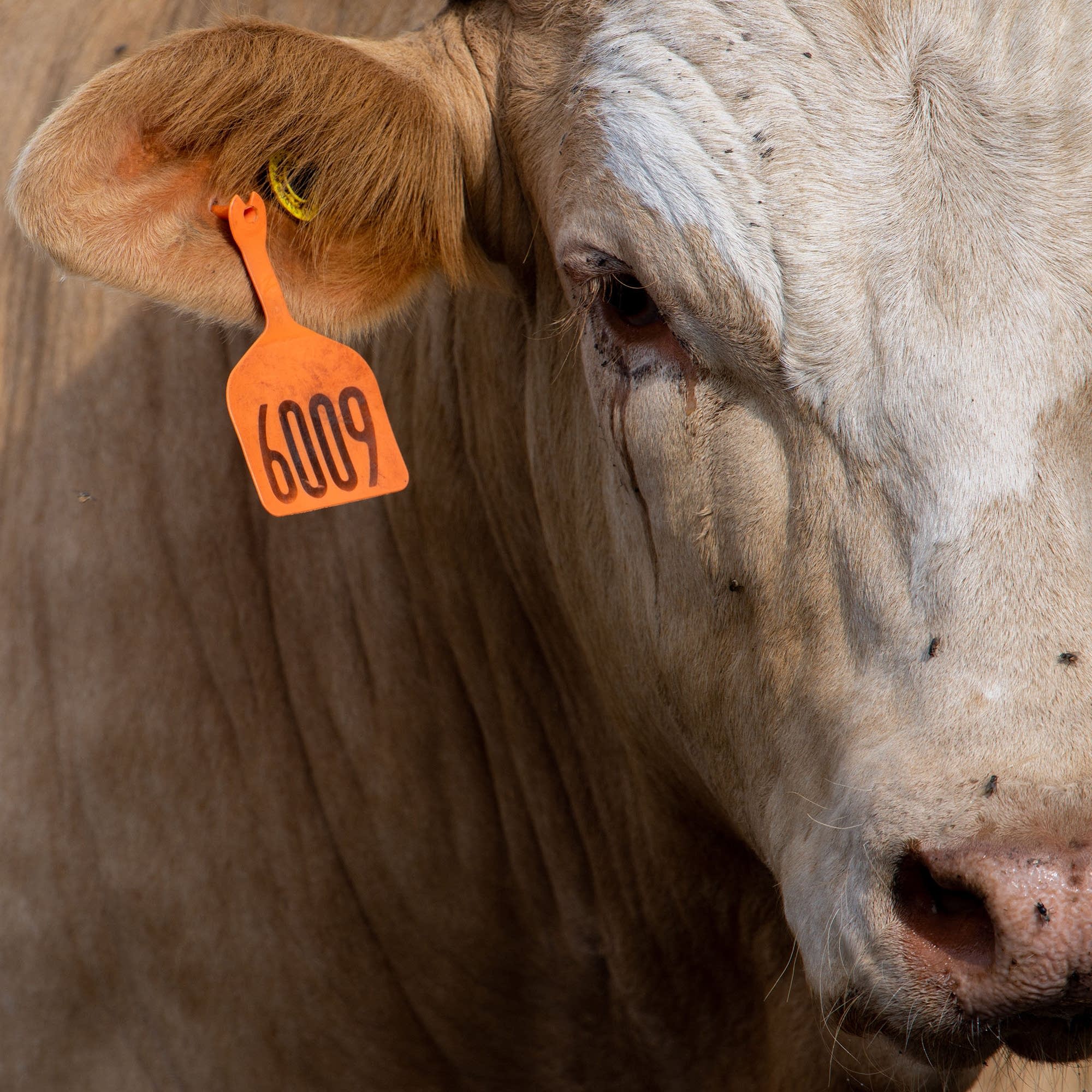
Loading summary
Transcript37 lines
- [00:00]
Dell PC Advertiser
Introducing your new Dell PC with the Intel Core Ultra processor. It helps you handle a lot, even when your holiday to do list gets to be a lot like organizing your holiday shopping and searching for great holiday deals and customer questions and customers requesting custom things. Plus planning the perfect holiday dinner for vegans, vegetarians, pescatarians and Uncle Mike's carnivore diet. Luckily you can get a PC with all day battery life to help you get it all done. That's the power of a Dell PC with Intel inside, backed by Dell's price match guarantee. Get yours today@dell.com holiday terms and conditions apply. See dell.com for details.
- [00:30]
Odoo Advertiser
This podcast is supported by Odoo. Some say Odoo business management software is like fertilizer for businesses because the simple, efficient software promotes growth. Others say Odoo is like a magic beanstalk because it scales with you and is magically affordable. And some describe Odoo's programs for manufacturing, accounting and more as building blocks for creating a custom software suite. So Odoo is fertilizer Magic beanstalk building blocks for business Odoo exactly what businesses need. Sign up@odoo.com that's o d o o.com.
- [01:02]
David Brancaccio
Meat plus dairy equals cattle equals greenhouse gas. I'm David Brancaccio in Los Angeles. First in four hours we'll pop some popcorn and wait for the bulletin revealing what central bankers are going to do with interest rates. Economist David Kelly is chief global strategist at JP Morgan Funds and he joins us now for more. Good morning.
- [01:22]
David Kelly
Good morning.
- [01:23]
David Brancaccio
Are we fixing for maybe a little cut in interest rates? Is that what you're thinking?
- [01:27]
David Kelly
Yeah, I think that's very likely. One of the problems the Federal Reserve has is that they don't have any government data like the rest of us. So they are kind of dancing in the dark here. But I think they have signaled they're going to cut rates by 1/4 of a percent. I think they'll go ahead and do that.
- [01:39]
David Brancaccio
I mean, they're not flying completely blind. It's a little like a pilot in bad weather. You may not be able to see out because of the clouds, but they have some instruments from the private sector.
- [01:49]
David Kelly
That's right. They've got a fair amount of private sector data and they've got their own models and so they know more or less what's going to happen in terms of tariffs feeding through to some higher inflation. I think they can see the effect of the government shut down a little bit. They've got, of course, all these reports from the regional Federal Reserves, the beige book, they call it, talking about local conditions. So I think they realize the economy is soft, it's not really in trouble here, not really threatened by recession, but inflation is not skyrocketing here and they're under a lot of pressure to cut rates. And I think they will cut rates.
- [02:20]
David Brancaccio
Yeah. I mean, there are signs of softness. There are reports that Amazon has some significant layoffs. The Wall Street Journal was first to report that the parcel service, large layoffs, management and operations people. You don't have to wait for the official monthly unemployment report to see that.
- [02:39]
David Kelly
What we have here is a sort of K shaped economy where we can see booming sectors. The stock market is absolutely booming and we're seeing huge spending on AI data centers, chips, all that is doing very well. But at the same time, average Americans, lower middle income consumers are getting squeezed by higher tariffs, by, by slower job growth, by the government shutdown. And I think a lot of what you're seeing in the economic data really reflects that.
- [03:06]
David Brancaccio
I'm looking at a capital letter K here, the K shaped economy. Right. One part of it shoots skyward, one of them droops down and you have both that at once. I see the metaphor. David Kelly, chief global strategist at JP Morgan Funds always good to catch up anytime. Next week, the Supreme Court hears arguments on whether a president can call something an emergency and use that to launch tariffs without working with Congress. He Yesterday, The Senate, with five Republicans joining Democrats, voted 52 to 48 to try to block President Trump's 50% tariff on imports from Brazil. That's a country that buys more from the US Than we buy from them. But the US President objects to the way a friend, a former Brazilian president, was convicted of attempting a coup. The Senate vote is symbolic since the House will not take this up.
- [04:12]
LHH Advertiser
Recruitment in finance, it can feel transactional, driven by numbers, not by nuance. Lacking the personal touch that fuels performance, LHH believes it should be more by connecting people to opportunity, not just skills to roles. Beautiful things happen in finance. A leader drives growth. A team finds clarity in complexity. The people you hire become the people you rely on making 90,000 hours in a career well invested. Recruitment development, career transition. Lhh a beautiful working world for the world of finance. Get the recruitment solutions your business needs to move forward. Start today@lhh.com Beautiful.
- [05:09]
The Economist Insider Promoter
The world is changing faster than ever now with the Economist Insider, a new premium video offering. We're giving you unprecedented access to the debates shaping our world.
- [05:18]
David Brancaccio
I have sat around that table at.
- [05:20]
Paolo de Meofio
NATO There is an incoming missile attack.
- [05:22]
Dell PC Advertiser
Now could you answer the question? I'm sorry, we've got very little time left.
- [05:25]
The Economist Insider Promoter
With a few surprises along the I.
- [05:27]
Dell PC Advertiser
Can'T promise we'll have a cocktail every time, but we'll try.
- [05:30]
The Economist Insider Promoter
So don't just be an Economist reader. Get on the inside track with the Economist Insider. Go to economist.com to join the conversation.
- [05:40]
David Brancaccio
Researchers figure livestock herds contribute between 12 and 20% of the world's greenhouse gas emissions. That's mostly methane from the digestive process. In plain English, kids in the backseat. Climate altering gases come out of the tushies of cows, but it's mostly the burps. Amy Scott, host of our climate podcast How We Survive, has been looking into solutions.
- [06:02]
Amy Scott
It's feeding time for the steers in a research barn at the University of California, Davis. Using a cement mixer, an intern is blending a special additive into some of the cattle feed. It's made from seaweed. Postdoctoral fellow Paolo de Meofio runs the day to day operations here.
- [06:23]
Paolo de Meofio
So we have three groups in the trial.
- [06:27]
Amy Scott
One is the control group that receives no intervention. Another group gets a seaweed additive from their second day of life until they're three months old. And the third gets the additive from two months old to about 18 months when they go to slaughter.
- [06:42]
Paolo de Meofio
We hope these animals, over their life, they produce less methane compared with the control group.
- [06:50]
Amy Scott
How will they produce less methane? Seaweed has a compound called bromiform that blocks the production of methane in the cattle's rumen, the first of their four stomach chambers. To see how the treatment is working, Demeofio lures the animals to a machine that deposits tasty alfalfa pellets. Right now, a steer named Sheepy, part of the long term treatment group, has his head in the machine. While he enjoys his snack, sensors measure his emissions. So this is maybe indelicate, but like when they're in there, they're belching. And that's what it's measuring.
- [07:32]
Paolo de Meofio
Yeah, exactly. It's important to highlight, like 95% of the emission come from the mouth. The noise trail. So it's the expiration and the belching from the room.
- [07:43]
Amy Scott
As Shipy eats, an app on Demeofio's phone shows a small spike in methane.
- [07:49]
Paolo de Meofio
So this is probably his first belch the machine could capture. So what we see spiking here, previous.
- [07:58]
Amy Scott
Research of feedlot cattle found that adding seaweed to the feed reduced methane emissions by as much as 90%. But Professor Ermias Cabrab, who's leading the UC Davis study says cattle spend most of their lives grazing before they get to the feedlot. If he can prove that early intervention has long lasting effects, that could be a game changer. And so far the results are promising. The five months after they stopped receiving the treatment, the steers in the short term group still had a 20% reduction in methane.
- [08:32]
David Brancaccio
I'm really hoping that this will continue.
- [08:34]
Paolo de Meofio
Until they are harvested, but we'll have.
- [08:38]
David Brancaccio
To do the work and find out.
- [08:39]
Amy Scott
He's also working with researchers at UC Berkeley to use gene editing to modify cattle's microbiome to produce the same effect. Critics of the effort say even if it works, it doesn't address the other climate impacts of livestock, from deforestation for grazing to petroleum based fertilizers and transportation. But Kebrab says if we want cleaner beef, reducing methane has to be part of the equation. I'm Amy Scott for Marketplace.
- [09:12]
David Brancaccio
For more on how we eat alters the planet, you can listen to the fresh season of our podcast, How We Survive. It's free from the podcast Apps. This is the Marketplace Morning Report from APM American Public Media.
- [09:25]
Lulu Miller
Want to see a wilder world than the one we live in? A world with more beauty, more kindness, and more unbelievable superpowers?
- [09:32]
Odoo Advertiser
Guess what?
- [09:33]
Lulu Miller
It's right here on Planet Earth. And over on our podcast, Terrestrials. Each episode we tell you stories about the strangeness waiting right here on Earth, hosted by me, Lulu Miller from Radiolab, along with a whole crew of amazing storytellers, animals and our song bud, Alan. Get curious with terrestrials on the Radiolab for Kids Podcast podcast feed. Listen wherever you get your podcast.