← MarTech Podcast ™ // Marketing + Technology = Business Growth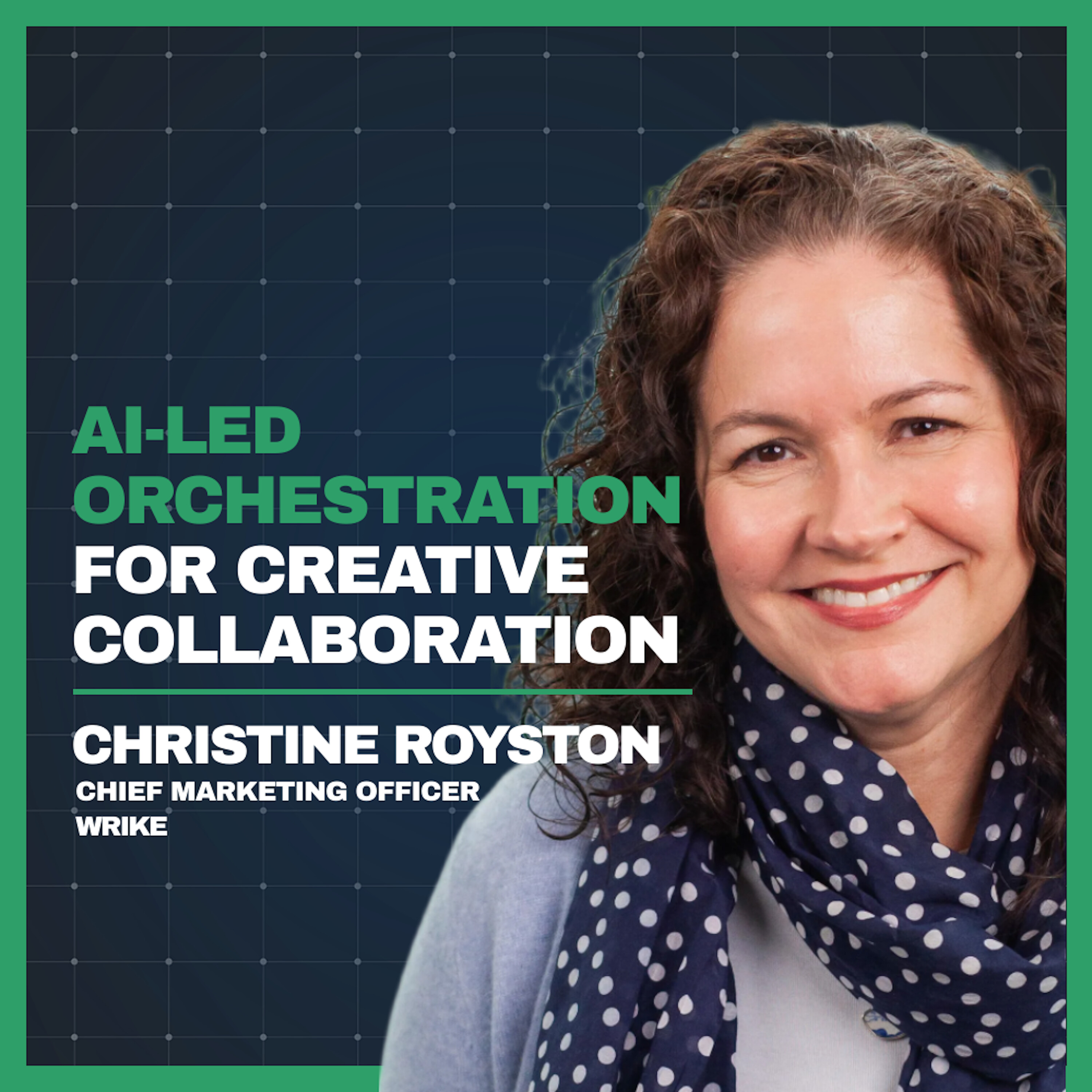
MarTech Podcast ™ // Marketing + Technology = Business Growth
Using AI to build more creative workflows
00:39:20
Loading summary
Transcript65 lines
- [00:00]
A
The Martech Podcast is a proud member of the I Hear Everything Podcast Network. Looking to launch or scale your podcast, I Hear Everything delivers podcast production, growth and monetization solutions that transform your words into profit. Ready to give your brand a voice? Then visit iheareverything.com.
- [00:26]
B
From advertising to software as a service to data across all of our programs and clients, we've seen a 55 to 65% open rate. Getting brands authentically integrated into content performs better than TV advertising. Typical lifespan of an article is about 24 to 36 hours. We're reaching out to the right person with the right message and a clear call to action. Then it's just a matter of timing.
- [00:54]
A
Welcome to the Martech Podcast, a member of the I Hear Everything Podcast Network. In this podcast, you'll hear the stories of world class marketers that you use technology to drive business results and achieve career success. Here's a host of the Martech podcast. Benjamin Shapiro.
- [01:16]
B
73%. 73% of marketing teams now use generative AI. That's 116% jump in adoption in one year. In 2025, most marketers are still treating AI like a vending machine. You put a prompt in, you get a headline or a blog post that comes out the bottom they're automating tasks without rethinking workflows. They're building AI onto old systems instead of building new ones. But the question isn't whether you can write your next campaign brief, it's whether you can design workflows that amplify your team's best ideas. So how do you move from an AI assisted task to AI orchestrated creativity? I'm Benjamin Shapiro and joining me today is Christian Royston, the chief marketing officer at Wrike, the intelligent work management platform trusted by over 20,000 companies. And today Christine's going to reveal how teams are using AI to transform creative collaboration, keeping human creativity at the center while automating everything else. Christine, welcome to the Martech Podcast.
- [02:19]
C
Hello.
- [02:20]
B
Thanks for joining me. Happy 2026. Hey, this is my first recording of the year. Your year starting off okay so far it is, yes.
- [02:29]
C
It's been a very fast start, jumping right into January.
- [02:33]
B
Wonderful. Well, last year was the shift from just having AI into agentic AI. And now we're in this third year of artificial intelligence being a reality. We have agents, we have browsers, we have all sorts of AI enabled tooling. How are you seeing marketing teams shift from one off campaign creation to always on orchestration when it comes to their workflows?
- [03:01]
C
Sure, sure. So I Think, you know, if, if we look at the traditional quarterly planning process or even shorter timeframes, I think those are, are going away or being reduced because there's so much change in the market. We've got to focus on growth. We have to react to what's happening. Uh, and so we have to stay agile. And you know, while you need a, a plan on what you're going to do, you can't wait until a quarter ends to act on great ideas or react to something. Um, so, you know, if I think about the planning process and you know what I'm talking to my peers about, what we're talking about in Inside Reich, it's really about how do we balance, you know, these, these planned themes. We know that this is our target audience. We know this is how our company can help them solve their problems. What are themes we believe will resonate. But we've got to balance that with being reactive to these hot topics that are popping up in the market. And so that's where having that always on orchestration is key. So you're not starting, stopping, starting, stopping, but you just have this ongoing workflow that then you can jump in and adjust and say, new topic. This is a hot priority that's showing up in the news. We have to have a position on it, a point of view. And really when I think about, you know, the, the planning process, I always tell my teams, hold 15 to 20% of your time for those hot topics. Do not plan to 100% because something is always going to come up in the business environment. A competitor does something you need to, to react to, a new trend pops up. And so you've got to have that time and space so that you haven't started something that you have to stop and then jump into another initiative. So I think that that's kind of what we're, we're looking at is this just, you know, it's, it's ongoing. Not one quarter is done. Now we move into the next quarter.
- [04:56]
B
We used to be very rigid, right? Campaign thinking. This quarter we're talking about X, Y and Z. And everything needs to be in this little box. And here's the messaging and the content stack and everything was prescribed and was all pushed, right. New world. Now you're saying, all right, preserve a little time. 10 to. I think you said 15% of your time to be reactive. But there's a layer here of that notion of personalization and sort of the beauty of AI is we can create custom messaging on a one to one basis. How do you think about having these always on orchestrations that are personalized while also sort of maintaining the direction you want to, let's say, navigate your themes or get something across, have a campaign, have a central theme towards what you're saying.
- [05:52]
C
Right, right. Yeah, I think. Well, number one, I'm super excited by the opportunity with personalization. I think we've all received the ill targeted email. We get something, we say why would I spend time reading this? And so I think the opportunity is, you know, how do we make sure we're giving people something of value? And with personalization I think you have to look at what is that core theme, what's that, that base theme that you want to talk about and make sure it's, it is relevant to your ideal customer profile, the offering that you have for them, but then allow the personalization elements. Maybe it is, you've got a broad, a broad audience you can go after and there are industry specific personalizations that you need there department specific personalizations. You have data that you know, this particular individual has already engaged with 1, 2, 3 things. Clearly this is a theme that they're focused on. How can you potentially give them something that's more unique? I think another opportunity is most, most of us are, are probably looking at a couple different campaigns and themes that we are promoting out there. If we're looking and we're saying, you know, this individual is not engaging, how do we shift them over to a, a theme that is going to resonate more, that they're going to engage with more? So I think it's, it's also being able to take a look at the performance and the engagement of individuals and say this is not working, we're going to lose them, they're going to unsubscribe or we invited all these people and no one registered. How do you kind of incorporate all that data into your personalization as well and start to refine the different Personas that you go after as well as the individuals and what they need.
- [07:35]
B
Walk me through the orchestration flow at Wrike. How do you think about going from this sort of campaign style structure and building out the automations that allow you to have that level of personalization.
- [07:48]
C
Sure, sure. So I think the, the first key thing is to think about, you know, what are those workflows, those standard workflows that you can build out? You know, example would be running a webinar. The steps in running a webinar are typically the same. Every time blog post, they're typically the same. You know, you are, you're identifying a topic, you're finding an author or finding speakers, you're finding a host, you're creating a deck, you're having dry runs. So you're creating that orchestration that, that workflow that is going to be pretty consistent in terms of processes. But the real difference is as you're thinking about the themes, the audiences, the actual topic, that's where the creativity, the brainstorming, the focus of, all right, what are we going to focus on? And then you drop it in the workflow that you have built out and you don't have to think about, well, what's the next step? Or who owns the next step. So I look at where we can create the workflows and that orchestration that is consistent in terms of process. And then what you're actually dropping into the process may be a little bit different every time. And that's where I think also the personalization piece where you can start to say, all right, you know, we're, we're targeting this audience. Let's give this, this particular Persona, this, this version of the, the, the email or this person will receive the invite to this webinar, but not this webinar. And so I really look at it that as that balance of what can you standardize in terms of your workflows to just give your teams more time to actually execute and ideate?
- [09:34]
B
I spent a lot of time last year flushing out workflows for what we call podcast os, the production infrastructure we use to produce the shows and any of our clients shows. And what you said resonates with me in the sense of the workflows are always the same. You know, in my world in podcasting, right, it's the guest selection, process, evaluation. Right. Speaker research, topic research. We do a planning meeting, we do the interview, edit, write, copy and publish. But the context is always a little different. Right. That context engineering piece is very important to make sure that you have not only an understanding of what the boundaries are or how you want to write, but, but also what makes each individual piece of content unique. How do you think about context engineering when you're building these workflows that give your team, again, that sense of structure and AI, helping with the automation, but also making sure that you're producing something that isn't either mundane, boring, uncreative. Tell me about context.
- [10:49]
C
Yes. Yeah, I think the, the context piece is, is important and not just for, for the people on my team, but for, for the ways that we use AI so that we're, we are providing all the right Context for AI to be able to help us along the way. And so I think being able to, to make sure that teams have access to the ICP care abouts, they've got access to research, they're hearing directly from customers, maybe they're not on the phone, but they're seeing this summary of interviews or conversations with customers. So they're understanding what are the pain points they care about, they know what this person is about. I think the other piece of it is also looking at the objectives. I mean, what are you trying to do? It is not always necessarily I want a lead to send to the sales team. It could be, I'm trying to, to create more awareness about our brand. And so this campaign is not going to be driving people to register for a webinar. Maybe it's ungated and we just want the thought leadership to get out there. So I think having the context of what's the objective, what are we trying to do here as well as who we're trying to reach and what they care about is key because even as we're looking at how much can we, how much can we automate, how can, how much can we build out and have really structured, you've got to have those opportunities to say, you know, what is this the right thing for that audience or is that the right thing for this objective? Maybe we need a different workflow built or we need a little bit more flexibility, a couple of different branches in this workflow based on what we're trying to do.
- [12:32]
B
2025 was the year of the agentic browser of AI agents. And I feel like this year, or I guess last year, we started to have more capabilities. And I think the realization now is that just because you can does not mean you should. Right. Just because you can have an agent do a lot of these things doesn't mean that it is actually creating better context, better information, better, more value. When you're working with your team, how are you thinking about using all of the agentic processes, workflows, automations, while also still keeping an eye on a high level of quality to make sure that the content you're pushing out there is as good as what you would have created had it just been a person doing it on their own?
- [13:21]
C
Sure. So, you know, we are, we are definitely keeping humans in the loop. We are looking at where the routine tasks, the, the manual tasks, the things that are the same every time that we can use AI to help us automate, we are looking also at where can AI be a partner, where can it help Us in terms of brainstorming, where can it help us in terms of coming up with those first drafts, the feedback loops even. But ultimately, if you think about human judgment, taste, really looking at how an audience may react to something, we still want the humans to be part of that process, having their eye on the brand tone, the creativity. And I think especially as you're building out new workflows and new ways to use AI, you do need that human oversight initially to say, is this actually operating the way I thought AI would operate so that you can help give it the context again and maybe say, hey, this is not what we were expecting. We need you to do another round and here are the things that are off. So I think especially as you're thinking about building out new workflows, incorporating AI in different ways, you've got to have the, the humans there to guide it and make sure the output is what you were hoping it would be.
- [14:45]
B
Tell me a little bit about the orchestration landscape. Reich Monday ClickUp. Nada. It's. There's a whole bunch of different tools, definitely AI enabled, you know, competitors, let's call them in the space. How do you segment the landscape? Where does Reich live in it? Tell me about what your world.
- [15:06]
C
Sure, sure. So I think if you look at the traditional collaborative work management tools, there are a lot out there. And if you look at, you know, there are tools that are meant for more simple workflows, they are meant for more out of the box. If you think about wrike, you know, we are built for complex workflows. We're built for, for companies, enterprise companies that need to scale, we can help any company, any industry, any size. But if you think about, you know, our sweet spot, it is really where you need to scale. You need to make sure you have the domain expertise. And there are a couple of key areas where, you know, we've said we, we can really help certain types of workflows and we have experts in, in the company that can help you really understand. Okay, you think you need a workflow that looks like this. I've seen this workflow, you know, at 10 different companies in the past year and this is how they're thinking about it. Also the integration layer is key. You know, while, while we do all of our work and wrike it starts and ends there, we certainly integrate with a lot of other enterprise class tools and so being able to integrate into those systems is key. So I do think you have to kind of look at what are you trying to do with the tool, where is it that you know, you need to make sure you've got the expertise from, from the vendor, from the partner that you're working with and looking at where is it that it is something where yes, you may be able to build some elements yourself, but really, you know, where can you lean on an expert, somebody who has invested a lot of time, effort and expertise into building a tool that is, is something that's going to help you focus on other things in your business.
- [16:56]
B
I think of companies like yours having the hardest job as marketers. And you know, normally it's we're a CRM for mid market health care companies, right? We are a email service provider for dentists. I don't know why I'm going into health care. But you can be the product management, which can be basically anything. It could be a CRM, it could be a cms, it could be any of the element ops like any TLA you could imagine. And your target market can be anybody. How do you do that? How do you not boil the ocean being like, oh well, we can actually go after down market, we can go after enterprise, we can go after verticals like your target market because the product flexibility can be anybody. Where do you start?
- [17:54]
C
So we, you know, Reich has, has been around for, for many years and so we have this history of where have we been most successful, where do we hear from customers, we're providing the most value. And so while, you know, from a marketer's perspective, you want to have a broad corporate message to say here's the value we can provide, you do have to get specific and talk about the differentiators. And so as we talk about areas, you know, where we have strength, we know there are certain industries where we have strength. Manufacturing companies, professional services companies, we know that there are departments or workflows where we have strengths. Marketing is, is one of those key places being able to select and unify the company and the marketing team and all the programs that we're running to say, you know, we need to make sure we're going deep in these areas because it's where we think we have the right to win. We've got the biggest chance to, to succeed. While also balancing the fact that if you come to our site and you want to buy B Reich, we want to make sure you feel like, you know, you can find what you need. You get a tool that, that meets your needs. So it is, it's always an interesting balance. And of course, you know, we, we all have finite resources. We have to pay, put that next dollar or that next hour to the place where we think is going to drive the best ROI for the company.
- [19:14]
B
Yeah. The classic marketing advice is niche down right, come up with a segment. But in reality, your tool is so flexible that it really can be applied not to every industry, but to every industry and multiple different job functions in the industry. It blows my mind. Let's talk more about actually getting into workflows and using the tools. As a marketing leader, how much do you think about building workflows as opposed to just getting the work done?
- [19:47]
C
So I'm always looking at how do we scale and I think that's what marketing is all about. It is how do you scale and be able to reach more people than you could if you were trying to reach them one to one. And so I, if I think about the results I need to deliver, the outcomes I need to deliver, I have to make sure I've got the right combination of people, process and tools in place. And so creating that orchestration upfront and building those workflows, the ones that are common, they're consistent. We know we do them all the time. I think that is the best investment of time that we can have. And certainly it's something that I think about in terms of just optimizing the resourcing across the team. My leaders think about is they're looking at, hey, I own this function or I own this program. What is it that I need to build out new or optimize because the workflow isn't serving me anymore. So I think the build once so you can execute multiple times later is, is the best investment of time because really you want to put your, your hat on. Not how we're going to do this because you've already built the workflows, but it's what we're going to do. We're looking at data, we're looking at feedback from customers, we're looking at market trends. And so we want to focus more on the. The. The what and getting the work done versus well, how are we going to do it this time or this month?
- [21:14]
B
I really struggle with this. There is the idea as a marketing leader that I can go build a workflow. I can use Reich, I can, you know, use my GPT and N8N and all these different tools and create these processes and agents and get a bunch of stuff done and automate it to ad nauseam at scale. Or I could tell my team that they should go do the same thing or I could just do something one off and make sure that it gets done and there's this constant rebalancing in my head right now of what can I build that is repeatable? What should I direct somebody else to go try to figure out as opposed to this email needs to be sent to this person. Talk to me about the decision making criteria you have of I should do it, my team should do it, or I should build a system.
- [22:07]
C
And when you say I should do it or my team should do it, you mean the execution. So I think that when it comes to the strategy, the plan of what we're going to do, that's where I look at bringing my leadership team together to say, we know we've got these objectives. This is the company strategy. What do we think this should be? And then depending on who owns what, having them kind of walk away with that and say, all right, how does this impact my team? How does this impact the project that I'm working on? I think the, the, you know, the systems piece is how we scale. We're always going to be asked to do more with the same or less.
- [22:52]
B
Welcome to being a marketer.
- [22:54]
C
And then the, the growth targets continue to go up. And so part of being a marketer is figuring out how do you scale, how do you create the system that works for you now, don't spend a month on it. Don't, you know, say, that's what I'm doing in Q1 is building systems and then I'll execute in Q2. You, you do have to balance between them and figure out what is it that I can build out that's going to help me execute faster. While saying, we've got a, you know, we've got a couple workflows that are working and I just need to make sure I'm driving pipeline. I need to make sure that I'm giving the sales teams the tools that they need. So I think it's this constant evolution. It's not create a system, you're done and now you're just executing. There's this parallel track that you're always running of, you know, all right, new, new process needs to be created, new workflow, we don't have it yet. I'm going to take X percent of my time and think about that while making sure we're executing on the existing work.
- [23:48]
B
I want you to play this clip for your CEO. Christine. I think you have the hardest job in marketing of anyone. You've got a product that is applicable to anyone in any industry. And we are in a time where marketers have to decide between not just should I be Focused on demand generation or brand building. Right? Not just the right now versus the future, but we also have to think about, should I be building a system? Should I be automating a system? Should I be sending a campaign? Should I be having my team do this? The world has gotten so incredibly complex, and you are in this seat where you can go wide, you can go high, you can go back, you can go forward. It is really like flying an airplane from what I could see with your role. Are you okay?
- [24:48]
C
Yes, I am doing fine, but thank you for asking. I think one of the things that I love about being a CMO is I can take off my marketing hat and sit down with the executive leadership team and talk about what do we think is the right thing for the business. So I'm part of the discussions when we say, yes, we have this huge, huge TAM and we need to focus. And I'm part of those discussions to say, all right, where do we focus? What industries, what types of accounts, what. What go to market motions. And then I can take that back. Once we were all aligned and the CEO is in agreement, you know, I can take that back to the team and say, yes, we could do anything. But I am telling you, this is where we should focus. And the CRO is going to say the same thing, and our chief customer officer and our head of ops and our CFO is going to say the same thing. So let's. Let's double down and focus in these areas. Now, the big thing we always run into is, you know, halfway through the year, someone says, but there's this bright, shiny object, and can we just do that also?
- [25:50]
B
Yeah.
- [25:51]
C
And that's where I always tell the teams, there is. There. There is a point where you say, there is no. Also, I need to sleep. What's the trade off? Something may have become more important, but let's all call it out and say, that means we can't do the other thing that we planned on because we're going to have burnout. We're going to have people, you know, start to. Start to leave or start to. To just not be as motivated because they have too much on their plate.
- [26:15]
B
I either greatly envy your resolve or your poker face. I'm not sure which one it is.
- [26:22]
C
Don't get me wrong. It's. It's a challenge. But I love a challenge. And I think, you know, the alignment across the executive team is key in any role in any company, but especially in this case, where you do have a lot of options to focus on and kind of putting all our hands together is important.
- [26:41]
B
And look, I think my takeaway, you know, we're talking about how to balance the use of new technology, artificial intelligence and its application in marketing, and how to preserve creativity. And fundamentally, it's the same problem that I think that I would have in your role. It, there is so much opportunity, there is so much blue ocean surrounding us. You can go any direction. And so picking a course and, and, and refining and deciding on a strategy and using judgment and just going, sometimes having an answer is the best answer. And again, I don't know how I would boil the ocean and pick an industry or an area of focus in your chair. But again, like I said, you're, you've got a hard job and I, I, I envy your resolve. All right, with that said, Christine, I want to move on to our lightning round where I'm going to ask you a couple of Martech related questions around AI and creative collaboration. Are you ready?
- [27:37]
C
I am ready, yes.
- [27:39]
B
All right, what's one workflow that your team built that completely eliminated a painful manual handoff?
- [27:46]
C
Ooh, I would have to say, I think it is probably approval routing. So if you think about roles and responsibilities, many people want to say, everybody wants to kind of approve something, review something, provide their input. And so what we have done is make sure that we are being really clear for certain types of work, certain types of asset, who is the approver, when does the approval go to that person or request for input, how much time do they have to turn it around? And that has, I think, taken, taken a lot of the manual. All right, well, who should I send this to for review? And I need it within two days. But this person either doesn't know it or they're on vacation. And so setting up that routing so that you're able to say, all right, it's ready to go to the next step and it gets routed and people can review it within, you know, all, everything that we, we are orchestrating ends up in Wrike. People can do it in Wrike, they can approve it in Wrike. They can add commentary on, on visuals if they don't approve it and they want a little bit more, a little bit more work done. So I think that piece, because roles and responsibilities and clarity of, of who owns what I think is one of those key pieces to a successful system so that you're not spending time circling around or getting way too much input that's conflicting, so you can't actually get to the end result.
- [29:15]
B
I just want one of those big staples, buttons. It Used to be the. I forgot the get it done button or something like that. I just want a no button that you can smash. So whenever anybody comes with some sort of an approval or request for me to do something else, it's just one AI automated button that just says no and then slams the door on everybody. But maybe that's something we could build later. Okay, next question. If you could keep only three tools in your marketing tech stack tomorrow, which ones would survive the cut?
- [29:45]
C
All right, do you want names like.
- [29:48]
B
You'Re gonna say Reich as number one. That it's inevitable.
- [29:52]
C
Yeah.
- [29:52]
B
But let's, let's omit Reich. And that is your project marketing tool. Give me three tools that you need to keep.
- [29:58]
C
Sure, sure. Number one. Well, no, I won't. I won't rank them in order, but top three, our AI SDR tool for, for our website and our platform. So we, we use qualified. It really helps us to optimize not only the experience for people who are visiting the site, but our, our human resources. You know, we, we want to get people the information they need to decide if they want to talk to us so that our humans can have the more complex conversations, the things that are going to be more nuanced. So I'd say that is definitely one that has, has helped us out quite a bit. I'd say also, you know, just with the impact that we're all seeing on organic search, a platform or a tool that gives us insights in terms, in terms of generative engine optimization or, or, you know, AI engine optimization, whatever acronym you're geo.
- [30:55]
B
It's all SEO to me.
- [30:56]
C
I saw a new one earlier this year that was a combination of all them, so llemio. And so using a tool that is giving us the insights into those recommendations we use. Profound. I know there are many out there because we need to sort of see where are we showing up in these engines. Where is it that we may not have traditionally put content invested that now we know communities like Reddit are more and more important? How do we make sure we understand where we need to be, where our brand needs to be? So that is definitely one that has been helpful for us as we see this transition and it's just going to continue where we see more and more traffic going to search in those LLM LLM engines. Llmio and then I think the last one would probably be our webinar platform. So we transitioned to Goldcast. Uh, it's been a game changer not only for the team that actually runs the webinars, it's it has helped them in terms of ease of use, quality of output, but it gives us this ability to slice and dice and really maximize the content. And I feel like video is, is definitely something we're all seeing, is driving a lot of engagement with, with digital. People want shorter, snappier pieces of information. You are, you are probably seeing this.
- [32:21]
B
Hence we're doing a lightning round as we speak.
- [32:23]
C
Exactly. Exactly. So I just, I think that that's one that has given us capabilities both from an execution as well as an output perspective.
- [32:31]
B
Yeah, you mentioned your AEO and Profound, which they were a guest on our SEO podcast, the Voices of Search. I'm glad to hear it's a useful tool. One thing that I heard recently or saw, it was a LinkedIn post like the last day or two that ChatGPT, like citations from Wikipedia and Reddit have gone down like 50% in the last week.
- [32:58]
C
Oh, wow.
- [32:59]
B
So be careful where you put your content. It might be changing. Yeah.
- [33:02]
C
Yes, Remain flexible.
- [33:04]
B
I know, I know. And we had Sarah from Qualified on the Martech podcast as well. Always good to hear a case study from one of our guests. All right, let's move on. What's the biggest mistake you see marketing leaders make when they first try to build orchestration workflows?
- [33:21]
C
So this goes back to our discussion on focus. I think you, you have to decide where, where are you going to focus first when you're building out workflows, you have to prioritize. So, you know, looking at where, where is the area that you, you know, there's, that is ripe for, for automation, it's ripe for streamlining. It is, you know, a lot of resources going into it so that you can show some learnings, show some momentum. But you do need a roadmap. You need to look at, you know, what's that, that priority based on the expected impact of, of creating an automated workflow as well as the time to execution. Because some workflows may take longer to build depending on integrations, number of steps involved. So I do think it's, it's the focus. And as we mentioned earlier too, you can't just spend your time building workflows and not executing anything. So that focus lets you build while you're also continuing to execute on, on the other side.
- [34:19]
B
Yeah, I have some counterintuitive advice. You need to add more steps into your workflow, and it's not that you need to make your workflows more complex. In my experience, building orchestration and workflows, the smaller and more concrete you can make each individual step the higher percentage of success. So instead of saying, and I'll use an example from creating a podcast, write an interview script for Christine. It's not write an interview step for it's not write an interview script for Christine. It is conduct the research of who Christine is. Take that research and then look at what the topics that she talks about in public. Then, you know, analyze the audience. Now that you have an understanding of who Christine is, what she likes to talk about, and what the audience is, use that information to write an interview script for Christine. And the more you can break up the sort of steps and logic, the more successful your workflows become.
- [35:20]
C
Yeah. Yeah. You know, actually, I was just talking to one of my leaders the other day, and we were, we were talking about, okay, well, everyone who, who's going to do the, to own this, this type of project, they need to do this as the first step. And she said, do you think everybody actually knows what you mean when you say, do you know, do XYZ process? And I thought, well, that's a good, that's a good point. I know exactly what I mean. But five different people are probably going to take that in a different way unless we specifically define what is included within that first kickoff caller or, you know, what this first piece of the project looks like.
- [35:56]
B
Yeah. And, you know, I think everybody has a different way to skin the cat here. Right. You know, everybody builds workflows, and it's sort of the mind map. Everybody thinks a little bit differently. So when people get together to create their workflows, they're going to be a little different. There's a lot of creativity built into the process. There is no real right one way. Just the same way, there's no right way to create a prompt.
- [36:18]
A
Right.
- [36:19]
B
You can, you can word it however you want. I think understanding what you're trying to accomplish and defining it as well as you can and then understanding what the outputs are and being iterative is probably the right answer.
- [36:30]
C
Yeah.
- [36:31]
B
All right, last question for you. You moved from Salesforce to Dropbox to Wrike. What was the one marketing principle that stayed consistent across every company.
- [36:43]
C
Putting the customers first? I think if you are thinking about what's the right thing for the customer, it's always going to point you in the right direction. Yes. You might have, you know, different parameters around that. You might have different limitations in terms of, well, how much can you do for the customer or how much can we invest in this? But I think using that as your guiding light is, is the way you think about everything is not just marketing. I think it's, you know, what you're building, you know, how you're, how you're thinking about the value that you provide them.
- [37:13]
B
You know, at the end of every one of these podcasts in the eight, almost nine years I've been publishing the Martech podcast, I've always said my advice is to focus on keeping your customers, customers happy. Which if you stick around after I read the outro, you'll hear one more time today. But it's true, right? If you lose focus on who your customer is, if you're building for the sake of building, if you're optimizing for the sake of revenue, yeah, it's all important. But we're building for the customers and that's what builds the lasting relationships that make the best business. I could not agree with you more about that being an ability important topic for marketers and also something that regularly gets lost. And I'm not surprised it was consistent across your career.
- [38:00]
C
I think that it is good to hear that we are aligned on that. I think that it's the key. Every successful company, I think, has that at its core. And even, you know, even when you're kind of in your ups and downs in a company, doubling down on what you think the customer needs is always going to bring you back up important lessons.
- [38:19]
B
And I think that also goes back to our central theme for today, which is understanding how to blend technology and creativity. No matter what you're using, whether you're building workflows, automations, agents, bots, God knows what else is coming down the pipe, or if you're doing things manually, your focus always has to be on the customer. That's who we're working for and that's what we're trying to serve. And that wraps up this episode of the Martech podcast. Thanks for listening to my conversation with Christine Royston, the Chief Marketing Officer at Wrike. If you'd like to contact Christine, you can find a link to her LinkedIn profile in our show notes or on martechpod.com or you can visit her company's website, which is wrike.com w r I k e.com if you haven't subscribed yet and you want a daily stream of marketing and technology knowledge in your podcast feed, hit the subscribe button in your podcast app. We're on YouTube and we'll be back in your feed next week. All right, that's it for today, but until next time, my advice is to just focus on keeping your customers happy.
- [39:42]
A
Thanks for listening to the Martech podcast and I hear everything. Production Looking to launch or scale a podcast like this one for your brand? Then visit iheareverything. Com.