← Master Plan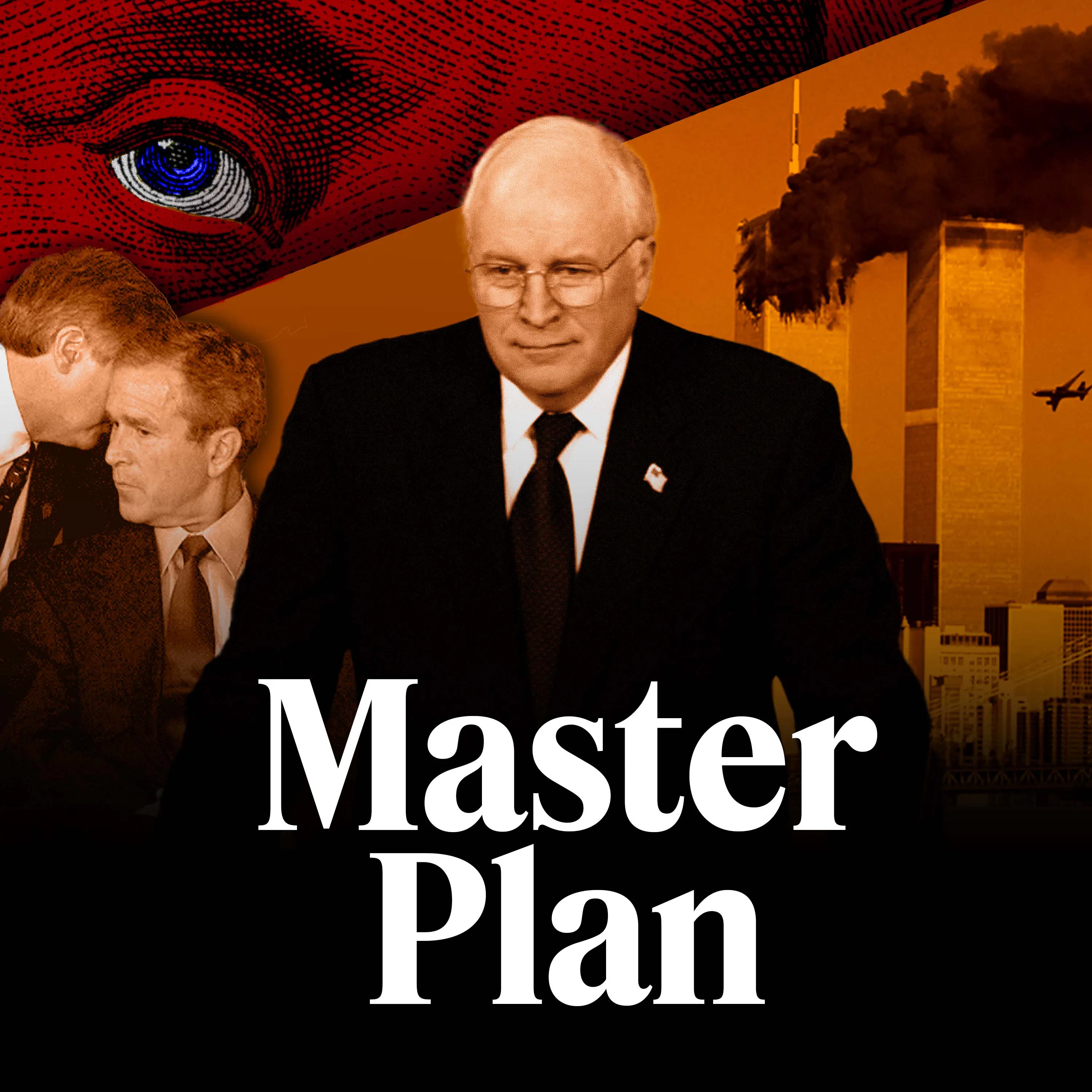
Master Plan
Episode 5: State of Emergency | The Kingmakers
01:04:22
One man's war against the post-Watergate order.
Loading summary
Transcript277 lines
- [00:00]
Podcast Advertiser
This episode is brought to you by Facebook. So you were scrolling on Marketplace and there it was. The bike you'd been searching for. You sent a message and it turned out the seller was super chatty, kind of funny, and an avid cyclist. The next thing you know, you're in a cycling crew. Well, a community cycling group. The thing about Facebook, you might find more than what you're looking for from a browse to a bike ride this summer. Find more on Facebook.
- [00:30]
Ryan Reynolds
Hey, it's Ryan Reynolds here from Mint Mobile. Now, I was looking for fun ways to tell you that Mint's offer of unlimited Premium Wireless for $15 a month is back. So I thought it would be fun if we made $15 bills, but it turns out that's very illegal. So there goes my big idea for the commercial. Give it a try@mintmobile.com switch upfront payment
- [00:52]
Commercial Narrator
of $45 for three months, $90 for six months, or $180 for a 12 month plan required $15 per month equivalent taxes and fees Extra initial plan term only greater than 50 gigabytes. Me slow when network A burst pipe,
- [01:02]
Dick Cheney
A dead water heater, the AC calling it quits. Who do you call? HomeServe is an easy way to handle unexpected home repairs with plans covering stuff basic homeowners insurance usually won't Instead of scrambling for a contractor, you make one call to get the repair process started. Join the millions of customers who trust HomeServe right now. Go to HomeServe.com podcast for 50% less your first year. That's HomeServe.com podcast savings compared to renewal price void in Florida
- [01:33]
David Sirota
the Lever hey everyone, just a quick note. You're listening to the free feed of Master Plan, which means two things. You're going to hear ads and you'll have to wait longer for new episodes. If you'd rather skip the ads and get the episodes faster, visit lever news.com upgrade to support our work. There's a link in the show Notes
- [01:54]
Commercial Narrator
previously on Master Plan the Kingmakers when
- [01:57]
Dick Cheney
the President does it, it is not illegal. The Heritage foundation provided us with the
- [02:01]
Narrator/Commentator
remarkable 1093 page work mandate for Leadership
- [02:06]
Dick Cheney
the only person in the United States government that knew precisely about this was lieutenant Colonel North.
- [02:11]
David Sirota
I didn't want to show Congress a single word on this whole thing.
- [02:15]
Dick Cheney
It says that the executive power. Not some executive power.
- [02:19]
Narrator/Commentator
Unitary Executive.
- [02:20]
David Sirota
Unitary Executive.
- [02:21]
Dick Cheney
Unitary Executive.
- [02:27]
Narrator/Commentator
It's really exciting for me to be here. I want to thank Ms. Daniels for
- [02:30]
David Sirota
being a teacher at an elementary school in Florida. A classroom of second graders was getting a Special treat, a visit from the new President of the United States.
- [02:39]
Dick Cheney
660 of our SRA reading book.
- [02:42]
Narrator/Commentator
I know very well where that came from.
- [02:44]
David Sirota
That late summer 2000. One day started with another benign press opportunity for George W. Bush in the first year of his presidency. A few minutes before entering that classroom, Bush had received some breaking news.
- [02:58]
Dick Cheney
We don't fully know the details.
- [02:59]
David Sirota
There is one report, as of yet unconfirmed, that a plane has hit the World Trade Center. And you can see that there is smoke there coming out of at least
- [03:07]
Dick Cheney
two sides of the building.
- [03:09]
David Sirota
I remember this moment. I was watching it on television inside the US Capitol complex from my job on the House Appropriations Committee. Initially, people assumed the plane crash was just an accident since it didn't seem like an emergency and the camera crews were already waiting for Bush in that Florida classroom. The President decided, decided to continue his visit. He entered and sat down on a small wheeled chair in front of the students.
- [03:34]
Dick Cheney
Are you ready, my butterflies? LLP position. Eyes on me. 1, 2, 3. Get ready to read all the words
- [03:41]
David Sirota
on this page without making a mistake. As the children flipped through their books, Bush's chief of staff stepped forward, leaned down and whispered into his boss's ear. A second plane in the second tower. America is under attack. The aides stepped away. The students began to read a children's book, the Pet Goat. Nobody but George W. Bush knows what was going through his head at that very moment. But the news cameras in the room captured the longest, most uncomfortable, blank, thousand yard stare in American history. Meanwhile, outside the classroom, there are indications
- [04:22]
Dick Cheney
that it may have been a Boeing
- [04:23]
David Sirota
767 out of Boston. Just like a train rumbling and then boom. Hit with all the dust. And it was black.
- [04:33]
Podcast Advertiser
You can see the black smoke billowing
- [04:36]
Dick Cheney
out of the side of the Pentagon.
- [04:38]
David Sirota
September 11, 2001. Back in the nation's capital, it was total mayhem. The skies over Washington emptied as authorities grounded civilian planes. The police hustled all of Congress and their staff out of the Capitol after a plane hit the Pentagon. I tried to call my parents, but there was no cell service. No one knew how many more hijacked jets were still in the air. Over at the White House, alarms blared, staff were scrambling. Secret Service agents grabbed Vice President Dick Cheney from his West Wing office, barking orders as they physically picked him up by his pants. They escorted him to the elevator that descended to an underground bunker built for moments just like this. The Presidential Emergency Operations Center. Industrial lights glowed overhead. A conference table was outfitted with phones and headsets. CNN and Fox News blared on television screens along with Cheney's wife, Lynn. The bunker held a cross section of America's leadership, including cabinet officials like National Security Advisor Condoleezza Rice. As reports came in of another hijacked bunker plane, Cheney got Defense Secretary Donald Rumsfeld on the phone. Rumsfeld was over at the Pentagon. Cheney, the Vice President, told Rumsfeld that he had authorized the military to take out any hijacked aircraft threatening US Targets. Rumsfeld, in turn, ordered the military raised to Defcon 3. But of all the people Dick Cheney could have wanted next to him, generals, aides, Cabinet secretaries, one person topped his list. His lawyer. Hi, I'm Saul Goodman.
- [06:21]
Narrator/Commentator
Did you know that you have rights?
- [06:22]
Dick Cheney
The Constitution says you do.
- [06:24]
David Sirota
No, no, not Saul Goodman, but an attorney with the same kind of moxie. David Addington. And within hours, Cheney and Addington were linked by secure video to other senior White House advisors hatching plans to assert executive powers never before claimed by the President.
- [06:42]
Dick Cheney
We have to work the dark side, if you will.
- [06:44]
David Sirota
That's Dick Cheney days later on Meet the Press from Camp DAV telling America that his team was hard at work on a grand plan.
- [06:52]
Dick Cheney
Things have changed since last Tuesday. The world shifted. In some respects, terrorism has struck home in the United States.
- [06:58]
David Sirota
Cheney seemed to understand that this was his once in a lifetime opportunity to reshape the presidency.
- [07:05]
Dick Cheney
I think this is going to be a struggle that the United States is going to be involved in for the foreseeable future. There's not going to be an end date. What I'm going to say there, it's all over with.
- [07:13]
David Sirota
And Cheney would know. He'd spent most of his adult life inside the machinery of American power. Dick Cheney had been President Gerald Ford's chief of staff when Watergate era reforms clipped the President's wings. Dick Cheney had been in Congress when the Iran Contra scandal broke and kneecapped the Reagan administration. Now, as Vice President, Dick Cheney saw a silver lining in America's crisis. And he channeled his inner Tywin Lannister from Game of Thrones.
- [07:42]
Dick Cheney
Yes, a crisis is an opportunity.
- [07:44]
David Sirota
An opportunity to build a presidency that could take action unilaterally. You might even say unitarily. I'm David Sirota, and this is Master Plan.
- [08:00]
Dick Cheney
Huh? Thinking of a master plan,
- [08:08]
Narrator/Commentator
maybe.
- [08:09]
Dick Cheney
When you like a dictator.
- [08:22]
Podcast Advertiser
This episode is brought to you by Facebook. So you were scrolling on Marketplace, and there it was, the bike you'd been searching for. You sent a message, and it turned out the seller was super chatty, kind of funny, and an avid cyclist. The next thing you know, you're in a cycling crew. Well, a community cycling group. The thing about Facebook, you might find more than what you're looking for. From a browse to a bike ride this summer. Find more on Facebook.
- [08:53]
Commercial Narrator
Starting a business can seem like a daunting task unless you have a partner like Shopify. They have the tools you need to start and grow your business. From designing a website to marketing to selling and beyond, Shopify can help with everything you need. There's a reason millions of companies like Mattel, Heinz and Allbirds continue to trust and use them. With Shopify on your side, turn your big business idea into Sign up for your $1 per month trial at shopify.com specialoffer.
- [09:28]
Dick Cheney
In our nation's 246 year history, there has never been an individual who is a greater threat to our republic than Donald Trump.
- [09:36]
David Sirota
If you're under 35, you might not know anything about Dick Cheney's day in that bunker on 9 11. You may only know Dick Cheney as some ancient former vice president who came out swinging against Donald Trump in 2022.
- [09:49]
Dick Cheney
He tried to steal the last election, using lies and violence to keep himself in power after the voters had rejected him. He was a coward.
- [09:57]
David Sirota
Or maybe you remember Cheney, the arch conservative Republican endorsing Democratic presidential candidate Kamala Harris in the 2024 election.
- [10:06]
Commercial Narrator
And I also want to thank Vice
- [10:08]
David Sirota
President Dick Cheney for his support
- [10:14]
Podcast Advertiser
and
- [10:15]
David Sirota
what he has done to serve our country. The sudden, extraordinary switch makes Dick Cheney sound a little like a repentant Anakin Skywalker on his deathbed.
- [10:25]
Dick Cheney
You were right. You were right about me.
- [10:29]
David Sirota
Aww, it's so sweet it almost makes you forget about how Anakin Skywalker, otherwise known as Darth Vader, blew up a planet, killed a lot of people, and was a little careless with all those Force choke holds.
- [10:42]
Narrator/Commentator
Enough of this Vader.
- [10:44]
Dick Cheney
Release him.
- [10:44]
David Sirota
It's important that even if you don't remember him, you know who Dick Cheney was in this season of Master Plan. He is the kingmaker who is the bridge to the modern era. Dick Cheney is how America went from the end of the Reagan years to where the unitary executive theory ran into the firewalls of Iran Contra and Morrison v. Olson to Trump's seemingly unlimited power.
- [11:08]
Podcast Advertiser
Do you see any checks on your power?
- [11:10]
Dick Cheney
Yeah, there's one thing. My own morality, my own mind.
- [11:14]
David Sirota
Dick Cheney was a man whose quest to create an imperial presidency was so focused, so intense and so single minded that he ended up being billed as America's real life Darth Vader a comparison that he loved.
- [11:29]
Dick Cheney
An invitation from the Heritage foundation obviously is always very special. I'm sure Ed Folner thought, well, if we're going to talk about Star wars, we might as well invite Darth Vader.
- [11:41]
David Sirota
The Anakin Skywalker phase of Dick Cheney's story started in 1968. The same year the OG Imperial President himself, Richard Nixon, was elected to the White House. 27 year old Dick Cheney had straightened his life out. After a couple of DUIs and being kicked out of Yale. He went home to Wyoming, earned two college degrees from the state's public university, and then in 1968 he started a fellowship in Washington D.C. at the height of the national protests against the Vietnam War, A war that famously created chaos at the 1968 Democratic convention.
- [12:16]
Narrator/Commentator
Mr. Chairman, most delegates to this convention do not know that thousands of young people are being beaten in the streets of Chicago.
- [12:27]
David Sirota
But Cheney seemed annoyed not by the war, which he had avoided with five draft deferments. No, Dick Cheney seemed annoyed by his fellow 20 somethings who were protesting to stop the war.
- [12:39]
Dick Cheney
Democratic convention that year in Chicago was source of great controversy.
- [12:45]
David Sirota
This was Cheney on C span recounting how the chaos of the late 1960s created his affinity for order, authority and control.
- [12:53]
Dick Cheney
It certainly moved us in a conservative direction.
- [12:56]
David Sirota
Cheney soon hitched himself to a Republican power broker. Then on a super supersonic ascent up the ladder of power, Donald Rumsfeld, the poet laureate of American wars.
- [13:06]
Dick Cheney
There are known knowns, there are known unknowns. There are also unknown unknowns.
- [13:12]
David Sirota
Rumsfeld had recently gone from serving as a Republican member of Congress into a White House job overseeing the old war on poverty programs for Richard Nixon. Nixon wanted to pare back those programs, attack legal services for the poor and defund early childhood education is tough enough.
- [13:31]
Dick Cheney
He's a ruthless little master. He knows what I want. He isn't going to come in and try to sell me something.
- [13:37]
David Sirota
That's Richard Nixon in the Oval Office louding Rumsfeld for being, quote, a ruthless little bastard. So Cheney was learning at the knee of a man whose ruthlessness was admired by the 20th century's most ruthless imperial president. But by 1973, that president was embroiled in this.
- [13:56]
Dick Cheney
The Senate tonight voted to establish a select committee to investigate the Watergate bugging case. A committee of the House had recommended the impeachment and removal from office by the Senate of a President.
- [14:06]
David Sirota
Yep, even Don Rumsfeld and Dick Cheney were around during Watergate, but not too close. When the full force of Watergate hit, Rumsfeld And Cheney were outside the political blast zone. Rumsfeld had moved up to NATO ambassador and was in Brussels while Cheney was in a holding pattern at a private investment firm.
- [14:24]
Dick Cheney
My fellow Americans, our long national nightmare is over.
- [14:30]
David Sirota
When Nixon resigned and newly sworn in President Gerald Ford looked for any unscathed Republicans who could be his chief of staff. He appointed that ruthless little bastard Don Rumsfeld, who made Darth Cheney deputy chief of staff.
- [14:44]
Dick Cheney
What is thy bidding, my master?
- [14:47]
David Sirota
When a year later Gerald Ford made Rumsfeld Secretary of Defense, Cheney took his place running the White House as the youngest chief of staff in history. One looking to make an impact on the entire government.
- [14:59]
Dick Cheney
Perhaps I can find new ways to motivate them.
- [15:02]
David Sirota
But if young Darth Cheney had hoped to wield lots of executive power, he was no doubt disappointed. Cheney came into the job amid Congress's post Watergate assault. He, Rumsfeld, and then Justice Department lawyer Antonin Scalia had convinced Ford to veto an expansion of open records laws to subject the White House to more transparency. But lawmakers gave them the big middle finger.
- [15:26]
Dick Cheney
Congress has sent a jolting message halfway around the world to President Ford. After losing on only one of 13 vetoes sent earlier to Capitol Hill, the President today lost two in quick succession and by whopping margins.
- [15:40]
David Sirota
Then, of course, there were the reforms that we covered in episode one. There was the Empowerment Control act, which hampered Ford's attempt to slash $8 billion out of the budget. There was also the War Powers act, which Ford ignored during a brief military skirmish in Cambodia that resulted in 41American casualties. Congress was not pleased.
- [16:00]
Dick Cheney
You'd think that the Cambodians had landed in San Diego the way the President reacted to this.
- [16:06]
David Sirota
Meanwhile, Dick Cheney was trying and largely failing to assert executive privilege to hide documents from Democratic Senator Frank Church, who was leading a proctolog exam of the CIA, the NSA, the FBI, and the IRS. Here's church in 1975.
- [16:22]
Dick Cheney
If a dictator ever took charge in this country, the technological capacity that the intelligence community has given the government could enable it to impose total tyranny and there would be no way to fight back.
- [16:35]
David Sirota
Just months into Cheney's tenure as White House chief of staff, the New York Times ran an article with the headline, quote, Presidency is found weaker under Ford. It was a story which detailed all the ways in which Congress was emasculating executive power. Darth Cheney was pissed.
- [16:52]
Dick Cheney
The combination of Vietnam and Watergate had a significant negative impact on the presidency and in terms of the balance between Congress and the White House. And we ended up with things like the War Powers act, which I think
- [17:03]
David Sirota
is a flawed concept, voters did not share his lament. Instead, in 1976, they kicked Ford and Cheney out of the White House and replaced them with a peanut farmer. Jimmy Carter is now President Elect of the United States. Out of a job, Dick Cheney went back home to Wyoming and ran for Congress. Fresh off watching executive power slip away, he campaigned against what he depicted as a power hungry legislative branch. It is Congress which has voted the massive budget deficits, read one Cheney campaign flyer. When he won in the 1978 election, Darth Cheney was no longer working for someone else. He was now running his own political project.
- [17:43]
Dick Cheney
The circle is now complete. When I left you, I was but the learner. Now I am the master.
- [17:50]
David Sirota
After Ronald Reagan reclaimed the presidency for Cheney's party in 1980, Congressman Dick Cheney met with the Gipper's new chief of staff, James Baker, who in a handwritten note that we uncovered, said that Cheney was focused on making sure the new administration would, quote, restore power and authority to the executive branch. In Reagan's first term, Congressman Cheney became the go to guy for quotes about how Congress had no role to play in national security policy. Here he is on a panel discussing the War powers Act in 1983.
- [18:22]
Dick Cheney
In the years ahead, we are very unlikely to find ourselves in a set of circumstances where the kind of conflict that is envisioned in the War Powers act is likely to arise.
- [18:33]
David Sirota
Cheney argued that the President, by virtue of being elected, must be singularly trusted with the nation's war making capabilities.
- [18:41]
Dick Cheney
We build nuclear weapons systems and we give them total control over those system without consultation with the United States Congress whatsoever. And it seems to me, having made that leap of faith, that we are in fact going to trust the President to be Commander in Chief under those circumstances, we can also trust him in other areas and that there's no need for a replacement, if you will, for the War Powers act should that be struck down.
- [19:03]
David Sirota
And then, about eight years into Cheney's congressional tenure, came the Iran Contra scandal that you heard about in episode three. I engaged in shredding almost every day
- [19:12]
Dick Cheney
that I had a shredder.
- [19:13]
David Sirota
Most of Washington saw Iran Contra as a textbook case of executive branch lawlessness. But Cheney, who was the senior Republican on the Investigative Committee, saw Oliver North's testimony very differently.
- [19:25]
Dick Cheney
I thought the Colonel was extremely credible.
- [19:27]
David Sirota
Cheney even explicitly defended document destruction.
- [19:30]
Dick Cheney
The argument on shredding of documents for anyone who's worked in the West Wing is a valid one. That's not new or unique.
- [19:37]
David Sirota
When the Iran Contra hearings concluded, the Findings from Democrats got most of the press. In the majority report, committee members lay ultimate responsibility for the scandal at the
- [19:47]
Dick Cheney
feet of President Reagan.
- [19:49]
David Sirota
But Dick Cheney, with the help of the Republican committee member's lawyer, David Addington, he drafted a hardline Darth Vader ish response, casting Democrats as Monday morning quarterbacks on undermining national security.
- [20:02]
Dick Cheney
You are part of the rebel alliance and a traitor.
- [20:05]
David Sirota
Led by Cheney, the Republicans issued their rebuttal, the Minority Report, which argued that Congress should never have put any limitations on the Reagan administration in the first place. Cheney and his co authors wrote, quote, the committees have rested their case upon an aggrandizing theory of Congress's foreign policy powers. That is itself part of the problem. Or as New York Times reporter Charlie Savage explains, they're like, we disagree.
- [20:33]
Charlie Savage
The real bad actor here was Congress. That's an usurpation of the President's foreign policy powers under the Constitution.
- [20:42]
David Sirota
And then Cheney went even further. Cheney's minority report included this incredible passage. Quote, to the extent that the Constitution and laws read narrowly as Jefferson wished, the chief executive will on occasion feel duty bound to assert monarchical notions of prerogative that will permit him to exceed the law. Monarchical. They actually wrote that. At a press conference afterwards, Cheney doubled down.
- [21:10]
Dick Cheney
I'd go back 15 years, though, to the early 70s, and I think what we've seen is the development of a more assertive Congress that no longer honors the traditions that are laid out in our report in terms of the practices of the President's preeminence in foreign policy.
- [21:24]
David Sirota
Dick Cheney wasn't just looking to reform individual laws or play defense for his party. Amid a scandal like Ed Meese in the last episode, Cheney wanted a way around Congress entirely, a way that invoked the Constitution. Here's Charlie Savage again.
- [21:40]
Charlie Savage
You see the light bulb kind of going off that if you come at this not as a policy argument where you have to persuade Congress to roll back the laws that passed in the 70s, but you just claim a constitutional right to bypass them. You say these are unconstitutional in the first place.
- [21:56]
Narrator/Commentator
You win.
- [21:57]
David Sirota
As Iran Contra died down and its central figures skirted jail via presidential pardons, Dick Cheney drafted an essay and speech for the conservative American Enterprise Institute in which he would call for a full repeal of the War Powers act on constitutional grounds. But Cheney never delivered that speech because in early 1989, he was nominated Secretary of Defense. That same year, President George H.W. bush ordered the military invasion of Panama with no authorization from Congress.
- [22:29]
Narrator/Commentator
I directed our armed forces to protect the lives of American citizens in Panama and to bring General Noriega to justice there.
- [22:37]
David Sirota
At the Pentagon, with his trusty lawyer David Addington by his side, Dick Cheney wasn't just writing or talking about reclaiming executive power, he was wielding it. Emboldened by the lack of outcry from lawmakers, Cheney's Pentagon then began another military buildup in 1990, sending half a million US troops to the Persian Gulf without congressional authorization. This will not stand. This will not stand, this aggression against Kuwait. Throughout the military buildup, Cheney argued vigorously that the President did not need Congress's approval to invade the Middle East.
- [23:13]
Dick Cheney
The President has the authority in response to an attack, obviously without consulting with anyone in a matter of minutes to use that force, overwhelming force, more force than the United States has ever before employed.
- [23:25]
David Sirota
During a congressional hearing, Democratic Senator Ted Kennedy pressed Cheney on the matter.
- [23:29]
Narrator/Commentator
You're fully aware of the what the
- [23:33]
Dick Cheney
Constitution says with regards to the war making power. Do you agree that the President must obtain the approval of Congress in advance before the United States attacks Iraq? Senator, I do not believe the President requires any additional authorization from the Congress.
- [23:51]
David Sirota
Cheney then went on to invoke a few of the magic words from the nascent unitary executive theory.
- [23:57]
Dick Cheney
The President as Commander in Chief under Title 2, Section 2 of the U.S. constitution. Constitution has the authority to commit U.S.
- [24:07]
David Sirota
forces there it was. He called it Title 2, but what he was talking about was Article 2 of the Constitution. Now in the end, President George H.W. bush, cautious, careful, prudent George, he did ask Congress for authorization anyway. But years later in an interview with pbs, Cheney said, quote, I was not enthusiastic about going to Congress to ask for an additional grant of authority. I was concerned that they might well vote no and that would make life more difficult for us. That line was an admission about the kingmakers larger motives. They want unlimited executive power so that institutions of democracy that respond to voters like Congress, they'll never be able to make life more difficult for presidents by getting in the way of those presidents plans. And their king making projects may have accelerated right then had the economy not shit the bed which gave Democrats their opening.
- [25:06]
Dick Cheney
I still believe in a place called hope.
- [25:10]
David Sirota
In 1992 Bill Clinton and his Fleetwood Mac themed campaign tossed Dick Cheney and his party into exile. There they would realize that to take their master plan for executive power to the next level, they would need to do more. The next time he would try to create a powerful imperial presidency. Darth Cheney would be doing it with a partner.
- [25:31]
Dick Cheney
Join me. With our combined strength we can end this destructive conflict and bring order to the galaxy.
- [25:41]
David Sirota
Coming up after the break, Darth Cheney finds himself an emperor.
- [25:47]
Podcast Advertiser
This episode is brought to you by Facebook. So you were scrolling on Marketplace and there it was, the bike you'd been searching for. You sent a message and it turned out the seller was super chatty, kind of funny and an avid cyclist. The next thing you know, you're in a cycling crew. Well, a community cycling group. The thing about Facebook, you might find more than what you're looking for, from a browse to a bike ride this summer. Find more on Facebook.
- [26:16]
Ryan Reynolds
Hi, Ryan Reynolds here for Mint Mobile. Are you looking for a beach read this summer? May I suggest your big wireless bill? It's got some suspense, mystery, a slightly flat emotional arc and a shocking twist where you realize you've been overpaying the entire time. Fortunately, though, Mint Story is better. Every plan $15 a month, even unlimited. That's it. Happy ending, zero tears. Give it a try@mintmobile.com Switch upfront payment
- [26:39]
Commercial Narrator
of $45 for three months, $90 for six months or $180 for a 12 month plan. Required $15 per month equivalent taxes and fees. Extra initial plan term only greater than 50 gigabytes. May slow when network is busy. See terms.
- [26:49]
Dick Cheney
Now to the presidential campaign. We take you now to Austin, Texas, where Governor George W. Bush.
- [26:54]
David Sirota
On July 25, 2000, Republican presidential nominee George W. Bush announced that his vice presidential search committee, headed by his dad's secretary of Defense, Dick Cheney, had concluded its search for his running mate.
- [27:07]
Narrator/Commentator
As we work to evaluate the strength of others, I saw firsthand Dick Cheney's outstanding judgment.
- [27:14]
David Sirota
When Darth Cheney first got the call to head up the search committee, I imagine him beholding his old boss's bumbling, entitled fail son, George W. Bush with a bit of amusement and perhaps even disdain.
- [27:26]
Dick Cheney
As clumsy as he is stupid, but
- [27:28]
David Sirota
ever the shrewd Sith Lord, Cheney realized the younger Bush was ripe for a Jedi mind trick.
- [27:34]
Narrator/Commentator
Gradually, I realized that the person who was best qualified to be my vice presidential nominee was working by my side.
- [27:42]
David Sirota
Yes, Darth Cheney had done the seemingly impossible. He got himself put on the ticket all too easy. The time between Dick Cheney leaving the Pentagon and assuming the vice presidency marked a slowdown in the war over executive power. In the 1990s, the Clinton administration pushed to grab new power to veto congressional legislation, but the Supreme Court shut it down within a couple of years. But when the court declared Bush and Cheney the winners of the 2000 election, Cheney picked up right where he left off in his executive power project. Starting with a New task force on energy policy.
- [28:18]
Narrator/Commentator
The Vice President's going to head the task force. Report back to me and then to the nation how best to cope with high energy prices.
- [28:24]
David Sirota
Cheney, of course, came to the Vice Presidency right out of a job as CEO of the oil giant Halliburton. No surprise then that Congress invoked the old post Watergate transparency laws to try to find out who exactly was influencing his new task force. The General Accounting Office is investigating Vice
- [28:44]
Dick Cheney
President Dick Cheney's energy task force force and its ties to the energy industry.
- [28:50]
David Sirota
Cheney responded by flipping off those laws requiring transparency from the executive branch, laws that he had been fighting since he was Gerald Ford's Chief of staff. When it came to the energy task force, Dick Cheney argued that the king or the President had no obligation to follow transparency rules.
- [29:09]
Dick Cheney
I have repeatedly seen an erosion of the powers and the ability of the President of the United States to do his job. We are weaker today as an institution because of the unwise compromises that have been made over the last 30 to 35 years.
- [29:22]
David Sirota
When the task force issued its final report, Congress requested more information, as did watchdog groups which filed requests under the Freedom of Information act, the law that Cheney had told Gerald Ford to veto. Cheney flatly declined to turn over any details beyond basic receipts.
- [29:40]
Dick Cheney
The White House celebrated Vice President Cheney's 61st birthday today. But the GAO crashed the party, announcing it will sue the Vice President to find out who helped influence his energy policy report.
- [29:51]
David Sirota
The White House fought to keep the task force's proceedings secret and the courts ultimately sided with Cheney, ruling that Congress could not force the Vice President to disclose who had influenced internal executive branch deliberations. It was a landmark victory, allowing the executive branch to further shroud itself in secrecy.
- [30:10]
Dick Cheney
Experts say it's probably the last word on the long running public battle over public access to the White House decision making process.
- [30:18]
David Sirota
Congress dropped the investigation. Now keep in mind that these energy task force meetings happened before 9 11. Cheney was already laying down a marker, building a fortress of secrecy around the Executive branch and pushing back hard against oversight. Because for Cheney, this fight wasn't really only about energy policy. It was about correcting what he saw as a 30 year mistake. A presidency weakened after Watergate, boxed in by Congress, the courts and the press. He believed the Constitution placed national security and executive authority more broadly almost entirely in the hands of the President. And he believed that Congress, in passing the War Powers Resolution we mentioned in episode one, had stolen that power from the President.
- [31:06]
Dick Cheney
I emerged from that experience a very strong believer in the authority of the President to manage these issues as contrasted with the Congress. I thought Congress had infringed upon executive
- [31:19]
David Sirota
prerogatives and after 911 the theory stopped being abstract. That's when Cheney and his lawyer David Addington really went to work.
- [31:30]
Narrator/Commentator
We will make no distinction between the terrorists who committed these acts and those who harbored them.
- [31:36]
David Sirota
Immediately after the planes hit the Twin Towers, the United States began making plans to hit back. And Congress went to work handing over as much unilateral power to the Executive branch as it possibly could. On September 14, 2001, Congress passed a joint resolution authorizing the President to use all necessary and appropriate force against those responsible for the attacks. This Authorization for Use of Military Force, or aumf. It was an unprecedented open ended piece of legislation, basically letting the President attack whoever he wants, wherever he wants, and to do so forever, as long as he invokes this phrase, the war on terror.
- [32:19]
Commercial Narrator
War on terror.
- [32:22]
David Sirota
Soon after, the United States started bombing Afghanistan.
- [32:25]
Narrator/Commentator
These carefully targeted actions are designed to disrupt the use of Afghanistan as a terrorist base of operations and to attack the military capability of the Taliban regime a month later.
- [32:36]
David Sirota
Congress then laid waste to the post Watergate reforms led by the famous Church Committee that Dick Cheney hated so much. The reforms that had sought to rein in the government's surveillance powers. In October of 2001, lawmakers did this.
- [32:51]
Narrator/Commentator
President Bush today signed legislation giving the
- [32:54]
Dick Cheney
government sweeping new powers to go after suspected terrorists with electronic eavesdropping, searches and detention without charges.
- [33:02]
David Sirota
As the war in Afghanistan raged, top State Department officials convened an interagency group, military lawyers, prosecutors, national security experts, to carefully map out a lawful course of action. But Dick Cheney and David Addington were not satisfied with all the power the compliant Congress gave them. Nor did they want to waste time with internal committees and thoughtful deliberation. They believe the White House should be able to move quickly in a national emergency without having its hands tied. The two of them set to work with a lawyer who they had become enamored with, John Yu. John Y o o U was one of the first lawyers Cheney talked to during the early hours of the 911 crisis. And like Dick Cheney, John Yoo believed that the Constitution gave the President almost unlimited powers in wartime. Yoo was a young conservative law professor who had recently joined the Office of Legal Counsel. And as we learned in episode two, if a proposal is blessed by olc, it provides legal cover to the President and to the Executive branch.
- [34:11]
Dick Cheney
You got what I need.
- [34:14]
David Sirota
You had already given Cheney's executive power agenda a boost in October 2001 with an OLC memo saying the President had absolute authority to deploy the military not just overseas, but also inside the United States, and that the decision was for the President alone to make. Another OLC memo allowed the President to unilaterally try prisoners of war with military commissions, which is basically the executive branch, going around the judicial branch and serving as both, both prosecutor and judge, with no questions asked and no chance to appeal. Cheney's lawyer, David Addington, then used those OLC memos to draft a four page presidential order. Bush's Attorney General, John Ashcroft, was furious that lawyers at his Department of Justice had been scheming behind his back. Cheney brushed it off. Here's journalist Charlie Savage.
- [35:08]
Charlie Savage
Without telling anyone else, Cheney takes this piece of paper to a lunch she has every morning Thursday with Bush and says, hey, why don't you sign this? And Bush signs it. And it hadn't been interagency, it hadn't been vetted. Cheney wants it done and there's not going to be procedural niceties to get in the way of it.
- [35:25]
David Sirota
George W. Bush gave the go ahead. Within days, it was signed and official.
- [35:29]
Dick Cheney
President Bush signed a military order which allows non US citizens accused of terrorism to be tried by special military courts.
- [35:37]
David Sirota
Dick Cheney finally had what he'd spent in decades searching for. A legal permission slip granting unlimited national security power to the President. Or as John Yoo later explained in an interview with Frontline, the Justice Department
- [35:51]
Dick Cheney
had long thought that Congress cannot limit the Commander in chief power, that Congress cannot tell the President how to exercise his judgment as Commander in Chief.
- [36:01]
David Sirota
The military commissions were only one piece of the puzzle. Over the next year and a half, Cheney and Addington helped implement an additional trio of extraordinary measures. The first was an offshore detention site built near Guantanamo Bay, Cuba, beyond the reach of American courts.
- [36:18]
Dick Cheney
I would characterize Guantanamo Bay, Cuba, as the least worst place we could have selected.
- [36:24]
David Sirota
The second was more complex, warrantless surveillance of phone calls, emails and domestic communications going way beyond what even the Patriot act authorized. In the days after 9 11, the head of the National Security Agency, General Michael Hayden, was summoned by the White House. President Bush and Vice President Cheney had a question. Could the NSA expand its surveillance operations to detect threats not just overseas, but also inside the country?
- [36:53]
Dick Cheney
And I said, no, this is it. Now, if you have this or this, maybe I could do that, but right now it'll be illegal.
- [37:04]
David Sirota
That's Michael Hayden who spoke with us earlier this year. Hayden believed he'd already pushed the NSA's powers to the legal limit. FISA, the Foreign Intelligence Surveillance act of 1978 allowed national security surveillance, but only under judicial oversight and with strict limits on who could be targeted. Cheney and Addington did not want to work within those limits and they did not want to ask Congress to change the law. Here's Charlie Savage again.
- [37:31]
Charlie Savage
A huge driving force behind that is Cheney and Addington who say you're giving away the President's power. If you concede that Congress has a say, we can just invoke this theory. The President has sprawling inherent and exclusive authority in national security matters to do whatever he thinks is necessary.
- [37:54]
David Sirota
In other words, the unitary executive theory. And in one of his memos, Bush's OLC guy John Yoon was applying it to assert that after 911 the United States was effectively a battlefield. And if America was a battlefield, then the President as Commander in Chief could conduct military style intelligence operations inside the United States even if existing surveillance laws seemed to say otherwise. Spying on his fellow citizens now fell within the President's wartime powers, according to yu's theory. Theory, FISA and its restrictions did not apply. On October 4th, 2001 Bush signed a secret directive ordering the National Security Agency to conduct surveillance without judicial warrants. Michael Hayden told us that after the U memos lawyers at the NSA were ultimately persuaded to sign off on the program and that he told key lawmakers about it.
- [38:49]
Dick Cheney
And then I talked to Congress, four people I think maybe a little bit more. And then they said this is different, it's controversial but it's legal. And we did that for three and a half years.
- [39:05]
David Sirota
To keep the whole thing running, the White House created a secret internal sign off process. Every 45 days top officials, including the President himself had to reauthorize the program. So you've got the extreme power grabs of secret military courts trying non citizens and the warrantless wiretapping of Americans. But Cheney, Addington and Yu turned it up to 11 with a third power grab. The torture memos.
- [39:32]
Dick Cheney
I'mma get medieval on your ass.
- [39:34]
David Sirota
These were opinions, many drafted by John Yoo, providing legal loopholes for how prisoners could be treated like say, redefining acts of torture so narrowly that almost nothing short of organ failure or death counted as illegal under US law. Dick Cheney didn't seem to have an issue with any of this. In a radio interview he was asked the question about waterboarding. Would you agree a Dunkin water is
- [39:57]
Dick Cheney
a no brainer for can save lives?
- [39:59]
David Sirota
And Cheney's response?
- [40:00]
Dick Cheney
Well it's a no brainer for me.
- [40:02]
David Sirota
At black sites across the globe, the CIA was waterboarding detainees, chaining them in stress positions and Keeping them awake for days on end. And yet Dick Cheney was almost literally parroting Darth Vader's reassurances to a bounty hunter that torture is actually fine as long as it doesn't literally kill the person being tortured.
- [40:22]
Dick Cheney
He's no good to me dead. He will not be permanently damaged.
- [40:28]
David Sirota
All of Cheney's imperial rampage, the offshore detention site, the secret wiretapping program, the torture, it was justified by a single idea that when it came to defending the United States, the president as commander in chief was above Congress, above treaties, and even above the law.
- [40:46]
Dick Cheney
I'd do it again in a minute.
- [40:47]
David Sirota
And this was all prelude to the launch of a new years long war based on false pretenses and unconstrained by Congress.
- [40:56]
Dick Cheney
The objective has to be the complete destruction of Saddam's weapons of mass destruction and an end to all efforts to develop or produce more chemical, biological or nuclear weapons.
- [41:08]
David Sirota
That's coming up after the break.
- [41:11]
Podcast Advertiser
This episode is brought to you by Facebook. So you were scrolling on Marketplace, and there it was, the bike you'd been searching for. You sent a message and it turned out the seller was super chatty, kind of funny, and an avid cyclist. The next thing you know, you're in a cycling crew. Well, a community cycling group. The thing about Facebook, you might find more than what you're looking for, from a browse to a bike ride this summer. Find more on Facebook. This episode is brought to you by Starbucks.
- [41:45]
David Sirota
That is fire. Whoa, that's good.
- [41:48]
Dick Cheney
This might be the drink of the summer. Okay, I like this one too. I'm rocking with it.
- [41:51]
Commercial Narrator
Okay, try it for yourself. Starbucks refreshers concentrates are coming home. Find them in the coffee aisle and make it yours.
- [42:00]
David Sirota
Just over a year after 9 11, President George W. Bush and his top advisers began laying the public groundwork for a new war in Iraq.
- [42:08]
Narrator/Commentator
The Iraqi regime has acquired and tested the means to deliver weapons of mass destruction.
- [42:13]
David Sirota
We don't want the smoking gun to be a mushroom clout.
- [42:15]
Dick Cheney
What we're giving you are facts and conclusions based on solid intelligence.
- [42:20]
David Sirota
You might remember episode one, when we talked about Congress authorizing the Vietnam. Vietnam War using false pretenses. The Gulf of Tonkin Resolution. This time around, the lies weren't about a disputed naval engagement off the coast of Vietnam. They were about weapons of mass destruction, with Darth Cheney leading the charge.
- [42:38]
Dick Cheney
Simply stated, there is no doubt that Saddam Hussein now has weapons of mass destruction.
- [42:45]
David Sirota
Spoiler alert. There were plenty of doubts. And in fact, no weapons of mass destruction were ever found. But that didn't matter to Cheney because this was that rarest of things in American politics, a second chance. In the early 1990s, during the first Iraq war, Cheney had insisted the President could launch an invasion without congressional authorization. But he also defended the first Bush administration's decision to leave Saddam Hussein in power.
- [43:13]
Dick Cheney
Once you got to Iraq and took it over and took down Saddam Hussein's government, then what are you going to put in its place? It's a quagmire.
- [43:20]
David Sirota
But that was before Cheney spent five years as the CEO of Halliburton, one of the world's largest oil services firms. Under Cheney's leadership, Halliburton was so eager for business in Iraq that the company had reportedly used subsidiaries to try to circumvent US Sanctions on that country. Now that Cheney was vice president, 911 provided an opportunity for Halliburton and the American oil industry to crack open Iraq for good. Under the pretense that Saddam Hussein was working in tandem with the terrorist group that orchestrated the 911 attacks.
- [43:56]
Dick Cheney
There's overwhelming evidence that there was a connection between Al Qaeda and the Iraqi government.
- [44:01]
David Sirota
And using all of his dark side of the force powers, Darth Cheney got his boss to parrot the same line.
- [44:08]
Narrator/Commentator
The reason I keep insisting that there was a relationship between Iraq and Saddam and Al Qaeda, because there was a relationship between Iraq and Al Qaeda.
- [44:18]
David Sirota
Another spoiler alert. One report from the 911 Commission that Bush appointed found, quote, no credible evidence that Iraq and Al Qaeda cooperated on attacks against the United States. And that report concluded that contacts between Iraq and Al Qaeda, quote, do not appear to have resulted in a collaboration relationship. But facts were not going to get in the way because Dick Cheney understood something fundamental about American power. If a president moves fast enough, he can outrun Congress, sidestep the courts, and present the country with a fait accompli. Act first, justify later. And so, with Cheney pulling the strings, the United States invaded Iraq in March 2003.
- [45:01]
Commercial Narrator
Pentagon officials have called the their strategy shock and awe.
- [45:05]
Dick Cheney
Last night, a square mile in central Baghdad seemed like hell on earth, an inferno.
- [45:13]
David Sirota
And by May 2003, only two months later, America was claiming victory. Standing on the deck of an aircraft carrier, a massive Mission Accomplished banner behind him, President Bush declared that Baghdad had fallen. Saddam Hussein's regime was gone.
- [45:29]
Narrator/Commentator
Major combat operations in Iraq have ended. In the battle of Iraq, the United States and our allies have prevailed.
- [45:38]
David Sirota
Back in Washington, Dick Cheney was probably also thinking mission accomplished, but for different reasons. The sweeping executive authority he had spent three decades arguing for in memos, minority reports, and quiet Bureaucratic trench warfare that was now becoming real.
- [45:55]
Dick Cheney
This will be a day long remembered and will soon see the end of the rebellion.
- [46:01]
David Sirota
This was not the Gerald Ford presidency. Constrained, chastened, second guessed, this was its opposite. A president that didn't ask for permission. A unitary executive. But even before the end of President Bush's first term, Cheney's shock and awe campaign for executive power began to face pushback.
- [46:20]
Dick Cheney
Do you affirm that the testimony you are about to give before the committee will be the truth, the whole truth and nothing but the truth, so help you God?
- [46:29]
David Sirota
That's Democratic Senator Chuck Schumer swearing in former Bush Deputy Attorney General James Comey before his testimony in front of the Senate Judiciary Committee. Yes, that James Comey. But this is long before Comey served as FBI director, before he investigated Hillary Clinton's emails and before he became one of Donald Trump's favorite enemies. And I'm uncomfortable talking about this, but I am.
- [46:52]
Dick Cheney
Just answer the question.
- [46:53]
David Sirota
Comey told senators about a drama filled confrontation inside the administration in 2004 over one of Dick Cheney's pet projects. In the early part of 2004, the Department of Justice was engaged the Office of Legal Counsel under my supervision, in a re evaluation of a particular classified program. He was referring to that top secret NSA surveillance operation we mentioned earlier, the one that Dick Cheney pushed for that allowed the government to monitor communications without court warrants. The NSA's program, codenamed Stellar Wind, had continued to expand, monitoring communications tied to terrorist suspects, vacuuming up phone and email data, and eventually growing into a massive warrantless surveillance system operating almost entirely in secret. By this point, John Yoo, the lawyer who had written the opinions justifying the program, he was gone. Jack Goldsmith, the new head of the Office of Legal Counsel, reviewed Hughes memos and he was alarmed. The torture memo was legally flawed and the NSA program indefensible. Attorney General John Ashcroft agreed the Justice Department could not legally recertify the program in its current form. But then John Ashcroft collapsed. He was rushed to the hospital with acute pancreatitis and formally transferred the powers of Attorney General to his deputy, James Comey. And Acting Attorney General Comey had made the department's position clear. The DOJ would not reauthorize the surveillance program. So with the program on the verge of flatlining, the White House went to the intensive care unit. Literally. George W. Bush's top White House aides went to John Ashcroft's bedside to try to get the sedated, half dead Attorney General to sign off. But no dice. He wouldn't budge. So the next day, President Bush simply reauthorized the program anyway, without Justice Department certification. Relying on arguments advanced by Dick Cheney and David Addington, here's James Comey again. The program was reauthorized without us, without a signature from the Department of Justice attesting as to its legality Inside the Justice Department, the response was immediate. Ashcroft, Comey, and other senior Justice Department officials reportedly drafted resignation letters, preparing to quit en masse. Faced with the prospect of these resignations and public exposure, President Bush backed down and broke from Dick Cheney. He met privately with senior Justice Department officials and agreed to modify the program to satisfy the department's legal objections. But the broader operation itself did not end. The surveillance kept going under the president's secret reauthorization process, with Bush signing off on it every 45 days, all while continuing to operate outside the normal FISA court system. Yet less than a month after the Ashcroft confrontation, in the hospital room, President Bush was reassuring Americans at a town hall that nothing shady was happening.
- [50:00]
Narrator/Commentator
Anytime you hear the United States government talking about wiretap, a wiretap requires a court order.
- [50:06]
David Sirota
It does require a court order. But Bush's administration was going around the courts.
- [50:11]
Narrator/Commentator
When we're talking about chasing down terrorists, we're talking about getting a court order before we do so.
- [50:16]
David Sirota
This is what Bush was telling the public. But he himself had secretly signed an order continuing Operation Stellar Wind.
- [50:23]
Narrator/Commentator
When you think Patriot act constitutional guarantees
- [50:26]
David Sirota
are in place, yeah, that's just. Just days after Bush's lie, Cheney's imperial strategies took another hit. Photographs from the Abu Ghraib prison exploded into public view. 60 Minutes revealed leaked images of Iraqi detainees naked, stacked in pyramids, hooded prisoners attached to electrodes, US Guards smiling for the camera. The man was told to stand on a box with his head covered with wires attached to his hands. He was told that if he fell off the box, he would be electrocuted. Investigators would later trace the logic and conditions back to decisions made by Dick Cheney and David Addington, including the enhanced interrogation techniques approved by John Yoo's infamous torture memos.
- [51:13]
Dick Cheney
Abu Ghraib. Saddam Hussein's prison that became a torture chamber for American military intelligence, will undoubtedly take its place with the My Lai
- [51:23]
David Sirota
massacre in Vietnam as a dismaying symbol of sadism. That same year, Cheney's prized invention, the military commissions, hit a judicial wall. In November 2004, a federal district judge rejected the Bush administration's claim that the Geneva Conventions didn't apply to an Afghan prisoner being held in Guantanamo. Meanwhile, there was growing Opposition to the Patriot act from members of Congress, from the aclu, from privacy groups. Their concerns about the government violating citizens rights were bolstered in December 2005, when the new York Times finally exposed Bush's lie about the warrantless wiretapping program.
- [52:03]
Dick Cheney
President Bush signed an order to allow the spying without court warrants. According to the report, a few congressional leaders were briefed on the program. But today, senators of both parties called for offer explanations.
- [52:16]
David Sirota
The day after the New York Times piece, Bush took to the airwaves. And he was saying something quite different than what he'd said back in 2004 when he'd avowed that the administration always got court orders before implementing a wiretap.
- [52:29]
Narrator/Commentator
The activities I authorized are reviewed approximately every 45 days. The review includes approval by our nation's top legal officials, including the Attorney General and the Council, to the President.
- [52:42]
David Sirota
Notice, no mention of courts. That time, Dick Cheney tried to contain the fallout as he fielded questions from reporters.
- [52:48]
Dick Cheney
The Constitution calls for a court, the co equal branch of government as a check on the power of the executive. This has been done, Terry, in a manner that is completely consistent with our obligations and requirements, I can assure you.
- [53:01]
David Sirota
Commentators compared the Bush White House to Nixon's secretive intrusive illegal. Instead of backing down, Dick Cheney insisted the surveillance was fully within the President's constitutional authority, the same argument he'd been making since the 1980s. Dick Cheney and David Addington lost that battle, but they continued to fight the war for executive power using another weapon, presidential signing statements. Here's journalist Charlie Savage again.
- [53:27]
Charlie Savage
Addington is the ghost writer of Bush's signing statements. That over and over again talk about inherent Article 2 of Powers as commander chief and unitary executive theory.
- [53:37]
David Sirota
You'll recall that a signing statement is a document written by the President when signing a bill into law. The Bush Cheney administration started to use them to suggest that laws they didn't like were unconstitutional and would go unenforced by their executive branch. For instance, when Congress passed legislation banning the torture of detainees in 2005, a bill led by actual torture survivor Senator John McCain, Bush publicly praised the initiative.
- [54:05]
Narrator/Commentator
Senator McCain has been a leader to make sure that the United States of America upholds the values of America.
- [54:14]
David Sirota
But days later, it became clear that Bush had signed the Detainee Treatment act and also quietly issued a signing statement drafted by David Addington, one that said in effect, Bush could still authorize so called enhanced interrogations as Commander in Chief. The signing statement invoked the phrase unitary executive four times four. Thanks for the law, fellas. I'll follow it if I feel like it. But sometimes Darth Vader just has to torture people. To Dick Cheney, signing statements weren't just about undermining individual laws. They were about the law long game, making sure the President had the final say on everything.
- [54:55]
Narrator/Commentator
I'm the decider and I decide what is best.
- [54:57]
David Sirota
Cheney's plan with all of this, the signing statements, the surveillance, the war powers, was to turn the unitary executive from theory into practice. For that to happen, it needed to be sanctioned by the Supreme Court. And the test case arrived in 2006.
- [55:14]
Dick Cheney
We'll hear argument in number 05184, Hamdan against Rumsfeld.
- [55:21]
David Sirota
This case centered on Salim Hamdan, who had worked as a driver and bodyguard for Osama bin Laden. He'd been captured in Afghanistan. And in 2004 he was supposed to be tried under the military tribunal system we heard about earlier. The question now before the court was could the President unilaterally create his own separate court system? The Justices said no.
- [55:42]
Dick Cheney
The U.S. supreme Court ruled today President Bush had no authority to order military trials for terrorist Suspects.
- [55:49]
David Sirota
In a 73 page opinion for the majority, Justice John Paul Stevens wrote that if the executive branch wanted different rules, it had to ask Congress for them.
- [55:59]
Dick Cheney
Nothing prevents the President from returning to Congress to seek the authority he believes necessary.
- [56:05]
David Sirota
Cheney's team had argued that any law interfering with presidential war powers was unconstitutional. But in their 5 to 3 decision, the Supreme Court rejected that argument.
- [56:15]
Dick Cheney
We decide in effect that Congress has denied the President the legislative authority to create this military commission.
- [56:23]
David Sirota
For Dick Cheney and David Addington, this was a full throated rejection of their whole interpretation of the Constitution. By 2007, with the lies about Iraq's weapons of mass destruction now uncovered, with the unpopular war still raging years after the Mission Accomplished promises, with the Abu Ghraib torture scandal in the headlines every day, and with the economy headed towards a major financial crisis, Darth Cheney was no longer riding high during his final years in office. But go hard or go home, right? The end was inevitable. So he and David Addington channeled the old risky business attitude.
- [57:01]
Dick Cheney
Say what?
- [57:02]
David Sirota
The Cheney started defying his own, his own boss's executive order on the proper handling of classified materials. Then he tried to shut down the agency, demanding he comply. And then he claimed that as Vice President he wasn't subject to the order because I shit you not. He insisted he was not in the executive branch. He was actually in the legislative branch because he was President of the Senate. What the fuck gives you freedom? Meanwhile, it later came to light that church. Cheney was running a counterintelligence program and reportedly ordering officials to deliberately hide it from Congress.
- [57:38]
Commercial Narrator
It's being reported it might involve the alleged but never confirmed Cheney executive assassination ring aimed at top terror targets.
- [57:45]
David Sirota
By the time the 2008 presidential campaign unfolded, Dick Cheney had become public enemy number one, perceived as a reclusive, power crazed supervillain who Democratic presidential nominee Barack Obama ridiculed.
- [57:59]
Dick Cheney
Yesterday, Dick Cheney came out of his undisclosed location.
- [58:04]
David Sirota
He said that he is, and I quote, delighted to support John McCain. He's delighted.
- [58:10]
Dick Cheney
You've never seen Dick Cheney delighted before.
- [58:12]
David Sirota
After nearly 40 years of working in government, Dick Cheney departed in disgrace with an approval rating that went as low as 13%, a rating even lower than his old boss, Richard Nixon had when he left office.
- [58:26]
Dick Cheney
Dick Cheney is one of the most
- [58:28]
David Sirota
unpopular politicians in America, if not the world. Dick Cheney single handedly helped make America less safe, single handedly helped make our economy worse, and has absolute disregard for the Constitution and the rule of law. And that Darth Vader comparison that Cheney likes so much and works so hard to cultivate.
- [58:47]
Dick Cheney
I am more machine than man, twisted and evil, responsible for the deaths of billions of sentient beings.
- [58:56]
David Sirota
In the end, it had turned Cheney into a late night TV punchline.
- [59:00]
Dick Cheney
But it has come to my attention
- [59:02]
David Sirota
you have been comparing me to Dick Cheney.
- [59:05]
Dick Cheney
That seems a bit harsh. And breaking news now. Former U.S. vice President Dick Cheney has died at the age of 84.
- [59:15]
David Sirota
In November 2025, Dick Cheney died at his home in Northern Virginia, remembered as
- [59:20]
Commercial Narrator
America's most powerful modern vice president, the chief architect of the war on terror.
- [59:26]
David Sirota
For a guy who had five heart attacks, the first one when he was 37. Dick Cheney lived a surprisingly long life. Long enough to see his brand of conservatism go from the defining center of the Republican Party to the political wilderness, mostly because of one man.
- [59:44]
Commercial Narrator
Mr. Cheney said his funeral was private and by invitation only. The White House says President Donald Trump was not invited to the funeral.
- [59:51]
David Sirota
A man that Dick Cheney had come to revile and who reviled him in return.
- [59:56]
Dick Cheney
I was never a fan of Cheney. I was always very critical.
- [59:59]
David Sirota
Donald Trump had spent years attacking Dick Cheney. Trump also railed against his daughter, former Congresswoman Liz Cheney, for voting to impeach Trump and opposing his reelection.
- [60:10]
Dick Cheney
She's a radical warhawk. Let's put her with a rifle, standing there with nine barrels shooting at her.
- [60:16]
David Sirota
And Trump's style of governing has been so toxic that people have even been waxing nostalgic about the Bush Cheney years.
- [60:23]
Dick Cheney
I think we're at a point where we can all agree that we miss George W. Bush, right?
- [60:29]
David Sirota
Well, maybe just Bush. Cheney's legacy remains complicated. After his death, he was most remembered for his lifelong obsession with executive power. He disliked the restrictions on the presidency
- [60:42]
Dick Cheney
that developed as a result of Watergate, Vietnam.
- [60:44]
Commercial Narrator
He was determined to use his position as vice president to try to claw some of that back.
- [60:49]
David Sirota
Dick Cheney didn't care what people thought of him. What he cared about was power. Cheney believed that the tools he'd amassed for the executive branch would be wielded in service of the nation. And history is full of people who build powerful institutions believing they'll be used the way they were intended. The problem, of course, is that you don't get to pick who wins the next election or the one after that. And what happens if those tools fall into the wrong hands? That may be the great irony of Dick Cheney's life and legacy. Because once you have power, would you actually choose to give it up?
- [61:25]
Dick Cheney
As for our common defense, we reject
- [61:28]
David Sirota
as false the choice between our safety and our ideals. That's next time on Masterplan. Master Plan is a production of the Lever. This episode was written and produced by Jared Jakang Mayer, Laura Krantz and me, David Sirota. Fact checking of this episode are by Emma Wilkie. Original music is by Nick Byron Campbell, sound design and mixing by Amber Devereaux. Marketing support by the podglomerate. Our director of podcast production is Ron Doyle. Special thanks to Charlie Savage, whose book Takeover was a valuable resource. Also thanks to Michael Hayden and the folks at the George W. Bush Presidential Library. You can listen and subscribe to Master Plan on Apple Podcasts, Spotify, iHeartRadio Radio, YouTube Music or wherever you get your podcasts for ad Free episodes, exclusive bonus content, transcripts with links to our sources and access to the Lever's entire archive of investigative journalism. Please visit Levernews.com to become a subscriber.
- [62:50]
Commercial Narrator
What if doctors could detect Alzheimer's before symptoms appear or treat cancer with unprecedented precision? On the new season of Tomorrow's Cure, the chart topping and 2025Ambie Award finalist podcast from Mayo Clinic, we explore how breakthroughs like these are already reshaping the future of healthcare. I'm Lindsay Sievert, the new host of Tomorrow's Cure, and this season I'm joined by leading physicians, researchers and Mayo Clinic experts exploring everything from AI powered diagnostics to precision cancer treatments. Follow Tomorrow's Cure wherever you get your podcasts.
- [63:25]
Ryan Reynolds
Hi Ryan Reynolds here for Mint Mobile. Are you looking for a beach read this summer, may I suggest your big wireless bill? It's got suspense, mystery, a slightly flat emotional arc, and a shocking twist where you realize you've been overpaying the entire time. Fortunately, though, Mint stories back better. Every plan $15 a month, even unlimited. That's it. Happy ending, zero tears. Give it a try@mintmobile.com Switch upfront payment
- [63:48]
Commercial Narrator
of 45 for 3 months, $90 for 6 months or $180 for a 12 month plan required 15 per month equivalent taxes and fees Extra initial plan term only greater than 50 gigabytes. Me slow when network is busy. See Terms.
- [63:55]
David Sirota
Wow, you made it all the way to the end. Want to keep going? The next episode is available right now for paid subscribers. They already know what's coming next, so don't wait. Become a paid subscriber today@levernews.com upgrade. You'll get every episode of Master Plan early and ad free, plus exclusive bonus interviews, access to our research, and more. Again, that's Levernews.com upgrade. There's a link in the show notes.