
Podcast
Maximum Lawyer
Hosted by Tyson Mutrux · EN
Maximum Lawyer is the podcast for law firm owners who want to scale with intention and build a business that works for their life.
Hosted by Tyson Mutrux, each weekly episode features candid conversations with law firm owners, business experts, and industry leaders sharing real strategies and lessons learned in the trenches.
If you're ready to grow your firm with less stress and more support, this is your next must listen. Subscribe today.
210episodes
Episodes
Newest firstAll episodes
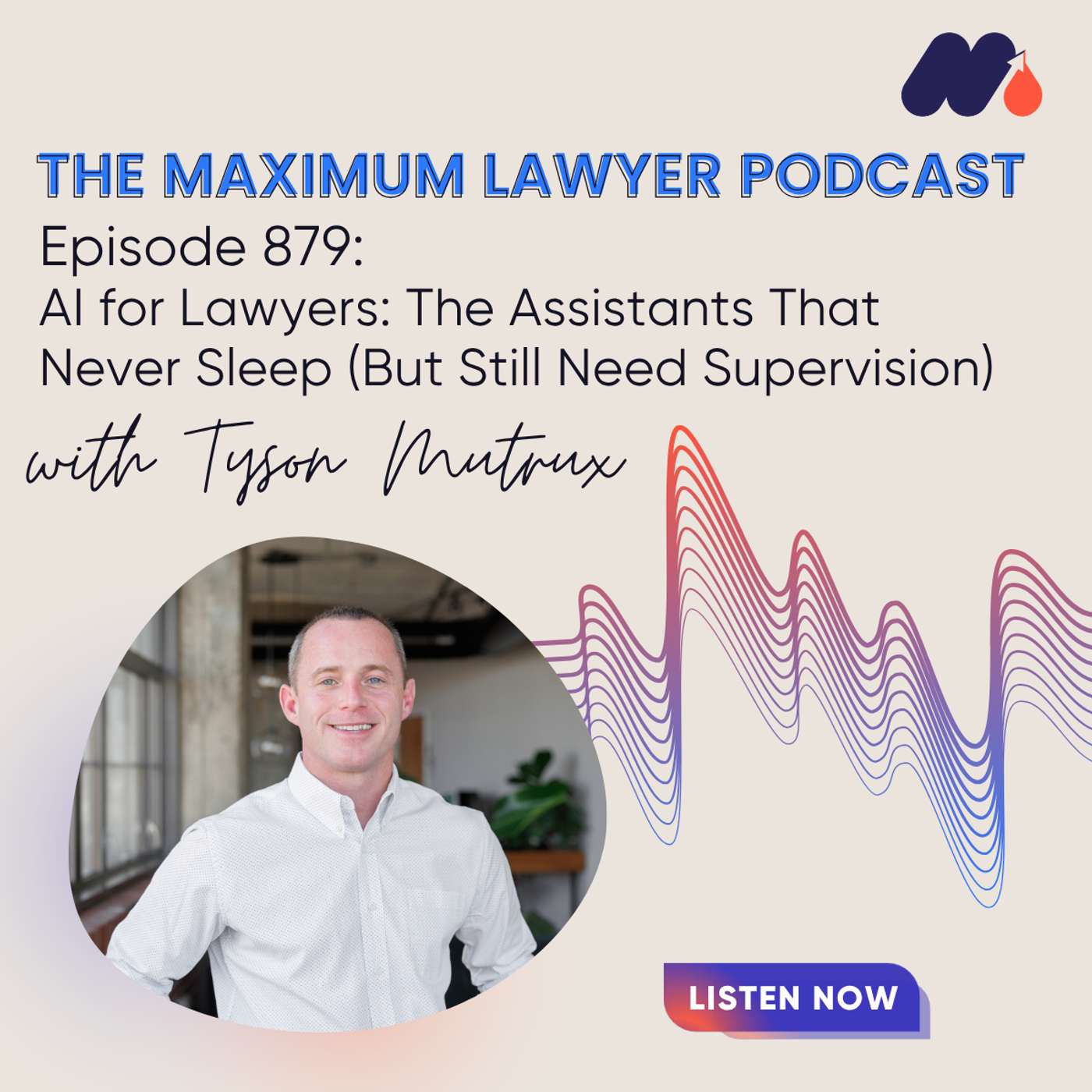
AI for Lawyers: The Assistants That Never Sleep (But Still Need Supervision)
Apr 1100:28:38Summary readyWatch the YouTube version of this episode HEREAI is rapidly reshaping the legal industry but where does it actually help lawyers, and where does it fall apart? In this episode of Maximum Lawyer Live, Tyson Mutrux breaks down a thought-provoking article shared by Alex Su about how lawyers are using AI tools like Claude and ChatGPT in real legal practice.Tyson walks through real examples of where AI excels like client communication, summarizing information, and reviewing documents and where it still struggles, including due diligence, negotiation strategy, and complex legal drafting. He also highlights a critical shift many lawyers are missing: moving from chat-based AI usage to process-driven automation inside firm workflows.If you’re a lawyer experimenting with AI or trying to integrate it into your firm more effectively, this episode offers practical insights, cautionary examples, and a smarter way to think about AI implementation.Timestamps 01:30 – The two stories that show AI’s strengths and failures03:40 – Comparing AI tools: Claude vs ChatGPT05:00 – Using AI for client communications and simplifying legal language07:15 – AI for reminders, prioritization, and managing overwhelming inboxes19:00 – When AI drafting goes wrong in complex agreements22:00 – The danger of generic AI answers in legal research35:30 – Legal nuance AI often misses (release language example)39:30 – The biggest takeaway: build process-driven AI workflows 42:30 – Practical automation example: AI pulling weather data for casesTune in to today’s episode and checkout the full show notes here. Resources:Join the Guild MembershipSubscribe to the Maximum Lawyer Youtube ChannelFollow us on InstagramJoin the Facebook GroupFollow the Facebook PageFollow us on LinkedIn
Summary
Think Like a CFO: The Financial Framework Every Law Firm Needs
Apr 900:26:03Summary readyWatch the YouTube version of this episode HEREWhen business owners talk about success, they almost always talk about revenue. But what if the real question isn’t how much you made… it’s how much you kept? 💰In this episode, Chelsea Williams breaks down the uncomfortable truth many entrepreneurs avoid: high revenue does not equal a profitable business. Drawing from her experience helping law firms across the country understand their financial data, Chelsea explains why so many business owners feel financial stress even while bringing in significant income.Through her CFO Framework, Chelsea challenges entrepreneurs to step out of being “pawns” in the game of money and start thinking like the financial leader of their business. She introduces the Three Pillars of Finance, Foundation, Framework, and Flywheel, simple systems that replace guesswork with clarity and help business owners build sustainable profit. By understanding financial reports, implementing intentional spending controls, and confronting the beliefs that shape our money habits, entrepreneurs can move from financial anxiety to confidence, control, and long-term freedom.Chelsea Williams is a Chief Financial Architect who works with law firms across the United States to help owners leverage their financial data, keep more of what they earn, and scale their businesses with intention. With nearly two decades of experience working with business owners, she specializes in turning confusing financial reports into clear strategies that support both business growth and personal financial freedom.Tune in to today’s episode and checkout the full show notes here. 2:05 Why revenue doesn’t matter if you’re not keeping profit 4:15 Thinking like the CFO of your own business 6:30 The three pillars of financial strategy 7:50 The importance of monthly financial reports 9:25 How budgets protect your future freedom 10:35 The flywheel: systems that create financial momentum 11:55 Confronting limiting beliefs around money 13:05 The universal profit equation explained 15:35 Why more revenue won’t fix broken finances 16:50 The $7 million firm that still struggled with cash flow 17:55 How systems create freedom for business owners 19:15 Why profit is about life, not just money 21:40 Moving from pawn to player in the game of money Connect with Chelsea:Website InstagramLinkedInFacebookYouTube
Summary
How AI Took Missed Calls from 23% to 1% (And Doubled Clients)
Apr 701:19:21Summary readyWatch the YouTube version of this episode HEREAI is no longer a futuristic idea for law firms — it is already reshaping how firms capture revenue, manage staff capacity, and compete in the marketplace. In this conversation, Billie Tarascio shares how implementing AI tools such as automated intake and billing capture is directly increasing revenue while reducing missed opportunities. She explains how even small workflow improvements can significantly impact a firm’s bottom line.The episode also explores the real challenge leaders face when adopting AI: managing change without overwhelming their team. Billie explains how thoughtful implementation, daily communication, and focusing on higher-value work helps teams adapt successfully. Rather than eliminating roles, AI is shifting expectations toward stronger judgment, better client relationships, and more strategic thinking.Beyond AI, the conversation touches on innovative hiring strategies such as legal clinics that help firms develop talent early, as well as data-driven decisions about expansion and office locations. She shares how investing in systems, people, and technology today positions firms to grow faster and smarter in the future.0:02 AI is transforming legal tech faster than expected0:42 Using AI across the firm to improve efficiency and profit1:12 AI intake ROI and increased revenue opportunities2:14 AI billing tools that capture missed billable time3:43 Leading teams through rapid change and AI adoption5:28 Which legal roles are most impacted by AI evolution6:31 Hiring strategies and developing future lawyers7:30 Creating a legal clinic to build talent pipelines14:11 AI voice systems improving lead capture and conversion16:10 Missed call rate drops from 23% to 1% with AI26:37 Expanding law firm locations using data insightsTune in to today’s episode and checkout the full show notes here. Connect with Billie:Website TikTok Instagram Facebook Linkedin Youtube
Summary
Why “Using AI” Isn’t Enough
Apr 400:22:48Summary readyWatch the YouTube version of this episode HEREThe future belongs to builders. In this episode, Tyson explains why the biggest advantage in the AI era will go to those who move beyond simply using AI tools and begin building systems with them. As AI continues to rapidly evolve, the gap between those who create and those who consume will only widen.Tyson shares how modern AI tools make it possible to design workflows, automate processes, and create custom solutions without needing advanced technical skills. By reducing friction in research, operations, and execution, AI allows business owners to experiment faster, improve efficiency, and reinvest savings into growth opportunities that compound over time.The key message is simple: start now. Even small experiments can lead to significant long-term advantages. Those willing to build, test, and iterate today will be better positioned to adapt, compete, and lead as AI continues to transform how businesses operate.00:00 Consumers vs. builders and why it matters01:08 Shifting from using AI to building with AI02:16 Renting software vs. owning systems03:16 Using AI tools to build custom solutions05:14 The first-mover advantage in AI06:25 How quickly AI capabilities are accelerating07:20 The build, fail, iterate cycle09:29 What building actually means for business owners15:04 One simple automation to start with20:58 Why taking action now creates long-term advantageTune in to today’s episode and checkout the full show notes here.
Summary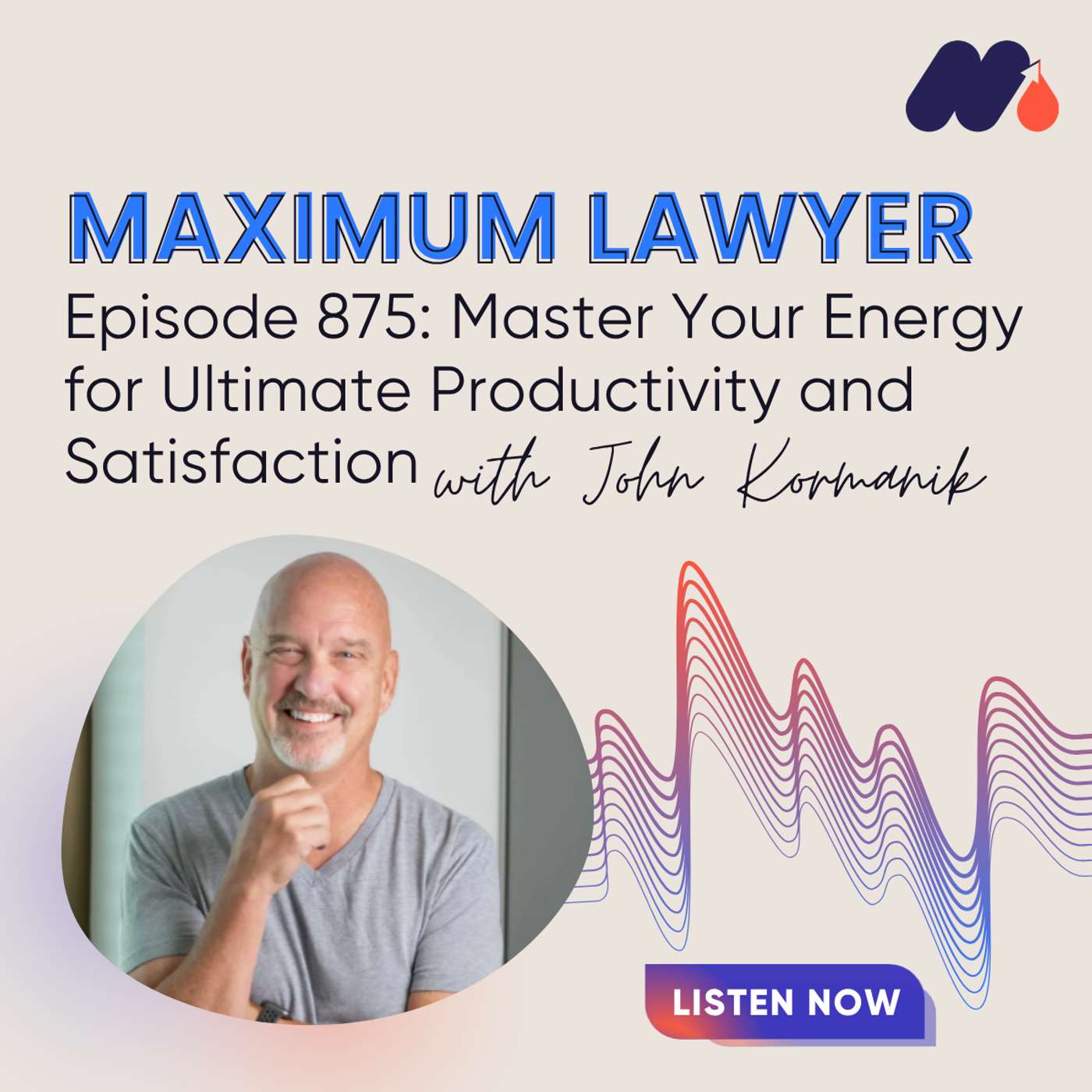
Master Your Energy for Ultimate Productivity and Satisfaction
Apr 200:22:39Summary readyWatch the YouTube version of this episode HEREWhat if time isn’t actually your problem? In this episode, John Kormanik explains why many high performers feel overwhelmed despite having the same 168 hours as everyone else. He shares how focusing on energy instead of time can unlock better decision-making, clearer thinking, and more meaningful progress.John introduces the difference between catabolic energy, which drains us during stress, and anabolic energy, which helps us think strategically and respond intentionally. He also discusses how attitude and beliefs shape performance more than most people realize.The conversation also explores biological energy patterns, including whether you are a morning or evening person, and how aligning your schedule with your natural rhythms can improve productivity and reduce frustration.00:00 Why time isn’t the real problem02:28 The limits of time management04:58 Choosing your attitude in difficult situations06:34 Catabolic vs anabolic energy11:59 Understanding your natural energy rhythm16:01 Why managing energy leads to better resultsTune in to today’s episode and checkout the full show notes here. Connect with John:Website Instagram Linkedin Youtube X
Summary
Is the Traditional Law Firm Already Obsolete?
Mar 3101:03:24Summary readyWatch the YouTube version of this episode HEREMost law firm owners know they’re doing too much — but identifying the real bottleneck is often harder than expected. In this episode, Chad Burton and Tyson Mutrux discuss the common warning signs that a firm owner is overloaded and why trying to both practice law and manage operations can slow growth. They explain why popular business frameworks don’t work for every firm and why the right structure depends heavily on the individual owner’s strengths, goals, and capacity.The conversation explores how law firms can scale more effectively through better operational models, including leadership teams, outsourced functions, and Managed Service Organizations (MSOs). Tyson shares how these models can help firms improve efficiency, build stronger systems, and create more valuable long-term exit opportunities without requiring the owner to manage every detail personally.The episode also looks ahead at the role of AI in transforming legal operations. From intake systems to document organization and discovery workflows, AI is rapidly reducing administrative workload and enabling firms to operate with greater speed and precision. Tyson explains why the concept of an AI-first law firm is quickly becoming realistic and how firms can begin preparing now.0:54 Can owners realistically both practice law and run a firm?2:03 Why some founders succeed with limited caseloads3:00 Problems with the visionary vs integrator model4:33 Why business frameworks don’t work for every firm10:25 Evolution from consulting to Law Firm OS platform12:46 How MSOs are reshaping law firm operations15:10 Creating scalable infrastructure for long-term exits20:06 Fee sharing and referral incentives in Arizona25:04 Differences between litigation and transactional firms27:26 Why MSOs are not the right fit for every firm31:31 Is a fully AI-powered law firm possible today?43:40 AI tools for document analysis and discovery automationTune in to today’s episode and checkout the full show notes here. Connect with Chad:Website Linkedin XResources:Join the Guild MembershipSubscribe to the Maximum Lawyer Youtube ChannelFollow us on InstagramJoin the Facebook GroupFollow the Facebook PageFollow us on LinkedIn
Summary
We Spent Thousands on This System… Then Killed It in 3 Days
Mar 2800:22:47Summary readyWatch the YouTube version of this episode HEREWhen a major system upgrade fails, what should leaders do — push through or pivot fast? In this episode, Tyson Mutrux shares a candid behind-the-scenes look at a recent technology rollout that didn’t go as planned, and the leadership decision required to protect the team, client experience, and long-term outcomes. Rather than defending a poor decision due to time or money already invested, Tyson explains why quickly pivoting can often be the smartest strategic move.Tyson explores the concept that failure itself isn’t the problem — hesitation is. Drawing from real-world leadership experience, he discusses the danger of the sunk cost fallacy, the ripple effects a broken system can have on team morale, and why leaders must detach emotionally from decisions and instead focus on desired outcomes. He also shares how feedback loops, communication, and accountability play a key role in maintaining a strong team culture even when things go wrong.Listen in.2:12 The real danger is hesitation, not failure itself5:21 The sunk cost fallacy and knowing when to walk away7:26 Making leadership decisions that protect the team8:31 Owning mistakes and removing ego from decisions10:32 Detaching from decisions and focusing on outcomes12:33 Opportunity cost and the law of diminishing returns16:31 Accountability as a leadership responsibility18:37 Building a company that can pivot quickly21:20 Why failure provides valuable information for future successTune in to today’s episode and checkout the full show notes here.
Summary
Unbillable Brilliance: Monetizing Your Legal Knowledge Online
Mar 2600:53:07Summary readyWatch the YouTube version of this episode HEREIn this episode, Sonia Lakhany shares how attorneys can monetize their knowledge by creating digital products that generate leveraged income beyond the billable hour. Drawing on over 15 years of trademark law experience and her course Two Weeks to Trademarks, Sonia explains how lawyers can package their expertise into guides, templates, courses, and resources that serve both clients and other professionals.She discusses how digital products can create scalable revenue streams, the importance of market research before building a product, and practical strategies for validating demand through content and audience feedback. Sonia also provides insight into pricing, audience targeting, and choosing the right tools to build and deliver online products successfully.3:00 Moving beyond the billable hour with leveraged income6:46 Ethics considerations and setting up a separate entity9:36 Types of digital products attorneys can create13:18 How to price digital products based on value18:11 Building an audience and identifying your buyer24:38 Validating demand before creating the product31:05 Tech tools to create and deliver digital products42:18 Marketing strategies and lessons learnedTune in to today’s episode and checkout the full show notes here. Connect with Sonia:Website Instagram Facebook Linkedin Amazon Store
Summary
The Hidden System Behind How You Make Decisions and Take Action
Mar 2401:12:02Summary readyWatch the YouTube version of this episode HEREWhat if the reason some work feels easy for you—and hard for someone else—has nothing to do with personality or intelligence? In this episode, Christine Morrow explains how the Kolbe assessment measures the instinctive ways people solve problems, make decisions, and take action. She breaks down how Kolbe differs from personality tests and cognitive tests, and why understanding your natural mode of operation can change the way you work, hire, parent, and lead.Christine also shares how Kolbe can be used in real life, from team training and hiring to understanding children, spouses, and workplace roles. Tyson reflects on his own Kolbe results and talks through how knowing your score can help you give yourself more grace, understand where you thrive, and recognize where you may need support from others.Throughout the conversation, Christine makes the case that there is no such thing as a bad Kolbe score. Instead, the goal is to understand how you naturally operate so you can do more of what matters in a way that feels more natural, sustainable, and effective.2:21 Why Kolbe focuses on how you naturally get things done7:03 How life transitions can affect assessment results23:51 What implementer really means and why people misunderstand it35:01 The idea behind doing more, more naturally52:50 Why there is no such thing as a bad Kolbe score1:05:18 Why Kolbe scores are not inherited1:08:58 How Kathy Kolbe used her strengths after a traumatic brain injuryTune in to today’s episode and checkout the full show notes here. Connect with Christine:Website FacebookLinkedin Youtube Instagram
Summary
What Jiu-Jitsu Can Teach Law Firm Owners About Legacy
Mar 2100:28:45Summary readyWatch the YouTube version of this episode HEREAfter attending his jiu jitsu professor’s fourth-degree black belt ceremony, Tyson Mutrux reflects on the idea of legacy and what law firm owners can learn from martial arts. In jiu jitsu, lineage and mentorship are central to the culture, with generations of students carrying on the influence of their instructors.Tyson explores how this idea applies to the legal profession. Many law firms are built around a single rainmaker, which raises an important question: what happens to the firm when that person steps away? Instead of focusing only on revenue or case results, Tyson challenges listeners to think about the lawyers their firms develop and the impact they leave on the profession.He also encourages firm owners to think with a longer time horizon. By prioritizing mentorship, intentional development, and succession planning, lawyers can build firms that last longer than their own careers and create a lasting professional legacy.0:02 Attending his professor’s fourth-degree black belt ceremony3:15 How the ceremony sparked thoughts about legacy4:46 Whether your firm is built to survive without you6:49 Lessons law firms can learn from martial arts lineage10:07 Why mentorship matters in professional development12:19 Measuring success by the lawyers your firm produces15:31 Thinking about your firm in a 30-year timeline18:56 Designing development paths for attorneys23:10 Imagining what a 100-year law firm looks like27:31 Building a firm that can outlast the founderTune in to today’s episode and checkout the full show notes here.Resources:Join the Guild MembershipSubscribe to the Maximum Lawyer Youtube ChannelFollow us on InstagramJoin the Facebook GroupFollow the Facebook PageFollow us on LinkedIn
Summary