
Podcast
Memphis Material
Hosted by Memphis Material · EN
An oral history project chronicling the stories of the visual arts in Memphis, Tennessee. Memphis Material is a podcast celebrating the personal histories, intimate stories, and the studio practices of some of the people who help shape the creative landscape of our city.
19episodes
Episodes
Newest firstAll episodes

Maysey Craddock Part 1
Jul 301:40:13Tap to summarizeEditors note: Both Maysey and I mentioned the piece The Eagle Has Landed painted by David Parrish in 1969. It will be among the works from the permanent collection on display when the Memphis Art Museum opens in December. Maysey Craddock has long been fascinated by ruin. The ephemeral quality so richly sewn into her paintings began with her childhood interest in searching for fossils at the edge of rivers or uncovering contents of forgotten drawers, always intent on discovering what came before – what once was. Craddock’s large-scale gouache paintings reference spaces in similar states; a landscape left to its own devices, crumbling structures, transformation, and natural entropy. Working from her own photographs, Craddock transfers her intricately drawn imagery onto found materials and carefully builds the surface with layers of paint, eventually revealing the bigger picture. She compares her process to a familiar expression; “There is a chunk of time where I am only seeing the trees, and then towards the end I begin to stand back more, and try to see the forest. It becomes a balance between light and dark, the contrast of tight color and washy strokes, all weaving together until I feel, instinctually, that the painting has achieved the perfect harmony and tension. The built paper and the unbuilt image merge.” Craddock currently lives and works in Memphis, TN. She received an MFA from Maine College of Art (2003) and a BA from Tulane University (1993). For the past three decades, her work has been shown in galleries and institutions across the US and in Germany. Craddock has received fellowships including the APSU Tennessee Artist Fellowship and the Tennessee Arts Commission Fellowship, and has participated in artist residencies both in the US and Germany, including the Oberpfälzer Künstlerhaus in Schwandorf, Germany; the Vermont Studio Center Residency in Johnson, VT; and the Virginia Center for Creative Arts in Amherst, VA. Craddock was a founding member of ArtsMemphis’ Artist Advisory Council and the ArtsAccelerator Grant for Individual Artists. She currently works from her studio in The Medicine Factory in downtown Memphis.
Transcribe →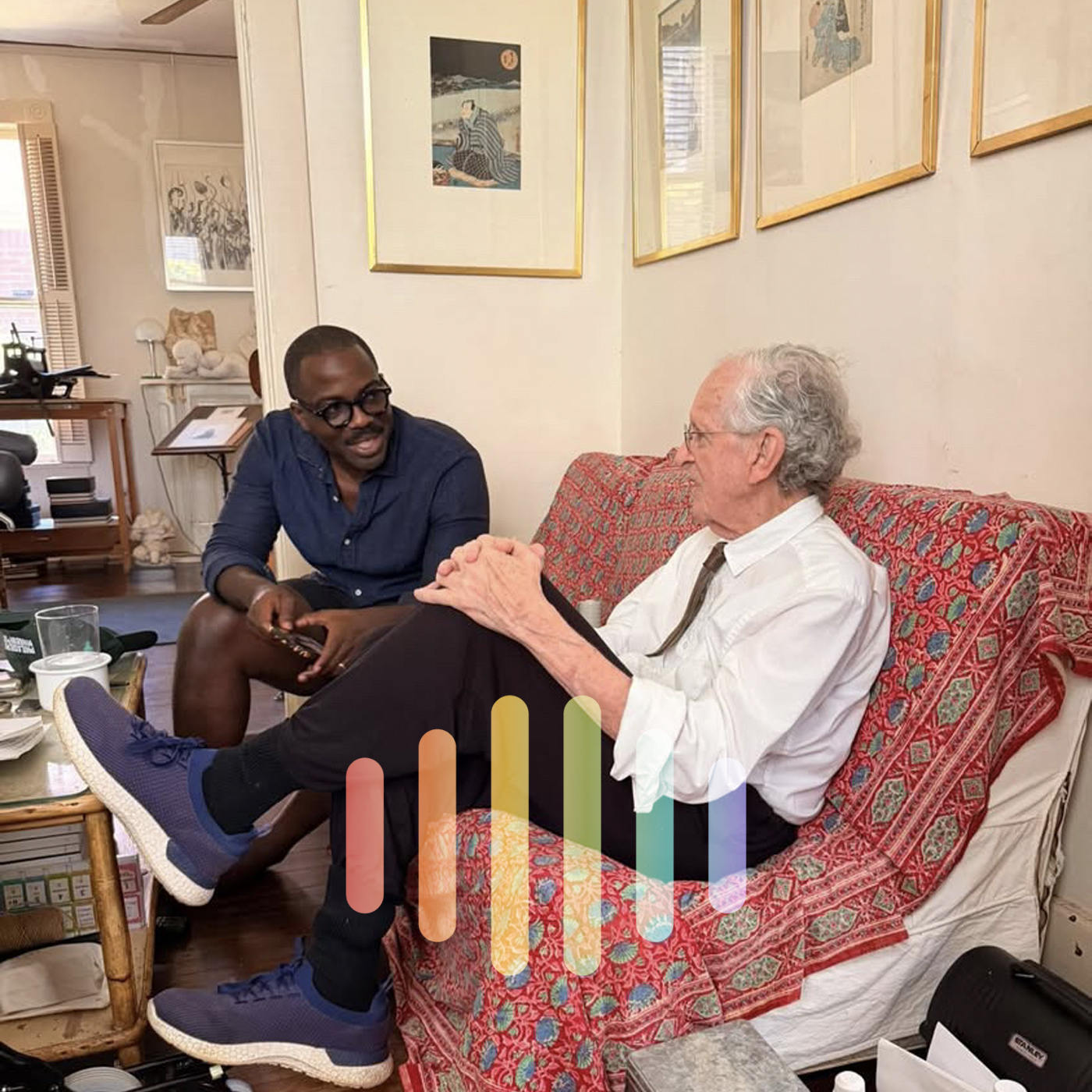
Derek Fordjour
Jun 1400:49:43Tap to summarizeFrom Derek Fordjour’s page on the Petzel website: Derek Fordjour (b. 1974, Memphis, Tennessee) Derek Fordjour is the recipient of the 2025 Gordon Parks Foundation Artist Fellowship, the 2023 St. Jude Children’s Research Hospital Spirit of the Dream Award, and previously served as the Alex Katz Chair at Cooper Union. He has received public commissions for the High Line, the NYC AIDS Memorial, MOCA Grand Avenue and the MTA’s Arts & Design program. Fordjour’s work has been reviewed in The New York Times,Financial Times, The Wall Street Journal, and The Los Angeles Times. A monograph of his work will be published by Phaidon in 2027. He is a graduate of Morehouse College in Atlanta Georgia. He also earned a Master’s Degree in Art Education from Harvard University and an MFA in painting from Hunter College. His work is held in the private and public collections of the Metropolitan Museum of Art, Whitney Museum of American Art, Guggenheim Museum, and The Royal Collection in London among others. He is the founder of Contemporary Arts Memphis.
Transcribe →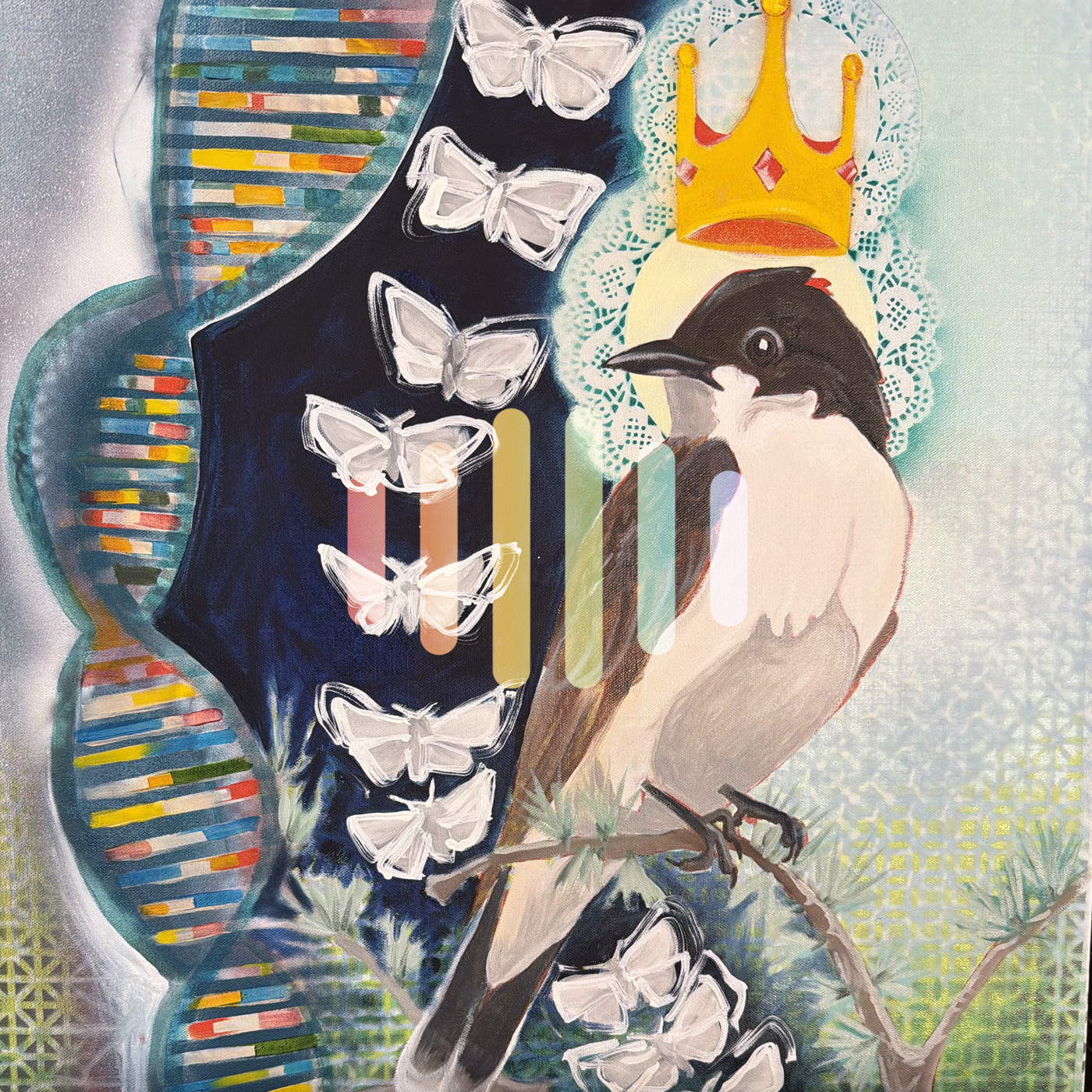
Tim Andrews Part 2
May 3101:32:40Tap to summarizeTim Andrews was born and raised in Northwest Arkansas attended Junior college in Fort Smith, Arkansas. He movee to Memphis in the mid 80s to attend Memphis College of Art. He received his bachelor of Fine-Arts degree with emphasis in printmaking and painting. After graduation Andrews started teaching in the summer school and Saturday school programs continued that for years and returned to Memphis College of Art in the 90s to get his masters degree in 1994. He continuted to teach Saturday AP class for years meeting and engaging with some of the finest young artist in our area. He maintained a studio at Marshall Arts for years and with a active member of the Art Farm community in the 90s and early 2000’s he continued making art in our community ever since and has been featured in several group shows over many years. Tim now lives just outside of Memphis where he continues to make art and show.
Transcribe →
Tim Andrews Part 1
May 2202:02:41Tap to summarizeTim Andrews was born and raised in Northwest Arkansas attended Junior college in Fort Smith, Arkansas. He movee to Memphis in the mid 80s to attend Memphis College of Art. He received his bachelor of Fine-Arts degree with emphasis in printmaking and painting. After graduation Andrews started teaching in the summer school and Saturday school programs continued that for years and returned to Memphis College of Art in the 90s to get his masters degree in 1994. He continuted to teach Saturday AP class for years meeting and engaging with some of the finest young artist in our area. He maintained a studio at Marshall Arts for years and with a active member of the Art Farm community in the 90s and early 2000’s he continued making art in our community ever since and has been featured in several group shows over many years. Tim now lives just outside of Memphis where he continues to make art and show.
Transcribe →
Lawrence Matthews Part 3
May 1501:43:51Tap to summarizeBorn and raised in a lower middle class neighborhood fixed between the Mississippi border, the Memphis city limits and the well off suburbia; Lawrence Matthews’ early life was lived in places, ignored, forgotten and in the liminal interiors of southern family homes and spaces. His life and work exist as an extension of the southern gothic voices with whom he is aligned. He emerges as somewhat of a Morrisonian beloved ghost, a child who desired more. Now, fully grown as a manifestation of his environment’s love and bitterness intertwined. With a BFA from The University of Memphis and a decade long career exhibiting, performing and working with various arts nonprofits, his work in nearly every area of the arts is an amalgamation of his whole life. Visually inspired by Parks, Eggleston, and the regionalistic mythology of Paul Thomas Anderson and early Spike Lee; Matthews’ own visuals weave African spirituality with the Christian mythology that permeates the region. While working as a musician he’d create with the rap, soul and alternative rock references he’d come in contact with through his upbringing. His artistic practice highlights the deep relationship between the often maligned spiritual connections Black people have explored for generations, creating a hauntingly familiar but surreal experience.
Transcribe →
Lawrence Matthews Part 2
May 801:46:45Tap to summarizeBorn and raised in a lower middle class neighborhood fixed between the Mississippi border, the Memphis city limits and the well off suburbia; Lawrence Matthews’ early life was lived in places, ignored, forgotten and in the liminal interiors of southern family homes and spaces. His life and work exist as an extension of the southern gothic voices with whom he is aligned. He emerges as somewhat of a Morrisonian beloved ghost, a child who desired more. Now, fully grown as a manifestation of his environment’s love and bitterness intertwined. With a BFA from The University of Memphis and a decade long career exhibiting, performing and working with various arts nonprofits, his work in nearly every area of the arts is an amalgamation of his whole life. Visually inspired by Parks, Eggleston, and the regionalistic mythology of Paul Thomas Anderson and early Spike Lee; Matthews’ own visuals weave African spirituality with the Christian mythology that permeates the region. While working as a musician he’d create with the rap, soul and alternative rock references he’d come in contact with through his upbringing. His artistic practice highlights the deep relationship between the often maligned spiritual connections Black people have explored for generations, creating a hauntingly familiar but surreal experience.
Transcribe →
Lawrence Matthews Part 1
May 101:39:43Tap to summarizeBorn and raised in a lower middle class neighborhood fixed between the Mississippi border, the Memphis city limits and the well off suburbia; Lawrence Matthews’ early life was lived in places, ignored, forgotten and in the liminal interiors of southern family homes and spaces. His life and work exist as an extension of the southern gothic voices with whom he is aligned. He emerges as somewhat of a Morrisonian beloved ghost, a child who desired more. Now, fully grown as a manifestation of his environment’s love and bitterness intertwined. With a BFA from The University of Memphis and a decade long career exhibiting, performing and working with various arts nonprofits, his work in nearly every area of the arts is an amalgamation of his whole life. Visually inspired by Parks, Eggleston, and the regionalistic mythology of Paul Thomas Anderson and early Spike Lee; Matthews’ own visuals weave African spirituality with the Christian mythology that permeates the region. While working as a musician he’d create with the rap, soul and alternative rock references he’d come in contact with through his upbringing. His artistic practice highlights the deep relationship between the often maligned spiritual connections Black people have explored for generations, creating a hauntingly familiar but surreal experience.
Transcribe →
Patricia Lee Daigle Part 2
Apr 2401:45:19Tap to summarizePatricia Lee Daigle is Chief Curator at the Memphis Brooks Museum of Art (MBMA), where she leads the curatorial department and specializes in modern and contemporary art. Prior to this role, she served as MBMA Curator of Modern and Contemporary Art between 2021 and 2025. At MBMA, she has curated numerous exhibitions including Suchitra Mattai: with abundance we meet (2025), Harmonia Rosales: Master Narrative (2023), and Tommy Kha: Eye is Another (2023). She has also served as site curator for traveling exhibitions such as Christian Siriano: People Are People (organized by SCAD FASH Museum of Fashion + Film) and Black American Portraits (organized by the Los Angeles County Museum of Art). From 2015-2020, Patricia was Director of The Martha and Robert Fogelman Galleries of Contemporary Art at The University of Memphis, organizing solo exhibitions featuring the work of Virginia Overton, Jefferson Pinder, Umar Rashid, and others. She has also held curatorial positions at the Dixon Gallery & Gardens and the Santa Barbara Museum of Art. Patricia has written for numerous exhibition catalogues and other publications. She holds a Ph.D. in the History of Art and Architecture from the University of California, Santa Barbara, with a specialization in race and representation in twentieth-century American art.
Transcribe →
Patricia Lee Daigle Part 1
Apr 1701:46:23Tap to summarizePatricia Lee Daigle is Chief Curator at the Memphis Brooks Museum of Art (MBMA), where she leads the curatorial department and specializes in modern and contemporary art. Prior to this role, she served as MBMA Curator of Modern and Contemporary Art between 2021 and 2025. At MBMA, she has curated numerous exhibitions including Suchitra Mattai: with abundance we meet (2025), Harmonia Rosales: Master Narrative (2023), and Tommy Kha: Eye is Another (2023). She has also served as site curator for traveling exhibitions such as Christian Siriano: People Are People (organized by SCAD FASH Museum of Fashion + Film) and Black American Portraits (organized by the Los Angeles County Museum of Art). From 2015-2020, Patricia was Director of The Martha and Robert Fogelman Galleries of Contemporary Art at The University of Memphis, organizing solo exhibitions featuring the work of Virginia Overton, Jefferson Pinder, Umar Rashid, and others. She has also held curatorial positions at the Dixon Gallery & Gardens and the Santa Barbara Museum of Art. Patricia has written for numerous exhibition catalogues and other publications. She holds a Ph.D. in the History of Art and Architecture from the University of California, Santa Barbara, with a specialization in race and representation in twentieth-century American art.
Transcribe →
Tracy Lauritzen Wright Part 2
Apr 1000:54:15Tap to summarizeTracy Lauritzen Wright is Chief Operating Officer at ARTSmemphis, a Local Arts Agency supporting the arts to strengthen the community. She administers $3.4M+ in grants to 90 arts organizations and artists annually. She has 25 years’ experience in museums and cultural organizations, including 14 years at the National Civil Rights Museum. She served as Executive Director of Delta Axis, a contemporary art and film organization, was a founding board member for Indie Memphis Film Festival and served on the Board of the Tennessee Association of Museums. Her current focus is on strengthening local communities through the arts, by expanding ARTSmemphis support to more artists and organizations, and connecting community partners with arts organizations.
Transcribe →