
Podcast
Menopause Balance
Hosted by Dr Ian (Chinese Medicine) · EN
These Podcasts are for finding Health Balance, moving through Menopause smoothly, gracefully and with Balance. They aim to help you find the point of good health or even great health again.
They are to help shift the way we in the western communities see our health and how we can help ourselves become our own Health Champions and achieve the Balance that is essential for good health.
Each podcast will deal with individual topics that can seen together as a way to acquire that different lens so as to see how to achieve that Balance.
14episodes
Episodes
Newest firstAll episodes
HeadachesandCEAM
Jun 2600:12:17Tap to summarizeNo description available
Transcribe →
CEAM and Autumn
May 2800:14:27Tap to summarizeNo description available
Transcribe →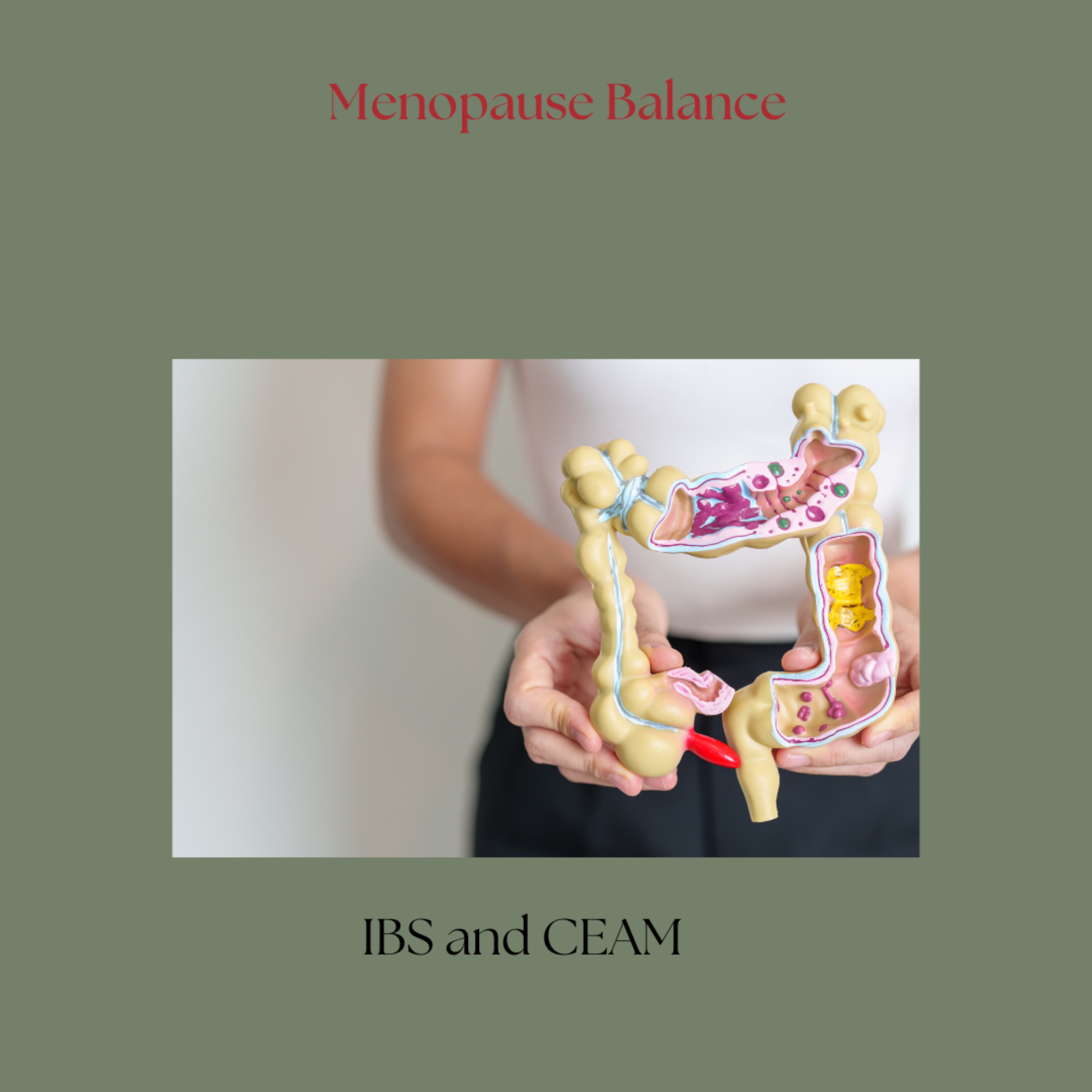
IBS and CEAM
Apr 2300:15:24Tap to summarizeThis month we are looking at IBS through the lens of Classical East Asian Medicine.
Transcribe →
“How CEAM Understands and Treats Endometriosis: Restoring Warmth, Flow, and Balance”
Mar 2600:26:34Tap to summarizeNo description available
Transcribe →
Still Waters Within: The Heart, Shen, and Sleep in Late Summer
Feb 2600:12:04Tap to summarize“Still Waters Within: The Heart, Shen, and Sleep in Late Summer” [00:00:00] Hello everyone and welcome back to the Menopause Balance Podcast. I'm Dr. Ian, and today we're going to explore something that touches us all that gentle but sometimes elusive rhythm between wakefulness and rest. Now it's February and in the rhythm of the seasons, we're still in the late summer phase. That humid, heavy, sometimes unsettled time when our sleep can become a little erratic and our minds a little busier than we'd like. Now, in classical East Asian medicine, this season belongs to the heart and the residents of the Shen or spirit. And when the heart is stirred, the Shen becomes restless. Sleep may slip away. Our dreams can become vivid and our emotional [00:01:00] landscape can sometimes start to ripple like water in the wind. So today's episode is called Still Waters Within the Heart, Shen and Sleep in Late Summer, and we're gonna talk about what disturbs the heart, what calms it, and how we can find stillness again. Not through force, but through understanding and gentle restoration, the heart and the Shen. Now in classical East Asian medicine, the heart is not just a pump for your blood. It's the seat of consciousness, the home of our emotional clarity. And connection. It is the place where our inner world meets the outer one, where our feelings, thoughts, and [00:02:00] awareness gather and become harmonious. The sheen, which is often translated, his spirit reflects the heart's brightness when now Shen is calm. Your eyes are clear. Your speech is measured, and our presence is centered. But when the Shen becomes disturbed by heat, worry, overstimulation, or even emotional excess, we can start to feel scattered, restless, unable to settle. The heart becomes like a pond. You know, after you throw a stone in it, the ripples spread right out to the edges. And our sleep, our mood, and our focus can be disturbed. [00:03:00] So in late summer, when the weather can often contribute to this, you get humidity lingering. And warmth can transform into what in classical East Asian medicine we call damp heat. This not only affects the body, but it affects the mind. The heaviness we feel in our limbs can also appear as heaviness in our thoughts and, and as the knights remain warm, our capacity to cool and anchor the yang. That's the active outward moving energy. That becomes challenged and therefore yang drifts upwards, and the Shen, which resides in the heart can become unsettled by that rising yang. When the heart can't find stillness, you might notice this pattern in [00:04:00] yourself or in your friends or your family. This is when sleep becomes lighter. You tend to wake easily or toss and turn. Your dreams may become colorful or even disturbing. There's a sense of fullness and warmth constantly in the chest, or perhaps you feel physically fine, but you can't turn off your mind, particularly when you lie down to go to sleep. Now in the world of classical East Asian medicine. These things are not random. We take them as signs that the heart's residence has become too warm. Or perhaps that the fluids, the yin, that normally anchors the Shen has become thinned out due to heat. Sometimes that can be from overwork, too much thinking, or late night screen time. You know, [00:05:00] blue light sometimes, or even emotional tension. Or even things that you're eating, dietary factors like excess coffee, alcohol, and sometimes even spicy foods, Nourishing Sheng the heart and calming the Shen. Now the good news is that the heart responds beautifully to care, simple, mindful, consistent care. So let's take a look at a few practical ways that we can do things to restore the stillness. First, let's cool and settle the heart through rhythm. This is done by creating an even an evening ritual. That's not a rigid routine, but a gentle rhythm that sends signals. Signals that are saying it's time to return inward. It's time to slow and head [00:06:00] towards the yin, not the yang. How do you do this? Well, let's try dimming the lights an hour or so before you go to bed. Avoid the news screens with their blue light or stimulating conversations even. Listen to light soft music, or you may even like to just step outside for a few quiet breaths under the stars and look up and take into that magnificent spectrum. 'cause the heart thrives on peace and predictability when the world slows. So does the Shen. Next, support the heart with nourishment. In classical East Asian medicine, the foods are used to help gently nourish the yin and therefore calm heat. [00:07:00] Yeah. So what can do that? Well, simple things like fresh pears, fresh apples. A small amount of cooked mung beans, perhaps a sprinkle of lotus seeds or red dates in some congee, some herbal teas with things like Conantum or rose. Now, these are just a few that are gentle tonics for the heart's clarity, and therefore the Shens calmness. You might also try something like some acupressure that can anchor the Shen. You know when you're lying there and you're awake at night. Well try placing a finger on heart at seven or Shen min, and it's located on the wrist crease on the inside of the wrist, in line with the little finger. Now gentle gently massage this point while breathing slowly. [00:08:00] You might combine that with pericardium six, which is a little closer to the midline of the wrist, which also helps release emotional tension and steady the pulse of the heart. You could keep the spleen light and clear because the late summer belongs to the earth phase, and that's the spleens. Big time. The spleen's function of transforming and transporting is vital, but when dam accumulates, it clouds the heart's clarity. And a phrase that's comes up a lot is the mud in the pond. So avoid heavy, greasy, or overly sweet foods. Keep your meals warm and moderate. Think nourishment, not indulgence. [00:09:00] You might wanna reconnect with the joy of simplicity. In classical East Asian medicine, joy is the emotion of the heart, but like all emotions, it's a spectrum from light, contented warmth through to overstimulation, so small. Quiet joys like sitting with a loved one, tending a garden, or playing gentle music. They can help you restore the balance over. Excitement, even from a positive thing can deplete the heart just as quickly as sorrow. Some late summer reflections. So as we move through this late summer period when the yang still dances brightly, but the earth begins to turn inward, I'm inviting [00:10:00] you to find stillness within that warmth. Let the ha rest in the middle. Neither overheated nor dulled, but quietly radiant. When the Shen is calm, sleep does return naturally and our inner rhythm matches the earth's slow turning towards autumn. And you might like to ask yourself tonight, what is it that helps my heart feel still? You know, that could be a walk after dinner, a simple pause before you go to bed. Or simply choosing to let one thought drift away instead of chasing it. Now, the ancients wrote that the sage rests the heart before the night begins, and that might be a key [00:11:00] rest is not only the body lying down, you know, it's the spirit of the Shen being at ease with the day that has passed. Okay, so if you'd like, if you've liked this and you'd like to explore more gentle ways to support your heart and your Shen, I have added a few home care suggestions in the Sagire health members library. Under the home health section, that's where you're gonna find calming tea recipes, acupressure guides, And seasonal self-care tips to help you nurture, restful sleep from within. So until next time, may your nights be peaceful, your mind clear and your heart calm, like still water. I'm Dr. Ian, and this has been the Sagire Health [00:12:00] Conversations.
Transcribe →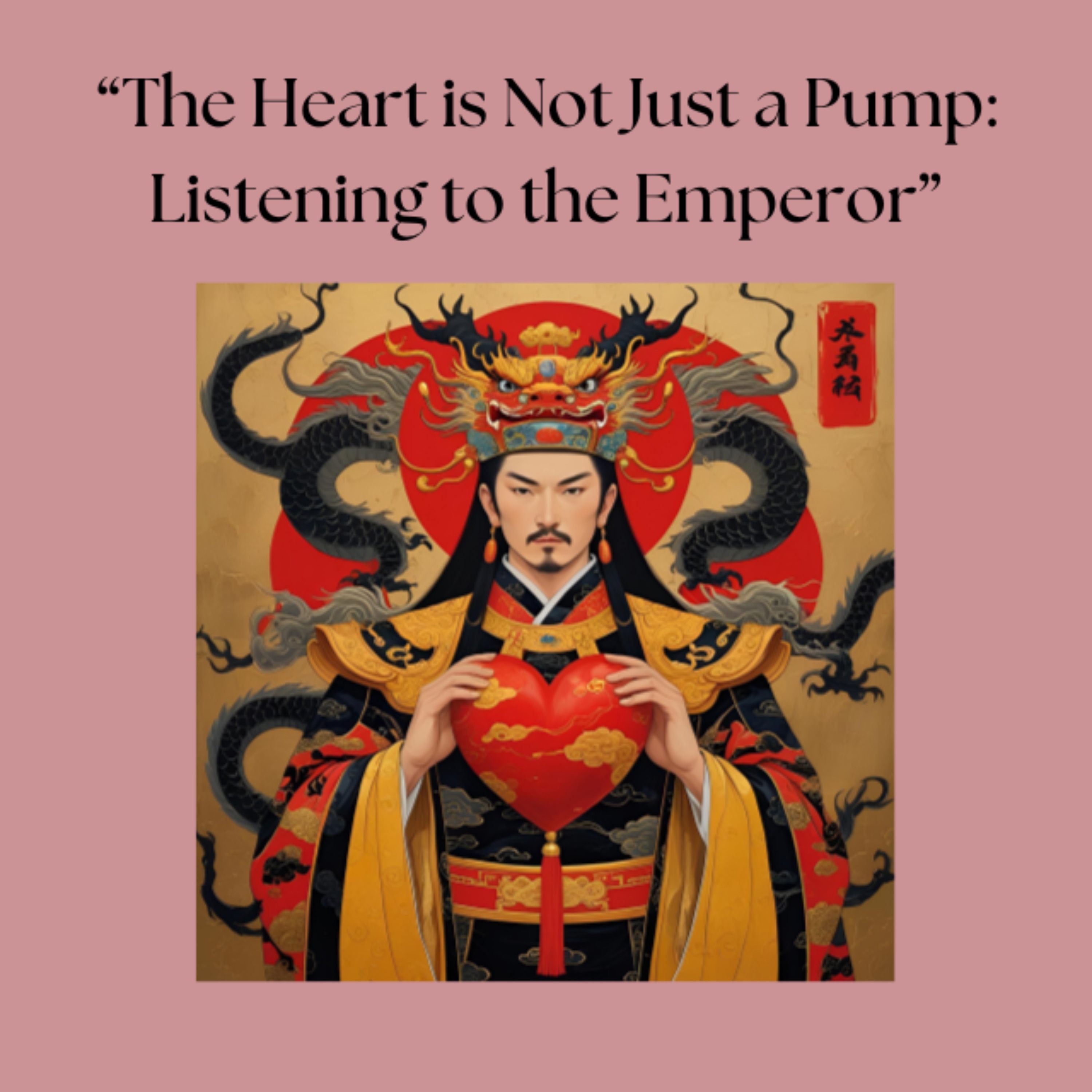
“The Heart is Not Just a Pump: Listening to the Emperor”
Jan 2900:13:44Tap to summarizeNo description available
Transcribe →
Eating under the CEAM framework
Dec 2500:14:28Tap to summarizeNo description available
Transcribe →
Granules or Raw Herbs
Nov 2700:17:28Tap to summarizeNo description available
Transcribe →
Women’s Health Beyond Menopause: CEAM for Your Next Chapter
Oct 3000:13:46Tap to summarizeHello and welcome to the Sagire Health Podcast, where we explore timeless wisdom and modern approaches to women’s health. I’m your host, Dr Ian Dummett and I am a Doctor of Chinese Medicine, and today we’re diving into an inspiring journey—“Women’s Health Beyond Menopause: CEAM for Your Next Chapter.” Menopause is often framed as an ending, but in Classical East Asian Medicine, it’s seen as a natural, graceful transition—a move from peri-menopause through menopause into a stage of wisdom, freedom, and possibility. Today, we’ll explore how CEAM supports vitality, balance, and emotional health through this powerful phase of life. The CEAM Perspective on Menopause Let’s begin by understanding how CEAM views menopause. Rather than a decline, it is a shift—a transition into a new phase marked by knowledge and grace. This is the Autumn of life, a season rich with opportunity to craft a life that feels full and abundant. CEAM believes that when Yin no longer controls Yang effectively, especially in the Yang-dominant summer season, Yang can ‘float,’ leading to symptoms like hot flashes, night sweats, anxiety, and mood changes. But this isn’t a flaw—it’s a signal. A guidepost showing us where balance has shifted. Let me share a story of a patient. She came to me feeling overwhelmed by hot flashes and restless sleep. Through CEAM, we recognised her Yin was struggling to anchor Yang, causing heat to rise. With targeted acupuncture and herbal formulas, She gradually felt her body cooling and her mind calming. This was a profound change for her as she had started to believe that there was no light at the end of her tunnel. Identifying Imbalances So, what happens when this transition isn’t smooth? CEAM uses diagnostic tools like pulse and tongue analysis, along with understanding your symptoms, to uncover where balance has been lost. Quick Aside here, for more on how CEAM sees symptoms and comes to a treatment protocol you might listen to a previous podcast called “What can CEAM Treat?” Now back to this podcast, perhaps sleep is elusive, emotions feel overwhelming, or energy levels fluctuate. These signs help guide us to identify how we can move back to balance. For example, when the pulse feels rapid or the tongue is red with little coating, it suggests internal heat. Conversely, a pale tongue might reveal cold or poor blood flow. These subtle signs give us insight into how best to support you. Herbal medicine, acupuncture, dietary adjustments, and mindful practices all work together in CEAM to restore harmony, easing symptoms and supporting a smooth, empowered transition. Embracing the New Chapter So, what does life beyond menopause look like when we restore balance? Imagine waking with steady energy, feeling emotionally grounded, and moving through your day with confidence and grace. This stage of life is about freedom—freedom to create, to explore, and to fully embrace who you are. Let’s consider another story—this patient, who after menopause, felt lost and disconnected. Through CEAM, she discovered practices that reconnected her with her body’s natural rhythms. Today, she volunteers at her local art centre and feels more vibrant than ever. Menopause became her turning point. By understanding and supporting your body’s natural rhythms, CEAM empowers you to move forward with vitality and clarity. This is your time to craft the life you desire. Practical Steps to Begin Let’s talk about a few ways to begin this journey today: **Mindful Observation**: Start tracking your symptoms—notice patterns in sleep, mood, and energy. This self-awareness is powerful. 2. **Gentle Movement**: Incorporate daily movement, like walking, tai chi, or stretching, to support circulation and balance. 3. **Balanced Eating**: Focus on nourishing, seasonal foods that align with your body’s needs. Think warm, cooked foods in winter and lighter meals in summer. 4. **Restorative Practices**: Explore acupuncture or herbal support to ease symptoms and promote balance. 5. **Journaling**: Reflect on this life stage. What brings you joy? What do you want to create in this next chapter? Emotional and Spiritual Growth Menopause is not just a physical transition; it’s deeply emotional and spiritual. This is a powerful time to reconnect with yourself, honour your journey, and let go of societal pressures. CEAM encourages nurturing not just the body but also the heart and spirit. Consider practices like meditation, breathwork, or even creative pursuits to express and explore your evolving identity. Remember, menopause is not an ending—it’s a doorway. A beautiful transition into a life filled with wisdom, freedom, and joy. Classical East Asian Medicine offers a compassionate, holistic path to guide you through. Thank you for joining me today. If you found this helpful, I invite you to explore more resources on our website sagire.com.au or consider joining our community for deeper support. Until next time, take care of yourself with balance, confidence, and grace.
Transcribe →
Spring and Classical East Asian Medicine
Sep 2500:14:22Tap to summarizeHello, and welcome to my podcast series Menopause Balance. This is where I get to explore how classical East Asian medicine views and treats the human body. These episodes cover specific symptoms, theoretical frameworks, and foundational classical East Asian medicine concepts to help you better understand your health and your wellbeing. It is important, however, for you to understand that the information covered in these podcasts is not to be taken or used for diagnostic purposes. It is for general information only, and as a general guide, if these podcasts raise any health issues that are of concern to you, then you need to have a full and proper consult with your appropriate healthcare professional. Okay. I'm your host, Dr. Ian, and I'm a doctor of Chinese medicine. With degrees in human biology and Chinese medicine, as well as a postgraduate diploma in classical East Asian medicine. Now, I have been treating people in regional Australia with East Asian Medicine for over 20 years, and I have helped them through classical East Asian Medicine to see their symptoms in a new way. I see them through the lens that is classical East Asian medicine. With its warm, rich, insightful, functional, and above all practical ways with its use of lifestyle, diet, and then combine that with herbal medicine and acupuncture so as to enable you to reach the balance within. Now, I assume that if you have found me here, then you are someone who is looking for answers to your health issues, answers that make sense. Give you an understanding, a clarity, and allows you to have control of your health problems and provides practical solutions that can make you your own health champion. I also understand that you are somebody who is looking for some ancient wisdom to give you an understanding of your modern health issues, and that can show you how to reach the balance within. Classical Easter Asian medicine can provide that different lens for which to see the issues of health, women's health, menopause, dietary issues, stress, sleep issues, some seasonal awareness, even men's health or straight pain management. You can do this through the lens that is east asian east asian medicine and help. It can help you achieve the balance within. So please join me now as we journey through the ancient wisdom that is classical East Asian Medicine and discover how it can be a positive impact on your modern life and bring your health back to balance. Let's explore the ancient wisdom and reach the balance within together. So let's start this month's podcast spring. So welcome back to my podcast and I'm Dr. Ian. And today we are diving into the vibrant energy of spring and its connection to the wood element in classical East Asian 📍 Medicine . Now, this season is all about renewal. It's about expansion and movement both in nature and within your body. You may well, and if you've been feeling a little sluggish, that's fine because you're coming outta winter, or you may be experiencing some seasonal shifts in your health, and I hope this episode will help you realign and rejuvenate and explain why those things might be happening. So let's explore how you can support your body and your mind as we step into the energy that is spring. Spring is the wood element, and in east asian east asian medicine, spring is linked to that wood element representing growth, flexibility, and vision. Now the wood element is made up of the liver and the gallbladder organs and there's supporting systems and these correspond with wood playing key roles in detox. Playing key roles in detoxification, in decision making, and ensuring the smooth flow of Q or energy. When these organs are balanced, we feel motivated, clearheaded, and adaptable. However, when they are imbalanced, you may be experiencing such things as frustration, headaches, irritability. Or even some digestive issues, some signs that the liver, isn't moving properly is that you might be feeling stuck. You've lost your motivation. You're, you know, you really are, you're stagnant. You're sitting still, you're not moving forward and you can get easily frustrated feeling that sense that just things just. Not working. You may suffer some physical symptoms like abdominal bloating, headaches that seem to come on really quickly, suddenly some muscle stiffness, and you're going, I haven't done anything to warrant this stiffness, or Your allergies seem to be even more sensitive, or you have some that you've never had before. You might be waking in the middle of the night feeling, why am I waking up? And it seems to be the same time every night. You know, it's somewhere around one o'clock, two o'clock, something like that. So that's the one to three O am liver time according to the body clock, that is a sign that the liver. Is not being happy. It needs some attention. It's trying to tell you something. You may combine that and you have cravings for sour foods. Sour is associated with the liver. That's the taste of the liver. So the liver responds well to that sour food flavor and when you start thinking about it. Sour food flavor can lead us into what should we be eating? So how can we support our, your, our liver and our gallbladder through this spring period? In the early spring, you want to be looking really to new shoots, fresh shoots. So, and a lot of those are going to have a slightly sour. Paste to them, or a sour energy. So you eat for the seasons, so you need to increase your fresh greens and those slightly sour foods like leafy greens, some lemon water even, or fermented foods, they're all going to help stimulate the liver to be in. Its help stimulate the liver to be in its appropriate condition. Now we talked about the liver is responsible for the movement of energy or qi. Well, we can help that by having daily move that are daily movements that are simple, slow, gentle. We need to incorporate stretching. So what am I talking about? You could be doing out, you know, getting outdoors now after winter. We're talking initially is particularly in the early stages of spring gentle movements, so just gentle walks. Gentle tai chi, gentle yoga, not vigorous hard. Go out like a bullet, a gate. That's LA for later in the year. This time we're talking about waking our bodies up, if you like, gently moving it towards that. Stage that was winter, which was inactivity, internalness. Now we're looking to start moving about. We need to manage our stress. This can be done through journaling. Health journaling is something I really strongly recommend. This is where you journal everything about you, your sleep patterns. As I say, what time are you waking up? If you're waking up, is it the same time every night? Are you waking up with feelings of anxiety, depression, anger, a sense of doom? These symptoms all can help start to make patterns. Are you sleeping badly after eating something? What is it that you're eating? Are you finding that you're feeling bloated, sluggish, depressed? After eating. So what are you eating? If you're not recording it, you don't know. We're not talking about allergies. We're talking about things that may cause you to have adverse reactions. So a sensitivity to something, and you may not see it necessarily unless you go looking for it. And the longer you've been journaling, the more detailed you journal, the more you can see. You might wanna start incorporating mindfulness techniques like meditation and meditation is anything really that helps your mind become clear and unfettered. What we're looking to do is teach our mind to not run away with itself so that you have control, you have the ability to say to yourself. I'm not talking about or thinking about the dishes right now. What I'm doing is I'm breathing in and out slowly. Or it might be that you meditate by reading, so that you get so deep into the book you are reading, that you forget about all other things. That is a type of meditation. It could be that you go out and you're a gardener, so you can sit there and garden and literally stick your hands in the dirt, put your toes in the dirt. You are earthing yourself, grounding yourself, and that ability to set aside all other concerns. Your mind is now yours to control. That's the aim of meditation and mindfulness technique. It allows you to give yourself the energy to support and be emotionally flexible. You may need external professional help in the form of acupuncture and or herbal medicine support, and this is where classical East Asian treatments can help balance the flow of Q and support the transition into spring. Part of the classical way of treating in classical East Asian medicine is that everybody should attend to their doctor at the change of seasons. If only just to be told everything's okay, you are on track, your body is balanced. If not. Herbs and or acupuncture, and perhaps to talk about what you're not doing in the way of eating correctly or you've forgotten to do something. That support can come through the professional, east asian Asian medicine practitioner, seasonal adjustments going to keep you healthy so that you don't need long-term treatments. Okay, you should now have an idea of spring its connection to the liver and gallbladder and how you may be able to help manage your transition from winter into spring, through spring and beyond. Now, as part of this, as we step into spring, please take a moment to reflect. Where do you feel the need to for renewal in your life? That's spring. What small changes can you make to align with this season of movement and growth? Now, if you'd like deeper guidance, join my Sagire Health community. This is where we explore seasonal transitions together. It's like a Facebook page, but it's private. It's a place where you can get to talk to other like-minded people, host questions, answer other people's questions, tell people what you've been doing and what's been working for you. Ask questions of me and then help me to create more inform...
Transcribe →