Podcast
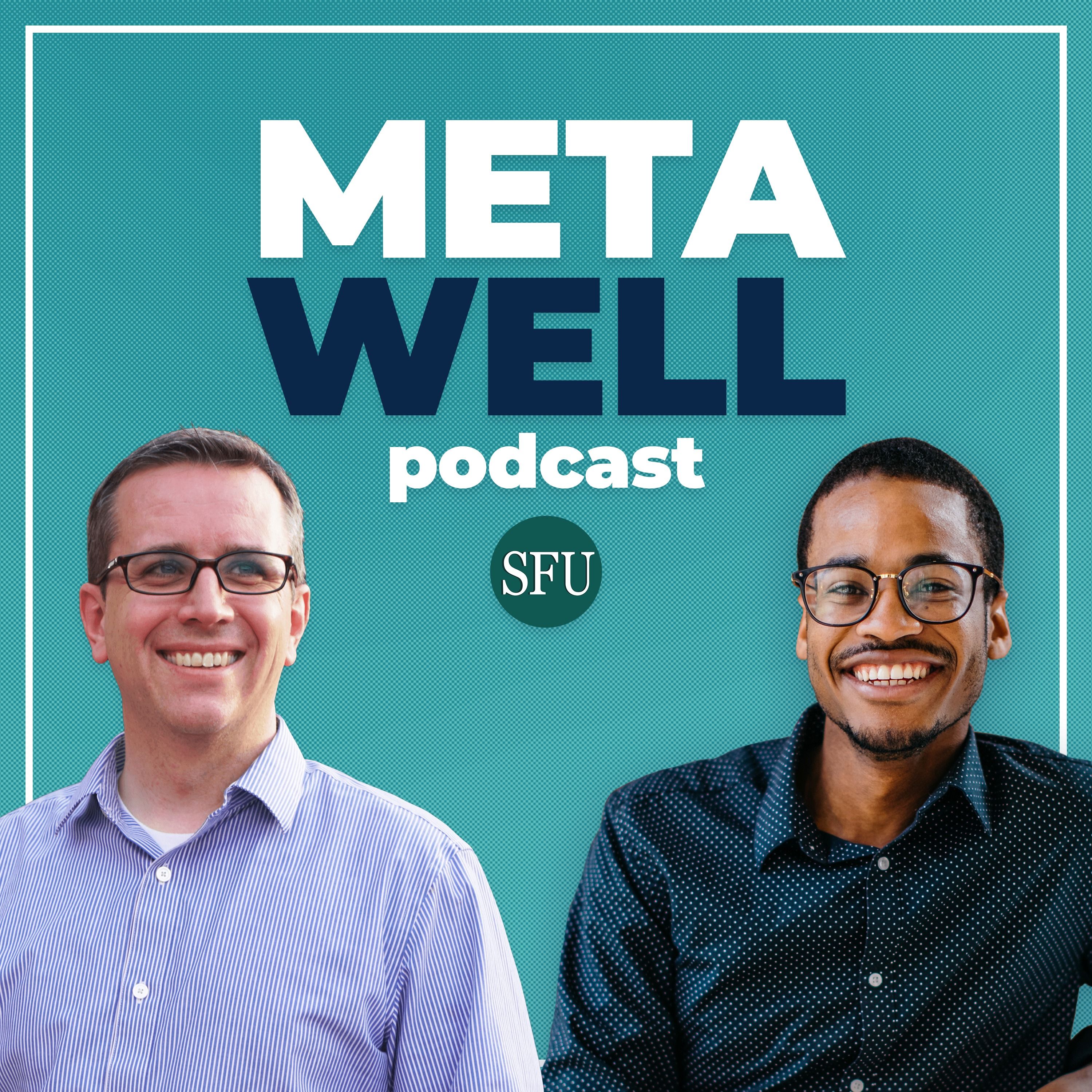
MetaWell
Hosted by Dr. Adam Froerer, Cecil Walker · EN
We’re two therapists exploring what it really means to be well—mentally, emotionally, and beyond. We break down big ideas from voices like Brené Brown, Jay Shetty, Mel Robbins, and more to help you live with hope, purpose, and intention.
10episodes
Episodes
Newest firstAll episodes
We Wish You Well - A Season Recap
Jan 900:28:59Tap to summarizeAs we go into the new year, remember the importance of new beginnings and micro choices in wellbeing. Every day is an opportunity to begin anew and surrounding yourself with supportive people who encourage positive habits can significantly influence your path to wellness.Stay tuned for Season 2, coming later this year! Our WebsiteYouTubeInstagramFacebook
Transcribe →Learning and Intellectual Wellbeing
Dec 2600:27:19Tap to summarizeIn this episode, we discuss how learning is not limited to novelty, how difficulty and challenge often drive meaningful growth, and why learning styles and personal context matter. From metacognitive learning theory to real-life examples involving hardship, evolution, fitness, and music, this episode reframes learning as an ongoing, adaptive process that shapes how we engage with the world and ourselves.Show NotesMetacognitive Theory: https://www.taylorfrancis.com/chapters/edit/10.4324/9781032646527-16/metacognitive-aspects-problem-solving-john-flavell Our WebsiteYouTubeInstagramFacebook
Transcribe →Intellectual Wellbeing Explained: Wisdom, Curiosity & Becoming Your Best Self
Dec 1200:30:41Tap to summarizeLet's dive deep into an often overlooked area of wellbeing: intellectual wellbeing. We'll explore what intellectual wellbeing truly means, why it matters, and how it connects to lifelong learning, wisdom, self-reflection, and even compassion toward others.We'll break down key ideas like:• The difference between intellect and wisdom• Why intellectual wellbeing can’t be pinned to a single part of the brain• How our thoughts, beliefs, and decision-making influence our lives• Monica Dalt’s three-dimensional model (cognitive, reflective, affective)• What it means to flourish intellectually rather than just “get by”• How to improve your intellectual wellbeing through intentionality, curiosity, and practical daily habits• Why people might dislike school but still genuinely love learningShow notes: PBS Crash Courses-https://www.youtube.com/user/crashcourseGarder: Types of Intelligence: https://www.taylorfrancis.com/books/mono/10.4324/9781351249355/intelligence-analysis-fundamentals-godfrey-garner-patrick-mcglynnThree Dimensional Models of Wisdom: Ardelt (2003): https://journals.sagepub.com/doi/abs/10.1177/0164027503025003004 Our WebsiteYouTubeInstagramFacebook
Transcribe →Occupational Wellness in Crisis: What We Can Learn From the Government Shutdown
Nov 2800:29:49Tap to summarizeIn Episode 14 of the MetaWell Podcast, we dive into a very different and timely conversation about occupational wellness and how the recent government shutdown has affected (and continues to affect) millions of people’s overall well-being. Using the current political and economic climate as a backdrop, we explore: How being required to work without pay impacts emotional, financial, and relational wellness The ripple effects of losing income on physical health, food security, stress levels, and family stability Why the shutdown reveals the deep interconnectedness of all areas of well-being How Maslow’s hierarchy of needs helps us understand the crisis Practical ways to support your well-being even when one area (like work) is suffering How political decisions around healthcare, finances, and resources shape long-term wellness for individuals and society This episode brings a more personal and human lens to a national issue, spotlighting the immediate and long-term consequences of economic instability — and why tending to wellness matters now more than ever. If you have been affected by the shutdown or experiencing financial stress, we are sending you our very best and hope you can still find small moments of wellness in the struggle. Our WebsiteYouTubeInstagramFacebook
Transcribe →Occupational Well-Being: Finding Purpose and Recovery in the Work You Do
Nov 1400:28:41Tap to summarizeThis week, Adam and Cecil dive into occupational well-being — the often-overlooked side of our health that deals with how we experience our work. From government shutdowns to personal burnout, they unpack what it means to find meaning, purpose, and balance in the jobs we do every day. Whether you love your job or feel stuck in it, this episode gives you practical insight on how to reconnect with your sense of purpose and protect your well-being without letting work consume you. 🎙️ Topics covered:What “occupational well-being” really means How to find purpose in any job The balance between control and acceptance at work The psychology behind recovery and resilience Why self-care isn’t just relaxation Our WebsiteYouTubeInstagramFacebook
Transcribe →Are You Spiritually Well? Finding Meaning in This World
Oct 3100:36:33Tap to summarizeHow do you know if you’re spiritually well? Adam and Cecil discuss the balance between religious well-being (connection with a higher power) and existential well-being (living with meaning and purpose). We will examine why intentionality and clarity in belief are vital, how culture and context shape spiritual identity, and why intrinsic belief — not just belonging — leads to greater happiness. Whether you’re deeply religious, vaguely spiritual, or just questioning what it means to live meaningfully, this episode will help you reflect on how aligned your life feels with your values and beliefs. 🎙️ Topics Covered: How to recognize when you’re spiritually unwell The difference between religious and existential well-being Why intentionality is the foundation of spiritual health How culture and social systems influence our spirituality Intrinsic vs. extrinsic religiosity and how it shapes happiness Our WebsiteYouTubeInstagramFacebook
Transcribe →Finding Spiritual Balance: Purpose, Connection, and Well-Being
Oct 1700:29:18Tap to summarizeIn this episode of The Metawell Podcast, hosts Dr. Adam Froerer and Cecil Walker explore the often-overlooked dimension of spiritual well-being — what it means, how it connects to purpose, and why it matters for your overall mental and emotional health. Join Adam and Cecil as they unpack the relationship between intentionality, relationships, and purpose, and why tending to your spiritual well-being might be the missing piece in your pursuit of balance.John Fisher's Wellbeing Questionnairehttps://www.mdpi.com/2077-1444/1/1/105. Our WebsiteYouTubeInstagramFacebook
Transcribe →Happiness & Mental Well-Being: What the World Happiness Report Teaches Us
Sep 2600:38:59Tap to summarizeIn Episode 10 of the MetaWell Podcast, we explore the connection between happiness and mental well-being through the lens of the 2025 World Happiness Report.We break down the 7 key factors linked to global happiness, share insights on how pro-social behaviors boost life satisfaction, and highlight why trust and connection are vital to thriving—not just surviving.By the end of this episode, you’ll walk away with practical ideas for improving your own mental well-being and contributing to the happiness of others around you.Sources:World Happiness Report from the Wellbeing Research Centre (WRC) from Oxford University. https://www.worldhappiness.report/ Our WebsiteYouTubeInstagramFacebook
Transcribe →Is Social Wellbeing the Secret to Feeling Good?
Sep 1200:31:50Tap to summarizeIn this episode of The MetaWell Podcast, Adam Froerer and Cecil Walker continue their deep dive into social well-being—why it matters, how it impacts health, and what happens when connection is missing. Our WebsiteYouTubeInstagramFacebook
Transcribe →Social Well-Being: How Belonging, Contribution, and Hope Shape Our Lives
Aug 2900:29:55Tap to summarizeIn this episode, Adam and Cecil unpack the complexities of social well-being.They'll explore how it spans from close relationships to communities and society, and how to tell when it’s thriving or struggling. Topics Covered: 💡 Practical ways to assess social health 💡 The “concentric circles” lens 💡 Modern loneliness, trust, and rebuilding connection 💡 Restoring faith in people through a story about friendliness SHOW NOTES: Keyes, C. L. M. (1998). Social well-being. Social Psychology Quarterly, 61(2), 121–140. https://doi.org/10.2307/2787065 Bronfenbrenner, U. (1979). The ecology of human development: Experiments by nature and design. Harvard University Press. Our WebsiteYouTubeInstagramFacebook
Transcribe →