← Midlife Conversations with Natalie Jill: Fat Loss, Hormones & Health for Women Over 40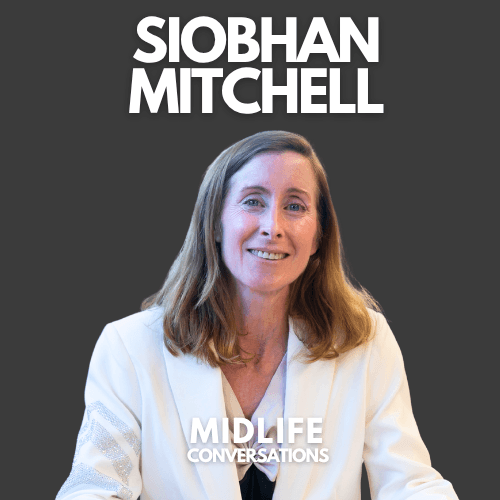
Midlife Conversations with Natalie Jill: Fat Loss, Hormones & Health for Women Over 40
520: S-Equol - The Natural Estrogen Support System Most Women Abandoned for No Reason with Dr. Siobhan Mitchell
01:09:04
Loading summary
Transcript167 lines
- [00:00]
A
Your metabolism did not break. What is actually happening inside our cells right now is something that most people are not talking about. And once you hear this conversation today, everything's going to make a lot more sense. Why the belly fat showed up, why you're exhausted, why nothing seems to work at all anymore. Stay with me. We talk a lot on this show about hormones, about gut health, about all the things we need to be doing in midlife. But our metabolism didn't just mysteriously slow down. What's actually happening is a hormonal shift that shifts as early as our mid-30s, and estrogen is the actual center of it. I'm not talking just about your cycle, because estrogen controls how our cells make energy, how we burn fat, how we handle blood sugar, and when it starts to decline, our entire metabolic system changes. And that is why some of those same habits that worked for us all these years, that worked great at age 35, no longer work at 45, 50, and beyond.
- [00:59]
B
Midlife isn't falling apart. It's changing. And for a lot of women, it can feel confusing, frustrating, or overwhelming. And if your body feels different, hormones feel unpredictable, fat loss feels harder, and stress hits differently than it used to. You are not broken. You're just in midlife. Hi, I'm Natalie Jill, and this is Midlife Conversations, the podcast where I take complicated health topics and break them down simply so you actually understand what's happening in your body and what to do next. I have honest, fascinating conversations with leading doctors and experts about hormones, gut, thyroid health, blood sugar, weight management, brain health, emotional well being, relationships, and navigating this special season of life with clarity and confidence.
- [01:42]
A
No fear tactics, no extremes.
- [01:44]
B
Just real conversations and practical insights to help you feel confident, capable, in control
- [01:50]
A
of your health again.
- [01:54]
B
Before we get started on today's episode,
- [01:56]
A
I want to tell you about something that might make make you go, why
- [01:59]
B
did nobody tell me this?
- [02:00]
A
Now, we talk a lot about strength, especially in midlife. I mean, we're working out, we're doing the protein, we're doing all the things. But your muscles don't just need fuel from the outside, they need energy from the inside, like at the cellular level. Think of it this way. You know how your phone battery starts amazing when it's brand new, and then two years later, you're at 40% by noon and you haven't even done anything different. That's basically what happens to our cells as we age. The little energy factories, they're called mitochondria, they start getting sluggish and damaged. And what happens Your energy dips and your strength dips and your recovery takes forever. Sound familiar? That's where timelines might appear comes in. It contains urolithin A, which helps your body clean out the old broken mitochondria and support healthier ones. It's like finally replacing that old phone battery instead of just charging it more and more. Timeline spent over 15 years and 50 million on researching this. In one clinical study, people saw a 12% improvement in muscle strength in just four months with no change in exercise. 12% doing nothing different. Mito Pure now starts at just $99, and my listeners get 20% off@timeline.com forward slash. Natalie, Jill, go check it out. My guest today is Dr. Siobhan Mitchell. She has a PhD in neuroscience. She spent 25 years researching how nutrition affects the brain, the body. She's worked at Nestle PepsiCo Noom, and she's now the chief science officer at Mitochu, a cellular health company. With over $60 million in research, she's here to talk about what is actually happening inside our cells during midlife, what we can do about it. Thank you so much for being here today, Siobhan.
- [03:41]
C
Yeah, it's great being here. I'm really excited to talk about this really important subject. And just to tell you a little bit more about how I view the way that our hormones change and the way it affects our metabolism in starting, I would say our late 30s, all the way up to our 50s, is this is a time of transition in your health. And if you can steer it in the right direction, things can go well. If you don't steer in the direction that you want, like over this really vital decade, then things can become more of an issue, bringing on more risk of diseases, of aging, things like that. So this is, I think, a vital time for women to be aware of what they can do.
- [04:25]
A
Why I'm really excited about diving into this conversation, too, is historically the only conversation we've had around. This is just going right to hrt. And today we're opening up a different conversation. So especially if you're listening and you're someone who can't do hrt, you've chosen not to do hrt, you're going to want to lean in. And even if you're on hrt, this is some pretty groundbreaking information today. But I'm going to back up for a minute. I want to dive a little bit deeper into metabolism.
- [04:51]
C
So.
- [04:51]
A
So why is it that women have this belief that they feel like their metabolism suddenly broke, especially in their 40s and 50s, like, what's actually happening there?
- [05:02]
C
Yeah. And just to be clear, it's not broken. It's just that you are undergoing these hormonal changes. And these hormonal changes are so vital for everything that we do. And so this is where I think everyone's aware of estrogen is kind of like, okay, it's there to make babies. That's great. But the main thing to also know is that because it's there to make babies, it's also going to regulate many of your nutrients, how you use nutrients, how you use fuel, for instance, carbs, fat, and all the rest. And because it's so important for all these different things, when it starts to fluctuate more and more, as it does when you get into your late 30s, you're going to start noticing that your metabolism changes as well, too, and especially the way you're using fat and also glucose. But I would just kind of emphasize fat right now because this is, I think, really interesting for women to be aware of, because that's one maybe the first things that they start to notice that feels broken is like, hey, I'm eating the same way I used to. I'm trying to get that exercise in, trying to eat a good diet, and suddenly I have more fat around my middle. And where is this coming from? I haven't done anything different. And so, yeah, the main message is that you haven't done anything different. It's literally those estrogen changes. It's your hormones changing as your ovaries, like I hate to use this word, begin to senesce. Like, they are not working as well. They're not producing the hormones they used to as well. And so you get a lot of fluctuations which then lead to decrease. So these fluctuations can make it so that, for instance, the way that estrogen helps your body is that it's helping you use fat better. And this is kind of surprising because people think, all right, well, women end up having more fat than men. It kind of feels like it's not using fat better. In fact, it is. This is really interesting. So the way that estrogen helps us use fat is it helps us put fat into fat cells more easily. And this is overall a health benefit for us. So because we don't have a lot of triglycerides, all these lipids, all these fats floating around in our cells, we're actually having less risk of cardiovascular disease, which, as we all know, men seem to have more of when they're younger. But women seem protected when you start to have those estrogen Fluctuations, the estrogen is no longer able to tell what's called our subcutaneous fat. Fat that's just right underneath our skin, fat that's around our hips and our thighs. Like that kind of fat is no longer as active. And so this means you are going to have more fat just kind of sitting around in your bloodstream. And then because of that estrogen fluctuation and decline, that fat is now going to go around your middle and that's called visceral fat. It's basically fat that is around your organs and it can be much more deleterious to your health over time. Some of the reasons why is that belly fat, as it's kind of colloquially called visceral fat, sort of the science term is that it's making more inflammation and it's making more inflammation that then leads to all sorts of different disease risks, including cardiovascular disease clearly, but also dementia, also diabetes. So this is clearly not good fat for us to have. And it just kind of suddenly just appears and you feel like, like what's happening? Where did it go? Like, like why is it not going away when I do my usual routine?
- [08:44]
A
So let me ask you for a minute because I, I speak a lot about fat loss in general and the different types of fat going on. But what I've not dove into deeply is visceral fat. So I typically will talk about excess body fat, I'll talk about cortisol driven fat. I just bloating and where that's different. And then sometimes it's loose skin that people are mistaking for fat. Well, how do you know it's visceral fat?
- [09:10]
C
Yeah, so that's a very good question. So you know it's visceral fat when you can't, I hate to use this term, pinch an inch like so when you kind of grab the fat around your waist and you can kind of pinch it and kind of see. All right, you know, it's like this much. That is subcutaneous fat. That is not a problem. That's actually good to have. It's sort of like our insulation. It's kind of like the fat that helps women be able to use nutrients properly. The fat I'm talking about is underneath your abdominal sort of cavity wall. So it's sort of like inside your abdominal cavity and that's where you can just see like a stomach distension. Right. So, so well seen in men. Right? The beer gut where they just have
- [09:56]
A
to say a lot of men. Yeah, we could definitely see that in a middle aged men. It's like my d. That and my dad actually died at age 49 of a heart attack.
- [10:04]
C
Oh, my gosh.
- [10:05]
A
He had. I remember my dad didn't look overweight except for that area. It was like this hard, distended stomach, which now I know was visceral fat, but I didn't know that obviously, that many years ago.
- [10:18]
C
Yeah, yeah. And so this is where the main thing to remember about visceral fat is it just doesn't seem to be something that we can control as well. And you mentioned cortisol. So, for instance, cortisol, which comes from stress. So stress in our lives, cortisol is actually well known to make more belly fat, so it can contribute to that. And interestingly, when we have that estrogen decline, as we get closer to midlife, this is also going to make us more susceptible to stress. So it's kind of like this weird synergy of, like, you are now probably having more cortisol because everyone knows women are having, like, such busy lives, right? Taking care of kids and job and family and all the rest. And so then this is where you're having cortisol causing more belly fat deposition, and that that lack of estrogen is going to cause also more belly fat deposition. So, yeah, I don't want to get
- [11:16]
A
too far off topic here, but I want to bring this one part up because I think this is important. Anytime we bring up cortisol, who. No matter who I'm interviewing and myself included, when I'm just talking about cortisol, we tend to lean in this conversation around stress as if we can control it. So we hear, oh, well, you've got to breath work. You got to work on your vagal nerve. You got to. We hear all these things trying to control. But what you just said is really important. If you've got an underlying inflammation, something going on underlying, your body will kick up cortisol to try to protect you and to counter that. And so you could do all the breath, work and calming that you want. If we don't address it, we're going to still have a spiked cortisol. I wanted to bring that up and see if you have anything to add there, because I think that's very misunderstood. We're told women just to calm down.
- [12:02]
C
Oh, yeah, that's, I think, a really good point because everyone feels like that is something that we should also just try harder and everything should be okay. But, yeah, you know, this is only so much deep breathing you can do. And you're right. If you're just having a Lot of stress coming at you and all that inflammation that comes from. Yeah, just even changes in your hormones, changes in the way that you're distributing fat. Like it's not going to be something you can control as well. So I'm not saying like give up or anything else like that. I'm just saying like maybe address the root cause, which is some of those hormone changes. So I think that's a really interesting place for us to explore as we have this conversation.
- [12:46]
A
Yeah, I mean there's, I, you know, I just learned the hard way about I was dealing with super high cortisol for, gosh, a year and it was, for me it was a low grade root canal infection I didn't even know I had. So what just so it just reminded me there's so many different variables that can create it. But just having that low estrogen drop in general also creates this, these inflammation markers. And then so it's like this vicious cycle of which one is causing which. Right.
- [13:13]
C
I mean, no, estrogen's really like an amazing protective thing for women and sometimes people feel like, oh, but maybe he's driving my PMS or whatever. But no, estrogen is, is amazing. It's really like our fountain of youth for women in terms of it can help manage our blood glucose. For instance, estrogen is really important in managing our lean muscle. So when people go through menopause they actually have a decline in their lean muscle mass because estrogen is so vital for keeping that lean mass there. So yeah, we're making more fat and distributing more fat in places we don't want and we're losing that beautiful lean muscle that is so important to use up calories better to kind of decrease inflammation, all the things we want. So yeah, so when I tell people like, how do you deal with stress? I, I hate to say this, but the best way to deal with stress is to, to go outside and take a walk, try to get your heart rate up a little bit and it feels a little bit like is that the thing always, but it kind of is.
- [14:16]
A
I don't even know that it's fully just heart rate. They're just being outside in nature, just grounding being outside sunshine. I think there's a lot of variables that are calming to nervous system and can be calming to cortisol as well. I also know that 3am Wake up call a lot of times is your body pumping out cortisol and that also has to do with low estrogen. Is that.
- [14:34]
C
Yeah.
- [14:35]
A
Anything?
- [14:35]
C
Yeah, yeah, yeah. And this is I think also something where people feel like I should be able to control this, like, what am I doing wrong? And I can tell you just you cannot control these fluctuations in estrogen while you are starting to have this. This transition. So, you know, you can try to at least balance things out with, you know, a few things you can do to kind of keep that sort of estrogen spiking sort of under control, which we can talk about in a little bit. Sure. But the main thing is to just not blame yourself that you're, you know, not doing all the right things in terms of lifestyle, because I think you probably are. I think anyone who's listening to your podcast probably knows a lot about lifestyle, but just this is going beyond that.
- [15:17]
A
So just to kind of recap this, estrogen, it's going to decline as early as your mid-30s. Lower estrogen is going to create reduced mitochondrial efficiency, lower bmr. It's also going to affect your appetite, your craving shift your insulin sensitivity, your gut inflammation starts to rise. So all of that's getting affected. And then what you brought up was this whole indicator of metabolic aging, which is visceral fat. So it's not just annoying, it's literally a metabolic warning sign. So important to pay attention to. And I also have understood that visceral fat can play a role in unfavorable lipid changes. Is that correct? And higher triglycerides as well.
- [15:57]
C
Yeah, exactly. So visceral fat, it's interesting. It's kind of thought of as a more active fat. So it's going to have a lot more activity in terms of being able to release a lot of triglycerides into your bloodstream, which then can lead to. Yeah, there's cardiovascular disease risk, that kind of thing. And then the same thing with the inflammation, like, the inflammation is also something that is going to lead to more, I would say, problematic lipids. So inflammation can lead to oxidative stress. When fats are oxidized, I think everyone knows about, like, rancid fat that, you know, smells bad. I hope so. But.
- [16:34]
A
But touch on that a little bit. Some people don't know what that is.
- [16:38]
C
Yeah, well, so fat usually is just kind of this neutral thing that's going through your body and, you know, is useful for all sorts of things, for creating cell membranes and all sorts of stuff. Especially your brain needs a ton of fat. But when fats get oxidized, so oxidized, like, that means basically that a free radical has attacked the fat and it's made it kind of more, I would say, reactive. This is now making that oxidized fat more likely to do something like stick onto your artery wall and cause a scar. Right. Or like, cause an immune reaction on your artery wall that will then cause a scar. So it's something where oxidized fat. So for instance, there's something called oxidized ldl, and everyone's heard of LDL cholesterol. That's obviously bad. But the real problem with LDL is when it's oxidized and that kind of reactivity that is now been bestowed on that, that lipid, that ldl is now going to attack your arteries, it's going to create a lot more inflammation. It's like a real problem. So, yeah, and it's the same thing that's going to happen to you when you have, like a rancid fat. If you have, you know, for instance, rancid fish oil, that's also going to be something that can cause more inflammation in your body. So I always tell people, be careful of your fish oil. Make sure that it does not smell too fishy and that kind of thing as well.
- [18:04]
A
Yeah, that's another one. How do we even know with. I mean, if it's in a capsule, it's not going to smell fishy? How. How do we know if something's rancid or not?
- [18:13]
C
Yeah, you just. You just break it open and it just, if it gives you that feeling of like, oh, you know, that is too much not helping you, that's. That's a bad sign.
- [18:19]
A
Yeah, interesting. Okay, Good to know that. Okay, so when we look at estrogen and the decline and all these things that it could create, people usually automatically go to hrt. But not everybody can do it. Not everyone chooses to do it. Now, I've so many times on this podcast shared about the Women's Health Initiative and how it was a flawed study. But I don't want to go into that as much because I think women are educated around that. And still some are choosing not to do hrt, and I don't want them to feel bad about that. I want to talk about what people that cannot do hrt. Like, let's. Can we talk about that? Is there any opportunity for them to help with this estrogen declining if they're not going to do hrt?
- [19:06]
C
Yeah, and there's so many reasons why you don't want to do hrt. Like, I have many friends, for instance, that just didn't like birth control, for instance. Just felt like it gave them a lot of side effects. And then HRT is the same thing and they just don't want to deal with it. So I totally understand. And obviously there are some risk factors that just basically make it clear that you probably shouldn't go close to hrt, you know, clotting kind of issues, blood clotting issues, such and such. Anyway, so the main thing that I want to talk about is that there are kind of ways to still help with estrogen signaling that are non hormonal. They can go into the same pathways, but they're not considered hormones. They're just going into, I would say, the same kind of receptors and particularly they can go into the estrogen receptors that we want to control, that control our metabolism and not any of the estrogen receptors that are, I would say more about reproductive processes, like preparing your body for a baby, that kind of thing. The main thing I want to go into with estrogen is that there's two different estrogen receptors. There's actually a few more, but I'm just going to focus on the main two, which are estrogen alpha and estrogen beta. Estrogen alpha receptors are located more in our reproductive organs, our breasts, our ovaries, and they're more responsible for those reproductive processes. So for instance, when you get some breast tenderness, you know, during certain times of the month with your cycle, that's estrogen alpha receptors and they're kind of more associated with proliferative activity. So they're sort of more associated with growth of cells, which, you know, that's sort of where people don't want to go because it feels like, oh, that might be related to cancer. Not that that's, you know, a big sort of straight line to cancer, but that's kind of what they do.
- [21:02]
A
But I would imagine fibroids would also make sense with that too.
- [21:05]
C
Yeah, exactly.
- [21:06]
A
Or melasma, things that are a lot of those things that show up.
- [21:09]
C
Yeah, yeah, exactly. So then there's estrogen beta receptors and these are more on, I would say, sort of metabolic tissues. There's a lot in our brain, there's a lot on our muscles, on our fat, on our kind of, you know, muscles in terms of like, like what they're doing in their muscles is actually helping build up more mitochondrial capacity. So your muscles are working better, for instance, and then on your fat, they're really like there to help metabolize fat better. So estrogen beta receptors are really, I would say, crucial to kind of get the benefits that we want for our metabolism without kind of having to worry about all these sort of excess things that HRT builds in and just to make it clear, like when I talk about these other alternative ways you can make estrogen signaling work, I'm talking mostly about phytoestrogens. Phytoestrogens are a whole big category of chemicals that come from plants. They're naturally derived from plants. They're basically called phytoestrogens because they might have a little bit of similarity in terms of estrogen, in terms of their structure. They can hit on those estrogen receptors, but usually not to any kind of same degree. So, like, you know, maybe 100 times less or even a thousand times less than estrogen, estradiol itself.
- [22:32]
A
So, okay, I want to. I have a lot of questions about phytonutrients and fight. I'm sorry, phytoestrogens. But before we talk about phytoestrogens, can you explain what xenoestrogens are and why those are not ideal?
- [22:44]
C
Yeah. So xenoestrogens are what I would call the ones that are disruptors. And so this disruption is really about not having estrogen work as well as it's supposed to in our bodies. And the one that's the most famous is bpa. So bisphenol A, it's kind of just this chemical that's in a lot of industrial pollutants and it can disrupt the way that estrogen sort of hormone signaling is happening. I'm not talking about that. That is a totally different thing. And I would say that is more something that's out of control in terms of how it's going to affect your estrogen signaling because it has so many different activities. So it binds both to the estrogen alpha receptors and the beta receptors, but it's also doing many other kind of activities that are problematic.
- [23:39]
A
So is it like a broken signal? Is it like a. Yeah, it's sort
- [23:43]
C
of like a broken signal, yeah.
- [23:45]
A
Okay. So it's going to the right places, but it has the wrong information and the wrong. So it's not supportive. It's not going to help you not have hot flashes. It's not going to help you address visceral fat. It's not going to. So it's because we hear that a lot, like, don't take this because it has. It's an estrogen disruptor. So thank you for explaining that. So we don't want that. So now when we look at phytoestrogens, this gets very, very confusing because we get very mixed messages. Ibrahana, we get told not to take soy because it's a phytoestrogen. And then or we get told to take it because it's going to help.
- [24:19]
C
So where.
- [24:19]
A
What do we need to know there?
- [24:21]
C
Yeah. So this is where phytoestrogens have been shown for decades to be extremely safe. Cannot emphasize this enough. So many, many studies showing that women that take a lot of phytoestrogens, for instance, from soy, so tofu, soy milk, they're actually having overall better health and they're having less diseases of aging, so less cardiovascular disease, less diabetes, less dementia. So there's really, I would say, a lot of benefits of having phytoestrogens. And just to get into the cancer situation, just very briefly, it's really been shown that women that take a lot of soy in seem to have less risk of cancer.
- [25:07]
A
So that's really why the drama around soy.
- [25:10]
C
I think it's just one of these kind of associations that people have. As soon as they hear phytoestrogens, they think, oh, you know, soy is off the table. I don't want anything with estrogen in it because my doctor told me to avoid estrogen because of that woman's health initiative. So I think that's where it comes from.
- [25:28]
A
So it's literally a misunderstanding. It's not.
- [25:30]
C
It's a misunderstanding. Yeah. It's just one of those. Those associations that kind of got into the press and it got into forms, and then people all sort of discuss like, oh, you know, not so sure about soy. I heard it's feminizing. It's not feminizing. So this is where men can have it, too. Yeah, men can have it too. Men can get huge benefits from soy as well. So once again, you're taking.
- [25:56]
A
If you're taking hrt, can you still
- [25:58]
C
do soy too, or is it going to get too much? Yeah, yeah, no, it's perfectly fine. And just to make it clear again that HRT is much more powerful than phytoestrogen. So what you're really doing with phytoestrogens is you're just nudging the estrogen beta receptors a little bit more because most phytoestrogens are working on the estrogen beta receptors. So you're talking about the xenoestrogens. They're working kind of on both estrogen receptors. And that's where I think the disruption comes in. These phytoestrogens from soy, so genistein, daisine, and then also this metabolite that gets made from soy called equal, are mostly acting on estrogen beta receptors. So 90% of the activity is estrogen beta. And that's where you can get a lot of benefits. Yeah.
- [26:45]
A
What about the woman listening that had estrogen positive cancer and their doctor has put them on estrogen blockers in addition to not taking HRT or can they do soy?
- [26:57]
C
Yeah, that this is once again where it's. It's okay. So the main thing to realize is that if you've had a history of breast cancer, maybe avoid some soy because we just don't have enough information to know everything about how it's going to work. But if you're taking tamoxifen or something else like that, it's not going to disrupt anything about the tamoxifen. It's really not going in the same kind of signaling pathways and it's not that strong. Yeah.
- [27:27]
A
I've had mom guilt for 18 years because when my daughter was a baby, I breastfed her and tell him I couldn't breastfeed. I had some issues there, but I breastfed initially and then she. I moved her to a formula. This is before I was really in the health space. So I didn't know a lot of what I know now. I did not know most of what I know now. And I. She couldn't do formula. She reacted and my mom had said, oh, give her soy formula because typically babies that have reactions are fine on soy. So she was exclusively on soy formula until she ate food. So I've had this mom guilt for 18 years that I've done something damaging to my daughter because of soy.
- [28:06]
C
No, it's. It's totally fine. My son also was on soy formula because he had some allergies and there's nothing wrong with him. Like he's quite, quite so he's 16. He's, you know, all in the sports.
- [28:21]
A
So this is a myth. This has been a rumor. This has been a. Based on nothing. If I'm hearing you correct about soy, it's been a fear mongering thing that is also attached to the flawed women's health initiative, if I'm hearing you correctly, that people jumped and made an assumption.
- [28:38]
C
Yeah, that's what it seems like to me because most of the studies that I've ever seen about soy has just shown that it can decrease risk of cancer. So yeah, for men, for instance, soy can help decrease the risk of prostate cancer. And it's just one of these situations where we know a lot of Asian cultures have had huge amounts of soy intake, crazy amounts of soy intake for literally thousands of years. And we kind of know, for instance, like for, for Japan, where I think that's the Highest amount of soy intake in the world. Everyone's living the longest than anyone else in the world. Right. Like, I don't want to say that's all because of soy. They have a lot of other lifestyle stuff, but it's certainly not doing, I think, bad to their lifestyle or their lifespan.
- [29:25]
A
So, yeah, you know, it's so wild. I think of my own brain, 54 years old, how many things we've been told and believed and didn't really challenge. And now I know, here we are, like, I, I don't know. I, I don't know where I learned that about soy initially, but we, we have these things just like we, we one point learned that fat was bad, then bad is good, that, you know, we learn these things and we have to unlearn them.
- [29:49]
C
Oh, yeah. You know, I, I also had the same problem too. I've been working on nutrition for, for decades. And it's amazing how much it can change in terms of just the knowledge that we get from just not just relying on the one study that tell us everything about, yeah, saturated fat, for instance, and how bad it's for you, but then looking at many studies and understanding the whole situation. So, yeah, that's, that's really what people get frustrated with science. It's like, didn't you get the answer in the first place? It's like, no, it can be nuanced. You know, we really have to kind of evolve, see it again, again, and then we know. Yeah.
- [30:22]
A
So I think if I'm the reason to avoid soy, if you're going to avoid it would just be because you're more concerned about genetically modified or you're concerned about pesticides. But as long as you're getting good whole, like tofu, a good quality tofu or edamame, then you're getting good. Or flax, really, or legumes. I mean, there's a lot of foods that have soy in it.
- [30:43]
C
Yeah. And I think this is where people don't even realize how many foods have phytoestrogens. So nuts have phytoestrogens. Like tons of stuff that we don't even think about have phytoestrogens. So, yeah, even when you think you're avoiding them, you're, you're not. But I, I will say that there are some categories of phytoestrogens that seem to have a lot of science behind them in terms of health benefits. So I'd love to talk maybe a little bit about that because that's a really.
- [31:10]
A
Yeah, let's talk about that.
- [31:11]
C
Yeah.
- [31:12]
A
I want to talk about that.
- [31:13]
C
Okay, cool.
- [31:14]
A
So, and I pulled some things. So I know early mouse studies use massive doses way beyond human consumption. And then. So this is just some of the stuff that I dug when I was doing this. And then it looks to me, just from my own digging, that it was that Women's Health Initiative scare back in 2002 that created this whole scare around estrogen related anything. So I also saw there was a meta analysis, 35 studies soy LinkedIn to reduce breast cancer risk, not increase reduce risk.
- [31:45]
C
Exactly. Yeah.
- [31:46]
A
And then American Journal of clinical nutrition, 26% reduction in prostate cancer with high soy take intake.
- [31:53]
C
Yep.
- [31:54]
A
These are big numbers. This is, this is wild that we've been told it's not good. Okay, what do we do? Is it just eating tofu and edamame? What else can we do?
- [32:03]
C
All right, so the main thing is that there's a lot of good phytoestrogens in soy. So the two main ones are genistein and daidzine. And they have been shown to have some benefits for people. But what's interesting about the way that people have looked at soy is that in a lot of these clinical studies, they will show that some people are getting huge benefits from soy. So really clearing up their cholesterol, clearing up their lipids, helping with blood glucose, you know, all the things you want for metabolism. And some people are not getting as much benefit. So it's been a kind of interesting area. So people are like soy, it's a little bit confusing, definitely not causing any harm, but just in terms of understanding how well it's working. And this is including with menopausal symptoms. So people have looked at soy for a lot of different studies on menopausal symptoms. And it seems like some women have huge benefits. Like all their hot flashes go away, everything's great. And some women are knocking that much effect. And the reason why is because some women have the ability to take those soy isoflavones, particularly daidzine, and convert it into a very bioavailable, potent phytoestrogen called S Equal. And S Equal, I would say, is like this superstar of women's metabolism, that it's just starting to get more attention recently, I think, especially because it's now been able to be made into an actual supplement. But what has been known for years is that women who make S equal through their microbiome, so you need a certain kind of microbiome to convert that daid scene, that soy isoflavone, into this S equal, get all Sorts of benefits that women who can't make S Equal, like, don't get. So just to name a few, for instance, S equal makers have, yeah, less menopausal symptoms overall, they have less body fat, they have better bmi, they have better belly fat, they have better blood glucose, they have decreased risk of dementia, they have decreased risk of cardiovascular disease, and in some circumstances decreased risk of specific cancers. It's just really fascinating. This S equal. This is something that I have been looking at for decades. I've known about S equal for the last 20 years. And it was so interesting seeing that there's this really potent molecule that seems to affect our bodies in such a beneficial way. But only some people can get that benefit. So, yeah, that's been kind of like a big interesting mystery of a sequel in terms of, you know, how can we make sure that more people can get that benefit?
- [34:58]
A
Okay, real quick, I have to tell
- [34:59]
B
you about something because Mother's Day is
- [35:00]
A
coming up and I genuinely think this is one of the best gifts you could give or can request or honestly just give it to yourself because we are definitely allowed to do that. Now, you might have heard me talk before about Cozy Earth. I'm obsessed with their sheets. But this month I want to tell you about their robes and their slippers which I just got. And listen, I put this robe on and I did not want to take it off, like I mean ever, ever, ever. It's made from viscose from bamboo and it's that kind of soft you have to feel to understand. It's got pockets, adjustable tie and it just wraps you like a big cuddle hug. There's no other way to describe it. And those slippers, same situation. You put them on in the morning and your feet are like, okay, this is how we are supposed to feel. They are amazing. There's like this exhale moment the moment
- [35:45]
B
you put them on.
- [35:46]
A
Here's what I love about this for Mother's Day specifically, because we are always the one creating comfort for everyone else. This is the perfect Mother's Day gift. The Cozy Earth robe and slippers are literally the gift that says now it's your turn. And it's backed by a hundred night trial and a 10 year warranty. So this is not a use it wants to forget it situation. This is everyday luxury. If you go to cozyearth.com and use
- [36:11]
B
my code, Natalie, Jill, you'll get 20% off.
- [36:13]
A
And if you see a post purchase survey, tell them you heard about it here on Midlife Conversations. The code once Again is Natalie. Jill. Enjoy it. How do we know if we're somebody. I know you said there's these risks associated if your body does not make it, but maybe you don't have those risks now, but your body's still not making it. How do you know? Is there a test for that?
- [36:33]
C
And there is not a test for it. And that's. I think part of the problem that has been going on for the last two decades is that the scientists who have been studying all these epidemiological kind of like studies of just, oh, look, this woman who can make us equal is like in this kind of level of health compared to the woman who can't. And they have no way of giving that woman who can't a pure S equal to kind of boost them up. So the main thing that people know about sequel producers is that there's no good test. Like, it's not something you can go to your doctor and say, test me for sequol. It is possible, but only in kind of research studies. There's maybe just the indication that you're in overall better health for whatever reason, or you're getting a lot more benefits from soy. So I've had friends that started drinking soy milk and then just said like, oh, my menopause symptoms went away. And I'm like, yeah, you're probably an S equal maker. So that's one way you can maybe
- [37:31]
A
figure out what percentage. Like, how do we. Like, what percentage do you think more women are SQL makers or less are?
- [37:37]
C
Yeah. So for Western women, so women who live in Europe and the US it seems to be about 20 to 30% of women can make sequal. In Asian cultures like Japan, it's up to 50 to 60%. Still not all women, even though they're eating tons of soy in Japan. So. So that's the big mystery is that they've tried to look at just telling women to have a lot more soy in their diets. Maybe that will help them make s equal. It doesn't always. Sometimes it works and maybe like 10% of the women, but not enough to make it kind of like the recommended situation of like, this is how you help your body make s equal.
- [38:16]
A
So basically the only way to really know is if you're adding soy and you're realizing, oh, wow, my hot flashes stopped or my symptoms went away. That's the only reason. The way to know that that works for you. For everybody else, it's likely not. It sounds like 75% people are not making it. So you. So what do you do? Like how do you just take it?
- [38:35]
C
Yeah. So this is, this is the interesting thing that's happened over the last few years is that with all this epidemiology showing it's really beneficial, they started working on how do you make S equal from like a kind of fermentation process of soy isoflavones. And they finally perfected it and they started to do a lot of interesting and interventions with sequol. So they gave it to women who have really bad hot flashes and menopausal symptoms. And they saw that S e qual was better than soy isoflavones at taking those menopausal symptoms away. And even more interestingly, when they did that study, they saw that joint pain and muscle pain also went away better with S e qual, like pure S e qual than soy isoflavones that you'd get from soy milk. So that's, I think one of that proof moments of just like, this is really what you need. This is the stuff that really can make the difference. And so then, yeah, so if you,
- [39:32]
A
if you are somebody who has been avoiding estrogen, so you're, you're maybe you're not taking hrt, you've been staying away from soy, you're kind of open minded now, but you're taking estrogen blocker. Could you still take sequol or no?
- [39:46]
C
Yeah, yeah, you, you can because it's really just only on one receptor, that estrogen beta receptor. And its activity is not like a huge hammer, it's more like a nudge. Right. So okay, that's, I think the way that I picture it, it's really just making sure that your body is still having some of that estrogen activity. Especially people have I think problems being perfectly consistent with hrt. So then S equal also has the advantage of it's got a very prolonged bioavailability. So it can stay in your body for quite a long time. And it's bioavailability is way better than any other phytoestrogen that we know of. So when you take isoflavone like genistein or datesine.
- [40:31]
A
Yeah.
- [40:31]
C
Most of the time that's just getting flushed out of your body without really getting into your bloodstream. But S equal is able to get into your bloodstream, it's able to get into your brain, which is also really challenging. I'm a brain scientist, so I know how hard it is.
- [40:44]
A
So it crosses the blood brain barrier.
- [40:46]
C
Yeah. So then it can also have a lot of benefits for your brain as well too. Because as I said the brain has a lot of estrogen beta receptors and they seem to be very important for yeah things like you mentioned like appetite control, mood cognition. So yeah, this is I think another interesting area where when they looked at sequel producers they also saw that they had less mood issues. So it just seems like an all arounder. It just helps in many ways. Yeah.
- [41:13]
A
So when I decided to interview Dr. Siobhan here, I didn't know anything about sequol before and I ordered the Mitoq Hormonal Metabolic Control because I wanted to. I didn't, I, I didn't understand this and I thought okay, if soy is supposed to be better for us, let me just eat more soy. I did not understand that not everyone is going to get that. So I got, I got a bunch of questions now. So okay, if you are taking esql, if you're taking it, do you then absorb the soy, you're eating better or no does that, is that you don't need it or what happens?
- [41:47]
C
It's mostly I think that you don't need it as much. So.
- [41:51]
A
Okay.
- [41:52]
C
I don't know if you'd feel like you'd have to have as much soy in your diet because now I think this equal can take a lot of those, those benefits.
- [41:59]
A
But it wouldn't hurt anything.
- [42:00]
C
It would not. No. Yeah. I mean soy protein I think is great. It's like a great source of protein. I know everyone's crazy about protein these days but no, I really love tofu.
- [42:10]
A
I love tofu. I stopped having it from because I was confused about soy years ago but I actually like having it so I think it's a great protein. What about if you're on hrt? So like I'm on hrt, many of my listeners are on hrt. They feel good on their hrt. Is there still benefits to adding sequol or do they not need it?
- [42:32]
C
Yeah, I mean I would say it can be beneficial. Not that there's a lot of data on this like so there's no published studies looking hrt but I would say that s equal because it has this high bioavailability of the brain and HRT itself can be I would say like a bit problematic in terms of delivery. You know sometimes people use the patches and the patches aren't delivering things as well, especially towards like the end of the lifetime of the patch. So yeah, I would say it's just nice to have something that can be consistently used.
- [43:05]
A
So it's like an insurance policy.
- [43:06]
C
It's like an insurance Policy and, and I would say s equal because of the fact that it's shown to have so many benefits. Like, to me, I just think, like, it's probably going to be a really good thing no matter what. I haven't even talked about some of these targets that it hits, like the mitochondria, where we really need to protect our mitochondria for healthy aging. So I can get into that a little bit.
- [43:28]
A
Yeah, I definitely have questions about, about mitochondria. But let me, before I even do that, how much sequal do you need to actually take to have to have the result? Like, is there a certain amount and how long do you need to be taking it? Is it like an instant thing or do you have to be on it for a month or how does that work?
- [43:47]
C
Yeah, so you don't need that much of it. So a lot of the clinical Studies only use 10 milligrams of sequoia and they show things like improvements in belly fat. So we just talked about belly fat and how annoying it is and how it's hard to get rid of. So Sequel was helpful. Whether you're a Sequel producer or you're just literally taking endogenous Sequol, it's very good for overall kind of artery flexibility. So it's great for helping your arteries kind of stay more like, like young, I should say. And these results can be in as little as like a few weeks. So some studies have shown this in four weeks, some have been a little longer in eight weeks. Obviously you're not going to know when your arteries have become so much more flexible. But I would say that the main things you might notice is that maybe your exercise feels a little bit better, that kind of thing. So as I said, it's very useful for joint pain, so it can get rid of joint pain, which definitely can improve your exercise. And just overall, well being the other
- [44:50]
A
thing that I wonder, would you need to be taking 10 milligrams to start seeing this? Is this like pretty.
- [44:55]
C
The artery flexibility? Yeah, so that's, that's about eight weeks.
- [44:59]
A
Okay.
- [45:00]
C
Yeah. And then I would say the other benefits are around helping with blood sugar, so it can support blood sugar control. So, you know, kind of supporting more normal A1C. So this is like the classic indicator of kind of, you know, normal blood glucose. And that's something that can really become problematic as you go into perimenopause. So it's nice to have that kind of insurance as well. And it's also very good for bone mineral density, so it can help strengthen your bones, which is something that women never think about as they go through perimenopause. It's just kind of like, I'm not gonna deal with that. I'm just gonna think about the now. But for sure. And I'm sure you have a lot of friends that can talk about relatives or mothers that have had all sorts of hip fractures, things like that. And that's like, like one of those things that it's really hard to recover from. So bone density is so important, especially when you get into menopause, because that's basically all you're going to have, and it's just going to start to decline after that. So you need to preserve it.
- [46:05]
A
You know, I featured a lot of conversations on my podcast about bone loss. And what this makes me happy to. To hear is that always comes up, what for the person that can't take estrogen. They're like, well, now what do I do? Because they. So this sounds like a good option. Another thing, when you were just going over a lot of the benefits of essequal, what came to mind was a lot of people say they get those benefits microdosing glp, but that would not include the bone loss. Have you heard this conversation about, like, microdosing GLP is, and how does that compare versus doing something like this?
- [46:38]
C
Well, it's interesting because there's a recent study showing that when they're looking at GLPs and they're looking at women that were taking HRT, they saw there was a synergy in terms of weight loss. But because of the hrt, because of the same reason that we know estrogen's so good for our metabolism and our bones that they were overall healthier when they're on the hrt. So there can be a really interesting synergy of things that hit estrogen signaling and also GLP1 activation. So I will just leave it at that. But I, I tend to also feel a little bit wary of GLP1 agonists, just in general, because I, I've seen so many friends on it, and they're suddenly like, I don't want to eat anymore. I don't even want to eat anything at all today. And I'm like, you have to eat.
- [47:29]
A
You have to think about disorders, too.
- [47:30]
C
Yeah, exactly.
- [47:31]
A
I'm not denying there's benefits to many, many people. But I also think it's bringing back the trauma that we all went through in the 90s with eating disorders and, like, looking at the ultra skinny and just people thinking, because shutting off the Appetite thing is going to create a whole other issue with metabolic breakdown and then bone loss and sarcopenia. There's just a whole list of things that concern me around that.
- [47:54]
C
Yeah. Tend to agree with you that I just feel like it's not going to make you learn to live better. It's going to be this crutch that you will be on forever. And I know it's great to feel like, oh, the weight's finally coming off. I don't have the food noise. But you have to think about how crazy your eating is when you're on it and then really deal with that first. So, yeah, I can get somebody a whole. A whole rant. Yeah.
- [48:18]
A
If somebody is doing GLPs, whether it's micro, they. They could still take this too, though, correct?
- [48:24]
C
Oh, yeah. And that's what I'm trying to say is I think for sure GLP1 agonists and something that has estrogen signaling can have an overall beneficial effect working together. So. Yeah. And so there hasn't been any actual intervention studies looking at, for instance, S equal for appetite control or anything else like that. But for sure it's been shown to help with the blood glucose, help cholesterol, help with a lot of the other things that we have seen GLP1. Agnes also helping with. So, yeah.
- [48:58]
A
So let's talk about. I want to talk about mitochondria for a minute here because, you know, we all learned in elementary school that mitochondria was the powerhouse of the cell. And I don't think we knew in elementary school when we learned that what that was actually going to mean for us as we age. And it seems that mitochondria is sort of this. It's become this hot topic lately and I don't believe it's because it's a trendy topic. I think it's just a really important one when it comes to longevity. Can you talk to us a little bit about mitochondria and estrogen and how those work together? What does one have to do with the other?
- [49:29]
C
Well, so this is. My big passion in life is mitochondria. And I also felt like in high school, like this is a very confusing topic. I am not sure what's going on, but I will just leave you with this main message is that it seems very clear that mitochondria, because they're making most of the energy for ourselves, they are actually the controllers of most of what happens in our cells because they control most of what happens in our cells in terms of growth, stress responses, you know, all the different functions of the cell, they are really important to protect. And at the same time, because they're making energy, the way that they make energy, and I won't go into all the details of it, is also making, I would say, damage that can cause aging to the rest of the cell. So that's kind of the deal with the devil that we made with having mitochondria in our bodies, is that we have these amazing organelles that can create a huge amount of energy for us. But at the same time they're making that energy, they're also making oxidative stress. And when we're young, this is managed pretty well because mitochondria can make these things called antioxidants. I think everyone's heard of antioxidants.
- [50:46]
A
Yeah.
- [50:47]
C
The reason why antioxidants are always so beneficial for us is that when you're having oxidative stress in your body, this is something that can damage your cells in many different ways. And so oxidative stress basically is damaging your DNA, your proteins, your cell membranes, and basically can cause cells to dysfunction and die. So you want to protect your body from oxidative stress as much as you can. And so you can get antioxidants from your food from, you know, different sources. But mitochondria are also making lots of antioxidants inside them. And they have to do this because mitochondria are kind of a protected area. They let very few things inside. So most of the antioxidants here, eating from food will not go inside your mitochondria. So the mitochondria have developed all sorts of, like, special kinds of CO factors. So, for instance, CoQ10, I think, is one of the most famous ever. Instead of CoQ10, that's basically a mitochondrial antioxidant that protects your mitochondria. But this starts to decline as you age. So your mitochondria are having less and less protection against oxidative stress. And that's a huge problem, because then you are going to have more damage to your cells. And I literally think this is one of the things that we have to think about as we age is, like, one of the main targets we should focus on as we age. And people don't notice or they don't know about their mitochondria because it's very difficult to measure them. But I will tell you, you know that something's wrong with your mitochondria because, for instance, you get your best exercise performance in your 20s and then never again. So 30s, 40s, 50s, it's decline. That's because your mitochondria are dysfunctioning. That is one of the earliest signs of aging. So we need to focus on a mitochondria in order to have the best lifespan we can.
- [52:41]
A
So that's the main thing sometimes what to do for that because like, for example, like, I've definitely had episodes. We talk about urolithin A, which is something I've added in. Then we, we hear about we have to clean out senescent cells there. There's so many different angles here. Can you give us kind of your professional opinion, your research opinion, like, what do we actually do? What's needed? What's not needed? Like, there's. I think every time we talk about mitochondria we go to like, what should I take? What should I do? But yeah, help us understand, like, what's really essential here.
- [53:12]
C
Yeah, well, the, the main thing is that, yes, you know, clearing out bad mitochondria is important. Preventing senescence of cells. So cells that are just kind of doing nothing and actually creating inflammation, zombie cells, those are all bad. But you can actually see that most of these mechanisms, the senescent zombie cells and the mitophagy, the clearing out of mitochondria, arise from too much oxidative stress. So this is kind of the very root cause of mitochondrial dysfunction in most circumstances. So that's why it's so important to target oxidative stress. You can definitely take your lithium A and it can help with mitochondrial turnover. But I would say taking something like mitoq, something my, my company sells, which is a mitochondrial targeted antioxidant, is the way to preserve your mitochondria as they are so they keep functioning longer. And this is especially important for places that have a lot of mitochondria, like your brain, like your heart, like your muscles. You want all those mitochondria working optimally. You don't want them kind of falling apart. So. So they do need a lot more mitophagy. You'd rather kind of keep your mitochondria healthy as is. So, so that's my, my main feeling there. And so
- [54:31]
A
before you keep going there, I want to just make sure we understand mitophagy. Cause a lot of people think they can just fast and create that. Like, can you explain that a little bit better? Like, what is that? And then how does sequol tie into all this?
- [54:43]
C
Yeah. So mitophagies, when your mitochondria basically decide to. Yeah. Destroy themselves.
- [54:52]
A
Okay.
- [54:53]
C
For lack of a better term, they kind of turn themselves over and then start anew. They kind of rebuild some, some new mitochondria and this for sure has been shown to be useful. And your lithium A, you know, that's sort of the main mechanism they talk about. I haven't been so impressed with all the clinical studies on things that target just mitophagy to fix a lot of clinical issues. So I, I just haven't seen the data for that compared to like something like mito Q which because it can fix oxidative stress in the mitochondria, it's been shown to be great for exercise, to improve vascular health, to help with, you know, immune function and liver health and all sorts of other things. So that's, I think the main thing, mitophagy is good because for instance, you know, probably people don't realize mitochondria have their own DNA. And if you have a lot of DNA that has been damaging mitochondria, mitochondria are not going to function well. So the best thing to do is just to throw that mitochondria in the trash, so to speak, and just rebuild some new ones. But I would just venture that maybe the best thing to do is to protect that mitochondrial DNA in the first place to like make sure it doesn't get damaged from something like oxidative stress. So for instance, your lithium A can't get into the mitochondria.
- [56:11]
A
So yeah, okay, I want to make sure, I'm sorry I'm digging here, but I want to make sure I understand too. So if you are the, the argument for fasting, for example, if I understand it correctly, and I'm talking like the long fast, like, so you're doing like people that do a three day fast, they say they want to get into mitophagy. The idea is that they're not eating and so now their body is going to basically eat up, up old cells, it's going to eat up damaged DNA and repair. But if I'm hearing you correctly, you're saying a power, more powerful tool would be to prevent the damage to begin with. Is that, did I hear you right?
- [56:45]
C
Or I mean me personally, I think this is the better way of doing it. Like I, I think for sure fasts and especially calorie restriction in so many animals has been shown to be very good for overall lifespan and health. But I will tell you, one of the things that fasting and calorie restriction do is they actually make the mitochondria more efficient in the energy they're creating. So that actually creates less oxidative stress because you don't want revved up mitochondria. They're just making a huge amount of. Yeah, energy. And that's one of the problems with obesity is that obesity is literally this signal of like, you, you should just keep on making more energy and then with that energy you're making more oxygen, save stress. If you're telling your body this is the only nutrients you're going to get, like it's a very small amount and you're actually going to have to recycle a little bit too, then your mitochondria are now going to be much more efficient and also much more able to control the oxidative stress that they're making.
- [57:42]
A
So that makes sense. This is also, you know, sometimes people just jump into a mitochondrial st. Like they'll, they'll do nad or they'll do. And they're, they're wondering why they're not. They don't feel good on it or they're responding. But we're even glutath, glutathione on some people. They don't respond well. And I've learned that it could be if your mitochondria are already very dysfunctional and now you're throwing something like that on top of it. It's like throwing speed onto something that's already, already broken. You're just ramping it up more. So does essie qual, like actually, I know it's going to help prevent future damage, but will it also help repair? Does it do anything there?
- [58:16]
C
Yeah, so. So the beauty of SEQUAL is that mitochondria have lots of estrogen beta receptors. Right. So then they are really wanting estrogen signaling to make sure that they're functioning well. And the way that they function better is that estrogen signaling can stimulate a lot more antioxidant production. And that's what we really want. We really want that endogenous antioxidant protection that can protect your mitochondria against all sorts of things. So Sequel is also able to do that as well too. There have been studies showing that Sequel, when you put in the mitochondria, it can help with the overall mitochondria kind of machinery to make energy. So it helps improve the machinery to make ATP, which is the energy, energy currency of our cells. But it's also helping with antioxidant control as well as. And then the other thing that is really great about sequal is it can help with mitochondrial proliferation. So making more mitochondria so, and that's something estrogen can do as well, so it can help make more mitochondria, which is especially important for your muscle, but it's, it's important for all parts of your body.
- [59:30]
A
So I was giggling how I even started this conversation about mitochondria because I was, I was with my, I was just recently with my daughter in San Diego. She's almost 19. And I, she heard me talking about mitochondria on a video. I don't even remember what. I was recording something about mitochondria. And she said, she goes, mitochondria is the powerhouse of the cell. I'm like, wait, how'd you know that? She's like, mom, duh. We learned that in school. But I said, well, do you know what that means? Do you know what that means for aging or longevity? And she looked at me like I was crazy. So it, so it's, it is interesting that we all literally learned about it, but I don't think we fully connected the dots with longevity. You know, I was just listening to a different podcast recently and they were giving this analogy about broken mitochondria that really resonated with me about. He was talking about a record, like an old school record that we would play. And if you scratch the record, a bunch of scratches and then you go to play the record, it still plays. It's just not going to play correctly. It's like skipping areas. And the analogy was that that's kind of what's happening to your mitochondria as it's getting damaged. Like it's still there, it's just not functioning correctly. That's why now we start having these other issues in our health and our body. So this is, this is important. So because of you, I've now, in addition to Urolithin A, I've added in Mitoq and I'm gonna stay on this because I want to, I wanna see how this affects me this esqal. And I'm also not afraid of soy now. So thanks to you, I'm gonna be adding a lot more soy for you all. If you wanna try this, if you go, I'll link this all up in the show notes, of course. But if you go to mitoq.com, mitoq.com the letter Q. And then of course, if you put Natalie, Jill, my name, you'll get a discount to try this out. But if I'm hearing you correctly, we really, people really should do two months to really know, because you said it pretty much Eight weeks to start seeing a lot of the benefits and differences.
- [61:14]
C
Yeah, some studies. Like, so, for instance, the cholesterol study was 12 weeks, so. Yeah. Okay, give it a few months. Yeah. So.
- [61:21]
A
So don't just order a bottle. Like, get two to. To be. Any negatives to this? Anything that you want people. People to know that shouldn't maybe do this, or should they? Is there anything negative they could feel?
- [61:31]
C
There have been really. No reported major side effects to this. This is just super benign in terms of how people feel on it. They usually just feel the benefits. So, for instance, when I finally got hold of sequol, you know, a decade later, after hearing about it, I was right in the middle of, like, really bad time of night sweats. And when I started taking ace qual, they all just went away within a week. So it was like. That's just one. One data point, but it was that quick. And I really felt like, wow, this is. This is amazing stuff.
- [62:04]
A
Do you personally do HRT with this or.
- [62:07]
C
I do. I do. Yeah.
- [62:08]
A
You do. Okay.
- [62:09]
C
Yeah.
- [62:09]
A
I wish I knew about this a long time ago, because, I mean, I'm on HRT now, but I went through all perimenopause with no HRT with crazy hot flashes. So now I'm in menopause, and I love my hrt, but I'm, like, excited about adding in this into the mix. What did I. What do you wish I had asked you? What do you want women to know?
- [62:30]
C
One thing that's kind of interesting, that that makes it a little bit more salient for women is that mitochondria are also very important for skin. So really? That's. Yeah, yeah, totally.
- [62:39]
A
How so? Tell us about that.
- [62:40]
C
Well, if you think about it, skin is getting a huge amount of oxidative stress because of the UV exposure that it gets all the time.
- [62:48]
A
And even toxic sunscreen sometimes, like, that's also not helpful to us.
- [62:54]
C
Yeah. So, yeah, you really want to protect your mitochondria of your skin, because. Same thing. Like, if you protect the mitochondria of your skin, you'll have overall better skin hydration, and you'll have, like, more collagen and more elastin and all the things that we want to keep our skin supple. So, for instance, there's been studies showing a sequel can help with skin hydration. And.
- [63:15]
A
Okay, now I'm on the rest of my life. That was what I needed to hear. Now I'll be taking it the rest of my life. So. Okay, this. Just because you mentioned that about the Sun. This is also a very confusing thing about the sun. I don't know where you feel about this, but sun actually helps our mitochondria, but then it also can damage. So it's confusing for women to know, what do we do?
- [63:37]
C
Yeah, it's confusing because I. I think we're getting a lot of information about red light therapy is good for our mitochondria, which. It is. Yeah. So, yeah, I don't dispute that. But then you're also. Yeah, yeah. All these ultraviolet rays from the sun, which are clearly bad for your skin. Like, no one just.
- [63:58]
A
But it's also good for your mitochondria, though. That's where it's confusing. Like, you. If you're depressed. Depressed, and you go into the sun, you feel better. So there's a lot. There's a lot. I don't know. It's confusing.
- [64:07]
C
It's.
- [64:08]
A
I understand the damage from overexposure, but also there's the benefits.
- [64:12]
C
No, I. I totally get it. And the story around vitamin D production because of sunlight exposure is really good. And then just even getting sunlight into your eyes first thing in the morning to kind of help with mood. Like, I. I love the sun too, but I will keep it a very. Kind of, like, low kind of exposure amount because I'd rather also keep my skin looking healthy and young.
- [64:35]
A
Totally.
- [64:36]
C
So I. I'd rather. Yeah, I'd rather kind of like, keep that. But at the same time, if. If you want to have at least the most protection, you can at least kind of feel like s. Equal might like. I'm not saying this is sunscreen. Okay. I'm not saying that's the sort of solution now instead of sunscreen, But I'm just saying that it's like another insurance to make sure that you feel like you're keeping your skin protected. You're keeping mitochondria in your skin protected. Did. Yeah.
- [65:00]
A
Here's what I personally decided. So I'm. I am. Well, I'm 54. I have the brown spots all over my skin from. From tanning beds when I was younger. I believe it was that more than the sun. And what I personally do now is I'm obviously red light. I'm gonna obviously do essequal. I do all those things. But I do believe sun in min. We need it, like, in the first thing in the morning in our eyes. Helps regulate our cortisol, helps set the tone for the day. I also like getting sunset light in my eyes, and I do walk every day in the sun, but I'm Not. Not a long one. So I think it's. And I do know my mood. I can't deny my mood or my health improves with it. So it's like. But I'll wear a hat and cover my face. I'll wear something and cover my chest. So I'm just aware if my arms get more brown spots, so be it for my mood. So that's kind of what. How I've. Where I've landed.
- [65:48]
C
Yeah, yeah, yeah, I get it. Yeah. Like we could have told all these differential things and you're like, which one am I going to follow? Yeah, I think we all have to figure out our own solutions for it. But my main feeling is just that, yeah, I. I can be vain too. And I want to keep my skin looking as best I can. So I've really found that things that target our mitochondria, like that is going to help our skin in ways that like very few things can.
- [66:15]
A
Totally.
- [66:15]
C
Though I will say that, you know niacinamide, so like vitamin B3, that's also sort of really known for skin. The reason why is it's because it's really important for a mitochondria. That's like an NAD precursor. Right.
- [66:28]
A
Okay.
- [66:28]
C
NAD is really important for our skin. Yeah.
- [66:31]
A
Well, I can see why you're so passionate about all this. I've learned a lot from you, so thank you for this. So again, you all, if you want to try this with me, mitoq.com use Natalie Jill, you'll save 10%. You can try it out and we will all report back to each other. I'll have to keep you posted. I definitely learned a lot from you today. Thank you so much for being here.
- [66:52]
C
Thanks. It's been great. So definitely always ready to come back and talk more about mitochondria.
- [66:58]
B
Thanks for joining this conversation on Midlife Conversations Today. If you found this episode valuable, please share it with friends on social media
- [67:05]
A
and be sure to tag me and
- [67:06]
B
our guests so that we can find your share. I'm Natalie Jill Fit on social media platforms. The biggest thank you that you can give me is leaving a review and a nice one. I hope by that this is how others find these episodes.
- [67:17]
A
If you do leave me a review,
- [67:18]
B
Message us@supportataliejill fitness.com with a screenshot of your review and we'd love to send you a free digital download of our DSR journal as a thank you. And let me be crystal clear, I have a podcast, not a prescription pad. I'm just a curious person with a microphone exploring midlife topics alongside you. Any advice I give should be filed under Things Natalie thought sounded good rather than medical Gospel. I'm not your doctor, therapist, or biological mother, though I do care about you enough to remind you that this show is for entertainment, curiosity and educational purposes only. If you're making health decisions based solely on the podcast, we need to have a different conversation. Partnerships on this podcast are done by partnerships by Category 3 media group. To advertise in this podcast, contact sales admin@category3CA. Information provided in this podcast is for entertainment and information purposes only. This information is not intended to be a substitute for professional medical advice. Always seek advice of your physician or other healthcare professionals before starting something new or making changes to your current regimen. Information provided and the use of any products or services related does not create a client patient relationship between you and the host and or anyone I've interviewed or featured on this show. Statements have not been evaluated by the FDA and are not intended to diagnose, treat, cure or prevent any disease. Some episodes may be sponsored by products and services discussed. The host may receive compensation for advertisements
- [68:49]
A
or if you purchase products through affiliate links.
- [68:51]
B
Opinions expressed about products or services are not those of host and our guests. Sponsorship does not imply endorsement of any product or service by healthcare professionals featured on this podcast.