Podcast
Midnight Library of Baseball
Hosted by Ben Orlando | Baseball Historian and Storyteller · EN
Midnight Library of Baseball is a documentary-style baseball history podcast for listeners who want something deeper, quieter, and more reflective than the typical sports show.
Hosted by Ben Orlando, the series blends immersive storytelling with deep research to explore the game’s most iconic figures, like Babe Ruth, Roger Maris, and Honus Wagner, alongside forgotten players and unlikely stories that shaped baseball in surprising ways. Told without loud music or jarring production, each episode unfolds with a calm, narrative style that lets the history breathe.
Season 1 explores foundational questions about the game, from how players were paid across eras to the evolution of equipment, and even the stories of famous figures who nearly chose baseball, including Kurt Russell, Billy Crystal, and John Dillinger.
Season 2 is a deep, narrative journey into the making of Field of Dreams, from its origins as a short story to the creation of one of the most beloved films in baseball history.
Season 3 features long-form series on the Black Sox Scandal and the enduring fascination with baseball’s consecutive games played streak, examining legends like Lou Gehrig and Cal Ripken Jr.
Season 4 explores the intertwined evolution of baseball, radio, and television, and how each helped shape the way fans experience the game.
If you love baseball history, storytelling, and the quiet details that bring the past to life, this is a show designed to be listened to, not just heard.
26episodes
Episodes
Newest firstAll episodes

E12: When They Vanished
Jan 1900:39:03Tap to summarizeFor years, three voices defined the sound of Yankees baseball. Then one vanished. Then another. And finally, the last walked away. This episode investigates the unanswered questions behind the disappearances of Mel Allen, Red Barber, and Phil Rizzuto, and why their silences lingered longer than their calls.
Transcribe →
E11: The Curse of 61
Jan 1000:48:30Tap to summarizeRoger Maris broke Babe Ruth’s most sacred record, and baseball never forgave him. Labeled unfairly, burdened by an asterisk, and judged by a narrative that ignored the facts, Maris paid a heavy price for doing something history said couldn’t be done. In this episode, I revisit 1961 and the story baseball got wrong.
Transcribe →
E10: The Strange History of Home Run Derby
Dec 2400:34:53Tap to summarizeIn this episode, I explore the strange and overlooked history of what has become an event that rivals the allstar game for American popularity. Through this history, we see how baseball has changed, and we might get a glimpse of what's to come with home run derbies of the future.
Transcribe →
Ep9: The Athlete Television Made a Star
Dec 1301:03:37Tap to summarizeJackie Robinson arrived at exactly the right moment, not just in baseball, but in media history. As television spread into American homes, Robinson became the first athlete millions didn’t just read about or hear on the radio, but watched. This episode tells the rarely discussed story of how television shaped Robinson’s fame, magnified the pressure he carried, and helped transform American culture in ways no box score could capture.
Transcribe →
Ep8: The Game that Sold America on Television
Nov 2300:36:29Tap to summarizeIn the beginning, experts swore television would never matter. Viewers would tire of “staring at a plywood box.” Baseball could never be captured on one screen, and no one would trade the color of their imagination for grainy black-and-white flicker. And yet, one messy, chaotic, barely-watchable baseball experiment in 1939 sparked a revolution. In this episode, I trace the improbable origin story of baseball on television, from the fuzzy “little white flies” of the first broadcast to the national shared experiences that made America rush to buy a set for themselves. This is the story of how a single game, and a single swing, helped sell a country on an idea that would transform the future.
Transcribe →
Ep7: The Voices We Carried
Nov 1400:45:45Tap to summarizeIn the 1950s, baseball broadcasts on television were expanding, and this fairly new technology was starting to catch up to radio in sports coverage, until a groundbreaking innovation cemented radio for the next sixty years as the most flexible, reliable way to experience a game away from the ballpark. In this episode, I discuss the history of this breakthrough, along with some of the iconic personalities that benefited from the invisible waves that carried their voices to the most remote reaches of the country, and world.
Transcribe →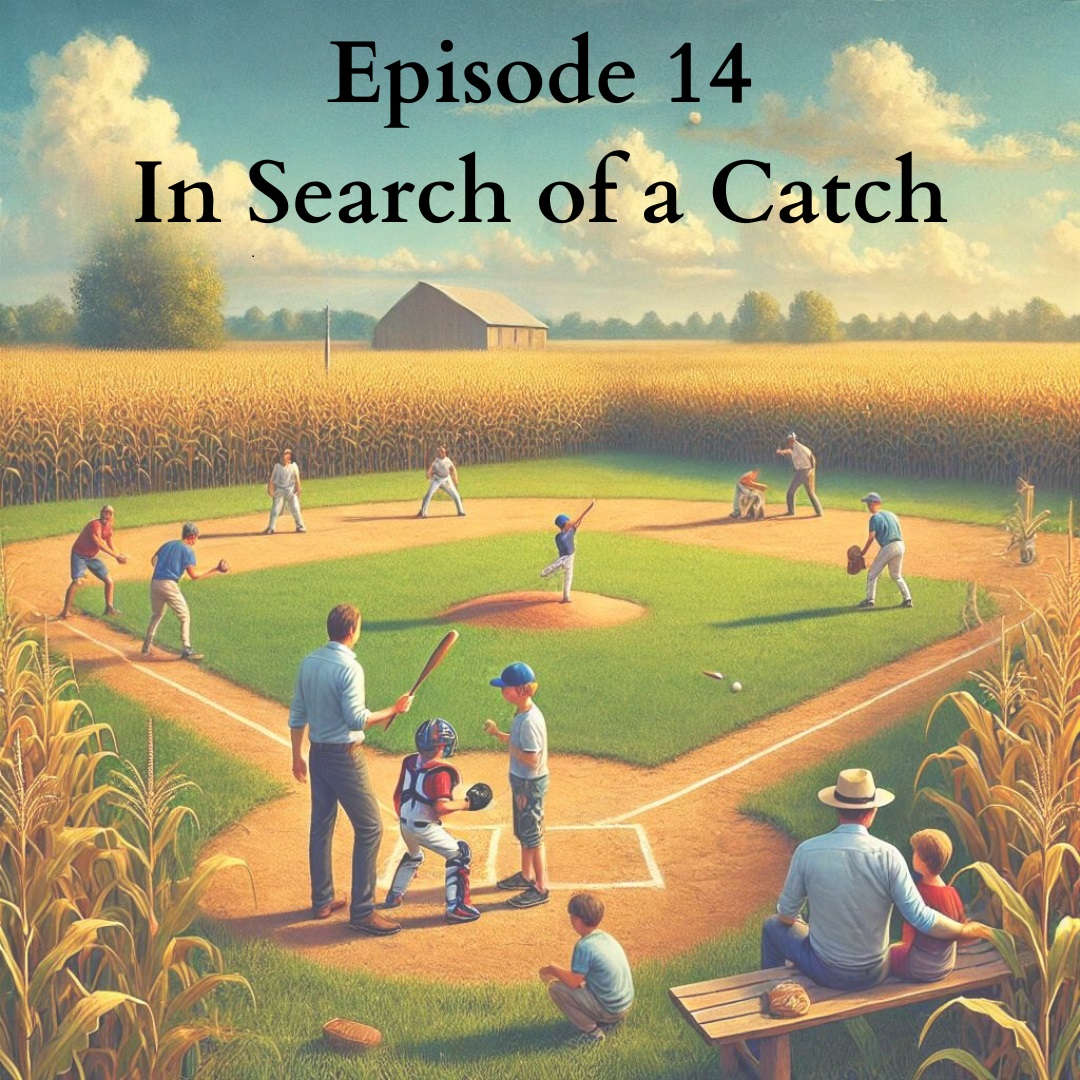
Ep. 14: In Search of a Catch
Dec 13, 202400:31:01Tap to summarizeIn the finale of Season 2, I talk with hall of fame historian Tim Wiles about a real-life Field of Dreams story that predated W.P. Kinsella’s book by ten years. Did Kinsella know about this field and draw inspiration from it? I’ll also share some final thoughts about this film, and discuss my own story around Field of Dreams, and baseball overall.
Transcribe →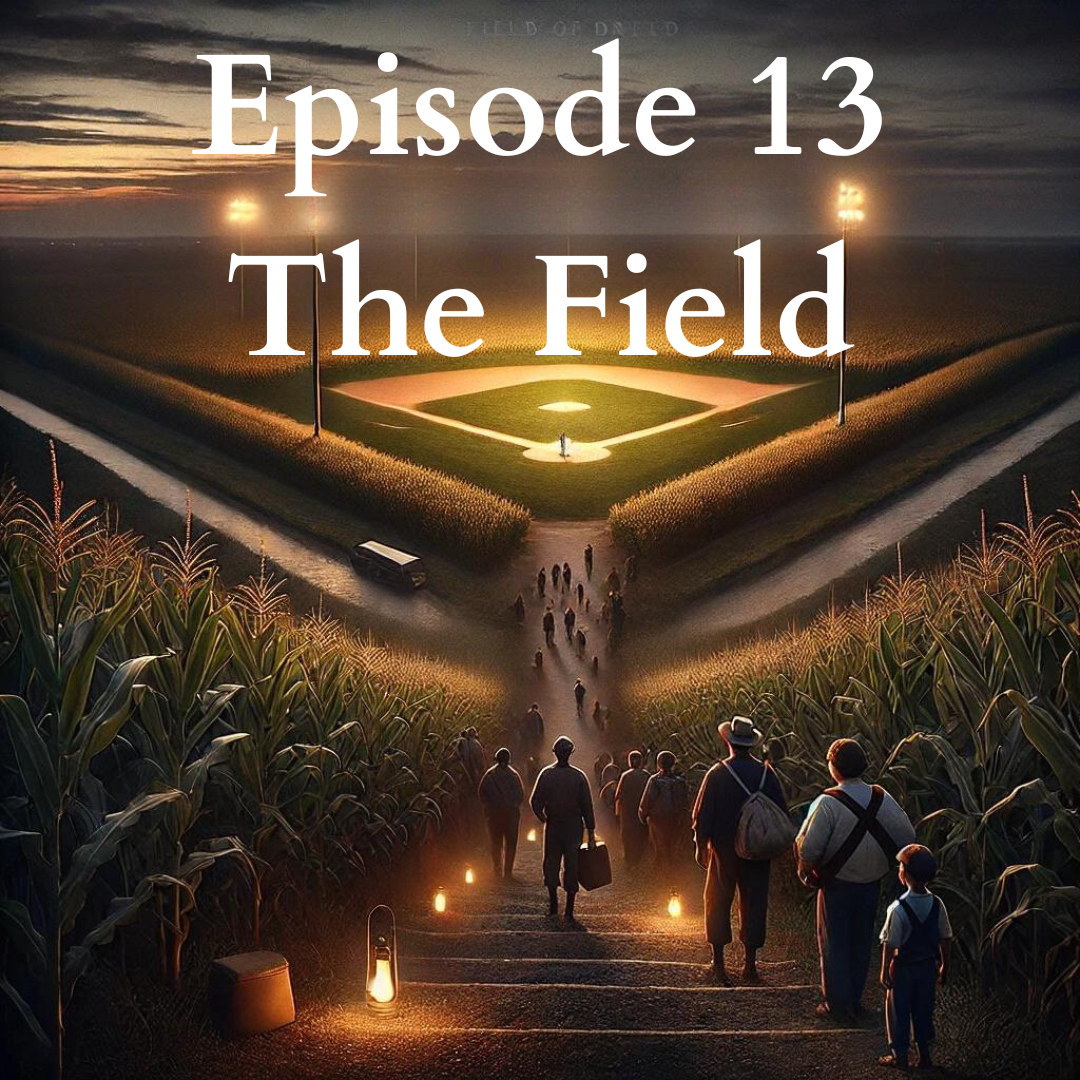
Ep. 13: The Field
Dec 7, 202400:41:44Tap to summarizeIn this episode, we delve into the fascinating collision of fantasy and reality surrounding the iconic field in Dyersville, Iowa. Truth is often stranger than fiction—and this magical ballfield is no exception. Join us as we uncover extraordinary stories and remarkable occurrences that have unfolded on this small farm long after the cameras stopped rolling.
Transcribe →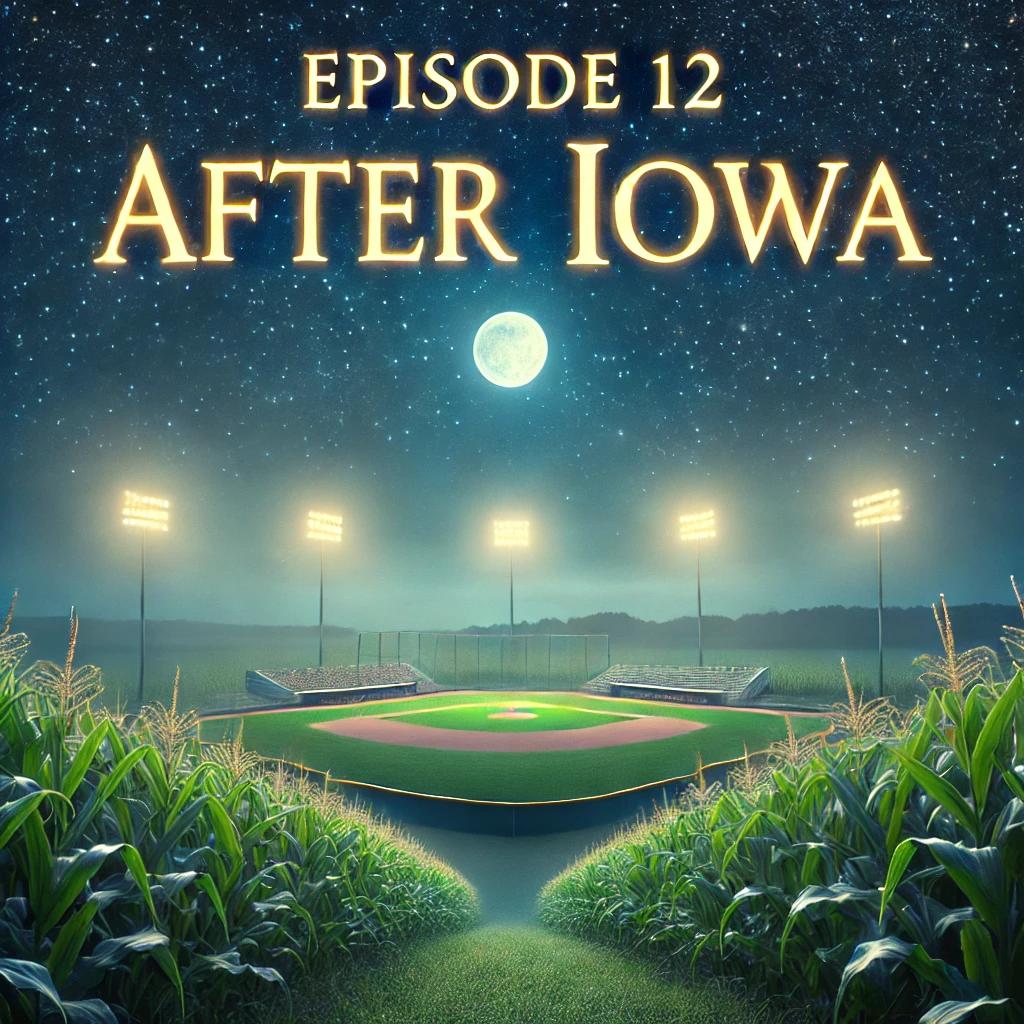
Ep. 12: After Iowa
Nov 28, 202400:41:33Tap to summarizeIn this episode, we reveal the pivotal edits made just before the film’s release, including a bold title change that angered many involved. We also examine how audiences across the country responded to a small-scale debut that ended up catching fire.
Transcribe →
Ep. 11: Heartbeat of a Dream
Nov 21, 202400:31:21Tap to summarizeWhat composer James Horner attempted with Field of Dreams had never been done. In this episode, we look at the unorthodox, emotional score that Horner created on the fly. We also discuss a man who has played catch more than 900 days in a row, and the impact he’s had on countless lives.
Transcribe →