Podcast
Mind Body Health & Politics
Hosted by Richard L. Miller · EN
Dr. Richard Louis Miller is an American Clinical Psychologist, Founder of Wilbur Hot Springs Health Sanctuary, and broadcaster who hosts the Mind Body Health & Politics talk radio program from Mendocino County, California. Dr. Miller was also Founder and chief clinician of the nationally acclaimed, pioneering, Cokenders Alcohol and Drug Program. Dr. Miller’s new book, Psychedelic Medicine, is based on his interviews with the most acclaimed experts on the topic. Mind Body Health & Politics radio broadcast is known for its wide ranging discussions on political issues and health. The program’s format includes guest interviews with prominent national authorities, scientists, best-selling authors, and listener call-ins. The programs offer a forum and soundboard for listeners to interact with the show and its guests. We invite you to listen to the latest broadcasts below or visit our many archived programs. We’d love to hear from you on political and health issues!
www.mindbodyhealthpolitics.org
www.mindbodyhealthpolitics.org
24episodes
Episodes
Newest firstAll episodes
Orgasms Aren’t “Reached,” Erections Aren’t “Achieved”
6d ago00:35:09Tap to summarizeDiana Richardson, who has studied human sexuality, intimacy, and couples’ relationships with sex for fifty years, returns to the program (her first appearance, “The Power of Slow Sex,” aired March 2022). She and Richard trace how sexual mores have shifted over the last century — more premarital sex, then a modern pullback into isolation, pornography, and falling fertility rates — and why Diana thinks the real problem isn’t how much sex people are having but the mechanical, goal-driven way we’ve been taught to have it. They get into the language attached to sex (“achieving” an orgasm, “premature” orgasm) and what it does to performance pressure, especially for men, and Diana answers Richard’s question about pleasure and connection without an erection.Guest: Diana Richardson — researcher and teacher of conscious sexuality; author of eight books including Tantric Sex for Lovers (the Slow Sex / Tantric Sex for Men / Tantric Orgasm for Women collection, Destiny Books) and The Heart of Tantric Sex (John Hunt Publishing/O Books, 2003). With her partner Michael Richardson, she has run the week-long Making Love Retreat in Europe for over 30 years, with more than 15,000 couples attending. Site and online course: rekindle.love.Chapters00:00 — Cold open: sensitivity vs. sensation00:39 — Welcome to Mind Body Health and Politics01:30 — Welcome back: Diana Richardson02:17 — Fifty years of change in the sexual field06:33 — A hundred years of premarital sex, and the 60s revolution07:48 — Pizza, porn, and the retreat from dating08:29 — The epidemic of isolation, alienation, and loneliness09:42 — It’s not the amount of sex, it’s the how11:23 — Falling fertility rates12:55 — Writing The Heart of Tantric Sex14:06 — What “tantra” actually means15:03 — Conventional sex vs. tantric sex19:40 — Words that hurt: “achieving” an orgasm23:38 — Eight books, and how the Making Love Retreat began26:11 — Thirty years, fifteen thousand couples28:06 — Bringing the retreat online28:44 — Pleasure and connection without an erection32:34 — What could bring young people back to each other33:34 — Where to find Diana: rekindle.love This is a public episode. If you'd like to discuss this with other subscribers or get access to bonus episodes, visit www.mindbodyhealthpolitics.org/subscribe
Transcribe →
Psychedelic Crisis: Free Counseling at Fireside Project
2w ago00:39:56Tap to summarizeJoshua White left a decade-long career as a San Francisco city attorney to found Fireside Project, a free, anonymous peer-support line for anyone in a psychedelic crisis or working through one from the past. He and Richard, an advisor to Fireside Project, talk about the four gaps Joshua set out to close in the field, what it takes to be a “loving rock” for a stranger mid-trip, reframing the bad trip as a challenging one, the burnout that nearly broke him, and Lucy, a training simulator built from tens of thousands of anonymized calls now used at Mount Sinai and in a New Mexico psilocybin study.Guest: Joshua White — founder and executive director of Fireside Project; former Deputy City Attorney, San Francisco City Attorney’s Office. Volunteer alumnus of the Zendo Project and Safe & Sound’s parental stress line before founding Fireside in 2021. Fireside’s free peer-support app is available on iOS and Google Play; the training tool Lucy is at fireside.training; donate at firesideproject.org/donate.Chapters00:00 — Cold open: reach out and call somebody02:25 — Welcome: Joshua White02:48 — Green smoothies and egg whites03:41 — From city attorney to psychedelic support04:42 — Psychedelics, therapy, and the decision to leave the law07:04 — Testing the waters: the Zendo Project and a parental stress line08:01 — The four gaps in psychedelic support10:10 — Fireside Project launches, April 202110:22 — Anonymity, legality, and why people call12:43 — Who answers the phone: the “loving rock” question17:20 — Reframing the bad trip18:55 — From bad trip to challenging trip20:34 — Finding volunteers, finding the public22:43 — The nonprofit fundraising treadmill25:34 — Burnout, Ibogaine, and “ten out of ten”26:37 — Richard’s advisor disclosure: take a vacation27:28 — The patient who taught Richard about self-care30:31 — Introducing Lucy and how she trains therapists35:08 — Forty thousand calls and counting36:24 — Why there’s no AI avatar yet37:40 — An ethical data model, by contrast41:04 — The pitch: why Fireside needs your support41:35 — How to donate, volunteer, and spread the word41:55 — Close This is a public episode. If you'd like to discuss this with other subscribers or get access to bonus episodes, visit www.mindbodyhealthpolitics.org/subscribe
Transcribe →
Mendocino: Hippies, Loggers, & the FBI
3w ago01:00:29Tap to summarizeBritish historian Charlie Harris spent years living with his sources in Mendocino County to write Mendo, the first full history of how a logged-out fishing-and-timber county became the cannabis capital of the Americas. He and Richard — a Mendocino resident since 1975 who watched much of it happen — trace the whole arc: the Back to the Land migration, weed as currency, the homestead wars that united hippies and loggers against the government, Reagan’s helicopter raids and the invention of asset forfeiture, the genetics that made California weed famous, and what legalization actually did to prices, potency, and the people who built the industry.Guest: Charlie Harris — historian and writer; eight years with Oxford University’s Global History of Capitalism Project; author of Mendo: How an Unlikely Group of Rebels Turned Cannabis into California’s Cash Crop (Counterpoint Press, June 2026). Available from Counterpoint, Amazon, Barnes & Noble, and your local independent bookstore — Charlie asks you to try the indie first.Chapters00:00 — Cold open: stories that were never written down00:31 — Welcome: what happened in Mendocino County02:24 — Picked up hitchhiking, dropped on a pot farm06:33 — From trimmer to Oxford historian08:47 — “Get these stories written down before they disappear”11:42 — Logging, fishing, and the collapse that emptied the land14:28 — Back to the Land: the largest urban-to-rural migration in history17:47 — “We couldn’t grow gasoline”: weed becomes currency20:21 — The homesteading wars: red tags and a common enemy22:47 — Hippies, rednecks, and the hipnecks27:46 — Reagan sends in the helicopters: CAMP, 198330:40 — Asset forfeiture is invented in Mendocino County32:01 — “The campaign to aid marijuana prices”33:19 — Indica genetics: California weed gets good35:30 — Traffic reports for police convoys37:30 — Medical marijuana, 1996: everything changes40:27 — Overproduction and the price collapse44:24 — Hedge funds, Flow Kana, and the economics of legalization48:36 — “Nobody wants stronger weed”: the THC arms race53:04 — What they smoke in England56:44 — The book: Mendo58:07 — “I have a lot of hope for America”: gratitude and close This is a public episode. If you'd like to discuss this with other subscribers or get access to bonus episodes, visit www.mindbodyhealthpolitics.org/subscribe
Transcribe →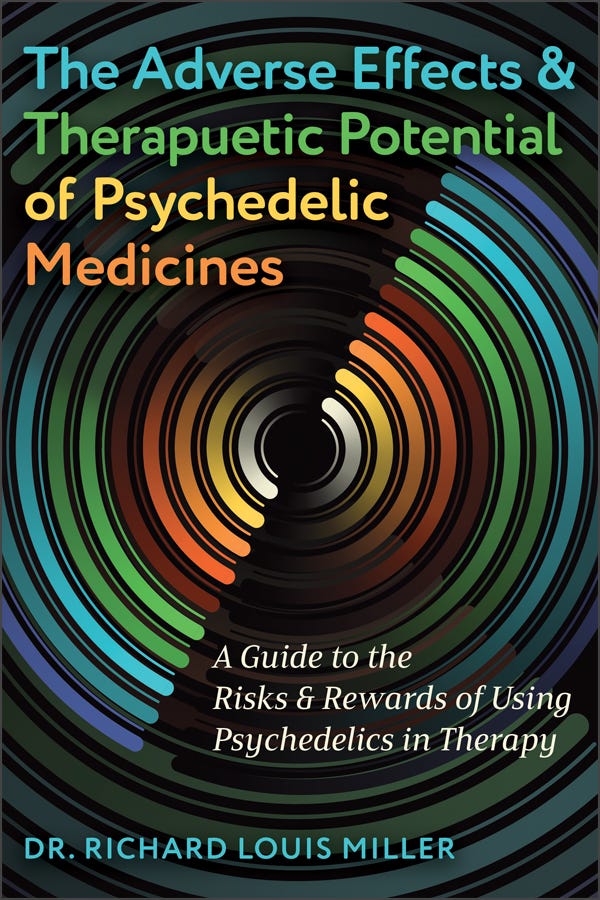
Danger Ahead! Don't Act Your Age
Jul 800:38:03Tap to summarizeJournalist Abbie Rosner spent several years interviewing thirty-six older adults, most in their sixties, seventies, and eighties, about psychedelic experiences they had quietly, outside the clinic. She and Richard talk about elderhood, conscious aging, what changes when these medicines meet a long life rather than a young one, a disagreement over when "elder" begins, and her pilot vision for small, committed cohorts of older adults growing old together on purpose.Guest: Abbie Rosner, journalist. Author of Psychedelics and the Counterculture of Aging (Park Street Press, 2026, foreword by Dr. Julie Holland). Writes The ELDEREVOLUTION on Substack and a Next Avenue column. abbierosner.com00:00 The epidemic of isolation01:45 Conscious aging, what's on Abbie's mind05:28 What aging actually is, body vs. spirit10:14 The opportunity of older life, going inward12:24 The fragility question, screening older adults15:34 How older adults approach psychedelics today20:00 Who is drawn to this work, seekers21:20 Am I an elder at 60, the Julie Holland exchange27:04 Inside the book, 36 interviews and a book tour33:11 Elder Vision Circles38:44 Close This is a public episode. If you'd like to discuss this with other subscribers or get access to bonus episodes, visit www.mindbodyhealthpolitics.org/subscribe
Transcribe →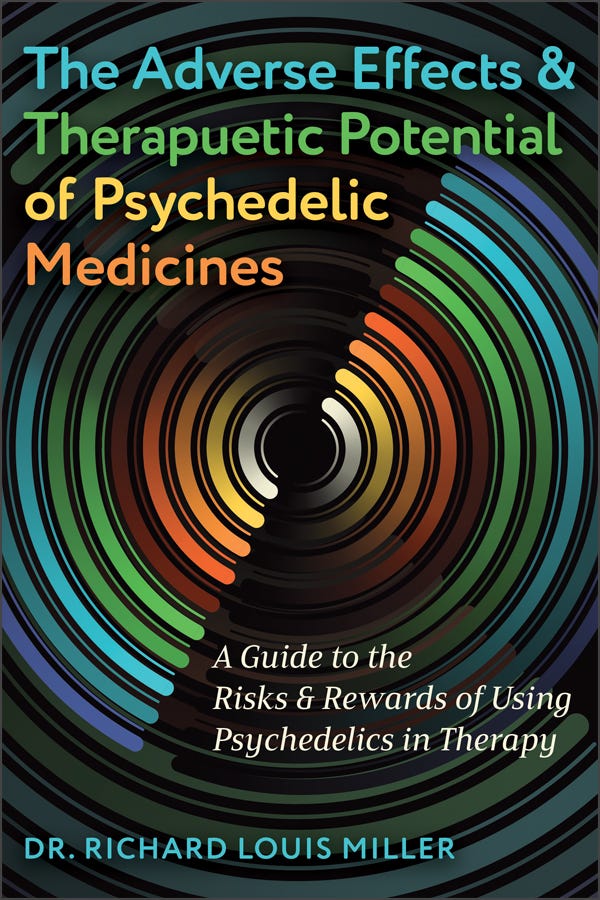
Why Willpower Fails and Curiosity Wins | Jud Brewer
Jun 3000:44:59Tap to summarizeDr. Jud Brewer, a Brown University neuroscientist and Yale-trained addiction psychiatrist, joins Richard to lay out a habit-loop model of anxiety. From his own residency panic attacks to the smoking-cessation work that produced five times the standard quit rate, to a randomized trial of his anxiety program, the throughline is one mechanism: pay attention to what a behavior actually does, and the brain stops finding it rewarding. We close on a thirty-second practice for the next time anxiety shows up.Guest: Dr. Jud Brewer, Director of Research and Innovation at the Brown University Mindfulness Center. Author of The Craving Mind (2017), Unwinding Anxiety (2021, NYT bestseller), and The Hunger Habit (2024). drjud.com00:00 Opening, the epidemic of anxiety and depression01:56 Jud's own anxiety story06:46 Choosing mindfulness as a career in 200611:38 Coke Enders and the academic hazing pattern15:10 Reinforcement learning, pay attention as you smoke20:28 The anxiety habit loop23:28 The default mode network and the posterior cingulate cortex25:49 The mind is a tool, not the boss29:46 Richard's Vipassana origin with Goldstein and Kornfield31:07 Conscious breathing and five-finger breathing32:42 Anxiety travels in clusters34:40 If these tools work, why are we prescribing36:42 Could this be taught in high schools38:19 Going Beyond Anxiety, the AI-paired digital therapeutic41:52 Mid-episode break43:32 Curiosity will conquer fear, flip the NO to WHAT45:27 Feelings are just feelings47:15 Off-air closing This is a public episode. If you'd like to discuss this with other subscribers or get access to bonus episodes, visit www.mindbodyhealthpolitics.org/subscribe
Transcribe →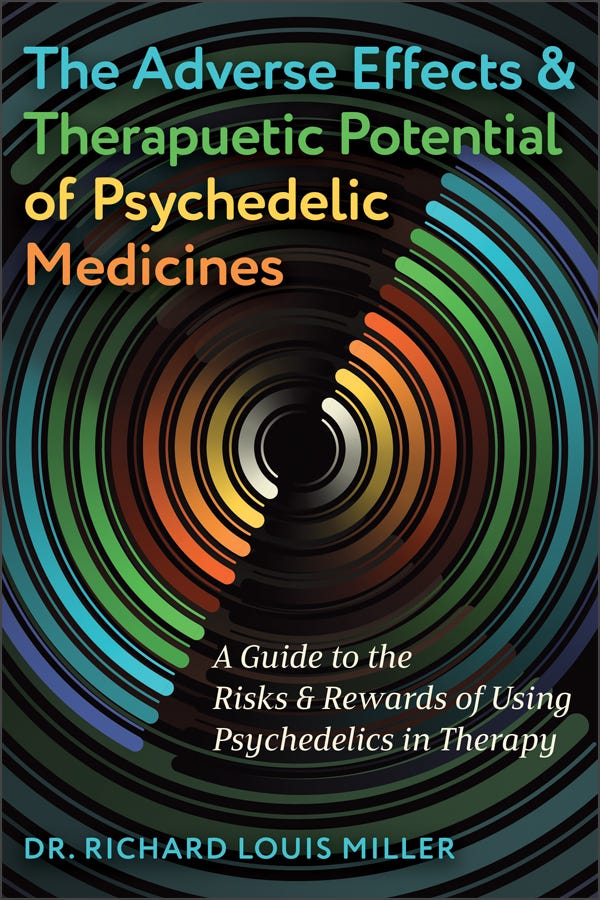
Slowness Is a Superpower | Carl Honoré
Jun 2300:49:30Tap to summarizeIn this episode — Carl Honoré, the journalist whose 2004 book In Praise of Slow named the global Slow Movement, returns with the thesis sharpened. He and Richard work through what “slow” actually means, why busyness has become a measurable chemical addiction, the myth of multitasking, loneliness as a mortality risk, the acceleration that precedes burnout, and the four prescriptions any of us can start today.Guest: Carl Honoré — journalist and author of In Praise of Slow (2004), Under Pressure (2008), The Slow Fix (2013), and Bolder (2018). His TED talk has more than 3 million views. He writes Tempo on Substack. More at carlhonore.com.Chapters[00:00] The case for connection[02:34] What slow is, and what it isn’t[04:28] The cost of a speed-driven culture[07:31] Where the drive to speed comes from[12:29] Busyness as addiction[15:59] The digital detox[19:12] What young people are getting right[27:21] The multitasking myth[30:09] Loneliness, longevity, and connection[34:22] Burnout and the last burst of speed[42:20] Carl’s four prescriptions[51:58] Two quotes to close This is a public episode. If you'd like to discuss this with other subscribers or get access to bonus episodes, visit www.mindbodyhealthpolitics.org/subscribe
Transcribe →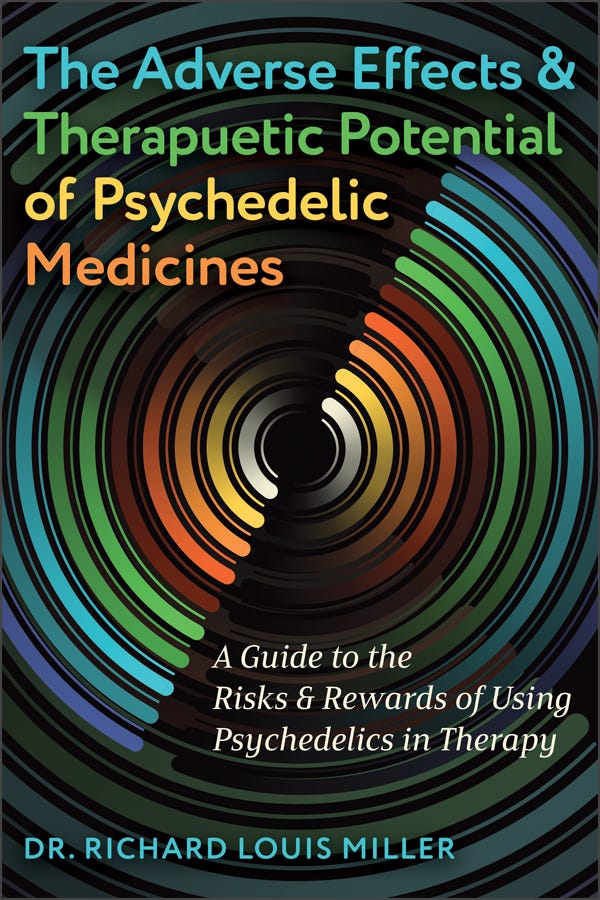
Your Mind Creates Your Reality – Dr. Ellen Langer
Jun 1001:00:30Tap to summarizeIn this episode—Dr. Ellen Langer, the Harvard psychologist who has studied mindfulness and mind-body unity for nearly fifty years, joins Richard to explain why mindfulness is not meditation, what the counterclockwise study revealed about aging, why the placebo is our strongest medicine, and how a diagnosis can become a self-fulfilling prophecy. Richard shares his own recovery from two terminal diagnoses at 82.Guest: Dr. Ellen Langer—Professor of Psychology at Harvard (the first woman tenured in the department), author of Mindfulness, Counterclockwise, and The Mindful Body. More at ellenlanger.com.Chapters[00:00] The mission—connection as antidote to isolation[02:23] Welcome, Dr. Ellen Langer[03:03] Mindfulness is not meditation[04:30] The horse and the hot dog—everything I knew could be wrong[06:00] How to become mindful: notice three new things[10:00] Noticing makes others feel cared for—and it’s enlivening[17:50] Mind-body unity since 1977[20:15] The counterclockwise study[30:01] Imagined exercise builds real muscle[31:21] The borderline effect—69 vs. 70[35:18] ADHD, labels, and pharmaceutical collusion[40:05] Placebo, sham surgery, and “you’re making yourself well”[45:40] Richard’s two terminal diagnoses—and recovery[52:30] Add life to your years[55:20] Make the decision right, not the right decision This is a public episode. If you'd like to discuss this with other subscribers or get access to bonus episodes, visit www.mindbodyhealthpolitics.org/subscribe
Transcribe →
Support Jamie Joyce for Congress
Jun 100:53:59Tap to summarizeDear Friends,I want to introduce you to someone I have known for years and admire a great deal. Jamie Joyce came on Mind Body Health & Politics this week. She is running for Congress in California’s 12th district, she founded the Society Library, and she is an artist (I keep one of her pieces that she made with a particle accelerator on my dresser). She is the real deal.You know how I open this program most weeks: human beings are tribal animals, healthiest when we live in small groups where we know one another by face and by name. The standing threat to that is the small number among us who would rather dominate than collaborate. Jamie has built her whole campaign on exactly that distinction. She is running, she told me, because she is tired of watching power concentrate in a few hands while the rest of us are talked past.It has already cost her something. Twenty minutes after she announced, the phone calls began — people telling her they would ruin her life if she did not drop out. In a later call, they read back the names of old boyfriends, to let her know they had been digging. A private citizen decides to run for office, and that is the welcome she receives. She did not drop out. When I asked her about it, she said something I have not stopped thinking about:“There are people who have taken bullets to the head for me to even have the ability and the right to run for Congress. If I’m not willing to risk my reputation to stand up for the rights of others, then I don’t deserve the job.”I felt protective when she said it, and I told her so on the air.Here is the part that delighted me. Jamie founded her Society Library after reading, in her early twenties, about a club Benjamin Franklin started — a small group that met to reason together in a spirit of sincere inquiry into truth, with no taste for argument or domination. Franklin called it the Junto. I started a Junto in Fort Bragg twenty years ago, and it still meets every Thursday morning. I invited her to join us. Two people, two centuries apart, reaching for the same simple thing: people thinking together instead of shouting at each other.We covered a great deal: the bill she wrote, the art she makes with a particle accelerator, the long odds she is running against anyway. I told her on the air what I will tell you now. I wish her all the luck, and all the help and support that the people who know her can muster. Go to jamiejoyce.com and see for yourself. Then listen to the whole conversation.And then, just below, I have a small practice for you this week.Golden light,Dr. Richard Louis MillerA note for CaliforniansThis letter reaches you on a Monday. Tuesday, June 2, is the statewide primary.If you live in California, you almost certainly already have a ballot sitting at home, because the state mails one to every registered voter. There is still time, but not much. Do not put it back in the mail now. Fill it out and drop it in any ballot drop box, or at any polling place, by 8:00 p.m. Tuesday. Or vote in person that day.I say the same thing at the top of the program most weeks, and I mean it every time: get out and vote, and vote for the people who will actually represent you. And if you happen to live in the 12th district, around Berkeley and Oakland, Jamie Joyce is on your ballot.Today’s PracticeA simple thing to take with you from this week’s conversation.Most weeks on this program I tell you to vote, and I mean it. This week I want to hand you something smaller and just as important — and it comes straight out of what Jamie and I were talking about: that we are tribal people, healthiest when we know the people around us by face and by name.Here is the practice. For the next three months, say hello to the people you would normally pass in silence. Say hello to the checker in the supermarket. Say hello to the clerk in the store, to the plumber behind the counter, to the person sitting inches from you who never gets a word. Introduce yourself. “Hi, my name’s Richard. Glad to meet you.” That is the whole thing.We live in a country that has been divided on purpose. We can begin to put it back together one hello at a time. Try it for three months and see what happens.And if you want the civic version Jamie left us with: pick up the phone, take five minutes, and tell your representative the one thing you most want them to do — then ask a friend to do the same. Mind Body Health & Politics is a community-supported broadcast. To receive new episodes and reflections, consider subscribing.Show notes[00:00] The missionRichard’s standing frame: human beings are tribal, healthiest in small groups where they know one another by face and name; roughly 95% of us want to collaborate, and a small minority would rather dominate. The civic conclusion he always reaches — get out and vote — sets up the guest.[02:39] Why she’s running* Jamie is running in CA-12 because she found her representatives unresponsive — she spent three months in DC last year and couldn’t get her own reps on the phone.“We need to stop electing politicians and start electing legislators.” — Jamie Joyce[06:17] “They said they’d ruin my life”* Within twenty minutes of announcing, she got calls pressuring her to drop out; a later call referenced names from her past.“There are people who have taken bullets to the head for me to even have the right to run for Congress. If I’m not willing to risk my reputation to stand up for the rights of others, then I don’t deserve the job.” — Jamie Joyce[10:54] The MAD ActJamie’s omnibus bill bundles ten titles she’d otherwise have to pass separately. As she describes them: data-privacy/surveillance limits (requiring brokers to delete holdings), a “Demand a Plan for AI” framework of technical working groups, limits on the Insurrection Act, dark-money disclosure, electoral reform (funding ranked-choice / STAR voting), and mass digitization of government records.[23:48] The jungle primary* California’s top-two primary means Jamie and the incumbent — both Democrats — go straight to the general; no Republican is running. She’s a late entrant and out-fundraised, but the only challenger.[36:05] The Society Library* In her early twenties, Jamie read Benjamin Franklin’s autobiography and the description of his debating club — a group that reasoned together in “a sincere spirit of inquiry into truth.” She built the Society Library to do that at civilization scale, extracting arguments and evidence from across media into models city councils and universities now use.“Our reasoning is fractured and broken across the web... We focus on creating models of formal civilization-scale debate.” — Jamie Joyce[42:30] Her art* Jamie funded college winning art competitions; a Burning Man honorarium led to her hand-cut wooden “wisdom” books and, later, Lichtenberg figures — three-dimensional lightning shapes made by irradiating acrylic in a particle accelerator.“The real treasure is the friends you make along the way.” — Jamie Joyce[48:22] Franklin’s Junto, and Richard’s own* Franklin’s club was the Leather Apron Club, which became the Junto. Richard started a Junto in Fort Bragg twenty years ago that still meets every Thursday; he invites Jamie to visit.[50:33] Closing“Energy and persistence conquer all things.” — Benjamin Franklin, quoted by Jamie Joyce“It matters less whether I win this particular seat... what really matters is that we never, ever give up.” — Jamie JoyceResources mentioned* Jamie Joyce for Congress — jamiejoyce.com* The Society Library* Benjamin Franklin’s Junto (the Leather Apron Club)A note on working togetherFor those who feel drawn to working together more directly, I offer a limited number of one-on-one sessions.These are not traditional therapy sessions. They are quiet, practical conversations focused on calming the mind, easing anxiety, and working with simple tools that support steadiness in daily life.We move at a thoughtful pace. We work with what’s present. We focus on what helps.My BooksI wrote Adverse Effects and Therapeutic Potential to contribute to how we, as a community, handle a moment of unprecedented attention and capital.Will psychedelic medicines be another drug dispensed in 15-minute sessions with psychiatrists, or will they be used properly as facilitators of psychotherapy?Early feedback:Dr. Richard Louis Miller is a true elder and wisdom keeper of the psychedelic community, and his credentials come honestly, through hard-won experience. In this book, he continues his role as an educator by sharing his knowledge of both the perils and the promise of psychedelic substances. The reader will find valuable advice on how to avoid pitfalls while realizing the maximum benefits from the thoughtful and safe use of these remarkable medicines.— Dr. Dennis McKenna, ethnopharmacologist an...
Transcribe →
Robert Whitaker on what the largest antidepressant trial actually found
May 2900:53:38Tap to summarizeIn this episode — Investigative journalist Robert Whitaker returns for his fourth conversation with Richard. They trace the antidepressant story from the 1980 DSM-III rebrand through the reanalysis of the largest antidepressant trial ever run, the long-term data on children and stimulants, and — at the end — what Whitaker learned from the people who actually recovered.Guest: Robert Whitaker — investigative journalist, founder of Mad in America, author of Anatomy of an Epidemic (2010), Mad in America (2002), and Psychiatry Under the Influence. His 1998 Boston Globe series was a Pulitzer finalist.Chapters* [00:00] The epidemic of isolation* [02:20] Introducing Robert Whitaker* [03:30] The 1980 DSM-III pivot* [05:50] Where the chemical-imbalance idea came from* [12:40] What the public was told instead* [18:30] How the drugs change the brain* [23:10] Patients who’ve been on SSRIs for years* [27:53] STAR*D: the trial reanalyzed* [37:01] Why the press stayed quiet* [39:53] Children on psychiatric drugs* [42:56] The MTA stimulant study* [51:00] “A menace to society”* [55:34] Why informed consent drives him* [57:32] The connection cureIntroductory notes - the epidemic of isolation [00:00]The mission of the program: enhancing wellbeing by making connections with the people who live near you, by face and by name. Ninety-five percent of people want to collaborate, not fight. A small group of dominated predators benefits from divisiveness. The current American epidemic is isolation, alienation, and loneliness. The antidote is connection - a theme the conversation returns to in its final movement.Introducing Robert Whitaker [02:20]Whitaker is an investigative journalist and the founder of Mad in America. He is the author of Anatomy of an Epidemic (2010), Mad in America (2002), and Psychiatry Under the Influence. His 1998 Boston Globe series on psychiatric research was a Pulitzer finalist. Of all the people I have interviewed in over twenty years, his work has had the greatest impact on my professional life.The corruption of psychiatry and the DSM-III pivot [03:30]* The forty-five-year story begins in 1980, when the American Psychiatric Association published DSM-III and adopted a disease model. Schizophrenia, bipolar, anxiety, and a new diagnosis called attention deficit hyperactivity disorder were each declared distinct illnesses.* The profession said it knew the causes. Depression was too little serotonin. Psychosis was too much dopamine. A second generation of drugs would correct those imbalances, “like insulin for diabetes.”* Prozac arrived in 1988 as a breakthrough that could make you feel “better than well.”* Before DSM-III, American psychiatry felt its legitimacy as a medical specialty was under attack. DSM-III was a rebrand to position psychiatrists as medical doctors treating medical illnesses.“It was pitched to us as a story of science, but it wasn’t a science story. It was a marketing story. It was a rebranding story for American psychiatry, which in the 1970s was feeling that its legitimacy as a real medical specialty was under attack.” — Robert WhitakerWhat the science actually showed [05:50]* The chemical-imbalance hypothesis came out of the 1960s, working backwards from drug mechanism, not from measurement of patient biochemistry.* Tricyclics and MAOIs both upped serotonergic activity. Researchers inferred that depression might be low serotonin. Antipsychotics block dopamine receptors, so they inferred schizophrenia might be high dopamine.* Direct testing failed. By 1978 researchers weren’t finding it. A 1984 NIMH study concluded that a lesion in the serotonergic system is not a cause of depression.* In 1998, the APA’s own textbook declared the monoamine theory of depression dead. The profession did not tell the public (Moncrieff et al., 2022, Molecular Psychiatry).What the public was told instead [12:40]* Pharmaceutical ads kept selling SSRIs that “fix chemical imbalances.” The APA website told the same story. In 2005 the APA put out a press release calling psychiatrists experts in fixing chemical imbalances in the brain.* Drug companies funded APA education programs, media training, and “key opinion leaders” at Stanford, Harvard, Johns Hopkins, Penn. Thought leaders were paid hundreds of thousands, sometimes more than a million, over a few years.* By 1998, when the New England Journal of Medicine wanted a review of antidepressants, it could not find an academic mood-disorders expert who wasn’t already on pharma payroll.My Other Books:* Master Your Mind: Practical Tools to Calm Anxiety, Silence Your Inner Critic and Stop Overthinking* Psychedelic Medicine at the End of Life: Dying Without Fear* Freeing Sexuality: Psychologists, Consent Teachers, Polyamory Experts, and Sex Workers Speak Out* Psychedelic Wisdom: The Astonishing Rewards of Mind-Altering Substances* Psychedelic Medicine: The Healing Powers of LSD, MDMA, Psilocybin, and Ayahuasca* Integral Psychedelic Therapy (co-edited with Jason A. Butler & Genesee Herzberg)How the drugs actually change the brain [18:30]* Before treatment, a patient’s serotonergic system is not operating abnormally. The drug ups activity. The brain dials itself down to compensate (Hyman & Nestler, 1996, AJP).* After long-term treatment, patients do in fact end up with a low-serotonin system, physiologically.“The drug induces the very change that was hypothesized to cause the problem in the first place.” — Robert Whitaker* On withdrawal, the dialed-down system can’t snap back. Patients feel terrible and conclude they are still sick.* A University of Bristol cohort (n=222,121, 10-year follow-up, 2022) found elevated risk of coronary heart disease, cardiovascular events, and all-cause mortality among long-term antidepressant users.What to tell patients already on SSRIs [23:10]I described to Whitaker a patient of mine who has been on an SSRI for twenty years and no longer knows what she is without it. His answer:* Before antidepressants became long-term care, 85% of hospitalized depressed patients recovered within a year.* As long-term medication became standard, the one-year recovery rate dropped. By 1998, the reported stay-well figure on antidepressants was about 15%.* A 2025 systematic review found the median antidepressant trial lasts 8 weeks. The median real-world prescription is 5 years. The science backing five-year prescribing was never built.STAR*D - a $35 million study that became a hoax [27:53]* STAR*D enrolled 4,041 outpatients, the largest and longest antidepressant trial ever conducted. Four chances to remit across four steps.* Reported a 70% cumulative remission rate. Medical school curricula, the New Yorker, and the New York Times cited it.* The protocol specified HAM-D as the outcome s...
Transcribe →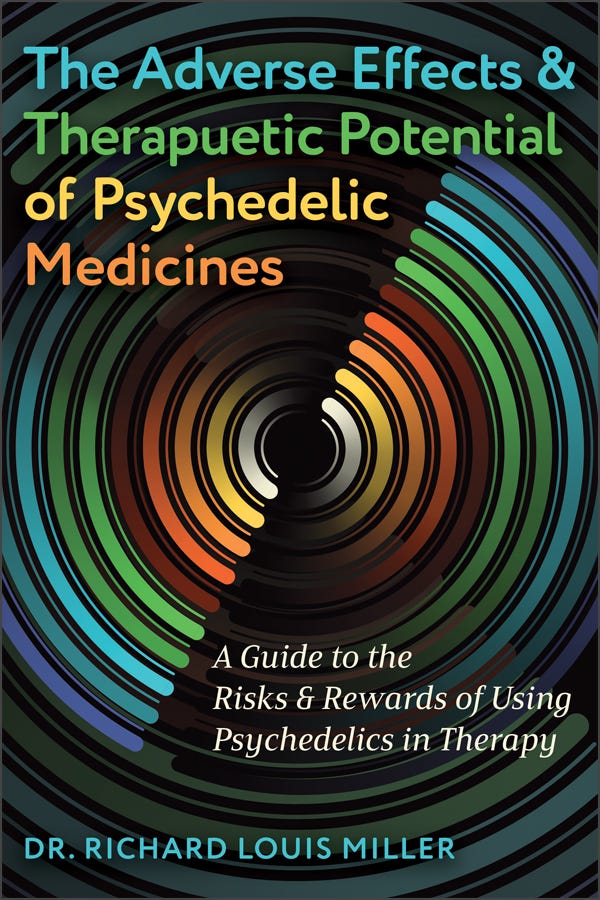
3,000 ceremonies; 0 hospitalizations
Apr 3000:55:51Tap to summarizeSam Believ came to Colombia as a Latvian oil-and-gas engineer with a depression he could not name. Today he runs LaWayra, the highest-rated ayahuasca retreat in South America, and has served close to 3,000 people. I asked him the question I have been trying to answer for my forthcoming book: what does the safety data actually look like when you are not a clinical trial, but a jungle with a shaman and thirty-seven staff. His answer is the most honest field account I have heard. My new book, The Adverse Effects and Therapeutic Potential of Psychedelic Medicines (Park Street Press), publishes May 5, and Sam's work sits inside it.00:00 Welcome and the Case for Tribal Community01:40 From Latvia to Colombia, How Sam Got Here06:02 Running the Retreat, What's on Sam's Mind10:59 Running Four Businesses in One Jungle14:08 Frequency and the Indigenous vs Western Debate21:53 Dosing, Why You Trust the Shaman Not a Scale24:10 The Bastardization Argument, Tobacco Cacao Coca26:17 Adverse Effects, What 3,000 Ceremonies Have Shown30:58 The Facility, 12 Cabins and a Hospital 10 Minutes Away33:20 Is Colombia Safe, The Narcos Reframe39:43 From Oil-and-Gas Engineer to Hippie with a Purpose43:56 Marxism, AI Unemployment, and Finland's Homeless Solution52:44 Hydration, Closing, and the InvitationSam Believ's work:- LaWayra Ayahuasca Retreat — https://ayahuascaincolombia.com- Ayahuasca Podcast with Sam Believ — https://ayahuascapodcast.com- Sam's Instagram — https://www.instagram.com/sambeliev- LaWayra Instagram — https://www.instagram.com/lawayra_ayahuascaDr. Miller's books:- The Adverse Effects and Therapeutic Potential of Psychedelic Medicines (Park Street Press, May 5, 2026) — https://www.amazon.com/Adverse-Therapeutic-Potential-Psychedelic-Medicines-ebook/dp/B0FNDPSMJ1- Master Your Mind — https://www.amazon.com/dp/B0FHWFZ362Dr. Miller's website: https://drrichardlouismiller.comInstagram: https://www.instagram.com/drrichardlouismiller This is a public episode. If you'd like to discuss this with other subscribers or get access to bonus episodes, visit www.mindbodyhealthpolitics.org/subscribe
Transcribe →