← Mind Pump: Raw Fitness Truth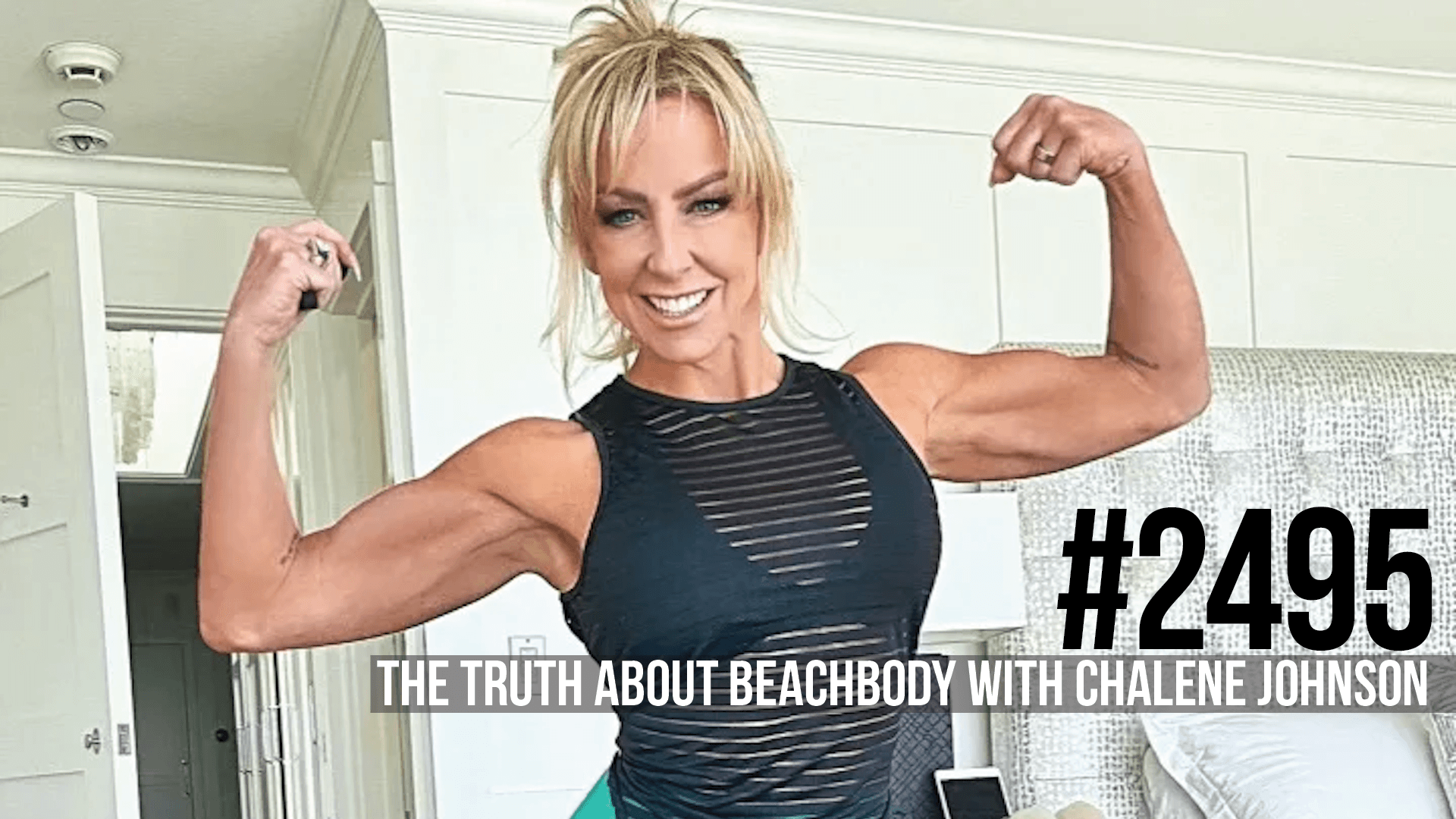
Mind Pump: Raw Fitness Truth
2495: The Truth About Beachbody With Chalene Johnson
01:26:23
Chalene Johnson What is going on with Beachbody? (1:54) Why you MUST have more than one stream of income. (12:03) Biggest business learning lessons. (15:16) Changing the conversation around perimenopause/menopause. (20:29) Her relationship...
Loading summary
Transcript380 lines
- [00:00]
Chalene Johnson
Marketing is hard, but I'll tell you a little secret. It doesn't have to be. Let me point something out. You're listening to a podcast right now and it's great. You love the host. You seek it out and download it. You listen to it while driving, working out, cooking, even going to the bathroom. Podcasts are a pretty close companion. And this is a podcast ad. Did I get your attention? You can reach great listeners like yourself with podcast advertising from Libsyn Ads. Choose from hundreds of top podcasts offering host endorsements or run a pre produced ad like this one across thousands of shows to reach your target audience audience in their favorite podcasts with Libsyn ads go to Libsyn ads.com that's L I B S Y N ads.com today.
- [00:42]
Justin Andrews
If.
- [00:42]
Sal DiStefano
You want to pump your body and expand your mind, there's only one place to go. Mind Mind Pop with your hosts Sal Destefano, Adam Schaefer and Justin Andrews, you.
- [00:55]
Adam Schafer
Just found the most downloaded fitness, health and entertainment podcast. This is Mind Pump. Today we have the fitness icon Shalene Johnson. She is a juggernaut in the space. We love her. And in today's episode she talks about training with menopause fitness for women, alcohol and its impacts on health. We talk about building a fitness business, which she is an absolute genius at. You're gonna love this episode. This episode is brought to you by one of our sponsors, mphormones.com if you're interested in finding out about hormone replacement therapy or working with peptides like teslfensin or GLP1s popular GLP1s for fat loss and weight loss or the growth hormone boosting peptides, go to mphormones.com, this is working with real doctors. It's none of that gray market stuff. It's legit. Working with real pharmacies. Again, it's mphormones.com also. These are the final hours for the Maps 15 Performance Launch Workout. Just 15 minutes a day. Get incredible results. With this launch. You're getting a discounted price. It's $20 off. Plus you're getting two free bonuses. You're getting a free 30 day landmine workout program. So this is a full 30 day program in addition to mass 15 performance. And you're getting the seven day overtraining rescue guide. This will get you back from the grips of overTraining in just seven days and get you ready start our training again. Those are both included for free. Here's what you do if you're catching this in time, go to 15performance.com. Use the code 15plaunch. That gets you the $20 off plus the free bonuses. All right, here comes the show. Welcome back to the show.
- [02:38]
Justin Andrews
I'm so excited.
- [02:39]
Adam Schafer
Yeah, we had fun with you last time.
- [02:41]
Justin Andrews
We did.
- [02:42]
Adam Schafer
So we have you back on and you sent us a few things that you thought would be cool to talk about. One of them I want to get to right away.
- [02:48]
Justin Andrews
Okay.
- [02:49]
Adam Schafer
Like, something's going on with Beachbody. They're ending their MLM model and which was massive for them. This is a big deal. Like, okay, what is going on?
- [02:57]
Justin Andrews
Yeah, so when I first started with Beachbody, they were a. An infomercial company. They sold fitness on tv, you know, so that's how I partnered with them. And I don't know, several years into working with them, they transitioned that model into a network marketing model. Kind of like Herbalife, you know, Amway. And they started having distributors, people who are doing the workouts. This is like in 2006, seven, eight, maybe, maybe even 2009. So anyone who was doing the workouts, if they recommended them to their friends, they got a percentage or a cut, you know, just like a network marketing organization. Then eventually that became a billion dollar business for. For them. And people who were selling it were called distributors. You know, they actually called them coaches, which is interesting because, you know, they were kind of positioning themselves as coaching fitness and nutrition. But you didn't have to have any credentials or knowledge other than being. You took the class. Yeah, exactly. You're someone who used the products or, or watched the workouts and you could become a coach.
- [04:05]
Adam Schafer
Wow.
- [04:06]
Unknown
I believe it was the. The la. I remember looking this up and you. You have better knowledge of this because it was like the business was valued billion and at least 2 billion of it was coming from the MLM side. Is that correct?
- [04:18]
Justin Andrews
A big piece of it was the shakeology. Almost, eventually, almost all of it came from the network marketing because, you know, infomercials, that business model kind of dried up. I was the last infomercial that they did that was viable, you know, and.
- [04:31]
Adam Schafer
So this, this utilized social media, used fitness influencers, and they were able to sell the products, the workouts.
- [04:37]
Justin Andrews
I wouldn't even say fitness influencers so much. Eventually people became kind of influencers because they were using social media to market the workouts and all of the supplements, you know, the shakes, the pre workouts, post workouts. But that model started to decline because, as you know, fitness is available at. You know, when my program was originally sold, it was Like, I don't know, like $150 or something. P90X, I think, was like $300.
- [05:04]
Adam Schafer
Oh, wow.
- [05:05]
Justin Andrews
And now, you know, fitness is. Every single person who's got a decent body is a fitness influencer. Right. And so they're selling on YouTube. They're not even selling. They're making it available for free everywhere. So that plus all of the other streaming platforms really cut into their, you know, their profits. And then eventually all of the supplements, too, became readily available. There were more companies making those things.
- [05:29]
Unknown
Was it a slow decline or is it like a cliff for them? Do you know?
- [05:34]
Justin Andrews
I mean, I have personal opinions on it. I. I want to hear those.
- [05:37]
Unknown
Yeah, I want to hear that. I want to hear the.
- [05:39]
Justin Andrews
That's what I want to.
- [05:39]
Unknown
That's why I'm asking.
- [05:41]
Justin Andrews
You know, I. I've always. I stepped back away from Beachbody many years ago. I did. I did it quietly because I had a lot of friends who were in the network marketing side of things. Our former company, we sold to Beachbody. So, you know, it was. I just kind of had to keep my mouth shut and not say much. But I could just see that they were jumping on trends when they were almost already over and creating what I felt like they're trying to create dupes of things rather than to innovate. Like when we originally came out with turbo jam and P90X and insanity. Those are super innovative. Like, people hadn't seen that on tv. And it's hard for people to remember this, but you couldn't get fitness workouts like that because there weren't streaming platforms. You either had to go to a gym, which most people didn't have access to. An instructor like that. You couldn't get it on even vhs. So this was really a revolutionary idea with these incredible workouts and if I do say so myself, great instructors, very innovative. And they had to pay us a lot, you know, because we sold a lot. And I think the executive team there was always like, how can we find someone to do the same thing who. We won't have to pay them as much. You know what I mean? Like, always trying to find that dupe. And there's a million people who want to be fitness famous, so they could find a lot of people who were willing to make a lot less money. And so they started kind of watering down the programs. I think that was one big mistake. And then I think just jumping on trends, too, like jumping on streaming, too late jumping on the bikes, you know, too late jumping on live workout classes, too Late.
- [07:31]
Unknown
Yeah.
- [07:32]
Adam Schafer
You know, and so what now? Are there a lot of people who are going to be hurt by this change, who made a living doing this.
- [07:39]
Justin Andrews
By sending one email, the company made a $58 million increase in revenue just by cutting. What was the percentage going to their distributors or coaches? So they changed from a network marketing model to a affiliate model, which a lot of companies have been doing in the network marketing space, because they're like, wait a second, everybody can be an affiliate and we don't have to pay that person. Plus the person they signed up. Plus the person they signed up. Plus the person they signed up.
- [08:09]
Adam Schafer
You just pay that one person.
- [08:09]
Unknown
Just a flat affiliate for everybody.
- [08:11]
Justin Andrews
Yeah.
- [08:11]
Unknown
Wow.
- [08:12]
Adam Schafer
And so that's how it's going to be now, from now on.
- [08:14]
Justin Andrews
Yeah. And that means, you know, some people will. Not a lot, but there's a small percentage of coaches who were there from the beginning, you know, been with the company for 17 years, building this, thinking it was their business, making a lot of money. We're talking seven figures and that essentially gone. Gone.
- [08:36]
Unknown
There's. Is there. Is there that many people that could make second seven figures selling a beachbody program, the Shake College? Was that really that much?
- [08:44]
Justin Andrews
When you say a lot, there's not a lot. It's a small percentage. You know, it's a small percentage, but I mean, off the top of my head, I know personally, like 10 people.
- [08:53]
Unknown
Yeah, that's. That's pretty impressive.
- [08:55]
Justin Andrews
Yeah.
- [08:55]
Unknown
I mean, that's impressive to do, period. But be selling somebody else's to make seven figures, doing that is incredible.
- [09:01]
Justin Andrews
Yeah. I mean, there were distributors who are making more than the people who are making the videos, you know, making the workout videos. And so it's. It's interesting because it created a lot of. Well, there's so many rumors that, like, network marketing is, like, cult, you know, it's like a system where you can't speak out, you have to toe the line. When you know that there are problems, you're not allowed to talk about it. When you know that things need to happen, you're not allowed to say it. And there's so. There's just been this, like, kind of collective sigh. Like, now we can finally say all the things that we hated about it. You know, it's like, well, what are they saying?
- [09:40]
Adam Schafer
What do you mean?
- [09:41]
Justin Andrews
Well, I think probably so I started because I've kept my mouth shut out of respect for other people's means by which they're creating a living. Once this happened, and I saw all these people with a rug Pulled out from underneath them. I'm like, you know, masking tape is off. I'm going to talk about what I experienced. And as I shared, the last time I was here on the show, it was a really unhealthy environment for me. I don't think they were concerned with health. I think it was a lot of lip service. I think there are a lot of really, really unhealthy practices. So think about it. You need to sell a fitness program and you're a distributor. What sells more than anything before and after photos. And they're conditioned to be a product of the product. So you constantly have to be in the state of like, okay, I just got these amazing results from this program. So you're either constantly going to the next level or you're gaining it back and then losing it again for these programs. So nothing sells the way before and afters do. And so they're all really conditioned to create these before and after results. And it just took a real. And this is mainly women. Yeah, these are mainly women. So a lot of eating disorders, a lot of very disordered body dysmorphia.
- [10:56]
Adam Schafer
Just, there's a lot in common with this side of the fitness industry and the modeling industry. There really is with just kind of that dysfunction. You know what's funny is that we don't, we don't do, do before and after is to sell our programs precisely because of what you're saying.
- [11:08]
Unknown
Yeah, our marketing team hates us for it too. We know we lose out on it.
- [11:12]
Justin Andrews
Absolutely.
- [11:13]
Adam Schafer
But, but because we were trainers for so long and we worked with people, it's like, we can't do before and afters. We know what it promotes, we know what it encourages, and it does promote this kind of body centric. This is what fitness is all about. And it sells. Like, don't get me wrong, like you're trying to sell a program that's easiest, fastest way to sell a lot of programs to show a great before and after. But we just couldn't do it. So we made an agreement that we would never do it.
- [11:37]
Justin Andrews
Because how do you, how do you depict in a picture more energy, better, you know, better everything in terms of metrics of your health. How do you depict more confidence? How do you depict longevity? You know, it's just, it's, it's a physique. And so, so many of these people, you know, I really like stepping back and realizing, like I've just done this for the last 15 years, like the gaining and losing and gaining and losing and you know, So I. I started, like, kind of telling my story and my side of things, you know, like, the experiences I had on my Patreon. And it's been very cathartic for, like, a lot of these coaches. They're like, I knew. Or I thought this was happening, you know, And I always felt like something was off. And so I think it's kind of. It's been very therapeutic for me, and I think it's been very therapeutic for a lot of them to realize, like, okay, this is disordered. It's really disordered. And it's difficult when the way that you make money is with your body.
- [12:44]
Adam Schafer
Yeah.
- [12:44]
Justin Andrews
You know?
- [12:45]
Adam Schafer
Yes. You know, one thing that we respect so much about you is just how you understand the business side of these things. I think one of the lessons, and I'd love your opinion on this, is don't the illusion that your business is yours when it's, like, based on a social media platform or it's based on, like, Beachbody. Like, I knew people. I know people who were very successful, and it was all because of Facebook. Facebook changes their algorithm, and they went from making lots of money to nothing overnight. And you see that with a lot of people, they build their entire business off of, like, a social media platform, and they're like, this is my business. It's not your business.
- [13:22]
Justin Andrews
It absolutely isn't. And that was one of the kind of conflicts I had when I was partner, when we sold our company eventually to Beachbody, our certification programs. And so we still had contractual obligations with them. I still had to represent in some regards, but we were also doing our own thing. And one of the things I was vehemently promoting with anyone who would listen is you have got to have more than one stream of income. It's the riskiest thing you can do is just rely on one thing. And so you start getting golden handcuffs. You know, people are like, this is. I'm focusing all my attention on this, and they're calling it their business. But if someone can send an email and change your income, it ain't your business, you know?
- [14:08]
Adam Schafer
Yeah.
- [14:09]
Justin Andrews
And so we would. We were teaching. Brett and I were teaching people how to. To create their own business, how to create an email list, how to diversify their income, how to create multiple streams of income that are related, you know, so you're still things you're passionate about. But what's so ironic is I got in a big argument one of the days with the CEO of Beachbody because he was really unhappy that we were giving anyone who would promote Our marketing workshop. An affiliate fee or giving them 50% of the registration, you know, because if you're. If you're going to register, you're going to send someone to my seminar, I'll give you an affiliate fee. And he felt like that was very distracting to them. It was, you know, so we had a big argument about it and said basically they were told they could not promote the workshop. I'm like, but then, are they employees or are they really consultants? Are they really independent if you're telling them what they can and can't promote? So it's just very ironic that now he's switched to an affiliate model.
- [15:06]
Adam Schafer
Changed it.
- [15:07]
Justin Andrews
Yeah.
- [15:07]
Adam Schafer
After he told you not to.
- [15:08]
Justin Andrews
Yeah. Yeah.
- [15:09]
Adam Schafer
Are you. What demographic do you find yourself speaking most to when you're doing this?
- [15:14]
Justin Andrews
When I'm speaking to people about diversifying.
- [15:17]
Adam Schafer
Yeah.
- [15:18]
Justin Andrews
Anyone. Anyone who will listen. Okay, you know, I don't care whether you're. You. You've got a very comfortable job and you're thinking about staying another five years and then retiring. I don't. I don't care if you've got, like, a very successful business. I mean, Covid taught us that even the most successful business, something can happen and you go to zero. So anyone who will listen, I just think it's fun. It's available to everybody. It's important. And it's something that has really changed in the last 15 years. It didn't used to be as easy to create multiple streams of income. So, you know, I'll talk to anyone who will listen to it, but my audience tends to be primarily females.
- [15:58]
Unknown
You and you and Brett have done such a. A great job of building so many businesses and so successful. I love to hear and learn from people and their mistakes. When you look back at your guys's journey, like, what have been some of the. The biggest. Like, that was a blunder or that was a bad turn. When you think of all the business decisions and pivots that you guys have made, what comes to mind when you think of the. The ones that, like the big learning lessons that you had?
- [16:24]
Justin Andrews
I would say the through line in every mistake that we've made is trying to soften the message of something so that it would appeal to more people versus, like, doubling down and saying, no, it's just for these people with conviction. Yeah. So I. I would say it was, you know, it's really niching down to the point where it's uncomfortable is probably the biggest mistake that we've made. Anytime that a business has taken a lot longer to Take off a lot longer to identify the marketing, the avatar and just to get it right. It's because I was like, well, I don't want to alienate.
- [16:59]
Adam Schafer
That's right.
- [17:00]
Justin Andrews
This group or that group, you know, and the more I double down, the more successful our business.
- [17:05]
Adam Schafer
You know, it's interesting on that. I watched this. I don't remember what it was. It was a conversation on a podcast, I think it was. And they were talking about how the old marketing strategies don't work necessarily. Some of them do, but some don't for the new environment. Because in the past, you had limited bandwidth, so you had, like, a few channels, you had a few radio stations. You're trying to cast a wide net, whereas now there's like an infinite number of potential channels, an infinite number of potential people. So you're better off being very focused on this group of people rather than just trying to be like the late show host that talks to everybody. It's like, no, no, I'm talking to this group right here, and here's what you need type of deal. And that in the past was murder because you would alienate half your audience. But now you'll get a larger audience. We found that with programs that we create, it's like, yeah, you know, we create a program, it's just for women. It did the best that we've ever done.
- [17:56]
Justin Andrews
Yeah.
- [17:57]
Adam Schafer
And we cut out half of our.
- [17:58]
Justin Andrews
I think it's brilliant, the program you guys have done for people who are GLP on GLP1s and learning to not lose muscle right now. Do you watch TikToks? TikTok. Instagram.
- [18:08]
Adam Schafer
Instagram.
- [18:09]
Justin Andrews
Well, I mean, anytime you open up your phone, especially with TikTok, because their algorithm is so dialed in, you're like, how do they know that I want to see this? Like, I haven't talked. This is in my head. I haven't even talked about this, you know, and it shows up on your phone. And so because of that, the algorithms of all social media platforms are trying to deliver us exactly what will hold our attention.
- [18:34]
Adam Schafer
Right.
- [18:34]
Justin Andrews
And so if something is a little.
- [18:37]
Adam Schafer
If it's too general, then it won't go anywhere, Right.
- [18:39]
Justin Andrews
A thousand percent.
- [18:40]
Adam Schafer
Oh, wow.
- [18:41]
Unknown
Can you give an example of, like, where that. Where you guys noticed that and then you changed? Like, was it the communication on the podcast or was it the way you were marketing and emailing? Like, what did that look like? You guys were speaking a point. You said it like this, and then it changed. Okay, this is how we need to communicate that. What'd that look like.
- [18:57]
Justin Andrews
Well, for sure, YouTube. That. That's happened for me a lot on YouTube. I'll get back to that. But in terms of business. So we created this program called the One3One method. And it was for anyone who wants to figure out what's the right nutritional approach for them to understand, like, true health from the inside out. But I wasn't. I was reluctant to speak to, like, one specific demographic, like a very small sliver of the population, and I lost interest in it. And that business suffered because of it. Cause I just was like. Like, it's hard to get passionate about something when you're talking to, like, a big group.
- [19:38]
Adam Schafer
Yeah.
- [19:38]
Justin Andrews
Whereas when you. When you're, like, talking to your people, people are like, geek out on the same things and they lean forward and they know exactly all the nuanced and the, you know, weird little experiences you've had. You. You just get so pumped up and excited for that. You have an energy for it and this enthusiasm for something that's so specific. And when you. When we weren't doing that with our business, if it. I just didn't have the passion for it event. And we kind of let that simmer. We put on the back burner. We talked about selling that business. You know, it was moderately successful. I mean, it lost us money for a while. And then eventually we got to a point where it's like, breaking even. Then we're making a little bit of money. But I'm still like, I'm not interested in this the way I should be. And as I started realizing, like, what. Who is it I want to help this with? And really started, like, narrowing that down, that focus and not worrying about helping everyone. Yeah. Now the business has taken off again, and we've changed the name of it, changed the marketing of it. Like, everything is so that I'm speaking just to that woman, you know?
- [20:39]
Unknown
Yeah, yeah.
- [20:39]
Justin Andrews
And. And that. That, like, sets me on fire. Like, now I can't stop talking about it, you know, Whereas before I'd be like, oh, yeah, we've got this thing, you know what I mean? I didn't even like the name of it, you know, I didn't like any part of it. So. And then with YouTube, I was trying to again, just get a viral hit, just get a video that, like, you know, really takes off. So I was trying all these different topics, and when I realized who it was, I wanted to speak to and spoke directly to them. It's usually yourself, you know, I was.
- [21:11]
Adam Schafer
Just gonna ask you, who do you find yourself Speaking the most to when you do stuff like that, someone who's.
- [21:16]
Justin Andrews
Just a few years behind me. You know what I mean? Like, whether it's a few years behind me in business or life, so that I can say, like, I've been there. Let me help you accelerate that. Exactly. Let me help guide you so you can avoid some of those missteps. For me right now, it's, you know, knowing what I know, having transitioned into menopause, and wanting to help that woman. Also help the woman who is maybe a few years older than me, but doesn't realize that there's still a lot of things she can do, you know? And really, I'm very, very passionate about hitting that woman who's has her fingers in her ears and doesn't want to hear anything about perimenopause or menopause because she's like, I'm. I'm way too young to be talking about that. You know what I mean? But, like, we need to talk about that now so that you're not hitting it. Yeah. So that you have a very. A much different experience than your mother's menopause.
- [22:08]
Adam Schafer
The narrative around menopause has changed or the attitude around it, I think, for a long time, and I'd love your input on this. For a long time, it was kind of like you just. Well, it's just what happens, and you deal with it and it sucks and whatever and don't complain. And now I'm hearing more and more women saying, no, no. There's a lot of things you can do, and there are ways you can make this a lot easier. Things from hormone therapy to how you approach exercise, to just admitting or acknowledging the changes that happen. I used to have female clients that would go to the doctor and would say things like, I don't know what's happening. Like, I never gained body fat in my belly before. And the doctor's like, oh, you're just eating too much. It's, you know, it's in your head. And they're like, no, you don't understand. Like, I know my body. It seems like the conversation around it has changed. Am I hitting the nail on the head here?
- [22:55]
Justin Andrews
It's a little skewed your experience because you've had some great guests on. I mean, you guys have done such an awesome job of bringing on some fantastic guests to talk about this. Right. Like, I watched your interview with Dr. Tina Moore and Stephanie and Dr. Lyon. I mean, you guys have had some great guests on talking about these things, but generally speaking, not the case not the case.
- [23:16]
Adam Schafer
Yeah, you're right.
- [23:17]
Justin Andrews
Like, it's great. Even in my audience, like, when I do one of those, like, ask me anything, it's just like, I'm just shocked how little knowledge there is and it's being suppressed. I did a post a week ago talking about vaginal estrogen cream and I'm since been shadow banned on Instagram. Yeah, I got a notification that.
- [23:37]
Adam Schafer
Why?
- [23:38]
Justin Andrews
Because it violates community guidelines. Yes.
- [23:41]
Adam Schafer
Really?
- [23:41]
Justin Andrews
Yeah. So any. Any talk about. That's weird, women's hormones. Not any, but just. You certainly can't say vaginal. You can't say anything about sexual health, libido, any of, like, so any of these conversations weren't. They're really quite suppressed. And, and certainly because less than 3% of even OBGYNs have any substantial training on women's hormone hormonal health, not to mention your general practitioners, they just. They don't know and it's not their fault. It starts with medical schools. They get less than eight hours of training on 50% of the population. Who's going to spend 50% of their life in this stage? So it is a conversation that needs to happen. And right now, I think there's just a lot of phenomenal female, primarily doctors and some dudes out there too, who are helping spread the word with social media, but it ain't happening on Instagram.
- [24:38]
Adam Schafer
I find it interesting. I was actually having this conversation with my wife because I know how bad they are with men with men's hormones. And men's hormones are straightforward and basic in comparison to understanding women's hormones. Like. Like a woman's hormones before menopause has cycles and changes, and yet they're supposed to go to the doctor, get a test once and be like, here's your snapshot. Like, snapshot when. At what point in your cycle? And this is what it looks like here and there. And there's lots of different ways that they affect you and how they communicate with each other. And then insulin, you know, is related as well. Whereas the man. They're like, testosterone, estrogen, dht, you know, pre test, you're okay. We were having this conversation. He's like, it's so complicated. And they're not talking about this. They're not discussing it. Luckily, we have access to some brilliant people because of the podcast. But you're right, you just. It's true. Generally speaking, like, nobody talks about this at all or even understands it. Where do you find your conversations going with this? What are the things that women need to know the most around this.
- [25:40]
Justin Andrews
Well, what's interesting is when it's the worst is perimenopause. So that's at 10 years before you hit menopause.
- [25:46]
Adam Schafer
Why is that the worst? Because it's the transition.
- [25:48]
Justin Andrews
And it's just because your hormones are wildly out of control.
- [25:51]
Adam Schafer
You just don't know what the hell is going on.
- [25:53]
Justin Andrews
No, they're, they're. Because they are in decline and it's not a steady, smooth decline. It's like this, right? So what's wild is we shouldn't really. I mean, we should be talking about menopause, but the real conversation needs to be in perimenopause. So it's that woman who's like 38 to 51. She needs to know because that's when things are out of control. I mean, they're so unpredictable. And if she can. Studies show we've got like really great data now to show that the younger, the, the earlier a woman starts on hormone replacement therapy, the more balanced her transition is into menopause. The irony is we've created such a negative reputation for menopause, then nobody wants to hear perimenopause. I mean, when I was 45 years old and my. And I'm 55 now, a doctor recommended that I start on some hormone replacement therapy. I think you're perimenopausal. And I was like, offensive. Like what? La la la. Like, why? Excuse me, that's for old people. We're not. Have you looked at, like. No, I did not want to hear it. Because menopause has such a negative connotation. It's, you know, you're old, you're dried up. You are, you're. You've now your hair is gray and you're invisible and you need to wear navy blue and a long skirt and your grandma, like, you know, you're certainly not sexual, you're certainly not energetic. You don't put on. But all, all of that is fault. It doesn't have to be true. I shouldn't say it's false. It doesn't have to be true.
- [27:26]
Unknown
If you believe it to be true. It can be true.
- [27:28]
Justin Andrews
Absolutely. And if you don't have the right information, if you don't make the lifestyle choices. Number one. Right. HRT is great, but if you're not making lifestyle choices, it's futile.
- [27:38]
Adam Schafer
Yeah, we've learned, we learned about that too. Where they basically throwing hormones on a fire. If you're just unhealthy, it's just going to make things not better.
- [27:45]
Justin Andrews
I'm the perfect Example of that. You know, I was doing HRT because that's what she was suggesting. But I was also doing all the things that I'd always done, which means hammering your body. Hammering my body. Like doing endurance, intense Cardio kickboxing for two hours. Then I'm gonna go for a run for 40 minutes. And now I'm gonna lift weights. Cause I know I should be lifting weights, but everything I was doing was, you know, catabolic. And it was creating this insulin response in me that no matter what I was doing with my hormone replacement therapy, it wasn't going to overcome, you know, the increased cortisol and the, you know, insulin problems that I was having and the decrease in my testosterone, the increase in my stress. So. And I'm like, I just. And so you get to the stage, especially for perimenopausal women, where they start putting on. It's like a midsection thickness.
- [28:37]
Adam Schafer
Yep, yep.
- [28:38]
Justin Andrews
And you just don't feel like yourself. And you don't wanna talk about it. Cause you're like, it must be me. I need to go harder and I need to eat less. So I'm gonna train harder. I'm gonna eat less. Oh, I'm hearing about lifting weights. Okay, I'll add that in there too. But I'm still gonna keep doing my endurance cardio. And you just get really frustrated and think to yourself, like, I'm just gonna keep doubling down. But it doesn't work. So it's understanding, like, why it's not working, you know, and why you have to change those things, which we've been conditioned in our heads to believe. They. Well, they did work before.
- [29:13]
Adam Schafer
Yeah. Well, what they also. What they tend to do quite a bit. Because your GP isn't, like you said, well versed on hormones.
- [29:20]
Justin Andrews
Yeah.
- [29:21]
Adam Schafer
Neither is your OB.
- [29:22]
Justin Andrews
Right.
- [29:22]
Adam Schafer
But your GP will often is well versed on SSRIs. And what they tend to do is take women on who are going through perimenopause, who's like, I feel like I'm going crazy. And they're like, here's an antidepressant.
- [29:35]
Unknown
This will numb. Numb it down.
- [29:36]
Adam Schafer
And why don't you take this instead? When the issue was hormonal, it was not something that they needed necessarily an antidepressant for. But that's where they. That's what they know.
- [29:45]
Justin Andrews
That's exactly what they do. They want to numb it down. They want, you know, like, gosh, you seem upset. You sounds like you're, you know, more moody because you are like, listen. Well, yeah, you're horrible when your pants are tight. Your tight pants will make anybody moody. Right? Like you're just in a bad mood when your clothes are tight. You're in a women in particular. I don't know if guys are like this, but like explains a lot about Justin.
- [30:07]
Unknown
Now this, I didn't know. I never connected that. I never connected that until I'm learning today.
- [30:12]
Adam Schafer
Loosen your pants. Yeah, you gotta get back.
- [30:13]
Unknown
I gotta get back.
- [30:14]
Justin Andrews
Your spray painted pants.
- [30:16]
Unknown
Right?
- [30:16]
Justin Andrews
Try to wear those Vori joggers. Yeah, that's a ticket. But you know when you start feeling that way and you start not looking like yourself too, it's weird, you know, Like I remember, I remember before I hit menopause, before I like kind of figured this out for myself. I was looking at pictures of myself. I'm like, why is my face so round? Like my weight hasn't changed. Why is my face getting so round? And I started looking it up and of course googling it, you know. And the first thing that came up was Cushing's disease. I'm like, I must have Cushing disease, right? And then this is like 2019, 2020 maybe. I discovered a study where they had taken a look at endurance athletes, chronic high intensity endurance athletes, and looked at their hormone levels and they almost mirrored people with Cushing's disease. So a super elevated cortisol. I mean, and these are people who are like semi professional athletes. They're training that hard. But if you're working out for hours and that's what you've been conditioned to do as a woman, you're not getting paid, but you're semi pro. You know what I mean? You're putting the same kind of effort.
- [31:24]
Unknown
And you're doing it in a calorie deficit many times.
- [31:26]
Justin Andrews
That's right.
- [31:27]
Unknown
Exacerbating all that.
- [31:28]
Justin Andrews
That's. And there's just no way you can get around the fact that that's gonna decrease your testosterone levels so it impacts your bone density. Like the worst thing a woman over 40 should be doing is endurance cardio.
- [31:43]
Adam Schafer
Yeah.
- [31:43]
Justin Andrews
Like you wanna destroy your hormones. Run a marathon.
- [31:46]
Adam Schafer
Yeah, we've been. So tell me about your relationship with.
- [31:48]
Unknown
Feel so good to have you say that.
- [31:50]
Adam Schafer
I know, I love that.
- [31:50]
Unknown
Yeah, it's way better coming.
- [31:52]
We get a lot of dirty looks when we say stuff.
- [31:55]
Adam Schafer
That's the truth. Tell me about your relationship with traditional strength training and how it's evolved and where you're at now with it.
- [32:01]
Justin Andrews
So my love for strength training has always been there and I've always for as Long as I can remember, lifted five days a week. Heavy. But I wasn't ever getting results because I was destroying him with my cardio. And under eating, I was not consuming enough protein, was not consuming enough calories, and it was wasted time. So I was never seeing the kind of results I couldn't put on muscle the way I wanted to because I thought, okay, I've got to get in this calorie deficit. Right. So I've got to do more cardio. And obviously I had cardio programs that were long endurance, high intensity cardio programs that helped get me in shape at one point. But what kind of shape? Like, I, I mean, I should give you guys photos you can show on the screen of like when I was.
- [32:48]
Unknown
Oh, I can see a clear difference when you, when you cut out all the cardio training.
- [32:52]
Justin Andrews
Yeah.
- [32:52]
Unknown
I mean, you're much older and you look better today than you did back then at your. Yeah, yeah, Huge difference.
- [32:58]
Justin Andrews
I mean, like, my butt was completely flat and I was doing lunges and squats and all those things. But you just don't have anything to build off of to build muscle. And your hormones are a big piece of that.
- [33:08]
Adam Schafer
Oh, yeah, you're just, you're super catabolic. So once you started to switch and change, were you okay with the growing muscle gaining, or was that a mental challenge as well?
- [33:18]
Justin Andrews
Yeah, that was mental at first because I didn't still quite have it right. You know, like, I was like, okay, I understand I have to reduce some reverse dieting. Right. So that was the first piece. You know, once I kind of stepped away from that mindset of, like being afraid of food and, you know, weighing everything and every single macro and trying to always be in a deficit. So once I started, like eating real food and still building my, and cutting back the cardio, then I still wasn't cutting my cardio back enough. You know, I was like, all right, so maybe instead of doing two hours of cardio a day, I'll do an hour, you know, and it didn't, it didn't shift until I cut it all out and just started walking.
- [34:03]
Adam Schafer
Yeah. Now, how scary was that transition because you had developed a long term relationship with this burn, burn, burn form of exercise. All of us grew up during an era where that was the way you got lean.
- [34:17]
Justin Andrews
Yeah.
- [34:18]
Adam Schafer
You had to cut it out completely. Were you like, okay, this is gonna be scary? And then how did you deal with the building of muscle? Because initially it just feels like you're getting bigger, especially if you're not used to it.
- [34:30]
Justin Andrews
Yeah, and it did. At first I was getting bigger. At first I did put on because until I was doing things right, once I really started, once I cut out the cardio, like the high intensity, long duration cardio, cut that out in the first month I saw results. And so I would say to anyone who's afraid to do that, like really dial it in. And the older you get, the less room for error you have.
- [34:53]
Adam Schafer
Totally.
- [34:54]
Justin Andrews
So you gotta get it right. It's not just the hrt, it's the style of exercise you're doing. You've gotta lift heavy. I think you really need to focus on zone two cardio. You've got to dial in your nutrition, sleep and then if you're open to it, look into hormone replacement therapy. You know, there's those, those five pillars and if you get four of them right, we're, you know, great. But there's just less room for error the older you get.
- [35:22]
Adam Schafer
Yeah. Well, how much muscle have you put on since you, since you.
- [35:25]
Justin Andrews
I don't know. I mean, I, I don't have, I've done in body, I do that all the time to look at my body fat, but a considerable amount.
- [35:33]
Adam Schafer
A lot stronger.
- [35:34]
Justin Andrews
Yeah. Oh, in terms of strength wise? Crazy. Yeah, crazy amount of strength. And, and that really I'm asking you.
- [35:41]
Adam Schafer
These questions because I know there's women listening right now who are scared. We talk to them all the time.
- [35:46]
Justin Andrews
Yeah.
- [35:46]
Adam Schafer
They're afraid to cut the crazy cardio out and just focus on getting stronger and especially eating more. It's like, I think that I know the fear. Now, logically they might not admit this, but the fear is I'm gonna blow up like within a week, I'm just gonna gain 30 pounds of body fat.
- [36:01]
Unknown
I mean, we just had a, we just had a girl who called, she called in, she was a caller last year and she had, she sent over three pictures. She was an ex model. She sent her modeling picture.
- [36:11]
Justin Andrews
Modeling or like fitness modeling?
- [36:13]
Unknown
No, like modeling modeling. Yeah. Look like a modeling picture. Yeah. She looked like she was some sort of a model. Right. And then that was what? A year ago we had given her the advice that she needed a reverse diet. And then she had two more pictures. She had the pictures before and then after her reverse diet and she went.
- [36:29]
Adam Schafer
From 1800 to 2400 calories.
- [36:31]
Unknown
Yeah, 1800 to 2400 calories. She would put on eight pounds, significantly stronger. And she was calling back because she felt that she's doing something wrong, wasn't working and she's. And then we're looking at these pictures and I'm going like this. She really thinks that the modeling version of her is the best version. I'm looking at the thickest version. She looks better right now. The fact that she went from 1800 to 2400 calories and only put 8 pounds on the scale, probably half of that was muscle there, half is water. So she's doing phenomenal, but yet massive.
- [37:03]
Reserves over the scale weight, though.
- [37:05]
Justin Andrews
She didn't think she looked better?
- [37:07]
Unknown
No, she wanted. She thought she was lost. She was like, I'm calling because it didn't work, which you guys told me didn't work. And we're going like, well, yes, it did. Yeah, it's working real well.
- [37:17]
Justin Andrews
You got to follow the right people. She needs to follow the right people. Because for me, I unfollowed all of the overly stringy things. Thin cardio girls. I had to unfollow all them. And I just followed muscle mavens, women who are my age or older. And you shift what you see as beautiful and what you see as aspirational. And so that was.
- [37:40]
Adam Schafer
How big of an impact does that make? Talk about that. Because I just was on a podcast. It was the audience, their general audience was like girls in their 20s. And they asked me, what are some things you could do to help with, like, body image issue? And the main thing I said was change the algorithm on your social media.
- [37:56]
Justin Andrews
Absolutely.
- [37:57]
Adam Schafer
Because that is your reality. And if all you're looking at is impossible to achieve whatever, without realizing, you compare yourself. So talk about how powerful that is, what you did and why you did it.
- [38:09]
Justin Andrews
It's huge because it's brainwashing us and we're subjecting ourselves to it. And the algorithm serves you more of what you pay attention to. Even if you don't enjoy it, if you're paying attention to it, you're going to get more of that. And that seeps into your brain, and it really does create beliefs. Creates really strong beliefs for me. I also was very careful about unfollowing people who were overly obsessed with the science of all of this, you know.
- [38:37]
Adam Schafer
So speaking our language.
- [38:40]
Justin Andrews
I've unfolds, okay in complete transparency. I don't track macros. I don't count my calories. That was stress. I did that enough. I've done that for years.
- [38:51]
Adam Schafer
How freeing is it to not.
- [38:53]
Justin Andrews
It's amazing. You know what I do? Sit down, use my intuition, and I eat a big piece of protein and greens and things that are unprocessed, and I can eat as Much as I fucking want.
- [39:03]
Adam Schafer
Doesn't it feel like you just broke a bunch of chains to something that you were just.
- [39:07]
Justin Andrews
And it still drives me crazy because, you know, you can make yourself stressed by worrying incessantly about getting it right.
- [39:18]
Adam Schafer
Yep.
- [39:18]
Justin Andrews
You know, and I hear the people who call into your show, they want to know, like, should I, should I do my cardio before I lift? Should I lift, you know, how much should I have of my pre workout before it? And does it make a difference if I do this or that? And we're splitting all these hairs and it's like, just like, use your intuition. And that's been conditioned out of us, especially for those who've been very much a victim of consumer fitness and consumer diet programming. Right. Where we're like, we've convinced you you don't know what's right for your body. You don't know what's the best way to eat. So don't do that. Do this and do this for eight weeks. And if it didn't work, it's because you didn't do it right.
- [39:55]
Adam Schafer
Yeah, no. Well, well, there's, there's a learning process of, of, of learning and understanding how, what things affect your body. But you have to move into the place you're in now because this is a relationship you're going to have for the rest of your life. And you can't, I mean, unless you become orthorexic. And it's just this insane, stressful situation. You can't add and count everything for the rest of your life. And by the way, stress isn't good for you. It also contributes to eating disorders. It also contributes to a decrease in quality of life. So whatever you achieve with how you look, you'll take away with the stress of all this counting and stuff. And so it's not enough people communicate this.
- [40:34]
Justin Andrews
Yeah.
- [40:34]
Unknown
And there wasn't a lot of education either in terms of, like, people had a lot of options to buy something and it's like they can defer that. I'm just going to go through this program and run this program and whatever happens, you know, happens by, by going through that as opposed to really like educating them through. I think that, you know, the marketplace has changed somewhat on that level, which is a good thing. But I feel like, you know, back in the day there was just like, there's just so many options and it's like, well, if this doesn't work, I'll just keep trying this. And yeah, so it's just been, it's just been really confusing for the consumer.
- [41:07]
Justin Andrews
And so much of that is you looking at the person who created the program and going, I want their body. I want their results. That's all I had to gauge, you know? And, like, I'm the perfect example of how bullshit that is. Like, I was filming a fitness infomercial on camera, and it was for a workout. And I remember looking directly into the camera and saying, and you can get these results, too, in just 30 minutes a day eating real food. And I thought to myself, who? Not me. I'm working out five hours a day. I'm not eating. So these results are orthorex. Like, this is the. I'm the most unhealthy I've ever been, and people are looking at me like, body goals.
- [41:47]
Adam Schafer
Yeah.
- [41:48]
Justin Andrews
You know?
- [41:49]
Adam Schafer
Yeah. No. I'm so glad you communicate all this. I want to get back to the hormone conversation. This is a big one. Hormone therapy. Let's talk about testosterone, because testosterone traditionally considered. I mean, this is a male hormone. A lot of people don't realize that this is a hormone that is very important for women as well.
- [42:07]
Justin Andrews
Right.
- [42:07]
Adam Schafer
Very important for body composition, motivation, strength, energy. Let's talk about that for a second. You do hrt. Is testosterone a part of the mix?
- [42:17]
Justin Andrews
Absolutely. Yeah, absolutely. I think that most women don't. In general. The problem is that we have given a sex assignment to hormones. Like, you have estrogen and I have.
- [42:29]
Adam Schafer
Estrogen, and I need it, too, just like you do.
- [42:31]
Justin Andrews
Absolutely. And I have testosterone. You have testosterone. You might be surprised to know that most women have more testosterone than they do estrogen, but we've just labeled them as a male hormone versus a female hormone. And what a disservice. I think it's also been a real disservice that we consider testosterone for women a fix for libido. When. I mean, when. That period of time when I was really kind of experimenting with my hormones before menopause, we basically eliminated testosterone. And I remember going, like, I just cannot find the right words. My brain feels really foggy, and I didn't notice a change with my strength or libido, but a major impact on my cognition. And what we do know about testosterone is it has a tremendous impact on your cognition. Right. And so. And your body's ability to put on muscle and to build strength. And so that's confidence. And in order for anyone to have libido, your brain has to be right. Like, sex and sexual attraction starts up here. You know, that's where it starts. You've. You've.
- [43:43]
Adam Schafer
So if you're Going to be health, sex, organ. It's the brain. Yes.
- [43:47]
Justin Andrews
Between your ears, not between your legs. And, you know, so that's a big piece of it. Also bone density. So the fact that we make it so difficult for women today to. And you just need a whisper of it. You need very little for most women to, you know, be imbalanced. So I think testosterone's a big one that we've.
- [44:06]
Adam Schafer
I think they're also made it difficult. They're gonna get masculinized with it. Like, am I gonna throw a burden?
- [44:11]
Unknown
Do you find there's a lot of stigma still when you talk about testosterone to women?
- [44:15]
Justin Andrews
Yeah, I. I do, and I. I think it's really difficult for a lot of women to have access to testosterone. And also because the FDA has not, you know, and we're trying to change this. Shout out to Dr. Kelly Casperson. She's like one of the people who's like, really at the forefront of trying to get some changes to happen there. But it's difficult to dose to women. So a lot of them are doing pellets. Right. And so if your doctor gives you a pellet, which is not the way the endocrine system produces testosterone, we produce testosterone daily. So if you're doing, like one shot or if you're doing pellets and it's the wrong dosage, it's been inserted.
- [44:56]
Adam Schafer
You're stuck with it for a long time.
- [44:57]
Justin Andrews
Yeah, you're stuck with it. So then you might find that people have negative side effects and it's very difficult to adjust. So one of the, you know, one of the things that they're saying is probably most ideal is a much smaller dose, much more frequently. But because we don't have those type of dosages available for women, you have to get them through compounding pharmacies where they're going to compound it with something else. So you can inject a very small amount, like, you know, weekly. And none of this is covered by insurance. No, that's so wrong. Like, there's. There's a new company out there that. There's a couple of companies that are trying to work with insurance carriers, but like mo, it's inaccessible to women who can't afford out of pocket care. And that's wrong.
- [45:44]
Adam Schafer
Yeah, Yeah. I think with testosterone, too, because a lot of it was based off of men and our dose is so much higher.
- [45:49]
Justin Andrews
Yeah.
- [45:50]
Adam Schafer
That a once a week ejection just works great. For some women, that works all right as well. But I think a lot of women do better with, like, A daily cream or. Or lozenge. Now they have them.
- [46:00]
Unknown
Is it Dr. Lauren who recommends the vaginal cream, like, daily?
- [46:03]
Adam Schafer
That's the way she has it. She has.
- [46:05]
Unknown
That's how she tells her patients.
- [46:06]
Adam Schafer
Yeah. I saw you do a post not that long ago on alcohol, and it was something like, oh, I got to revisit this or something. I think you saw an episode of someone that you were. You were. You were commenting on something you had read about alcohol. Like, I got to revisit. Can we talk about that for a second?
- [46:20]
Justin Andrews
Talk about losing a lot of followers.
- [46:22]
Adam Schafer
Did really? Wait, what happened?
- [46:24]
Justin Andrews
Oh, my gosh. Nobody wants to hear this. Like, right now everyone's going to be, like, turning away from this episode for sure because we're going to talk about alcohol. You know, I. I like to drink. I love champagne. It's like one of my favorite things to do is to go out to dinner and order a nice bottle of champagne and, you know, whatever. I've been drinking since I was 13. And so whenever I would hear some of my favorite podcasters or I had doctors on my show that I really respected and they would say they don't drink, I'd be like, wa. Wa. You know, and I. When I'd see, like, some of those biohackers doing episodes on the negative side effects of. Of alcohol, I'd be like, I'll skip that one because I don't want to hear it. Right. And then I would look for people who were kind of in our space that did drink. I'm like, oh, cool. Like, so I'm safe. Right?
- [47:15]
Adam Schafer
To confirm yourself.
- [47:17]
Justin Andrews
So Brett and I were in Europe and going out to dinner every single night.
- [47:22]
Adam Schafer
Yeah, and you're in Europe too. The wine there is. Come on.
- [47:25]
Justin Andrews
Absolutely. So we were. Because we were never eating a home cooked meal. We had been drinking, you know, a little bit every single night. And I just felt, like. Felt puffy. I didn't feel great. And so I was like, you know, let's like, not drink for seven days. And I know that sounds like seven days. No big deal, but, like, when you're in Europe, that feels like anti vacation, you know? But we did seven days. And during that seven days, to keep myself, like, from not ordering champagne at dinner, I started watching a couple of those podcasts and then looking up the research to see, like, is this legit? Like, how bad is this really? And once I saw it, I couldn't unsee it. And I felt out of alignment with the women I want to help and how I want to Help them with their hormones. And I'm like, I can't. I can't drink anymore because this isn't in alignment with what I know now to be true for their health. And I know that women are looking at me the same way I was looking for somebody else who was drinking. But you drink, right? You know, because I wanted that. I wanted that affirmation and so stopped drinking completely. Completely.
- [48:32]
Unknown
How long has that been?
- [48:34]
Justin Andrews
Four months. Oh, wow. Yeah.
- [48:35]
Unknown
I didn't know that.
- [48:36]
Adam Schafer
What have you noticed?
- [48:36]
Justin Andrews
I didn't know that. Well, a lot of good things, but at first I was kind of like, well, that was a bait and switch because everyone's like, oh, you're gonna, you're gonna lose weight and you're gonna, you're, you know, you're gonna sleep better. I'm like, I didn't. But so many other things were positive that it, Anything that didn't happen, it didn't matter because all the good things happen have been great. So I would say the biggest thing that I notice is I had this low level. Every day after we would go out drinking, I would. Or not, like, not like we're going out drinking, have drinks with dinner, really, I would notice this kind of low level, almost anxiety, but like, something's wrong and I don't know what. You know what I mean? Do you know that feeling? Like some, some. Something's wrong and I don't know what it is. And I really do feel like today it's. Because I was. It didn't align with what my life's purpose is and my mission, especially at this age. You know, I don't think I would have quit, like when I was 35. But like, at this age, if I'm saying I want to live powerfully, if I want vitality, alcohol has no part of that.
- [49:53]
Adam Schafer
How big of a role. So you sound so much like a lot of the coaches and trainers that I know that are really good, that love what they do. They find so much growth in themselves because it's a mirror that you're training and working with other people and you feel responsible for. Okay. Like, I know I tell these people to do this and am I really living up to some of the stuff and how big, how, how much of an impact has that put on your. Because you're so growth minded. I think you're growth minded anyway. But how big of a. Of a role does that play? The fact that you're. You're talking to these people and teaching about health in terms of just looking.
- [50:30]
Justin Andrews
At yourself, it's it's a big deal. And also, you know that authenticity piece, like, you know that experience I had at Beachbody where I was paid to say something into a camera that was out of alignment with who I am and I walked. And so here I was doing something intentionally or knowingly that was out of alignment. And also because especially when I looked at the research on Alzheimer's and cognitive decline and my father in law has, you know, late stage Alzheimer's and it's just, it's very hard, it's devastating and it's devastating on the family, you know, so for me to think about my kids caring for me and because of something I knowingly did, you know, that would have contributed to it, it was just like this is such a no brainer. But I was afraid. I had fear of missing alcohol. I call it foma fear of missing alcohol. Like I was afraid that people wouldn't invite us out to dinner. I was afraid that I still wouldn't want to dance on tables or that I, you know what I mean? That I wouldn't be a freak in the sheets, you know, like all these things and none of it's true. Like sex is better, you know, and, and so many other things are better. The only thing that's like a major, major aha moment is I didn't realize that I was saying yes and going out to dinner and spending time with people who are really boring if there was alcohol involved. And now I'm like, hell no, I can't.
- [52:01]
Unknown
You're really not that interested.
- [52:02]
I have a sober conversation. No way we're going.
- [52:04]
Adam Schafer
That is so true. There's so many times where I've gone somewhere and I'm like, well at least there'll be drinks.
- [52:11]
Unknown
Literally I'll be able to deal to my in laws.
- [52:14]
Justin Andrews
I love you guys.
- [52:15]
Adam Schafer
Edit that out everybody. No, it's so true. It's, I think a big reason why people use any consciousness altering anything because I, we. I look, I think most people struggle. Not that you're an addict or whatever, but most people struggle with kind of at times general anxiety, social anxiety. I think that's why a lot. Or just, just I'm not comfortable on my own skin.
- [52:39]
Justin Andrews
Yeah.
- [52:40]
Adam Schafer
And this is I think why a lot of people develop relationships with things like alcohol, cannabis or other types of things. Because it kind of maybe makes it bearable. But the funny thing is you don't realize it actually makes things work. Especially if it's a consistent thing.
- [52:53]
Unknown
Well, especially if you're talking about the, the women and or the people or the demographic. We were just talking about how much they struggle with the messaging they've been getting, how much their, their hormones are potentially off. And then you're piling alcohol on that. It's just like, talk about making it really difficult to solve all that stuff.
- [53:12]
Justin Andrews
It makes every single symptom of perimenopause and menopause worse. It. It destroys your gut health, it destroys.
- [53:18]
Adam Schafer
Your hormones, affects your insulin sensitivity in a big way.
- [53:21]
Unknown
Thyroid issues can exacerbate.
- [53:23]
Adam Schafer
And so you lost followers.
- [53:25]
Justin Andrews
Oh, my gosh. When I talk about alcohol. So I really like. And I get it because I would mute those people too, you know, like.
- [53:34]
Adam Schafer
Do you think it's just because they don't want to hear it? I don't want to hear it. I don't hear it.
- [53:36]
Justin Andrews
Absolutely. Yeah. And for me, it wasn't about escaping anything. I don't have any past traumas to speak of. Love my life, love my husband, all these things. But oftentimes it was that. It was a reward. So that was the hardest piece for me. I'm like, how do I know I had a good. How do I know I deserve. What? I deserve something today, right? Like, I, you know how you're just like, you know, oh, God, I deserve this. You know, you feel that way. And I didn't know in the beginning how to reward myself at the end of a day or there was. It was like about a month into it, I was recording a webinar and had like, you know, whatever, a thousand people waiting for this webinar. And the tech was one of those days where, like, the tech was not teching, everything was crashing, microphone fell off the stand, you know, the site went down, like, everything. And I was just like, like, this is one of those days where for a split second I thought to myself, well, you can have champagne tonight. And I thought, oh, wow. So I was using that to like, go. You know, you dealt with something really hard. You deserve this. So I had to find new things, a new way of, like, rewarding myself.
- [54:54]
Adam Schafer
You're so growth minded, Chalene. Like your ability to look at things and discuss them in this way and then make radical. That's a big change to go from enjoying it every night to none at all. Where does that come from? Or do you teach that? Are you able to coach that to people?
- [55:08]
Justin Andrews
I've tried, yeah. So I did. It's funny. So I did a walking challenge last, I guess, February, and we had like, like 30,000 women take part in it. And then, then I did it again in the fall. And I did. I said, I called it a walk more drink less challenge. And the attendance was like. But I knew I needed to do it. And even though, you know, I think we had like 5,000 women take part. And after the. I just did 21 days. And after the first week, you know, massive decline because people didn't do it. But what was so rewarding was just reading comments from women who were like, I've been drinking for 43 years. I'm done. It was remarkable to help them do that. And I helped them do it by understanding what they would experience, understanding the science, understanding you have choice. And guess what? Even if you just drink less, like, I'm not this all or nothing kind of person, drinking less is so much better. But that's really hard for a lot. For me, I can't do that. I like it too much. If I have one glass, I want.
- [56:20]
Adam Schafer
That's knowing yourself very well.
- [56:21]
Justin Andrews
Yeah, that's Katrina. But for some people, if they can. If they can drink less, that's, you know, still a poison, but it's. It's better.
- [56:30]
Adam Schafer
Yes, yes, I know. It makes. It makes a huge difference. I love the way you communicate that. I think another challenge with some people is that they will stumble. And what happens often to people when they stumble, like, oh, I went off my diet, or, oh, I had the drink, or then they're just like, I'm done. I'm going in the other direction. And they don't give themselves grace. Yeah, they don't give themselves grace. How do you. How do you communicate to that to people? Because you have an ability to decide something and do it. You definitely have that, but that's rare. A lot of people can't do that right out the gates. It's hard. And maybe you do struggle in some things that, you know, we're not familiar with. How do you communicate? Like, look, it's. You stumbled. You're going to do. You set them up ahead of time. Is this something you communicate first?
- [57:13]
Justin Andrews
Absolutely. Yeah. I think it's important to help people understand that it's an experiment, you know, and so I was really. And I'm not an expert at this, obviously, I'm a newbie. And that's so like me to, you know, do something new and be like, okay, I want to help everybody else, you know, but for me, I knew an all or nothing declaring that I'll never drink again. I still won't say that. I might, but I know I'll never be a drinker. And I Want it to be an experiment. I think this all or nothing doesn't work for everybody. So there were people who were part of the 21 day challenge. And by day 14, they're like, I gave in. And I had drinks last night. And my thought was, well, you can go back to where you were. You can kind of keep going on this and experiment with. It's an experiment just like exercise. Just like fitness. Just like anything. It's a journey. And we practice. You can practice quitting. You can practice cutting back. You practice these things until you get really good at them. And I wanted to offer a space because it feels like to me, the alcohol conversation is like, you're either an alcoholic and you have to quit entirely. But, like, where does that person go who's like, I'm just a social. We were just social drinkers. We just started becoming a lot more social.
- [58:35]
Unknown
Extra social.
- [58:36]
Justin Andrews
And so, like. But I couldn't find a book for me. I couldn't find, like, a. Like, and I knew I wasn't an alcoholic, so. But. So I wanted to help that person who was like, yeah, I just probably should cut back, maybe quit. But I don't know. It's like kind of that sober, curious movement.
- [58:52]
Unknown
So is this opened up like a new door? Like something else you're pursuing? Is it. Is it, like, led you into doing more business things or, like, more spiritual type of interest or. Yeah. What have you noticed?
- [59:05]
Justin Andrews
Well, I've noticed it's not something people want to talk about, that's for sure. I've noticed that It's. It can really. It's almost like politics. Like, people, you know, either do or don't, because. Oh, my gosh, the comments under this video of people who have quit drinking are. You'll see them. They'll be like, every single person will say, I quit four years ago. Best decision I ever made. You know, so those are all really positive. Or it's the people who are like, live a little. What's wrong with you? Judgmental much? You know what I mean? But it has. It has helped me to realize, like, I have to be in alignment with all things I need to be. And the more in alignment I am with what I believe and when I practice, the better I. This sounds weird. The better I feel about myself.
- [59:51]
Adam Schafer
Of course.
- [59:52]
Justin Andrews
You know, like, sleep is the next thing I have to tackle. I suck at sleep. Really, I don't. It's not fun to sleep.
- [60:00]
Adam Schafer
Yeah. You're so energetic. That's what it is.
- [60:02]
Justin Andrews
There's more things I want to see and listen to and talk about.
- [60:05]
Adam Schafer
So how much do you sleep at night? What do you do normally?
- [60:08]
Unknown
Yeah, let's not count this trip.
- [60:09]
Adam Schafer
No, I know. I know you guys had a crazy flight situation, whatever, but not enough.
- [60:13]
Justin Andrews
You know, I recently talked to my doctor about it, and he's like, so I have a new doctor in Miami, Brett and I moved to Miami Beach. And so I'm meeting with a new, you know, longevity doctor. And he was like, so. So what do you need to work on? Like, it looks like you've got a great plan here. And I said, thanks, you know, I. I really need to work on my sleep. And he grabbed my phone, which was on the edge of his desk, and he goes, this is like five minutes in my first session with him. And can I swear.
- [60:39]
Adam Schafer
Yeah.
- [60:39]
Justin Andrews
He's like, this thing is controlling your fucking life, isn't it? I can tell. He's like, you don't need a pill. You don't need any special program. You need to stop with this. And I was like, okay, that's a.
- [60:53]
Unknown
Little too fast, too soon.
- [60:55]
Justin Andrews
God, he read me. But, yeah, so it's about changing my habits. I know it is. You know, and the right supplements, I think that helps, too. But I think so much of sleep for many of us is habit.
- [61:10]
Adam Schafer
Are you a night owl?
- [61:11]
Justin Andrews
Yeah.
- [61:11]
Adam Schafer
Yeah.
- [61:12]
Justin Andrews
Yeah.
- [61:12]
Unknown
Best business thoughts come around that time, too.
- [61:14]
Justin Andrews
Yeah. And for so many years, because we had little kids, I didn't want. I wanted to be with them all the time. I wanted to be at all their games, want to be at all their everything. Right. And be present, be present for my husband, all these things. And so I was always. I was like, I'll sacrifice sleep. I'll sleep when I'm dead. I would say that all the time. I used to say that. Yeah. And so regularly got like, four hours of sleep for years. And then I had my brain scanned at the Amen clinic, and they were like, something's. We need to send you for a sleep study. So they sent me for a sleep study because of the, you know, way my brain looked. And I was like, they don't need to send me for a sleep study. I know what the problem is. It's not a problem with sleeping. It's a problem with not wanting to sleep. So, yeah, my sleep study came out perfectly fine. No problems there. It's about honing in my habits. And I asked so you literally don't let.
- [62:05]
Adam Schafer
You just don't go to bed when you're supposed to.
- [62:07]
Justin Andrews
I don't like to, and I don't.
- [62:10]
Unknown
Have much to contribute on this one. That's. I'm guilty of the same thing. No, so is Doug. Doug and I are both like that. I text him at 2 o'clock about a business question and know he's up.
- [62:18]
Justin Andrews
He's answering.
- [62:19]
Unknown
Yeah. Yeah.
- [62:19]
Justin Andrews
I asked Dr. Kristen Holmes recently. We're speaking at a conference together and I, I explained the struggle to her and she said it just requires the same decision that you made with exercise or alcohol. It just requires a decision that it's important to you.
- [62:38]
Adam Schafer
That's right.
- [62:39]
Unknown
I think there's just, there's not a lot of books, a lot of conversations around a night routine. There's a million books on morning routines and how to start your day in the first 15 minutes, all that bullshit. But there's not a lot of conversation around treating the process of getting ready and going to bed as there is getting up and starting your day. And it's equally, if not more important.
- [63:01]
Justin Andrews
Right.
- [63:01]
Unknown
And so I think that's a lot of it.
- [63:03]
Justin Andrews
But you know what to do and Doug knows what to do and I know what to do, but I still don't do it.
- [63:09]
Adam Schafer
What helps me is I work out early in the morning. And because I work out early in the morning, I have to go to bed at night on time, otherwise my workout's gonna suck. And so it motivates me to go to bed on time. I don't have to work out in the morning. I always end up staying up late.
- [63:23]
Unknown
If I don't get to sleep, I'm just brain dead.
- [63:25]
So, yeah, I want to, I want to talk about something else that makes you really rare. It's already rare to have a successful business. Right? If you have a successful business, you're already in the 20 percentile. If you keep that business for more than five years, you're now in a smaller percentile. If you make a million dollars, you're even a smaller percentile. If you make millions of dollars, you become even, even smaller percentile. And then to do that with your husband, it puts you in a whole nother, like, category. So talk to me a little bit about, because I find it very interesting and fascinating to be able to not only have done that, but then to have done that together. Like, what are your favorite attributes about Brett and what he brings to the partnership and like your guys, synergy and has it always been that way? Like, tell me about it.
- [64:13]
Justin Andrews
Well, it just makes me happy to think about because it's such a big piece of my joy, is what we do together. And how we complement each other, how much we need each other, you know, to be successful. And no, it wasn't always that way. When we first got married, Brett was, I was raised by wild, unabandoned entrepreneurs, you know, who are always starting businesses and businesses failing and starting failing. So risk was what I was raised to do. I was raised to work for yourself and create risk and calculated risk. And Brett was raised by, you know, his father and mother and his dad was a educator, coach. And you just, you become a teacher and that's what you do. And so when we first met at Michigan State, I was already in, you know, had already created business. It was a swap meet for cars, the All Michigan auto swap meet. And so when he met me, I was already, you know, an entrepreneur. And, and so I think he liked that because it was a competitive. That's the only place where I'm really kind of competitive.
- [65:20]
Unknown
You're a chick in college and you're doing a swap meet for cars.
- [65:23]
Justin Andrews
Yeah. Yeah.
- [65:23]
Unknown
You gotta tell me a little bit about that.
- [65:25]
Justin Andrews
Yeah.
- [65:25]
Unknown
Like how?
- [65:26]
Justin Andrews
Yeah, so I, I, in order to put myself through college, I flipped cars. So I bought my first car from the state auction in Michigan and had it painted black, made a couple hundred bucks and then I was like, oh, this is crazy, I'm gonna do this again. So I kept doing it and doing it, but one car at a time. And it was cumbersome to have people come to your home to see a car. Especially if you're like, you know, 19 year old girl. And sometimes I'm driving down to Detroit with a purse full of cash to buy a Honda Prelude, you know what I mean? So it wasn't exactly the safest thing. And I realized like other people have to be dealing with this. Cause people wouldn't, they would say I'm coming at 5 o'clock and they wouldn't show. Or they would show and they'd be sketch, you know, so, so I'm like, other people have to be dealing with this. What if I ran an ad and I leased a piece of land, like a big empty lot and I had. Everybody was going to buy a car from a private owner, which you do in the Midwest. You don't do that necessarily in California, but in the Midwest they still do. Or anyone who wanted to sell their car as a private owner, I could bring them all together. I'll take a small percentage. And so that was my, my business and the way that I got people to show up for it because, you know, I had a little bit of money for ads. Not much is. I would just go through the classified ads, and I would call every single person who had a car for sale, and I would say, are you having this problem? I would cold call every single person who had their vehicle and talk them into coming to my. So anyways, when we first got married, you know, Brett was an athlete. He played. He was quarterback at ucla, quarterback at Michigan State, did a little professional stint, and then we were married. And now he's not. Not playing football, and that was his identity.
- [67:11]
Unknown
Now, did you think when you were first getting with him that you were marrying the pro athlete who's going to take you into the sunset?
- [67:16]
Justin Andrews
I was hoping not.
- [67:17]
Unknown
No. Okay.
- [67:17]
Justin Andrews
No. Yeah. I was hoping because I thought they were all, like, players. And, you know, I didn't want to be on the road. I want to do business. I did not want him to. I mean, it was great if he did, but. So once that was over, you know, he kind of struggled to figure out, like, what is. Who am I? And I think a lot of athletes do, for sure. And so, you know, I didn't know how to have him help me, but I knew he had these other skills and this business acumen that was hard. You couldn't teach it to somebody, but he had it.
- [67:50]
Unknown
If you're a D1 college athlete and a quarterback at that, you have some natural gifts and talents when it comes to leadership and running things. Right?
- [67:58]
Justin Andrews
Yeah. Yeah. And numbers, too. Like, he's a human calculator. It's insane. And he's so good at projections. He's so good at forecasting, which is remarkable, But I didn't know that then, and I didn't know how to have him help me, but I knew I needed his help. So when we first started working together and, you know, I convinced him to quit his job, he'd gone to get, like, a. Just a random job, but I convinced him to quit that. And I'm like, we can do this together. But I didn't know how or what he should be doing. So I gave him, like, I'd be like, well, do this, and it would be something that I should be doing, or I knew how to do, and he didn't. So I was kind of, like, setting him up for failure, you know, unknowingly. And we just struggled. Like it wasn't comfortable for him, and it wasn't comfortable for me. We went to therapy. Yeah.
- [68:47]
Unknown
Was it because of that, too?
- [68:48]
Justin Andrews
Partly, yeah. Yep. That was one of the things we talked about. And a big piece of that was understanding how to recognize each other's strengths and even the language I was using, I would say, so can you do this for my business? Or, like, can you do this for me? It was like, no, it's for us. And we learned how to really honor each other's gifts and strengths and revere them. And eventually, I mean, I just. Every part of our business wouldn't be. We wouldn't be where we are today if we weren't partners. Like, it's such a privilege to have a partner who. And I realize that so many people don't have this, that they like. Being married to a squirrel brain entrepreneur is hard, right? Like, he's constantly running in front of me and setting up orange cones so I don't kill somebody. But he also, like, there's a part of my Tasmanian devil energy that he respects, and he just makes sure that I don't fall off a cliff. Right? And there's a piece of his. Slow down. Yes, we could do that, but do we need to do that? Let's evaluate this. Does this make sense? Now here's what this is gonna look like when we play it out. Like, all those things. Like, he just helps me look at things in a less emotional way. For example, one of our businesses, we did these physical journals for I don't know how many years. It's been probably like 10 years. And I'm so passionate about them. But recently we've decided to sunset that business. And if it were up to me, we wouldn't. I'd bleed it out, you know, because it's a passion. But he's like, but we have to look at where you're spending your energy and where you get the biggest bang for your buck. And what do you want to do you want to work more or do you. Do you want. Or should we be enjoying life more? It's like, yeah, you're right. So it's just a joy to have and it's a privilege to have someone who, like, we can lay together and be excited about the same things and appreciative of each other. And also, like, you're in your lane and I'm in my lane. And we really respect that.
- [70:57]
Unknown
If I were to ask you both your favorite revenue stream, would it be the same thing or would you guys disagree on your favorite and your least favorite?
- [71:05]
Justin Andrews
My favorite is always the thing that I like doing the most. And. And that's the easiest. Right. So my current favorite revenue stream, I think it always will be, is just talking. Yeah, right. I mean, isn't it the coolest thing ever.
- [71:18]
Unknown
It resonates with Sal. Big time's, like, just let me talk for me, worry about all the other stuff. Yeah.
- [71:25]
Justin Andrews
It's wild to think that, like, I can just talk and we'll find a way to make money from it. Like, whether I'm sharing my experience with diet and exercise or if I'm just talking about, like, personal stuff on my Patreon. Like, that's crazy and so fun because you're never going to stop talking anyways. So I. I'd be curious to know.
- [71:48]
Unknown
As I say, what do you think he would say? Yeah, because you know, how his mind works. If. And, you know, knowing all the business and in the revenue streams, what would he most likely be like for his reasons? Like, that's. That's the. That's the one. That's the revenue stream.
- [71:58]
Justin Andrews
I like probably our affiliate deals and our, you know, partnerships. But a lot of that's related to.
- [72:04]
Unknown
Like, podcast off hands, most scalable, allows you to travel.
- [72:07]
Justin Andrews
Yeah. I think the one that's probably got the. The biggest scalable potential and, you know, an exit strategy would be phaseit, our program for perimenopausal and menopausal women.
- [72:16]
Unknown
Okay.
- [72:17]
Justin Andrews
Yeah. And. And it's one I'm super passionate about, too. So, you know, those two.
- [72:22]
Unknown
Now, have you guys had to. I mean, Katrina and I share this also, and I know there's been phases and stages of our relationship with both business and personal. Have there been certain things that you guys have had to create as, like, boundaries or, like, habits to do to make sure that the business side doesn't bleed too much into the personal dynamic? Like, have you guys.
- [72:44]
Justin Andrews
Absolutely. Especially with the kids, you know, because. Because we were both in the same business, it was really easy to let that go. Just keep going after the kids are home and, you know, to keep talking about us, our work, et cetera. So we. When the. When our children were. Now they're grown. Grown adults, but when they were young, we had code words when. Because usually one person is, like, still hot about one topic, and the other person's like, I don't. I'm done talking about it. So we would have a code word, you know, to say to each other that was like, okay, we're done talking about this. And then we just had boundaries, and we had specific written guidelines that we did not cross when it came to our business and our family. Like, family came first. So I didn't take any appearances on the weekends. I didn't do anything where I had to be Away from the kids. And we also had. When they were young, we had an agreement that I wouldn't get excited about. I could have one new thing a month because I get too excited about, and it would just take over everything. So I was allowed to do, like, one new idea per month. Was it.
- [73:50]
Unknown
What's that code word? Is it tangerine?
- [73:53]
Justin Andrews
No, no. Yeah, his. For me, he would call me Smalls. He'd be like, oh, that. That's really interesting, Smalls. It's like a, you know, movie reference. And for me, I would call him handsome. So I'd say, okay, that's. That's very interesting. Handsome. And that meant. Look, stop talking about this.
- [74:07]
Adam Schafer
I like those kind of works. It's like a compliment, too.
- [74:09]
Justin Andrews
Yeah. How old are your kids now? They are. I have to ask my husband, but 24 and I think 27. Is that right, honey? Yeah, 24 and 27. And my son is, you know, he's an online marketer, entrepreneur as well. And, you know, so he's the CEO of one of.
- [74:26]
Adam Schafer
Any kids, do they have?
- [74:27]
Justin Andrews
No, no, no. But he's married.
- [74:28]
Adam Schafer
Are you excited for that? At some point, yeah.
- [74:30]
Justin Andrews
But, you know, you're not allowed to ask or say that. Like, that's like.
- [74:34]
Adam Schafer
Really?
- [74:34]
Justin Andrews
Yeah.
- [74:35]
Adam Schafer
No, my parents were all over me, of course.
- [74:37]
Justin Andrews
Different generation. Right? So now. Now you're not supposed to ask that or assume that or get involved in that any way, shape or form. Do you.
- [74:44]
Adam Schafer
Do you think about that? Like, oh, I can't wait.
- [74:46]
Justin Andrews
Well, I think it'll be fine if my children have children, but I won't be a grandma, if that makes sense.
- [74:52]
Adam Schafer
What do you mean?
- [74:53]
Justin Andrews
I'll just. It'll be my children having children, but I'll never be a grandma. And it'll be lovely for them.
- [75:03]
Adam Schafer
You're going to love it.
- [75:04]
Justin Andrews
Yeah, I can't wait. And then my daughter, you know, she started a business about five, four years ago now and started beauty business. And this year just realized, like, I don't want to do this. I don't want to do a beauty business. And so it's fun to see them experiment.
- [75:22]
Unknown
Both entrepreneurs, huh?
- [75:23]
Justin Andrews
Yeah. And we, you know, and know that it's. It's a. It's not a failure. It's like you're just experimenting and figuring out what works and. And that's really cool. Like, the most successful people are okay with things not working out the way they had planned and moving on to the next thing. That's how you tie part of it.
- [75:41]
Unknown
Does Brock embrace you guys helping or Telling him what to do or is he very much so? Leave me alone. I got this. What's he like?
- [75:50]
Justin Andrews
He's the king of nepotism. He's like, give me all those menopausal followers. I'll take them all. And my daughter's like, mom, please don't tag me, please. Like, this is not my avatar. Do not tag me. My son's like, don't forget to tell him I'm your son and tag me. You know, he's like, yeah, yeah. So they're completely opposite.
- [76:10]
Unknown
Oh, wow, that's so great. That's so great.
- [76:12]
Adam Schafer
So with your podcast, tell me about some of your favorite guests that you've had and some of the ones you've learned from the most.
- [76:19]
Justin Andrews
You know, the female doctors in the last year have really, like, just cracked my head open to see so much more about lifestyle, right. You know, and especially when it comes to the way women want to age. And they've opened up my eyes with regard to, you know, one probably one that's had the biggest effect is Dr. Mary Claire Haver. She's written the author of the New Menopause, and it's just a phenomenal book, and she's a renegade. And just learning from her really understanding what a difference it makes when you have all of these levers. And because we're always looking for that one thing, and we've been conditioned by women to be looking for that one thing. Like, so if I get on the right diet, if I take the right injection, if I do the right exercise program, then I'll be fit. Like, that's how we value women. That's how we value ourselves. And so, you know, that has really had a profound impact on the way I help women. And I think that, you know, understanding that longevity, like, longevity is about. It's not about all those, like, little things that we're so worried that all the biohackers are talking about. Like, you know, like, do you have to do red light therapy? X number of days per week, followed by a cold plunge, followed by, you know, ozone. Like, it's a lot. And I think so much of it is like, just get the best basics right. How about we get the basics right?
- [77:54]
Adam Schafer
That's 99%, dude.
- [77:56]
Justin Andrews
Get sleep, right? You know, obviously, maybe if you can handle it, cutting back on alcohol, maybe cutting it out at a certain age. But getting lifestyle right, getting stress right? Exercise, like, put muscle in your body. Like, muscle is such an underrated biohack. Totally, 100%, you know, just the amazing transformation that you see women have not just with their bodies and their hormones, but their confidence when they start lifting heavy. But we, we don't know what lifting heavy is like. We don't, we don't know what. When we hear people say, oh, you gotta lift heavy, you know, and people are like, well, what does that mean? Or they'll say, well, you know, do a certain number of reps. But we haven't taught women like what that's supposed to feel like.
- [78:43]
Adam Schafer
Yeah, we would experience this with female clients all the time. Where you get a female client and you're, she's lifting something and you go and you start adding weight. I can't do more weight. It's like, no, no, I'm watching you. You can actually do more than I added. But we're going to move up slowly. Yeah, just, they, they don't, they're not used to that type of exertion. And then being able to get used to it and then building strength from there is so empowering.
- [79:05]
Unknown
Yeah. Combined with the stigma around heavy weight makes you bulky is also in the back of their brain. Right. So there's this, oh, this feels scary and heavy. And then in addition to that, I don't want to get all big and bulky. I mean, I think it's a com too, for sure.
- [79:18]
Justin Andrews
Yeah, I think it's going to change in this next generation.
- [79:19]
Unknown
It feels like.
- [79:20]
Adam Schafer
Oh, it already is.
- [79:21]
Unknown
Yeah, it's already shifting.
- [79:22]
Adam Schafer
You go to gyms now?
- [79:23]
Justin Andrews
Totally.
- [79:24]
Adam Schafer
I work on a commercial.
- [79:24]
Unknown
Racks are filled.
- [79:26]
Adam Schafer
50 or more of the free weight area is women now. It was never like that before. Just, you know, 15 years ago it wasn't like that. Now it's like I go to the gym and it's half women and they're all deadlifting and squatting and they're lifting heavy. And I, sometimes I pause and I go, man, what a difference.
- [79:42]
Unknown
I mean our, our biggest seller program ever was Muscle Mommy. So to me that's.
- [79:47]
Justin Andrews
Oh really?
- [79:48]
Unknown
That's a true testament to that. It's changing because that would have never flown 15 years ago. No, 15 years ago we would not have marketed Muscle Mommy.
- [79:55]
Justin Andrews
And I still am not seeing enough women my age in the way.
- [79:59]
Unknown
No, no, because they're still.
- [80:01]
Adam Schafer
Women in our generation were lied to the most. And it was so, it was so consistent, so constant that like if I had to convince a 25 year old girl to lift weights, it's easy. You give me a 45 or 55 or 65, forget it. Now I'm talking and I'm doing I have to really do my best at explaining the benefits of strength training and what's not going to happen. And here's the myths and here's why and have to ease them in. And once they feel it, then they're bought in. But that our generation was definitely lied.
- [80:33]
Unknown
To the most for decades, for decades we were told that. Or the 25 year olds, they might have heard a little bit of the bullshit.
- [80:38]
Adam Schafer
They were told. Low calorie, low fat, lots of cardio. And if you do lift weights, do a thousand reps, that's the only way you can do it, right?
- [80:45]
Justin Andrews
Absolutely. You know, and 50% or women who are 50 years and older have a 90% chance that they are likely already experiencing problems with bone density. Right. So just lifting, just lifting weights three times a week, you significantly improve bone density just wearing a weighted vest?
- [81:03]
Adam Schafer
Yeah.
- [81:04]
Justin Andrews
Wearing a weighted vest three days a week for just 30 minutes in the lower body especially can increase your bone density by as much as 3% in 12 months.
- [81:12]
Unknown
Well, that's where your kick with the weight of vest came from. I was wondering where that came from. I know you started doing that recently.
- [81:16]
Justin Andrews
Well, the weighted vest is a lot of things for me. So the weight of vest is, it's an easy way to improve bone density. So I was diagnosed with osteopenia in, when I was perimenopausal and I'm like, how can this be? I lift heavy all the time. Well, the reason why is because I think in large part because the type of cardio I was doing it. Absolutely.
- [81:35]
Adam Schafer
You were overtrained and underfed.
- [81:37]
Justin Andrews
That's right. So I had weak bones, which I was like, how if you're doing all the things right, but you're also doing the other things wrong, you just aren't going to see the benefit.
- [81:48]
Adam Schafer
You actually, you, you actually saved yourself a little bit because of the exercise. Because it would have been much worse had you fed yourself the way you did and not worked out. Yeah, but yeah, it was. Now that you've reversed that, do you still get your bone density test?
- [82:03]
Justin Andrews
Yeah, yeah.
- [82:03]
Adam Schafer
Oh, I bet you it's going the opposite.
- [82:04]
Justin Andrews
Reversed it.
- [82:05]
Adam Schafer
Oh, yeah, yeah, 100%. You can build bone very quickly and effectively if you do things right. I've had many women come to me and then I've had women's doctors come to me and call me and go, what are you guys doing? Like, we're lifting weights once a week. What?
- [82:19]
Justin Andrews
Yeah, yeah.
- [82:19]
Adam Schafer
And I'm having to eat more food. Oh, my God.
- [82:21]
Justin Andrews
And we've, we have studies from the last 20 years. There's 20 years worth of studies looking at the effectiveness of just wearing a weighted vest. But I ask my community all the time, have you ever been told by your doctor, when they tell me they've been diagnosed with osteopenia, did your doctor recommend wearing a weighted vest? No, of course not. You know, and listen, I'm not saying that medication is a bad thing, but why wouldn't we start with lifestyle intervention? Why wouldn't we add that? Right. And so just wearing a weighted vest, you know, three times a week, 30 minutes, can increase your bone density in that way. And you don't have to be out exercising while you're wearing. You can just wear it around the house and increase your bone density. You know, it's a great way because a lot of women, once they start walking, you know, they're conditioned to make it harder. What's an easy way to make it harder is to add a weighted vest.
- [83:11]
Adam Schafer
Do you know how much strength training is required to prevent the muscle loss and bone density loss that's attributed to age? Do you know how much it's required? It's like once a week, every two weeks.
- [83:24]
Justin Andrews
Wow.
- [83:24]
Adam Schafer
Just to. That'll prevent the loss. You can build tons of muscle and strength.
- [83:28]
Justin Andrews
Yeah.
- [83:28]
Adam Schafer
It doesn't take much at all to stop the bone density loss.
- [83:33]
Justin Andrews
And a little bit of strength training to have strong. To have great muscles, you need great bones.
- [83:38]
Adam Schafer
Yeah.
- [83:38]
Justin Andrews
I mean, they are part of the same system.
- [83:40]
Adam Schafer
The same thing that builds muscle, the same, you know, stimulus that builds muscle will build bone. It's the same thing.
- [83:46]
Justin Andrews
And that's the other reason why women, as they age, they have to understand the importance of testosterone, because testosterone has a major impact on our bone density as well.
- [83:54]
Adam Schafer
It does.
- [83:55]
Justin Andrews
You know, and so for so many women, it's. They think, okay, well, I'm menopausal, so now I shouldn't be looking at hormone replacement therapy. You absolutely still can. And, you know, depending on how far away you are from that transition, it can look a little different. But I just want any woman who's hearing this to understand that she is deserving of a practitioner who understands and is passionate about treating women for hormone health. And they're out there and you'll find them. And they're. You can find them with telehealth sometimes, but find them because it's. Your longevity is dependent upon it. Your vitality is dependent upon it. And so just because doctors hate to not know, I recently. Yeah.
- [84:40]
Adam Schafer
That's why they dismiss you.
- [84:41]
Justin Andrews
Absolutely. I was seeing a new doctor when I was kind of doctor searching in Miami and I saw a gp, female gp, and she asked me to give me the list of the supplements that I was taking. So I gave her the list of the supplements and she's like, why are you taking collagen peptides? And I said, well, you know, for skin and hair and bones. And she's like, well, you know, there's, there's no research to support that. You can take it if you like it, but it's wasting your money. And I thought, okay, now what do I do in this situation? Like, do I print out the research and bring it back to her? And I just decided I'm just not going to go back to her and move on. But, but so many people don't have that knowledge in their life.
- [85:19]
Unknown
Not only that, yeah, they hear that, they go, oh, I was duped. This is bullshit.
- [85:22]
Justin Andrews
Right? I'm like, oh, it's just so. I would have much preferred if she said, you know, I'm curious to see the research or why is it? What research have you seen? You know? Instead she just. And I think a lot of people are in a position of authority. We just take what they say as golden and we don't question it. And they don't want to say, you know, I need to look into that.
- [85:45]
Adam Schafer
Yeah, yeah. Well, you keep doing what you're doing. You're helping a lot of people.
- [85:48]
Justin Andrews
Thank you.
- [85:49]
Adam Schafer
Yeah, I appreciate you coming back on the show.
- [85:50]
Justin Andrews
You guys are so fun.
- [85:51]
Adam Schafer
Thank you so much. And I appreciate what you have to say about all things health. It's great.
- [85:55]
Justin Andrews
You guys are awesome. Thank you.
- [85:56]
Adam Schafer
Thank you.
- [85:57]
Sal DiStefano
Thank you for listening to Mind Pomer. If your goal is to build and shape your body, dramatically improve your health and energy and maximize your overall performance, check out our discounted RGB super bundle@mindpumpmedia.com the RGB Super Bundle includes Maps, Anabolic Maps, Performance and Maps aesthetic. Nine months of phased expert exercise programming designed by Sal, Adam and Justin to systematically transform the way your body looks, feels and performs. With detailed workout blueprints and over 200 videos, the RGB Super Bundle is like having Sal, Adam and Justin as your own personal trainers, but at a fraction of the price. The RGB Super Bundle has a full 30 day money back guarantee and you can get it now. Plus other valuable free resources at mindpumpmedia. Com. If you enjoy this show, please share the love by leaving us a five star rating and review on itunes and by introducing Mind Pump to your friends and family. We thank you for your support. And until next time, this is Mind Pump.