← Mind Pump: Raw Fitness Truth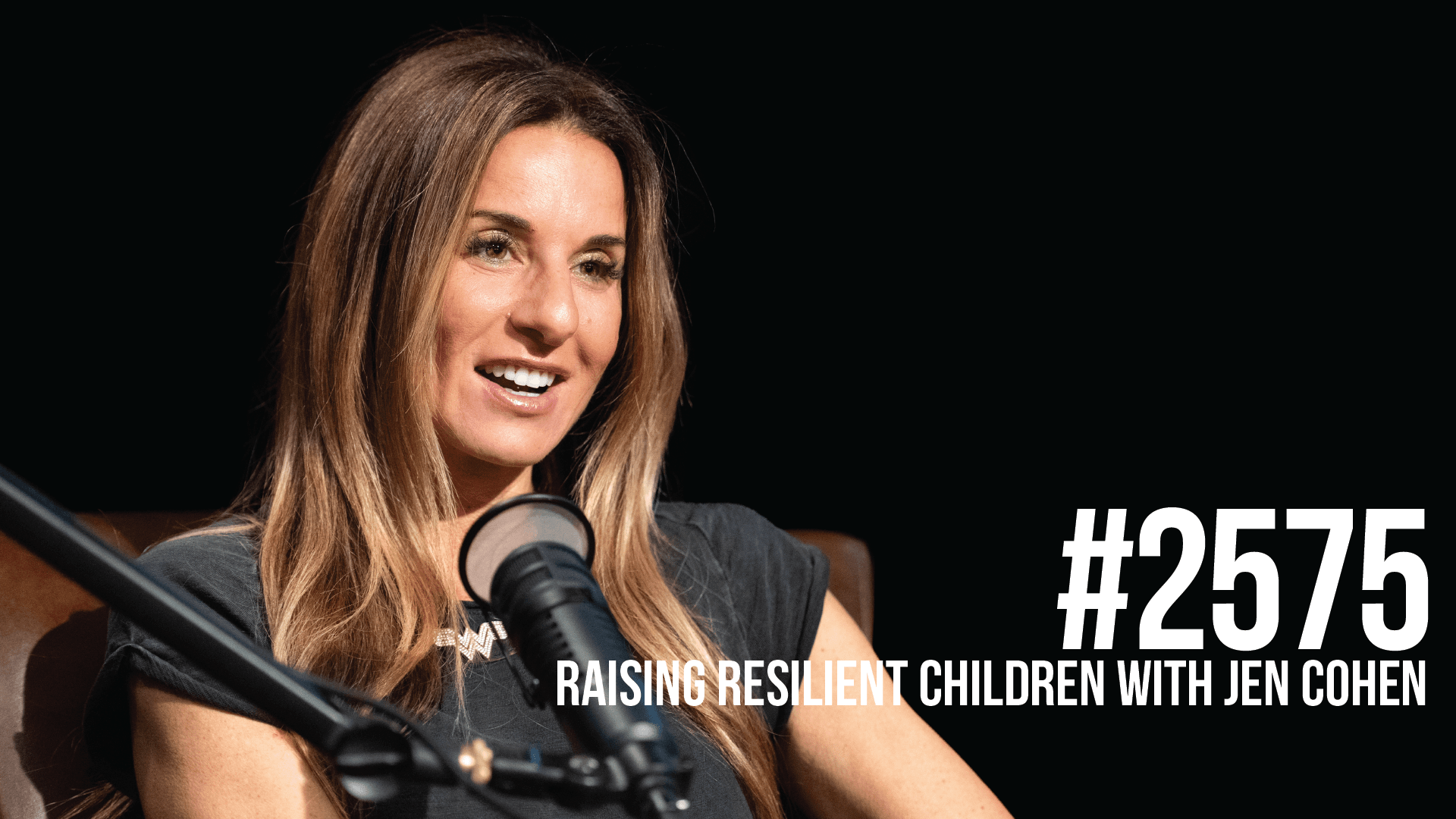
Mind Pump: Raw Fitness Truth
2575: Raising Resilient Children With Jen Cohen
01:19:52
The Secret to Raising Mentally Strong Kids in a Fragile World with Jen Cohen The reasoning behind her latest Ted talk. (2:02) Characteristics of a “gentle” parent. (4:52) Why aren’t parents letting their kids struggle? (7:51) The two...
Loading summary
Transcript305 lines
- [00:00]
Sal Destefano
Hey, prime members, are you tired of ads interfering with your favorite podcasts? Good news. With Amazon Music, you have access to the largest catalog of ad free top podcasts included with your prime membership. To start listening, download the Amazon Music app for free or go to Amazon.com ADFreePodcasts that's Amazon.com ADFreeP Podcasts to catch up on the latest episodes without the ads. If you want to pump your body and expand your mind, there's only one place to go. Mind Pump.
- [00:33]
Adam Schafer
Mind Pump.
- [00:34]
Sal Destefano
With your hosts, Sal Destefano, Adam Schafer.
- [00:38]
Adam Schafer
And Justin Andrews, you just found the most downloaded fitness, health and entertainment podcast. This is Mind Pump. Today's episode, we had our friend Jen Cohen back on the show. And in this episode we talked about raising resilient children. She did a very popular talk at TEDx. The title of that was the secret to raising Mentally Strong Kids in a Fragile World. And we're all fathers. She's a mother. It was a great discussion around raising children in today's world. By the way, you could find Jen at Thereal Jen Cohen. That's C o h e n on Instagram. She's great. Go check it out. This episode is brought to you by one of our sponsors, mphormones.com so if you're looking into hormone replacement therapy or you want to benefit from peptide therapy, go to mphormones.com, real doctors prescribing real compounds, not gray market stuff. By the way, they have a huge discount on growth hormone releasing peptides happening from April 7th to April 30th, 25% off. All of them, including Tessa, Marilyn, Hexarelin, IGF1, LR3, Samarilin. It's awesome. They also have bundle options, two month and four month bundle options. Again, it's Mphormones.com, we also have a sale on some programs. Maps Hit and the Extreme Fitness bundle are both 50% off. If you're interested, go to MapsFitnessProducts.com and then use the code APRIL50 for that 50% off discount. Here comes the show. Jen, welcome back to the show. We have so much fun with you.
- [02:09]
Jen Cohen
Thank you. I have so much fun with you too.
- [02:11]
Justin Andrews
Yeah, yeah, yeah.
- [02:11]
Adam Schafer
You look great, by the way. All super shredded from the last time I saw you.
- [02:14]
Jen Cohen
Really?
- [02:14]
Adam Schafer
Yeah.
- [02:15]
Jen Cohen
Oh, my gosh.
- [02:15]
Adam Schafer
Thank you.
- [02:16]
Jen Cohen
It's called Stress Stress Diet. It is. That's basically the best way to lose weight. That's like Mind pump in like nutshell. You could have your whole podcast in one sentence. You know, be stressed, lose weight.
- [02:29]
Adam Schafer
So you're one of the few people. There's very few people that will ask to come on our show. We don't ask them why or what. We're just like, yes.
- [02:38]
Jen Cohen
Really?
- [02:39]
Adam Schafer
Yes. That's why when you came in, you had no clue. So what do I talk about?
- [02:42]
Jen Cohen
I know you're like, oh, why are you here?
- [02:44]
Adam Schafer
Yeah. So you. Okay. So you did a talk. You did a TED Talk. You did a few.
- [02:47]
Jen Cohen
I've done it. I'm actually doing a third one. I just did my second one three and a half, four months ago.
- [02:52]
Adam Schafer
Yeah. So what's cool about that, by the way? And, you know, we'll get to the subject. But what's cool about that is that you had a fear of public speaking and now you're doing these talks.
- [03:01]
Justin Andrews
Yeah.
- [03:01]
Adam Schafer
Getting millions of views. We talked about this before, how you got over that fear and kind of the practice and you go through it. So I think that's pretty remarkable. But the last talk you did, I'm very interested in. Because that's to do with raising children.
- [03:13]
Jen Cohen
It is.
- [03:13]
Adam Schafer
We're all parents.
- [03:14]
Jen Cohen
Yes. I mean, this is the thing, right? Like, I don't. I don't help my. I don't. I'm not a psychologist. I'm a parent. So I think anybody who is a parent, they're. Then. That makes them an expert. Right. Because they're dealing with parenting day in, day out. And, you know, I really thought it was an important topic, which is. I wanted to. It was called the Secret to Raising Mentally Strong Kids in a Fragile World.
- [03:37]
Adam Schafer
Yeah.
- [03:38]
Jen Cohen
And the reason why I did it was I have two small kids, 10. And one's gonna be 10 next week, another one's 12. You guys all have kids as well. And what I've been noticing, as you know, through the. Throughout the years is, over time, kids are becoming more and more fragile, more and more frail. And it's really. The onus is on the parent. And I think this whole culture of. A culture of gentle parenting has really made our kids weaker. And so I wanted to have a platform or create some type of platform where we can kind of come together, unite, and create mental resilience in our. Our little. In our. In the younger generation. And so to me, also, if you want to be a mentally strong person, why not start when they're. When you are a child? Like, these are habits and tools that are. Are. Are important throughout your life. So why. When you're like, what, 21, 25, then you start to learn how to be mentally resilient. Start when you're a kid and get the foundation. Prime your brain, prime yourself for failure, for resilience. Because life's not easy. Life isn't easy. And if we coddle our children, which is what a lot of people are doing now in this, in this time, it's actually, you're doing a disservice.
- [05:04]
Adam Schafer
Okay.
- [05:05]
Jen Cohen
In a real way.
- [05:06]
Adam Schafer
So this is a great topic. But there's a quote you just reminded me. I think it was Frederick Douglass, that's Douglas, that said it's easier to raise strong children than it is to fix broken men. And I think it was Frederick Douglass. Maybe Doug can look that up, make sure I'm not messing that up. But let's get, let's go back for a second because I understand gentle parenting very well.
- [05:23]
Jen Cohen
Are you a gentle parent?
- [05:25]
Adam Schafer
But a lot of people misunderstand what it means. So I want to know from you what you're referring to when you. Because it's like intuitive dieting. Like when I say intuitive dieting, people have this completely.
- [05:36]
Unknown
You talking about helicopter parent scene, skewed.
- [05:38]
Adam Schafer
View of what it is. So what do you. What are the characteristics of what you're talking about of this coddling type of parent that raises these? Because by the way, and I know you have the data to support this. Yeah, I'm familiar with it. It's true. We are raising children that are more fragile and less resilient than ever before.
- [05:58]
Jen Cohen
Yes. Let me just start by answering your question of what in my belief is gentle parenting? Gentle parenting in, in my opinion is snow plowing all difficulty away from your children?
- [06:11]
Adam Schafer
Yeah, that's not. Okay, great.
- [06:12]
Jen Cohen
I'm so glad you said that. And snow plowing challenges. We've created a culture of caudal culture versus challenge culture. And challenge is what makes you stronger and makes you more resilient. So let's start with that. I would also say part of this stuff is helicopter parenting. Participation trophies. Creating a space where. Safe space. There's safe spaces and triggers. All of this lingo and language, in my opinion is creating a soft child, which then creates a soft teenager, a soft adult. Which by the way, I will tell you some of this, some of this is causing suicidal rates to increase. Anxiety is through the roof. Depression is through the roof. When you don't feel competent and capable of like taking care of yourself and having any form of self efficacy, what happens to you as a, as a human being is. Is beyond detrimental. Right?
- [07:15]
Adam Schafer
Yeah.
- [07:16]
Jen Cohen
And we've seen it. I mean, the reason why? Like, with the reason why. We are. We all. We were all raised in a very different time where independence was very much a thing. We took risk. We were kind of like thrown into independence because our parents weren't watching our every single move. And another big one is boredom. We've eliminated boredom from our children's lives where we are over scheduling everything because we're so nervous of our kids missing out on anything. When the reality is boredom is where creativity lives. It's where kids think for themselves and figure shit out. And if we're, if we're eliminating all of these things, what is our child left to do? They're not thinking for themselves. They're not acting on their own. Their parents are getting them out of every, you know, uncomfortable, challenging situation. And we're left with like, basically a blob of a human being. That's what we're left with.
- [08:18]
Adam Schafer
You know why, by the way? You know, what's your. Why do you think parents are doing that? Why do you think parents aren't letting their kids be bored? Or why do you think parents are not letting their kids struggle?
- [08:29]
Jen Cohen
I think what's happened. Because over time we've evolved to a place where parents rather be your. Be their child's friend than being their parent. They're so scared of being disliked by their child that they're just like, not parenting anymore. They're not disciplining anymore. They're not. They. They're so. They're so scared of that particular thing. When the reality is our job as a parent isn't to be liked all the time, isn't to make our kids happy all the time. It's actually the opposite. The. Our job as a parent is to make our kid resilient, make them competent, make it. Make them capable. We are not do. We are taking away everything from our kids. Chores are no longer even in most homes anymore. Like, when I was a kid, there was no chance that I was not going to be forced to make my bed, put my dishes away. And when I was 12 years old, I had a job. I was working at the olive garden by 12 in today's time, kids aren't even babysitting anymore. They've like, there's no more babysitting. Like, I mean, do your kid. Like, how old are your kids?
- [09:33]
Adam Schafer
Yeah, so. Well, I have four. Four. I have two older ones and two younger ones. So 19, 15. And then four and two.
- [09:39]
Jen Cohen
Okay.
- [09:40]
Adam Schafer
But you know, when you mentioned, you said confidence, independence, that all goes down to security. Right. When a kid feels secure Then they can do all those things and they don't feel secure when they don't feel like they can tackle the challenge. Well, because it feels insecure.
- [09:59]
Jen Cohen
Well, also because what hap. There's a couple things, right? There's like, there's like that learning space in the middle. Yeah, right. You have on one side not knowing how to do something, and then the other side you have having the ability and competence to do something. But in the middle it's like that learning I can't do, I can't do. And so it's very frustrating. Even as an adult, if I can't figure something out, I get super like anxious and frustrating, but frustrated. But I've learned that like it's part of, it's part, part of growing is like being comfortable enough in that frustration to try and try again. Which is why I talk all about like that 10% target that I, that I usually come on and talk about, which is making 10 attempts. We've eliminated that from our children, which is how people get comfortable with failure. And so we are so uncomfortable as a parent or as an adult watching our kids struggle.
- [10:56]
Adam Schafer
That's it.
- [10:56]
Jen Cohen
Right? We're so, we're so uncomfortable from the struggle that we'll just do it for them. And so our kids don't know what to do when they feel frustrated, so they get super anxious. And then in that anxiety spirals versus understanding and teaching your child that, you know what, like this is a normal feeling. You know, it's. It's okay to feel frustrated. It's okay to feel like I don't know how to do it. But that's part of getting from not knowing to knowing is that process in the middle. Right. Like any good athlete, there's a lot of practice, a lot of hours of practice that go in from being like bad at something to being really good. And it's us as a parent explaining and executing on that message, saying, you know what, me doing your homework or doing your science project isn't going to make you better, isn't going to make you feel confident, it's not going to raise your self esteem. It's not going to do any of those things. All it does is make me as a parent compete with the other parent for the gold star of the science project. And what does that do for you? Absolutely nothing.
- [12:04]
Unknown
Do you think that if you're looking back at like generations, especially baby boomers and you know, it was a very high authoritarian type of parenting in the house and sometimes there's love involved with that Sometimes there's probably an absence of love with that. And this is something I talk about even with some of my friends who are parents, because their natural reaction to that was to do the opposite in terms of, you know, not forcing their kids to do anything. And they're trying to kind of approach it with a different perspective. But do you think that might have played a role in terms of, like, how, you know, culture sort of shifted in terms of the style of parenting?
- [12:45]
Jen Cohen
Okay. I think two things happened. I think people growing up in the. In the 70s, let's say 80s, there's a massive shift after. After having your birthday. 1993, I believe it was, or 1995, I think a couple things. I think that Smart in 2010 actually was a big one when smartphones became a big thing. That's. That's the first thing, because instead of going outside to play and ride your bike and do all sorts of adventures and climbing trees, we've. All the kids have now migrated to being inside on an iPad, playing video games alone. So the, The. The whole act of socialization just dissipated at in two from 2010 on. And when that dissipated, anxiety, depression, suicide, all skyrocketed. That's one thing. The other thing that happened was if I would be. If I were to be honest with you, I think it's the woke culture. I think the woke culture has crushed mental resilience in kids, period. Full stop. Because that's when all of this gentle parenting, the helicopter parenting, the participation trophy, safe spaces, all crept up into society where that became the new norm. And if you're somebody who is on that side of the fence, that's what you do.
- [14:13]
Adam Schafer
You know, you, me. So when you say gentle parenting, I want to interject because there is a massive misunderstanding. And this is what a lot of people do with their quote, unquote, gentle parenting is they think it means always being nice, never nothing hard, letting you do whatever you want to do. The child kind of leads what's going on with the real gentle parenting was. Was firm with boundaries and structure, inconsistency, but not through anger or fear. Because what you end up getting are children that obey not because they think it's the right thing to do, but because they're scared. So this is like the girl who scared of my dad. I'm ready. But the second she gets out, she's like, I'm free to do whatever I want.
- [14:56]
Jen Cohen
Right, right, right.
- [14:57]
Adam Schafer
But what you're talking about is like, I'll give you an example. Parents who don't let their Kids be bored are parents who never let themselves be bored. It's uncomfortable being with little kids in the house. You know this. You got little kids in the house. They're bored. It's uncomfortable having them be bored because it puts it on me.
- [15:15]
Jen Cohen
Yeah, yeah.
- [15:16]
Adam Schafer
Then you ask the parent, when's the last time you went to the bathroom without your phone? When's the last time you stood in line without looking at your phone? When's the last time you did nothing?
- [15:23]
Jen Cohen
Totally.
- [15:24]
Justin Andrews
I mean, I would, I would actually, I would make. Even though I'm not a fan of woke culture, I would actually point almost all of this towards the introduction of phones with kids at such an early age. I think that so much of what you describe that we're not doing happens in play. When you go outside and you play with other kids, you. You lose some games. You don't get to play what you want to play. Sometimes you get hurt. There's so much of this. And. And because we took that away from our kids and allowed them to be glued to a phone or an iPad or a television all day long, we rob them of those experiences. And then you compile woke culture or this attitude of parents who don't know what to do. And instead I don't want my kid to be any more anxious or depressed. And so I'd rather be play on the safer side and go the gentle parenting route. And because I don't, I'm afraid to overcorrect the other. I really think the phones cause so much of this because there is so much to be to learn. I mean, Jordan Peterson talks about Those ages between 3 and 5 and how.
- [16:31]
Adam Schafer
Important if they don't develop social skills.
- [16:33]
Justin Andrews
If they don't do it, then they don't get it.
- [16:35]
Jen Cohen
So let me tell you something. A couple of things. You know, by the age of eight, children would have now spent a year of their lives on a smartphone.
- [16:43]
Adam Schafer
Yeah.
- [16:44]
Jen Cohen
Oh, I believe by the age of eight, that's one year completely eliminated from their life by just the amount of time they spent on their phone.
- [16:50]
Justin Andrews
And I. But that stat was pre Covid because Covid exacerbated that.
- [16:54]
Jen Cohen
Yes. And then the thing about play beyond what you just said is the inability to know how to socialize. Yes, it has been detrimental. Do you know another crazy stat is 26% of Gen Z are taking their parents to an interview.
- [17:13]
Justin Andrews
I know, I saw. We saw. We brought this stat up on the show the other day.
- [17:16]
Unknown
How can you not be embarrassed by that?
- [17:18]
Jen Cohen
I mean, how are you? But. But by the way this is the part that's even more embarrassing that it's, it's actually been like considered okay. Nobody there's no, there's nobody is like actually kind of like pushing back on that.
- [17:32]
Adam Schafer
I won't hire you if you come with your parent. You're not getting hired.
- [17:35]
Jen Cohen
And by the way, let me tell you something. Forget about even that. No way you're getting hired. But I don't know about you because you guys have a very like you guys run a tight ship here. But people don't want to hire people from, from Gen Z anymore. They're like if they see that person coming or if it's on their resume they just won't hire them or, or from the woke from people who are woke because it's just too much liability with it.
- [17:59]
Adam Schafer
You know what's interesting Jen, about that? So the data is really fascinating with that. There seems to be a schism that's happening with Gen Z where and this is recent where a lot of these kids are adopting more of these conservative hard work whatever we want to label them values because I think that they're like this isn't working for me.
- [18:19]
Jen Cohen
Yeah.
- [18:19]
Adam Schafer
I don't know what the hell is happening.
- [18:20]
Justin Andrews
Isn't it split by sex? Isn't that what the research is showing particular.
- [18:24]
Adam Schafer
Then girls seem to be going the opposite direction.
- [18:26]
Unknown
Polar.
- [18:27]
Adam Schafer
Yeah. And there's lots of stuff.
- [18:28]
Jen Cohen
So you're saying girls are, are getting.
- [18:30]
Adam Schafer
More towards the woke. More towards. And the boys are going in the opposite.
- [18:33]
Jen Cohen
Oh yeah. And the boys are going toward. I, I saw that. And that. Yes, I, I think I saw that. The other thing I wanted to tell you what was very interesting. I can't remember when you were saying and I turned to. Oh yes, the other thing about play was going to. What I wanted to mention which is I think really important just in terms of like inter, like interconnectedness is. Nobody's dating anymore.
- [18:52]
Adam Schafer
Yeah.
- [18:53]
Jen Cohen
Nobody is like going out and like dating. No one knows how to act with the opposite sex. So porn is up like a thousand percent.
- [19:01]
Adam Schafer
Nobody's talking about that. That is a huge problem.
- [19:04]
Jen Cohen
Huge problem.
- [19:05]
Adam Schafer
It's causing so many issues with kids.
- [19:07]
Justin Andrews
Have you, have you ever heard of me? Tell the story of our intern who was working for us when he was 16, 17. How old was. Okay, so we had an intern. This was like five, six years ago and he was 16, 17 years old. I can't remember how. He was young. Right. He was just out of high school and I, we were, we were asking him questions about what's high school, like, and hanging out and do they have parties on weekends and this and that and we're asking. Oh, yeah. You know, sometimes they do. Not a lot, you know, but occasionally there's a party and I'm like, okay, well, then when you go there and you see a girl you like, like, how does that play out? Like, and he. And what he told me and this is like how all his friends do. Would handle this situation. If there was a girl at a high school party that you were interested in, it's in the same party as you are. You wouldn't walk over to her and say anything to her. You would pull your phone out, add her as a friend on Facebook and wait to see if she adds you back. If she adds you back, then you then engage with her. Yeah. DM her on Facebook. And then if she respond paused you then. Then you would go over and potentially talk to her. That's how you would handle that situation. I thought that was so crazy that you would do that when someone's 10ft away.
- [20:16]
Jen Cohen
You don't find that to be like, that's just like crazy socially, it's also crazy.
- [20:21]
Adam Schafer
It's also. If you're a young man listening right now, the. Like, you can be such an. It's such an easy way.
- [20:27]
Justin Andrews
Yeah. You're a stud. If you just go over and say hi. If you're the guy who has the balls to go over and just say hi and be willing to fail.
- [20:33]
Jen Cohen
Think about it. The barrier to entry right now, today, the person is. So is the bar is so low. If you just go up to them, like, right. Right away, like, that's all you need to do. But that to me is like, doesn't that tell you something about where our society, our culture is going?
- [20:48]
Adam Schafer
Yeah. What you. What this points to for me, because I can use fitness as an example, is when you have obese, unhealthy kids, you almost always have obese, unhealthy parents. So children who are anxious, depressed, they can't be bored. They're always on devices. They never go out. They don't also have parents who are doing the same thing.
- [21:13]
Jen Cohen
Right. And that's. And there's so much research that backs that that kids learn 73%. I mean, I have all these crazy stats in my head from doing the TED Talk. Right. Because I researched the hell out of this whole thing. But it was like 73% better by watching.
- [21:31]
Adam Schafer
Yeah.
- [21:32]
Jen Cohen
Versus listening. Because after a while, nobody's listening. Like, everything, everything kind of just. Kind of just blends After a while, you're not paying attention. So kids mimic what they see. So for an example, right. All four of us were big workout people. Right. So most likely our kids are going to, like, adopt some of those habits. Right. So if you want your kid to be active, you as a parent should be active. Right. If you want your kid to really understand nutrition, then you need to. You need to be eating a certain way. Right. Because kids will follow what you do. Not to mention, I think that the fitness element is. It's crucial because what fitness does and was done for me, and I'm sure it's done for you, is it taught me accountability. It taught me discipline. It taught me delayed gratification. These are core life skills that are transferable in every walk of life. And if your kid is doing that at a young age, then they're taking those with them.
- [22:34]
Adam Schafer
Yeah, Yeah. I think a big problem with this, or challenge, I should say, not problem is that the. There's so much value in the real world, but it requires more work. And what we've created are cheap substitutes for the real world. So, like, you talk about pornography as a teenage boy, you know, I had drivers to go talk to girls. Very overwhelming. Powerful driver. Teenage boy understands this now. I couldn't relieve those drivers with pornography every five seconds with extreme novelty. I didn't have it when I was 14 years old. You know, you could trade a bike for a dirty magazine. That's how hard they were to get. Right. It was so strictly regulated.
- [23:14]
Jen Cohen
Yeah.
- [23:15]
Adam Schafer
So I had to muster the courage because these drivers are actually for. In particular for young men. They're drivers for creativity. They're drivers to get you out of fear because it's scary. You're 14 years old. You're going to go talk to a girl that you're interested in, and that is scary. She's going to say no. She probably will. You're going to feel like a piece of crap. You got to go talk to her friends around her. Your friends are watching you. What am I going to do?
- [23:39]
Jen Cohen
Totally.
- [23:40]
Adam Schafer
But to do that, you end up building these incredible life skills through this challenge. And speaking for young men now, because I think for women, it's different, but I also think they develop skills out of this as well. For a young man to be attractive to other girls, that's not nothing. You got to learn how to kind of grow up. You got to clean up a little bit. You got to present yourself not like a creep.
- [24:03]
Unknown
It's feedback.
- [24:04]
Adam Schafer
You got to kind of be funny. So you got to learn a little bit of skill, you got to learn how to communicate properly. You got to show some courage. These are all things that girls value. So I got to develop all that. Well, if I was a 14 year old boy with a cell phone, with a, with a smartphone in my room with more sexual novelty than kings, a thousand years ago, didn't even have like that drive is gone. I have no drive because I'm just, I'm just in my room stuck. And there's no girl that could even match that artificial process. You know, whatever.
- [24:34]
Jen Cohen
Can I say one more thing? Can I just interject? Also because of that phone, you're not learning that failure piece. Right. So you're so fearful of rejection. You don't even have, you don't have to worry about rejection. Right, right. There's no such thing as rejection if you're just stuck on a phone watching porn. Right?
- [24:51]
Adam Schafer
Right.
- [24:52]
Jen Cohen
So you'd rather do that. And now on a app with, with AI, you can have like a fake girlfriend who just talks really nice. You could pick the voice you want. You could pick it, you know, you could pick the voice, you could pick the answers. You could pick how she speaks to you, what she says to you, what dirty talk you like. Like it's making it like it's a. It's literally eliminating any ability for any type of rejection and human contact.
- [25:17]
Adam Schafer
That's right.
- [25:17]
Jen Cohen
The only question I have with the AI piece which I don't, I have not yet figured out and maybe because maybe my mind is like limited in this way. How do you have sex with an AI creature? Are you just like, are you jacking off and that with like listening to.
- [25:30]
Justin Andrews
The voice they're already in. Yeah, they're already making dolls that are very realistic.
- [25:35]
Adam Schafer
Yeah, they'll make dolls. But you know, it could get real twisted when you're talking about that, that lustful drive. It could get real twisted.
- [25:42]
Justin Andrews
We were just talking about this today before you got here. This was part of our conversation and just that this is the direction we're going. This is the inevitable is going to happen though. And we've also draw the, drew the parallel to 3D printing and be able to have all these consumer goods. We're in our lifetime or definitely in our kids lifetime. You are going to be able to have access to almost anything and everything you could possibly want. And what we're going to find out is we'll be more miserable and more unhappy than we've ever been in our life yet we have access and availability of anything and everything. We want.
- [26:13]
Jen Cohen
Well, that's what's happening now. But look what's happening also, like, look at the fact that, like, we have, I think, over consumption or haven't you ever heard, like my mother would always say to me, too many. You know, if you have too many options, you end up with nothing. Right. Like, that's why the prettiest girl always ends up alone. Right? Because she can pick from everything. She becomes so particular and picky that she ends up with no date and all her friends who are mediocre, not that great, are all married, happily, happily living with like, boyfriends, husbands, kids. And the prettiest girl is alone. Because too many options always, almost always leaves you with nothing. Well, you know, because of that. But. Okay, go ahead.
- [26:52]
Adam Schafer
No, no, I was going to say with. With girls, with the dating apps. What's happened with variety women.
- [26:58]
Jen Cohen
Yeah.
- [26:58]
Adam Schafer
Is it. Can they continue? It. It reinforces this idea that they're. Because you get on a dating. I don't care what kind of girl you are, especially if you're offering sex, you're gonna get a million and one different requests and they're 99 going to be invisible to you. Except for that one dude that's over 6 foot tall makes over 6 foot the biggest fish. And the data on. That's funny. It's like 5% of men fit in this category.
- [27:20]
Jen Cohen
It actually is 2%. That's crazy. I know.
- [27:23]
Adam Schafer
And so it's creating this really distorted world of what's happening while meanwhile, while people are not interacting in the real world and to what Adam said, the social interactions, the social skills, the brain is very plastic when you're a child. So like learning a language. You can learn multiple languages as a child and never develop an accent. You can speak them all fluently. You learn them as an adult, and you can tell which one's your native language and which one you learned as an adult. Social skills, the ability to approach people, talk to them, deal with situations, fail, whatever. You don't develop those as a kid, you're permanently disabled.
- [27:58]
Jen Cohen
I mean, I feel like 1000% true.
- [28:00]
Justin Andrews
Sports play working out are the three things that we have to find a way to get our kids involved in.
- [28:09]
Jen Cohen
So you did listen to my TED Talk. I say that fitness, huge sport, team sports, huge. Anyone who's not putting their kids in team sports before, between the ages of, let's say 3 to 10 is doing a major disservice to your kid because that's where you learn all these team buildings.
- [28:33]
Justin Andrews
If you are going to allow them to use the phone and iPads and tools like that, you have to at least counterbalance. You have to. Otherwise you are almost for sure signing them up to have social anxiety, depression and all those things. If they. You allow that and you don't put them in those. Because there's hope. If they at least get a team sport because they're going to learn. What I love about sports is you're going to fail, someone's going to be better than you. You're going to have to communicate.
- [28:59]
Jen Cohen
I think you just said the key thing, though. Somebody is going to be better than you. This is one we have not spoken about yet, guys, which is in life, there are winners, there are losers, there are people who are average, there are people who are better than average. And. And guess what? You may not have great talent, but if you work your ass off, you can move yourself from a three to a seven. Right? That's where you learn these things. Right. If you don't have. Instead of. And this is where parents really are screwing up their kids because they want to tell their kids, oh, you're amazing. You're the best. You're the best. Worst thing you can do.
- [29:33]
Adam Schafer
Yeah, yeah.
- [29:34]
Jen Cohen
By telling your kid how great they are. Worst thing you can do.
- [29:37]
Adam Schafer
No. Praise their work.
- [29:38]
Jen Cohen
Praise their work and their effort. Don't pray, don't tell them how great they are.
- [29:42]
Adam Schafer
You know why that's a problem? The reason why that's an issue is if you. This happened to me as a kid. If you constantly tell a kid, you're so smart, you're so smart, or you're so pretty, or you're so great, you're so great. The second they encounter a challenge that counters that, they'll crumble, they'll flee. Yeah, this happened to me as a kid. I was always told how smart I was. You're so smart. You're so smart. You're so smart. And then I got into it.
- [30:04]
Jen Cohen
Oh, I did that too, all the time.
- [30:06]
Adam Schafer
That's okay. As an adult, you can say it all, you want to figure this out. But then when I encountered actual challenges where I'm like, oh, I'm struggling, not gonna even try, because I don't wanna destroy the image of how smart I was. Versus, wow. I could see you really worked hard at that. Yeah, I could see you enjoy that.
- [30:21]
Jen Cohen
Or see. Or see. Look, I say that to my daughter all the time. And like, look, look, you work. You put so much effort into that. You worked so hard on that. And now look at the results of this versus, like, you know, basically praising that effort versus just like, oh, you're so wonderful. Anything you do is great. Or that the coach doesn't like you. Screw him. Let's go to another team. That's what's happening. Parents are pulling their kids off of teams of sports because their kids are not getting enough playtime. The coaches are benching them, which is. Which is happening all the time. And so basically the parents are moving them to different teams. And where the coaches now are, like, it becomes this whole thing where coaches are so scared and fearful of losing these players, losing the money, where now, like, everybody's going to have equal amount of time to play equal amount of.
- [31:09]
Justin Andrews
Are you familiar with how. How NIL is doing that to college sports? Right. No, that's. Right. Now there's this. There's this huge, like, problem in college sports with the introduction of nil, which is basically kids that can get paid now for sports.
- [31:23]
Jen Cohen
Oh, yeah.
- [31:24]
Justin Andrews
And because they have these options, you have scenarios where a college football team or college basketball team goes and shops all the other schools that are willing to set them up with better NIL deals, and then the whole team leaves at once. So literally, the coach comes in the next season and all of his players are looking to move out somewhere else because they've been able to shop other. The grass is greener on the other side. Someone else is willing to pay them. Someone else is willing. And so we haven't even figured out how we're going to solve.
- [31:51]
Unknown
When I was coaching, dude, I had never heard of kids transferring just to get to another school because they thought they had a better opportunity.
- [31:59]
Adam Schafer
Sorry.
- [32:00]
Unknown
You live here, you go to this school and it was like this loyalty. There's no loyalty anymore. And the coaches are having to face it.
- [32:07]
Jen Cohen
No, it's terrible.
- [32:08]
Adam Schafer
Well, here's what you. So this is the thing about sports that I think a lot of people don't realize because we're listing all the attributes, but really, the reason why sports exists in the first place, the reason why games exist in the first place is what games are, is games are life, but boiled down to an hour or an hour and a half with specific rules. So we could play the game of life in this. In this sport or this game.
- [32:33]
Jen Cohen
It's a microcosm.
- [32:34]
Adam Schafer
That's all it is. That's all it is. And so you're practicing life is what you're doing. And what we've done. Two things that we've done with sports that have, in my opinion, ruined it. One is everybody wins, nobody loses.
- [32:46]
Justin Andrews
Which Is stupid. Keeping score because there is.
- [32:48]
Adam Schafer
Because you're not. They're not learning life in that sense because life is. Life hits you all the time. Okay. The other thing is we've, we've on the other extreme is we've boiled sports into money. You make money. That's what's good about this. So now these kids who are getting paid aren't learning life, they're just learning it's about money.
- [33:06]
Jen Cohen
Yeah.
- [33:07]
Adam Schafer
Which is, which is equally terrible. So when you put your kids in sports, you need to think about is I, my child is practicing the game of life for the next 45 minutes. That's all they're doing. And so if they sit on the bench, what does that show about life? Sometimes you can't participate, sometimes they can't participate. But they need to support because that's how life is. Or when they're playing and they're winning, there's lessons there too. Hey, you did a good job. Oh, your pride is building up. Let's talk about that for a second. You're not a badass like you think you are. Make sure you support your other teammates or they get their asses kicked and they loot great lessons and losing because that's what life's going to show you. They learn how to work with other people. They need to learn how to work with difficult people.
- [33:44]
Unknown
That's it. It's all of that conflict resolution.
- [33:47]
Jen Cohen
It's. Conflict resolution is a big one. And also it shows you who are naturally born leaders and where you have to. Where you, where you are in the slot of life.
- [33:57]
Adam Schafer
Right.
- [33:58]
Jen Cohen
I think it's a very teachable moment. Right. Like, I think that you can learn a lot about your own dynamic, what makes kids likable versus not likable. If you, how you treat others, how you will be then treated or whatever these things are like, these are fundamental qualities that are just being completely decimated.
- [34:19]
Adam Schafer
I love that you said that about leadership because what's, what's great about that? And so you got to think about as a parent, again, think about life. Okay. For a second. I think when we think of sports, we think the automatic leader is the best player on the team. There are many teams where the worst player is the leader of the team because of the one that pull the team forward. They're the ones like that. What's that movie Rudy, where you got that kid on the team that sucks. But everybody rallies around them because of their spirit, because they bring everybody together.
- [34:46]
Jen Cohen
Yeah.
- [34:47]
Adam Schafer
So it's not about your kid being the best or the worst or in the middle. It's like, it's so much more complicated. The problem with it is it seems simple. And so we relegated it to, oh, it's just you scored a goal or you don't. Maybe we shouldn't have them lose because the kids cry when they lose and we don't want that type of deal. No, no, no. It is way more complex. And as long as societies existed, games have existed. And the reason why they've existed is because they're extremely, extremely valuable. So putting your kids in them is incredibly important. And then back to like, challenging with your kids. We've talked about this, right? Our kids are growing up very privileged from a worldly sense, right? My kids have way more money than I did as a kid. They live in a nicer house. It's like, you know, they have to worry about a lot of things that I did. So how am I going to help them become resilient? You know what I'm going to do? Because they're still going to have challenges, going to get frustrated when they try to build something, it doesn't work. They're going to get upset when something happens they don't want. They're going to go play with the kid that's going, they don't like or whatever. I don't jump in. Let them feel it. Let them feel it.
- [35:44]
Jen Cohen
I create this kind of Lord of the Flies type of, like, scenario, right?
- [35:48]
Unknown
That's a little far where I see yellow jackets.
- [35:52]
Jen Cohen
I feel like, to survive what we. It's the truth, though, are we should create a Lord of the Flies scenario with our kids and the survival of the fittest, right? Like, I don't jump in. Like, I want my kid to. I want to see how they fend for themselves without me getting involved socially. That's with a lot of stuff. Like, there's been a ton of situations recently with. With my daughter, right? Because girls can be horrid. Okay. Girls are worse than boys. Like, and it starts young, right? With, like, social and all these other emotional, social.
- [36:28]
Adam Schafer
You guys are socially. You guys are born more socially intelligent. That's why you understand social complexity. So girls do the whole, like, well.
- [36:37]
Jen Cohen
Girls are catty at any age.
- [36:38]
Adam Schafer
Well, they build their alliances.
- [36:39]
Jen Cohen
They build their alliances like Lord of the Flies. I'm telling you, it's very much like Lord of the Flies. And it's so easy for. Especially because, like, you don't want to see your kid hurting. It's like, horrible, right, to not jump in, right? But, like, the second you Jump in. You're, you're, you're taking that game and you're like, the game is over. Right. You need to see how your kid.
- [37:01]
Adam Schafer
Yeah.
- [37:02]
Jen Cohen
Can actually fend for themselves in that environment. With girls especially, it is, I, it's a dog eat dog world out there for these girls. Let's just like, let's see how, how you survive or how you fend for yourself. So I like to just sit back and watch now as much as it kills me because I want to like tear the head off of these, some of these ten year old girls. I swear I would if I, if I wasn't going to be put in jail. But at the same time, like that's how they build grit, like, that's how they build toughness. That's how you really build toughness. When you really step away as a parent and say, you know what, you're doing this on your own. You're going to take care of that fight by yourself. You're going to go. If you're, if you, if you, if you want to go on that dance group, if you want to be on that soccer team, you know, like you got to practice or you're going to be booted out. Like, put them in places where it's hard, make them do that they don't want to do, put them on teams they don't want to be on and see how they fend for themselves.
- [37:55]
Unknown
That social integration piece to what you're describing, if, if there's conflict amongst the peers and the groups, they have to learn how to interact with each other and resolve it themselves in the way.
- [38:06]
Justin Andrews
Of that they will if you stay out of the way. Absolutely will.
- [38:09]
Jen Cohen
And this is what I've learned from, for my observation and meeting a bazillion people I know, and I'm sure you guys too have maybe found the same thing. The people that had the most challenges as kids were the best adults. They were the coolest, they were the most resourceful, they were the strongest. They were the most like able, like willing and abled people who had true success in life.
- [38:36]
Adam Schafer
You know, you're right. The root of this, you got to, this is important though. The root of this is a child has to feel secure with their parent and that's because they have a home base that they feel secure with. They could take these risks unless they.
- [38:50]
Jen Cohen
Just boot them out and be like, bye, you're not coming back.
- [38:52]
Adam Schafer
No. But people are like, what's that security look like? The security looks like this. I have a consistent parent there who's consistent with me. They're not sometimes going to scream at me when I do something.
- [39:03]
Unknown
They're just very consistent, fair and honest.
- [39:05]
Adam Schafer
They're fair, they're honest. They're there for me emotionally. So I'm gonna go to them and be like, oh, you know, the soccer team won't let me play. And mom's like, that sucks. You know, I'm here for you, but mom's not gonna go talk to the coach, not gonna fix it for you. But I'm here to provide you with that security so they feel secure with that home base.
- [39:23]
Jen Cohen
That's a truth. That's a very good point.
- [39:25]
Adam Schafer
That is. Now I'm gonna tell. It's gonna be controversial and I'm sure people are gonna get mad at this. This is a fact, though. I'll argue this all day long. The root of what's happened with what you're labeling as woke culture or what you're labeling as like this gentle par. Kids do whatever. The root of this, because a lot of what you're talking about play risk challenge. Figure this out, kiddo, is dad. And dad has been gone. So if you look at the data on what has happened culturally is there are a lot of fatherless homes that have existed, a lot of moms, and moms have tons of value. But what moms don't do nearly as well as dads. And the data's a fact on this. Okay, Rough and tumble play and pushing your kids a little bit to take risks. Right? Mom's the one that says, don't throw them so high in the air. That's scary. Like, oh, wait, don't let him do that thing. And dad's the one that's like, no, no, we'll push him a little bit. Let's let him go to this thing a little bit. And so dads have been gone, moms have been going to the games. And it's moms that are saying, everybody needs to get a trophy. It's not fair that my kid is crying. It's not fair that my kid isn't playing. And I'm not blaming moms. Moms are doing the best that they can. Dad's gone, so dad needs to be involved. And it's the dads that provide what you're talking about that's lacking. So a lot of this is the non involvement of fathers. When dads are involved, you see a lot of people.
- [40:42]
Justin Andrews
That's an interesting.
- [40:42]
Jen Cohen
That's very interesting.
- [40:43]
Justin Andrews
Yeah. Because if you take like, again, this is anecdotal because My own experience. Right. I think right away, my two best friends, I go all the way back to their child. They would tell you that their, their dad didn't. Couldn't do anything. And they're. They both, they both come from homes, parents are married, stay together forever. Mom ran everything.
- [40:59]
Adam Schafer
Yeah.
- [40:59]
Justin Andrews
You know, mom ran every. Dad was not a dad didn't do. Dad worked. Dad worked all day long, did his thing and I mean, they didn't turn out weak. They both are strong men and successful and figured it out without dad being involved. So I don't know if you can pinpoint it to that. Because mom can do that. Mom could potentially.
- [41:19]
Adam Schafer
So here's what the data shows. Dad just being there is a million times better than dad not even being there.
- [41:24]
Jen Cohen
No.
- [41:24]
Adam Schafer
But what's better than that is a dad that's involved, who's consistent, who provides those things. Like rough and tumble plays a big deal. Right. So playing rough with your kids, which dads seem to do.
- [41:36]
Justin Andrews
I mean, so here's. I guess, I guess the point that I'm trying to argue because what you're going to hear from me, and it's just because I have such a strong stance on the iPhone, been screaming it on this podcast for fucking 10 years almost now. I just think that that takes away so much.
- [41:53]
Adam Schafer
You're right.
- [41:53]
Justin Andrews
That all these things that you're saying isn't. You're not wrong. You're right.
- [41:57]
Adam Schafer
Because these trends were happening before the.
- [41:59]
Justin Andrews
Yeah.
- [41:59]
Jen Cohen
So I think you're totally right.
- [42:00]
Justin Andrews
So it requires that. Because otherwise if, if, because let's say you don't have a dad. I mean, obviously I didn't have the most consistent parenting stuff going on in my house and figured all this stuff out. But I played and I interacted with kids and I did sport. And so because I did all that, it filled all those gaps.
- [42:16]
Adam Schafer
Yeah.
- [42:16]
Justin Andrews
And without that, I feel like.
- [42:19]
Adam Schafer
Have you seen, have you seen children without fathers who play organized sports and what the coach does for them?
- [42:24]
Jen Cohen
Yes. Ok, first of all, this is what's interesting about. You're both right. So if we didn't have smartphones and there's so much data on this, we would be left with hours and hours a day to be bored. We would have to figure out. We would have to be like, okay, where's Bobby at? Maybe we can go for a bike ride. Where's Lucy? Maybe we can, like climb that tree or do this painting. Because we are. Because now, every time, every minute, even if we're in an elevator for 27 seconds, we're scrolling our phone because God forbid where we. We have a moment, but if we took away the phone or the smartphones and the iPads, that will leave us with all these. This time to, to basically distract ourselves in a good way with actual socialization, dating, real playing real things in life. The other thing, what you said, Sal, about the lack of fathers is a 1 million percent, if you look at data on that as well, because the dad provide a role that a mother just simply cannot. My question to you is where did all the dads go now beyond where they were before? Is it because they're working constantly? Are they working more?
- [43:38]
Adam Schafer
Are they just like still a huge fatherless problem?
- [43:40]
Jen Cohen
Why? That's true. But why?
- [43:42]
Adam Schafer
Well, that's a deeper question. I mean, I think marriage has been devalued. I think that they've lost their sense of community, which you need as a married couple. That was the church for a long time and then that was.
- [43:53]
Justin Andrews
You think it's more today than it was 20 years ago?
- [43:55]
Adam Schafer
It's about, it's about, it's. It's maybe a little better, but it's still bad.
- [43:58]
Justin Andrews
I mean, so that's where my, my argument. That's why it's like, I don't think it's any different.
- [44:02]
Jen Cohen
I really, I think that gets the same too.
- [44:05]
Justin Andrews
I just think that your, your point though, that you're making. That I agree with is that because of the introduction of that robbing those kids of so much that his role becomes paramount. It's like your, your mom, that's not what she gives. That's not her, her thing. God bless the single moms that have to try and figure both out. But that's not what her strength is. That's dad's strength. And then if he's not gonna be playing with friends, playing sports into that, you've got to step the up or it's almost guaranteed he's going that route. I just think that that phone has robbed these kids of so much of that stuff of life. I mean, I look at. This is something where my son, I have a very sensitive son who like his default is to cry when he doesn't get his way or doesn't like things. He'll start to get sad and he'll cry. And like watching him interact with kids, he's younger than a lot of kids, so a lot of times they're stronger, they take. They dominate a little bit more. So I definitely have this kid who I'm trying to build that resiliency. And you know, we'll let that. We'll let it unfold. But the conversations I'm having to have with him a lot are things like Max, listen, sometimes you don't get to play what you want. Sometimes you got to play what Timmy wants. You don't always get to play what you want to do. And so either one, you play with what they want, you play and do what they want to do for a while or you go do your own thing. But you don't cry. You don't cry because you don't get to play this way or do that. That's not how you do this. That's not how real. So I'm having to have a lot of conversations like that because of. And thank God we, we foster that play and making sure he's doing that with kids and he doesn't get all this. But it is. I could see that if you didn't, if I didn't insert myself into those conversations and teach him that lesson, then he could easily become that really soft kid who just every time he doesn't get what he wants cries and defaults to that.
- [45:45]
Adam Schafer
Yeah, yeah. The fire started with, with, with fatherless homes and the gasoline is social media, the Internet and smartphones. But it started before that. And now you have a situation where we are trying to. Here's the problem. Problem is that parents, you are competing with something that you're going to lose against. Right. You give the child an opportunity to choose between a smartphone and outside Smartphone's going to win. It's engineered to win every time.
- [46:16]
Jen Cohen
Every time.
- [46:16]
Adam Schafer
So it has to be gone. And they can't see you on it. That's a big one. They can't see you on it. You also have to. And you think that's hard for you? Well, guess what? It's going to be for your kid.
- [46:26]
Jen Cohen
Well, that's the problem. Because if we're, if we're having a hard time with it, can you imagine how a young 10 year old's going to feel? The, the only answer to solving this problem is not giving your kid a phone until 16 years old. And I'm not kidding you, this is.
- [46:44]
Justin Andrews
But I wish it's a society. We would band together on that. I wish we would all come together on that. That it's just the same way. We don't let kids drive cars until they're 16. We shouldn't allow them to have that kind of access.
- [46:55]
Jen Cohen
That's why I did this stupid TED Talk. When I say stupid, I mean like that's why I did this TED Talk. Because I wanted to band together with parents and educators to come together for this exact message. You know what happened when I tried to do this? Because my kid is now 12 years old and all his friends have phones. And I wanted to, I wanted to, I really wanted to kind of stunt that. I didn't want to give him a phone, but all his friends had a phone. So I went to a bunch of moms and said, listen, can we just not give their. Like we try to maybe just extend the period of time before we give our kids the phones. Nobody, nobody was on board. Not one. And so I was the only mom who gave my kid a phone that's like, kind of like the equivalent of like a, like a flip phone. No social media on the phone, no Internet on the phone. It's just a phone where he can text me. He can, and he could call me for safety reasons. Right. And you know the problem with that becomes tenfold, right? Because other parents don't want to do that because their life is easier with the kid has the phone because then they can do whatever the hell they want a lot of times. And when you work like me or like, you know, a lot of other working moms, you know, you, you kind of need that, that built in babysitter to like eliminate the problem. Is there? The, the only, the only answer is when we as a, as a society unite and not give the kids full access.
- [48:24]
Adam Schafer
Let me, let me help you out with that because this one, this is really hard because otherwise you're isolated. And if you're isolated.
- [48:31]
Jen Cohen
Exactly. It becomes another problem.
- [48:33]
Adam Schafer
If you're isolated as a parent, you're screwed. So what you need to do is find a group of people who live like you do and that way they have friends. Their kids live like your kids do. So we did this with our church. We've done this with our church because here we found all these people that follow the same values. So it's not weird when my kids are hanging out with these other kids and they're all doing the same thing versus if I have other friends who are different, their kids come over and now I become totally isolated. By the way, this is true for all things, okay? So I can bring it back to fitness. Your kids do what everybody else is going to do. They're going to be fat and they're going to be unhealthy and they're going to have chronic health conditions. They have to kind of be different. And if you don't want to be isolated, you're gonna have to surround yourself with people. So as a parent, it's challenging, but it's always been challenging. But the way that we used to do it in the past was we had big families, big extended families, and we belong to communities, and that doesn't happen as much. And so you feel a bit isolated. So you gotta surround yourself with other families that are similar or you're screwed. Because you'll give in if your kid's the one that's left out. Now you're dealing with this other problem. Well, my kid now is left out. Now their friends are all communicating together on Snapchat or whatever. They're having all these conversations, developing friendships, and my kid has no friends. So now I'm dealing with the, well, do I let them be lonely? That seems worse than allowing them to use Snapchat so they can hang out with their friends. You got to find parents who believe in the same thing so that your kid doesn't feel isolated. So it's even more difficult.
- [50:05]
Jen Cohen
Well, that's the only way to do it. This is a very layered conversation, right? Because there's. It's not just like, just do this and you'll be fine. Like, that's not at all what. And by the way, we're all in the same challenges, right? Because we're all working parents. We all understand how we need to make it easy for us to get work done. There's. There's no easy answer. All I'm saying is that we need to. We need to. We need to kind of stop giving our kids phones at such an early age.
- [50:36]
Adam Schafer
For sure.
- [50:36]
Jen Cohen
Because even I'm talking. Even like before all of that, like, I'm talking, like, at 3, 4, 5 years old, where they become. They become so. Their. Their brains become so used to that. The way that the phone is. Their neuroplasticity will change and adapt to the phone, as opposed to knowing about socialization and friendships and all these other things. You're like. You're taking a mind that's basically like putty, and you're creating this. This dependency on really terrible things, you know?
- [51:08]
Adam Schafer
You know, the statistics are. So Adam brought this up the other day. I remember what percentage? It was an alarming percentage.
- [51:13]
Justin Andrews
It was a prison one.
- [51:14]
Adam Schafer
Yeah, it was. How many? What was the percentage?
- [51:17]
Justin Andrews
So that the average kid today sees less sunlight and daylight than a prisoner does. So your average kid today. I saw that it's outside less than what our prisoners do.
- [51:31]
Adam Schafer
How crazy is that?
- [51:32]
Justin Andrews
And they have two days. The prisoners have two times a day where they get to Come out, take a walk outside and do their thing. And they on average get more time outside than our children do.
- [51:42]
Adam Schafer
Here's another alarming one. You know what the average age of a kid who sees pornography on the Internet is what, 10? 10. That's the average age a kid comes across some kind of, of nudity or pornography on the Internet.
- [51:58]
Jen Cohen
What was it, 20 years ago?
- [52:00]
Adam Schafer
Oh, I don't know. I don't know. But I mean that's, that's terrible.
- [52:04]
Jen Cohen
Oh, it's, it's.
- [52:06]
Justin Andrews
But well, I was in high school when I saw my first dirty magazine. I think.
- [52:09]
Jen Cohen
Yeah, but we had like, you know, but you saw Playboy, you had like, that was, that was all, that was all you had.
- [52:15]
Adam Schafer
But you had like five pages of the same, like this kid. If they go on the Internet, it's like infinite crazy, crazy stuff.
- [52:20]
Jen Cohen
And, and so we, we didn't say earlier about this was when you guys were young, you guys had Playboy. You looked at what like some boobs and whatever. But like now it is so nasty raunchy stuff that like people, guys now believe that's what's like the norm. So when they actually meet a girl in like in irl, in real time or whatever, in real life or they ex. Their expectations are so outrageous that nothing will ever match that expectation. So they just rather go back to porn versus like dealing with a girl and her issues and like, whatever, like, you know, stuff that she has to deal with.
- [53:02]
Adam Schafer
Classic. So it's, it's, it's actually, it's worse than people realize because it has drug like effects, but it's also acting on a very strong natural driver that we need to have. We're supposed to have this driver.
- [53:15]
Jen Cohen
Yeah.
- [53:15]
Adam Schafer
So what it's doing is it's manipulating this natural driver and distorting it. And it's got profoundly profound negative impacts on our life. And the data on this now is becoming super clear.
- [53:27]
Jen Cohen
Yeah.
- [53:27]
Adam Schafer
On what it does. But what happens like with all drugs, Right. Caffeine is an example. You have one cup of coffee, I'm zooming. Three days later, if I drink it every day, I need another cup.
- [53:36]
Jen Cohen
Totally.
- [53:37]
Adam Schafer
So what's happened, and the stats and the data on this is really interesting is that pornography's gotten more and more and more extreme to meet consumer demand because of the, the novelty effect is, is, is weaker. They got to keep going and it gets worse and worse and worse to the point now where it's. Some of the top viewed things are things that, that allude to incestual relationships and stuff. That is like what is going on, right?
- [54:04]
Jen Cohen
Just to kind of keep it as violence and. Yeah, because you're right. Because you become so desensitized to whatever you are watching. It's like caffeine like you said. It's like, you know, we're wired to.
- [54:13]
Justin Andrews
Seek novelty as creatures. We're wired to go out. And if you're. If that's no longer novel of seeing gang bangs every day, it's like I need the next level, the next novel thing. And so it just. That's the natural progression. And I don't think a lot of people, I think it's something that a lot of men are embarrassed about or don't share and don't talk about. And so I think it's even worse than what we do.
- [54:37]
Adam Schafer
I am a grown man, okay. And I went off, I completely went off pornography over a year ago because I saw the data, all that stuff. Plus had a spiritual conversion went off at complete was actually great. But I remember trying to go off of before and it was really challenging. As a grown man I couldn't imagine being a 15 year old boy with a smartphone. Couldn't imagine what that would have done to me as a, as a 15 year old boy with that kind of access. That would have been. You might as well have handed me cocaine every day and said here you go, good luck. Let's see what you. Let's see what happens. I can't imagine. And this is what's happening when you're giving your kid a smartphone. You're giving them access to everything.
- [55:15]
Jen Cohen
The world.
- [55:16]
Adam Schafer
Not everything. All of its terrible. I know is in there. It's really, really crazy.
- [55:22]
Justin Andrews
I mean are you guys. I. There's. I'm optimistic. I feel like you know, the, there's. There's more and more TED talks and books that are coming out and more and more parents. We have enough years now behind us and we're seeing all these things unravel and get worse. And so I, I want to believe that we're in the thick of some of the hardest times when it comes to this. Because you know, I, I feel bad for parents like you guys who like I have a five year old. So I had already read the book Irresistible Unplugged. I read those books before I had him Igen. So I was very like on top of that right away. Whereas I can't imagine if I have. I had a 19 year old or 15 year old when iPhone was brand new and everybody was celebrating how great it was not realizing like I don't think a lot of parents that have got teenagers right now were thinking about these, how detrimental this was going to be where I think it's a conversation now. So I'm optimistic about where we're heading. I think that we're just, we're barely just starting to create a lot of awareness around it. And I want to believe as society will, will figure it out or we'll be. And I think it'll become more common that when you go to a bunch of parents like that they're going to, I mean I just experienced this with my son. I told these guys on air the other night or the other day that my, we went up to our Truckee place up, up in Tahoe and we went with a couple that I never hung out with. It was my son's, my son's best friend at school and this is the first time I'm hanging out with them. So I don't really know the parents. I'm getting to know them and we're like on the second or the third day and I make a comment to the dad, I said hey, I noticed your son hasn't asked for an iPad or anything this entire time we've been up here. And he's like oh yeah, no, we, we. He works for Netflix. And he's like oh yeah, we, he, we won't even let him watch it or have it. We've not introduced it to him. And I said, I love that. I said really? Yeah. So it's so cool to meet other parents that are aware of that and have just made the conscious choice to not even. And it's so cool because my son and him don't, they don't even think twice about it because we, we regulate that really closely at our house. And then here he is playing with another kid who doesn't. So it's not a problem. It's not hard because, because he's with another kid who has, has parents. So I'm hoping that we'll see more of this.
- [57:41]
Jen Cohen
Well, I think also. Well, to your point, Sal, about you know, basically surrounding yourself with people who are like minded. Like building that community is so important because it's very easy when you don't, when you, when you are, you basically are peer pressured into doing things.
- [57:59]
Adam Schafer
As a parent.
- [58:00]
Jen Cohen
As a parent.
- [58:01]
Adam Schafer
Yeah.
- [58:01]
Jen Cohen
I also think it depends on where you live. Right. Like Los Angeles versus living in maybe Kansas is very, very different.
- [58:08]
Justin Andrews
Oh yeah.
- [58:09]
Jen Cohen
In terms of different pressures. What you're, what you kind of are around, what you're, you know, what I mean, like, to me, that makes a major difference.
- [58:18]
Justin Andrews
Oh, you're the. You're in the belly of the beast.
- [58:20]
Jen Cohen
You are the belly of the beast.
- [58:21]
Adam Schafer
Yeah.
- [58:21]
Jen Cohen
For I am.
- [58:22]
Adam Schafer
Yeah.
- [58:22]
Jen Cohen
But what's gonna say is, what I actually find super interesting too, is to you what you just said about your. The guy that you were with who works at Netflix. What I find super curious is why is it that people who work for Meta, who work for Tick Tock. I was gonna say, isn't that interesting? They will not let. They will not allow their.
- [58:40]
Justin Andrews
This is what blew my mind when I read Irresistible Resist. There's a great book by Adam Alter called Irresistible. And I remember sharing it on the podcast years ago. These guys, and I was like, dude, and the guys who created this tech don't allow their kids to use it because they knew how much they were making this to be addictive enough that they wouldn't even allow their own kids to use. I said, what does that tell you? If the creators of it.
- [59:04]
Jen Cohen
That's what I find to be so fascinating. If the people who actually created is actually what you were saying. It's. It's true. They. What they do is they. They. They basically mimic slot machines in Vegas. That's how they create it. People don't realize this is. These things are not made for you and I, the users. It's a marketing machine. It's like, that's why the algorithm picks up and tracks what you watch, to give you more of it, so they can make money off of you. This is. They didn't do this out of the goodness of their heart. They didn't create Instagram and Tick Tock. Say, here you go. Be entertained for 24 hours a day. They did it because they knew they can make money. They can sell you all sorts of stupid random shit that you would otherwise never know about. And people just are not realizing this is not for them. That's why people who create and make their businesses on Instagram, the smartest thing you can do is take your audience and take them off of Instagram, like, get them into a different database. So you can then. Because it. This is, this is, this is rented, not owned. Like, you don't own Instagram. This is. They're making money off of you. Not, not vice versa.
- [60:14]
Unknown
I'm also hopeful too. I'm not big on government policy, but if, if enough parents band together and actually start pressuring, you know, schools and in a lot of these places where, you know, obviously this is affecting kids to a degree where we saw the detriment of cigarettes and we saw the detriment of alcohol and we're like, okay, we need, you know, more restriction and access here. And so you see a little bit of this in Florida where they're experimenting with like an age of, for social media at least. And it, it seems to me that if, if this subject keeps coming up, we keep having these kind of conversations, more people bring that awareness to it. It's like we, we need to all, you know, really start pressuring and affecting policy.
- [60:56]
Adam Schafer
There's light at the end of the tunnel. So you're, there's a small spike or you're starting to see a, kids who are getting flip phones, they're actually wanting them themselves.
- [61:06]
Jen Cohen
You're seeing, I posted about that the.
- [61:09]
Adam Schafer
Other day, there's a rise in young men who are going off pornography. There's groups online that talk about this. And for the first time in I don't know how many decades, seen declining rates of church attendance and Christianity. Right. The main religion in America has flattened out and started starting to reverse. And the largest growth is in Gen Z. The largest growth in that is Gen Z. And they're going for the more traditional orthodox versions of Christianity, which to me points to the fact they need some structure. They're looking for structure and discipline because they're like, I can do whatever I want. This doesn't feel good. I feel like crap. I like going to this place that's like, here's how we live. It feels much more secure and better and I'm getting some purpose in my life. So there is some light at the end of the tunnel.
- [61:52]
Jen Cohen
There are some schools also who are becoming foam free. In Australia they passed a law that you cannot bring a phone. There's some schools already in the US that have done that. But you know what it's called? It's, it's bringing awareness. And the more you talk about it and the more we educate people on the actual true data and effects that this is having, the hopefully the more people will kind of band together kids.
- [62:18]
Adam Schafer
Kids thrive in an environment with a predictable, consistent structure, love, support and empathy and where you allow them in an age appropriate way to overcome challenges and obstacles. If you do those three things, you've done like 99% of all of it. If it's an inconsistent environment with no structure or discipline, you're going to raise a very anxious kid who doesn't know what to expect. If you raise a kid with no love, that obviously I think everybody understands that totally screws them up.
- [62:52]
Jen Cohen
Yeah.
- [62:52]
Adam Schafer
And if you don't let them encounter challenges and actually feel the struggle of the challenge. You're going to raise a kid that's fragile. And by the way, one of the ways that parents do this is you got a kid who's crying because they don't get what they want. And one thing, a big mistake that parents made, I did this with my older kids, is you put on, oh, no, stop. Really, let's put on your favorite show. And what you did is you taught your child to disassociate from the challenge. They're distracting themselves from whatever they're going through and then they become adults that disassociate from challenges rather than letting them be uncomfortable, which makes you uncomfortable as a parent. So you got to ask yourself, I do this all the time, like, is it me, like my kids having a fit right now and I'm having problem with it, but I'm uncomfortable with it. So I got to let them sit through this and I got to, I'll be there with them and I'll sit next to them, but I got to let them feel this. I know I gotta deal with my own uncomfortable feelings around it.
- [63:45]
Jen Cohen
So a lot of this is actually training the parents to be uncomfortable with discomfort also. Right. Like, like that's what I'm saying. Like it's very interesting because it's like it's a dual thing here because it is very uncomfortable to watch your kid be uncomfortable and struggle. Nobody likes to see, of course. And like I'm a Jewish mom on top of it, so you can imagine. So it's extra hard, right? It's extra, extra, extra hard. But I mean, being cognizant of what the issue is and working through it, because I, like I said, it's, it's very easy just to give in. Right?
- [64:19]
Adam Schafer
Yeah.
- [64:19]
Jen Cohen
And like we've trained our brains at us to, to, to know better. Right. And so we just have to kind of apply that with our kids.
- [64:29]
Adam Schafer
Yeah. And it's age appropriate stuff too, right? Like your one year old throws food on the floor, not a big deal. Your 10 year old throws food on the floor, it's different.
- [64:38]
Jen Cohen
Yeah, right.
- [64:39]
Adam Schafer
So like my 4 year old's a great example. Like up until relatively recently, maybe a little while ago, every time we played a game, he would win because it's, he doesn't understand losing, he just understands if I win, I win, I win it. But right around the age of three and a half or four is when they start to figure out, or they need to figure out that they can lose so what do I do with them? Now we play Uno. Right? And so now we'll play Uno. And now every five games I'll win. And he's, oh, okay, I'll try again. Now at 2 years old, he'll cry. He doesn't know what's going on. I don't wanna play anymore. You crush your kid. So there's age appropriate ways to allow your child to encounter challenges because you also don't wanna do this. There's also the authoritative non loving parent which raises psychopaths. So it's the parent that's like. And it's the parent that raises the kid. No, no, do it this way and that's it. And you're whatever, you raise a psychopath that way. So, so there is a way to do this by figuring out the age appropriate ways to, you know, like your kid cries because they fell off their bike, but they're five, like, okay, that's fine. Your 15 year old falls down and cries every time they fall off their bike. Like we have to talk about this kid.
- [65:44]
Jen Cohen
Well it's also like, exactly. But you know, just to what you just said, you know, I never let my kids win at games. Ever, ever, ever. Yeah, when they were one or two, I'll be like, yeah, you won. But like as they get older, as they get older, like, like I would have, like I played, I play Rummy Cube with them, I play Uno with them, all those things. And like I'm trying, like my kid beats me 9 out of 10 times because they have been trained to like actually have to put effort in it because again, that's a microcosm for life. Like they're not going to win at everything and they're going to have to try. And if I just allow them to just to kind of beat me every time, what am I really?
- [66:19]
Adam Schafer
But it's important to learn this stuff too. Like the age appropriate, like, well, I.
- [66:22]
Jen Cohen
Didn'T do it too, but I'm sure as hell doing it right.
- [66:24]
Adam Schafer
Like two or three year olds playing together, you know, you're like, no, you need to share. Two year olds understand that they play in tandem, they play on their own.
- [66:31]
Jen Cohen
Parallel play.
- [66:32]
Adam Schafer
Yeah, four or five years olds. No. Now you can't always play the way you want. You got to play what other people want to. So then you start. So it's age appropriate, is important because what can happen is you can get the parents that are authoritative and abusive who hear this, like, yeah, I, yeah, my kids smack them whenever they, you're not doing the Right thing either, buddy.
- [66:51]
Justin Andrews
You guys think that the traditional values around gender roles and moving away from that has played a role in this also. Because when I hear you guys what we're communicating right now too. There's a lot of qualities that mom just does a really good job of doing. And the ones where dad and it almost allows. You don't have to have this perfect balance. Dad could kind of be the hard ass who's always doing that maybe isn't the best at showing love affection. Because mom comes back behind all the time and picks her son up.
- [67:22]
Adam Schafer
Yeah.
- [67:22]
Justin Andrews
Because you feel love.
- [67:23]
Adam Schafer
You have an inconsistent environment when one person does both. Is mom gonna act like a dad or mom today? Is she hard or is she soft today?
- [67:31]
Jen Cohen
And that's very true. You know, it's interesting like when I, when I tell my kids not to do something like don't do that or if I'm yelling at my kids to. But if my husband says it, they listen. They like, they buck up really quickly and they'll listen. And I get so annoyed as a mom, like why would I say it? No one pays attention. But when you say it one time there kids are naturally more scared of their father than they are of their mom. When there's two parents like that there is. It's true. Like it doesn't matter because I feel like naturally there must be an instinction like, like, like instinctually moms feel more like safe and comfortable and like the dad, they can't get away with it.
- [68:11]
Justin Andrews
Did you we. I brought up a stat on I told the guys the other day where, where a kid, you know, they did a, they did a study with teachers. Dad, grandma, all these people who do you think the kid and they said is most likely to misbehave in front of. So all think of every parent. So mom, dad, grandparent, teacher, all these people and they, they studied all these kids. Thousands of kids. And there was one of them that stood out more than any of them that the kid was more likely to misbehave in front of the mom. Yeah, 900 more. 900, 900 more. But that was the reason why was because the kid feels safe. Feels safe. Can he can challenge boundary. And part. That's part of life is is kids are, are part of raising kids is learning what I can and can't do. They feel the most safe and protected with mom. And so they're going to stretch those boundaries. Dad is not that way. Dad is more the authoritarian, more the disciplinary, more that person. And so that's the same Thing in my household, too. Katrina will drive her crazy. She's reminding him to do something like that. Then all I have to do is step in and said, max, listen to your mom.
- [69:16]
Jen Cohen
And then. And then they listen.
- [69:18]
Justin Andrews
Yeah. Then he gets right up, and she's just like, I just said that to him, like, seven times. And then you come over and do that. So crazy.
- [69:22]
Jen Cohen
But it's. It's 100%. I didn't know. It's 900%. That's crazy.
- [69:25]
Justin Andrews
900%. More likely to. In front of.
- [69:28]
Adam Schafer
Yeah, I think that. Wow. I think the challenge with the why the gender role issue has caused such an issue isn't because it's two reasons. One where we devalue the strengths that each person has, and we pretend like there are no weaknesses sometimes either in either side, so. So we overvalue sometimes mom or dad, depending on the situation, and we don't realize they both have value. They're both very important. Like, how many times have moms told dads, don't wrestle with the kids before bed. You're gonna rile them up. No, no, don't rile them up. What are you doing?
- [70:00]
Jen Cohen
Yeah, yeah, yeah, that's true.
- [70:01]
Adam Schafer
Do you know how important it is or, like, how valuable it is that dad gets to do that with their kid? Like, the skills that they learn, you know, or the dad to the mom. Oh, come on. Stop coddling when he's crying. That's important that mom can provide that. It's okay. Cause you provide the other side so well, the balance.
- [70:17]
Justin Andrews
Yes, that's my point of why? Like, do you think I believe that it's played a role? And I know that's a controversial thing to say because we've tried to eliminate traditional gender roles, but there's something to be said about how valuable, how organically it used to happen, because dad just was that guy. Dad. Dad didn't have to be better about coddling and empathy and doing those things because mom was so good at it, and so he could get away with being, you know, dad who works all day long, and then he just comes around and he disciplines all the time, and they still raise a decent kid. Yeah. That's because mom did such an organic job. Great job of balancing that out and vice versa. Right. Like, she didn't always have to be the one who's hard discipline because she knew her husband could come in and do that. And it's. It's unfortunate that we have shamed people for so long about following these kind of traditional values and gender roles. When there's a lot of value that comes from that. And it's not to say that you can't have a dad who has more empathy or a mom that has more discipline. That's not the point of that, that this conversation. It's just that we've eliminated that so much or we've shamed that so much that, oh my God, that traditional is so old school and so bad. And we point out all the bad and it's like, well, okay, there was some really good things that used to happen when, when mom had her role and dad had his role. Because we are different and we have different strengths, and those strengths feed and play into raising a kid.
- [71:42]
Jen Cohen
And by the way, like, after everything we've just talked about on this show, right, like, there are gender roles, in my opinion, for a reason, right? I feel like the world works better when that's the case. Even with, when it comes to dating, when it comes to socializing, when it comes to raising a child. That's why it's a natural instinct. And what we're trying to do is eliminate their natural instinct and create this other form of being because it's more progressive. And to me, that's when we've had this demise in, in every way. What? Like, like walk of life. We've had this demise in, in raising children. We've had this demise in dating and cohabitating. We've had this. We've. In relationships. We've had this demise in work life, in work and professional. Like, in every way there's been a demise because we are trying to, like, we're trying to create this other instinctual way to be. Which is impossible, right? Like, and this is not me being like a, you know, like this, like, super hardcore right wing traditional. No, Like, I'm super malleable in a lot of ways. But I do believe that, like, there are roles for a reason. Like, like women, like, for women. We talked about this last time I was even on the podcast. Like, there's certain, like, tradition. There's certain traits that women should have, and there are certain traits that men should have for the world to work better. Right? Like, in order for a woman to be attracted to a man, men have to have certain traits beyond just being tall. And they have, like you were saying, bravery, you know, like leadership. Leadership confidence. Like, like security. Security. Like, duh, who wants a weak guy? I don't really care what you say. Right? But. And women, like, no matter what, like, women should have to have, like, some sense of softness, some nurturing, Some like, maternal instincts. Like, you don't have to be a total, like, you know, Stepford wife. Obviously not like, do I look like a step for wife? No. But there are certain things that are.
- [73:59]
Adam Schafer
I think the world's lied to us a lot, and it's sold us the law of. Of lies. And what it's done is, it's over. It's glorified the attributes that men provide, and it's completely undervalued. I'm talking about the world, right. Society undervalued the attributes that women provide. So it's like, let's celebrate the first woman to build a sky skyscraper, first female astronaut, first whatever. And so it's like, like, you know, it's. It's celebrating these big conquests. Meanwhile, like, moms that raise incredible children, build incredible communities that provide emotional support, which women do exceptionally well. Like, all great people were raised probably by a great mother to an extent, or there's a great mother there. We've undervalued that. And now it's. I think it's starting to change. But it's to the point where, like, my wife stays at home with the kids. She doesn't hear this so much, but I remember my mom. My mom was stay at home. She almost felt embarrassed saying that when people would ask, what do you do for a living? Oh, I'm just a. I'm just a homemaker. Because it was so undervalued.
- [75:06]
Jen Cohen
I love that. I'm just, you know, it's crazy. It's crazy. It's like, by the way, I mean, I'm obviously not a homemaker by any stretch, but I will tell you, that's the hardest job in the world. When I have to stay home for two days with my children alone, I. I'm running back to work.
- [75:23]
Adam Schafer
There's nothing more. More challenging.
- [75:25]
Jen Cohen
It's the hardest thing in the world, and it's. It's to raise a good human being. It's incredible.
- [75:31]
Adam Schafer
Is there anything more important? I think there's nothing more important.
- [75:34]
Jen Cohen
There's nothing more important.
- [75:34]
Adam Schafer
No, there's nothing.
- [75:35]
Jen Cohen
I work.
- [75:36]
Adam Schafer
I work so that my wife can raise my kids, most importantly, and my work can change. I'm not going to switch my kids out for better kids or whatever. That's the most important thing. But my point is, the world's lied to us, and it's lied to us and it's undervalued what we tend to do best. There's nothing wrong with being, you know, a little more masculine, a little more feminine, whatever. You Want to label it or whatever, there's nothing wrong with that. But, but there are tremendous values in these things that we provide. Especially as parents. Especially as parents. And that's why I think, like, single parents have it real tough because you're trying to figure out doing both. And it makes it a bit inconsistent. I gotta be a little bit more, a little bit more like that. But, you know, traditionally it's the dads that provided a lot of that, that kind of, that, that discipline, a little bit of that challenge, the, the rough and tumble play, the kind of tough it up a little bit kind of attitude thing typically came from dads. And when dad's not there, mom's got a, she's got a real difficult choice, okay, who am I going to be? And she's probably, she's probably going to default to the thing that she's best at, which is not those things, which is more of the safety and comfort, nurturing, which can become by itself, without the other side of it, a little toxic in the sense that now my kid, I fix every problem. I talk to every teacher that my kid has a struggle with. I don't like, oh, they're, I mean.
- [76:55]
Justin Andrews
Just like what would happen if the opposite was true? If the dad with just the discipline and the get up, you're fine attitude with no empathy.
- [77:02]
Adam Schafer
Yeah. A bunch of psychopath kids, you know, so, so there's, there's, there's. They're both extremely valuable. Just have way more single moms than single dads because dads tend to bounce. But, you know, that's the case. Anyway, good time.
- [77:13]
Jen Cohen
Yeah, we'll see how controversial this podcast is. You always have controversial.
- [77:20]
Justin Andrews
But I love, I love talking to you about it because you're not coming from the traditional right wing Stepford mom. You're this business woman, like, badass, and you work your ass off. And so coming from you, it's such a good person to talk about it because it's not like you're over here trying to say too, oh, me just being a mom, staying home is more important. All these women that go out and work, it's like, no, listen, I, I crush work. I love business. I do that stuff.
- [77:46]
Jen Cohen
Yeah.
- [77:46]
Justin Andrews
But I also recognize that these traditional values that we've had with, you know, the way the woman would run the house and how the man would run the house and why we, we need each other.
- [77:56]
Jen Cohen
And also, I thank you. I appreciate that. And I think that's why it's really important. Right. Because I'm not like, I'm not a stay at home. I'm not a stay at home mom, as you said. And I think that these are all, these are challenges that most people in the world like, face. Right. Because most of us have to work, unfortunately. And it's, I'm not saying I'm perfect. God, like, I struggle with these things every day. So if I feel I'm struggling, I'm sure a lot of other people are struggling. Which is why I think it's important, like I said, for us to band together and educate and tell people and build a community around what's really happening so we can better it later on.
- [78:32]
Adam Schafer
I agree. One of the best. I heard this quote, so I don't remember who said it. I thought it was incredible. And she said, if you ever want to judge a policy or a shift in culture, there's a real easy way to judge it. How does it affect the kids? So this is good for adults. We're gonna do this new thing. How will it affect the children? And that will give you your answer right there.
- [78:55]
Jen Cohen
Wow.
- [78:56]
Adam Schafer
Yeah.
- [78:57]
Justin Andrews
Like that.
- [78:58]
Jen Cohen
By the way, we never even talked. We'll talk about it next time. We didn't even touch upon all this other stuff, like. Well, I'll tell you. Well, actually, forget. I'm not going to say anything. We'll talk about it on my podcast that we're going to do next.
- [79:08]
Adam Schafer
Okay.
- [79:09]
Jen Cohen
Okay.
- [79:10]
Sal Destefano
Thank you for listening to Mind Pump. If your goal is to build and shape your body, dramatically improve your health and energy and maximize your overall performance, check out our discounted RGB super bundle@mindpumpmedia.com the RGB Super Bundle includes Maps, Anabolic Maps, Maps Performance and Maps Aesthetic. Nine months of phased expert exercise programming designed by Sal, Adam and Justin to systematically transform the way your body looks, feels and performs. With detailed workout blueprints and over 200 videos, the RGB Super Bundle is like having Sal, Adam and Justin as your own personal trainers, but at a fraction of the price. The RGB Super Bundle has a full 30 day money back guarantee and you can get it now. Plus other valuable free resources@mindpumpmedia.com if you enjoy this show, please share the love by leaving us a five star rating and review on itunes and by introducing Mind Pump to your friends and family. We thank you for your support and until next time, this is Mind Pump.