← Mind Pump: Raw Fitness Truth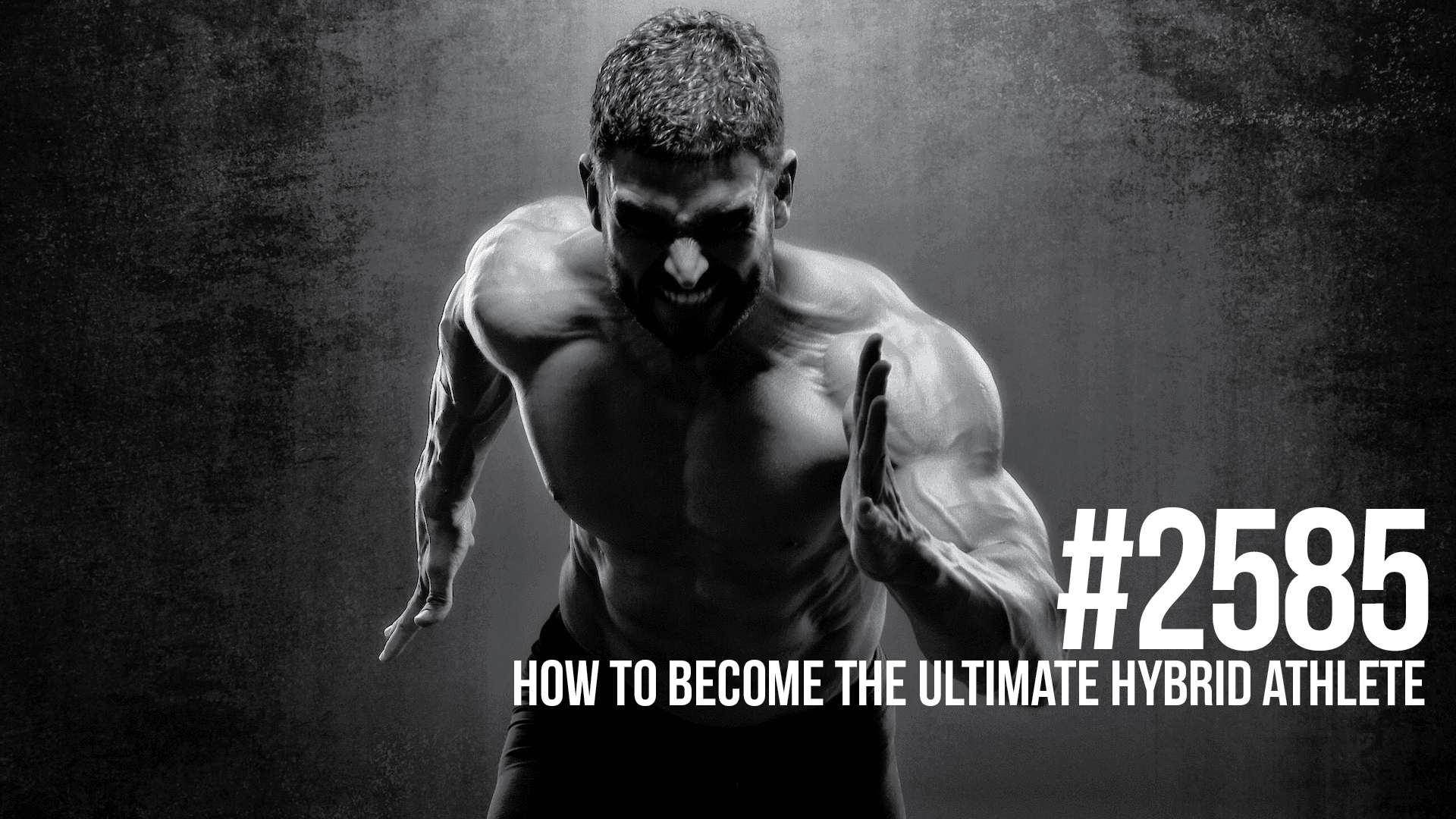
Mind Pump: Raw Fitness Truth
2585: How to Become the Ultimate Hybrid Athlete
00:33:26
How to Become the Ultimate Hybrid Athlete What is a hybrid athlete, and why is it trending? (1:18) The biggest mistakes this avatar makes. (5:04) How to Become the Ultimate Hybrid Athlete: The Ultimate Balanced Weekly Routine (18:35) Day 1:...
Loading summary
Transcript101 lines
- [00:00]
Unknown Host
Danger lurks in the American landscape. No one in their right mind would be out here, which makes it the.
- [00:06]
Sal Destefano
Perfect place to kill someone.
- [00:08]
Unknown Host
Introducing Hot and Deadly from id, your podcast for classic American true crime, served with a side of biscuits and gravy. On each episode, you'll hear some of ID's most shocking stories of murder and betrayal, from the mystery of a preacher shot and killed by a bow and arrow to a former prom queen gone missing and found murder. Listen to Hot and Deadly on Apple Podcasts, Spotify, or wherever you get your podcasts.
- [00:33]
Adam Schaefer
Race the rudders.
- [00:34]
Justin Andrews
Race the sails. Race the sails.
- [00:36]
Adam Schaefer
Captain, an unidentified ship is approaching. Over.
- [00:40]
Justin Andrews
Roger. Wait. Is that an enterprise sales solution?
- [00:44]
Sal Destefano
Reach sales professionals, not professional sailors.
- [00:48]
Justin Andrews
With LinkedIn ads, you can target the right people by industry, job title, and more. We'll even give you a $100 credit on your next campaign. Get started today at LinkedIn.com results, terms and conditions apply.
- [01:02]
Sal Destefano
If you want to pump your body and expand your mind, there's only one place to go.
- [01:08]
Justin Andrews
Mind Pump. Mind Pump.
- [01:10]
Sal Destefano
With your hosts, Sal Destefano, Adam Schaefer.
- [01:13]
Justin Andrews
And Justin Andrews, you just found the most downloaded fitness, health and entertainment podcast. This is Mind Pump. Today's episode, we're talking about hybrid athlete training. We give you the blueprint, we break it down, we tell you what to do, how to train the lifts, everything, if you want to be like a hybrid athlete. Now, because of this episode, we have programs that train you to be like this. We have three of them. Maps Performance, Maps Performance Advanced, and Maps 15 Performance. All three of those because of this episode are 50% off. You can find them@mapsfitnessproducts.com use the code HYbrid50. That'll give you that 50% off discount. Now, this episode is brought to you by our sponsor, mindpumpfitnesscoaching.com if you're a personal trainer or an online coach and you want to build your business, we have put together the course for you. By the way, our course is nationally recognized and we'll give you CEUs for both NASM and AFAA if you're interested. And you want to grow your business and you want to learn from us, the best in the industry, go to mindpumpfitnesscoaching.com all right, here comes the show. Hybrid athlete. This is trending right now. Today's episode, we're going to talk about how you can become a hybrid athlete yourself. What does the training look like to get yourself proficient in all the physical pursuits that'll make you a badass let's go.
- [02:34]
Adam Schaefer
Oh, I love social media.
- [02:37]
Unknown Guest
Does that mean we have to be slightly.
- [02:39]
Adam Schaefer
The new. The new hot thing? It's like, it's a buzzword going on right now. The ultimate hybrid athlete.
- [02:45]
Justin Andrews
Yeah. Well, what happened was I was out talking with our editors, and I said, hey, what's. What's trending right now in the fitness space? Because they're all in it all the time. I said hybrid athlete. And so I thought it'd be good. And by the way, this is not new. The term may be trending, but the concept is not new at all. It's an old concept. I mean, we've written workout programs specifically for people who have this kind of a goal, but I think we should kind of define what it means. What is a hybrid athlete? This really is somebody that is able to kind of do it all. So they're strong, they've got endurance and stamina, good agility or mobility. They're functional. They. They're well rounded, I guess would be the best way to put it. Right.
- [03:29]
Unknown Guest
Well, before, back in the day for Olympic athletes, wasn't this like the. The first depiction of a real Olympic athlete was the. The kind of athlete that could kind of do everything pretty good. Not like, excel in just one area, but almost all of the events.
- [03:46]
Justin Andrews
What a great point.
- [03:47]
Adam Schaefer
I think look good, feel good, move good, strong. Yeah, I mean, that's what comes to mind to me right away. It's just like that. You kind of check all the boxes. You look good, you feel good, you move good, and you're strong.
- [03:57]
Justin Andrews
Yeah, no, that's good. And Justin brought up a good point. You know, the Olympics, a really long time ago, what they used to believe the ideal athlete was for whatever sport in the, in the, in the Olympics was somebody who was kind of well rounded. And then eventually they realized this is not what was best for shot put, was not what was best for swimming or best for running.
- [04:19]
Unknown Guest
Yeah.
- [04:20]
Justin Andrews
So now you have athletes that are specialized. Yeah. Specialized in one thing and built to do well in one thing. They look like a shot putter, looks very different than a long distance runner, looks very different than, you know, a swimmer. But a hybrid athlete is somebody that kind of can do it all now, isn't the best at each one of them. So that's key. A hybrid athlete isn't the. They're not going to have their max endurance, they're not going to have their potential for max strength or their potential for max agility. Because if you just focus on one thing, you'll get a lot of that thing, but you'll actually lose a lot.
- [04:54]
Unknown Guest
Of the other trade out.
- [04:55]
Justin Andrews
A hybrid athlete is somebody that's like, look, I want, I don't, I don't need to have my max strength or my max endurance or my max agility, but I'd like to have a good amount of each one. I'd like to be able to be well balanced. And I think it's trending because people identify with that. I think they identify with what that may look or feel like.
- [05:14]
Adam Schaefer
Yeah, I think this is a great conversation because leave it to the Internet to bastardize something like this. And really it's a bit nuanced because you have goals and I don't want to say they conflict with each other, but don't necessarily complement each other. It's important to understand how to train for each attribute that you want. And I think what happens, what I mean by the Internet's bastardize it is I think they've kind of thrown it all into one basket and feel like just if you do it all, you'll.
- [05:48]
Unknown Guest
Get it all at once and melding.
- [05:51]
Adam Schaefer
Evolved and you might get a little bit of results that way. Like if you, if you train like all those all at one time in a workout, sure, you're going to get some of a little bit there. There's definitely a better way to do this. If you want all those attributes that you defined when we started, there's a very clear way to go after those and to obtain all of them. And it actually doesn't look like doing them all at once. And I think that's the mistake is that people think, oh, you just do all this.
- [06:18]
Justin Andrews
Yeah, that's the biggest mistake. So you think to yourself like, well, I want strength, endurance, agility and functionality. So today I'm going to do all those things all at once. And what ends up happening is you get kind of none of all of them. You might get endurance, you actually might get endurance if you do everything all at once. But you're not going to get strength, you're not going to get agility or power, functionality. Kind of a smaller degree. Like the mistake people make is they combine everything all in one workout. What you want to do is you want to train specifically for each attribute on its own. So, you know, one day is going to be strength training. Strength training needs to be strength training. If I make strength training, if I try to meld it with anything else.
- [07:01]
Unknown Guest
It'S not strength training, it's not stretch training anymore. No, it changes the definition of it completely.
- [07:05]
Justin Andrews
If I do strength training and I'm like, you know, I want to also have endurance. So what I'm going to do is have no rest in between sets and go from exercise to exercise to exercise. It's just endurance training. I've actually lost all the strength. If I'm trying to do power and I'm also trying to combine that with, you know, endurance, it just becomes endurance. I lose the power. So what you want in endurance? If I'm trying to get endurance from strength training, then I'm going to not. I'm not, it's not going to work. Strength training is for strength. Endurance training is for endurance. Agility training is for agility and so on. And so a routine, when you look at a good routine, one that's effective, by the way, the best athletes in the world that are looking for multiple physical attributes, that's how they train. When you're an athlete and you're training for strength, it looks like traditional strength training. When you're training for endurance, it is traditional endurance training. So what you need to do is break it up during your week and then that's going to give you best, the best results.
- [07:59]
Adam Schaefer
Well, that's how you train if you're being coached by the right people. I mean, we just had our good friend Stan efforting in and I mean, he had the opportunity to train Jon Jones and actually a lot of these professional athletes that don't have the best coaches don't get this. And so don't be fooled because you see somebody famous or that's a pro athlete that you see mixing all these workouts together and it seems to be working for them because they're a pro athlete. So you think, oh, I'm going to go do that same thing. I think that's part, part of the mistake. And, and we've had the opportunity to talk to a lot of elite coaches that specialize in sports or help specific athletes out. And I'd say the most common thing that they all have found is like this, this, you know, where these athletes are doing it all at once and they're. Then they have to try and communicate to them, like, listen, we're going to focus on one thing right here and get really good at it. We're not going to do all of this in this workout. That doesn't make sense.
- [08:51]
Unknown Guest
It's tempting for the athlete because they're, they're going to want to then hire other coaches, like on top of that one coach. So look at their stre coach. But then right after their strength coach they're going to go work with their skills coach, then they're going to work with their endurance coach all on the same day. And it just, it ends up muddying the actual attributes that you're trying to acquire.
- [09:10]
Justin Andrews
Yeah, and another reason why this is confusing is if you play a sport, if you're thinking of yourself as an athlete because you play a particular sport, what you're probably thinking right now is, well, I'm, when I'm playing my sport, I'm using all of them. So if I'm, if I'm playing a game, I'm using strength and agility and endurance. Why don't I train all of them at the same time? You'll actually get more strength, more endurance, more agility by training them separately. And then you practice your sport. That's how you practice bringing them together. So in other words, you've got your different instruments in a symphony that practice on their own and they play together at the same time. Allow these attributes to work together when you're practicing your sport. But when you train each attribute, you do them individually. And a lot of people understand that in fact, really bad workout programming that is for hybrid athletes. Here's how you know it's really bad workout program. That's what it looks like. It looks like deadlifts and then run and then jump and then pull ups and then it's like, okay, this is terrible programming. That's not how you train for those attributes. Even if you want all those attributes, the other mistake that they make is that they do too much. Because if I look at just the strength training routine, it's going to look like this many days a week. If I look at just an endurance routine, it's going to look like this many days a week. If I look at just the mobility or agility or functional training routine, it's going to be this many days a week. So what people do is then they just add them on top of each other. So like, okay, man, strength training. Oh yeah. I know this great push, pull legs routine that I do. So it's, you know, it's four days a week or six days a week even. And then, oh, running. Oh yeah. You know, endurance. You know, marathon runners, they run, you know, 10 miles every day. So now I'm going to run 10 miles a day on top of it. And then, oh yeah, you need to do plyo training and you need to do functional training. Well, that looks like three days a week. So I'm going to do that on top of it over train in Fact, people who try to become hybrid athletes over trained at a higher rate than almost anybody else because they don't realize that you're still dealing with the fact that you need to be able to.
- [11:05]
Unknown Guest
Recover such a tendency for them to just want to add and compile that into the workout instead of separating it out and blocking it out so you actually have a chance to really learn. And your body needs that opportunity to learn that, that particular attribute to, to its fullest degree to then really incorporate it in for the overall. So the, the one thing I, I, I think the smart way to approach it too is like, yes, skill training is something you know, you do want to still maintain. You want to maintain that ability to perform your skill, but there's a way to segment it out so we're not convoluting the workout good way.
- [11:42]
Justin Andrews
I'm so glad you said that. So if you're listening to this because you want to be a hybrid athlete through workouts, that's not as important. But if you're trying to become a hybrid athlete because you have a specific sport that you play, you need to have that segmented out to practice your sport because that's the most important thing. You could get very fit, but lose some of the skill of your sport and actually perform much worse. In fact, we have a program called Mass Performance Advanced. The advanced part really is the fact that we allowed for that skills training for specific athletes. But you may be just listening to this and saying, well, it's not really that I want to play specific sport. I just want to have all these fitness.
- [12:16]
Unknown Guest
I just want to be able to do a lot of things.
- [12:17]
Justin Andrews
I just want to be able to do a lot of things. In which case it's not, you know.
- [12:21]
Adam Schaefer
As important, but you should be able to. If you, if you go about a program and you're that person you're describing, you don't have a very specific sport. You just want to get good at all this. You should be able to measure all that before you go through good programming and see your improvement endurance, improve your mile time, improve your 40 yard dash, improve your strength and your main lifts go up. You should look better, feel your movement should be better. Like if you go about this right, all those attributes, attributes should come along for that. And you shouldn't just see, oh, I got a little bit better at this or a little bit better. All of it should come up measurable. Yeah, yeah. And measurable if programmed correctly.
- [12:55]
Justin Andrews
Yeah, it's a good point. It's important to track all of those because you can also get caught up. Caught up with. Especially, you know, we said earlier that people do too much all at once and over train is that they don't track their progress, they just track their, their tolerance. It's like, yeah, I can do all these workouts, but meanwhile they're not really gaining any performance. I, you know, I would see this with clients that I would train who did, you know, high level competition. So, like the ones I specifically remember, my triathletes, and these were, these were not, you know, these were people who were in their 30s. They were, you know, business professionals. But they had time on their hands, they had money to devote to personal training. They took the nutrition seriously. They had done marathons before and, you know, qualified for things like the Boston and all that stuff. And like, I want to do a triathlete. You know, triathlon is no joke. And I remember, you know, the first time I trained somebody who was a legit triathlete who then wanted to do a half ironman and then eventually want to do an ironman. He came to me and he's like, you know, I don't do any strength training. I just do the cycling, the running, you know, the swimming. Here are my times. I've done it before, but I know strength training is important. I want to incorporate it. And it took me, it took me a few months to titrate it down to an appropriate dose because the amount of training that he did was so high. What it turned into was literally he would come in twice a week, one day a week. With strength training, it was like three or four lifts. One day a week was mobility. That's what it turned into. The intensity was moderate. And then we saw improvements. But it took me so long to figure out how to titrate because I kept. It's like, oh, my God, we're overdoing it. We're overdoing it, we're overdoing. I got to keep scaling it back. And then eventually it turned into, like I said, three, four lifts of moderate intensity with mobility work well.
- [14:37]
Adam Schaefer
The hardest part is their, their tolerance is so high. Yes, even your, your average person is guilty of this. We talk about all the time of people overreaching and gauging their workout by what they can tolerate or they can handle. And just the average person does too much of that many times, right? You take an athlete who's been trained to have mental toughness and push through and not give up, and man, it's their, their tolerance level is so much higher. It's really Hard to communicate to them, to get them to understand. It's like this, I know this seems like way less and you can do way more. This is the appropriate dose.
- [15:07]
Justin Andrews
By the way, I do want to say for people listening right now, we are going to give you a workout. Like we're going to break this down as we continue going, what this week would look like if this was a goal of yours. But you know, before we get to that, you know, another mistake that we need to talk about that hybrid athlete minded fitness enthusiasts make is they don't fuel properly with diet.
- [15:28]
Adam Schaefer
Yes.
- [15:29]
Justin Andrews
Now this looks like two different things in my experience. One is they're just not eating properly. Okay, That's a common one. But the other one is that they know how to eat properly for endurance or they know how to eat properly for aesthetics and they never train for all of it. And then they don't understand. So I'll give you a good example of that. Okay, so we'll get to the overall better diet, but I'll give you an example of what I'm talking about. I've trained people who did mainly strength training and trained for aesthetics and they knew how to go low carb to get the abs to look shredded. But then they switch to hybrid style training where they cut back, some strength training, incorporate endurance and they crash. And I'm looking at their diets, I'm like, you're eating 120 grams of carbs a day. That's not gonna, that works when you're just strength training and you wanna look, spread it. Yeah, that's not gonna work now that you're running and swimming and trying to improve your stamina. And then on the flip side, I've had endurance athletes who are eating, you know, 80 grams of protein a day and then they incorporate some strength training. I'm like, bro, you got to put the protein way up if you want to build the strength that you're looking for. So you have to fuel properly. And what it looks like is a, a more balanced diet. It's not extreme in one direction or the other.
- [16:38]
Adam Schaefer
I think this is the look good attribute that screws people up. Right. I think the, if all you cared about was, you know, endurance, strength, moving well, that, those pursuits, I think you'd be okay. But it's a lot of times this also attracts a person who's like, and I want to good. So they go deficit and they're going into this and they're like, they know they got some body fat. Yeah. They don't look the way they want to look, yet they know they gotta lose some body fat. They do want that very athletic look to them. And so that's kind of in the back of their head. And in their head it's like, well, I need to cut out all this food or cut out these things I shouldn't be doing. And so they do that while simultaneously doing all these other things. And what ends up happening is they end up hindering all of it. And they don't get the aesthetics they want either. So they don't fuel their body properly. You don't get the benefits from all the strength training and building.
- [17:27]
Unknown Guest
You're surviving.
- [17:28]
Adam Schaefer
Yes. And so that's probably, I'd say one of the biggest mistakes made for these. These clients that want this type of look, feel and performance is because they attach the look piece also. And many times when you sign up for this or you want to do this, you're not quite where you are. You want to be aesthetically. And so that tends to drive your nutrition habits.
- [17:49]
Justin Andrews
Really the only kind of training where you could successfully diet or eat for esthetics only is a strength training based model. It looks more like bodybuilding. This is where you could really play with the diet to really achieve the aesthetics you're looking for. If you're training for athletic pursuits, you're going to look better if you fuel yourself for better athletic pursuits, not for aesthetics. Okay, so let me put them, let me say it differently. You're trying to become a better hybrid athlete. Fuel your body to improve your performance. You'll look better than if you fuel your body to get shredded or an aesthetic look while training this way. That'll just lead to disaster.
- [18:25]
Unknown Guest
Your goal is to perform at your best. Like that's your ultimate goal.
- [18:29]
Justin Andrews
And that'll make you the look. Yeah.
- [18:31]
Unknown Guest
And that'll give you the look as a byproduct. But yeah, it is misleading because if they're coming in with that idea, I want to look this way, then they start manipulating their calories.
- [18:39]
Justin Andrews
That's what happens. That's another type of client I had where I've had clients who they understood bodybuilding or strength training, style training. They would lift four days a week. They would manipulate their diet and carb cycle and backload and front load. And they knew how to make themselves look a particular way for summer. And then they are like, you know what, I want to try this sport or I want to try training in a more balanced way. And they continued with their dietary strategy they had before trying to accomplish a look and their performance Suffered. And they also lost muscle. And just the conversation I had, stop eating for looks, start eating for performance, because that's what we're training for. And then we're going to get more the look that you're looking for. And that's exactly.
- [19:19]
Unknown Guest
I'm reminded of our conversation with Rob Wolf and how he was a part of CrossFit.
- [19:23]
Justin Andrews
Yeah.
- [19:23]
Unknown Guest
How they were doing Paleo and they just, they were not consuming barely any carbs at all. And so it was just left and right, like athletes were just kind of dropping and bonking and. And so they had to really make a big adjustment for that.
- [19:36]
Justin Andrews
Yeah. 100. All right, so let's get to what this kind of routine would look like. Now, we, we created a very balanced routine. You could modify this to be more strength focused, more endurance focused, whatever. If you do that, that means you got to take away from one of the others. Okay. So. And we did create this. Considering that you're relatively fit and healthy, if you're new, this is gonna be. It might be a little bit too much. So let's start with the first day. So we're gonna, we're gonna break this down like day one, day two, day three, day four, day five, whatever. So this is what it would look like. Day one. You're focusing on strength. You're not focused on anything else but strength. That's all you're doing on day one. Now, what does this look like? Very basic. You're doing four lifts, about two to three sets each, all compound. Compound lifts. We're not doing, you know, we're not going to be doing, you know, you know, isolation exercises, bodybuilding style, workout. We're not trying to, you know, serious rest periods. We're not trying to sculpt and shape the body. What you're trying to do is get stronger with core, foundational, compound type lifts. I picked five reps because it's less taxing on the body than 15 or 20 reps. And we want to maintain some of that ability to recover for the rest of the week. We're trying to train for strength. Now the question is, what four lifts? I mean, you got your barbell squat, you've got your bench press, your overhead press, your row. That's a good four combo. Or you could do a deadlift, you could do another overhead press, another incline. Basically, compound lifts that hit the entire body is kind of what we're looking at training. And I would always start with the more challenging lift. Now, now.
- [21:14]
Adam Schaefer
Or the one that you want the most return from, because some of These people are hybrid athletes and are going to be looking for also still somewhat of a look. If you lack lower body, start with your squats for sure. If you have an incredible lower body, but you lack upper body, start with your overhead press or your barbell row or your bench press. That's how I would do that with. Because it's a hybrid athlete. Because we're not looking for just strength and like, it's like, what? What do you want? Well, I'm trying to shape you into this look too. Well, I'm just gonna. Whatever. Whatever the priority is as far as the look. That's how I'm going to prioritize exercise. That's how I would do it.
- [21:47]
Justin Andrews
The intensity is like 75%. Okay. So you're going to do five reps with a weight that you could probably do eight reps with. Seven or eight reps, and you're going to rest about two to three minutes in between sets. That's what this looks like for me. What this will probably look like is a barbell squat. Three sets of that, five reps, then I'm going to move to my bench press, then I'm going to move to a row, then I'm going to move to an overhead press. And that's the workout I love.
- [22:14]
Unknown Guest
This is because it's so contrary to what you would see. Probably most hybrid athletes put putting together in terms of their structure of, you know, it's going to be usually going to be 15, 12 to 15 reps. It's going to be circuit style. And so, yeah, that's just common what we.
- [22:30]
Adam Schaefer
And way more stuff like this is what if. If you trust this process, if you trust what we do, if you just do this with the other things you're doing, you are going to be strong, mobile, functional. You're going to get all of it. You really. It doesn't. You don't need that much. And if you've been listening to the show long enough, you've heard how little you need to lift weights in order to build muscle. This is plenty to do that.
- [22:53]
Justin Andrews
When I was doing. When I was training in jiu jitsu at my highest level, three, four days a week, this is how I lifted. I go to the gym, do three, four lifts done. Yeah. And that was it. And it was great. And before that, I was doing too much. I was doing too much. All right, so day two, it's a good idea to follow up strength with mobility. Now. There's lots of different mobility movements and things you can work on. I wanted to make this simple. Now, of course it could be much more individualized and it can be programmed in a way to where you've got more targeted areas. But the world's greatest stretch has got to be one of the best general kind of mobility movements.
- [23:27]
Unknown Guest
Yeah.
- [23:28]
Justin Andrews
And I like it in a. Because like you're walking and stepping and taking and moving through the whole.
- [23:33]
Unknown Guest
You're not going to get a lot of stretches where you get that T spine rotation mobility. And you're also comboing that with hip mobility in combination with that. And it's also. I love that it too. You can, you can have movement with it. So a lot of mobility exercises I love to do on. On grass and. Yeah, because this is kind of like, you know, appeals more to the athletes so they can get out there on the. The field and produce.
- [23:59]
Adam Schaefer
I mean, I love that movement that would that probably be in there. Or if. If the idea of us putting this episode together is give somebody a really good general idea that could go do this on their own. Right. Let's say they're not. They're not following one of our programs, then I probably would. And. And I'm sticking to giving them great free advice. I'd probably prescribe the Prime Pro webinar that I did. I think that because basically it's a. It's about 50 minute, 45 minutes, 50 minutes long. But I. I take you from head to toe. So you. And it's basically my favorite mobility movements for every major joint in the body. And so if you wanted something very specific but yet detailed that you would. It would cover everything. I think that would also be a great direction.
- [24:40]
Justin Andrews
Right. So. So with this though, it's world's greatest stretch. Then you can finish off with static stretching. This entire session should take you around 30 minutes. So give or take about 30 minutes. Mobility. That's your mobility workout. Day three. You take it off. This is your rest day. Day four is now functionality. I love this. Now again, we're going general here. Cause I can get much more specific with who I'm working with. But I love the sled for functionality. I love the sled. And because you can go. I could push it, I could pull it and I can go laterally and I've done a huge functionality work on my lower body with that. Go ahead.
- [25:19]
Unknown Guest
2. It really brings you up on your forefoot. And so hybrid athletes too, they consider they're going to be running and doing a lot more endurance. And so to strengthen your forefoot, I think is really another like hidden gem with with the sled and the mechanics there too, driving it and getting better at sprinting. So there's a lot of crossover that plus it's concentric. So we're not putting a lot of, you know, excessive amounts of damage to recover from.
- [25:47]
Adam Schaefer
I mean, I think 30 minutes of push, pull, drag, lateral.
- [25:51]
Justin Andrews
I mean, that's perfect if you just moderate intensity.
- [25:54]
Adam Schaefer
Yeah. Not, you're not trying to kill it or crush it, but a nice 30 minute moderate intensity of the, the push, pull, drag and then lateral movement in there is, would be a great complement to what you're doing. And for the, the hybrid athlete that wants a little bit of everything, you're going to get that from this. And what's beautiful about that is it is another form of strength training, but it doesn't do as much damage as weight training does. So you're going to reap the benefits of some more, a little bit more strength training without adding a bunch more damage.
- [26:24]
Justin Andrews
It's really going to be bolstering the stability of your joints is what we're looking for with this. And then the last day five is endurance. And here's where you pick your form of endurance training. Running, swimming, biking, you want it to be at a moderate to high level for about 20 to 30 minutes. So you want to kind of push yourself. You're not trying to kill yourself, but you are trying to push it and get that heart rate up during that workout for about good 20 to 30 minutes. And then the next two days are off. You take two days off and then you repeat the cycle. With this general workout we put together, what you should see are nice progressions in your strength and endurance. Those are the two things you could probably measure the most, is that you're able to run, swim or bike faster or further, and you're able to lift more with those Core 4 lifts. And that's how you know you're doing it right, is you see a little bit of progression each one.
- [27:18]
Adam Schaefer
I always liked, you know, not giving myself a time. So if I'm going to swim, bike, run, any of those things, I'm not even going to give myself the first time a time or, I mean, I give myself a time that I need to hit or a distance I need to hit. I'm just going to go for the 30 minutes, push myself, see where I land and then every time I come back.
- [27:34]
Justin Andrews
Try and beat a little bit.
- [27:35]
Adam Schaefer
Yeah, try and beat it a little bit. It doesn't take much. You, you shave, you know, 20, 30 seconds off each time you come back to that row or come back to that run or come back to that swim. It's not that crazy to, to shave that. And before you know it, you've shaved minutes or, or distance, you've added on that time and you'll see major improvement like that. Just little increments like that every single time you revisit that run, row or, or swim.
- [28:00]
Sal Destefano
We have some questions. The first one is what does a hybrid athlete look like?
- [28:04]
Justin Andrews
Now this is the real reason why I think it's going well, viral.
- [28:07]
Unknown Guest
Yeah.
- [28:07]
Justin Andrews
Is because they paint a picture of an hybrid athlete that looks kind of like somebody who just does strength training and eats for aesthetics, muscular. But the truth is a real hybrid athlete looks like someone who moves well and performs well. Yeah, that's what they look like. As far as body fat percentage and all that stuff is concerned, here's what the data shows. Best performance for men. For male athletes, body fat percentage probably sits around 12 to 15% body fat.
- [28:34]
Adam Schaefer
Yeah. As you say low teens.
- [28:35]
Justin Andrews
So it's not the like, you know, 8% that we like to see on, on, on social media. We now of course those like high level pro athletes that are just genetic anomalies that look like that. But most people are going to be at their best performance, male, about 12 to 15 women, you're looking at, you know, probably 19 to 24. Body fat is what you're going to probably look like if you're eating healthy and doing all this. But really a hybrid athlete looks like someone that can kind of, kind of do all of it. They just move really well.
- [29:02]
Adam Schaefer
Yeah, I mean to me that's how I think I would answer because a lot of the stuff that we see is all gimmicky marketing stuff. A very unique person. You're going to look nothing like them because you're nothing like them in the, to start with. So I, I would put it back on the client and be like this. You're gonna look like the healthiest, fittest, strongest, best looking version of you. I mean if you train this way, you eat correctly like we're talking about, you will move better than you ever move. You'll probably look better than you ever looked. You'll be stronger than you ever did. You'll have the endurance better, you'll have all those things that you want and it'll be the best version of you. But all depending on your body type will long belt, muscle, belly, short muscle, bellies. Do you show abs at a lower percent, a higher percent? All those things are going to be different to the Individual.
- [29:41]
Sal Destefano
I want to attain a specific look and sculpt my body. Is this the best way to train?
- [29:46]
Justin Andrews
No, no, no. If you want to shape and sculpt, then you want to.
- [29:50]
Adam Schaefer
It's a bodybuilding.
- [29:51]
Justin Andrews
You're just going to strength train and diet. Like that's the way to train, to look a specific way. This style of training, hybrid training for someone who also wants to look good, but really they want to move well, they want to be able to do it all, which I totally get. I totally get that there's, it feels really good in the times of my life when I felt like this, you know, it feels better to be able to move well than it is to look a particular way. Just to be quite honest. The look part is cool, I guess. You take your shirt off, whatever. But to be able to move, you know, and go, you know, play a game and go run and go high into whatever you want, have just kind of be well balanced, that feels really, really good.
- [30:28]
Unknown Guest
Yeah. If you're in good balance and you're strength training and you're also moving around like an athlete athlete, like your body's gonna, you know, benefit from that. And so it's, it, you know, the overall look of that is going to be, it's, it's a good look. You look athletic. But I think with the, the misconception is that we're getting portrayed a lot of these really muscular athletes is like this is the hybrid athlete.
- [30:50]
Adam Schaefer
Oh yeah.
- [30:51]
Unknown Guest
It's just misleading is all.
- [30:52]
Adam Schaefer
You remember when they did the, did you remember the, the Reggie Bush when he was on the COVID of Sports Illustrated? You know, we, we highlight them as like these, like the genetic. Yeah, it's like, did you just. People, I mean, there's certain people that.
- [31:02]
Justin Andrews
You do he just do push ups.
- [31:04]
Adam Schaefer
Eat whatever he wants and do whatever and he looks like, I mean, and probably hardly ever weightlifted and it still looks like that. So it's like you got, you can't go off of what social media or the marketing is telling you're going to look like. But if you do, if you care just about a look and sculpting, that's bodybuilding. I mean, there's programs for that. There's a way to diet for that.
- [31:21]
Unknown Guest
That's the best way to do it.
- [31:22]
Adam Schaefer
Unique to somebody who wants to do it all. If you say you want it all. I want to look good, I want to feel good, I want to move good, I want to be strong. Well, there's other factors now that, that come into play and everything There's. You got to give a little bit, like, you're not gonna be. You're not gonna look like Mr. Olympia and then also be able to run a mile really well and swim really good. Something's got to give.
- [31:41]
Sal Destefano
How can I train like a hybrid athlete with minimal time?
- [31:44]
Justin Andrews
You know, in the past, I would have been like, oh, I don't know what that looks like, but I know very clearly what that looks like now. We actually wrote a program called 15 Performance. What it looks like is a little bit every day. It looks like 15 minutes of working out every day, strength training or mobility or some endurance work. That's it. You're just doing a little bit every day. Again, we wrote a program specifically around this. So rather than just doing four days a week, like we just said, you're training more like six days a week, but it's very short.
- [32:11]
Unknown Guest
Just go get the right dose. And that's what we have written down.
- [32:13]
Adam Schaefer
Well, look at what we. We just. We risk recommended only an hour for major lifts, an hour of lifting, one day of major lifting, you know, and then maybe some sled work. If you just divide that over six days broken up in smaller. I mean, 15, 20.
- [32:26]
Justin Andrews
Very similar.
- [32:27]
Adam Schaefer
Very, very similar.
- [32:27]
Justin Andrews
Yeah. So, by the way, we have programs that are specific to this. We have Maps Performance, which is really about developing the kind of performance that we're talking about in this episode. Then we have Maps Performance Advanced, which allows for you to insert your sport or your particular skill that you do so you can incorporate that in your routine. And then we have mass 15 performance, which is you have minimal time, but you like to train like we're talking about, like a hybrid athlete. So performance performance advanced, 15 maps. 15 performance. Because of this episode, every single one of the ones I just mentioned is going to be half off. You can find all of them at Maps Maps, FitnessProducts.com use the code HYbrid50 for the 50% off discount. You can also find us on Instagram. Justin is @mindpumpjustin. I'm @mindpump. To Stefano Adam @mindpump.
- [33:19]
Sal Destefano
Thank you for listening to Mind Pump. If your goal is to build and shape your buck, dramatically improve your health and energy and maximize your overall performance, check out our discounted RGB Super Bundle@mindpumpmedia.com the RGB Super Bundle includes Maps, Anabolic Maps, Performance and Maps Aesthetic. Nine months of phased expert exercise programming designed by Sal, Adam and Justin to systematically transform the way your body looks, feels, and perform performs with detailed workout blueprints and over 200 videos. The RGB Super Bundle is like having Sal, Adam and Justin as your own personal trainers, but at a fraction of the price. The RGB Super Bundle has a full 30 day money back guarantee and you can get it now. Plus other valuable free resources@mindpumpmedia.com if you enjoy this show, please share the love by leaving us a five star rating and review on itunes and by introducing Mind Pump to your friends and family. We thank you for your support and until next time, this is Mind Pump.