← Mind Pump: Raw Fitness Truth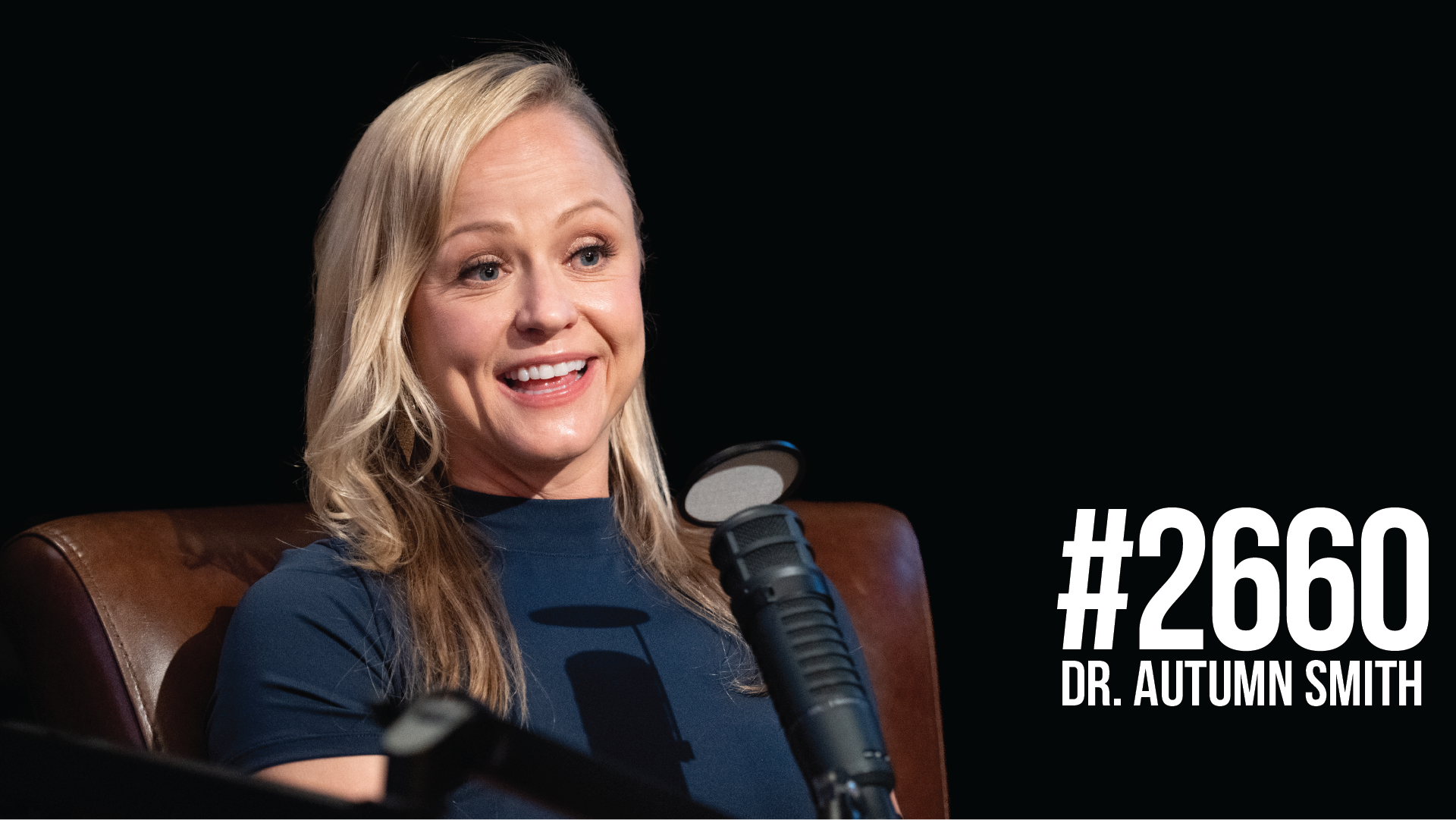
Mind Pump: Raw Fitness Truth
2660: Dr. Autumn Smith
01:17:49
Dr. Autumn Smith Autumn’s early life and struggles surrounding food. (1:17) Her journey of being a personal trainer while going to school. (3:14) Why she decided to go paleo. (4:17) Why their beef sticks stand out above the rest!...
Loading summary
Transcript484 lines
- [00:00]
Sal Destefano
If you want to pump your body and expand your mind, there's only one place to go.
- [00:06]
Adam Schaefer
Mind Pump. Mind Pump.
- [00:08]
Sal Destefano
With your hosts Sal Destefano, Adam Schaefer and Justin Andrews, you just found the.
- [00:14]
Adam Schaefer
Most downloaded fitness, health and entertainment podcast. This is Mind Pump. Today we had the founder of Paleo Valley on the podcast, Dr. Autumn Smith, talking about Paleo approaches to farming, diet, how to use food to make yourself feel better like medicine. It's a great episode by the way. Paleo Valley, great company. Go check them out. Go to paleovalley.com mindpump Also, this episode's brought to you by a sponsor, nphormones.com Hormone Replacement Therapy and peptide therapy with real doctors. None of that gray market stuff, not research chemicals. You're going through real doctors. Mphormones.com, get your labs checked out. See, see if hormone therapy and or peptide therapy is right for you. We also have a sale this month, maps 15, half off. Very popular program, 15 minutes a day. Build muscle, burn body fat. If you're Interested, go to maps15minutes.com maps15minutes.com, use the code Muscle50, Muscle50 for the discount. Here comes the show. Dr. Autumn Smith, welcome to the show.
- [01:20]
Dr. Autumn Smith
Thank you. So excited to be here with all of you.
- [01:22]
Adam Schaefer
Thanks for coming on. So, just so our audience knows who you are, your background a little bit. Before we get into some of the topics that we have, tell us a little bit about yourself.
- [01:32]
Dr. Autumn Smith
Basically, I'm a girl who grew up in Montana and started having digestive issues at the age of 10 that no doctor really knew how to solve. And so I kind of went about my life. They said, take Beno. I did it. And it didn't address the root issue as you might imagine. And as I got into my teens, it's started to become mental health issues. I got kicked out of my parents house before I even graduated high school and kind of just continued to struggle like I made things happen. I went to la, I danced professionally, worked for Tracy Anderson. But it wasn't really until I met my husband that my story changed because he saw me suffering and said I just, I think we need to do better. And doctors in LA weren't really able to help me address it either. So we got on Google and saw that some people were having luck changing their diet and improving their digestive health, which at the time was really a novel idea. It was back in the early 2000s or 2000s and we did it for 30 days. I just cut out processed foods and My digestive issues went away completely within 30 days. And I was working as a fitness trainer for Tracy Anderson, doing all these fun things and decided I just needed to quit that job and go back and fully understand how food could have changed something that nobody else knew how to treat for 15 years. And so we saw the writing on the wall, though. We originally started as like information products and realized that information was going to be more free. And, and, and I went on a world tour with JLo and I could, didn't have the staples that I needed to keep my digestive system happy because we were gone for seven months. So when I came back to America, we started Paleo Valley. And so I'm a co founder of Paleo Valley, I'm a mom. We started Wild Pastures and really just incredibly passionate about food as medicine and how to bring really high quality options to the masses.
- [03:14]
Justin Andrews
So you were a trainer and then did you go back to school? Is that what you did?
- [03:17]
Dr. Autumn Smith
I did.
- [03:18]
Justin Andrews
Oh, okay. Well, tell me a little bit about that journey of, you know, being a personal trainer, having that experience and then going to school probably to get even deeper knowledge around what you're starting to learn. Did you feel like you got what you were looking for, the school, or did you feel like they were even missing on stuff and kind of old, old science? What did you find?
- [03:37]
Dr. Autumn Smith
Well, I chose it really strategically, so I did more holistic programs. Yeah, so I didn't go back to traditional school. I went to something called Hawthorne University and then, yeah, American College of Healthcare Sciences because I knew what I had tried learning that calorie was a calorie. And growing up as a ballerina, I basically just didn't eat too much. That was kind of the advice, like, you can eat whatever you want, just don't eat too much and you'll be fine. And that led me to junk food and candy and whatever. So I chose the school very strategically because I knew what had worked for me and not worked for me. And I was a fitness trainer with Tracy Anderson. So I didn't like do all the traditional fitness training, but Tracy Anderson's method specifically.
- [04:16]
Adam Schaefer
So when you, when you, so you're already a trainer, you're eating quote, unquote healthy, right? As a trainer, whatever that means. And then you change your diet. What was it that you took out of your diet? Because as a trainer, I'm assuming you're not eating like total garbage all the time, but you must have had food.
- [04:29]
Justin Andrews
Or are you just keeping it low?
- [04:31]
Adam Schaefer
Yeah. What was it like?
- [04:33]
Dr. Autumn Smith
What were the Things that you changed, basically. Gluten was a big one for me. And processed foods. I was eating a lot of processed protein bars, you know, and I was having, like, a green machine every morning with which has, like, 50 grams of, you know, sugar, whether it's natural or not. But I was just kind of on a roller coaster. Lots of caffeine, lots of green machine, lots of processed foods, and protein powders. That didn't really serve my digestive system at all. So I wasn't eating total garbage. But I was also a lot of processed foods. So what I did is just anything that wasn't whole food, I just cut it out, including gluten and dairy for a while. And beans. I basically did paleo diet. I found Rob Wolf in Mark Sisson, and so just eliminated all processed foods. Protein, vegetables, fruit. That's a lot of what my diet became.
- [05:17]
Adam Schaefer
Yeah.
- [05:17]
Dr. Autumn Smith
And caffeine, too. I got rid of it. But I don't think everyone else.
- [05:20]
Adam Schaefer
You know what's interesting, because I had lots of gut issues myself. 90s, early 2000s, there wasn't a lot of information. It was very difficult. Leaky gut syndrome was people made fun of. Now they call it intestinal wall hyperpermeability. It's got a now medical term for it. There wasn't a lot of good information, and there definitely wasn't good information around the connection between the gut and mental health, which now is, I think, pretty well established, although we're still getting more and more science around that. What were your mental health symptoms with your gut? Because when I say gut health, people, okay, fine. Constipation, diarrhea, bloating, Everybody understands that. But there's a very strong connection between mental health and gut health. What were your symptoms before and then what was the symptom relief like after? And how long did it take to start to notice those benefits?
- [06:10]
Dr. Autumn Smith
Yeah, so very anxious, I think, for some reason. I think gluten was a huge problem for me, and I know it doesn't manifest that way for everyone, but for me, it was definitely inflammatory. And, you know that for some people, that inflammation is a part of depression. For I think, like a third or a subset of people, that that can trigger depression. So I had anxiety and depression, which, you know, kind of go together. Also, as a young dancer, I had an eating disorder and eventually substance abuse when I was in so much pain and I didn't know why. And sometimes my stomach would look pregnant, and I just kind of like, turned to alcohol and a lot of different things. I could get my hands on to just kind of numb out and just to try to feel something different in my body. And so all of that persisted all the way through my early 20s. And when I changed my diet, it was probably. It wasn't just taking out processed foods, it was then learning to stabilize my blood sugar too. I think that was a huge piece for me. And so over the course of the next year, I suddenly felt stable. It was that stability that I was missing. Just like I think physiological stability, not being on this roller coaster. And then I started to see like a light, like things were exciting again. I felt inspired. I wasn't just struggling every day. And so I was able to think beyond just making it through every day and what I wanted to contribute instead. So it was kind of an enthusiasm, a stability, a peace and an excitement. I just didn't.
- [07:34]
Justin Andrews
Were you able to mask all this with your family and friends? Like when you were like going through like your addictions or going through this? The eating disorder, like, does everybody kind of know it and you don't realize or is it. Is it kind of one of those things where like nobody has any idea?
- [07:49]
Dr. Autumn Smith
Hmm. Eating disorder for sure. Parents knew about that, but. And I did get kicked out of my parents house before I graduated high school. So no, I don't think I was fooling anyone. I think if you would ask anyone that I went to high school with if I would own an organic food company, they would say that was crazy. Yeah. Absolutely insane. It's a total shift.
- [08:10]
Guest
Wow.
- [08:11]
Adam Schaefer
You know, in my experience, because I had some anxiety connected to gut health. The gut health symptoms got better before the mental health stuff started to feel better. So it's like I noticed better digestion and then it was. Is that what happened to you as well?
- [08:24]
Dr. Autumn Smith
Yes, the digestive issues. 30 days, I could not believe it. They were gone for the most part as long as I cut most of those foods out. But it was about the course of the next year when I really started to say whoa, emotionally, because my husband and I, when we first met, I was a bit of a roller coaster. And we would fight and I'd crash at the end of the day. And I was just kind of a unstable human. And then I became stable and peaceful. But yeah, it took about a year.
- [08:49]
Guest
Did you notice to your sleep being affected in a positive direction or.
- [08:53]
Dr. Autumn Smith
Yeah, well, I just used to sleep so much more, which is interesting. I would crash in the middle of the day, I needed naps and then I would come home and I would sleep a really long time. So it kind of regulated in the opposite way. Actually, for me, I got a healthy amount of sleep.
- [09:07]
Adam Schaefer
You know what's interesting with people who have chronic gut health issues is when they start to figure out what works for them, a centerpiece of their diet is almost always meat. You almost never find someone who's like, oh my God, I had chronic gut health issues and then I became a vegan and it got better. In fact, I don't know anybody that's ever. And I'm sure there's some out there that might say that this helped them, but it's almost always meat is always the center of it. And I speculate part of the reason is meat is we're so non reactive to meat. Like meat causes very few reactions in people from a immune system standpoint. But did you find this for yourself? Did you find that meat became more of a staple in your diet?
- [09:48]
Dr. Autumn Smith
Absolutely. And like you said, it's essentially an elimination diet. When you cut out all the processed foods and vegetables. For some guts are very. They give them issues. And yeah, meat became really important and I tried to avoid it when I was young and I really think that I had some sort of protein deficiency, amino acid deficiency. You know, amino acids become our neurotransmitters. Right. And so it's really important. And for that stability. But yes, I brought in animal products as a staple. The centerpiece of every single diet or every single meal, three times a day. And then when I snacked, I snacked on animal products, protein meat sticks. And I think that was a huge piece of it. That's why our product was a beef steak. You know, I never thought I would make a meat stick, but it was so integral. They're the best.
- [10:29]
Justin Andrews
Hey, they are the, they are the best though, I tell you, that's what actually that's what sold us.
- [10:34]
Adam Schaefer
That's what sold us on was we've.
- [10:36]
Justin Andrews
Had, yes, we've had so, so many different meat sticks. Every jerky company in the world and we. And one of the things that's always kept like, I don't know, I don't see myself eating this the time. And we had yours and like, oh my God, this tastes so good. You guys hit it out the park.
- [10:50]
Dr. Autumn Smith
Well, thank you. It's because it's different, it's fermented and.
- [10:53]
Adam Schaefer
That was that what the difference is.
- [10:55]
Dr. Autumn Smith
Yes. Here's the thing, because when I was in France and I was really struggling to find food on that tour that I could eat at, my husband brought over this like literally a suitcase of beef sticks and they were grass fed. And I thought, okay, this is going to be healthy. For whatever reason, they still ripped my stomach up. So when I got back to American, I was like, let's figure out what this is. And we called a bunch of manufacturers and they use an ingredient called encapsulated citric acid that's just, you know, made with processed oils and GMO ingredients. Anyway, I thought, okay, well, how can we do it without that? Maybe that's playing a role in it. And I found out, you know, if you could ferment meat, it takes a long time, four times as long. It. It's not as lucrative, but you can do it. And a few. One person was able to say, okay, I'll try making this for you. And it's that fermentation that kind of breaks down the meat, but also gives it interesting rather than like a really tough texture.
- [11:43]
Adam Schaefer
What's the encapsulated? So go back, why do they add encapsulated? What is it, citric acid? Is it citric acid?
- [11:48]
Dr. Autumn Smith
Yes.
- [11:48]
Adam Schaefer
So usually is it as a preservative?
- [11:49]
Dr. Autumn Smith
It is. So it'll take like, you know, corn, genetically modified often, and then they coat it with like this processed oil, like a cottonseed oil, and they make these little balls and then it just melts into the stick when it hits a certain temperature because it changes the PH of the citric acid. Drops it and then makes it shelf stable.
- [12:07]
Adam Schaefer
And that helps keep. Okay, keeps it shelf stable.
- [12:09]
Dr. Autumn Smith
It does.
- [12:10]
Adam Schaefer
Now you're saying you take the meat, you ferment it. So what do they mean? What do you. What's the fermentation process look like? Do you add bacteria to it?
- [12:16]
Dr. Autumn Smith
Exactly. Yep, we just grind it up or the add the organic spices and then the bacteria and then that drops the ph because it produces. It eats the. This carbohydrate substrate and then it produces lactic acid and then that also drops the ph. It's a different way.
- [12:31]
Adam Schaefer
And what that's doing is it's breaking down the meat, which makes it not tough. That's the difference. Is your. Those meat sticks?
- [12:37]
Guest
Yes. Tender.
- [12:38]
Adam Schaefer
Yeah, they're tender, whereas other meat sticks.
- [12:39]
Justin Andrews
And they're juicy.
- [12:40]
Dr. Autumn Smith
Exactly.
- [12:41]
Justin Andrews
So different.
- [12:42]
Dr. Autumn Smith
It's the fermentation process and it takes so much longer. Right. But you avoid the use of that and you get an entirely different texture. It's kind of like a kielbasa.
- [12:50]
Adam Schaefer
Is meat fermentation? Are there cultures that do that often? Is that something that we've done for a long time?
- [12:55]
Dr. Autumn Smith
Oh, yeah.
- [12:55]
Guest
Is that done typically?
- [12:57]
Dr. Autumn Smith
Yeah, I know you can ferment fish in Norway, I know that they make, like, Polish sausages. You know, there's. All throughout the world, and we've always been fermenting meat. But then when we came up with, you know, refrigeration and then we've been adding citric acid, it kind of like, went by the wayside.
- [13:12]
Adam Schaefer
Okay.
- [13:12]
Dr. Autumn Smith
But we just decided, well, what if we didn't, like, our ancestors fermented it? Let's try to bring it back. And smart. Yeah, yeah.
- [13:19]
Justin Andrews
How much does it cut? The cost for them not to do that and then the speed of production? Because I'm assuming that's the reason why.
- [13:25]
Adam Schaefer
We want the four times as long. It's got to make it way less. It's got to cut into the margins.
- [13:30]
Dr. Autumn Smith
Oh, yeah. Nobody wanted to do it. When we called them, they were like, oh, you don't even have to label that ingredient. You just have to put citric acid. Like, no one even knows. And, like, this is what everybody would tell you. They would tell us that. And I was like, that just. It still matters to us, so we're going to still try it. And like, I said one. I think we called, like, 100 different manufacturers, and one guy was like, I'll do it for. For you. But, yeah, four times as long time as money, obviously, it takes a lot longer to make.
- [13:55]
Justin Andrews
Wow.
- [13:55]
Adam Schaefer
Did they go. Did they take off right out the gates, or was it just when we talked about. Just kidding.
- [14:02]
Justin Andrews
No.
- [14:02]
Adam Schaefer
Did they take off rather. Because they do taste very, very, very good.
- [14:06]
Dr. Autumn Smith
It did. It's funny, because we started to attract customers. I would just tell my story. People. So many people have digestive issues. Right? You know, like, almost half of America has some element. And so, yeah, people loved them. Yeah. It's always been our best taste.
- [14:19]
Justin Andrews
Beats themselves. I mean, as much as I'd love to give us credit for something like that, I mean, we had so many companies that sent us stuff that we could have worked with. And because none of us fell in love with that, the first time we bit into that was like, oh, my God.
- [14:29]
Adam Schaefer
The other thing, too, a lot of people don't know this with jerky or meat sticks is oftentimes they have gluten. Oftentimes they use. Yes, they'll use. Gluten will be in the meat. And so you'll be eating jerky and you're like, well, I'm going to go with protein and meat. Not realizing you're getting as much gluten as you would be if you eat, like a cereal bar.
- [14:45]
Dr. Autumn Smith
And Sugar. They have sugar too. And you're like, why are you adding sugar to meat?
- [14:49]
Adam Schaefer
I don't know.
- [14:49]
Dr. Autumn Smith
But, yeah, there's just a bunch of random ingredients.
- [14:52]
Adam Schaefer
So. So, you know, my generation, we grew up. You still. Actually, I don't even know why I said that. You still hear this today. Meat's bad for you. Meat's bad for you. Can cause all these different problems, yet when you really look at people and you really boil down the data, it's not bad for you. Where'd that idea come from that meat was bad for us? Like, where's that coming from? What's going on? Is this, like, red meat?
- [15:16]
Dr. Autumn Smith
Yeah.
- [15:16]
Adam Schaefer
Is this like an anti. Like, is this like a PETA propaganda thing? Like, sometimes I read the things that are written, and I go, this can't be. Who would write this? This is not true.
- [15:26]
Dr. Autumn Smith
Yeah, there's a lot of factors. Have you guys heard the story of Belinda and Gary Fettke? Okay, so this is really interesting. It happened down in Australia. He was an orthopedic surgeon, Dr. Gary Fettke, who, realizing that his diabetic patients were receiving amputations, and he realized, okay, well, he was learning about low carb and thinking, okay, well, maybe if I just told him to avoid some sugar, maybe that might help them. And he did. And then he got turned in by the dietitian on staff for giving advice that she didn't think was good. And he actually became the first doctor ever silenced about talking about nutrition because he recommended avoiding sugar to his diabetic patients.
- [16:03]
Adam Schaefer
So that's crazy.
- [16:04]
Dr. Autumn Smith
It's crazy.
- [16:04]
Adam Schaefer
Can you believe the controversy around that? You have issues processing sugar. I'm gonna have you avoid it, you know. No, can't say that I know.
- [16:11]
Dr. Autumn Smith
And in the course of, like, four years of litigation, his wife Belinda, he would go on the stand, and then they'd have these representatives, which she later found out were from cereal companies, like, saying, okay, no, you. You know, sugar isn't that bad, and blah, blah, blah, basically. And so Belinda really dove into, like, where this idea came from and has a lot of historical, like, religious origins. Really? Like Dr. John Harvey Kellogg, he created Kellogg's cereal because.
- [16:36]
Adam Schaefer
To stop people from masturbating.
- [16:37]
Guest
Yes.
- [16:38]
Adam Schaefer
That's literally why it was invented.
- [16:39]
Dr. Autumn Smith
Exactly. Yeah. So a lot of the Seventh Adventist Church has kind of instructed us that meat is sinful. And so that's embedded in lots of hospitals, lots of universities throughout the country, and they're actually really proud of their influence on that. They've written a paper about it, and so religious ideation, of course. And then we have Ancel Keys research. I'm sure you're familiar with saturated fat. We do have environmental activists. We also have people, animal welfare, animal welfare rights activists. We had the Jungle, we had sugar industry executives. They came in and I'm sure you guys have heard about this too. So yeah, there's just so many different interests kind of coming to converging to create this idea that meat's harmful and also people who don't understand the environmental aspects. Right. You can raise meat in environmentally ethical and sustainable, even regenerative ways.
- [17:29]
Adam Schaefer
Yeah, let's. I want to get back to regenerative farming because that's different than, than doing it ethically. It's better. So I want to, I want to get, I want to talk about that. But you know, I do have this theory also around this anti meat propaganda and that's that, you know, GMO products are incredibly profitable. Like if you can, you can patent a plant and then sell it, like that's great. Otherwise everybody could do the same thing. There are right now at least no GMO cows or sheep. So it makes sense that a lot of the money would go towards let's be able to sell this corn or the sugar that comes from this corn or this whatever these products that are for GMO type plants. So to me that's, I think another angle, another reason. Thoughts on that?
- [18:14]
Dr. Autumn Smith
Absolutely, yeah. And I mean it's so consolidated now that four companies own like 85% of the processing in the cattle industry. And so it's getting a little bit dicey there too. But what I think we need to do is go back to the family farms in our particular bioregion. And I think, but I think you're absolutely right. It's not profitable. It's. You make a far smaller margin on animal products than you do on something like sugar, wheat, corn, rice, and you don't get all the subsidies, you know, and the government doesn't support you in the same way.
- [18:44]
Adam Schaefer
All right, let's talk about regenerative farming. What is that and why is that different than just like good farm commercial?
- [18:50]
Dr. Autumn Smith
Yeah, so there's like three types of agriculture happening today. We know about the commercial, the conventional model where there's glyphosate, you know, pesticides, fertilizers, and a lot of animals. And factory farms, that's where 90% of our animal products come from factory farms. And then we have sustainable and that's something like organic where essentially you're not creating damage because we've been creating A lot of soil desertification and other environmental issues with the conventional system. But then regenerative is this third type and it's actually to return to a higher war worthy state. That's what regenerative means. So sustainable is like stopping the bleeding, but regenerative is actually rehabilitating the land. And that's why it's really different. It's using metrics like soil health, biodiversity, water holding capacity, and actually measuring where a plot of land is before and where it's going afterwards. And this is really important because 60, between 30 and 60% of our soil has been desertified, essentially. And so we don't know the exact timeframe. People estimate 60, 80, 100 harvests left. We don't know if we continue at our trajectory that we might lose the capacity to create our own food one day. And 95% of our calories, over 95% come from the soil.
- [20:01]
Adam Schaefer
When was it that we. What was it that we figured out that we could replace the soil and just get it to continue growing things, but we don't replace the minerals. And the, what was it that we started replace? It was like fertilizer. But what are we adding necessarily?
- [20:14]
Dr. Autumn Smith
Npk.
- [20:14]
Adam Schaefer
Okay.
- [20:15]
Dr. Autumn Smith
Yeah.
- [20:15]
Adam Schaefer
Is that, what is that?
- [20:16]
Dr. Autumn Smith
Yeah.
- [20:16]
Adam Schaefer
Yes. Okay, so. So they replace that and that allows you to keep growing plants, but they don't replace everything else.
- [20:22]
Dr. Autumn Smith
Exactly.
- [20:23]
Justin Andrews
Think of it like, so that depletes it. Think of it like that's like the macronutrients for a plant. Proteins, fats and carbs. But then we just forget about all the micronutrients.
- [20:32]
Dr. Autumn Smith
Yeah, exactly. And the microbial life. So what happens in like the rocks? The minerals are in the rocks. Right. And then we have the plants, but the plants need the minerals in the rocks and then they become food for humans. And humans get access to the minerals. But it doesn't happen without the microbial life. So when we come in with pesticides and fertilizers and other, you know, agents, chemicals that are essentially killing that microbial life, the microbes will, when they get carbon from the plant, then they go to the rocks and then they bring the minerals and make them accessible to the plant. So when we kill that microbial life, basically the taxi system between the plants and the nutrients, the minerals in the soil is broken. So then we get nutrient depleted plants and nutrient depleted.
- [21:12]
Justin Andrews
It makes me think of, it's like if it fits your macros for plants eat, Twinkies, eat whatever, as long as it fits in your macros. But we're not gonna talk about all the other things and all the other benefits that come with all these phytonutrients and stuff.
- [21:23]
Dr. Autumn Smith
Exactly. And then it harms their immune system. So plants become more vulnerable. And then we bring in the pesticides and the weed killer. You know what I mean? It just becomes this cyclical thing.
- [21:32]
Adam Schaefer
And you call it desertifying or.
- [21:34]
Dr. Autumn Smith
Yeah, desertification.
- [21:34]
Adam Schaefer
And that's because the soil becomes essentially dead.
- [21:38]
Dr. Autumn Smith
It goes from something that's living, you know, more living microorganisms and like a teaspoon of soil than there are people on the planet to something that's like caked and dead, devoid of life. That's where you get that, like, you see the chocolate cake soil. I don't know if you've ever seen these pictures or you have this like brown crumbly stuff that's just devoid of life.
- [21:55]
Adam Schaefer
Now how do you regenerate that? So how do you get it better? You know, through harvest versus just stopping the bleeding?
- [22:02]
Dr. Autumn Smith
Yeah. So animals, there's like several principles. One is least disturbance. So you want to keep a living root in the soil as long as possible. Because again, we're creating that taxi system. We're feeding the microbes. You want soil armor. A lot of times we keep our ground barren, and that leads it very vulnerable to wind and water erosion. And again, we're not feeding it animal integration. This is why I think it's so important. Animals are natural fertilizers. Right. So cows, come on. They look.
- [22:30]
Adam Schaefer
Cows are bad for the environment.
- [22:31]
Dr. Autumn Smith
Exactly. They are. Only when you raise them in certain ways. Have you guys heard of Alan Savory?
- [22:36]
Adam Schaefer
No.
- [22:37]
Dr. Autumn Smith
Oh, I got to tell you that story in a second. But essentially they act as fertilizers. They create little divots for water to pocket and to stay in the soil. Biodiversity. We've kind of separated animal and plant systems, but I think ideally we got to bring them back because you don't need all the fertilizers when the animals come and bring the nutrients back to the land. Right. And a lot of our ability to hold water in the land is because. Or inability now, I should say is because again, we've killed that microbial life.
- [23:03]
Justin Andrews
So is there a cycle in this, in this, like, season where you're like, okay, we're going to let the cows come trample all over this area and.
- [23:10]
Guest
Poop all bigger land to do this because of. Yeah. Being able to kind of cycle them through?
- [23:15]
Dr. Autumn Smith
I love that question. And yes. Okay. So it's really interesting. It depends on how you do it because you'll need More land. But a lot of times these regenerative farmers find that they can actually have three to four times the amount of animals on that land. But what Alan Savory. I'm going to go. Alan Savory is a fascinating individual and he was an environmentalist living in Africa and he thought animals did lead to desertification. And so he and his colleagues made a decision to kill 40,000 elephants because they thought, oh, well, this is going to help the land get better. But what he found out was it didn't. It actually made it much worse. And so then he went back and looked at the research from Andrew Vason and all these regenerative ranchers, finding that it's not about the animals, it's about the way that we manage them. Right. So moving animal from a plot of land to a different plot of land, you know, sometimes daily. I've had regenerative farmers move them more than once a day. Sometimes people move them weekly. It really depends on where you're living. But yeah, the animals cycle through different paddocks, they call them different. And they watch. Right. You don't want an animal to over graze because then that is harmful. So when you put a cow out on a pasture, animals, and you don't manage them, they will, they'll find their favorite plants, then they can continue to eat them over and over and they can do damage to the land. But if you're watching them managing them in what they call predator prey cycles, essentially, animals wouldn't have ever gotten onto a plot of land and then stayed there. No, they would move because they would poop on it or they would be chased out. And so it's really just building a system that mimics that by looking at, okay, how does the land look today? And then where are we going after that?
- [24:48]
Adam Schaefer
So yeah, and then that ends up making the soil better than it was first time around.
- [24:52]
Dr. Autumn Smith
Exactly. Because the soil or the land needs time to recover. Right. It needs that disturbance. It's like exercise. Right. You guys know this. We stress our bodies out a little bit and then in the recovery we become stronger. And that's what adequate recovery will do to the land. And so they might be on a plot of land and then they'll give it lots of rest, like 30, 60, 100 days.
- [25:11]
Adam Schaefer
Yeah.
- [25:12]
Guest
Too. Like how some farms do it now, like when they don't have crops, sometimes they'll plant like non fruiting plants, cover crops, hovercraft. Yeah, yeah. So and what, is that a successful strategy at all or is that somewhat.
- [25:27]
Dr. Autumn Smith
Absolutely.
- [25:28]
Guest
Okay.
- [25:28]
Dr. Autumn Smith
Yeah. And especially like, if you're talking in terms of like carbon sequestration, the more you have photosynthesis happening, the more carbon. They're literally like sucking carbon out of the air with their leaves and storing it underground. And that carbon becomes the food for the little microbes and the taxi systems that then. So yes, it's rehabilitating, sequestering carbon. It's the water holding capacity too that it's building, which is really important because most of our floods and droughts, it doesn't come because we don't get enough water. It's also, it's often because we can't hold the water, we can't retain the water. But when you bring that microbial life back.
- [26:02]
Guest
Now what about like insects and like this whole like biodiversity thing of like our ecosystem, like, like how, how can they manage that better with the insects instead of having like pesticides all the time?
- [26:16]
Dr. Autumn Smith
Yeah. So what they find is that it's just different populations come, like the dung beetles. They're actually really important for taking nutrients and bringing them back. And so different types of pestis or pests will arise, but many of them actually work for the system. Right. In a healthy system.
- [26:31]
Justin Andrews
Or aren't there some too that will like, like counter take care of like keeping some at bay. So it's like these ones live and kill and eat these ones so they don't get overpopulated and kill the plants. Isn't there, there's some pests like that?
- [26:42]
Dr. Autumn Smith
I'm sure there are. I'm not an expert in that particular area, but yeah, I do know that when I speak to the farmers, they say we were trained that we just needed to kill everything. And once you start interacting with the ecosystem in a different way, you realize that it's not incredibly, it's not totally necessary and that a healthy, thriving ecosystem will have lots of diversity and it won't always be destructive.
- [27:04]
Adam Schaefer
Now is it again, are the, are the margins smaller with regenerative farming or is it, can it be just as profitable? Like what's the deal with it? Because obviously there's a reason why less, more farmers either way. Maybe it's education, but I'm assuming it's lowering scale wise.
- [27:20]
Dr. Autumn Smith
Yeah, it's really hard to take that chance and be a regenerative farmer. But like I said, once you get through that transition period, it can become as profitable, if not more profitable because you can have cows, chickens, hogs on the same plot of land. Right. Usually we have cows. Right. Or you know, they're specializing in One particular system, then they can have honey. Right? And they're running three to four times as many animal per acre. You know, they're running larger herds, so you can get there. And I absolutely think it can be as profitable. But I'm not going to lie that there is a transition period and you're not getting subsidies for corn and wheat and you know, so they're kind of unplugging from a system that supports farmers.
- [28:00]
Adam Schaefer
Now we mentioned carbon earlier and you hear the term carbon footprint, you know, footprint. Does this type of farming produce less of that the same or is it, is it better from that standpoint?
- [28:13]
Dr. Autumn Smith
Yes. Have you guys heard about the white oak pastures analysis?
- [28:16]
Adam Schaefer
No.
- [28:16]
Dr. Autumn Smith
Okay. So basically down in Bluffton, Georgia they have a farm, a regenerative farm, and they had, they did what's called a life cycle analysis from kind of cradle to harvest, like what is the environmental footprint? And they actually compared it to other similar proteins, you know, soy, conventionally raised beef, pork, chicken, and found it was the only net positive food. So for every pound it produced, it was about 3.45 pounds of carbon that was actually sequestered. Then they compared it to even like plant based burgers and found around 3.5 pounds were emitted. So he likes to joke that if for every plant based burger you would eat, you'd have to eat one of his grass fed beef burgers in order to offset the footprint. So yes, which is kind of funny, which is so counterintuitive, but absolutely. And in many people will refute this. But what is often missing is the accounting for the carbon sequestration. People aren't often taking that into consideration when they look at it. But there's been research out of University of Michigan, Dr. Jason Roundtree and that analysis to suggest now explain the difference.
- [29:19]
Justin Andrews
Between things like grass fed, grass finished and because I know there's some controversy too around that, like if I recall, like unless it says grass, grass fed, grass finished, then what a lot of these farmers are doing is they're using the benefits of saying I'm grass fed, but then they're still pumping them full of grains and then things in the last couple weeks to fatten them up so they can make so explain all the difference of that and what that looks like.
- [29:43]
Dr. Autumn Smith
So as of 2016, that regulation largely went away. So no one's really ensuring that it's grass finished. And all cows begin their lives on grass. Right. For the first six months.
- [29:52]
Justin Andrews
So in 2016 we. So we're not like regulating that now?
- [29:56]
Dr. Autumn Smith
Not really regulating that. No. Wow. And that's really clear in a paper that came out Bronchema 2019, I believe, where they surveyed many different American grass fed farms and they found the omega 6 to 3 ratio was like 26 to 1, which is highly indicative of a lot of grain feeding all the way down to like a 2 to 1. So yes, you don't really know, right? No one's really checking on that. As of 2016, grass fed can mean grass fed and grass finished, or it could mean grass fed and grain finished or grass fed distiller's grains. I've heard people going and dumping grains onto a pasture and calling that grass fed.
- [30:33]
Justin Andrews
Wow. So how do you. Okay.
- [30:35]
Guest
Finishing too?
- [30:36]
Justin Andrews
I've heard as a consumer, how do you, how do you even protect yourself if they're not regulated third party?
- [30:43]
Dr. Autumn Smith
Okay, yeah.
- [30:44]
Justin Andrews
Okay, so what, tell me what they should look for then when they're more buying a product. Since we now know that grass fed could totally be grain finished and they, they're not regulating it. So how does the consumer know they're getting one that's pure, like truly grass fed?
- [30:58]
Dr. Autumn Smith
I love American Grass Fed Association. So they certify beef and pork and I think even buffalo, bison. And so you can see they actually go in and verify. But unfortunately there have been recent reports like the Food Safety and Inspection Service is the one who you would go to to get these sort of certifications. And what they found is that a lot of times even they're not going on site. Typically it's just an affidavit that they're filling out. And there was one report that said something like 80% lacked sufficient substantiation. Some of them didn't even have applications. Some of them had applications that were only partially filled out. And so, yeah, I think across the board, it's hard to say.
- [31:40]
Justin Andrews
I would imagine this is probably one of the biggest challenges you guys would be having right now is that just because there's so many bad apples that you get lumped in potentially with some of these people. It's like, I mean, I was just telling the guys before the show, I just was sharing with Sal that my buddy and I, we were just talking about this and he's like something like 98% of everybody that says they're, they're grass fed, grass finished is bullshit. Like it's very, very, very small percentage are actually truly up to par to what they should be. That's crazy.
- [32:08]
Dr. Autumn Smith
Yeah, it's really insane. That's why we do the third party audits and just grass fed Grass finished. But yeah, it's really, really hard to know what you're getting as a consumer. I talk a lot about that. Even with Cage Free and Free Range or Made in America is a good one too. Yeah, Made in America does not.
- [32:22]
Adam Schaefer
You can do like five touches.
- [32:23]
Justin Andrews
Doug, look up some of the. Exactly. I want to see, I want to see what this looks like. Like, I want to see what the certification or what does it look like on the packaging for somebody. Like that's what I'm trying to think like as a consumer.
- [32:32]
Adam Schaefer
What's it called?
- [32:33]
Dr. Autumn Smith
American Grass Fed Association. It's got like a little circle and then you'll see like AGA and then like a little grass on there.
- [32:39]
Justin Andrews
Now that's the one you like. Is there more that do it? Those are a couple other organizations or that's the only. Or is that the main one?
- [32:45]
Dr. Autumn Smith
You know, I think in terms of like regenerative ag, there's the Savory Institute. But they're more looking at environmental footprint. So American Grass Fed association is the one that I would trust.
- [32:55]
Justin Andrews
Okay.
- [32:56]
Dr. Autumn Smith
And I mean sometimes if you have 100% grass fed and finished.
- [32:59]
Adam Schaefer
Oh, there it is.
- [33:00]
Dr. Autumn Smith
Yeah, that's exactly right. Yeah, that's the one that I would trust.
- [33:04]
Adam Schaefer
That's the one you trust?
- [33:05]
Dr. Autumn Smith
That's the one I trust. And I. And they have a focus on environmental stewardship and just, you know, they're. I like that.
- [33:10]
Adam Schaefer
What are the big nutrition, nutritional differences between you know, conventional and maybe non conventional type meat?
- [33:17]
Dr. Autumn Smith
Yeah, we actually just did, for my dissertation I did this project with Drs. Van Vliet. Have you heard of him over at Utah State? And this is whole area of research. And so we took. I think it's going to be about 200 different producers all across the country from grain feeding in a feedlot, feedlot, light, you know, grass fed grain finished and grass fed, totally grass finished. And then even regenerative meats and then put them all together and the main ones that we found more Omega 3s, which you would think doesn't matter. And you've heard that because it's an absolute amount is small. But there have been at least six to eight trials showing that when you eat grass fed beef, your levels compared to grain fed beef, the levels of omega 3s in your blood rise appreciably, like significantly different. And I think that's really important. The other one is a much lower omega 6 to 3 ratio which people believe can contribute to inflammation. You find about a 2 to 1 in grass fed grass finished and about an 8 to 1 in grain finished. For example, a different saturated fatty acid profile. And we've all heard all saturated fatty acids are bad, but we know that's not true. And longer chain forms and even stearic acid.
- [34:27]
Adam Schaefer
So the type of saturated fats are different? I don't know.
- [34:29]
Dr. Autumn Smith
Type of saturated fats are different. Yes. So more stearic acid. Stearic acid is known as a more neutral. It's not going to raise your levels of cholesterol. And then bahenic acid and ericidic acid are these very long chain saturated fats that they've actually seen. Now this is associative evidence that they are associated with a decreased risk of cardiovascular disease in the very long chain form. So that's interesting if you guys have heard about pentadecanoic acid. Yeah. So that's slightly higher in grass fed meat as well. Some people believe it's like a necessary nutrient supplements.
- [35:00]
Adam Schaefer
Now selling it.
- [35:01]
Dr. Autumn Smith
Exactly. Fatty. Yep, yep, yep. So that's a little bit higher. And then we also did mineral analysis and so the selenium content was six times higher. Copper, calcium and iron were slightly higher in the grass fed beef.
- [35:15]
Adam Schaefer
I eat a lot of beef. Probably easily a pound a day, but closer to two probably. I notice a big difference if I go conventional versus if I go grass fed. I just feel different. I feel way less inflamed. My digestion's better. I just feel different. I can tell. And I think it's the fatty acid profile's got to make the. Because I eat so much of it, it makes a big difference for me.
- [35:35]
Dr. Autumn Smith
Yeah. And there was a preliminary study too. And this is what VanVleet's doing next. He's putting it into human bodies and then measuring the levels of inflammation. Yeah, it's really cool. So there was one in 2010 where they looked at kangaroo meat versus feedlot fed cattle. And everybody has an inflammatory response after a meal, but the degree to which that happens depends on what you eat. And it was a much larger response in inflammation when they ate the factory fed meat than when they had the leaner grass fed meat. So what he's found more recently is he did a trial where took people off the standard American diet and put them on a whole foods diet and then also had an arm where they went to a conventionally raised diet, you know, something raised with pesticides and animal products and feedlots versus regenerative. So he saw the biggest decrease in inflammation obviously when you went from conventional diet to whole foods diet. But he said there's also a trend towards further inflammation reduction from upgrading to a regeneratively raised diet. Diet without. So, yeah, he said definitely bigger here.
- [36:35]
Adam Schaefer
So that's like big. Like, let's start here. That's what we typically recommend on the show.
- [36:38]
Dr. Autumn Smith
Exactly.
- [36:39]
Adam Schaefer
Start here and then.
- [36:40]
Dr. Autumn Smith
Yeah, and if you have the resources and it matters to you and you can do that, then you probably see another. A further.
- [36:45]
Adam Schaefer
Was this the paper you said you've been working on?
- [36:47]
Dr. Autumn Smith
Yes.
- [36:48]
Adam Schaefer
Okay, so. And is this out for people to see or.
- [36:51]
Dr. Autumn Smith
It has been submitted to the Journal of Animal Science and so, yes, my dissertation I would be happy to share with anyone that was specifically about the fatty acids. But. But then the mineral profiles and this. And this is only the halfway point for the project. It will continue because I think their goal is to do over 300 producers. And really this all came about. Have you guys heard of the Bionutrient Food Association? So this is a big project with. Dan Kittridge's ultimate goal is to create a handheld meter for people to be able to go to the store and like scan produce for an animal product.
- [37:21]
Justin Andrews
Oh, that's cool.
- [37:21]
Dr. Autumn Smith
And to see what the nutrients are. Because his parents wrote organic standards and he's just seen too many farmers. Right now we're prioritizing efficiency and we're not looking at the nutrients. Right. And how do you flip the incentives in agriculture and with consumer preference? So that's where this whole project came out.
- [37:38]
Adam Schaefer
There is. I don't. Maybe you don't know this, but I think I read that there's this new coating that they're putting on fruit that is. They're like, look out for this. I think it's. Is it called appeal or something like that Might be. Have you heard of this? What's the deal with it?
- [37:51]
Dr. Autumn Smith
I've heard about it. I don't know a lot about it.
- [37:53]
Adam Schaefer
But I think Bill Gates.
- [37:55]
Dr. Autumn Smith
I know. I was going to say I have heard that name associated with it, but.
- [37:58]
Adam Schaefer
I don't know anything about it involved in.
- [38:00]
Justin Andrews
Well, what is it like? They're going to wax coating.
- [38:04]
Adam Schaefer
It's like some kind of special coating that keeps it from going bad. And they're like, when you get this, make sure you scrub your fruit clean or peel it before.
- [38:11]
Dr. Autumn Smith
And there's something like about. It's just kind of sliding in. Have you heard that there's not a lot of publicity of people. Yeah, that's all.
- [38:17]
Adam Schaefer
Maybe Doug, you could look it up. I can.
- [38:19]
Dr. Autumn Smith
Yeah, that would be.
- [38:19]
Adam Schaefer
So we can see what it is.
- [38:20]
Sal Destefano
Did you Find it appeal Sciences edible coatings made from mono and diglycerides.
- [38:25]
Adam Schaefer
Yeah, there you go.
- [38:29]
Dr. Autumn Smith
Right? Like, nice way to put it.
- [38:31]
Justin Andrews
Nice way to put it.
- [38:33]
Adam Schaefer
Made from plastic.
- [38:33]
Guest
Smells delicious.
- [38:34]
Dr. Autumn Smith
That's great.
- [38:36]
Adam Schaefer
So what. So the first product that got, that sold us to work with you guys was the meat sticks. Then we had the bone broth protein.
- [38:42]
Dr. Autumn Smith
Yeah.
- [38:43]
Adam Schaefer
Which is another level.
- [38:44]
Guest
Yeah.
- [38:45]
Adam Schaefer
What made you go with bone broth protein? Who are your top consumers with it? And then for the record, I like to talk about it because when. When bodybuilders bring up proteins, I talk about whey protein, egg protein, but when it comes to gut health, I find it to be the easiest to digest. I mean, I could take a lot of it. I could take an 80 gram protein serving of the bone broth protein. It's like water bump your protein. I could not do that with anything else. So why did you guys go with bone broth protein? Was it because of that? Was it the. The gut health stuff?
- [39:15]
Dr. Autumn Smith
It was the gut health stuff, yeah. And I realized, and the more I've dug into it too, there's like, you know, not all proteins are created equal. They have a very different amino acid profile. And that glycine is really key to keeping your gut cells happy. Have you guys heard of this? It's kind of like a trigger lock. Glycine is for your macrophages.
- [39:33]
Adam Schaefer
No.
- [39:34]
Dr. Autumn Smith
Have you heard this? I've become totally obsessed with this research because I just read this book called the glycine miracle by Dr. Joel Brind, now career. He's got a PhD, started really honing in on amino acids in 2007. And what he found was that basically your macrophages are like your first line of defense when something happens, they come in, they either gobble it up, they tend, or they rend. They can come in and they can create a lot of problems. They can essentially shoot bullets, cytokines, all these things. So what determines whether they do one or the other, he believes has a lot to do with glycine. Because glycine, if there's enough, will actually allow chloride channels to open. This is so nerdy. But it matters. And it keeps the cell hyperpolarized. So when it depolarizes, then it can release cytokines and create damage. So essentially, glycine keeps those cells quiet and doing more of their tending and befriending work. And he's found again. We know that glycine also is a calming agent in the central nervous system. But what he believes is because we're throwing the Bones now in the trash rather than into our soup like we've done historically, that most of us are glycine deficient. And there is research and experts who believe that we eat 3 grams a day, we produce 3 grams a day, but essentially we need about 15 grams a day of glycine. And many experts believe it should be at least a conditionally essential amino acid, though it is today considered non essential because we can make it, but the amount we make isn't tied to the amount we need as long as we weigh more than £88.
- [41:06]
Adam Schaefer
So conditionally essential, meaning we make some, but we just don't make as much as what we probably need.
- [41:12]
Dr. Autumn Smith
Yes. So the metabolic demand, after you're 88 pounds, it just shut off. And a lot of people believe this is why larger animals suffer from osteoporosis, because obviously glycine is a building block for our cartilage, our collagen, also glutathione. So, yeah, many believe, at least at 8 to 10 gram glycine deficiency, we could be suffering from each day, which is causing this kind of unregulated inflammatory response, or what he would even call Dr. Joel Brand an inappropriate inflammation response. His big idea is that inflammation, like the kind where you come in and they shoot things up, that should happen with infection, but not necessarily with injury. And he says nobody really knows why. When you become injured, your body would then create a situation where it'd be hard to move. Right. He said if you're out in the wild, that doesn't really make sense. Right. Maybe you can't get away. And there's one theory that it's supposed to keep it from you moving it.
- [42:08]
Adam Schaefer
So it can go in and heal it.
- [42:09]
Dr. Autumn Smith
Right. But he says his big idea is, no, that's just an inappropriate response of the inflammatory system because we don't have enough glycine around. So. Yeah, And a glycine has so much other research on it. Right. Insulin sensitivity. There was a study in 2008 where you could take it. I think it was 5 gram dose three times a day in type 2 diabetics. And it was able to reverse, improve insulin sensitivity and also reduce inflammation without even weight loss. So. Yeah. And sleep, I mean, yeah, there's great studies. Crazy.
- [42:39]
Adam Schaefer
That recently taking 3 grams of it before bed, an empty stomach improve sleep quality.
- [42:44]
Dr. Autumn Smith
Exactly.
- [42:44]
Adam Schaefer
Sleep, yeah.
- [42:45]
Dr. Autumn Smith
And serotonin levels and drops the body's temperature. Glutathione. Have you guys seen that trial where they did Glynac supplementation? This is. It was just a recent trial and I think like 24 elderly people and glynac. So glycine and N acetylcysteine, which you'd find in whey, they combine their two of the amino acids you need to create glutathione. And so what they did was they gave them this supplement and then watched many parameters of aging, and all of them, almost all of them, positively improved. And so I think if we took, you know, the glycine from bone broth and you know, the cysteine, this is the glycine is the one in shortest supply. And so could we be robbing ourselves of this glutathione and this ability to kind of create appropriate inflammatory responses? Because we don't have.
- [43:26]
Adam Schaefer
Well, historically, we've always eaten a lot of collagen proteins. Right. We've, we've, we've, we've used the bone. First of all, you would never. Humans wouldn't catch an animal, cut off the, you know, the sirloin and then leave. They ate everything, including the bones. Including, including everything. You melt it down and you eat it all. And so we just don't do that anymore. So it makes sense that we probably should add more of it to our diets.
- [43:49]
Dr. Autumn Smith
Yeah, and I think there's this big controversy around, oh, collagen. It's not stimulating muscle protein synthesis to the same degree, and obviously it's not. But I do think there are important roles around anti aging.
- [44:00]
Adam Schaefer
Listen, I'll say this. In fact, we just did an episode where we talked about tendon strength and connective tissue strength, which is very important. In fact, oftentimes you see injuries in athletes because, like, they'll blow out an Achilles because the muscles may be stronger than the tendons can hold, type of deal. So it makes sense that you should add it so you can still take your whey, but also add some, you know, some collagen based proteins like bone broth to strengthen those, those tendons and those ligaments. Especially if you're important, if strength is important to you.
- [44:28]
Dr. Autumn Smith
Absolutely.
- [44:29]
Adam Schaefer
You know, I think it makes a really big difference now.
- [44:31]
Justin Andrews
Before you started making like these products to produce and run a business, were you like, experimenting at home or trying things like how. I mean, the fact that you guys nailed it with some of these products and tastes good makes me go like, how do you. You must have been trying other stuff well before this or just. Did you get that lucky? What happened?
- [44:47]
Dr. Autumn Smith
No, I'm obsessed. Everything that goes on the market, I bring it home and I tinker with it and I try it and then we got really smart and we hired two amazing food scientists.
- [44:56]
Justin Andrews
Like, reverse engineer stuff.
- [44:57]
Dr. Autumn Smith
Yes. And we take every idea and then they just execute it beautifully based on what they know. But yeah, I live and breathe this stuff. It's just every product on the market is. Is something.
- [45:07]
Adam Schaefer
How do you guys like, what is the magic you do? Because it tastes really. The bone broth protein tastes silly good.
- [45:15]
Dr. Autumn Smith
Yeah.
- [45:15]
Adam Schaefer
To the point where I give it to my family members is true now. And if this ever comes out, I'll be upset, but they're like, there's no way. This doesn't have sugar. They're full of crap. I'm like, no, I'm telling you, it's like very minimally processed. Look at the bag. But it tastes so good. Is it?
- [45:29]
Dr. Autumn Smith
These food scientists do, it is a lot of them. And it's that creamy, that coconut powder, and it's also a little monk fruit. Right. So, yeah, it's just food science. There's nothing hidden in there.
- [45:40]
Adam Schaefer
But there's very minimal ingredients. If you look at the bag, it's very minimally processed.
- [45:43]
Dr. Autumn Smith
And you have to know it takes a very long time for us to get it right. A very long time. And we're willing to wait because we want every product to be something that we like, genuinely look forward to and want to consume.
- [45:52]
Adam Schaefer
I also think too collagen protein in general is easier to make taste good. I think some proteins are difficult, like vegan proteins.
- [46:00]
Dr. Autumn Smith
Oh.
- [46:00]
Adam Schaefer
Really hard to not get them to taste like grass or whatever.
- [46:02]
Dr. Autumn Smith
Yeah.
- [46:03]
Adam Schaefer
So I think it's just. It's a protein that's easy to. To maybe.
- [46:06]
Dr. Autumn Smith
Yeah. Flavor and it's knowing the complementary flavors.
- [46:09]
Justin Andrews
Has that been an intentional strategy for you guys where you. I feel like you just like one product at a time and it's almost like a really slow process. A lot of summer companies tend to like, wow, like all this stuff at one time. You guys have been very slow to like, release one thing after another. Has that been intentional like that?
- [46:23]
Dr. Autumn Smith
Absolutely. We are perfectionists for sure. And again, we're. We just. We. Our whole family taste test. It has kind of get approval throughout. And so, yeah, we don't. It's not a volume game for us. It's quality.
- [46:33]
Justin Andrews
So, okay, business question then. I mean, what is the indicator or marker that you go, okay, we could now do the next thing? Like, I mean, I imagine a lot of this stuff you guys doing. Like, I've refused to let Sal would. His dream would be for us to run a. Own a supplement company. And I refuse to Let him do it. Because I understand how difficult it is to be very, very successful. I also understand the margins.
- [46:56]
Adam Schaefer
I get it.
- [46:57]
Justin Andrews
And so they're not very. A lot of people think supplement companies are wildly profitable and all this money, but it's like, no. Margins are very slim. It's extremely competitive. There's all kinds of red tape. So how does one do that in your guys situation? Especially when you guys are taking the more expensive, longer route on stuff. I mean, did you guys do really well? Something else. And so you had the luxury to be able to. I mean, I mean, I'm so curious. The business side.
- [47:22]
Adam Schaefer
Bitcoin?
- [47:24]
Dr. Autumn Smith
Yeah. No, I wish we have bootstrapped this thing. But I think what really works is my husband is a marketer, and so his background came from marketing things online from the early 2000s. And so he knows how to find the people who are really, really appreciate our products.
- [47:39]
Justin Andrews
Okay.
- [47:39]
Dr. Autumn Smith
And then we're smart. Like, we don't really do anything that we can't track. Right. We're not just throwing money out here. And so we become really aware of these products are working and these products are not working as much. And so not every product isn't given the same amount of bandwidth.
- [47:54]
Justin Andrews
Okay.
- [47:55]
Dr. Autumn Smith
Right. We have our keystone products. That's where we put most of our attention. And as you stated, the supplement market is becoming very, very. Everybody has a supplement line. So we're going really hard into animal products doing. We just built our own bone broth manufacturing facility. And so we're bringing it. We're becoming a little more integrated and we're building the supply because right now, regenerative meats are really hard to come by. And so we're investing in farmers and their processes. And so, yeah, that was kind of like a roundabout way to say we find what works. And then we really put a lot of resources into that. And my husband also is good at seeing what's coming. And we knew, just like we knew information was going to be free and we're going to have to provide a product. He now sees, okay, we got to build this supply chain out. We got to get this manufacturing facility up. So it's intentional and like a lot of behind the scenes.
- [48:45]
Adam Schaefer
I have a question that you might be able to answer. I got in a debate with a friend of mine over vitamin C, and they said that synthetic vitamin C, natural vitamin C, it's the same. You look under a microscope, it's identical. There's no difference. My argument was that natural vitamin C tends to come with bioflavonoids and co factors to help you absorb it. Is there a difference between the two?
- [49:07]
Dr. Autumn Smith
Yeah.
- [49:08]
Adam Schaefer
Okay, what is it?
- [49:08]
Dr. Autumn Smith
I think there is. So, yes, this is a hotly debated topic, but obviously there's like dozens of compounds in a whole food, vitamin C, a food, and there's one, ascorbic acid. Right. So there was some research 2016 showing that you could give an equivalent dose. I think it was a thousand, a gram of ascorbic acid or a gram of camu. Camu juice, like a whole food source. And one reduced inflammation, the whole food and oxidative stress markers and the other one didn't. Now, that being said, I think that there can be in really high doses a case for ascorbic acid if you can't afford whole food, vitamin C. But there's dozens and dozens of compounds all working together to do far more than raise your vitamin C levels. Absolutely.
- [49:53]
Adam Schaefer
Yeah. Yeah. Because you eat an orange or something with vitamin C in it, there's like bioflavonoids and compounds and phytonutrients that seem to enhance its bioavailability. And how you. Now, I brought up vitamin C because it plays an important, important role in collagen.
- [50:05]
Dr. Autumn Smith
Exactly right.
- [50:06]
Adam Schaefer
So when you're taking bone broth protein, vitamin C, this is for athletes like you. You want to strengthen your tendons, you give yourself their bone broth protein for tendon and ligament strength or connective tissue strength. Take a dose of vitamin C with that. Or eat a food that's high in vitamin C with that.
- [50:22]
Dr. Autumn Smith
Exactly. To improve that vitamin C and copper. That's why we do the organ meats too. Organ meats are really important. Copper in organ meats are really important for collagen synthesis. This as well. But yeah, no, I think that there are differences. Absolutely. In whole food. Just the metabolomics research that I got to do with this project in the Utah state, There's literally like 40,000 compounds in beef. 40,000. And we label 13 and we track 150. But there's so much to be learned yet.
- [50:49]
Adam Schaefer
About 40,000.
- [50:50]
Dr. Autumn Smith
40,000 metabolomics looks, Amino acids and all these metabolites, all these different nutrients, all.
- [50:55]
Adam Schaefer
These phytonutrients, proteins, fats, and, you know.
- [50:58]
Dr. Autumn Smith
No, no, no. I think we will just continue to learn more and more. And I think a lot of these vitamin C research, they're looking at absorption and yeah, ascorbic acid is absorbed. But like, what are the long term. I think that's what the research is really missing. Like the inflammation and the oxidative stress down the line. But, yeah, I think we're just gonna continue.
- [51:15]
Justin Andrews
I love. I mean, this just confirms what I've been saying for so long when we talk about this, like, we act so arrogant that, like, we know so much. We distill it down to a few macronutrients. Oh, this. It's like the MPK analogy. You g. Like, okay, we know those are the main things that make the plant grow or the body grow, therefore. Oh, forget everything else. It's like. And. And I think there's so much still unknown about the human metabolism that we're not even certain how so many things work together. And I find it so arrogant that we get on, you know, podcasts and we write and talk about how, oh, this is the way, or we know this for sure.
- [51:50]
Adam Schaefer
It's like, you remember watching, there was this supplement, it's called Soylent, that came out, came out of Silicon Valley. Do you remember this? It was like, for tech people who don't want to get up out of their desks, just take this, everything you need. And you would see these people, and they were gray. Like, you'd look at them like there's. You might be getting the right amount.
- [52:05]
Justin Andrews
Of calories, you might be living. Yeah. But not. You might be alive. You're not living.
- [52:10]
Adam Schaefer
Yeah. So what, okay, along those lines then is what's the difference between bone broth and collagen protein? Because like I was saying, collagen protein, but you're. But you get collagen. Fun. Bone broth. What's the difference?
- [52:20]
Dr. Autumn Smith
Yeah, so collagen, if you look at it like an all star team, bone broth, we got many different players doing many different things. And then collagen is kind of like that one star player. So bone broth, we make it from bones. And then you get the bones that contain collagen. So you're going to get the collagen, you're going to get the gelatin, but you're also going to get electrolytes, magnesium, phosphorus, minerals that are in bone, too, and healing compounds, potentially. Hyaluronic acid, you know, sulfate, chondroitin, those. Those are all part of bone broth.
- [52:49]
Adam Schaefer
Got it.
- [52:50]
Dr. Autumn Smith
But then collagen typically comes from hides. And it's, you know, it's the amino acid profile, you know, hydroxyproline, proline, and glycine primarily, but other amino acids too. And usually a far more industrial process. You're going to have solvents to take a hide into a powder, as you might imagine, high heat pressure, all of that. So what we do Instead is use bones and water and time.
- [53:13]
Adam Schaefer
Where do you guys get your bones from for your bone broth?
- [53:15]
Dr. Autumn Smith
Well, right now, as I said, a lot of them come from the animals because what we do with both of our businesses is we buy animals, live animals, and then we use the organs, we use the bones and we use the meat and just the whole animal utilization.
- [53:30]
Adam Schaefer
Wow. What do you do with the organs?
- [53:32]
Dr. Autumn Smith
Oh, organ complex.
- [53:33]
Justin Andrews
Yeah.
- [53:33]
Adam Schaefer
Well, so tell me about that. So tell me about organ complex. What's the value of that? Why don't I just take a multivitamin if I need some of those things?
- [53:40]
Dr. Autumn Smith
Because they're the most nutrient dense foods in the world. So Dr. Thai Beal did research back in early 2000 and 20s and found when you look at. So all these algorithms are so interesting, right? Plants are typically glorified as the most nutrient dense foods, but that's often because these algorithms are the way they're determining the most nutrient dense food is penalizing saturated fat or really prioritizing vitamin C or you know, they're just more favorable to plant based foods. But when you look at the nutrients most people are deficient in worldwide, calcium, iron, zinc, you know, B12, vitamin A. Organ meats are the most nutrient dense foods in the world for the nutrients most and they're also the most bioavailable form. So anytime you have a nutrient in an animal form or a plant form, your body usually prefers the animal form nutrient.
- [54:29]
Adam Schaefer
Well, all your evidence is here. If you not saying this is ideal, but if somebody said I'll give you a million dollars to eat only one food for an entire year and not die and not become nutrient efficient, the thing you would pick would be meat.
- [54:41]
Guest
You'd have to.
- [54:41]
Adam Schaefer
Yeah, you couldn't get away with anything else. You could eat meat and not saying it's ideal, but you'd probably be okay. Yeah, you couldn't do that with any other single food. Definitely not a plant. There's not a single plant. You would have terrible nutrient deficiencies and you die within that period of time. So that's all the evidence right there.
- [54:58]
Dr. Autumn Smith
Yeah.
- [54:59]
Adam Schaefer
What goes in the organ complex? Which organs are you guys putting in there?
- [55:02]
Dr. Autumn Smith
We do heart, liver and kidney and then we freeze dry them. Because the reason we did that is because I couldn't eat organs. Even though when I started to try to eat them I felt noticeably different, probably due to the iron. You probably have heard there was a Nobel prize for the finding that beef liver could cure pernicious anemia back in the 1930s. And I think that's a lot of. Even B12, vitamin A.
- [55:23]
Adam Schaefer
The richest natural source pernicious anemia is when you're iron. They measure your blood. Oh, iron is fine. But you're actually B12.
- [55:31]
Dr. Autumn Smith
B12. It has a lot to do with B12. So that B12 in Liverpool, it's actually all of it's B12. It's retinol and it's copper and it's iron that all work together to improve iron levels. Because again, just taking iron isn't the same as getting iron from.
- [55:45]
Adam Schaefer
What's interesting about organs themselves or even supplementing with organs is that the nutrients found in that organ almost always correlate to the organ that you have. In other words, you know, heart, you know, cow heart will have high amounts of CoQ10, for example, which your heart needs. So if, like you have an organ that they used to call it glandular, I think it was science back in the day. But if you need, like, if you have an organ that's maybe not working so well, typically eating that organ provides maybe the nutrients you might be deficient in. Yeah, I find fascinating.
- [56:15]
Dr. Autumn Smith
It's amazing. It's the, like, cures, like principle where they would eat the eyeballs. And then Vladimir Kovinson, back in the 1930s, he was doing research for the Russian military and he actually found that the term bioregulators. Have you heard this? Yeah, yeah, exactly. So that they believe that eating that organ contains specific compounds that will rejuvenate that organ. So I've always heard. Oh, there's not a lot of scientific evidence for it. Maybe not, but it is a reservoir of the nutrients we need.
- [56:40]
Adam Schaefer
There is evidence, but it's Soviet evidence. It is true. You can look up bioregulator. Yeah, they still give them in Russia today. They still prescribe them and people here use them. Yeah, yeah, they do. And now you see athletes are starting to use them. But the, the. This research, and you'll see this when you look it up, all the research only comes out of Russia. Like, okay, so I guess we don't believe it.
- [57:01]
Dr. Autumn Smith
Like, right.
- [57:03]
Adam Schaefer
They don't have a patent on it. So what's the deal?
- [57:06]
Justin Andrews
Super random question. Did you guys feel an uptick in business when Liver King had his big fallout?
- [57:14]
Dr. Autumn Smith
Oh, man, I don't. I. Oregon Complex is one of our best sellers and always has been. So maybe, maybe that's.
- [57:22]
Justin Andrews
I just, I didn't think about it till we're talking right now.
- [57:24]
Adam Schaefer
I'm like, oh, wonderful.
- [57:25]
Justin Andrews
She really felt that because he's had a, you Know, he's had, like, a massive.
- [57:28]
Adam Schaefer
Oh, yeah. And he's in prison for trying to stalk Joe Rogan.
- [57:31]
Justin Andrews
Yeah.
- [57:31]
Dr. Autumn Smith
And that was real. I can know. Is that a real thing or. Because I saw him, like, anyway, supposedly from his house, but. Yeah. So Organ, that's always been one of our best sellers. But also a lot of people have Oregon complexes on the market these days. A lot of people are kind of finally, after 10 years of, you know, trying to encourage people. A lot of people are doing it, too, but many times they're imported, you know, not always grass finish, like we're saying. So the.
- [57:59]
Justin Andrews
The label that I had you or had Doug pull up so we could see what it looks like. Will you see that in a. In a grocery store? Is that you will. So some. Some. Some brands will actually have that.
- [58:09]
Dr. Autumn Smith
Yeah. You know, now that I think about it, probably harder to come by in a store. Probably harder to come by in a store. You'd probably want to. Wild Pastures is our other business. Would we use AGA certification? I actually. I'm not aware of a lot of other brands that do, unfortunately.
- [58:25]
Justin Andrews
Yeah.
- [58:25]
Dr. Autumn Smith
I don't know.
- [58:26]
Justin Andrews
Well, the fact that you. I didn't. I had no idea that in 2016, they totally, like, got rid of it.
- [58:31]
Dr. Autumn Smith
Yeah, yeah, they got rid of.
- [58:32]
Justin Andrews
Because I knew about the kind of the hustle before with the grass fed. And then you grain. Finish it, then you can still fall into the category. But the fact they're not regulating that at all anymore is like.
- [58:40]
Dr. Autumn Smith
Yeah, it's a bummer.
- [58:41]
Adam Schaefer
Alarming.
- [58:41]
Dr. Autumn Smith
Yeah, it's alarming. And that's the same with, like, even with collagens a lot of times. Collagen, grass fed.
- [58:47]
Justin Andrews
I mean, I think the good news about that, though, is companies like yourself will win in the long run. It makes it a little difficult right now. Yeah, it makes it a little bit more difficult right now because you're going to get lumped in with all these bad apples. But sooner or later, the consumers will get smart and. Because, I mean, I guarantee a bunch of people didn't know that till right now, till we just brought it up on the show.
- [59:05]
Dr. Autumn Smith
Yeah.
- [59:06]
Justin Andrews
And they'll start going, oh, shit. This whole time I thought I was making a much healthier choice. Now I got to really got to go to the next level of looking for those markers. And then. Then you. It'll serve you guys.
- [59:15]
Dr. Autumn Smith
I think it will long term. And I think people are more excited about this stuff than they ever have been. So I think eventually, what's the consumer.
- [59:22]
Adam Schaefer
Breakdown with the For Paleo Valley, do you have more men than women? Is. It tends to be families?
- [59:27]
Dr. Autumn Smith
Pretty even. Okay, it's pretty even. And all across. I mean, I think more of our customers is a 40 to 65 range, but we're getting those younger generations in as well.
- [59:38]
Justin Andrews
No wonder. Who was originally who found it? Who do you know who on your team connected us? Was it Shauna?
- [59:43]
Dr. Autumn Smith
I think it was Shauna.
- [59:44]
Justin Andrews
Okay. And I couldn't.
- [59:46]
Adam Schaefer
Yeah.
- [59:46]
Justin Andrews
I couldn't remember if it was Shauna or not, but I think it's been a while. We've been working together for so long. I was trying to remember how you guys. If I thought maybe your husband, because he said he's the one who's always looking at and finding talent, stuff like that.
- [59:55]
Dr. Autumn Smith
Oh, yeah. No, I think it was Shauna.
- [59:57]
Adam Schaefer
And with. With your consumers, are you getting a lot of people who are trying. Like yourself, who are trying to fix gut health issues, or is it now moved up beyond that?
- [60:05]
Dr. Autumn Smith
It was. That was initially. That was our audience and that we knew what they wanted because it was what I needed, and. But now it's becoming far more mainstream. Yeah, we've had a lot of growth recently.
- [60:15]
Justin Andrews
What are the most popular flavors of the beef jerky?
- [60:17]
Dr. Autumn Smith
Oh, original. Oh, I'd say original. And probably also the jalapeno.
- [60:23]
Justin Andrews
Jalapenos.
- [60:24]
Dr. Autumn Smith
So that's the best. Mine, too. I actually. Unfortunately, I can only eat the summer sausage. Really? Because I have a garlic allergy. Oh. But.
- [60:34]
Adam Schaefer
I like the buffalo chicken one, though.
- [60:36]
Dr. Autumn Smith
Oh. So.
- [60:37]
Adam Schaefer
Oh, yeah, yeah.
- [60:38]
Dr. Autumn Smith
And the venison I love. Do you guys.
- [60:40]
Justin Andrews
Are you any. Any. Any times you guys. Have you guys tested one and then had to get rid of it because it didn't sell or didn't work, or have you been able to stick with every flavor?
- [60:48]
Adam Schaefer
The liver sticks.
- [60:49]
Dr. Autumn Smith
Oh, I know. We really want to do it. Oh, we really want to. Yeah.
- [60:54]
Adam Schaefer
How do you make liver taste good?
- [60:56]
Dr. Autumn Smith
Yeah, it's really hard. We start with the primal blend in wild pastures where we put a little bit of liver. People were clamoring for it.
- [61:04]
Adam Schaefer
My wife does that on her own. She'll throw a little bit because you.
- [61:07]
Guest
Can'T taste it in there.
- [61:08]
Adam Schaefer
And, you know, organ meats are so dense and nutrients. You have to put a lot to make a difference.
- [61:12]
Dr. Autumn Smith
Yeah, it's true. And so, yeah, it's just a little pop in there, and people love it. But that was another idea someone else is executing on that right now because we haven't been able to make it taste in a way that we thought that most people would.
- [61:23]
Justin Andrews
So is there, are there any flavors or things that you guys had? Wow.
- [61:27]
Dr. Autumn Smith
We haven't yet. We've been really lucky because I think we're so slow and intentional. And we taste, and we taste and we taste. And our son is actually one of our biggest taste testers and he is very honest.
- [61:37]
Justin Andrews
Yeah.
- [61:37]
Dr. Autumn Smith
You know what I mean? Like, he doesn't like it and it's not happening.
- [61:41]
Justin Andrews
So it's actually a pretty good strategy.
- [61:43]
Dr. Autumn Smith
Yeah.
- [61:43]
Justin Andrews
We've been having a 10 year old eat your food and see what he says, right?
- [61:46]
Dr. Autumn Smith
Yeah. He always does this.
- [61:47]
Justin Andrews
No filter. He's not gonna lie.
- [61:50]
Adam Schaefer
How, how, how has it been since you've heard, healed your, your gut and done all this with the eating, the issues with your relationship with food? I, I've trained a lot of, I've trained a few dancers in the past, and I'd say those are some of the hardest demographics just in terms of, like, they develop a relationship with food over years. It's so hard to kind of come out of. Like, how has that been for you?
- [62:11]
Dr. Autumn Smith
Yeah, you know, that's such an interesting question because in my training through, they taught me, smoke cigarettes, eat lettuce or whatever. Take ginseng.
- [62:22]
Justin Andrews
Great advice.
- [62:23]
Dr. Autumn Smith
This is my advice.
- [62:25]
Adam Schaefer
Smoke a cigarette.
- [62:26]
Dr. Autumn Smith
No, I remember the dancers would smoke while we trained. It was kind of just encouraged. So, no, it's really interesting because I think on some level my brain was starving, honestly, for nutrients, for amino acids. And once I brought that back in, I just feel like so much better. It's not a struggle. I don't have these ups and downs. I don't obsessively think about food. It's kind of like I eat and then I'm satiated, and then I kind of go on with my day.
- [62:56]
Adam Schaefer
So you're not fighting this constant thought or what around food or fixation?
- [63:00]
Justin Andrews
It's pretty. It's actually really wild how healthy you look. For someone who's talked about, I did not know your history with eating drugs all the above. For you to look like you look is pretty amazing. Now, was there a major transformation? Like, if I look back, say 20, 15 years or however far back it goes, like, have you seen like a difference? Like just your skin health, like your vibrance, your muscle mass, like, did it all evolve and change?
- [63:25]
Dr. Autumn Smith
Absolutely. It's like night and day. I looked like a totally different person. I was always very skinny, as you might imagine. Horrible cystic acne. My poor, my poor skin. And I was always bloated. And so, yeah, over Time. And I'm someone who only does moderation and moderate. You know what I mean? I just do things full out. And so once I realized I had a choice in how I felt, it's. It's just so easy for me to choose it every day because the way where I came from, not somewhere I want to live anymore.
- [63:53]
Justin Andrews
Wow.
- [63:53]
Dr. Autumn Smith
And so, yeah, I've just been really dedicated, but I just feel like it. It literally changed my life.
- [63:58]
Adam Schaefer
You said you traveled with jlo.
- [64:00]
Justin Andrews
I'm glad you asked. I know we have to get all the science and fitness stuff, but I. I do want to ask about that.
- [64:07]
Adam Schaefer
I know, so. So let's.
- [64:08]
Justin Andrews
Let's get into that.
- [64:09]
Dr. Autumn Smith
So, yeah, Tracy Anderson, she's a fitness trainer, as you probably know, and she hires dancers. So I was dancing in a modern company. She picked me up and then she just sent me on tour with JLO as her fitness trainer. So I was JLo's trainer. I was JLo's trainer.
- [64:23]
Adam Schaefer
Oh, wow.
- [64:23]
Dr. Autumn Smith
But for the Tracy Anderson Method. Right. It was a very specific type of training we were doing. Oh.
- [64:28]
Justin Andrews
So, okay, so explain that to people, because I actually am not familiar, Tracy.
- [64:31]
Adam Schaefer
I'm not either.
- [64:32]
Justin Andrews
No, I'm not.
- [64:34]
Dr. Autumn Smith
Marginally.
- [64:35]
Adam Schaefer
Marginally.
- [64:35]
Dr. Autumn Smith
Okay.
- [64:36]
Justin Andrews
So, yeah, explain that. And what it sounds like to me is like, it's like a company and then she basically farms you out to JLo then. So it's her, her brand, Dance based fitness.
- [64:45]
Guest
Like, what's the.
- [64:46]
Dr. Autumn Smith
Yeah, this is interesting. So she dated. Well, actually married.
- [64:50]
Justin Andrews
Google me up some stuff, bro. So I can see some images while she's talking about it.
- [64:55]
Adam Schaefer
I'm so curious.
- [64:56]
Dr. Autumn Smith
She's a thing. I mean, she's got a massive following.
- [64:59]
Justin Andrews
Obviously, if she had JLo, I'm sure.
- [65:00]
Dr. Autumn Smith
That would have JLo. Shakira, Molly Sims, Victoria Beckham. I mean, so many celebrities. Wow. So anyway, basically she had a professional basketball player husband who had back problems, and she kept going down to Mexico and meeting with these doctors and them telling her, oh, you don't need surgery. You can completely redesign the muscular structure of your back with different movements and. But you have to change them really often. This is what she told me. So she created this method where basically she's. Her job is to wake up the smaller muscle groups, which she calls the accessory muscles. And. And yeah, it is based on dance, but it's like you did at the time. I was training like a 45 minutes of what she called muscular structure based on dance. Just these different movements of your arms and your legs.
- [65:44]
Justin Andrews
What would you say?
- [65:44]
Adam Schaefer
It's close to. Is it close to, like, Barre Pilates? Does it look like it's ballet inspired mobility stuff?
- [65:50]
Justin Andrews
I mean, that's what it sounds like she's doing. What is she.
- [65:52]
Dr. Autumn Smith
Yeah, we start with, like, free arms, where you're literally just rotating your arms in all of the different ways that a dancer would. Yeah. And then you're doing the same thing with your legs. All of these different rotations that you wouldn't. You wouldn't do a squat there. You would do these, like, kind of like you go to the corner and you go out. I mean, it's just all these very elaborate moves designed to not necessarily use the main muscle groups. Yeah. And so, yeah. So basically, she has a lot of celebrity clientele and I started working with them and JLo and I just. We're doing well together. And so when she went on a world tour, she's like, hey, do you want to come? And I had just gotten married, so part of me was like, yes.
- [66:31]
Adam Schaefer
Did your husband stay home or he stay at home?
- [66:33]
Dr. Autumn Smith
No, he stayed at home.
- [66:35]
Adam Schaefer
So you went off to go.
- [66:36]
Dr. Autumn Smith
I did. Because I feel like that's just something you say no to.
- [66:39]
Justin Andrews
He hung in there early on with you two. When you're a boy, that guy, I'm gonna have to give him a hug on the way out.
- [66:43]
Dr. Autumn Smith
You gotta give. But you also. Chaz is a lone wolf. He's like, I'm never really lonely. He's pretty cool on his own. But he did come visit me. Like, luckily not. Luckily I got sick. Sick. When we went to France and Ireland. And so he got to come over and spend time with me. And then we took a tour, you know, we went to South America, and then we had a little bit of a break. And then we went to America, you know, North American, Canada, and then we went to the other one. So there were moments when I got.
- [67:07]
Adam Schaefer
When was this?
- [67:08]
Dr. Autumn Smith
That you were traveling with 2012.
- [67:10]
Adam Schaefer
So did you go to a Diddy party?
- [67:12]
Dr. Autumn Smith
Oh, my gosh. No. No, no, no, no, no. I am so upset by that. But no, absolutely.
- [67:21]
Adam Schaefer
Was she dating him at the time?
- [67:22]
Dr. Autumn Smith
No, she was dating her dancer, Bo Kasser.
- [67:24]
Adam Schaefer
Oh, that's happened.
- [67:24]
Dr. Autumn Smith
Who? I. I worked with him too.
- [67:26]
Justin Andrews
Oh, wow.
- [67:28]
Adam Schaefer
I was going to ask about the.
- [67:29]
Justin Andrews
Diddy party, so I'm okay. I'm still.
- [67:31]
Adam Schaefer
Why is there so much baby?
- [67:32]
Justin Andrews
I'm still hung up on this modality because I always. I mean, one. The business side of me, I'm fascinated with something like this could explode. But you see what this is, right? So she has she found a way to connect and relate to all these dancers by teaching them good, great joint articulation, waking up all these dormant muscles in some sort of a dance like form flow.
- [67:51]
Adam Schaefer
Yeah.
- [67:52]
Justin Andrews
That probably worked for a lot of people that had low back pain, hip issues. And they probably did. It were like, oh my God, I feel so much better. And then brand movements.
- [68:00]
Guest
Yeah.
- [68:01]
Justin Andrews
And then was JLO one of her first big people that she got? Or did she get someone even bigger before is interesting. Yeah.
- [68:06]
Dr. Autumn Smith
Madonna was actually her big one.
- [68:08]
Adam Schaefer
Wow.
- [68:08]
Dr. Autumn Smith
Her first one was Madonna, but then Madonna. There was some. A bit of a falling out there. But yeah. So when I worked, it was Courtney Cox, it was Jennifer Aniston, it was Victoria Beckham.
- [68:16]
Adam Schaefer
So you're around all these people doing stuff.
- [68:18]
Dr. Autumn Smith
Well, my first day on one of my first assignments, she's like, okay, you're gonna go to Courtney's house. And I was like, oh, okay, Courtney. Yep. She's like, he lives in Malibu. I had no idea it was gonna be Courtney Cox. And then she's. I was like, oh, well, that would have been good to know. Then Shakira flew me down to Uruguay for 30 days to spend the holiday with her. Cause she said she'd bring Chaz or I could bring anyone I wanted. So. Yeah, lots of em.
- [68:41]
Justin Andrews
Any favorites of all them that you read?
- [68:43]
Dr. Autumn Smith
I mean, Shakira's amazing.
- [68:45]
Adam Schaefer
Really.
- [68:45]
Dr. Autumn Smith
JLo too. Victoria Beckham, I worked very closely with her. Molly Sims. Ashley Green was actually my flower girl. They're just. Kate Hudson was great. I mean, there was so many. I'm trying to.
- [68:56]
Justin Andrews
So that's interesting to me because typically celebrities, athletes sometimes can be a pain in the ass and most trainers don't want anything to do with them. Like my experience with celebrities and athletes are like the opposite. Is like they have this God complex or just. And they. I mean, it sounds like you did not have an experience like that. Oh, okay, okay.
- [69:17]
Dr. Autumn Smith
There were moments, you know, and. But I am someone very empathetic. And I'm like, I can see why you'd be stressed right now and why you'd be all in my bed. You know what I mean? And yeah, you kind of have to agree. Well, at least in my time, like when I was on tour, I was on call all the time for seven months, essentially.
- [69:34]
Adam Schaefer
So that's what they do. They pay you to be like, I'm telling you when we're going to meet up and we're going to meet up.
- [69:38]
Dr. Autumn Smith
Well, this particular arrangement, that's what happened. She basically was like, I Don't know what I'm going to want to work out, so just wait.
- [69:45]
Justin Andrews
Dude. Imagine how uber, uber successful she has to be to be able to charge, like, super famous people and not even have to go show up herself. Yeah, like, that's. That's kind of. That's like. I mean, break into celebrities is already a big deal. Like, we just had a good friend of ours, Ben Bruno. He trains, like, all probably one of the biggest client lists. Our other friend, Don Saladino, also has a crazy client list. But they have to train them.
- [70:08]
Dr. Autumn Smith
Yeah.
- [70:08]
Justin Andrews
I mean, it's them training. The fact that this chick is built something so big, I can hire somebody else to go do my method, which is not even like a real method.
- [70:18]
Adam Schaefer
Is freaking pretty amazing to me.
- [70:20]
Justin Andrews
So this is, like, wild. I had no idea about her. This is crazy.
- [70:24]
Dr. Autumn Smith
Yeah.
- [70:25]
Justin Andrews
And she's obviously. If she had Madonna, she's been doing this for a very, very long time.
- [70:29]
Dr. Autumn Smith
Oh, yeah.
- [70:30]
Justin Andrews
Where is she based out of?
- [70:31]
Dr. Autumn Smith
Well, she has studios in la. Two of them, actually. And then in New York, but I think she's out of the Hamptons or. I'm sorry. No. Tribeca is her main studio in New York, but all over the world now. I think there's one in London and.
- [70:45]
Adam Schaefer
Wow.
- [70:45]
Dr. Autumn Smith
She's international.
- [70:48]
Guest
Did you.
- [70:48]
Adam Schaefer
Did you, like.
- [70:48]
Dr. Autumn Smith
You got it. You want to interview? I'll get you in touch.
- [70:50]
Adam Schaefer
Yeah, sure.
- [70:51]
Justin Andrews
I would love to hear super fast the fact that I didn't know. I feel kind of embarrassed. I should know, like. But I'm so fascinated. Someone. I don't want to know the origin of how something like that could gets to this level now.
- [71:03]
Adam Schaefer
Do you. Have you sent some of your Paleo Valley products to some of these people that you've worked with? Because, I mean, I could see them being interested in the products and how good they are.
- [71:13]
Justin Andrews
Yeah. Were you able to leverage your brand with any of this stuff?
- [71:16]
Dr. Autumn Smith
You know what? I'm kind of someone who's like, I don't want to utilize those necessarily.
- [71:22]
Justin Andrews
That's very Don Saladino, Ben Bruno. That's why we like those guys so much, is they don't use their celebrity.
- [71:27]
Dr. Autumn Smith
Connections to advertise different terms where I was doing something. Yeah. I just don't like people to feel like I want something from them.
- [71:36]
Justin Andrews
You know, I think that's if. If you connect with those people, you have to be like that, because I think most of them. And that's why.
- [71:41]
Adam Schaefer
I mean, Donna used to people trying to.
- [71:43]
Justin Andrews
Yes. Everybody wants something for them.
- [71:45]
Dr. Autumn Smith
So can you imagine?
- [71:46]
Justin Andrews
Yeah. The only way you're probably going to be a true friend with them is you don't treat them like that.
- [71:49]
Dr. Autumn Smith
Yep. So I think there's been one. I think Ashley Green posted something herself because I had sent her a box. But no, I have no expectations of them. And Tracy's a vegan, so. So you might have a very interest. I think she was at least. So, yeah, definitely not. I don't think she'd appreciate. But honestly. But I would love to introduce you. You'll find her. She's fascinating and wonderful.
- [72:12]
Justin Andrews
I can imagine. I can only imagine. And is she the, like, the business brain behind all of it also?
- [72:17]
Dr. Autumn Smith
Or she have she partnered with Gwyneth Paltrow. So Gwyneth was another one of her early clients and she was also my boss. And so, yes, they've kind of built it together. And only very recently, I think, has she had like a CEO. So, yeah, they've done it. And it's kind of just like grassroots in la. It's a big deal. And obviously. Yeah, yeah.
- [72:39]
Justin Andrews
Like, I feel like such an idiot. You should know, like, you say, like, I'm like, I don't know. I don't want to ask her. I feel like I'm supposed to know.
- [72:47]
Dr. Autumn Smith
Well, I don't know. You're not a dancer, probably. And you know. Oh, Adam, I don't know, maybe you are.
- [72:54]
Adam Schaefer
Seem on the weekends, I feel like.
- [72:56]
Justin Andrews
I'm really good when I drink.
- [72:59]
Adam Schaefer
That's all that counts.
- [73:00]
Justin Andrews
But I. I'm. I'm. No, I'm really genuinely curious now because I, I bet I was trying to like, okay, if something goes this wild, it's. You can't just be famous. You can't. Like, it has to help people or worked really well.
- [73:11]
Dr. Autumn Smith
Oh, it has.
- [73:12]
Justin Andrews
And so. And I can imagine a lot of people who suffer from chronic pain, whether you're a basketball player, a dancer, they don't know how to get to the bottom of it. We try and teach this all the time of helping people find the root cause. It's almost always because of some sort of instability and weakness somewhere. And she has tapped into a way to help these dancers and athletes get there.
- [73:32]
Adam Schaefer
Now, before he did that, did you dance competitive? Like, were you. Did you perform on. What was that like for you?
- [73:38]
Dr. Autumn Smith
Yeah, that was. I mean, since the age of four, I was a ballerina and then I got incorporated with this Russian Bolshoi principle and he was like, oh, I want you to come to Russia. And I decided, no. When I was 16, I wasn't going to go To Russia. But I practiced ballet. And then I was in a company in college, a modern company. Then I went to LA and I danced for like a Disney artist named Lalanne. She was on that Lizzie McGuire show and just kind of got into the modern scene. And so it was. It was awesome. But by the time I was 24, I had had a 20 year career and I was kind of like, oh.
- [74:13]
Adam Schaefer
I just really strong feet.
- [74:15]
Dr. Autumn Smith
Oh, you guys should see it. I can walk on the tops of my feet.
- [74:18]
Adam Schaefer
Well, so I have a cousin, I have a cousin who. She does ballet and she. She was part of a big production company before she. Now she's married and she stopped. But her, she. I mean, she could do anything with her feet. She has got the strongest toes and feet because of what they do.
- [74:31]
Guest
Is that one viral video possible? Then I saw this. This girl tiptoeing on top of bottles.
- [74:38]
Dr. Autumn Smith
Ooh.
- [74:38]
Guest
Yeah, I haven't seen it.
- [74:39]
Adam Schaefer
Like ballet.
- [74:41]
Guest
Yeah.
- [74:41]
Justin Andrews
Style on top of Instagram reel fake. What's it? What is it? What was it?
- [74:45]
Guest
Yeah, it was on. It was on Instagram, but.
- [74:47]
Justin Andrews
Oh, I haven't seen that one thing.
- [74:48]
Guest
That's crazy.
- [74:49]
Dr. Autumn Smith
Yeah. I don't feel anything in my feet. I have calluses everywhere and they're so strong and so worn. You know, kind of like my son makes fun of it, but. Yeah, I wouldn't doubt it. Like a ballerina, you know, you over time with those point shoes, that's where you get blisters, blisters, blisters, and then eventually callus just everywhere. So I would say probably could be true.
- [75:08]
Guest
That's crazy.
- [75:09]
Dr. Autumn Smith
The person was a ballerina.
- [75:11]
Justin Andrews
You don't have any, like, only fans feet pages going, oh, God.
- [75:14]
Dr. Autumn Smith
You know what is so funny? My husband's like, you should do that. No, no, I don't. Even if my son could see a toe like.
- [75:24]
Adam Schaefer
I know.
- [75:24]
Dr. Autumn Smith
Yeah.
- [75:25]
Guest
Mainly for your son's friends.
- [75:27]
Dr. Autumn Smith
No, I would never want my son to be able to.
- [75:29]
Justin Andrews
I'm gonna stick to the beat. Products.
- [75:31]
Dr. Autumn Smith
Yeah. Beef sticks only help people. Yeah.
- [75:34]
Adam Schaefer
Any new products that we that are going to be coming out, can you tell us about anything Cool.
- [75:38]
Dr. Autumn Smith
Something you might like is a sleep formula that's bone broth based. Oh, gosh. Because, you know, the glycine already drops the body temperature. But then we've added so many other kinds of ingredients. Chamomile, tart, cherry. An actual whole food. Melatonin derived from tomatoes. It's really cool. And we made it. It's called strawberries and cream is where we landed. It's Delicious.
- [76:00]
Adam Schaefer
We're always looking at dropping stuff.
- [76:01]
Dr. Autumn Smith
Yeah. This fall. And then we have another savory flavor. If you like savory. Because, like, I don't know if you guys have tried the savory flavors. Pretty good. We have a turmeric ginger coming.
- [76:11]
Adam Schaefer
Make rice with it, by the way. You can, you can put it in your rice and add protein to it. It's delicious.
- [76:15]
Dr. Autumn Smith
Exactly. Protein, vegetables, soups as the basis. Yeah, it's all good. So those two are probably the closest to being done that I can talk about.
- [76:25]
Adam Schaefer
Okay. Can't wait for Doug. Doug's always struggling with sleep.
- [76:28]
Dr. Autumn Smith
Yeah.
- [76:28]
Adam Schaefer
So the sleep. He'll be the tester for the sleep product.
- [76:31]
Dr. Autumn Smith
We'll send it. We'll send some your way.
- [76:32]
Adam Schaefer
Thank you.
- [76:33]
Dr. Autumn Smith
Yeah.
- [76:33]
Justin Andrews
That's awesome.
- [76:34]
Adam Schaefer
Thank you. This has been awesome.
- [76:35]
Dr. Autumn Smith
Yeah. I'm so glad you guys. This is really enjoyable.
- [76:38]
Adam Schaefer
Appreciate you guys. Thanks for coming on the show.
- [76:40]
Dr. Autumn Smith
Thank you so much for having me.
- [76:41]
Sal Destefano
Thank you for listening to Mind Pomp. If your goal is to build and shape your body, dramatically improve your health and energy and maximize your overall performance, check out our discounted RGB super bundle@mindpumpmedia.com the RGB Super Bundle includes maps, anabolic maps, performance and maps aesthetic. Nine months of phased expert exercise programming designed by Sal, Adam and Justin to systematically transform the way your body looks, feels and performs. With detailed workout blueprints and over 200 videos. The RGB Super Bundle is like having Sal, Adam and Eve, Justin as your own personal trainers, but at a fraction of the price. The RGB super bundle has a full 30 day money back guarantee and you can get it now. Plus other valuable free resources@mindpumpmedia.com if you enjoy this show, please share the love by leaving us a five star rating and review on itunes and by introducing Mind Pump to your friends and family. We thank you for your support and until next time, this is Mind Pump.