← Mixed Signals from Semafor Media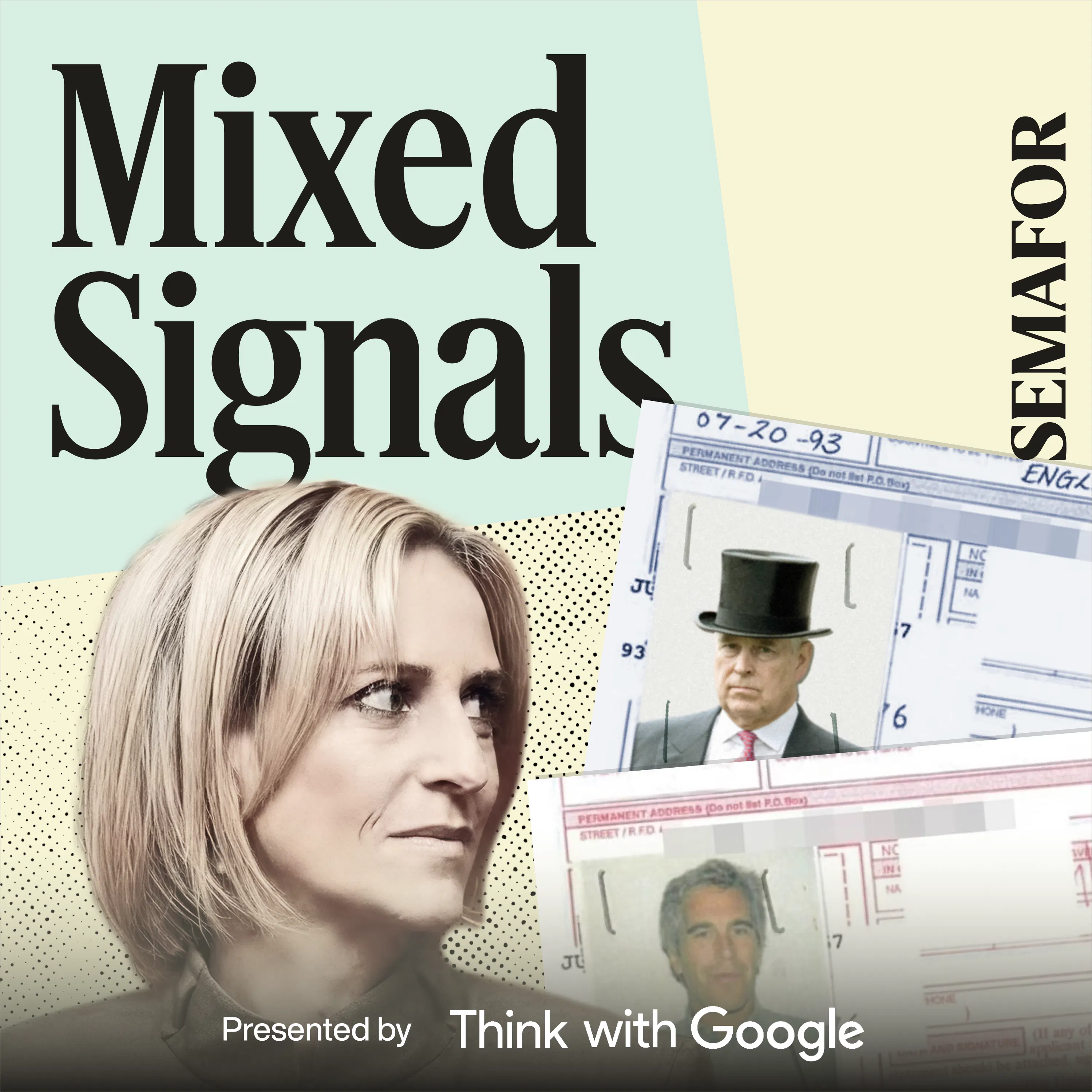
Mixed Signals from Semafor Media
Emily Maitlis on Epstein, Prince Andrew, and why American journalists can’t do interviews
00:52:25
Loading summary
Transcript81 lines
- [00:07]
A
Welcome to Mixed Signals from Semaphore Media, where we are talking to the most important and interesting people in our new media age. I'm Max Tawney, media editor here at Semaphore and with me, as always, is our editor in chief, Ben Smith. How's it going, Ben?
- [00:24]
B
It's good, Max. I feel like you're also one of the most interesting people. So, you know, just to close the circle.
- [00:28]
A
Thank you very much. Well, that's why I'm on the show every week and all of our guests are on the show just once. But this week we have somebody who's just a little bit more interesting than me. It's Emily Maitless, the beloved UK journalist, longtime presenter at the BBC and co host of the News Agents podcast. We'll talk to her about her role in the newly emergent British podcast space, her famous interview with Prince Andrew about Jeffrey Epstein and what that means in today's crazy Epstein news cycle and why American TV interviewers are so disappointing today.
- [01:05]
B
The British are such snobs about this, I gotta say.
- [01:09]
A
Well, we'll decide if it's snobbery or if it's justified when we talk to Emily Maitlis right after the break.
- [01:25]
B
In an era where AI is rewriting the rules and consumer behavior is changing by the minute, how do you stay relevant? You turn to the experts. Think with Google brings you insights from top CMOs, practical guides on emerging tech and strategies that drive real growth. It's like having a marketing guru in your pocket. Visit thinkwithgoogle.com to become a forward thinking marketer. Your next game changing idea is just a click away.
- [01:54]
A
So, Ben, two weeks ago you wrote something for our media newsletter about Jeffrey Epstein and how to think about the Epstein conspiracies and whether the media was kind of too obsessed with these conspiracy theories. Some people had some opinions on what you had to say. What did you write about Epstein? How are you thinking about this new wave of coverage and all of the political turmoil, chaos and intrigue that's come along with it in Washington?
- [02:28]
B
You know, I guess I have two thoughts, and one is that it's obviously incredibly fun to watch people who peddled a bunch of nonsense conspiracy theories to get hoisted on their own petards. Like, that's just eternally entertaining. And I think for that reason and because Democrats see a political opportunity, there's a kind of universal consent that everyone should just dive in with the most credulous possible view of the idea that Jeffrey Epstein was running like a global blackmail scheme on behalf of the Mossad. I may have lost track of where it today, but that's the general idea. And to me it's qanon for people with college degrees. It's a theory that if you look at the details briefly, it seems like, oh, this all must fit together on the whiteboard. But there's a reality that investigative agencies in every country and every investigative journalist in the world have gone after this for 10 years, 15 years, depending on who Galan Maxwell is sitting in jail, presumably because she couldn't hand over evidence about whichever global oligarch is involved at the heart of this scandal, because she didn't have any. And there are so many sort of specific reasons that different groups that ought to know better are peddling the most extreme versions of this conspiracy theory. But I do think people who want to live in reality need to be a little careful about it and to really try to confine yourself to what is known. Which, by the way, is pretty appalling, pretty interesting.
- [03:54]
A
So then, how should we think about our guest on the show this week, Emily Maitlis? She is obviously a very famous British journalist, former anchor for the BBC's evening news, but also she's probably most famous to people here in the US and around the world for her interview with Prince Andrew about Epstein. And I mean, you know, I. I'm not a tinfoil hat guy. I'm kind of an anti conspiracy theorist. I tend to think that people are generally too dumb or have too big of mouths to keep a really good secret as a journalist. That's my belief, given the fact that people tell me secrets and things that they shouldn't be saying all day. Nothing as big as this, of course, but I came away from that interview thinking, oh my God, this guy Prince Andrew, he is guilty of something for sure. I mean, he came away seeming guilty. So why should we think that. That people's obsession with Epstein is ridiculous if this was a huge media moment in which a large swath of the public thought that Prince Andrew had done something wrong. And indeed then after this interview that Emily did with Prince Andrew, he had to step back from his royal duties, whatever that means, we're not gonna ever.
- [05:12]
B
Figure out what that is from this side of the Atlantic? I mean, no. And I mean, Emily got one of the huge scoops of this, of the Epstein universe and you know, one of the few people who, among other things, was photographed with his arm around an underage girl, Prince Andrew. And if you may not know, Emily Maedless, because you're not a British news Consumer. She's a central figure in British media. Star host on the BBC, who then kind of shocked the world in 2022 by leaving to start a podcast called the Newsagents, which is one of a few podcasts that have really come to dominate British media in a way that while podcasts in the US they're interesting, they're everywhere. They're kind of the main alternative source of news, I think in the uk the News agents is like a central, central daily, factual news program in a somewhat different way. Emily is portrayed in actually two recent fictionalized versions of her life. One called Scoop, one called A Very Royal Scandal, both focusing on her 2019 interview with Prince Andrew, in which she basically persuaded him it was an opportunity to talk about his charitable ventures, perhaps clear the air a bit, the Epstein stuff. And, you know, really pressed him very hard, very directly about what was going on and kind of ended his career. To the degree that you can do that to a Royal. I am, yeah, I'm really. I am very interested in what she thinks, watching this play out here now, six years later, and, you know, to what degree she buys or does not buy my skepticism about the kind of biggest picture theories.
- [06:43]
A
Yeah, well, we'll have to figure out whether she agrees with you or she's ready to, you know, be like me and put on her tinfoil hat. You know, we. We talked a few weeks ago to Ari Aster, the director of Eddington, who said that we are all a nation of Jim Garrison's now. Jim Garrison being the. The lead investigator, a real guy, but made most famous by the movie jfk. And, you know, I found myself. I found myself actually moving in the opposite direction from you. I kind of felt previously like this is not a big deal, but now after watching Emily's interview with Prince Andrew, I'm full Jim Garrison. But you know what? We've got Emily waiting for us, so why don't we call her up and see what she thinks right now?
- [07:29]
B
Well, Emily, thank you so much for joining us.
- [07:31]
C
Absolutely great to be here.
- [07:32]
B
And as I introduce you, I realize you are, like, incredibly famous in Great Britain. And so for some of our audience, this is, like, very exciting and in the way of broadcast. Many people in the US have no idea who you are. By way of introduction, you were a huge presenter on the BBC. You totally shocked the world in 2022 by going off to do a podcast. And I guess that is a very familiar arc. And it's sort of something that a lot of the people we talk to are kind of wrestling with. And I wonder if you could just talk us a little through that decision to leave the mothership.
- [08:04]
C
Well, the first thing I'd say is, if you're ever gonna quit your job in a dramatic way, do it with a really good friend. Because it was a decision that three of us made at pretty much the same time. And so it had something of the kind of Thelma and Louise, you know, driving off the edge of the cliff into the canyon feeling to it, because we were metaphorically holding hands as we took the biggest plunge of our, you know, professional lives at that point. And, yes, I think a lot of people raised eyebrows. I had a very good job. I had a very central job. I was the lead presenter of BBC2's Newsnight, which is our kind of flagship current affairs show at the BBC. And I think there was something that we felt was going on, away from the world of television and sort of linear news. And partly it was, you know, chats with the director general in the kind of year up to. And he was like, what are we going to do about numbers? What are we going to do about youth? What are we going to do about people watching? What are we going to do about our audiences? And I remember saying to him, like, weird sort of presence of mind. I was like, I will bring you the interviews and I will get the stories done, and I will do you phenomenal, you know, bits of television. But I cannot control the time that we're on or the platform that we're on or the channel that we're on. I cannot do that. You know, that is all part of the. Of something much bigger than me. And actually, as it turned out, yeah, we found a whole new audience when we left. And it was a sort of audience that remarkably, hadn't been, like, die hard into politics, hadn't been sort of obsessive about Westminster, wasn't, you know, even a sort of Daily News listener. We found lots of young people. We found moms on the school run. We found people who were kind of coming to news in a different way. And it's been so really reassuring. Do. I mean, sort of invigorating, actually, to find whole different audiences in places that we. We didn't know we could reach.
- [10:16]
A
Has that been kind of the biggest change, moving from the evening news to podcasts is what are the ways in which not only has your job changed, but has your journalism changed, making the kind of platform shift?
- [10:29]
C
I would say, first of all, my life has changed because I never used to go to bed before 1:00am you know, we did late night news shows, and then you come off, you know, absolutely buzzing, and you're kind of reading Twitter and you're reading comments and you're talking to your colleagues. And I sort of used to end the day kind of with a vodka and a panic attack normally, you know, and very little sleep. And so the first thing that changed was like, oh, my God, this is extraordinary. I can literally go to bed whenever I want. This is unbelievable. So it was a sort of life change first. And the audience thing has been really interesting because I think we've discovered three different audiences instead of one. You know, I would say that linear television gave us the people who watch Newsnight, and occasionally it gave us, you know, more than our normal people if we're doing something kind of niche or specific or whatever. But it generally gave us the people who watch Newsnight. And now we have a YouTube audience, which is very different to our podcast audience, which is very different to our clips. TikTok insta audience. And so we've kind of reached people in different ways. But I think the more profound question you're asking is what do we do differently? And I think that the tone for an interview now is different. So we used to be very squeezed. You know, when you're doing live television, you always sound urgent, and sometimes that's a good thing. And sometimes it just sounds rushed, to be honest. You know, you're always trying to squeeze people. You end up sort of cutting into them, cutting over them. Sorry, but you know, we've got to go. Can I just rush it? Yes. And often people exploit that. You know, if you're doing a senior member of the government and they've worked out that you've got sort of six minutes max, then, boy, do they kind of filibuster their way through the first answer and generally the last answer. And they will, you know, they will give you a potted history of everything that they've, you know, ever legislated on when you're trying to get to the. The nub of things. And so I guess the fact that people come in here and it's a really comfortable studio, our chairs are comfy, we give people hot beverages or iced coffee when they walk in, there is no rush. We don't sit there going, we've got to get the weather. You know, we've got. Can you. Can I hurry you, please? We've got to go. We have as much time for them as they have for us. And that changes, I think, the whole spirit of discourse and what it generally means is that people leave happy. And that doesn't mean that we don't get to interrogate, you know, a philosophy or a policy or a change or whatever. But it means that they have their chance to talk about, you know, all the good things that they think it's doing or that it's done before. We then kind of go, right, you know, let's have some accountability. Let's go back and check on this. And so you tend to get something that is a bit more rounded. You know, it feels less harried, it feels less taken out of context. I mean, isn't that the thing you always hear from. From, you know, politicians, oh, my God, they took this out of context. I can't believe that you. You cred me out of context. And we don't, you know, they have. They have. As long as they want to make their case, yes, if it's. If it's kind of boring, you know, we'll. We'll squeeze it down a bit. But generally, we get the best out of people by saying, yeah, no, you tell us your side and then we'll ask you the questions about, you know, why 300,000 people have just signed a petition about your legislation overnight or whatever it is.
- [13:59]
B
Do you feel. I mean, I feel that too. Like, my impulse in interviews often is just to, like, hit people over the head immediately. And podcasts don't lend themselves to that. And, in fact, I feel a certain amount of pressure, and I wonder if you do, too, like to be a little nicer here than I really probably am in my journalistic profession usually. And, I mean, you've done some very tough interviews on television in your life, some very direct, very aggressive ones. And it feels to me like this medium, I don't know, favors being a little nicer. And I wonder, is that good for journalism?
- [14:28]
C
I think there are two things going on. One, quite often, you know, I might have booked that guest myself. Right, so you've put your, you know, your sense of self on the line a bit. You've said, oh, yeah, we'd love to talk to you about this. It'd be really interesting to hear about this. And so if you've done the booking, then you're kind of invested. Second, they come in, they're chatting. You know, there is the sort of preamble beforehand which doesn't lend itself so easily to you, then turning around and going, you know, why'd you screw this up? Or whatever. But I think. I mean, I think you've. You've. I can feel like in my Solar plexus. I'm, I'm starting to kind of feel defensive because you've touched on something that's really raw, which is nobody wants to turn to a podcast and feel that their journalism is suffering or that they're not doing hard enough interviews, or that they're not doing the same job that they would have done on sort of linear television. And so I do keep reminding myself of that, you know, and I mean, it's interesting. Like we, we did the Chancellor on the day that her budget came out last October, and I was really conscious. We had to go to, you know, 11 Downing street and we were sort of setting up and we had a camera problem and we kept her waiting. And there was this awful moment where because she'd been kept waiting, we were very apologetic and I thought, oh God, this is gon kill the whole vibe. Like how do you turn around to somebody and say, you know, have you seen what your, the implications of your policy is going to be on young workers coming into the workforce, blah, blah, blah, blah. And so we actually kind of took a moment out and we were like, we can apologize for being late, but we cannot let the journalism suffer, you know, as a result of this. And it was a really hard hitting interview, and rightfully so. I mean, about a policy that was kind of pretty catastrophic across the range. And sometimes you just need to kind of, I think, step out and have that little word with yourself. A podcaster doesn't mean that you let all your journalists at Standards go out the window or that you don't do the tough interviews or that you sort of, you know, you end up being so friendly with the guests cause you booked them yourself. It cannot mean that otherwise, you know, we all sink.
- [16:40]
A
Yeah. As we were thinking about doing this interview with you, I went back and I watched obviously the most famous interview you did, the one with Prince Andrew in 2019. As I was watching that, I was struck by the feeling that these are the types of marquee television interviews that you used to see. Not all the time, but with some regularity. If somebody had a big story to tell or they wanted to clear the air in some sort of way, they would say, okay, I'm going to go on the biggest news program or the most serious news program, and I'm going to sit down and I'm going to explain it. And you know, it creates these really, really incredible and memorable moments. And I do think that that's not. There's memorable podcast interviews, but they don't have the flavor of that Big marquee interview style. Can you still kind of get big interviews on the show? And have we lost that type of big marquee television interview and what's gonna replace it?
- [17:36]
C
Well, the first thing we decided when we started the podcast was that we were gonna visualize everything. So that was a big step for us. I mean, now it feels very obvious. But this was kind of three years ago and we said, we cannot just be slightly crappy audio in somebody's garage. You know, it has to feel like a studio. So our studio is pretty much set up for television and it's a, it's a better lit studio than any of the TV ones I used to work in. And so I think, I don't know if it gives you marquee, but I think it means that we take the visual side of things pretty seriously. And that if I'm asking a question, you should be able to see a cutaway of the interviewees, you know, face as I'm talking, because I think that's really, really key. That sort of all adds to what you're describing, which is the drama. When we first started, I remember an interviewer saying, do you ever think you'll do an Andrew interview? You know, would Prince Andrew ever come to a podcast? And I remember thinking, oh, you know, you've set me that test. That is going to be the test, isn't it? Would Prince Andrew ever do a podcast interview? And I think increasingly, actually, the answer would now be yes. The first interview with the Prime Minister, Keir Starmer we did on the show was when he was in opposition. And the clips are still played, like a lot of the clips are still played and actually still resonate now with the answers that he gave on that day. And so, I mean, I don't think there's gonna be much in my life that will compare to the Prince Andrew interview in the sense of that kind of scale. An hour long interview, you know, in the middle of a palace. I mean, it's, you know, it's kind of not your average Thursday. But I would say that the stuff that we are doing now should still have that longevity in terms of people remembering comments that were said and people remembering soundbites. And as I said, the Rachel Reeves Chancellor interview still gets played, you know, in clips now. The stuff with Keir Starmer from 2022 still gets played. 23, maybe it was, but, you know, so I, I sort of think we have to believe in our own medium a bit. You know, we have to believe that if that is the, the Future that we're going to still do the interviews as if they were going to be lasting testimonies of the journalism of. Of the day. And obviously, what we're competing with now is like Joe Rogan three hours, right? And that whole debate about whether, you know, Kamala Harris was gonna do Rogen and was it too much out of her busy schedule. And what happens if somebody's kind of spouting conspiracy at you and do you sit there kind of being a jock and being kind of fun, or do you say, no, you're talking absolute shite? You know, I think that is a whole. That is a whole sort of different question now. I mean, personally, I would say never do an interview that is three hours long because it's only ever gonna. But I think I still feel like a journalist in this studio. I don't feel like somebody who just sits and chats.
- [20:44]
B
Do you think? I mean, there's a sense, and I think advertisers love this, Podcasters, I think, are ambivalent about it, that it's really all becoming television, that it's all becoming indistinguishable, that, you know, your show is gonna wind up licensed to Channel 4 and playing at 6pm or something. And that for viewers and really for producers, increasingly this is all merging again. Do you buy that? And do you. Do you like the idea?
- [21:07]
C
I don't dislike the idea, but I don't agree with it. Actually, I think it's much more fragmented. I mean, look, we have. We have discovered recently, and we just had our biggest week last week on YouTube, right? And I think I feel confident saying that the people who watch us on YouTube are not the same people that listen to us when they get out of work at five o'. Clock. You know, our podcast comes live at 5:00pm every day. So we get a lot of people kind of in the lift, leaving work, you know, going home, on the tube, on the bus kind of thing, taking us as their afternoon commute. Then we get another kind of lot of, you know, the morning dog walkers, the runners, et cetera. But I think the YouTube watchers have now got us on their TV screens, right? And it's a totally different. It tends to be. It tends to skew male, it tends to skew older, sort of 50 to 65. And they are now our sort of fastest growing, as it were, TV YouTube audience, which is totally different to the kind of the students or the young people that we talk to in their ears.
- [22:13]
B
Well, Speaking of males 50 to 65, we gotta talk about The Jeffrey Epstein story, how was that transition? And you, obviously, you played a big role in it, in blowing up the Prince Andrew part that had been sort of lurking around the edges of it. I mean, I think in some sense, he's the only really major figure who has been really directly tied to Epstein and faced big consequences. And people who want to know more about your role in this should watch a very royal scandal on prime, which is quite amazing, which you worked on. But I wonder, looking right now, as Washington is totally consumed by this scandal that's really been rolling in various ways since the early 2000s, what does this Washington moment look like from where you sit?
- [22:59]
C
People here are absolutely transfixed. I mean, we've seen that in our numbers over the last week, and I think it's probably because it kind of has everything. So if you're a political geek, you're just fascinated by the Trump MAGA divide. You know, if anyone had ever thought that Trump would be divided from his base, I don't think they would have thought it would be over a conspiracy theory that he unleashed that he couldn't follow through. So you've got all the kind of, you know, people who feel it's worth their time politically to look at this because of what it's telling you about that kind of sort of the damage limitation exercise that Trump is failing so badly right now in Washington. And then I think you've got people who started off thinking that it was all a conspiracy and then kind of going, hang on. Actually, I don't. I don't think I know enough about this. I. I've now remembered a name. I've now remembered the 2008 Florida suit. I've now remembered the role that Tina Brown played in this with, you know, was it the Daily Beast and how that all began. I've now remembered that I don't know how Epstein got his money. And so there's. There's the whole kind of. I suppose there's the whole, like, what was the story in the 90s that I completely missed? Right. What was the story with the models? What was the story with the contracts? What was the story with Trump and the party and all that stuff that people genuine to kind of fill in the gaps for? And I think there's also, when we first started talking about the Epstein case, it was pre. Me too, right? And I think there's now a moment where you're like, your jaw drops and you just go, what the actual fuck? Right? Like, how many hundreds of victims were going through his hands and why do we only know so few? And why do we only know him? And why are there so few names publicly? And I think, I mean, certainly, I think for the younger generation who might have missed some of the early stuff, they're kind of going, I don't understand why this is okay, right? It is not okay. It is not okay to have not got to the bottom of this for the victim's sake and for the sake of truth and for the sake of all the people whose stories have been erased. And I think that's probably something that we understand much better in 2025 than we would have done in sort of 2014, 2015.
- [25:31]
A
Well, we have to take a break, but we will be back with a lot more with Emily Maitlis right after this.
- [25:43]
B
This week on our branded segment from Think with Google, we've got Google's VP of marketing, Josh Spanier, for the third part of our series on how modern marketing is is more than just AI. So, Josh, we've talked about two pieces of modern marketing. First, just the fundamentals. Second, understanding the customer, what to use.
- [25:59]
D
The third piece, embracing technology. Modern marketing really is about understanding how digital technologies and more have fundamentally changed how we all engage with the world. And maybe it's an old thought going back to Henry Ford and the Model T, but what we see at Google is marketers who embrace technology in all its forms and shapes drive much higher business outcomes across everything they're doing. But it's more than just AI. AI is obviously the hot technology of the moment, but it's actually thinking about technology in its broader sense. So the use of the cloud. So we use Google cloud to create collaboration to speed up our working processes. It means thinking about video across all its different services, not just YouTube, but also demand gen across search even. And it's also thinking about all the AI elements both in video production and beyond to speed up our workflows. I'm particularly excited about that Third1 Because AI is so fascinating and interesting. So products like Veo are really just transforming the creative production game.
- [27:01]
B
Veo is quite amazing. What excites you about it from a marketing perspective?
- [27:05]
D
It's just really hard not to get super excited about the unbound creativity that Veo makes. All of us, we can all be creative directors, we can all imagine ideas and then using Veo, make audio, visual films instantaneously, almost in real time to solve for any need or any moment. The NBA Finals just happened here in the United States. A number of advertisers used Veo to make the ads they put onto television, and they did it in a matter of hours. It's just witty and inspiring to see how this technology is evolving so rapidly. And since we last spoke about Veo Ben, we've actually sent out a new update where you can upload just a picture and turn a picture into a audio visual film in a matter of seconds. It's really fun. Recommend everyone try playing around with it.
- [27:52]
B
What are organizations that are adapting this successfully doing? What are they doing? Right?
- [27:56]
D
Organizations that are adapting AI successfully are finding the people in an organization who are leaning into these technologies, who are passionate and inspired about using it and letting them run riot, letting them have free reign to produce stuff. You obviously have to have human choice in what you actually put out in the world and put money behind. But the creativity, the spark, the speed. Find your best people, empower them, look at what they're doing, and play around with the technologies yourself.
- [28:23]
B
If people want to see what that looks like in action, where should they go?
- [28:27]
D
Head on over to thinkwithgoogle.com There are multiple case studies and examples of using VO, of using generative AI, of using Google Cloud, and of using YouTube and search to do all sorts of interesting things which will drive business outcomes. Over@thinkwithgoogle.com thanks, Josh. Thanks, Ben.
- [28:55]
A
I want to try out a theory on you because it's something I've been really thinking about. And it seems to me that, you know, the reason the interview resonated so much and is so fascinating is because it is one of the rare. I think a lot of people came away from the interview, watching Prince Andrew's responses and thought, this guy's probably guilty. Like, he probably did some of the stuff and he's probably lying. I'm really curious. I mean, were you thinking the same thing as he was responding and the way he was responding to you?
- [29:26]
C
No. I wanted the interview to be absolutely forensic, and I didn't want to bring any of my judgments or prejudgments into it at all. And that was really important, actually, to us as a team, that we treated it like we were gathering evidence in case it would ever go to trial. And that was all it was ever meant to be, you know, And I remember talking it through with my editor at the time, Esme Wren, about the order of how we wanted to ask the questions. And I said, we have to establish the building blocks, right? We have to get the facts down first. Were you, you know, ever on the jet? Were you on the island? Do you remember this? Did you go to his House. We have to actually build up the case of things that we know. Because the danger with those interviews is if you bring your own preconcept or your own sort of assumption of guilt, you kind of cut through the early stuff. You make a statement, that statement's then refuted and everyone kind of goes, oh, she got that wrong, didn't she? She didn't know what she was talking about. Oh, he's just said he wasn't there in 2007 because you got it wrong. And it was 2008. And so the thing that I really wanted to make sure when we did that was it was absolutely fact based and it was fact based to him, so that he was confirming things that I was asking. Just for the record, you've been on his private plane.
- [30:54]
A
Yes.
- [30:55]
C
You've been to stay on his private island.
- [30:57]
A
Yes.
- [30:59]
C
You've stayed at his home in Palm Beach?
- [31:02]
A
Yes.
- [31:03]
C
You visited Gillen Maxwell's house in Belgravia in London.
- [31:07]
D
Yes.
- [31:08]
C
And if you kind of, you know, if you look at the first 10 minutes of it, there was a moment when I asked the first question and his answer is kind of too long. And I remember thinking, you know, I take myself back there right now and I think, oh, my God, I've only got. I've got 50 minutes with him. Like, what happens if each answer is that long and I don't get to ask my questions? I was really nervous that I would sort of get run over, you know, verbally run over. And then I come back and I say, well, I'm almost doing my checklist. This, this, this, this. Can you confirm that? Can you confirm that? Did he go to your daughter's birthday party? And there's that moment where, I mean, one of the most famous lines in it now is a straightforward shooting weekend. Am I right in thinking you threw a birthday party for Epstein's girlfriend, Ghislaine Maxwell, at Sandringham? No, it was a shooting weekend. A shooting weekend. Just a straightforward, straightforward shooting weekend. And this just the clash between, like most people in Britain not finding a shooting weekend very straightforward, but him thinking that he'd clarified for me why my question was wrong. Right. I never threw a party for Epstein. It was just a straightforward shooting weekend. But that kind of stuff was fundamental to the arc of the interview because it allowed me to say, you've confirmed that check. You've. You've conceded that check. I understand that you were there at the time of that check. So my dates are right, my names are right, my locations are right. Now I can Ask the questions. And I think I needed that base, that structure in which to then build the interview. And so if you say to me, did I? I still would never say to you, I think he's guilty. I wouldn't say, I think he's innocent. I'd just say that wasn't my role as a journalist. I was just there to ask the questions.
- [33:00]
B
But you have had now six years to think about it and talk about it, and you've read a lot. And I think one of the reasons that the Andrew story is so interesting right now is I think that there is this sort of haze around, like, what was Epstein's relationship with these men? Like, what was the value exchange? What was Andrew getting out of it? What was Epstein getting out of it? And I guess I wonder if in that particular. In this case, what was Jeffrey Epstein getting out of this relationship.
- [33:26]
C
Yeah, I mean, look, I can tell you what the theories are, which is that, I mean, this is one of the ones we explore in the drama. And I say that because, you know, we explored in a fictional sense, because there is some sense, but no factual evidence that there was kind of money. There was a loan at the bottom of it. There was possibly, you know, a connection with Sarah Ferguson, Andrew's wife, and whether she'd borrowed money off it. Epstein and what was going on there was. I don't know if it was monetary, but I guess what you're asking is a much bigger question. And going back, I think that's why the Epstein story resonates so much, because we just don't know this stuff. You know, if you look at the passenger flight lists, don't you want to know what every single person was doing on that flight with Epstein? Right. Isn't that the starting place? Why were you going to the Island? Why were you meeting St. Barts? You know, why was he lending money? Why? Why did one. What? You know, one guy hand over his fortune to Epstein and let him just decide how the money was spent? Maybe that's completely normal. You know, I know a lot of finances do work like that, but I think for many people, it's kind of shocking and we just don't know any of it. And so in a way, I mean, you know, the fact that you have this hour with Prince Andrew took us to the heart of one relationship, maybe two. Ghislaine Maxwell as well. One relationship and one set of events. And what happened over the course of a decade and a half. But how many other people are out there that we're not talking about? That we haven't managed to do those interviews with, that we haven't investigated, that have shut down the story or the people who, you know, frankly, are no longer with us, who have taken secrets to the grave about what they were doing with Epstein. You know, I feel like we are tip of the iceberg here. And that's, I think, why it still resonates with people, not just the conspiracy theorists, but the people who are like, how could one man have had up to a thousand victims? And we know so little. We know still so little of what actually went on.
- [35:39]
A
The interview that you did with Prince Andrew obviously changed both of your lives. Have you spoken to him since then?
- [35:48]
C
No, I've spoken. I mean, it won't surprise you to hear that I do that. I have a lot of conversations with people who tell me about their own relationship with Prince Andrew and fill in some of the gaps for me. You know, I constantly get people saying, oh, you'll never guess who I'm shooting with this weekend. And I say, no, no, I will, believe me. I will say, you'll never guess who is really rude to me. That. No, yeah, believe me, I will. People see me coming, and there's kind of, you know, there's the anecdote. But I pieced together. I pieced together some of the story from people who came to find me after the interview and told me what had happened, you know, subsequently as a result, including the. The moment that the late Queen read the transcript on the Saturday morning it was shown, you know, primetime Saturday evening. But the Queen, we understand, read it Saturday morning. And there was a moment at which she then sent her people to pull Andrew out of her lunch. And that was kind of the last he was seen publicly. And so I learned about that much later from people who'd been at the lunch, around the lunch, you know, so it's. It's kind of weird. No, we've never. We've never spoken. Occasionally I find myself in the same room as his daughters, and I feel terrible. Actually, those moments, I just sort of. There's normally a very sort of quiet, elegant dance where I try and get to the other end and leave them in peace, because I sort of think, you know, that's a photo they probably don't need.
- [37:38]
B
Well, I would actually. Anytime you sort of mention the British royals, I feel like we could probably. You know, we're all obsessed with them over here secretly, and we could probably go on all day about that, but I wonder if we could. I know that you're obsessed with the United States. I saw you at that kind of hallucinatory Republican National Convention this time last year. That's right, yeah. In Milwaukee this time last year.
- [38:00]
A
Year.
- [38:00]
B
And I'm curious right now how the US and actually, really specifically the US Media, how do we look from your vantage point?
- [38:09]
C
I mean, look, there's so many bits to that, right? So we look at the White House press briefings, and we're like, Jesus, who's left in there asking real questions? Right? So that's one thing we're kind of like, you know, is it Marjorie Taylor Greene's boyfriend again, you know, who's got the top question this time? Like, who is literally asking the question that we're all kind of dying to hear the answer to?
- [38:37]
A
Sorry. To be clear for the listeners, Marjorie Taylor Greene's boyfriend is actually in the White House press pool.
- [38:43]
C
He's Breitbart, isn't he?
- [38:44]
A
No, he works for, I think, real. It's like real America's voice. It's a similar psychological disposition, I would.
- [38:51]
B
Say, in case you thought Emily was joking.
- [38:52]
C
Yeah, no, I know this is true. I mean, I'm sorry. I feel. Sorry. I'm diminishing because I can't remember his name. But I. But I remember thinking this is. This is an awkward position for us to have him as our filter of the answers to the questions we all really want to ask. So there's that. Then. We're kind of trying to make sense of, like, the payouts, you know, the George Stephanopoulos, the 60 Minutes. I don't know if Steve Colbert fits into that. We've been trying to work out in our own way what is kind of, you know, real media change and what is quiet censorship. And then actually, I read and I consume so much stuff coming out of the US Media, which I love. I think the writing is superb, and I think the. The analysis is absolutely gripping. And so, I mean, what's the answer to that? The answer is, I think the US Style of political interview is very different to ours broadcast wise, but I think the writing is unparalleled.
- [39:55]
A
Yeah, I was watching some of the interviews, the recent interviews that you've done. You did one at the RNC last year with Nigel Farage. I watched a recent interview that you had with a conservative MP on your show about these Pakistani groom gangs. I don't even wanna know. I don't wanna know what that is.
- [40:15]
C
Just to say he's not conservative. He's an MP who basically got kicked out of his. The Reform Party, Nigel Farage's party.
- [40:21]
A
Fair enough, I guess, on the political right, yeah. But I guess what I came away thinking was that it was amazing that some of these guys were willing to do interviews with you and that you could kind of express some viewpoints or be a little bit. Have some personality in these interviews in a way that nowadays you really just don't see that in American broadcast television anymore or just in many interviews, simply because political figures on the right are just not taking the time to speak with a lot of journalists or people in American media who are not ideologically aligned with them. I'm curious, do you think that British politicians face tougher questions than US politicians?
- [41:02]
C
I really do, yeah. And actually, I have to say I have a quiet respect for our politicians because we give them complete shit, and they're still really lovely afterwards, and they'll still come up to you at a drinks party and have a chat, and they'll be fine because we managed to, I think, delineate between. You know, I'm just, You know, I. I would always go back to. I'm just doing my job, right? I'm just asking the questions that everyone sitting at home kind of is thinking, so I'm just doing my job. This doesn't mean I hate you. This doesn't mean I won't break bread with you. It's a totally different thing. And I. And I would. You know, I mean, weirdly, I kind of. I had a chat at a. At a sort of somebody's garden party with Nigel Farage when all we talked about was his appearance on I'm a Celebrity. Get Me out of Here. You know, so I don't carry it into a different world. But I do think that in the studio or in an interview chair, I have to do my job properly and thoroughly, and I won't shy away from that. And I guess I go back and forward, and I'm gonna be maybe slightly too honest here, but I occasionally listen to, like, the Sunday shows, the US Sunday shows, and. And I'm kind of screaming at them, you know, I don't understand why you don't follow up on a question, right? You've asked one question, and then. And then you hear the interviewer go, let's move on. And we're all kind of going, no, do not move on. Do not move on. That was not an answer. Like, please go back. Do you not understand what they just said? They're trying to move you on, and you're moving on. And I suppose I can see what the argument is, which is like, oh, you want them Back on your morning show. So you kind of softball them because. And you say than and everyone starts going happy Mother's Day and Happy this day and Happy Thanksgiving Day. You know, you spend half the interview thanking everyone for whatever appearance that they're making. And then there's sort of no grit to the actual argument. And I don't think I'm alone. Like this side of the pond, we find that really odd. We're like, Jesus, you've got this person in front of you, you know, you've got the speaker of the House, for Christ's sake, like ask him all the questions that you've been dying to ask for six months because they're not going away. And yet the whole thing is sort of slightly polished and vene and I don't want to upset anyone and yeah, happy Mother's Day. So honestly, we just don't get it. But I guess the answer to it is if you ever do a proper interview with somebody, a high ranking politician in Congress or whatever, they don't come back. Is that true? If that's true, I'm really sad about that.
- [43:36]
A
I think. Yeah, I think part of that is true, but part of it is just that since Trump, and this predates Trump a little bit, but it's part of the political project on the right to kind of push back against the media, in some cases delegitimize the media. And so I think that that is part of kind of what's going on here. I'm curious, has it changed at all on the political right in the uk? Has the political right become more hostile towards the media and towards the press there in a similar way to the American rights hostility towards the media here?
- [44:09]
C
Do you know, I don't think it has. I mean, I get that people will naturally go to their silos. So we have a channel called GB News which for a long time was actually hosted by, you know, working MPs, politicians on the right who were doing the job of being our parliamentarians and our chat show hosts. Which is kind of weird, right? But you will tend to have politicians of the right going to GB News first because they will not be given as hard a time and they'll. I guess it's the foxification they'll tend to have people nodding in agreement rather than pushing back. That said, I don't think that you. We haven't yet heard enemies of the people stuff, right? We just haven't. I mean, in terms of the press, we haven't yet heard lying press. We haven't yet heard I mean, you're obviously online, all the rest of it, but not really from the mouths of politicians themselves. And I don't know whether that's because we still have a center of sorts. You know, we have a state broadcaster in the BBC and, and however frustrated people get with it and what it stands for or which kind of, you know, which way it, it sort of appears to be prioritizing stories. I think is still the sort of broadcaster that ties a lot of the middle together right now. I don't know whether that means like, you know, the extremes just don't, don't come towards it, don't hear about it. But I, I don't know, I sort of, I feel that we are not in that same place. Place. We're not in the place where the press just get denigrated for covering anything.
- [45:48]
B
Yeah, I guess the BBC does just create a kind of shared reality that I think we don't have here.
- [45:53]
C
I think that's true. I mean, maybe it's just that everyone uses the BBC as a punch ball, right? You know, I mean, like everyone's got their own reason for kind of being mad and so, you know, it's a unifying thing. But yeah, I think that's right. I mean, I think I would always go to the BBC to fact check something. You know, I would always, I would always read their copy still to find, you know, numbers or to get the background or whatever. And I hope that, you know, a lot of people feel that way, which I think I hope keeps some of the kind of conspiracy stuff at bay. But really what you're talking about is, I mean, maybe it's just the pool of journalists is smaller still, right? So you kind of don't want to isolate all the journalists by saying, you know, you're all lying about everything all the time.
- [46:40]
B
Well, Emily, thank you so much for joining us.
- [46:42]
C
Absolute pleasure. Thanks for having me, guys.
- [46:51]
B
I want to tell you about Think with Google. It's marketers go to spot for insights from top CMOs, practical guides on emerging tech and strategies that drive real growth. You can learn how AI can help level up your marketing and address your biggest challenges across creative media and measurement. Whether you're a marketer looking for new ways to reach your audience, or a curious leader wanting to get inspired. Think with Google is the place to be. Learn more by heading to thinkwithgoogle.com I'm curious, Max, if you were kind of satisfied with her analysis of the Epstein stuff and of Prince Andrew and really that sense that there's A lot more there.
- [47:31]
A
You know, I still think that she's behaving in. She may be a podcaster, but she still is a straight, straightforward journalist in many ways. She's like, hey, look, I'm here to collect the facts and, you know, prosecute the case or, you know, looking at it through that lens and not through the podcaster lens. If she was a true podcaster, she'd be putting the tinfoil hat on, you know, with the rest of us going deep down the conspiracy rabbit hole and delivering a verdict. Right. And that so often is the difference between the podcaster and the traditional interviewer.
- [48:02]
B
Yeah, this is, I mean, this is a bit of a tangent, but this is what's so interesting about British media right now is, is that in the US the podcasters are sort of all orbiting what's still a kind of shrinking but real kind of like mainstream fact based space. And then we podcasters are there to analyze it. In Britain, Emily and her colleagues really manages to seize that central, a big part of that central factual, just the facts, ma' am space from the BBC. And as you say, they don't sound like podcasters, they sound like broadcasters. I don't know. And it's been a very, it's a very different path than the US Actually. I think another show, Rest is Politics, has a bit of that as well. They're kind of authoritative establishment figures who are now on a different medium but still carry all of that veneer of authority where I think in US podcasts it's a much more sort of like it's curiosity, it's sort of an alternative point of view.
- [48:59]
A
Well, the other thing is that that space, that central journalism y space was just, just seized by the New York Times and the Wall Street Journal and npr, which have just the most successful just the news kind of podcasts in something like the daily. Right?
- [49:15]
B
Yeah, I suppose that's right.
- [49:16]
A
The other thing that I found to be really interesting and fascinating was the comparisons that she made between the ways in which UK media has changed in response to political attacks, mostly from the right on media and criticisms of the mainstream media. It was interesting for me to this kind of alternative universe that exists in which, yes, a lot of people still have complaints about media bias and liberal media bias, but that hasn't extended into the realm of enemy of the people. What did you make about her distinction there between the US media and British media?
- [49:53]
B
I think it's incredibly interesting. I mean, you're really, it's a really. Of the two different societies are very different I mean, in Britain, fundamentally, the sort of establishment has held, and you see it in a lot of ways when Liz Truss, you know, did some very unorthodox things with her budget. She was basically run out of town by the sort of establishment of British politics, which was the media and was the politicians and was the finance industry. And she was just gone almost immediately. And there's no such mechanism in the US There are no kind of. This is what people like to call guardrails. There's no sense that there are certain rules that political figures have to follow and they're enforced by the media, basically. But I mean, you know, the barbarians are like definitely at the gate over there. And I think it's a question of does that center hold or does a kind of real anti establishment and anti media wave, you know, maybe just hasn't broken there yet?
- [50:44]
A
You know, part of it, I think, is that the right there just isn't as good or as effective at creating this kind of alternate interesting media ecosystem. I mean, just. I was watching GB News, which she mentions during the interview. I was actually watching a GB News panel about Emily, you know, about one of her interviews, which they found to be offensive. And just watching the clips of this, I'm like, these guys just aren't as good at this as Tucker Carlson is. And they're just not as good at this as Sean Hannity or some of these other guys. And so I think there's a possibility that somebody could kind of figure it out. They tried to do it with Piers Morgan. Right. Cause he was kind of a part of this and he still is just too interested in doing journalism and kind of these interesting interviews. And he just ultimately is not as conservative as people on the right here. And so I think. I think part of it is just that they just haven't quite figured out how to do it as effectively as we have. And I think the other part is something that she mentioned, which is that it's a smaller country, the media ecosystem is smaller, people know each other there. You're gonna be in rooms with the people who you cover a lot. Right. I mean, this is something that you always say about British media, Ben. Like when I went to London, you were like, it's so crazy that everybody here just knows each other and they all know the members of Parliament and they all went to uni together. That's gotta be creating some of those guardrails that you were talking about.
- [52:01]
B
Yeah, they were all debating each other at the Oxford Union. So they can then switch on this very intense heated and sometimes personal debate mode on television, which, I mean, honestly, I'm not sure a lot of American politics and journalists, myself included, are really capable of that kind of sparring. But certainly if you were to go at each other that hard, very few of them would then, you know, walk out and head right to the pub.
- [52:22]
A
Well, Ben, thanks for booking Emily. I thought that was. That was really great, and it was great to get that kind of perspective from across the pond, as they say.
- [52:30]
B
Yeah, I think there's a lot to learn, actually, from British media right now.
- [52:34]
A
Well, that's it for us this week. Thank you, as always, for listening to Mixed Signals from Semaphore Media. Our show is produced by Sheena Ozaki, with special thanks to Josh Billenson, Chad Lewis, Rachel Oppenheim, Anna Pizzino, Garrett Wiley, Jules Zern, and Tori Kaur. Our engineer is Rick Kwan, and our theme music is by Billy Libby. Our public editor is Tobin Andre, the communications secretary for the Crown.
- [53:00]
B
And if you like Mixed Signals, please do follow us wherever you get your podcasts.
- [53:04]
A
And if you still want more, you can always sign up for Semaphore's media newsletter, out every Sunday night.