← Modern Love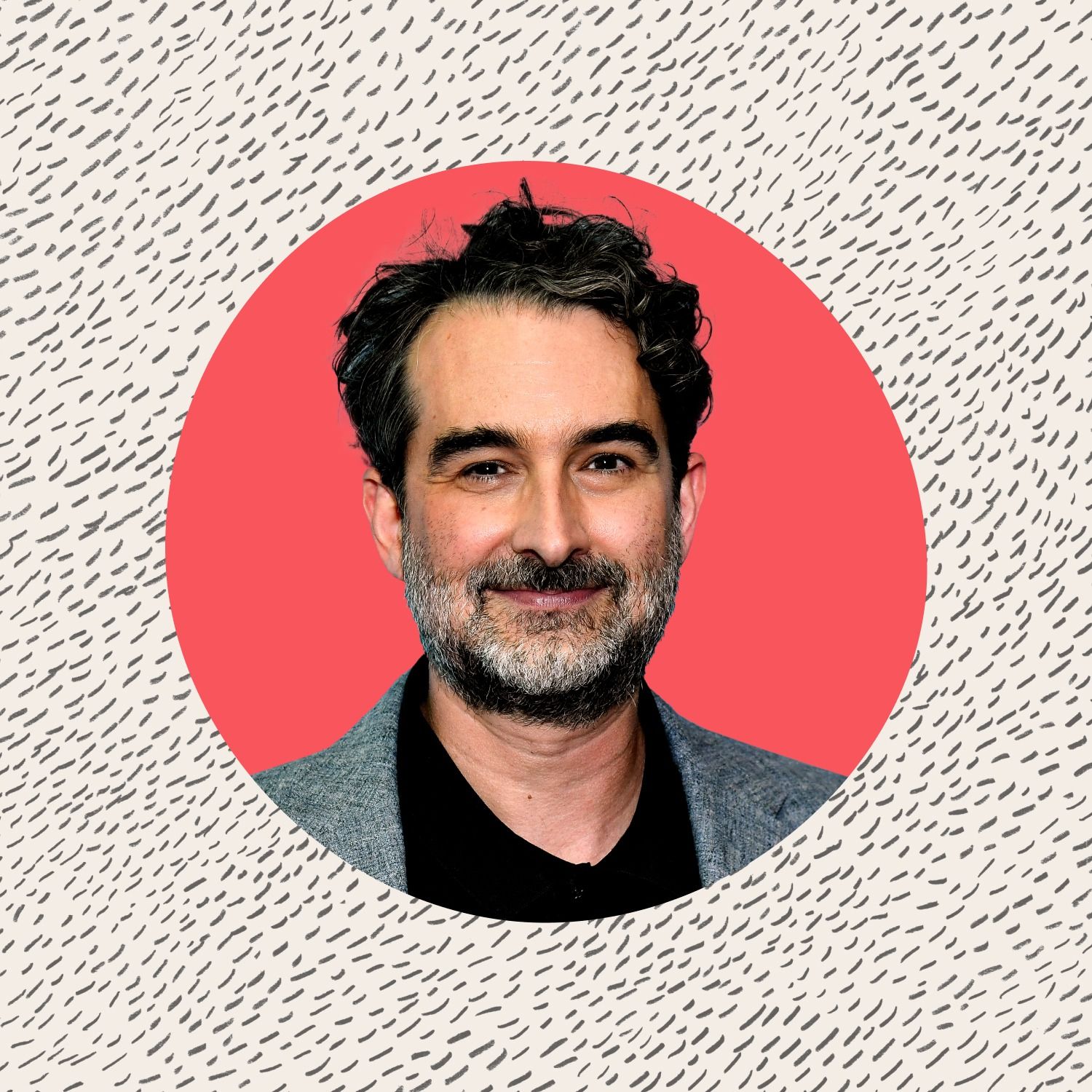
Modern Love
How an Off-Script Moment Changed Jay Duplass’s Life
00:42:32
Jay Duplass knows the power of improvisation. Many years ago, an unscripted, cliffside interaction changed his life, helping to set in motion the events that would lead to his new movie, “The Baltimorons.” The film features a newly sober comedian and a workaholic dentist who meet on Christmas Eve during an emergency dental procedure. What follows is a surprising love story that unfolds over 24 hours in Baltimore. The movie itself is an exercise in being open to unexpected connections. In this episode, Duplass talks about what it means to “yes, and” your way through life and how that can lead to some of our most rewarding experiences. He also reads a Modern Love essay called “The Dentist Who Treated My Divorce,” by Hillery Stone, and reflects on how the power of dropping our assumed roles can make way for deep interpersonal connection. Here’s how to submit a Modern Love essay to The New York Times. Here’s how to submit a Tiny Love Story.
Loading summary
Transcript120 lines
- [00:00]
A
Wednesday, September 24th, the Golden Bachelor returns. 66 year old Mel Owens, father of two and former NFL star, is looking for his second chance at love. And these women are in a league of their own. These intelligent, beautiful and fearless women hope to make a connection and show Mel that age is just a number and you're never too old to fall in love. The Golden Bachelor season premiere Wednesday, September 24 at 8, 7 Central on ABC at 8 and stream next day on Hulu.
- [00:32]
B
Love now and did you fall in love?
- [00:34]
C
Last love but stronger than anything for.
- [00:37]
B
The love love and I love you more than anything there's to love love. From the New York Times, I'm Anna Martin. This is Modern Love. Today I'm talking to director and actor J. Duplass. Jay has a new movie out now called the Baltimorans, and it's all about how a chance encounter sends its two main characters improving and, yes, ending their way through the course of a night. Jay talked to me about the power of going off script and how that can lead to some of the most unexpected and rewarding experiences. Plus, Jay reads the Modern Love essay, the Dentist who Treated My Divorce, and he tells me why the dentist office isn't just a place for a root canal. No, if you let it, the dentist's office can also be a place for deep interpersonal connection and a root canal. Jay Duplass, welcome to Modern Love.
- [01:35]
C
Thank you for having me.
- [01:37]
B
I want to start off by talking about improv comedy, which is like a bit of a divisive subject, I feel.
- [01:42]
C
Absolutely, absolutely.
- [01:44]
B
Where do you land on improv comedy?
- [01:46]
C
Yay. Nay.
- [01:48]
B
Have you done it? Are you hurting?
- [01:50]
C
I have not done it. I have been known to attend a UCB, a Groundlings, a Second City. I watch a lot of SNL YouTube shorts with my son because my son's 13 and you couldn't watch a whole goddamn episode of anything that's prime YouTube shorts. Absolutely. So I like the playfulness of it. I do feel inherently that sketch comedy is something that you watch with a grain of salt. Sketch is where people are really improvising. It's really, you're watching a tightrope act that's also funny sometimes.
- [02:29]
B
I mean, let's say sometimes.
- [02:31]
C
I think that is so fair. So. But I think that's what people have to realize is that you are watching a tightrope act that is also sometimes funny. And when it's funny, it's such a win, but it actually doesn't need to always be funny to be valuable.
- [02:49]
B
Tell me more about that why, when it's not funny?
- [02:52]
C
Because the tightrope act is. The drama is watching people who are fully willing to fall on their faces, and they're gonna fall on their faces. It's just whether it's funny or not, there's a lot of heart in it. And you see people operating. You know, the best sketch comedians, in my opinion, are people with funny bones. They're not funny people.
- [03:13]
B
Whoa.
- [03:13]
C
They're people who. You know. Michael Strasner, he's the lead of this movie. He's got funny bones. He's the kind of guy you just kind of want to watch him operate.
- [03:25]
B
Yeah.
- [03:25]
C
Cause it's just freaking funny, and I don't know why.
- [03:29]
B
Okay, we're talking about the star of your movie has Funny Bones. I want to talk about the movie sort of from a broad standpoint. Bird's Eye View. What's it about? What inspired it?
- [03:42]
C
The film, most succinctly, I think, is about two very different people who get shafted on Christmas Eve and get stuck together. And the film is about whether or not they can make lemons out of lemonade. We're talking about a sketch comedian who's recently gotten sober and given up comedy because he feels like he can't do comedy without alcohol. And this is the main character, Cliff. This is the main character, Cliff. And he breaks his tooth, his back. Right. 40, I believe, on Christmas Eve. And he goes to an emergency dentist, a workaholic named DeeDee, who's twice his age, who really doesn't need to be answering emergency dental calls on Christmas Eve. And they both kind of get shut out of their family's Christmases for very specific reasons. And they are an odd couple who are trying to make something out of this day. And they're both resistant in different ways. And what ends up happening is kind of a road trip movie through Baltimore where they're just trying to level this day up. And they each end up, I think, helping each other explore the single scariest thing that both of them can imagine over the course of the night. And they end up, surprisingly, supporting each other in doing those previously thought impossible things.
- [05:19]
B
It felt like, have you been in this situation, like, you're with someone, maybe it's an early date, and you're really excited by them, and you just don't want the date to end. So you keep making up excuse after excuse. You know, the person's like, don't you have work at 9am you're like, I'll cancel it. You know what I mean? Just, like, are you hungry? Let's get food. It's like any other. Any opportunity to just keep existing.
- [05:44]
C
Yes.
- [05:45]
B
And that's what struck me, too, about this relationship comedy, love story, whatever you want to call it, is like they just kept continuing and continuing and choosing to spend time with each other, which I found to be extremely sweet.
- [05:59]
C
That's really nice. Yeah. I mean, look, I wanted to be the Coen brothers when I was coming up. I wanted to be. I wanted to have the most controlled, brilliant, envisioned work unfolding in front of me as I had planned it to a T the year before. I failed miserably at that. And I turned into kind of the opposite kind of filmmaker, which is almost a duck, where I empower actors to do and live truth, and then I capture it. And, you know, I'm encouraging them to improvise. Look, we write a script very intensely and many, many drafts, but on the day, I just feel that if you're going for the highest level of truth, you have to be honest about what's actually happening. You know, an actor comes in and they're in a really bad mood, and if you try and force them to be peppy because the script says they're peppy, you're gonna get a weird, peppy person, and then you're gonna be like, that was a weird scene. Right. So you have to acknowledge that they're in a really bad mood, and they're not gonna fully beat this mood today. And so you have to incorporate it. That's just like a first simple example of the protocol of how I would think about working with somebody on a day like that and how you're just working with the truth of what's in front of you. You know, what I call it is goal based improvisation, which is you're not here to be funny or to. I mean, look, if you're a funny fucking person and you can kind of level it up, please, please do it, you know, but the concept is, you know, what your character is trying to achieve in this scene, and I want you to get it by any means necessary. You can use the words in the script and the methodologies in the script, but if you want to, like, shake it up, shake it up, and then what that does in turn is that actor across knows that anything could happen right here in this moment. And that feeling that anything can happen is what I'm addicted to as both a filmmaker and a viewer.
- [07:58]
B
Is there a moment that you can point to in the film where you. Where this goal based improvisation paid off and you were surprised by what the characters, Cliff and Dede were doing something they made together.
- [08:13]
C
There was a moment on the boat, I love that scene where they are start. They've just essentially gone into his heart of darkness and done an improvisation scene on stage where she kind of saved him, even though she had no idea what she was doing up there. And in that improvisation scene, they started to express some of the attraction that they had towards each other.
- [08:41]
B
This is what I'm talking about.
- [08:42]
C
Through the avatar of the characters on stage. But we know and they know that it's real. So meta, meta, meta. And they're on a boat on the water in the harbor in Baltimore, under the Key Bridge, which came down two months after we shot it.
- [08:59]
B
Oh my God.
- [09:00]
C
Wild, amazing coincidences and luck on our part. And I don't know who came up with it, but there's an interaction where they're lightly flirting with each other. And she says she's laughing at him. And she says, look at your face. And she's laughing at his face and he feels vulnerable and she says, I like your face. And he looks back at her and he says, you got a good one too. And she hasn't heard that in at least 20 years. And it hits her face in a way that never could have happened if it was scripted. Because that was also Michael Strassner telling Liz Larson, I like your face a lot.
- [09:49]
B
This moment really melted me. We're talking about Cliff. You mentioned his heart of darkness. One of the sort of climactic scenes of the movie is him doing a sketch on stage. Dee Dee comes up and joins him and he talks a lot about this principle of yes, yes and yes. How would you describe yes and the.
- [10:09]
C
Principle of yes and is the core principle of sketch comedy, which is you can never deny an idea that someone that you are doing comedy with raises. You must. Yes. And that idea and it creates an ever burgeoning and growing sense of reality. And it keeps everything fresh and new without getting too cheesy. It's a metaphor for life. You know, part of the theme of this film is also getting sober. And that's. Yes. And is a huge part of getting sober. Being in the moment is a huge part of getting sober.
- [10:43]
B
So I am struck that, you know, we often hear about yes and in a sort of silly context. It's like you're a dragon in a blow up castle. Yes. And you're a knight who's storming my castle. I mean, that's horrible. You can see that I was bad at this. But it's like, but you've sort of blown this up or applied it to a relationship between two people who are hurting in these very individual ways. And I guess, I wonder, like, do you find yourself applying this principle of yes and to your own relationships in your life?
- [11:18]
C
Oh, yeah, Yeah. I mean, yes and is. You know, without being cheesy about it. Yes and is. Is, you know, the principle of making art. I mean, when you go to make art, a low budget independent film with no movie stars, at a time when people are telling you independent films are off off Broadway now, what are you doing? It is a yes and moment to jump off of that cliff and hope that there's, like, nice clear blue water down there and not jagged rocks. Right. All relationships are yes and is. I don't know how this is gonna move forward. I don't know what it's all gonna look like, but I love you and yes, and I'm in. I mean, that's what life is. And the more that you can. Yes. And to it, I just feel like the more authentic you will be and the more, you know, that's what Glass Half Full is about. That's what all these stupid cliches that we gotta live with are all about. Is like, are you. Yes. Ending this moment or are you. No. Budding this moment? You know, so. Yes, it is. I find myself more and more as I go forward in my life and deal with more and more complex things, which is what happens when you get older. Everybody goes through it.
- [12:37]
B
Bummer.
- [12:38]
C
It's such a fricking grind, you know, and it never lets up, ever. But, yeah, you, you. You know, the more that you. Yes. And you kind of move into the mystery of, like, living out of a place of love and possibility and. And really having to let go of the return on that investment. But, yeah, you know, it's a hard world out there. It's a hard life. And the more we can say yes to the scary, wonderful things, the more that we will be led to just, I guess, like to use modern psych is like a more authentic life.
- [13:22]
B
Cliff is obviously an improv comedian. We've talked a lot about this. Dee Dee the Dentist. Wonderful alliterative name, sort of. Their first instance of meeting is in Deedee's dentist office and, in fact, in the dental chair. And you are here to read us a modern love essay that also begins in the dentist office. I will say our team works very hard to find essays that, you know, fit for a guest that are the right mix of their work and their life and their but we have never come across a match such as this. We found you a dentist essay.
- [13:56]
C
Yeah. That's also fundamentally about healing, relationships and healing.
- [14:00]
B
I mean 100%.
- [14:02]
C
It is wild. I mean, look, this movie, the Baltimorans, as you might guess by the title, is a lot of freaking laughs a minute. You know, it really is. But the movie is ultimately about healing and this essay is about healing and it kind of blew my mind. And specifically healing in regards to relationship.
- [14:24]
B
When we come back, Jay reads the Dentist who Treated My Divorce By HILARY STONE.
- [14:42]
A
Wednesday, September 24th the Golden Bachelor returns. 66 year old Mel Owens, father of two and former NFL star, is looking for his second chance at love. And these women are in a league of their own. These intelligent, beautiful and fearless women hope to make a connection and show Mel that age is just a number and you're never too old to fall in love. The Golden Bachelor season premiere Wednesday, September 24th at 8.7Central on ABC and stream next day on Hulu.
- [15:11]
B
Taking care of your skin is a personal daily ritual. No matter what regimen works best for you. It's important to remember that great skincare doesn't have to be complicated. With Clinique's classic three step routine, fresh, radiant skin is as easy as 1, 2, 3. Clinique's iconic trio of products used to cleanse, exfoliate and moisturize is specifically created to address your skin's needs and provides a refreshingly simple solution for maintaining beautiful, resilient skin twice a day, every day. Great Skin starts here. Visit clinique.com to learn more.
- [15:46]
A
Mass General Brigham in Boston is an integrated hospital system that's redefining patient care through groundbreaking research and medical innovation. Top researchers and clinicians like Dr. Pamela Jones are helping shape the future of healthcare.
- [15:59]
B
Mass General Brigham is pushing the frontier of what's possible.
- [16:03]
A
Scientists collaborating with clinicians, clinicians pushing forward research.
- [16:07]
B
I think it raises the level of care completely.
- [16:10]
A
To learn more about Mass General Brigham's multidisciplinary approach to care, go to nytimes.com mgb that's nytimes.com mgb.
- [16:47]
B
Whenever you're ready.
- [16:48]
C
Great. I'm gonna sit back a little. Adjust this. The Dentist who Treated My Divorce by Hilary Stone I have spent countless hours reclined in dentists chairs, but this was the first time I had cried in one. I was in for tooth pain and as it happened also at the end of my 16 year marriage, as I lay in the dentist's chair while the hygienist scraped each tooth with A steel scaler. I wept silently and irrepressibly under a pair of oversized goggles. When she stopped poking under my gum lines and asked if I was okay, my ears were filled with tears. I'm sorry, I said. I'm getting a divorce. I was almost 40 when I first came to see this dentist bringing a mouth too complicated for the dentist before him and the one before that. I have what are called supernumerary roots, an excess of roots under my teeth, which means, perhaps this goes without saying, a lot of nerves. It was the first winter of the pandemic. My three children, from whom I had only ever spent a handful of nights apart, were doing school remotely from home. It seemed the minute they would leave for their father's place on the weekends, all I could do was cry. I tried to escape and to curb your enthusiasm, and I tried meeting friends for outdoor drinks, but I was too raw, too thronged with the unprotected nerves I had in abundance. The hygienist handed me a tissue before excusing herself. When she came back, she was accompanied by the dentist. What is it? He said, crouching down. It hurts, I said. Everything hurts. He sat beside me on his little stool and said, can you show me where? I tried to point to where I felt discomfort, but the location got vaguer the further my finger got into my mouth. Is it pain? He said. It wasn't pain. It was something like a sensation I couldn't bear, but without the receptors to properly transmit the feeling. I thought the ache was in a tooth at the back, but the dentist had pulled that one years before. Like my marriage, the tooth was gone, but there was a tender place, still aching. He tapped the area with his tiny mirror. Here, he said, touching the nothingness where there had once been a healthy bone. Yes, I said. I felt the tears welling up. That's it. My childhood was plagued with jitters and loss related to problems of the mouth, tooth decay, tooth grinding, erratic spacing, several missing molars that, an early dentist joked, made me either spectacularly evolved or prehistoric. But worst of all were the extra canals in my roots. Most teeth have one molars often have two. Three is unusual, and four, as I have, is even more rare. A root canal I had in my 20s turned complicated when a dentist failed to find multiple canals and, exasperated, quit halfway. This turned into bone loss around that tooth in my 30s, and an excavation of the molar at 40. A titanium post eventually had to be implanted into my bone and a counterfeit tooth, a crown of porcelain pushed in it took multiple visits over several months. The office where my dentist works is in a busy center in midtown Manhattan. Eighteen floors up, lying in the ocean of anesthetizing dentist office whirs I didn't know how I would ever get up from the chair. I couldn't imagine the 45 minute subway ride home, the key turning the lock of my place, the emptiness that would meet me there. Then my dentist, as though watching a film clip of my mind, took off his two layers of masks and said, listen to me. His face was startlingly full of skin. My wife left me and our sons when they were 2 and 4. There was a long pause. Then she died. I stared at him. I had met his now teenage sons in the office. Their photo was above us on the wall. I thought I would die too, he said. But I didn't. I took a serotonin inhibitor for a year and it got me through. I could get up in the morning. I could walk myself to work. I swallowed my mouth sour. You need to get on something. This year will be the hardest, but it will get you through. I trembled in the plastic covered chair, staring at my scuffed boots bolstered pitifully in front of me. Was I broken? Was medicating myself more or less the same as medicating a tooth in pain? During our marriage, my husband and I shared a car that was always breaking down. The stories were terrible in the moment, but good fodder later at dinner with friends. The time our car died on the way upstate for Christmas with a backpacked to the ceiling with presents. The time it died on a bridge out of the Bronx in a snowstorm with all three children in the back and no shoulder for a tow truck to pull in. I had to call 911 to be rescued while my husband, afraid we'd accidentally be hit, stood 30ft behind our car, waving his hands at the traffic hurtling towards us. Who would wave away danger now? The next week I walked to my primary care doctor's office where she asked me questions about my mental health history, the scale of my pain, the length of my despair, listened to my answers and wrote me a prescription. When I got home, I put the bottle in a cabinet, poured myself a whiskey and lay down on the couch. It was Friday afternoon and I was without my children for the weekend. I had canceled plans to meet a friend for Korean barbecue that evening and decided I would instead lie very still for two days. As a pain control mechanism, I would lie motionless until my nerves stopped. The next night I got a call from my 7 year old son at his father's house, saying he was homesick. He cried bitterly on Facetime, his face floating in and out of frame while he listed his grievances. After reading him Frog in Winter, the story of a frog who suffers through the cold until springtime comes again. After feigning calm for him, feigning cheer to beget cheer, I hung up, walked to the cabinet, took a pill from the bottle and swallowed it. When I was nine, a small town dentist decided that I had a space between my teeth because the frenum, the soft tissue connecting the lips and gums, had grown in the way, so he cut it out. When I was 12, a different dentist declared that decision absurd and wedged in a veneer to close the gap. When I was 17, a third dentist touched my leg during an appointment and asked me to play tennis with him. When I slithered away and said no, he jammed a needle of anesthetic into my gum with so much force my jawbone ached for a week. I have had many good dentists and at least one monster. I have at times seen my life as one long dental problem. But this dentist, the grieving empath, now seemed to me like a Greek oracle, an unlikely body offering divine advice at a moment when I didn't think I could take one more step. For six months I swallowed a pill every day. Slowly I found myself packing up my youngest son's shark T shirts and beloved camo pants with less anguish, kissing my teenager's head in the morning with more focus on Sunday night when they got back from their fathers. I started taking long walks in the morning with our dog and slow, cooking soup all day while I worked. Nothing happened all at once or absolutely, but gradually I could open the door to the street where their father waited in an Uber, squeeze their bundled up bodies and let them go. When I went back to see my dentist, I was not crying. He could see right away I had taken his advice. You got help, he said, patting me on the shoulder and settling me into an X ray chair. Good. On the grainy screen I could see everything, the implanted post standing stalwart, small sites of recovery where my mouth had been rebuilt. I looked with curiosity and then tenderness for everything that had happened in that complex and intimate place. A whole narrative was stretched out over 23 root chambers and 44 years. When the dentist closed the digital files, they shrank into a tiny folder on the screen. It seemed natural for them to disappear. Like the photos from our married Christmases and road trips. They are records of the visible and invisible, the exposed nerves and soothing crowns, the absence and the abiding presence in a place called history.
- [26:15]
B
We'll be right back.
- [26:32]
A
Wednesday, September 24th the Golden Bachelor returns. 66 year old Mel Owens, father of two and former NFL star, is looking for his second chance at love. And these women are in a league of their own. These intelligent, beautiful and fearless women hope to make a connection and show Mel that age is just a number and you're never too old to fall in love. The Golden Bachelor season premiere Wednesday, September 24th at 8.7Central on ABC and streamed next day on Hulu. Gun injuries are the leading cause of death for children and teens in the United States. Some people avoid talking about gun violence because they don't think they can make a difference. But every conversation matters. When it comes to gun violence, we agree on more than we think. And having productive conversations about gun violence can help protect children and teens. Learn how to have the conversation@ agreetoagree.org brought to you by the Ad Council.
- [27:29]
C
Every Vitamix blender has a story.
- [27:31]
B
I have a friend who's a big cook. Every time I go to her house, she's making something different with her Vitamix. And I was like, I need that.
- [27:38]
C
To make your perfect smoothie in the morning or to to make your base for a minestra verde or potato leek soup.
- [27:45]
B
I can make things with it that I wouldn't be able to make with a regular blender because it does the job of multiple appliances and it actually has a sleekness to it that I like.
- [27:55]
C
Essential by design, Built to last.
- [27:58]
B
Go to Vitamix.com to learn more.
- [28:00]
C
That's Vitamix.com.
- [28:23]
B
What'S running through your mind after reading that?
- [28:29]
C
I think the word surrender comes to mind. I've had this exact moment of surrender, honestly, at the same time frame during the pandemic because my son has a lung issue, which without going into the deep details, made it feel like Covid was designed to take him out. And you know, as a parent, your job is to protect your kid. And all of a sudden I was like, I don't know if I can do that. You know, we had done so many protocols his whole life already, so many breathing treatments and hospital visits. And, you know, and so I was just really at the mercy of something so much bigger than us. And, you know, I had talked about it with my family and friends and my wife many times about, should I get on antidepressants? Why does everybody have to be on antidepressants to which my social worker wife responded because the world is too complicated and hard right now.
- [29:37]
B
Did you end up getting on the antidepressants?
- [29:39]
C
I did.
- [29:40]
B
And did it help?
- [29:41]
C
Yes.
- [29:41]
B
Wow. And isn't it amazing that it.
- [29:44]
C
Yes, yeah, yeah, it does help. And I would recommend to anybody who's just being resistant. Try it.
- [29:53]
B
This moment of. I don't know if it's this unexpected connection. It happens between the dentist, obviously, and the office of the essay Hilary Stone. It happens in the dentist chair. And your first, the word that came to mind was surrender to you. And it's so striking to me that we are very vulnerable in the dentist chair. Right. We're prone, our mouth is open, we can hear and feel these machines whirring, but we cannot see, you know, what's happening inside of our own heads. I mean, do you? You started essentially your movie in a dentist's office, so I assume you agree, but what is it about the dentist? That space of a dentist's office and you're powerless?
- [30:35]
C
Yeah, you're absolutely powerless.
- [30:37]
B
Are you afraid of the dentist?
- [30:39]
C
Yeah, I hate the dentist.
- [30:40]
B
Oh, God. Sorry to the dentist listeners out there.
- [30:42]
C
Look, if you're hearing it, go easier, guys, because there's some really lovely dentists out there and I've found one. And there's some real assholes out there. There are some people who really like to put you in pain.
- [30:57]
B
There just is something sort of especially unique and I would also say quite intimate about the dentist office as well. What about that dynamic? I mean, again, the two main characters meet in the dentist's office. So I assume you've thought about the intimacy of that space as well.
- [31:14]
C
Yes. I had had an idea floating around in my head for about 20 years of someone being on vacation and going to an emergency dentist and their family has gone on to do the activities of the day. Let's say it's like a fishing boat or whatever, they're gonna miss it. And that person is stuck at this dentist's office doing like a 12 step procedure that's gonna essentially take all day. And I thought it was like a great model for a super low budget independent film that essentially happens almost entirely in a dentist's office. This is not that film. This is a total adventure. But that was always in my head. And, you know, and then Michael Strassner is like, you know, he's a real sensitive sweetheart inside the body of a 1978 Chicago Bears linebacker is the best way I could describe it. And so when I thought of the idea of him walking in and Being terrified of needles. I just thought that was a great start, is, can we do this without needles? And she's like, trust me, you don't want to do this without needles. You know, and there's. It's cool. She's in a real position of power, and that's what she's craving in her life. And she's really kind of wielding it. And she kind of shames him a little bit. She says, come on, you're a big, strong guy. What are you afraid of?
- [32:30]
B
But she's also. She shames him, but then she's also, you know, tender with him, which I think is important. And we have this moment of also, you know, tenderness, connection. In the essay you just read as well, I mean, the dentist, literally, figuratively, you know, takes down the mask, opens up about his own pain. And it seems to me like the sort of patient dentist dynamic evaporates in some way, and they step out of their roles and are able to connect because of that. And I guess I wonder, like, it does not have to be at the dentist office, but I wonder if you've ever had a moment in your life where this has happened, where you've stepped out of a role you're playing and you've reached a space of unexpected connection because of it.
- [33:15]
C
There's one that's coming to mind that I'm not sure I want to say on the air. Let me just think. But it's blaring at me.
- [33:24]
B
Well, you decide if you.
- [33:25]
C
Yeah, yeah. I'll tell you the thing.
- [33:29]
B
Okay.
- [33:29]
C
I'll tell you the thing. So there are a lot of reasons why this is my first original movie in 14 years, and it's my first original movie as a writer, director, without my brother as a partner. There are many, many reasons. Movies were slowing down. TV was ramping up. My brother was becoming a famous actor. I accidentally became an actor. There was a pandemic where a Covid budget would cost more than the budget of an independent film. Then there were strikes. This is a long way of saying that. It took my brother and I about 14 years to figure out that he didn't really want to direct movies. And I did. And that was a long process and a particularly painful one for me because it was what I always wanted the most. I always wanted to just be The Coen Brothers 2.0 with my brother Mark. About seven years after my last movie, we were very embroiled in television. Mark was a very famous actor all of a sudden, and I starting to act a lot, and I was on A movie called Beatrice at Dinner, starring the great Salma Hayek. And we got along like gangbusters. Like, we were very just, like, in sync and laughing and having tons of fun. And it just felt very copacetic. And that's not always the case with giant movie stars when you are. I mean, I was very new to acting. I was in the movie because Mike White and Miguel Arteta loved me and they thought I could, like, do some cool stuff in this movie. But I was by far the least famous person in this movie, Right?
- [35:24]
B
Well, you're the most famous person in this room.
- [35:26]
C
Well, I'll take it. And that's what's really important, is just putting myself in rooms where I'm the most famous person. That's my job now. And so we got along thick as thieves. And she kept asking me so much about my life, and she had not seen my movies. She had not seen, seen anything. But people had told her, yeah, he works with his brother. It's a whole thing. And she asked me questions and started giving me a side eye in between takes. And she was just, like, looking at me, just trying to figure something out.
- [36:01]
B
Whoa, Salma Hayek looking at you, trying.
- [36:03]
C
To figure something out. Yeah.
- [36:04]
B
Not a deeply relatable experience, but when I put myself in your shoes, very.
- [36:09]
C
Freaking surreal experience, I'll tell you that. And one day I was on break, and I was literally on the edge of a cliff overlooking the Pacific Ocean. And I was actually on a phone call that dealt with some challenging things about Marx and my situation and what could come. And there's probably a movie on the line, and could I do this by myself? Because when you're paired as a team, it's like a whole thing. I don't need to get into it, but. And I was specifically dealing with that. And Salma walks up, and she's smoking and looking very stressed out, and she's pacing while I'm on the phone.
- [36:51]
B
You guys are both on this cliff. How big this cliff?
- [36:53]
C
It's a long cliff. It's a bluff. And I look back at her, and she gives me the keep going on my phone call sign, as if she's going to wait for me to finish this phone call. So I'm just negotiating this very challenging thing because Mark and I are like lovers, and we really want to take care of each other. Of course, you know, it was a very long conscious uncoupling for us as writer directors. And this was like, kind of one of those moments. I hang up the phone, she stops, she drops her cigarette. And she says, I don't know you and I don't know your brother, but you need to do your thing because you are a star and you need to shine and you need to do it for yourself and for your children. And that's all I know. I'm sorry. And then she ran away.
- [37:52]
B
She's your dentist.
- [37:53]
C
And I wasn't saying things like, oh, we have a tough partnership. I wasn't saying any of that stuff. I didn't say anything. I mean, like, Mark and I don't drag our laundry around. You know what I mean? Like, we do it in a collaborative way. We wrote a book about it together. You know what I mean? We don't. I wasn't on set just being like, I'm getting. I can't get out from under this partnership. I wasn't saying anything.
- [38:18]
B
Totally. Wow. She just sensed something.
- [38:22]
C
Sensed something. Whoa. Super primal. And. And I got back to set and she was like, I'm so sorry. That was inappropriate. I shouldn't have said that. I just had this energy come through me and I thought you needed to hear this message.
- [38:36]
B
Oh, my God, she's a medium.
- [38:37]
C
She's a medium. She's a goddamn medium. She's a goddamn medium. It was just like I needed permission to just make movies, you know what I mean? To just do it. And there were confidence issues there, and they were like, I love my brother so much and I don't want to, like, I don't want to, like, leave him behind in certain ways or whatever, you know, it's not like our partnership was like, undeniable. It was like, we are a two headed monster, you know? And that's what making movies has always been, and that's what it'll always be. So it was really the wake up call. And it still took me another seven years to make that movie. And that's this movie, the Baltimore Ones.
- [39:26]
B
Wow. That story. I had no idea where it was going. The fact that you brought.
- [39:34]
C
I had no idea where it was going. My wife was like, did you think she was gonna try and have sex with you? And she was like, because if it's Salma Hayek, you get a pass.
- [39:44]
B
I did. And you're like, well, thank you.
- [39:46]
C
She was like, she's like, number one. She's like number one in the world.
- [39:50]
B
We're thinking it. We're thinking it. No, I mean, it's so. I kind of whispered this weirdly as you were saying this, but like, she was your. To bring it back to this essay. She was your Dentist. It's like the author of this essay says, I saw this dentist as sort of a Greek oracle, right?
- [40:06]
C
She was an oracle, straight up oracle. I think she could just tell that, like there was some very primal, deep, I mean, I'm gonna cry, just unexpressed energy in me at that moment. And that it was. The potential of. It was so strong. And it's wild because as I'm saying that that is why I made this movie with Michael Strasner is, you know, I got through all that, the pandemic and the strikes. And I was like, I need to make a movie that can't be stopped. I need to go back to my old roots of making movies. I need to use available materials. And I literally went through a list of people in my mind who I could just take them and who they are and back their life into a little movie. And it was Michael Strassner. It was the least famous person that I knew. You know, look, he's a goddamn movie star. People just don't know it yet. And it was him. And then the more that I talked to him, it was like this movie just wanted to be made. It was, yes, ending itself constantly. And most importantly, I think it was because I tapped into this potential energy that Michael had. And also Liz and you know, she's a big part of it too.
- [41:28]
B
And also you had.
- [41:29]
C
And that I had too. We all had the same energy which was, we have so much we want to give and we're not. We have not been able to give it in a long, long time, maybe ever. And that is the feeling of the movie.
- [41:46]
B
It's very beautifully put. And I wonder, have you told Selma how much that moment meant to you?
- [41:55]
C
No, I'm thinking of writing a movie for her. So maybe I'll tell her that. Maybe someone will hear this and tell her Jay's talking about as an oracle. I also just want to say, like, her sharing of that was so pure in a way that it helped me understand that me doing my thing was no negative to Mark. She was just like, you gotta do you. You just gotta do you. And it's turned out Mark produced this movie. Mark paid for this movie with me. Mark is the smartest producer that I know and the most brilliant producer, really. And he helped me shape this movie in ways from a thousand foot view that I never could have done for myself. So we're supporting each other in whatever ways that the other person wants to be supported.
- [42:50]
B
And instead of being, as you described it affectionately, a two headed monster.
- [42:54]
C
Yes.
- [42:55]
B
What are You.
- [42:55]
C
Now we're two. Here's some gross new age psych talk for you. We're two individuated grown ass men who are not afraid to say what we want and to ask for help in achieving it.
- [43:11]
B
Hmm. I've thought a lot about this essay that you've read. And I wonder if the dentist read it. You know, opened up his Sunday paper and saw this essay about him. And really, you know, in a way it is a sort of a love letter. And I don't mean romantically, but like there's a lot of love. I feel like the author is sending to. And the whole thing is sort of an ode to him and their connection in a way, but certainly the way in which that connection empowers her. And I guess I'm gonna return to you never having told Selma about this moment. And I wonder if you could speak to her now through the medium of this podcast.
- [43:50]
C
I guess you're trying to make me cry, aren't you? You're fucking good at your job. God damn it.
- [43:57]
B
What would you say?
- [44:01]
C
I would say thank you for telling me that weird shit on top of a cliff in the year 2018 because you knew a deeper truth that I didn't even know. And you were serving a purpose that was bigger than we both even knew. So thanks for having the courage when you didn't know whether or not I was gonna hate your guts for calling.
- [44:37]
B
Me out or calling you in.
- [44:40]
C
Calling me in. That's what she was really doing.
- [44:45]
B
I think we gotta end it there. Thank you so much for this conversation.
- [44:48]
C
Love. Thank you. This is really fun.
- [45:06]
B
The Modern Love team is Amy Pearl, Christina Josa Davis Land, Elisa Gutierrez, Emily Lang, Jen Poyant, Lynn Levy, Reva Goldberg and Sarah Curtis. This episode was produced by Sarah Curtis. It was edited by Davis Land, Jen Poyant and Lynn Levy. Our mix engineer was Daniel Ramirez, and we got studio support from Matty Masiello and Nick Pittman. Original music in this episode by Aman Sahota, Carol Sabaro, Marion Lozano, Rowan Nimisto and Dan Powell. Dan also composed our theme music. The Modern Love column is edited by Daniel Jones, and Mia Lee is the editor of Modern Love Projects. If you'd like to submit an essay or a tiny love story to the New York Times, we've got the instructions in our show Notes. I'm Anna Martin.
- [45:56]
A
Thanks for listening. Gun injuries are the leading cause of death for children and teens in the United States. Some people avoid talking about gun violence because they don't think they can make a difference. But every conversation matters. When it comes to gun violence, we agree on more than we think. And having productive conversations about gun violence can help protect children and teens. Learn how to have the conversation at agreetoagree. Org brought to you by the Ad Council.