← Modern Love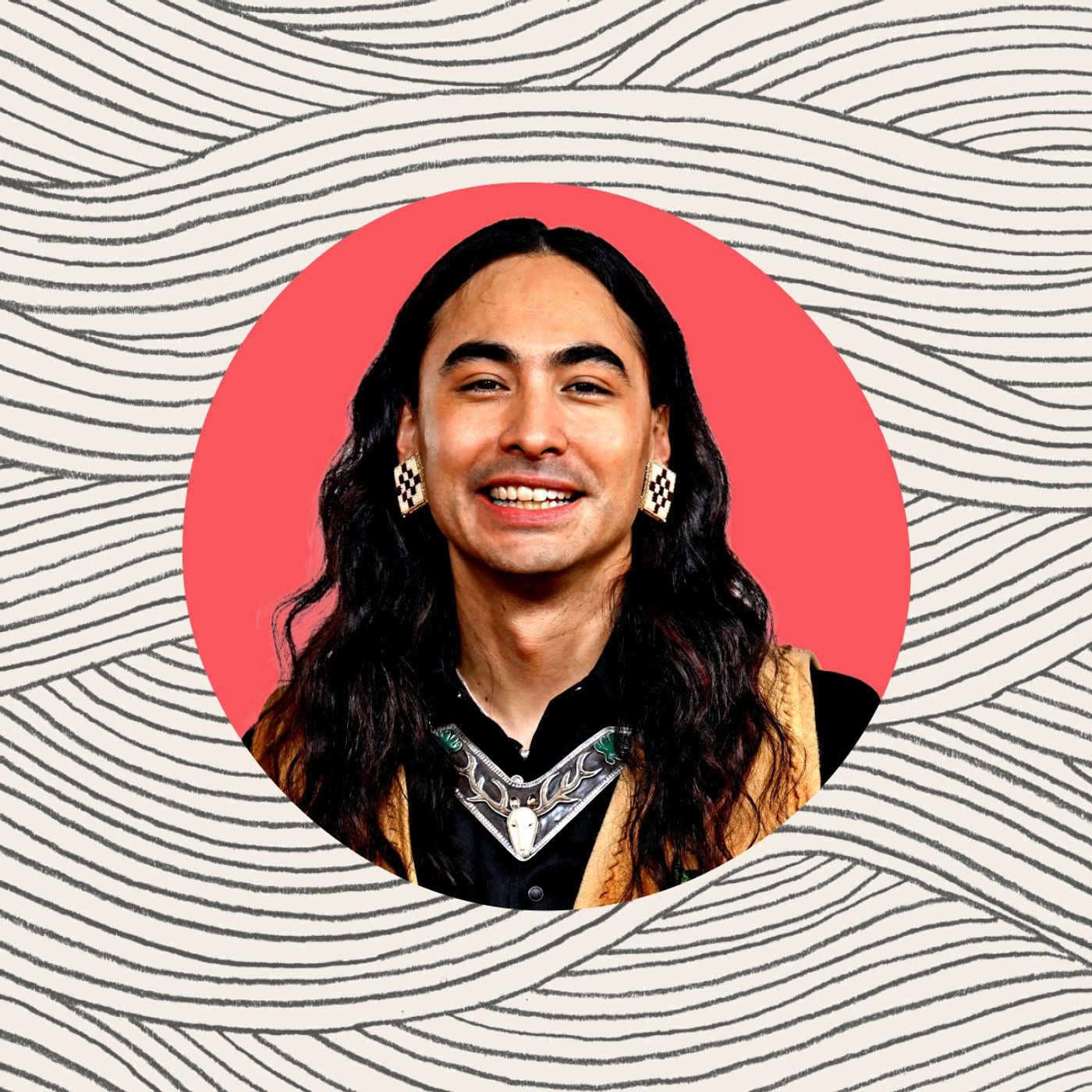
Modern Love
How Getting Stoned With My Dad Helped Us Heal
00:44:23
Growing up, Julian Brave NoiseCat’s father, Ed Archie NoiseCat, wasn’t around much. Other than the occasional ride to hockey practice from his dad, Julian mostly remembers the legends about him. Ed is an artist, famous for his wood carvings and larger-than-life stories. Julian remembers seeing him on the cover of Native Peoples magazine and hearing about his escapades driving across the country. What Julian could never understand, however, was why his dad couldn’t just be his dad, and be there consistently. For years, Julian didn’t have much contact with his father, but when he was 28, he decided to change that. He was working on the documentary “Sugarcane,” later nominated for an Academy Award, and writing his book, “We Survived the Night,” published last year. Both projects deeply involved his father and their family’s history. So Julian moved into his dad’s house. During the day, he would research and write, and at night, he would hang out with his father, playing “bong-hit Scr...
Loading summary
Transcript116 lines
- [00:00]
Podcast Narrator
This podcast is supported by OnlyFantasy on Audible. From the earliest days of the Internet, people have shared content online. But then came a platform that promised to put creators in charge of their own destiny. While you've heard of OnlyFans and its creators, Only Fantasy is here to challenge what you think you know about the platform. In this new investigative podcast, journalist Leon Nayfak teams up with comedian and OnlyFans creator Gracie Kanan for a one of a kind exploration into the current state of human connection. Listen to Only Fantasy wherever you get your podcasts or binge all episodes ad free right now only on Audible. Start your Audible subscription in the Audible app or on Apple Podcasts.
- [00:37]
Anna Martin
Love now and did you fall in love last fella?
- [00:40]
Julian Brave NoiseCat
I love love but stronger than anything
- [00:42]
Anna Martin
you love for the love love can I love you more than anything there's
- [00:47]
Julian Brave NoiseCat
love love
- [00:50]
Anna Martin
from the New York Times, I'm Anna Martin. This is Modern Love. And it's Father's Day this week. Like with many holidays, there's a greeting card version of Father's Day, right? You're grilling together, you're going fishing together, you're fixing a car, you're being taught how to tie a tie. But of course, there's the real version of having a dad. A lot of people grew up with dads who might have been tough to be around or tough to understand. Some people grew up with dads who just weren't around. That was the case for writer and filmmaker Julian Brave NoiseCat. He grew up with a dad like that. His father was this big deal native artist, this larger than life guy, but he also had a way of just kind of disappearing. And Julian didn't understand why his old man couldn't just show up and do the dad thing. Then Julian grew up. He became a writer and a filmmaker. His documentary Sugarcane got nominated for an Oscar. And through his work, he started looking for answers to all these questions he had about his dad, about their relationship, about the painful history that made his dad pull away. Julian just wrote about his father for the New York Times Magazine in a piece called How Getting Stoned with My Dad Helped Helped Us Heal. And when I reached out to him about the story, it turned out Julian was about to become a dad himself. And he was kind of freaking out about it. So I knew this was the perfect time to talk to him. Julian Brave NoiseCat, welcome to modern Love.
- [02:18]
Julian Brave NoiseCat
Thanks so much for having me, Anna.
- [02:20]
Anna Martin
Julian, you wrote an essay in the New York Times Magazine that I'm very excited to talk to you about. It's about nights you spent smoking weed with your dad and how healing that was. I wanna start off just by asking, what is it like to smoke weed with your dad? This is something I cannot even imagine doing with my own father. If he's listening.
- [02:42]
Julian Brave NoiseCat
My dad is a good hang. You could say a lot of things about my old man, but he is definitely a good hang. First of all, he's my pusher man. I won't claim that I don't smoke weed without my dad. I mean, I discovered this morning on the way to this inter that I had a pack of pre rolls in my pocket. So, you know, little pot calling the kettle black here. But he's a lot of fun. Like he, one of the things we like to do is we like to play games. He's big on.
- [03:15]
Anna Martin
Wow.
- [03:15]
Julian Brave NoiseCat
High Wylstone. Yeah. So he invents games and you know,
- [03:21]
Anna Martin
what are we talking about? Are these like, what are these games?
- [03:25]
Julian Brave NoiseCat
There's one in particular that has stuck around. It's called Bong Hit Scrabble. So you got your tiles in front of you. You know, you're trying to figure out words to spell with the tiles to make the most points. So you're doing math, you're doing spelling, you know, and then you're, you're playing your tiles and then when you're done, you gotta take the glass bong, pack a bowl, put your lips to the bong.
- [03:54]
Anna Martin
I'm loving the step by step. Uh huh.
- [03:59]
Julian Brave NoiseCat
And you get that nice gurgle, the bong gurgle sound. Yes you do.
- [04:02]
Anna Martin
Not that I know the water going through there. I mean, let me, let me ask you this. It's like Bong hit Scrabble. Again, not a game I've, I've played, at least in that iteration. Seems like it'd be very difficult as the night would wear on. Do you remember like the best word either you or your dad have gotten while playing Bong hit Scrabble?
- [04:25]
Julian Brave NoiseCat
Well, here's the thing, is that the words become less dictionary word as you go. My dad once famously played Slopify.
- [04:38]
Anna Martin
Oh my God, I love that.
- [04:39]
Julian Brave NoiseCat
It's not actually a word, but it should be a word. Maybe if Merriam Webster is listening.
- [04:44]
Anna Martin
What about your best word? Do you remember your sort of crowning achievement?
- [04:48]
Julian Brave NoiseCat
See this is the thing, is that my lore pales in comparison to my father's lore, which is I think a central problem of fathers and sons. We were always trying to catch up to our dad's legend.
- [05:00]
Anna Martin
Why were these nights with your dad so meaningful? To you?
- [05:05]
Julian Brave NoiseCat
Well, you know, I think that to zoom out here, I didn't grow up with my dad. You know, he left when I was 6, 7. You know, the backstory to all this is that my dad grew up on Indian reserve in British Columbia called Canem Lake. Pretty small, decently remote. He was born at an Indian residential school, a school designed to, in the words of one of their architects, get rid of the Indian problem. The idea was that Native culture was backwards, was leading us to the devil, so to speak, was making us bad capitalists. And so they had to assimilate us into Christianity and into the broader dominant society. And, you know, one of the impacts of not allowing a whole race of people to raise their own kids is, you know, eventually kind of unlearn how to do it. And so when my dad became a dad, he. He didn't really know how to be a father. To. To me, I was his firstborn kid. And he struggled with alcoholism, so he, you know, surprised we're talking about substances. My dad. My dad had history with substances. We kind of all did. And, yeah, so he. He peaced out. And to rebuild that relationship, I moved back in with him when I was 28 years old. And major way in which we bonded would be at the end of the night. We would play games and get stoned, tell stories.
- [06:48]
Anna Martin
Let's talk a bit more about your dad and paint a sort of even more vivid picture of him beyond the Scrabble of it all. If I saw your dad walking down the street, how would I know it was him? And let's say his full name, too, because I'm realizing we're just calling him dad.
- [07:04]
Julian Brave NoiseCat
His full name is Edwin Archie Noise Cat. He's gonna be annoyed that I said Edwin, so I'll just say Ed Archie Noise Cat. Yeah, he's. I mean, this is kind of a contradiction in terms because there aren't really any famous Indian artists. I mean, I d. You to name one, but he was. To the extent that there was such a thing as a famous Indian artist, my dad was a famous Indian artist. When I was a kid, I remember he was pictured on the COVID of Native People's magazine with a backwards kangal hat and purple rockstar shades. Like, he was, you know, he was a little bit of an icon.
- [07:38]
Anna Martin
Was that, like, an everyday look for him, or was that just for the COVID of the magazine?
- [07:43]
Julian Brave NoiseCat
My dad is still a bit of a style icon, to be completely real with you. One time, not that long ago, I remember we went out to, like, get pancakes together. And there was a table of, like, Gen Z dudes, you know, like kids, like, decidedly younger than me. Sure. At this table. And my dad walked in, he was wearing a bucket hat. And like, literally these like 20 year olds, if they were even that old, were like, sick. Bucket hat dude. And I'm just standing next to this old man, just like, well, he's not old, but, you know, my old man being like, come on.
- [08:21]
Anna Martin
This says a lot. Not just about the look, but to me, about the charisma, the pull.
- [08:26]
Julian Brave NoiseCat
He's got the riz, as they say. He's got the riz.
- [08:30]
Anna Martin
When you were growing up, when you were like a kid, you said your dad left around six or seven. I want to know, like, in those years after he left and didn't live with you anymore, how much did you see your dad? Did he show up when he said he would? Like, what were those interactions like, and how did you feel about them?
- [08:48]
Julian Brave NoiseCat
Yeah, my dad was. Was kind of with the wind. You know, he would not show up very often. There were some years where I maybe saw him once or twice. There were some years I didn't really see him at all. He gave up all custody to me. Like, you know, I remember on visitation days or when I'd get to see him, I would watch him go until I couldn't, you know, until he was literally out of sight. Right. Like, I would keep my eyes on him as long as I possibly could because, you know, I think underlying that was a question of when I would see him again and then, you know, also possible, but not one that I like to acknowledge very often, you know, whether I would see him again. But at the same time, my mom would give him opportunities to kind of perform the role of a father, I guess would be the way to put it. You know, like, there were some hockey tournaments and things. You know, we're Canadian, so I'm a hockey player. And when I was a kid, there maybe would be like a hockey tournament weekend where my dad would take me to the hockey tournament. So there was one weekend I remember when I was like 12 years old, I was playing on a peewee all star team, but from like, the Bay Area. Let's not get too excited here. This is not. We're not talking about, like, Toronto or.
- [10:06]
Anna Martin
Okay, understood. Understood.
- [10:07]
Julian Brave NoiseCat
Yeah, I'm a pretty good hockey player, but I'm not nothing to write home. And so, you know, we were playing in Anaheim and it was my dad's weekend to take me. And at the time, he. I remember distinctly, he was super Into Mike Jones, the. The rapper from Houston, you know, so you gotta imagine like, little kid with his dad who's not really present, and like, Mike Jones is rapping. Back then, host didn't want me now, you know what I mean? Like, just in case people don't remember Mike Jones.
- [10:37]
Anna Martin
Thank you.
- [10:38]
Julian Brave NoiseCat
And on top of that, he's speeding a lot. My dad is a road warrior. My dad has put probably more miles on cars than 99% of the population. He's driven all over North America. And he doesn't do this as much anymore, but he used to drive like a maniac. And he had all kinds of unpaid speeding tickets all across the continent to prove it. And so he was driving around way too fast listening to Mike Jones. And I asked him, I was like, aren't you worried that, like, the cops are gonna stop you or something? And he told me, and like, you know, straight face, like he fully. He fully, like, means what he says. He says, son, I have Crazy Horse medicine. The cops can't see me, they can't catch me. Which, like, by the way, Crazy Horse, in case people don't aren't totally familiar, he was a famous Oglala Lakota warrior and. And leader. He fought the United States also pretty famously. After he turned himself in, he was stabbed in the back with a bayonet. So he. He actually was. He was caught.
- [11:52]
Anna Martin
Okay. So that. It did kind of fell down upon further examination. But the, the sentiment that your dad was saying was, how did you understand as a 12 year old? I mean, it's such. I. It's really vivid. I can see this. You're like looking over at your dad. You're speeding down the highway. He's saying this to you. What was he communicating?
- [12:08]
Julian Brave NoiseCat
I think that he was communicating that he was a legendary, you know, mythic kind of trickster figure, you know, and to be honest with you, like, maybe he is. I don't know, you know, like, he did. He has defied death like, more times than I could count, more times than he can remember. You know, like he. He's gotten out of countless run ins with the law, you know, like, this is a. This is a man who. Maybe he does have Crazy Horse medicine. I mean, I will say when he said that he had Crazy Horse medicine, I didn't fully not believe him. You know, like, I know that my dad is full of shit, but at the same time, you know, yeah, something
- [12:59]
Anna Martin
about it was resonant or rang true. These were the moments, it seems pretty few and far between that you spent with Your dad. And it seems like he would make deep impressions during those times and then leave again. How did you and your mom talk about your dad when he wasn't there?
- [13:18]
Julian Brave NoiseCat
Yeah, you know, my dad managed to be the main. A main character in my life despite, you know, not making most of the scenes. You know, I. I remember When I was 12, my mom was driving me back from hockey practice and she said, I don't really remember exactly how the conversation led up to this, but she said, you know, you have to be prepared for the real possibility that your father might die. You know, I was 12 years old when my mother said that to me. And you know, that was a real. That was a real place where his. His road was potentially leading him. You know, my dad was a alcoholic. He was drinking back in those days and there's a. Hopefully was. But you know, a pretty significant self destructive streak in him. And you know, at various moments in his life, he has himself like really struggled with whether he wants to be here. You know, right around that time was the time that he took on the cops in Red Lodge, Montana. Cops pulled him over and, you know, he was like, fed up with life and all that sort of stuff. And they like had to tase him twice to get him to go down because, you know, he's a pretty hefty man. I mean, you know, what he tells me is that like he. The crazy horse metaphor for that one actually maybe makes more sense because, you know, I think part of what he was chasing down there was some sort of. I don't know if suicide by cops is quite right, but like reckoning via
- [14:50]
Anna Martin
cops, you know, when your mom said that, prepare for the possibility that your dad might die. When you thought about a world in which your dad was no longer alive, what was that world like? Could you even contemplate that or imagine it? The emotions surrounding that potential?
- [15:13]
Julian Brave NoiseCat
Despite not having my dad around and carrying that wound with me, I never really believed that he was gonna die in part because I believed him when he said he had Crazy Horse medicine. I believed that he had some sort of magic in him, for lack of a better way of putting this, that helped him survive, that helped him, you know, get through all these crazy situations that he found himself in that he often put himself in.
- [15:51]
Anna Martin
Did you have any. It seems like there was an admiration for your dad, sort of his otherworldly qualities. Did you want to be like him in certain ways?
- [16:06]
Julian Brave NoiseCat
When I was little, I definitely wanted to be like him. You know, I mean, the, the first thing is that my Dad's a carver. And the thing about carving is that it is traditionally an art form that is passed father to son. And so when I was little, there was some expectation, maybe not my own, but of people around that, like, my dad would put carving tools in my hand, and I would learn how to be an artist like him. I had all these memories, especially of when I was little, before he left, of, like, you know, being his little sidekick. Like, you know, when I was a little guy, people would call me like a Mini Ed, and he'd throw me in the van and we'd go to these. You know, he'd turn on the land before time on the VHS in the back seat, and, you know, we'd drive around the country to art shows and stuff. Like, it was a. It was kind of like a mythical little childhood experience. It's an interesting thing. Like, on the one hand, like, you aspire to be like your dad when you're. When you're little. And then I think a very natural thing that happens, whether or not your parent is present or not, is then you've, like, kind of in your adolescence, want to be nothing like you're swing
- [17:23]
Anna Martin
the exact other way.
- [17:25]
Julian Brave NoiseCat
Yeah.
- [17:25]
Sponsor/Advertisement Voice
Yeah. Huh.
- [17:27]
Julian Brave NoiseCat
And so, you know, my dad, by the time I was, like, 11, 12, 13, he was my model of who I did not want.
- [17:38]
Anna Martin
Tell me more about that. I'm interested in that switch.
- [17:43]
Julian Brave NoiseCat
Well, you know, I think that on the one hand, you know, like, my dad, he was this incredible, like, native artist guy who clearly had a lot of talent. And I think that the thing that I saw, I was just like, man, you know, you have all this talent, but, like, you keep getting in your own way because you have all this stuff that you haven't, you know, dealt with. And the most obvious one was, was the drinking. So, you know, I. From a young age, I understood my father was an alcoholic, and I really, really didn't want to become an alcoholic. You know, like, I know that there's a lot of stereotypes around native people and alcohol, and I don't want to play into those too much. But, like, it is also a very real thing that lots of my family, myself included, have. Have struggled with. And it was definitely an Achilles heel for my father. You know, he wasn't a present father. I mean, obviously, like, the biggest thing was, like, I. I wanted to not be the same kind of dad that he was someday. Like, you know, I think that's the biggest fear also is, like, the thing about having a father figure like this is, like, they're I mean, maybe it's all of our fathers, but like you know you it is parts of you worry that someday you will just repeat all these mistakes that you see so plainly as mistakes you know, because like you know, this man is also half of my genetics.
- [19:10]
Anna Martin
We'll be right back.
- [19:17]
Podcast Narrator
This podcast is supported by OnlyFantasy on Audible. From the earliest days of the Internet, people have shared content online, but then came a platform that promised to put creators in charge of their own destiny. While you've heard of OnlyFans and its creators, OnlyFantasy is here to challenge what you think you know about the platform. In this new investigative podcast, journalist Leon Nayfak teams up with comedian and OnlyFans creator Gracie Kanan for a one of a kind exploration into the current state of human connection. Listen to Only Fantasy wherever you get your podcasts or binge all episodes ad free right now only on Audible. Start your Audible subscription in the Audible app or on Apple Podcasts.
- [19:52]
Sponsor/Advertisement Voice
This message is brought to you by Apple Card Spring always feels like a reset, clearing things out, simplifying what you don't need. Apple Card is built with that same idea in no annual fee, no late fees and no foreign transaction fees. No fees, period. Get started and apply in the Wallet app on your iPhone today. Subject to credit approval. Variable APRs for Apple Card range from 17.49% to 27.74% based on creditworthiness rates as of January 1, 2026. Existing customers can view their Variable APR in the Wallet app or@carr.apple.com Apple card issued by Goldman Sachs Bank USA Salt Lake City branch terms and more at
- [20:27]
Podcast Narrator
applecard.com Losing weight is one thing, but keeping it off, that's where it gets really frustrating. That's why Weight Loss by Hers now offers access to the FDA approved Wegovy pill and the FDA approved Wegovy pen. Wegovy is designed to help you lose weight and keep it off. Ready to reach your goals? Visit fourhers.com modernlove to get personalized, affordable care that gets you that's F o r h E-R-S.com ModernLove Weight loss by hers is not available in all 50 states. WeGovy is the registered trademark of Novo Nordisks. To get started and learn more, including important safety information, WeGovy clinical study information and restrictions, visit4HERS.com.
- [21:13]
Anna Martin
When you were a kid or then a teenager, did you ever think your dad would become a bigger, more present part of your life?
- [21:24]
Julian Brave NoiseCat
No, I, I, I kind of thought that, well, There was at 16. I remember distinctly. I called him up and I kind of told him off for all the stuff.
- [21:41]
Sponsor/Advertisement Voice
Huh.
- [21:41]
Julian Brave NoiseCat
You know.
- [21:41]
Anna Martin
Wow, okay. What was that like? Did you plan it in advance or did it just come rushing out?
- [21:46]
Julian Brave NoiseCat
No, I think it probably kind of came rushing out with the hormones and everything else. You know, I saw by then pretty plainly the pain that it had caused me, and I, you know, felt that he should.
- [22:00]
Sponsor/Advertisement Voice
What did you say?
- [22:01]
Anna Martin
If you don't mind sharing some of it.
- [22:03]
Julian Brave NoiseCat
Do you remember? I don't really remember. I remember crying pretty hard and, you know, just telling him that, like, I was angry that he left and why did he have to leave and, you know, left me with the most painful thing that I'd ever dealt with. And, you know, like, I don't actually remember a lot of these things, but my mom, you know, says that, like, after my dad left for the last time when I was a little kid, like, and said he was moving to Santa Fe, New Mexico, peace and out after they divorced and all that, that I, like, wailed and that I was inconsol, you know, I don't actually remember that, but probably for, for preservation reasons. But, you know, like, these things, they, they, they really hurt. And, you know, I tried to convey to him that. But the thing about, I mean, you know, this is the thing that's so tricky about my dad too, is like, survival becomes its own kind of justification in a certain way. You know, like, he's been through so much. He really lived like a, a life that was a lot harder than mine when I was a kid. Like, I don't want to overstate my, you know, middle class daddy problems. Like, you know, my dad, like, like they didn't have running water on the Cannon Lake Indian Reserve when my dad was a kid. You know, like, there was really bad stuff happening all around. Like, he dealt with things that I thankfully never had to deal with.
- [23:32]
Podcast Narrator
Hmm.
- [23:34]
Anna Martin
Let's talk about why you decided to move back in with your father, because it relates to all of this. How old were you when you decided you hadn't lived with him since you were 6 or 7? And now at what age do you decide to move in with him?
- [23:48]
Julian Brave NoiseCat
So it was November of 2021 that I technically switched my residence. I was 28 years old. I had been living on the east coast for the prior decade of my life, pretty much, you know, for college and then for my career. And in 2021, there was a discovery of 215 potential unmarked graves at an Indian residential school in Canada in Kamloops and it was like an international news event. I had set out to write a book and also to co direct a documentary. The documentary was pretty SC Squarely focused on the Indian residential schools. The book is. It touches on the residential schools, but it's more broadly about my dad and about native identity, Natives across the continent. And I understood that both projects would have a lot to do with him. And so I decided, like, you know, might as well get as close to your subject as you possibly can. So, yeah, I moved in with him.
- [24:49]
Anna Martin
Were you nervous about that?
- [24:52]
Julian Brave NoiseCat
Yeah, I had no clue how it was gonna go. Obviously, the hope was that we would figure out stuff, you know, we would both learn stuff about his story and our story. You know, my dad didn't actually know really much about the story of his birth. There was kind of a rumor that he was born in Williams Lake and found in a dumpster. That was the version of the story that I had heard before him. And I had never really talked about it. And that was, you know, true for a lot of people. That was how our people survived, you know, was. By not. I think that's a very normal thing, not talking about the stuff that you've been through. And, you know, my dad was. Was similar. He didn't really know about the circumstances around his birth. He didn't want to look at it, didn't want to think about it, didn't want to talk about it. And then there was this discovery of all these potential unmarked graves at these schools. And, you know, when you have some inkling that you were born and then found in a dumpster, you immediately identify with those. Those dead kids. You know, he was like, that could have been me. And, you know, I think we all were like, holy crap. Like, you know, that never really registers until something like that or never really had registered, like, oh, my God, like, my dad could have been one of those kids. And so I think it. It led to him wanting to understand, you know, what happened, like, how. What were these schools and all these sorts of questions. And I think the hope was to answer some questions about his relationship to the schools, because he had this sort of question mark around his birth and his first years and his childhood and then how that had impacted me and his life, and also to create the opportunity for us to have a real meaningful relationship, to heal those wounds a little bit.
- [26:46]
Anna Martin
I mean, I want to make sure that we. There's this incredibly powerful scene in your documentary that you were working on when you were living with your dad, where he reads a newspaper article for the first time, it seems on camera, that tells more about his story. Can you share what else your father and you learned about that origin story through the process of making this work?
- [27:13]
Julian Brave NoiseCat
Yeah. My dad was born at St. Joseph's Mission. He's the son of my ka, my grandmother, and my Pa', a, who is no longer with us. My ka' a hid the pregnancy because they weren't married. And there's a big thing at the time, especially in Catholicism, about unwed children.
- [27:35]
Anna Martin
She was at the residential school when she was pregnant.
- [27:37]
Julian Brave NoiseCat
Your grandmother, she was actually working as a nurse, but she had gone to the residential school and then. So she went back to the residential school under circumstances that we still don't really fully understand, and then delivered the baby. And after the baby was delivered, it was found in the trash incinerator. I kind of doubt that she picked the baby up and walked it to the trash incinerator. So there's a big question of. Yeah. How that all went down. The baby was described as baby X in the Williams Lake Tribune. That was my father. And interestingly, even at the time, this was 1959, August 16, 1959, is the day of my dad's birth. Even in the conservative small town Williams Lake Tribune, at the time, they were asking questions, damning questions, about what sorts of procedures and policies and practices at this institution might lead a young mother to put a baby in trash incinerator. And as we were making sugarcane, we discovered that my father was not the only reported incident of this. So there was a pattern of infanticide at this school. And, you know, I think the part that's hardest about it is that it gets at not just the bad things that happened to us at these schools, which were numerous. You know, like there was rampant sexual abuse at St. Joseph's Mission. In fact, the first criminal cases for sexual abuse of clergy against children at schools came out of the St. Joseph's Mission in Williams Lake. It's, you know, it was bad. What happened to us was really, really bad. And the part about it that's. That sometimes is even harder to talk about is what that then did within our own community and family context. You know, so kids who were taken away, who were abandoned when they were kids, you know, turned around and they didn't really know how to be parents. Right. Like, because they weren't raised by their own parents. And, you know, unfortun, kids who suffered violence at the hands of priests and staff, clergy, sometimes they turned around and became violent. Kids who were abused, you know, turned around and abused that's the cycle that our communities, our families, found themselves caught in. And, you know, the same was true for my dad. He was abandoned when he was a kid and found in the trash incinerator. You know, he dealt with, like, sexual abuse and all kinds of different, like, awful stuff just all over the place. And, you know, he didn't know how to be a dad when he came around to his time to be a dad. And so we were, you know, trying to figure out that story and how to tell it and then also how to hopefully, you know, change the ending, right? Like, stitch our families, our communities, back together.
- [30:30]
Anna Martin
Thank you for sharing that. I mean, it's. It's. When you watch your documentary, uc. But I also want to ask, you know, you're living with your father as you're discovering his story, the broader pattern, many victims, the sort of ripple effects of these schools, which, as you're pointing out, is not unintentional. Right. What was it like to talk to your father as he was understanding himself even more? What were your conversations like?
- [31:00]
Julian Brave NoiseCat
I mean, we would get stoned.
- [31:03]
Sponsor/Advertisement Voice
I know, I know.
- [31:04]
Julian Brave NoiseCat
Yeah. Yeah. You know, I mean, so what we would do is he would be out in his. In the garage that doubled as his carving studio during the day, making his art. I would be, you know, hunched over my laptop, figuring out how to write a book and make a documentary during the day. And just as a total aside, like, you know, yet another point of envy for me with my father is that his creative process is a lot cooler than mine.
- [31:31]
Anna Martin
Like, you know, you're two artists, but there's a very different.
- [31:34]
Julian Brave NoiseCat
There's a big difference. And he always gets to be cooler for whatever reason, you know, like, so when he's out there making his art, he's, like, leaned over a log, adding away, you know, to the baseline of Led Zeppelin. You know, of course, taking rips from the bong every few minutes.
- [31:50]
Anna Martin
Totally.
- [31:51]
Julian Brave NoiseCat
Like, when he's making his art, it's like a. It's a vibe out there. It's like a music. Music video. It's physical. Like, you. You want to hang out. Like, he's a. When he's making art, he's also a great hang, you know, whereas, you know, a writer, you're just kind of, like, hunched over a laptop with terrible posture and nobody can talk or hang out with you. Like, you know, you have to be locked in. And, you know, as an aside, while I was doing that, I. I came across because, you know, our culture was nearly killed off by these schools. So, you Know, we have more than a lot of other indigenous communities, but we also lost a lot. And one things that we lost was a lot of our oral history and our people. We used to tell stories about our first ancestor, the trickster coyote, who was this sort of patriarch figure from the beginning of time who made the world, was sent to the earth by creators, set things in order, but was a trickster. And so he messed a lot of stuff up. So, like, you know, while he filled the river with salmon, he also used those salmon to try to marry into every single village along the river that would have him. And then after having all these kids, he abandoned them and all this sort of stuff.
- [32:53]
Anna Martin
Stuff.
- [32:54]
Julian Brave NoiseCat
So suffice to say, you know, I was reading about my first ancestor, this epic creator, destroyer, survivor, deadbeat dad, the coyote. And, you know, then I was, like, looking out at the carving studio at my own, you know, epic creator, destroyer, survivor, deadbeat dad. And I was looking back at the text and out of the carving studio, back the text, and, you know, kind of hit me. I was like, oh, my God. Like, my ancestors were talking about men like my father. My father is the trickster coyote or my creator. And so just as an aside, you know, like, maybe there's, like, just an element of this in us that has been there from the beginning of time that our own people have been trying to point out and telling us to be careful with.
- [33:40]
Anna Martin
Can I also say, though, you're saying as an aside, but to me, this feels like kind of an essential. I mean, you tell me. I don't know if it's a shift is the right way to put it, but that understanding of your father that clicked in that moment feels important, right? Like, it feels like you'd gone from this understanding that you had when you weren't seeing him as much as this person who you really didn't want to be like. And I'm not saying you. You changed that when you were living with him, but it seems like something made sense in that moment for you.
- [34:08]
Julian Brave NoiseCat
What I would say that was really interesting about it to me is that it gave me a language and a narrative and a character to put into my father that helped me explain all these things and feelings and thoughts that I'd already had about him, right? Like, I already understood him to be this epic creator, destroyer, trickster figure. And, you know, I think it gets that a lot, and it definitely helped me understand my own father, which is, you know, also a really beautiful thing because it also comes from my own culture, right? It was a way of me understanding my dad, that also helped me reclaim something that was lost by these schools.
- [34:46]
Anna Martin
Hmm. I mean, is there a way in which seeing your dad as this coyote figure was also kind of giving him some sort of out? Because it's like, oh, this is sort of how he. This is how he is, right? This is like how he's. How he was born to operate.
- [35:02]
Julian Brave NoiseCat
Yeah, of course. But doesn't that also just sort of deepen the truth of the whole thing, too? Like, you know. Well, you know, I think that my dad is always finding a way out. Like, he always is slipping out of the accountability and all that sort of stuff, which is also like, a very coyote kind of maneuver, I think. Like, you know, he sneaks his way out of the trap. He tricks his way out of the trap. And, you know, I think one way in which I think my dad may have ultimately tricked me is, you know, by having me turn him into this, like, legendary figure, you know, this kind of native artist dad stock character that will now exist forever in film and in literature.
- [35:41]
Anna Martin
I mean, it's just so interesting. You're learning all of this. You're so immersed in this research.
- [35:47]
Julian Brave NoiseCat
You're playing Scrabble Bong hits, Scrabble tm,
- [35:50]
Anna Martin
and you're talking about your sort of shifting understanding of your. Did your dad ever apologize in this time of living together for not being there?
- [35:58]
Julian Brave NoiseCat
No, not while we were living together. Yeah, you know, I think he. Not without reason, you know, can find justification for his behavior, his abandonment, all that sort of stuff. I mean, again, once you've been through the things that he's been through, it's pretty easy to justify a lot of different things. It wasn't until after all of it that he ever apologized, actually. So it wasn't until the book came out, and then I gave him an advanced reader copy, and he lost the first copy I gave him not to.
- [36:36]
Anna Martin
It actually feels, from what I know
- [36:37]
Julian Brave NoiseCat
of him, it's very true to form. And then I gave him another one, and then he. And then he read it, and then that was actually the very first time that he ever apologized to me.
- [36:48]
Anna Martin
Can you tell me about that?
- [36:51]
Julian Brave NoiseCat
Yeah, he. He just said that, like, he understood a lot more the pain that he had caused me, and, you know, that he was really sorry for that. And I think he also, you know, expressed how proud he was of the book as a work of art. You know, I think that there was also in all of this, the making art out of all of it is also an echo of my. My dad in a pretty significant way. I mean, like, you know, I didn't end up a carver or, you know, a visual artist in the same way that he is, but I now make my own art, which is a, you know, isn't that what all dads want? They want their sons to go be little versions of them out in the world in some way, shape or form. And so yeah, I think it was a combination of the two. I think he felt his story was honored, he felt he understood mine and my pain more. He apologized for the first time in his life and he was also proud of the art that I made.
- [37:59]
Anna Martin
We'll be right back.
- [38:17]
Podcast Narrator
This podcast is supported by Only Fantasy on Audible. From the earliest days of the Internet, people have shared content online. But then came a platform that promised to put creators in charge of their own destiny. While you've heard of OnlyFans and its creators, Only Fantasy is here to challenge what you think you know about the platform. In this new investigative podcast, journalist Leon Nayfak teams up with comedian and OnlyFans creator Gracie Kanan for a one of a kind exploration into the current state of human connection. Listen to Only Fantasy wherever you get your podcasts or binge all episodes ad free right now only on Audible. Start your Audible subscription in the Audible app or on Apple Podcasts.
- [38:52]
Sponsor/Advertisement Voice
This message is brought to you by AppleCard. Spring always feels like a reset, clearing things out, simplifying what you don't need. Apple Card is built with that same idea in mind. No annual fee, no late fees and no foreign transaction fees. No fees, period. Get started and apply in the Wallet app on your iPhone today. Subject to credit approval. Variable APRs for Apple Card range from 17.49% to 27.74% based on creditworthiness rates as of January 1, 2026. Existing customers can view their variable APR in the Wallet app or@carr.apple.com Apple card issued by Goldman Sachs Bank USA, Salt Lake City branch terms and more@applecard.com your gut isn't just about digestion. It's the command center of your whole body. New Ollie Precise probiotics are made with clinically studied strains to provide targeted benefits beyond digestive health by supporting your metabolism, skin health or stress response. Start giving your body what it needs. Shop precise probiotics with skin stress or metabolism support at your nearest Walmart. These statements have not been evaluated by the Food and Drug Administration. This product is not intended to diagnose, treat, cure or prevent any disease.
- [40:05]
Anna Martin
Julian I happen to know that you are going to become a dad yourself very soon. Congratulations. I mean, this is big.
- [40:16]
Julian Brave NoiseCat
Yeah, thank you. It's big. Big of an understatement. It feels like, you know, the roller coaster of life is about to just take off. And the crazy thing about all of it is, you know, I spent the last five years of my life now telling stories about my father, reconciling with him in my own life, living with him. And my dad was born in 1959. I was born in 1993. He was 33 when I was born. And it's 20, 26. I just turned 33. I am becoming a dad at the same age that my father became my dad. And I'm on top of that also having a son. So, you know, maybe there is something to all the, like, magic coyote story, all that sort of stuff. This is one of my things running through my work. You know, like, they make us Indians out to be like, these, like, hokey hocus pocus, like, you know, crystals and sage and all this sort of stuff. Stuff. And like, I don't know, man. Like, we've been here for thousands of years. Maybe there's a little bit of truth in our stories. Like, maybe we're not full of it.
- [41:23]
Anna Martin
You're gonna have a son. You're going to have a son the same age your father was when he had you. Did you always want to be a dad? Was this something that was a long standing desire of yours or a dream?
- [41:35]
Julian Brave NoiseCat
I did, yeah. I mean, you know, at the same time as I have always been really scared that I. This is all future tense now, because obvious, obviously, kids not here. But, like, you know, I. I want to. I wanted. I always wanted to become a dad so that I could have an opportunity to, you know, get it right, you know, Like, I'm sure I'm gonna make a lot of mistakes, but, like, the hope, obviously, is, like, with each generation, we make a few fewer mistakes than the last generation, you know, and like, over time, hopefully, like, we. We. We bring our people back from the genocide, you know, like, that's the. That's the mission.
- [42:12]
Anna Martin
Of course. What kind of dad do you hope to be?
- [42:17]
Julian Brave NoiseCat
I want to be a good dad. You know, I want to have the magical relationship that, you know, I remember having with my own dad when I was little, minus, you know, the. Minus the misadventures. You know, I want to do all sorts of cultural stuff with my kid. I hope he is a dancer like me. You know, I'm already telling my partner that we're gonna have a little hockey player. You Know, I hope that he's an artist, too. Like, you know, my father's an artist. I tell stories and make art in my own kind of way. My partner, you know, makes beadwork and sews and all that sort of stuff. There's a lot of creativity in both of our families. So, you know, I hope that he. You know, one thing that I always wish I had the opportunity to do was, like, sit there with my dad and learn how to carve. And my dad is still carving, still making his, and hopefully will be for, you know, some more time. So I. I have this real hope, this real dream that someday I'll get to bring my son into the studio and sit him down next to his ed and put a little carving knife in his hand, see if we'll have a little carver. Maybe it skips a generation, you know.
- [43:36]
Anna Martin
Can I ask what you're scared for?
- [43:39]
Julian Brave NoiseCat
Yeah. I mean, you know, I'm. I'm. I'm really scared that I'll make the same mistakes as my dad. You know, Like, I'm. I'm scared that I will mess things up in my. In my family life and won't be able to be present for him. That I. Yeah, that, you know, that. That. That these cycles which I see repeating around me all over the place, you know, that. That. That they might repeat with me in certain ways. I mean, I think that's a really big fear.
- [44:09]
Anna Martin
When you have that fear, how do you respond to it or counter it? What do you say back to it?
- [44:19]
Julian Brave NoiseCat
I usually take out a pre roll,
- [44:25]
Sponsor/Advertisement Voice
Dude.
- [44:27]
Julian Brave NoiseCat
I usually, you know, pack a bowl, you know. You know, I also try to. Try to look at the fullness of the story with my own father. You know, like, I think that at a certain moment in time, my belief was that, you know, my story of my relationship to father would always be one of brokenness and pain to a certain degree. But now it's a story of love and repair, you know, like this. This man who was not present for me, who, you know, another hockey stories, he left me in a hotel room in Las Vegas, which was very illegal for a weekend, and, you know, bounced to Indiana to go to an art show, you know, like that our story included stuff like that. And, you know, that it also has now included us becoming best friends and, you know, even making art together and living under the same roof and having a great time, you know, making some little coyote trickster adventures of our own in a beautiful way. And, yeah, you know, I'm sure I'm gonna make mistakes like hopefully nothing as egregious as my old man, but, you know, I'm sure I'll make mistakes, but, like, it's very possible to. To live a full life with a full relationship, even when there's some messiness in the mix.
- [45:59]
Anna Martin
What kind of grandparent do you think your dad's gonna be?
- [46:02]
Julian Brave NoiseCat
Oh, so here's the thing. I think that he's gonna be an amazing grandparent.
- [46:06]
Anna Martin
This is sort of my feelings.
- [46:07]
Julian Brave NoiseCat
I think that Pat. Yeah, that's what it is. It's gonna be so easy for him. He just needs to show up and be, you know, I mean, Ed showing up in a bucket hat to like, you know, with this carving knife. It's gonna be so cool. He's gonna kill. He's gonna. Yeah, it's. It's going to be his era. He's going to. He's going to nail it.
- [46:28]
Anna Martin
Julian, Brave Noise Cat, thank you so much for this conversation and congratulations again.
- [46:33]
Julian Brave NoiseCat
Oh, cooks chat, man. Thank you so much. It's a. Honor to talk to you. And yeah, dad stuff. It's in the air.
- [46:44]
Anna Martin
Okay, so in the time since we talked to Julian, he has become a father. His son, Copper Alexander Martin Noisecat, was born in April of this year and he was £9. Julian calls him a little bear of a kid and says he even growls when he's hungry. Julian's dad was in the delivery room as Julian's partner Joan gave birth. And Julian says his dad was probably the most nervous of anyone there. As for the first few weeks of fatherhood, Julian tells me that the most surprising thing has been how much copper pees and poops on him. And if that doesn't say Happy Father's Day, I don't know what does. The Modern Love team is Davis Land, Elisa Gutierrez, Lynn Levy, Reva Goldberg and Sarah Curtis. This episode was produced by Davis Land. It was edited by Lynn Levy. Our mix engineer was Daniel Ramirez. Original music in this episode by Marion Lozano, Pat McCusker and Dan Powell. Dan also composed our theme music. Special thanks to Rebecca Blandon and Elena Saavedra Buckley. The Modern Love column is edited by Daniel Jones. And Mia Lee is the editor of Modern Love Projects. If you'd like to submit an essay or a tiny love story to the New York Times, we've got the instructions in our show notes. I'm Anna Martin. Thanks for listening.
- [48:22]
Sponsor/Advertisement Voice
Your gut isn't just about digestion. It's the command center of your whole body. New olly precise probiotics are made with clinically studied strains to provide targeted benefits beyond digestive health by supporting your metabolism, skin health or stress response. Start giving your body what it needs. Shop precise probiotics with skin stress or metabolism support at your nearest Walmart. These statements have not been evaluated by the Food and Drug Administration. This product is not intended to diagnose, treat, cure or prevent any disease.