← Modern Love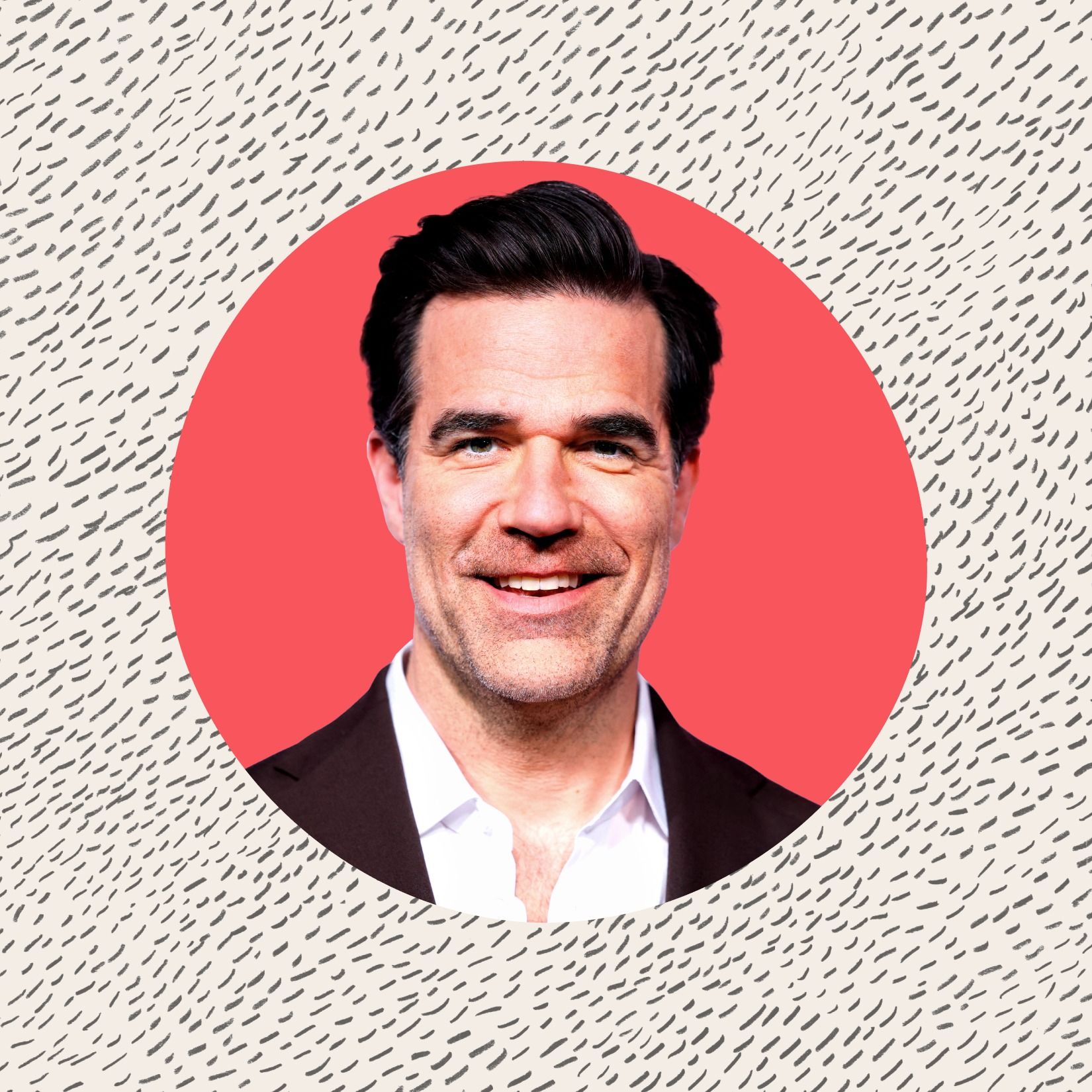
Modern Love
How to Keep Love Alive, With Rob Delaney of ‘Dying for Sex’
00:37:04
When we meet Rob Delaney’s character, “Neighbor Guy,” in FX’s limited series “Dying for Sex,” he’s scarfing down a burrito in an elevator, dripping food on his face and the floor. But Delaney’s performance reveals that under Neighbor Guy’s messy exterior is a man capable of deep vulnerability and empathy. “Dying for Sex” follows a woman named Molly, played by Michelle Williams, who is dying of cancer and desperate to experience sexual pleasure before it’s too late. At first, Molly thinks Neighbor Guy is disgusting, but the two soon discover they make sense together, sexually and emotionally. Williams and Delaney received Emmy nominations for their roles. Today, Delaney tells host Anna Martin why exposing the messy and painful parts of ourselves to other people can be rewarding and hilarious. He talks about tending his own relationship and reads a Modern Love essay about a couple who decides to try some role play to avoid getting too comfortable with each other. Here’s how to sub...
Loading summary
Transcript89 lines
- [00:00]
Intuit QuickBooks
Do you own a business that's ready to thrive? It's time to let Intuit QuickBooks take things like unpaid invoices and tracking expenses off your plate so you can take things to the next level. QuickBooks is a powerful AI driven all in one business solution that can help with day to day tasks like invoicing expenses and taxes. QuickBooks can help you unlock the growth in your business so you can get back to enjoying your business. Manage and grow your business all in one place. Intuit QuickBooks your way to money. Get 90% off for 3 months limited time only terms and conditions apply.
- [00:34]
Anna Martin
Love now and did you fall in love last?
- [00:37]
Rob Delaney
Love was stronger than anything.
- [00:39]
Anna Martin
You love love and I love you more than anything.
- [00:44]
Rob Delaney
You're still love love.
- [00:49]
Anna Martin
From the New York Times, I'm Anna Martin. This is Modern Love. My guest today is actor and writer Rob Delaney.
- [00:56]
Rob Delaney
The best thing that ever happened in my whole life was when I was a bellboy at the Hudson Hotel in New York in 2000, let's say, and I hit my head on an exit sign and nobody was around and I had a big, strong hotel umbrella and I was like, why don't I murder that exit sign?
- [01:17]
Anna Martin
As you know, our show is about the messiness that comes with getting close to other people. And Rob, he's someone who doesn't shy away from mess or pain. He finds the humor in it.
- [01:28]
Rob Delaney
And so I hit the exit sign with the umbrella and the metal exit face plate flew off like a ninja star and cut me badly on the bridge of my nose. Immediate karma. And I just was laughing and bleeding thinking, isn't that funny?
- [01:47]
Anna Martin
Like a lot of people. My first encounter with Rob Delaney was his show Catastrophe. He and Sharon Horgan created, wrote and starred in it together. And their fictional characters, who are also named Rob and Sharon, are a pretty warts and all couple on the show, including in their sex scenes.
- [02:04]
Rob Delaney
We never wanted it to be sexy. We wanted it to be, like, messy and frantic. There's like, you know, the animal need, but it's awkward. Also, watching me simulate sex with a human woman is often funny because it looks like different species, because I'm so much larger.
- [02:24]
Anna Martin
Delaney and Horgan put their characters through some of the most unromantic and I'd argue, pretty realistic, hilarious sex scenes I've ever seen on tv. But they also tackled serious subject matter like addiction, loss, and grief. While Rob was working on Catastrophe, he suffered his own loss. His son Henry, tragically died of a brain tumor at just two and a half years old. Rob wrote about losing Henry in his memoir, A Heart that Works. He said he wanted to destigmatize grief by speaking out about what he'd been through. And I'm bringing this part of his life up because knowing this added a whole other level of depth. Depth for me when I watched his performance in the FX series Dying for Sex. It's a show that takes you very close to mortality. Dying for Sex just received several Emmy nominations, including a Best Supporting Actor nomination for Rob. And Michelle Williams, who stars in the show, got a best Actress nomination. Michelle plays Molly. She's a woman with terminal cancer and she doesn't have much time left, so she goes on this mission to have all the sex and experience all the pleasure that's been sorely missing from her life. Rob plays a kind of unwitting hero, helping her discover these new dimensions of herself.
- [03:44]
Rob Delaney
Are you getting anything out of it?
- [03:47]
Anna Martin
Yeah. The way you look at me when.
- [03:50]
Rob Delaney
I give you exactly what you want. You look at me like you want me so much. Can I just say that your eyes are mesmerizing. And I know that sucks to say out loud, I'm sorry, but they are. Are you really not gonna eat these cookies? Because if you don't, I will eat all of them.
- [04:14]
Anna Martin
After the break, I talk to Rob Delaney about what we gain when we're willing to bear our true, messy selves to someone else. And he reads a Modern Love essay about a couple who tried a little role play to keep from getting too comfortable with one another. Stay with us.
- [04:36]
Intuit QuickBooks
Do you own a business that's ready to thrive? It's time to let intuit QuickBooks. Take things like unpaid invoices and tracking expenses off your plate so you can take things to the next level. QuickBooks is a powerful AI driven, all in one business solution that can help with day to day tasks like invoicing expenses and taxes. QuickBooks can help you unlock the growth in your business so you can get back to enjoying your business, manage and grow your business all in one place. Intuit QuickBooks your way to money. Get 90% off for 3 months, limited time only terms and conditions apply.
- [05:20]
Anna Martin
Rob Delaney, welcome to Modern Love.
- [05:22]
Rob Delaney
Thank you. Thank you very much.
- [05:24]
Anna Martin
Rob, I want to run something by you. I feel like you've kind of built your career on playing these charming people who are also pretty messy. And I'm talking emotionally messy, but I'm also talking sometimes physically messy. Your character in Dying for Sex you'll talk about. We meet him with burrito juice just dripping down his face. Does this Track for you. Are you drawn to mess?
- [05:49]
Rob Delaney
You know, it's gotta be due to the fact that the first thing anyone ever saw me in was a show that I co wrote and produced called Catastrophe, which was not autobiographical, but it did certainly show some real facets of my own personality. And I think people saw that. And you know how people are in Hollywood, they're like, oh, that's what he does. So they would put me in stuff, I think that showed a vulnerability and a humanity, I hope, and often a sense of humor. So I think I sort of. I was gonna say dug my own grave, but let's say made my own bed. Why don't we say that?
- [06:39]
Anna Martin
Your messy bed, although does that. Do you enjoy inhabiting that space of mess, of vulnerability?
- [06:47]
Rob Delaney
Oh, yeah, I love it.
- [06:48]
Anna Martin
What do you think is so endearing about these messy people?
- [06:53]
Rob Delaney
I think that people. There's a lot of inherent goodness in people. And when they see somebody, you know, like, for example, if a friend tells you something and it shows vulnerability or intimacy, you usually kind of get a warm feeling of support and love for that person. And you're glad that they showed that to you, you know? So I think the same thing carries over to tv, film plays, songs. You know, if somebody shows you what's really happening with them, it's kind of a gift. So I know we're inclined to be afraid to do that. And a lot of things in. I was gonna say the modern world, but I think even in olden days as well, when things were sepia, toned, there's an instinct which. It's sad that we have it or that it's. That we assume it. Cause a lot of the world teaches you to be like, hide, compartmentalize stuff. And when we resist that, and it's a daily battle, even for me, there are pretty immediate rewards. And then if you stack them on top of each other, they can really. It can become something beautiful and a better way to operate in the world.
- [08:09]
Anna Martin
I think you call it a gift, an invitation as well, for people to meet you with that same kind of vulnerability. We're talking about your characters, but I want to know, in your own life as Rob Delaney, can you give me even just a small moment where you kind of extended that invite or gave that gift to someone or received it.
- [08:27]
Rob Delaney
Okay, like to speak to whoever's editing this now. Get comfortable while I pause for up to four minutes. Well, I suppose, like, I've been sober, for example, for 23 years. And that has afforded me many opportunities over the years to show vulnerability. And thereby, I hope, help other people. You know, other people did that for me, and now I've been sober for so long and I really don't desire to drink. But now, I mean, the number of times I've said at parties when somebody offers me a drink, I'll be like, no, thank you. I have alcoholism, you know, And I'll say it loud and proud, sure, and it makes me laugh, which is very important. But also, other people hear it. And then sometimes people will talk to me and be like, so I had to lie at the liquor store the other day and say. Say I was having a party because of all the liquor I was buying, and I really don't feel good, you know, ever. And then they can talk to me about stuff like that.
- [09:36]
Anna Martin
That's a pretty remarkable thing to, like, in the middle of a buzzy party or whatever, have someone come to you and be like, I actually am strong. I mean, seriously, I think that the humor, the vulnerability clearly opens up like a space for a real connection in a way that feels rare.
- [09:51]
Rob Delaney
Well, I guess having been sober as long as I have been, I don't think it's bad to have alcoholism or addiction issues anymore, especially as I just get older. Because then you start to see, like, well, alcoholism or not, you know, life is extremely difficult and painful and unfair. And so I now know that it's really not that bad. It would be bad if I said, I don't have a drinking problem, you know, that. And if, you know, when you weren't looking, I was pouring gin into this and being like, that's fine. And then I'm going to go pick up my kids and, you know, freak out when they commit the most minor little child like, infraction. But no, I, you know, admit what I'm dealing with. And then it becomes, you know, something I can deal with and work through and live through, you know.
- [10:44]
Anna Martin
Rob, I also want to talk about your latest project, Dying for Sex. Your character, we only know him as Neighbor Guy. He's extremely messy. He leaves trash in the hall. I talked about that burrito dripping. The main character in the show, Michelle Williams, she hates him. She cannot stand him, and she tells him he's disgusting. But then this kind of remarkable thing happens. There's this shift that occurs between them. Can you talk about that?
- [11:12]
Rob Delaney
Yeah. So my character of Neighbor Guy starts out, at first, she finds him quite off putting, but then one time she chastises him in the hallway and she.
- [11:22]
Anna Martin
I love this scene.
- [11:24]
Rob Delaney
Oh, he liked that. And what do you know?
- [11:27]
Anna Martin
I liked it too, once Molly's character realizes that neighbor guy likes to be told what to do. Tell me how their relationship evolves from there. What sorts of things do they get into?
- [11:39]
Rob Delaney
Well, so it starts, you know, with, like, humiliation stuff and.
- [11:43]
Anna Martin
Just humiliation stuff.
- [11:44]
Rob Delaney
Yeah, it's just some light humiliation, but also mid grade. I mean, I don't know much about that one world, so I don't know where it falls on the scale of things, but, you know, I'd say it's maybe intermediate bdsm maybe. I'm guessing we'll fact check it. Yeah, yeah, yeah, sure. I mean, there you could do less, you could do a lot more. You know what I mean? And so it starts just as a sexual thing, but then, luckily for both of them, it really transforms into something more beautiful and, you know, genuine intimacy. And, you know, they really start to make sense as a couple who truly care about each other.
- [12:22]
Anna Martin
I want to talk about their emotional connection, but I want to linger on, as you say, the intermediate BDSM for just one second.
- [12:29]
Rob Delaney
And I suspected you'd want to.
- [12:31]
Anna Martin
Yes, you can answer this, you know, in a broad sense, in a personal sense, whatever you want. Did playing someone who discovers that they like to be sexually submissive, did it teach you anything about relationships or relationship dynamics?
- [12:47]
Rob Delaney
That's a great question that I really haven't thought about. But I think, kind of like I was saying earlier, you know, you're offering a piece of yourself to somebody in a way that is scary because there's the threat in this case that they could physically hurt you. But in any relationship, there's the threat that, oh, did I open up too fast? You know what I mean? Did I lose the advantage by uncooly expressing a feeling too early? You know, so honestly, it's almost like, easier seeming to be like, why don't you just kick me hard in that area where men usually don't like to get kicked, than to be like, hey, so, can't stop thinking about you ever. You know, like three weeks into a relationship, you know, I love that I.
- [13:52]
Anna Martin
Hadn'T thought about it from that perspective. I mean, I guess I wonder, you know, we're switching between your character and you. And of course, these are different people. One is, in fact, not a person at all, but this sort of cool veneer. Was that you in relationships? Like, were you afraid to open up in that way? Were you trying to keep the advantage, as you say?
- [14:12]
Rob Delaney
Yeah, certainly at times. Now, you know, I can't even begin this conversation without leading with the fact that my Wife and I have been together for 21 years.
- [14:26]
Anna Martin
Congratulations.
- [14:27]
Rob Delaney
Thank you. And I'm 48, so, you know, that's almost half my life. So I can remember early in our relationship, like, consciously talking. My wife and I talking about, like, taking off armor and stuff, and. And trying to operate more from our hearts than from our heads, which is a wonderful thing that love can help people do. So I definitely remember early in my relationship with my wife, like, being like, okay, relax, relax. You know, let go. And, you know, with varying degrees of success, sometimes utter abject failure and humiliation and years of pain.
- [15:15]
Anna Martin
Did you and your wife use explicitly that language? Like, take off armor? Did you use. Or was that, like.
- [15:22]
Rob Delaney
We totally did explicitly use that language. That's. And kind of laugh at it, but still found it, I think, important for ourselves because it's okay to have silly code words and catchphrases and bizarre private songs and all that stuff.
- [15:39]
Anna Martin
Well, I recommend that. We'll talk about that later. Yeah. No, I mean, I wonder sometimes in relationships, at least in my experience, there is a kind of shorthand, and I guess I wonder. I mean, this is projection of my own. But if, like, you're in a moment, do you say something like, armor? Like, is there a way that you sort of reference that as a touch point for you two?
- [15:54]
Rob Delaney
We're both pretty bad at, like, in a heated moment of being, like, you know what? Why don't we just. Hey, seems like somebody's wearing a little armor, you know, or, like, here, do you want me to help you unsheathe your. Yeah, so. But the good news. I say that as somebody who, like, I just left. I was just with my wife moments ago, and I'll go see her in a little bit. And I'm happy about both. And we're still bad at being like, you know what? Why don't we take a break?
- [16:26]
Anna Martin
I think that's great to admit.
- [16:28]
Rob Delaney
Disengaging.
- [16:29]
Anna Martin
There you go. The armor sometimes stays up. I mean, I see that happening, too, between the character of. Between Molly and Neighbor Guy and dying for sex. The armor does come down relatively quickly because it's, you know, Neighbor Guy does. It doesn't stay a sex thing. They develop this emotional connection, as you say, And Neighbor Guy realizes that Molly is sick, very sick, terminally ill. And the way your character responds to that knowledge, I think, is really surprising and affirming.
- [17:04]
Rob Delaney
The great thing, I think, about Neighbor Guy is he doesn't try to wedge his way in and become a bigger thing in Molly's life than she needs at that time, I think it's important to remember, and I think it's good to have the actor who plays Neighbor Guy be cognizant of the fact that the most important relationship in the show is between Molly and Nikki, played by Jenny Slate.
- [17:31]
Anna Martin
Best friends. Yeah.
- [17:32]
Rob Delaney
And so I think a good thing about Neighbor Guy is he doesn't try to become the star of the story. He understands that Molly has limited time on earth, and for all his flaws, he understands what it is that she needs from him, and he's willing to be that. And so that's something I like about him.
- [17:55]
Anna Martin
Yeah, me too. And he doesn't look away. Right. I mean, this is kind of, you know, psychoanalyzing a fictional character, but I assume that's part of acting. What do you think he realizes she needs from him?
- [18:09]
Rob Delaney
I mean, touch, kindness, warmth, presence, titillation, distraction. That might be. If she were to voice it, it might be something along those lines.
- [18:22]
Anna Martin
I think they also, Molly and Neighbor Guy, they sort of create their own world. So much of this show happens in hospital rooms where they share a really beautifully intimate moments together in a hospital. And it is sort of like their own bubble, their own world. Rob, the essay, the Modern Love essay you selected to read today is a fun one. It's not about dying, but I do think it relates to dying for sex in the sense that this is another couple who kind of creates their own world where their seduction of each other, their attraction to each other is sort of the only thing that matters, even just for a brief amount of time. Do you wanna say anything about this essay, why you chose it to queue us up for your reading?
- [19:09]
Rob Delaney
I chose this essay because I think it can provide a roadmap for people who are in relationships or would like to be in one. I think that these people do something in here that bodes well for their future. So there's hope in this essay, as far as I'm concerned. Mm.
- [19:31]
Anna Martin
I like that. Whenever you're ready, Rob, I'd love to hear you read this.
- [19:35]
Rob Delaney
Great. Just for tonight, pretend you don't know me by Tim Kreider. Like many couples, my girlfriend and I agree that Valentine's Day is a commercial holiday. Last year, neither of us wanted to do anything traditionally romantic, like go out for a fancy dinner. We wanted instead to do something scandalous. We had a wish list of activities we'd been gradually checking off and talked over a few possibilities. We settled on one of my suggestions. We would go to a bar that neither of us frequented, pretend to be strangers, and I would try to pick her up. We had been dating for eight months, long enough to get comfortable with each other. Getting comfortable is one of the pleasures of being in a long term relationship. Not having to put up a first date front, getting takeout and watching tv, being boring together. It's a relief not to have to be on, to feel free, to be in an unattractive mood or display one of your weird neuroses without worrying the other person will finally realize the truth about you. But this is also a hazard of relationships. You can take your partner for granted and quit trying to impress. Couples forget how to flirt or that they're attractive to anyone else and get bored with each other and themselves until the day it emerges that one of them has a whole secret life, an affair or erotic correspondence, a hidden kink, an ex of some unexpected type or gender. Neither of us was practiced at role playing. We're not into elaborate schoolgirl, professor, applicant, employer, or Princess Leia and the Hutt scenarios. We weren't going to pretend to be other people. We were going to be ourselves. In a parallel reality in which we hadn't met. We both worried that we might just feel stupid and want to quit. There was some last minute waffling. She was having a bad day and I told her we could postpone if she wasn't in the mood. But she decided to rally. We established some code words, one as a warning and another to call the whole thing off. Walking to the bar that night to meet my own girlfriend, I was nervous. I had freaked out over what to wear. Choosing a bar stool felt as fraught with possibilities and drawbacks as an opening chess move. In the end, I settled on a stool two away from a guy at the end of the bar, leaving my girlfriend the choice to sit beside either him or me. I took out the book I had brought, Nabokov's Pale Fire, whose narrator is also pretending to be someone else, and waited. When she arrived, she wounded me by taking the stool next to the other guy. I couldn't take the one next to you, she later said. That would have been too easy. She said she'd even considered sitting on the other side of the bar from me, making eyes at me from there. I have no idea how to pick someone up on the other side of a bar and would certainly have failed and disgraced myself. It's relevant to mention here that my girlfriend is voluptuous. She tired long ago of men staring at her cleavage and now dresses in severe black clothing with high necklines and austere copper accessories that look like machine parts or totemic objects. So when she slid onto her stool in a tight sleeveless shirt that clung to her breasts and bared her midriff, it had roughly the same warm, disorienting effect on me of half a Dilaudid chewed her skirt with an angled hemline that showed off her thighs, only added to the feeling. She took a book out of her purse and opened it. Also Pale Fire. We were reading it together as a winter project. The Other guy was also reading a book. It's the end of the Bar Book Club, I said as an opening gambit. Hey, other Guy said. Did you know you two are reading the same book? We both feigned surprise and the three of us got into a conversation. Other Guy's book was a collection of essays that sounded pretty good. Alarmingly, he turned out to be smart and well read, because of course New York is full of smart, well read people vying with their formidable educations and charm for mates. He was a lawyer, and not even a boring lawyer, but one who did something interesting and cool. It seemed to me that my girlfriend was talking with him more than me, and that it was by no means a foregone conclusion that I would win her. I had begun to both like and feel sorry for this guy, since he had no idea he was a supporting player in our private game and, I hoped had no actual chance with her. But I also started to hate him and want to best him in combat. My girlfriend and I had once seen two male Canada geese fighting over a female goose, squawking furiously and beating the water with their wings and grappling at each other's snaking throats with their bills because, no offense, all geese look pretty much alike. It was hard to say which goose won, the attacker or the defender, but I knew that I wanted to be the goose that ended up with the girl, not the one who flew off honking an ignominious defeat. Thank God the guy's wife eventually showed up with a colleague of hers. They were both writers for a TV show they assured us we had never seen, who got together every Tuesday night to watch the new episode. They were all interesting people. We liked them, but we also couldn't break character. We had felt self conscious and uncertain about this plan to start out with, but now that our private game had become an uncontrolled experiment involving other people, we were committed. It had gotten real. Having to maintain our pose of being strangers in front of a third party also forced us to reintroduce ourselves to ask each other so what do you do and what neighborhood do you live in? And we had to try to answer without being boring and to listen to each other's answers anew. It also kept our roleplay tethered to reality. She was forced to be more realistically flirtatious, treating me like a stranger at a bar with some wariness and respectability instead of just inviting me back to her place after one drink or having sex with me in the bathroom. Just before our three new friends left, the lawyer gave us each his card and said, I'm here every Tuesday if you want to keep our book club going. I thought it gave me a collegial guy look of good luck or congratulations. After they left, I asked my girlfriend if she would let me pay for our drinks. I was as anxious asking and as thrilled when she accepted as I would have been had I been meeting her for the first time. Let us draw the curtain of discretion over the evening's conclusion, except to say that it is a singular experience to have awkward, drunken hookup sex with your own girlfriend. This wasn't about spicing up a relationship gone stale. I'm not necessarily recommending this particular game to others. What I would recommend is what it did for us. It reminded us that despite the illusion of familiarity our months together may have fostered, my girlfriend and I are still strange to each other. Telling each other stories about our romantic and sexual pasts has something of the same effect, reminding me that she is a whole person of whom I know only, a recent and narrow sample with a long history of relationships, flings and fantasies, a whole spectrum of desire, much of which may be invisible to me. This is frightening, but also exciting. It's easy to get complacent and imagine that the narrow band your partner allows you to see, or the only one you're comfortable looking at, is all there is. In the end, our game was not just an aphrodisiac we but also a tonic, a reminder that she could, if she wanted, go home with someone else any night she wants. Although I trust her and believe that she loves me, I still have to win her once in a while. Maybe it will become a tradition for us, a ritual reminder of a perennial truth, assuming we get to do it again. But no one is guaranteed another Valentine's Day.
- [28:23]
Anna Martin
We'll be right back.
- [28:34]
Intuit QuickBooks
Do you own a business that's ready to thrive? It's time to let intuit Quickbooks take things like unpaid invoices and tracking expenses off your plate so you can take things to the next level QuickBooks is a powerful AI driven, all in one business solution that can help with day to day tasks like invoicing expenses and taxes. QuickBooks can help you unlock the growth in your business so you can get back to enjoying your business. Manage and grow your business all in one place. Intuit QuickBooks your way to money. Get 90% off for 3 months. Limited time only terms and conditions apply.
- [29:17]
Anna Martin
Thank you so much for reading that, Rob. I would love to know your immediate reaction. Was there a moment, a line that sticks out to you in particular?
- [29:27]
Rob Delaney
Well, I quite like the ending because it's not triumphant, it grapples with reality. So that's very nice. So there's a hopefulness in this essay, but also he says we're not guaranteed another Valentine's Day, which I think is great. That's true. One or both of them could be hit by buses. They could both already be dead. And, you know, it's nice of him to remind us of that fact.
- [29:54]
Anna Martin
Yeah, I think it's pretty amazing how well this adventure played out for Tim and his girlfriend. Like, they clearly felt extremely awkward going into it. They almost didn't do it. There are so many ways it could have backfired. If this was a TV show created by you, Rob Delaney, were any disaster scenarios playing out in your head? Like, what could you imagine in the show, first night?
- [30:19]
Rob Delaney
I mean, I was super nervous that it might lead to a threesome with her and the other guy.
- [30:25]
Anna Martin
Yeah, the book club.
- [30:27]
Rob Delaney
And that would have been scary. So that put a knot in my stomach because then he would have to see another man, hopefully do his best to satisfy his partner.
- [30:42]
Anna Martin
Yeah, you thought that would be kind of emotionally scary for him.
- [30:45]
Rob Delaney
Very challenging.
- [30:46]
Anna Martin
Can you imagine doing what Tim and his girlfriend did to try to win each other over again, as it were? Like, would you be able to pull something like that off?
- [30:57]
Rob Delaney
I'd really love to do it. And part of why I picked this is because I try to remain flexible, teachable, humble in my own long term relationship that I'm very grateful to have. So I think it's so cool that they did this because it's undeniably exciting and what it taught them about each other and themselves I think is really useful stuff because I can remember times in my own marriage, you know, like where I was working too much and I'd be like, but that's okay. I mean, my wife is an adult, you know, she can hand, you know, I can put our relationship on the shelf for a few months while I work on this project and that is a big, big recipe for guaranteed disaster. It doesn't matter that your partner's a grown up. It doesn't matter that they were self sufficient before they met you, you know, and could survive without you. When you're with them, you must tend to that person and that relationship as though it is, you know, it's as sensitive as, I don't know, like a garden, you know, or like milk, you know, it has to be like refrigerant. Like it's going to go bad fast if you don't pay attention to it. And so for me, and one of my favorite phrases, the currency of love is focused attention.
- [32:27]
Anna Martin
Whoa, who said that?
- [32:29]
Rob Delaney
I don't know, but that is one of the truest things I've ever heard. And so you've gotta give that attention to your partner. And so looking through a new lens at your partner is a really, really good idea.
- [32:47]
Anna Martin
Hmm, two great quotes in that answer. The currency of relationships is focused attention from unknown.
- [32:54]
Rob Delaney
The currency of love.
- [32:55]
Anna Martin
The currency of love is focused attention. And relationships are like milk, Rob Delaney. So both of those feel like very on the same level.
- [33:02]
Rob Delaney
I mean, I also said that they're like a garden, you know, but one of the. Not a California rock garden with cacti that can survive a drought, but more like a sort of a New York garden. I don't know.
- [33:16]
Anna Martin
Yeah, I mean, I love what you're saying. I want to ask you about this more. So it's like the author and his girlfriend have been together for eight months. They're starting. They're fearing that the honeymoon stage will end. Right. Which is why they engage in this project. Do you remember a moment like this that the essayist is referring to where like the sparks and the passion and the fizz of your relationship was starting to wear off and you had to confront that. Do you remember a moment like that?
- [33:46]
Rob Delaney
Yeah. I mean, it's so strange because there's seasons within a relationship and there's waxing and waning and you know, and then if children come into the picture. Yeah, I mean, for me, the sort of darkest period in our relationship was when I got swept up in some workaholism. And that had a real corrosive effect on our relationship. And it was something that I had to really consciously remedy. So I look back, you know, I'm extremely proud of our marriage and we've been through some very difficult things together. We've also been through some wonderful things, but sort of the biggest self inflicted wound was when I worked just absurd hours and thought I kind of fell into the traditional stereotypical thing like, well, all that matters is that I provide cash to this family and a roof over our heads. Beyond that, I mean, give me a break, you know? And that was sad for everybody and hard. And so my wife said, you're gonna need to change that lickety split or this won't last. And that's a promise. And I was like, oh, wow, okay. And I didn't really put up much of a fight. I was like, well, let's see what's more important, my marriage or my career? And I picked my marriage.
- [35:34]
Anna Martin
Can you tell me, in as many specifics as you want to share, what did it mean to change that? What did it mean to put your marriage first?
- [35:45]
Rob Delaney
Well, it meant a reduction in the number of hours that I devoted to work each day and each week. Curiously, my creative output became way more satisfying to me when I did that. And so that was that. And then understanding that the wellspring of energy and diligence and strength that you discover when you have children, because if you don't access it, they'll die because they'll starve, you can also find that for your partner. So I had to dig deep. And, you know, it was pretty rewarding pretty quickly because like I said earlier about the currency of love being focused attention, it yields pretty immediate results. And your partner wants you to pay attention to them. They want you to look at them and touch them and ask them how their day was and care about them. You really kind of can't go wrong telling your partner that they're beautiful, that they make you laugh, and then throw your phone in the sea, for example, and look at your partner and hold their hand and tickle them. Yeah, you should tickle each other. You should definitely do that.
- [37:03]
Anna Martin
Good.
- [37:03]
Rob Delaney
Yeah.
- [37:05]
Anna Martin
Rob Delaney, thank you for your advice to cultivate the garden of our relationships and to tickle the ones we love. I so appreciate this conversation.
- [37:13]
Rob Delaney
Thank you so much.
- [37:18]
Anna Martin
The essay Rob read today was by Tim Kreider, who's a writer and cartoonist. Tim's current project is a substack called the Loaf. The modern love team is Amy Pearl, Christina Josa Davis Land, Emily Lang, Jen Poyant, Lynn Levy, Reeva Goldberg and Sarah Curtis. This episode was produced by Reeva Goldberg. It was edited by Jen Poyant and Davis Land with help from Lynn Levy. We had production support in London from John Hazel and Laughing Around Studios. This episode was mixed by Daniel Ramirez and with studio support in the US from Matty Masiello and Nick Pittman. Our video team is Brooke Minters, Sophie Erickson and Alfredo Chiarappa. The Modern Love theme music is by Dan Powell. Original music in this episode by Carol Saborough, Dan Powell, Alicia Beitup, Marion Lozano and Rowan Nimisto. Special thanks to Mihima Chablani, Jeffrey Miranda and Katarina Clarici. The Modern Love column is edited by Daniel Jones. Mia Lee is the editor of Modern Love Projects. If you'd like to submit an essay or a tiny love story to the New York Times, the instructions are in our Show Notes. I'm Anna Martin. Thanks for listening.
- [38:42]
Rob Delaney
There's a time and a plate for a filet of fish, but breakfast for sausage biscuits. McDonald's breakfast comes first.