← Modern Love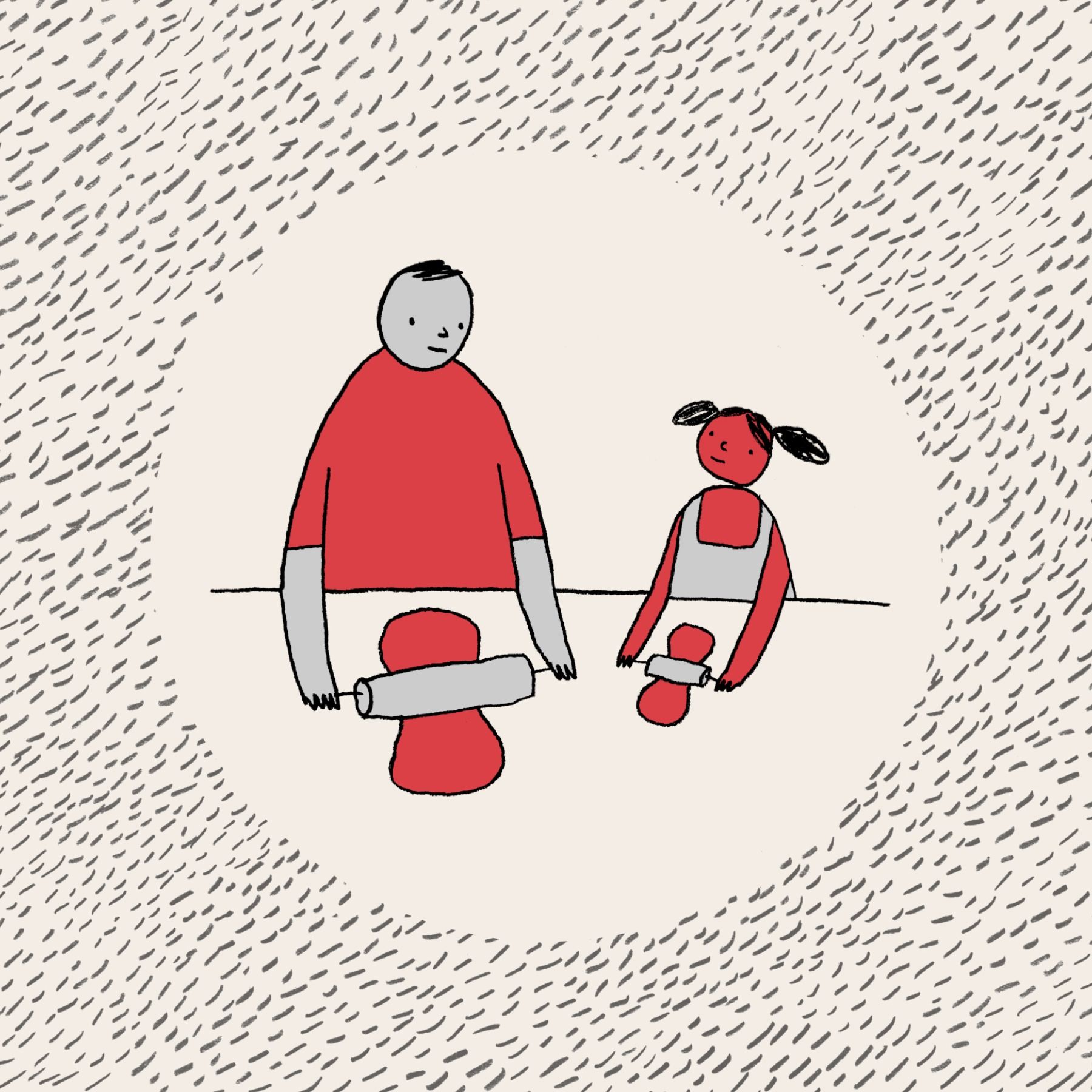
Modern Love
I Tried to Have a Kid With My Best Friend. It Got Complicated.
00:45:48
Joseph Osmundson spent years joking about having a baby with his best friend. But one day, she told Joe she was serious about it. Joe was elated. Growing up, he had always wanted to be a father, but he didn’t realize how deep that yearning was until the moment their joke became a concrete plan. At the time, Joe had a boyfriend he loved and his best friend was partnered with a woman. It took time, effort, and countless meetings to decide how to conceive and co-parent in a way that would accommodate everyone involved. What the group did not anticipate was how complex their feelings would become once their plan was underway, or that Joe would have to define what parenting meant to him all over again. Joseph Osmundson’s book, “Spawning Season: An Experiment in Queer Parenting” is out now. How to submit a Modern Love Essay: https://www.nytimes.com/article/how-to-submit-a-modern-love-essay.html How to submit a Tiny Love Story: https://www.nytimes.com/2018/09/19/style/modern-love-tiny...
Loading summary
Transcript186 lines
- [00:00]
A
This podcast is supported by OnlyFantasy on Audible. From the earliest days of the Internet, people have shared content online. But then came a platform that promised to put creators in charge of their own destiny. While you've heard of OnlyFans and its creators, Only Fantasy is here to challenge what you think you know about the platform. In this new investigative podcast, journalist Leon Nayfak teams up with comedian and OnlyFans creator Gracie Kanan for a one of a kind exploration into the current state of human connection. Listen to Only Fantasy wherever you get your podcasts or binge all episodes ad free. Right now only on Audible. Start your Audible subscription in the Audible app or on Apple Podcasts.
- [00:36]
B
Hey, Modern Love listeners. This is Wesley Morris. I host a show called Cannonball and here to let you know that Cannonball is going to be going live at the Tribeca Festival this year. And my guest is going to be Cynthia Nixon. Yeah, that Cynthia Nixon. And we're gonna talk about some great art about New York City. Show is Friday, June 12th at 6pm and I will say it again, cause you know, it's so nice you gotta say it twice. Friday, June 12th at 6pm you can get your tickets right now at tribecafilm.comaudio that's tribecafilm.com audio please come out. See me and Cynthia talk about New York City
- [01:23]
C
love now.
- [01:24]
A
And did you fall in love last?
- [01:26]
B
Love was stronger than anything for the
- [01:28]
C
love love and I love you more
- [01:30]
B
than anything there's to love love.
- [01:37]
C
From the New York Times, I'm Anna Martin. This is modern Love. I don't remember how this whole thing got started, but in high school, my group of friends, we were seven girls, we would always joke about having a friend baby. This is obviously a baby that we raised together. As friends, we talk about who would do the disciplining, who would do the spoiling, what qualities the baby would pick up from each of us, who would slack on parental duties. This was a joke, but also there was something real there for me. It was this vision of a future that even if I don't meet the right partner at exactly the right time, I. I could still be a parent. Today on the show, I'm talking to writer and biologist Joseph Osmunson. He's got a new book out called Spawning an Experiment in Queer Parenthood. And kind of like what I used to do. Joe and his best friend loved to joke about having a baby together someday. But when they got into their 30s, it stopped being a joke and they decided to become co parents together for real. Joe and his friend figured out all the practical details. They came up with a perfect plan, but they couldn't plan for the feelings that came up once they started the process. Feelings that put this family they were building together at risk of falling apart. Joe Osmondson, welcome to Modern Love.
- [03:04]
B
Oh, I'm so excited to be here, Joe.
- [03:06]
C
I feel like a lot of kids grow up with questions about where babies come from. What a start to a conversation, right? But I will say you are different. You did not have a lot of questions about that. You had a lot of experience with pregnancy and birth from an early age. Can you tell me about that?
- [03:26]
B
I actually got sent home from school because I knew suspiciously too much about the birds and the bees. It's true. Because my mother was teaching Lamaze classes at the time, and Lamaze, and they didn't have enough money to get a babysitter. And so I was sort of go along with her. And I earnestly believed at that young age that I had the very important role of teacher's assistant. I did not think that this was just because we didn't have a babysitter. I thought I was absolutely needed.
- [03:55]
C
You're like, mom has chosen me. Wait, how old were you when you started being teaching assistant at moms Lamaze classes?
- [04:00]
B
Oh, man, I had to be pretty young, probably six or seven, because it was around kindergarten. And I remember I literally had to choose between continuing to be the teaching assistant, which, again, I thought was totally a real job, and keeping on with boy Scouts. And guess what I chose.
- [04:16]
C
I'm gonna take a wild guess and say, continue to be the teaching assistant
- [04:19]
B
at mom's Lamaze classes. A million percent. That's what I chose. And so if someone was there on their own for that week, I would play the partner, and I would get on the ground next to them, and I would breathe with them. It's sort of these, you know, these he, he, he.
- [04:33]
C
Yeah, please do it.
- [04:37]
B
You know, and it's repetitive, right? And so it becomes like a mantra. And there's physical touch. So you would rub their back or if they wanted, sort of to hold their hand gently. So it was all these ways of practicing being present for someone and caring and showing and nurturing.
- [04:58]
C
Did it make you want to have a family, a baby of your own one day?
- [05:03]
B
Well, that was never even a question. My family always had the assumption that we would have that my sister and I would have kids. It wasn't an if. It was a win. And I think a lot of people that grow up in that type of environment might reject it, might be like, no. It's like as a way to assert their individuality. Might say, no, I'm not going to do that. But I just swam in it, I soaked it in. And, you know, I think it was also a way for me to express how different I was than the other boys.
- [05:32]
C
Tell me about that.
- [05:32]
B
You know, I lived in a town where boys were pretty violent to me. I was bullied, I was pushed, I was spat on as sort of a part of my daily existence. And so being soft and being nurturing and wanting to have kids and wanting to care for them, to give, you know, that all of those lovely childhood experiences of, like, gardening or sewing, you know, of playing a game of just that collective time spent, you know. And like, when I would go over to friends houses, their dads would not be present, but their moms would, like, cook food or they be curious about me. They would ask what classes I liked or what book I was enjoying reading. There was this intimacy. I was able to be vulnerable. I was able to be my kind of nerdy, weird self. And so I always was drawn much more, much more to the mothers.
- [06:25]
C
Mm. God, I'm so. I'm so endeared to little Jo. I mean, when you thought about. You say it wasn't even a question, just this, like, ancient, almost embodied knowledge that you would have a kid. You're saying you're drawn towards motherhood. So when you pictured having a kid, how did you picture your role in their life? Were you picturing yourself like, I am a. I am mothering this kid?
- [06:50]
B
Yeah, I, you know, I. I was definitely a queer child, but I always was attracted to women as well. So I just always assumed, you know, there weren't soft men, there weren't gay people. And so I just always assumed I would be with a woman and be a very tender dad. I guess that my longing for motherhood or viewing myself as a mother was really just about that tenderness. And I really wanted to be. Yeah, to like, to cook with them. My mom had this really old pasta machine, and I just have these memories of coating every surface in flour. And I loved making a mess, but, you know, was not generally allowed to. So it was like this time when you could roll these long sheets of pasta and coat, and it'd be my mom and I in the kitchen. And that's what I wanted to do with my kid.
- [07:38]
C
You know, as you got older, you moved out of your hometown, you went away to college, and basically right away, you meet your. The person who will Become your best friend. This woman who will become your best friend, really, even more so than best friend, who will become your chosen family. Can you tell me about her?
- [07:59]
B
Yeah. I mean, it starts slowly, you know, in the way that a lot of great friendships do, where you don't necessarily make plans to hang out. You know, it's sort of like you're walking down the hall and you're like, oh, are you getting dinner? I'm getting dinner. And then you get dinner together. And then soon enough, it was aim at the time.
- [08:13]
C
Yes.
- [08:14]
B
You know, and so you would. You would aim them like, oh, go into the dining hall. And then you. It sort of. It just. It built slowly over time. She was a woman and I was a man, and I hadn't yet come out as queer. And she hadn't yet come out as queer. Everyone thought we were a couple, and I just wanted to shake everyone and be like, she's a lesbian. We were. Come on. You know what I mean? It's like. But no one knew how to read us in that way. The only way you could read the type of intimacy between two people was like, that they were dating or that they had a crush on one another. And it was like, obviously. No, weird. Just like, obviously going to be life partners, but not in a romantic way. And I might be just jumping ahead, but it was like, early in this friendship that we started joking about having a kid together.
- [09:02]
C
Do you remember the first time it came up?
- [09:05]
B
It happened so frequently that, like, the first. It's like, what. What time? You know, when's the first time you ever saw a raindrop? Like, it was just like, you know, it was just. So imagine if I had an answer. Constant. Right, right. You know, and I think a lot of platonic best friends joke about getting married if they're both alone at a certain. You know, and that's a very. If we're both. If we're Both single at 40, we're gonna get married. I've totally done that, too. But for whatever reason, this best friend and I always joked about having a kid together. It was not, we'll get married. It was, we'll have a baby. It was 2006 or whatever, 2005, 2004. And our year was 2020, because it felt like so far off.
- [09:45]
C
I mean, I really do this sort of joking, if we're both single, we'll get married. I've absolutely done that. Like, yes, yes, yes. And even, actually, I remember with my high, we had this sort of dream of, like, collectively having a baby. So I guess my question is, like, it came up. You started saying this. Was it a joke? Like, what was the. What was the emotional undercurrent of this?
- [10:09]
B
So it did start feeling purely like a joke or as a way of saying, I do want to build a life with you. Like, that's what we were really saying because a baby is even more permanent than a marriage, you know. And so it was really a way to say this is a commitment even almost beyond love.
- [10:26]
C
I'm in it with you.
- [10:26]
B
I'm in it with you. Like, at the end of every hangout, It'd be like 2020 having a baby. See you tomorrow.
- [10:33]
C
And all your friends were like, just say goodbye.
- [10:36]
B
You know, stop this nonsense. And we would just absolutely not stop the nonsense. Like, the nature of our friendship was absolutely never stopping. Nonsense, nonsense forever.
- [10:48]
C
When you talk about this baby that you would have with your best friend, did this baby have a name?
- [10:54]
B
Yeah, I mean, we. So. So this. My best friend came to visit me in my hometown, and my dad was regaling her with fish facts as, as we do in the Pacific Northwest. You know, it's sort of very important animal to, to the, the region, the Pacific salmon. So we just started calling her our little baby fish fry. And so a fry is a, A, A, A life cycle st in like from an egg to an Alvin's to a fry to a smolt to a par to an adult.
- [11:23]
C
So I'm not gonna keep that in my brain because that's.
- [11:27]
B
There will be a quiz later. So it's a baby salmon.
- [11:30]
C
It's a baby salmon is a fry. Adorable. And so this baby, you were gonna.
- [11:37]
B
I started calling her Fry baby Fry baby fry.
- [11:42]
C
When you graduated, like you said, it was hypothetical. How did that, how did that hypothetical baby. How did that baby fare after graduation? Would you still talk about.
- [11:52]
B
Every time?
- [11:53]
C
Wow.
- [11:53]
B
At the end of every hangout, it was 2020, baby fry. And we would talk about. It became more real slowly. It became more real slowly as I was not in the traditional partnership that I thought I would be in. And so it became more reasonable, more possible that we were the people who were, you know, through all those boyfriends, through all those bad dates, who would I call at the end of it, but my best friend.
- [12:23]
C
Yeah.
- [12:23]
B
And I don't have an expiration date on my fertility. Right. And my best friend did. And so at about. And I noticed this with a lot of my friends, women, at about 33 to 35, it starts becoming a really pressing question. And that's, that's the wall that she hit at that time. And so she was just like, if we're gonna do this, it's time. It's time to do this.
- [12:51]
C
Do you remember like a conversation where she came to you with this urgency that you're outlining and she said, it's time to really do this. Can you bring me into that moment?
- [13:00]
B
It wasn't yet urgency. It was just. I'm not joking. And what do you think? And you know, I was a postdoctoral researcher at the time, making 40 some thousand dollars a year here in. And I had this teeny tiny little apartment that was subsidized by the university I was working at. And I was standing in the little entryway and we were hanging out like we always do. And at the end of the hangout, it was like, fry 2020. And I think this was 2018 or 2017. So we are. 2020 is no longer theoretical. It is a year in the future, not that far in the future. And she just said, okay, but I'm not joking anymore. And how do you feel about this conversation actually becoming real and intentional?
- [13:44]
C
And how did you feel?
- [13:47]
B
I lost it. I just lost it.
- [13:51]
C
In a good way or a bad way?
- [13:55]
B
Good is not even a good enough word. It was just like something unlocked in me that was like. I think one of the things I learned through this whole process is sometimes you don't know how bad you want something until it starts happening. And so I was just. I was immediately like, I wanted to shout, like, yeah, like, yes, yes, yes, yes, yes, yes, yes, yes. Like, really like. But then I was like, no, but then that'll be a turn high. She'll get scared and she won't want to have kids with me. I'm not exactly like clicking my heels in the air like. So I, Yeah, I was immediately like, this is. I want this very badly. And you know, she had just started dating a woman who ended up becoming her partner not that much longer before this. And they were both in their mid-30s, so they had already. They had started having these conversations about, do you want kids? But I loved the idea of having a kid with not just two people, because I had seen enough people parent with just two. And I know it's. It is really rough. And so I just love this idea of having more than two parents and having time where you could have a night on your own for quiet or for having drinks out.
- [15:15]
C
Yeah, but.
- [15:15]
B
But still be as much of a parent as in a sort of more quote unquote traditional situation.
- [15:22]
C
It's so sweet to me because your brain's already going to. Yes. And it's gonna be amazing to have more than one parent. And you don't scream yes, but you do say, what do you say in actuality, back to your life?
- [15:32]
B
I was like, yes, absolutely. But I said, I have to talk to my boyfriend at the time because I was dating someone. We lived together. And again, I was so financially precarious, even though I'd already finished my PhD and was working full time as a researcher at a major university. But those positions are low paid, so I could not afford my life without living with that partner at the time. So it wasn't my decision to make a loan.
- [15:56]
C
And so tell me about that conversation. How did you bring it up to him?
- [15:59]
B
Yeah, we were sitting, you know, he has a glass of wine, we're sitting on the couch, and I was like, oh, you know, I saw my best friend and she joked about having a kids, but I think it might not be a joke anymore. I think she wants to do it. And he was like, what? And I was like, yeah, you know, like, how would you feel about co parenting with them?
- [16:14]
C
Okay.
- [16:15]
B
And he just said. He was like, that's weird.
- [16:18]
C
Okay.
- [16:19]
B
That was the answer. I'm not doing that. That's weird.
- [16:21]
C
Wow. How did that hit you?
- [16:25]
B
It was. It was our. It was like a little death. Like, it was just, you know, this was in a period of like four hours, Right. I'm like, la, la, la. The day is just a normal Tuesday or whatever. And then I'm like, so overjoyed at this possibility, at this utopic possibility of actually being able to make a kid in this amazing way. And then my boyfriend just says no. And I couldn't imagine life without him. I couldn't imagine life without him, not just because I loved him very deeply and I loved our life together, but I literally could not afford to live without him.
- [17:00]
C
Huh. So where does that leave you in terms of. In terms of baby fry?
- [17:08]
B
You know, it left me in this place where I think I was subconsciously blaming my not being a parent on him, but I was making that choice. I could have said, I want to have a kid with my best friend so much. A lot of couples break up around wanting or not wanting to have kids.
- [17:27]
C
Yeah. Yeah. This is a big. I mean, this is an existential, as you've noted, decision. Yeah. So you could have pushed back. Yeah, I could have.
- [17:36]
B
I could have just said, it's a deal breaker for me. I'm gonna have a kid with my best friend. I love her. But ultimately I didn't. I wasn't brave enough. And I really, you know, you mentioned that, like, I love little Joe in the Lamaze class and I do too. Like, I look back on so many versions of myself as a younger person and I'm so proud of who he was and how he was himself, even when that self was, you know, a little effeminate boy in a logging town who got the crap beat out of him. But I'm proud that that little kid was like that and was brave and was strong. And I at that time was not brave and I was not strong. I made what I think now is a cowardly decision to sort of.
- [18:16]
C
I think you're being so hard on yourself.
- [18:18]
B
I mean, I think it.
- [18:19]
C
Cause to me, I mean, I hear what you're saying and I. And. But it also sounds like you loved this boyfriend so deeply. I did. And you, I mean, you're faced with kind of an impossible. Do I make this real with my best friend? This dream we've had now for over a decade? Over a decade, or this person who's the love of my life? Like that was where you thought your future was headed. Thought being the operative word, I will just say. Because that relationship, that didn't last, right?
- [18:48]
B
It didn't last. So maybe a year after that he made the choice to move to London for a gig that he had booked. And so he just. He walked out of our many year long relationship. And it was when he ultimately did leave, about maybe three or four weeks after booking the gig and deciding to move, my best friend was the only person in the neighborhood and she came right to my apartment. And I was sitting there catatonic, like I think I was too. The grief or the shock? It wasn't even grief yet. It was just shock. I was too much in shock to even cry. And I just remember saying, well, at least. At least we can have Fry now. And she just said, yeah, we sure can.
- [19:51]
C
We'll be right back. Foreign.
- [20:07]
A
And Don Cheadle make their Broadway debuts in proof. One of the best American dramas of the 20th century brought thrillingly back to life, raves the Chicago Tribunal. Through July 19th.
- [20:18]
B
Ohm.
- [20:18]
A
Tickets available at proof broadway.com Imagine.
- [20:21]
B
More than 800 exquisite objects handcrafted by over 400 craft artists from 70 countries around the world, brought together and framed by light on the beautiful island of San Giorgio Maggiore in Venice, Italy. This is Homo Faber 2026, an island of light, an international celebration of contemporary craftsmanship running from the 1st to the 30th of September, artistic director Ez Devlin. The British artist and designer puts the work of master craft artists in the spotlight through 15 immersive installations. Visit homofabber.com to book your tickets for Homo Faber 2026. An island of Light.
- [20:56]
A
Losing weight is one thing, but keeping it off, that's where it gets really frustrating. That's why Weight Loss by Hers now offers access to the FDA approved WeGovy pill and the FDA approved WeGovy. WeGovy is designed to help you lose weight and keep it off. Ready to reach your goals? Visit fourhers.com modernlove to get personalized, affordable care that gets you. That's F O-R-H-E R S.com ModernLove Weight loss by hers is not available in all 50 states. WeGovy is the registered trademark of Novo Nordisk. To get started and learn more, including important safety information, WeGovy clinical study information and restrictions, visit fourhers.com.
- [21:41]
C
It's very powerful to me that this idea of this baby in basically the moment of breakup was so present for you. Like, how did you and your best friends really start putting that plan into action?
- [21:53]
B
Yeah, I mean, it wasn't long after that that we started weekly meetings, sometimes more often. So yeah, I mean, we, you know, I was sort of moving through my grief, metabolizing, processing, spending a lot of time in a very dark room covered with lots and lots of blankets thinking about, but ultimately not adopting a dog. Like I was, you know, I was like planning on running a marathon but never did it. The classic breakup stuff. Yeah, of course. Oh, like shay, like full Britney 2006, you know, so. But it was, it was within a year we really started talking and it was first we would meet weekly and just talk about what we wanted. What does our family look like? Do we want to adopt? Do we want to do ivf? Do we want a turkey bastere? Are all these different options? We had a lot of queer friends who were doing different things with different people. What legal structures do we need to all be protected? And it was ultimately just about it initially. Just started talking about what was essential for all of us. Right. And so I obviously am gonna be a non gestational parent. My best friend does not want to be pregnant. Her partner is agnostic, kind of wants to. You know, in all of these conversations, we all had very complex feelings about adoption and ivf, you know, using a surrogate. Like, there's no thing that is like, you just feel like, oh, that's totally
- [23:25]
C
ethically awesome, you know, totally and so did you. Where did you land as you were having these meetings? Which, by the way, I will just note maybe some. You know, I'm thinking about my parents. They're. They're a straight couple. I am positive they did not have meeting after meeting after meeting after meeting discussing these things. And if they did, you know, they can let me know when they hear this episode. But this, to me feels unique for sure.
- [23:53]
B
Yeah. So, you know, we. Our intention with this was that we knew that we would be in conflict when parenting. And so this was almost about building the muscle memory, building the practice of having these hard conversations before there's a living child who is gonna have to deal with our bullshit, you know, our own, like, are we avoidant? And so it was like we were just practicing being non avoidant with each other, you know, so, you know, I can remember, you know, I was happy. I did not need to be the bio dad if we were adopting, whatever. If they were gonna do whatever I. To be a parent. And, you know, my best friend is a woman of color. And so it was really important for her to. And her partner is white. So it was really important for her to not have a white baby. To have a baby that reflected her own ethnicity, you know, in a way, so that she could share that with the child and so that she would not have this horrific experience of being around with a white child and not being perceived as being the parent. And that was like one of her deal breakers that she didn't want to be, you know, co parenting with two white parents with a white child. That. That would just too overwhelming for her. And her experience of the one time she gets to be a parent in her life.
- [25:04]
C
Yeah, that makes a lot of sense. I mean, in terms of the other sort of almost like, logistics of it. Did you land on stuff like where would the baby live, for example? Did you talk about that?
- [25:15]
B
Yeah, we talk. I mean. Oh, my goodness. Did we talk about that? Right. Like, you know, I think our ideal goal was like a full 50. 50 where I would. We would pick an apartment building together and get apartments in the same building. And, you know, the kid could go back and forth between them and we would all be present for family dinner every night. And that was the dream. And you know, with real intention, like, we all kind of wanted our family to look like that.
- [25:40]
C
Yeah. I mean, God, but it sounds like a dream to live in the same building as your friend and her partner and have Fry sort of run up or down the stairs when they're able to walk I mean, it's just to have family dinner. I mean, it's a utopia. I mean, you used that word before, but it's. It's a beautiful vision of the future. I'm gonna ask, too. Just because you were meeting so much, I feel like you might have hashed this out, too. Like, can I ask you, like, in these many meetings, did the three of you disagree on anything? Was there anything that was sort of a friction point?
- [26:11]
B
It definitely brought up. It brought up difficult. Nothing makes you consider your own childhood and your own relationship to your parents and the traumas of how you were or were not treated in the ways that you wanted as a kid, like having kids yourself or thinking.
- [26:27]
C
I mean, you hadn't had. Yes. Written it yet.
- [26:28]
B
The process. But the process that intentional. Of sitting around, like. So, yeah, you know, I'll just speak for myself. You know, I have a lot of abandonment issues, and so we would have a whole meeting to just talk about our fears. It was my best friend's partner's idea and, you know, to bring up those deepest, darkest fears that. That we were afraid of talking about. And so we were trying to practice doing that with each other, you know, and my fear of just it all going away, I just spoke about, like, I'm afraid of turning my back, and all of this is just not gonna be real anymore.
- [27:07]
C
So the three of you had been talking through the many logistics of having a kid talking out your fears. Can you tell me when you decided how you were going to make this baby?
- [27:22]
B
Yeah. So, you know, it was a Sunday, and we pretty much met every Sunday at that point. And, you know, we're lying on a blanket in the park, and they, you know, I think my best friend's partner says, well, do you want to ask him? And they just said, you know, would you want to be the sperm donor? And I definitely had to. Like, that had not been on the menu.
- [27:46]
C
I was gonna say.
- [27:49]
B
It just had not been something we'd ever talk about.
- [27:51]
C
It's interesting to me that this had not been on the menu because the three of you. Of the three of you, you are the one who can make sperm, right? So you hadn't. This hadn't been an option, you donating sperm before?
- [28:01]
B
I think I didn't let myself think about it.
- [28:03]
C
Huh?
- [28:04]
B
I think I didn't. I didn't bring it up. I was very deferential because I didn't. You know, it's like they're sort of. They have a lot more financial security than me, or at least enough that they can invest in IVF if they need to. And they're sort of doing a lot of those logistical things. They obviously, one of them is going
- [28:22]
C
to carry the baby.
- [28:23]
B
One of them is going to carry. So I do not want to overstep.
- [28:26]
C
Gotcha.
- [28:26]
B
You know, like, what happened ultimately was I only let myself want it when I felt like I could have it. I couldn't admit to myself that I wanted to be the biological father of the child. I could not. Because if I wanted it and I. And that wasn't the orientation that we ended up going with, I didn't want to feel disappointed. You didn't want to feel in my own path to parenthood. And so I think I didn't bring it up to myself even. I didn't even interrogate myself about, do you want to be the bio dad? Because I just felt lucky to be there. I felt lucky to be a dad at all.
- [29:04]
C
But then in this moment,
- [29:06]
B
on that blanket, they asked me, and the idea was that, so I would be the sperm donor, and my best friend would donate the egg and her partner would carry the baby.
- [29:18]
C
You were donating the sperm, your best friend was donating the egg, and then the best friend's partner was carrying the baby.
- [29:24]
B
Exactly. So it would somehow, like, magically, biologically. You know, I'm immediately thinking like a biologist, right? Where I'm like, well, you might think that my best friend's partner doesn't have a biological tie to the child because of the genetics, but that's not true, because the hormonal environment in the womb has a huge biological impact on the child.
- [29:46]
C
All three of you are involved in these physical, to use a layperson's term, ways, right? Like, it's your best friend providing the egg, you providing the sperm. So then the identity piece that it sounds like was so important to your best friend being the baby, being of color. That will happen.
- [30:04]
B
That's right.
- [30:05]
C
Her partner will carry the child. So all three of you are involved.
- [30:09]
B
It felt. Yeah, I mean, it felt like it unlocked in something that I couldn't admit to myself that I wanted that this type of relationship to the kid. And I think if my fear was feeling like poof, it could all go away. Well, if I'm the kid's bio dad, that is a tie that makes it harder for it to poof. All go away, you know, And I think this is one of the things about parenthood that we want so bad, and maybe why we want kids so bad is like, if I have a kid that's a relationship that can never, poof, go away. Like I'm going to be that kid's parent for forever, you know. But I think that ultimately is almost like a myth as well, because as a parent, you might want to hang on to different versions of your kid, but ultimately you have to let them go as well and become their own self. And so there's this tension, this push, pull between that desire to be needed, to be wanted, to have that tie that cannot break, that intimacy, that connection that is indelible, that is just as solid as the ground underneath us, another person in another person. And I think that being the bio dad made me feel like I would have that type of connection with our kid.
- [31:28]
C
It felt permanent.
- [31:29]
B
It felt permanent.
- [31:45]
C
Stay with us. This message is brought to you by Apple Card For a limited time, when you get a new Apple card and purchase AirPods Pro 3 at Apple, you can earn back the cost up to 250 daily cash. New AirPods Pro and up to $250 daily cash back. Now that's music to my ears. Subject to credit approval, limitations and spend requirements apply. Apple Card is issued by Goldman Sachs bank usa, Salt Lake City Branch Terms and more at Apple co. AirPods all aboard. Choose your perfect Caribbean escape with Princess Cruises. Maybe you spend a day relaxing on the top deck, golden sun, a refreshing pina colada and nothing on your schedule except dinner and a show. Other days you embrace a tranquil shore, snorkel mask in hand, ready to explore white sand beaches and crystal clear waters. The best part? Relaxation and discovery are both on the itinerary. Sail to the Caribbean with Princess Cruises. Visit princess.com or contact your travel advisor to book Princess Cruises ships registered to Bermuda.
- [32:53]
A
Losing weight is one thing, but keeping it off, that's where it gets really frustrating. That's why Weight Loss by Hers now offers access to the FDA approved Wegovy pill and the FDA approved Wegovy pen. Wegovy is designed to help you lose weight and keep it off. Ready to reach your goals? Visit fourhers.com modernlove to get personalized, affordable care that gets you you. That's F R h e r s.com ModernLove Weight loss by hers is not available in all 50 states, but Govi is the registered trademark of Novo Nordisk. To get started and learn more, including important safety information, WeGovy clinical study information and restrictions, visit for hers.com.
- [33:51]
C
After all this planning, the process begins.
- [33:55]
B
Oh, it does.
- [33:57]
C
When you actually start trying for this baby, what does that look like for the three of you?
- [34:02]
B
Yeah, you know so in ivf, it was my job first. Like, I am in doctor's offices, I am jerking off into a cup, you know, in a really brightly lit doctor's office in a tiny little room that has a toilet in it. For some reason that I still do not understand, I had to give one sample that was just to check genetics and then another to go a freeze test and then another. My best friend is coming with me to all the appointments. We are still meeting all the time.
- [34:28]
C
Okay.
- [34:29]
B
And then like I come out of the room and I like give her a high five and she's like. And then she like looks at her hand and she's like, ah. And I'm like, no, no. I jerk off with my left. And then it's. And I washed, I washed my hand. Okay, love, you know, so we were all. My best friend really wanted to be involved in my part of the IVF process and she was, she was there all the time. And it was just after that, after I donated the sample and the sample got cleared, everything went quiet.
- [35:02]
C
Communication between you and your best friend
- [35:04]
B
and her, okay, the fish fry group chat, literally our phones has this like fry group chat and it's just quiet.
- [35:14]
C
How does that make you feel? What do you think is happening?
- [35:16]
B
I'm just like, you know, my mind is going a mile a minute. I'm a very anxious person and I'm just thinking about all of it. They are like, well, because they're gonna be pregnant soon and so they're doing a lot of travel to sort of get as much travel in as possible before they can do the implantations. They're sort of ramping up to do this, you know, sperm donation is kind of humiliating, but. But the injections and stuff for extraction and implantation are really tough on your body. And so I'm just, I'm sort of empathizing. Like they're just really, you know, gearing up to do what is like my work is done and so, you know, you're giving me space and they're taking space and it's totally fine for them to take space. You know, I was in therapy for a lot of years learning that just cause someone is taking space doesn't mean
- [36:04]
C
that like the worst thing's happening. Right?
- [36:06]
B
Does not mean that the worst thing is happening.
- [36:08]
C
Uh huh. And when did they get back in touch?
- [36:12]
B
It was maybe a couple months later. I was really, you know, trying to stop myself from fearing some massive shift. And then I get a text, you know, on the group chat that just said we should Talk.
- [36:31]
C
What do they say to you?
- [36:33]
B
It was just that my best friend's partner wanted to be the egg donor.
- [36:39]
C
Okay.
- [36:39]
B
And that meant that if I were the sperm donor, the two of us are white, and so our kid would be white again. I think, you know, my best friend wanted to have a baby who's a person of color because she gets to be a parent once. That is. That. That is her parenthood experience. And her partner gets to be a parent once, and they didn't know if they were ever gonna have another kid. And she wanted to be the bio mom.
- [37:09]
C
So when your best friend's partner says, I want to be the egg donor, you put these pieces together. That. That means what for you?
- [37:18]
B
That means that I'm not gonna be the sperm donor. And I think that's where bargaining came in. And I immediately started saying, well, I never needed to be the bio dad. But what ultimately happened was they also, you know, they didn want to use a sperm bank either. So we had spent so many years discussing all this that, like, I already knew the math.
- [37:37]
C
You knew the math. Now, what does that mean? If you weren't going to be the sperm donor and they didn't want to use a sperm bank, then what did they tell you was the plan, the next step for them?
- [37:46]
B
They were talking to another friend, and they had already begun talking to that friend about sperm donation. And so I was outside of this process that I had been not outside of ever, but.
- [38:01]
C
Oh, my God. I mean, this is. Everything was coming together. These things. You hadn't even allowed yourself to hope for being a bio dad happening. Then there's silence. And then they tell you basically that this is. They're moving forward, not just. Not with your sperm, but with a different donor who it sounds like you even know. And I'm not even talking about that other donor. That's really not where I want to put the focus. I'm just saying, like, this arrangement. God, I mean, that must have been devastating. How did you. What was the emotional response for you?
- [38:40]
B
I, at first, was just trying so hard to not put pressure. I was just holding back because I didn't want to feel manipulative. I didn't want to say, you guys, we've been doing this for so long, and I want this so bad. Like I said on that conversation, that this is like a space shuttle launch where we all have to put our keys in and turn them. Yeah. Like, we're. If anyone does not feel enthusiastically like they can turn their key on having a kid in this way, we can't do it.
- [39:17]
C
Oh. I feel like if I were in your position, I'm a much more selfish person, and I would just be devastated. I'd be like. The ugliest part of me would be like, what do you mean? I mean, I love you, but this is me again, the ugliest part of myself. We've been talking about this since we were 18. You know, like, not me being the bio dad, but, my gosh, I mean, is there some ugly part of you that was, like, screaming and crying and. And throwing a fit?
- [39:43]
B
Not for a long time. And I think that part did ultimately need to come out. But this goes all the way back to my childhood and how the only emotion men were allowed was anger. And I did not ever want to be that. And I also. I felt like I was talking to myself. Like, her experience of not being the bio mom mirrored my experience of getting to be the bio dad. And I could not be angry. I couldn't. I understood her because.
- [40:15]
C
You got it.
- [40:16]
B
Yeah, I got it.
- [40:19]
C
Did any part of you think that some part of this plan could be saved? Like, even if they went with a different sperm donor, maybe you could be involved in the kid's life in some way? Like, was any part of this plan you'd work so hard on salvageable?
- [40:33]
B
They had to. You know, I became. It's not that I wasn't involved, it's just that there was a fourth person involved.
- [40:39]
C
Sure. The others were involved.
- [40:40]
B
And, you know, if. If three is company, four is a crowd. And my needs were not as important as his to figure out if he wanted to be involved as a parent. And so ultimately. And that was one of the hard things to navigate because I did still wanna co parent.
- [40:59]
C
You want to still be a co parent?
- [41:00]
B
Yeah.
- [41:01]
C
But it's so much more complicated now, though.
- [41:04]
B
Exactly. It's so much more complicated. And I think they then had to go figure out a lot of stuff that they did have to figure out on their own, that I was not key to those decisions about their new sperm donor and what role he was gonna play. And we all, I think, were just all of those conversations that we had had to practice talking about the hard thing. We tried, you know, and. And it wasn't enough. It was like a bubble that popped, but I had nothing to hold in my hands. I had no roadmap for even the type of grief that I was feeling because I don't know how most other people feel about almost having a kid. And in part because most people don't talk about that. Most stories about wanting a kid end with having a kid. And I was just like, but I have nothing. I just. I have nothing to hold onto in this whole experience of loss.
- [42:07]
C
I mean. Yeah, you're articulating something very true and very tricky because, you know, when we hear stories about someone. I mean, infertility, for example, is absolutely something people have to. People struggle with. People aren't able to have kids in the way they want to have kids for so many reasons, but because the three of you, you, your best friend, her partner, were sort of charting this, you know, this non traditional, non nuclear family structure. You know, there was no roadmap for that family. You were building it. But then also, as you say, there was no roadmap for the loss. This grief was probably even difficult to share with other people to get them to understand.
- [42:49]
B
Yeah.
- [42:50]
C
Hmm. Were you there for the birth of your best friend and her partner's?
- [42:55]
B
No, I was actually traveling for work when they had their kid, and it was really hard for me to go visit them after the birth. It took many months. And that was really, really painful for them, you know, and it is. It.
- [43:12]
C
I mean, I just want to be really clear, like, you are not a co parent to this child.
- [43:18]
B
No.
- [43:18]
C
Right.
- [43:19]
B
No.
- [43:19]
C
You are not involved in this child's life in the way that, you know, those meetings you'd planned. This is not fry. This is not the baby you and your best friend had Talked about at 18. This is a different baby.
- [43:33]
B
This is a different baby. Yep. And so it took a long time. And I think all those feelings that I wouldn't let come out were stopping me from the genuine joy of being an uncle. You know, I think grief. One of the funny things that grief did is. And it did steal that joy. It did steal the joy of being able to be present for my friends and experience this huge life transition that they had. I would, like, get up and be like, I'm going to see them and their. And I could physically could not do it.
- [44:04]
C
Do you still want to be a parent?
- [44:06]
B
I'll never move on from wanting to be a parent. Not ever. You know, I think one thing that Americans are really bad at dealing with is that life is inherently melancholy, that Americans are bad. Like the French people.
- [44:17]
C
They've really got it. Yeah, yeah, yeah.
- [44:19]
B
French people understand ennui, man. You know what I mean? It's like you get one life and you get to be a parent or you don't. And both of those are really hard, you know, And I'm just in a place of Accepting that I'm a person who's always wanted to be a parent, who probably never will be. And that doesn't mean that I can't nurture and nourish young people. And a couple of my best friends have kids, and it's really important for me to be an adult who listens to them and who shows up for them and who cooks for them. You know, I've. I've made pasta dough with my other best friend's kid. You know, I've had that.
- [45:01]
C
I shouldn't ask that.
- [45:01]
B
I've had that moment, you know, and it was. You know, she loved the feeling of the dough so much, she hugged it. And I have a picture of her hugging the pasta dough. Wow. It was more joy than my body could handle. And, you know, and so being there, being a parent is so isolating socially also, and so trying my best to show up for the parents in my life. So, you know, it's not just about the kids. It's also like, can you make parenthood a little less lonely for the parents in your life? I've started to view that as a role that I can play. That's really important to me.
- [45:41]
C
Yeah. I mean, it strikes me that you had this very specific idea of what it meant to be a parent when you were younger. And at this stage, you know, you've really sort of expanded. Maybe not your notion of being a parent, but this idea of care and nurturing. That was always. That was your deep desire. Right. As a kid. And you are doing that, but in a very different way than you imagined. But you said something that I think will resonate with a lot of. With a lot of people, which is you said, I'm a person who will always want to be a parent, who won't be a parent. What did you say?
- [46:19]
B
Yeah, I've always wanted to be a parent, and I will always want to be a parent, and I probably won't be. And that is the material truth of my life. And in the time when I was so desperate to undo the loss of the time that I thought I was going to be a parent, I couldn't accept that. I couldn't accept how fucking sad that made me. And now I'm in a place where I can accept it.
- [46:54]
C
Your relationship to your best friend, you two. What is it like now?
- [47:01]
B
Yeah, we are. I mean, I personally was never. My fear was never losing her, not ever. I just felt like we had been through so much. Like we had. Yeah, we were life partners to me. We were. That hasn't changed, and that hasn't changed. I mean, there's been a lot of repair that has been necessary. And I think that is gonna be a life. Another lifelong journey. We're still very close, and I think we're gonna spend our life nurturing one another and still being more present for one another. And the families that we each build.
- [47:38]
C
I'm so happy to hear that. I mean, throughout this conversation, I'm thinking that there are so many ways to make a family, and every single one of them is so hard.
- [47:55]
B
Is that so hard?
- [47:56]
C
Is that the takeaway of all this? It's like any route she chooses is just like. It's hard.
- [48:01]
B
It's, like, fucking impossible. It is unbelievable how you. Yeah, no, it's just. And it's so emotionally fraught because it brings up so much stuff from our childhood, our family. Everyone has trauma.
- [48:12]
C
So stressed. You know what we have to do to end this interview? We have to do the Lamaze breathing.
- [48:20]
B
I mean, clearly it's the only way out.
- [48:22]
C
Okay. All this family talk. Everything's stressful. Okay, I'm gonna do it with you. Lead me through it.
- [48:27]
B
We'll do a he, he, he who? Okay, ready?
- [48:30]
C
Yep.
- [48:30]
B
He, he, he, he.
- [48:34]
C
I wanna do it one more time. Cause I think I kind of messed up the heat.
- [48:37]
B
Okay, ready? Okay.
- [48:42]
C
One more time. I feel calmer.
- [48:49]
B
I actually feel better. I legitimately do. Yeah.
- [48:53]
C
Joe, we gotta end on a high note. Thank you so much for this conversation.
- [48:56]
B
It's been a delight. Thank you a lot.
- [49:21]
C
The Modern Love team is Davis Land, Elisa Gutierrez, Lynn Levy, Reeva Goldberg, and Sarah Curtis. This episode was produced by Reeva Goldberg. It was edited by Lynn Levy and Davis Land. Our mix engineer was Daniel Ramirez. Original music in this episode by Alicia Be Itup, Marian Lozano, Pat McCusker, and Dan Powell. Dan also composed our theme music. The Modern Love column is edited by Daniel Jones, and Mia Lee is the editor of Modern Love Projects. If you'd like to submit an essay or a tiny love story to the New York Times, we have the instructions in our show notes. I'm Anna Martin. Thanks for listening.