← Modern Love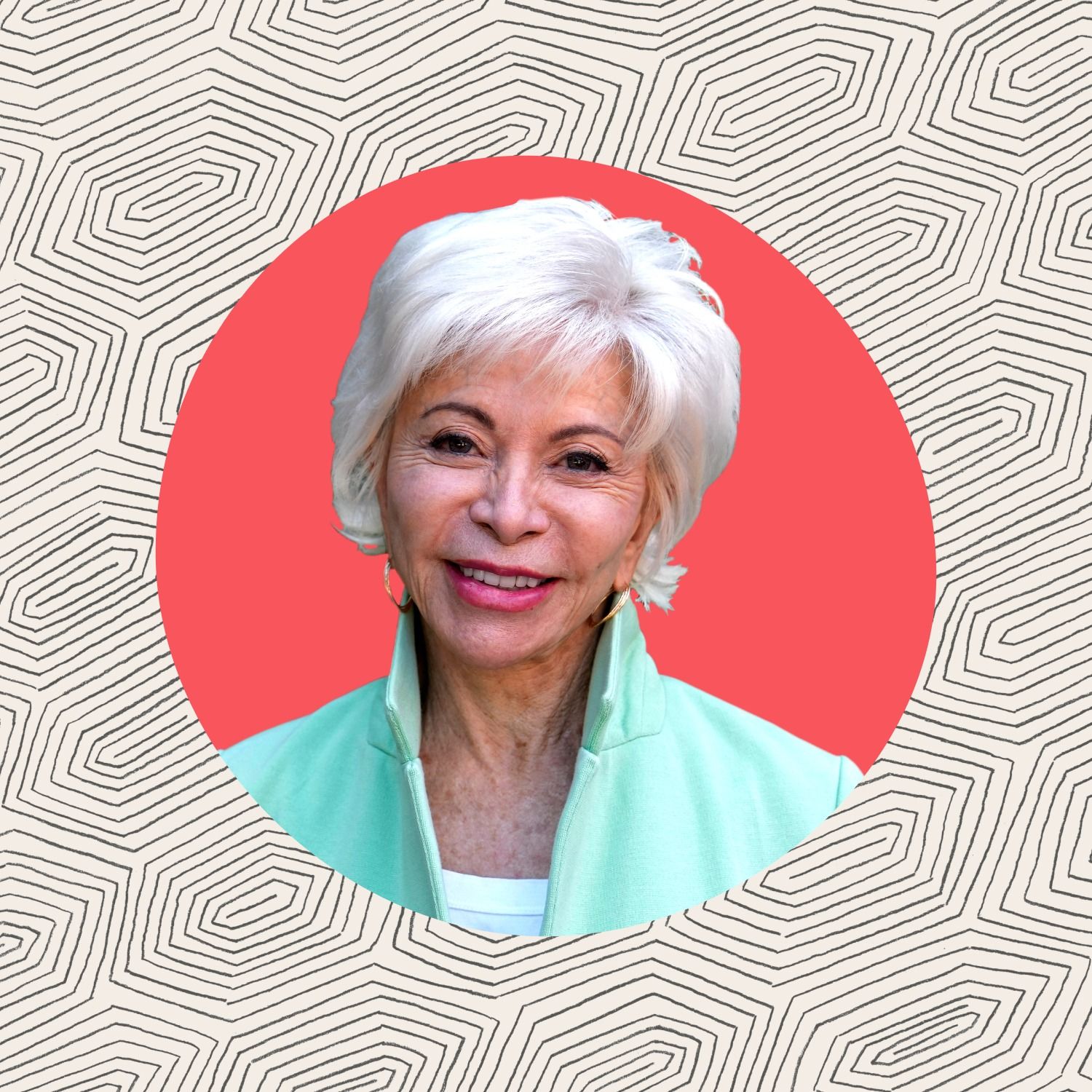
Modern Love
Isabel Allende and Her Mother Told Each Other (Almost) Everything
00:45:38
Isabel Allende began writing daily letters to her mother when she was a teenager. Over the next several decades, they exchanged over 24,000 of them. Allende credits their letter writing with removing the need for small talk and creating a deep bond between them. Knowing that she had to write to her mother every day pushed her to pay attention to her life in a way that, she says, was central to her becoming a writer. Letters have been a throughline in her books as well. Allende’s best-selling novel, “The House of the Spirits,” began as a letter to her dying grandfather. “The House of the Spirits” has just been adapted into a new TV series, and the connection between mothers and daughters is central to this multigenerational saga. In this episode of “Modern Love,” Allende tells the host Anna Martin about the transformative power of letter writing on her relationships and career.
Loading summary
Transcript153 lines
- [00:01]
A
Some days are just made for good food and great conversation. On Be My Guest with Ina Garten. Being a guest means sharing recipes, stories, asking questions, opening up and eating something delicious together. That's when things really happen. This season, hear from guests like Jon Batiste, Allison Janney, and Hoda Kotb. Listen to Be My Guest with Ina Garten wherever you get your podcasts. Love now and did you fall in love last fella?
- [00:31]
B
Love love. But stronger than anything else for the love love and I love you more than anything.
- [00:38]
A
You're still love love. From the New York Times, I'm Anna Martin. This is Modern Love. And today we're celebrating Mother's Day with author and mother Isabel Allende. Allende is an icon of literature, and it all started with a novel that many of you probably read in lit class. And I highly recommend you revisit the House of the Spirits. It's a masterpiece of magical realism and it's just been adapted into a new TV show. The House of the Spirits is about three generations of a family and really the women in that family, these women are complicated and conflicted and full of desire. And they're powerful, or as much as they can be in a world dominated by men. This is a story about mothers and about daughters and what gets passed on between them. The relationship between Allende and her own mother was built through writing letters. Over 24,000 of them. They wrote to each other every day for over 30 years. And they got to know each other in ways mothers and daughters usually don't. I wanted to know what that was like. And I also wanted to know, should I be doing this? I have a mom. I text her multiple times a day, every day, but I've only ever written her a snail mail letter, I think once when I wanted to be rescued from sleepaway camp. And I will say for the record, she did not reply. I love you, Mom. So for Mother's Day, here's my conversation with Isabel Allende. Isabel Allende, welcome to Modern Love.
- [02:15]
B
Thank you so much, Anna. It's wonderful to be here.
- [02:18]
A
Isabel, I know that writing letters has been a through line throughout your life. Your first novel, the House of the Spirits, began as a letter to your grandfather as he was dying. What did you want to say to him in that letter?
- [02:34]
B
I wanted to say that he could go in peace, that I remembered everything, everything he had ever told me. I remembered him, his life. We were really close. I grew up in his house, so I would write to him often when I was living in Venezuel but this letter, I knew somehow that he would never be able to read because the snail mail was very slow then. And it was not about him, really. It was about me saying goodbye. And I wanted just to tell him. I remembered all the characters in my family. The crazy lunatic relatives. Yeah. The stories of my grandmother, who was a legend. My grandmother supposedly was a clairvoyant, and she spent her short life experimenting with the paranormal. So there would be seances every week to call the spirits and the souls of the dead. It was she and three sisters, the Mora sisters. And so I grew up with this. And I wanted to tell my grandfather that no matter how long we hadn't seen each other and we hadn't talked, I remembered everything.
- [03:53]
A
People who have read the House of the Spirits will recognize so much of what you're saying in the clairvoyant, Clara in the Mora sisters, in the supernatural. I wanna talk more about what you said, that you had this sense that your grandfather would not be able to respond to this letter. Right. Because he was in the process of dying as you began this letter. So this letter, you're saying you wanted him to know you remembered, but was it also for you?
- [04:19]
B
Yes. First, let me tell you that the book is fiction.
- [04:23]
A
Yes.
- [04:24]
B
It started as a reminder, and then very quickly it turned into something that I couldn't describe. I didn't know if it was a memoir, a chronology, fiction. I just kept on writing and I said, well, it doesn't matter what it is. I just need to put it down. It was, like, dictated in a way, from the beyond, probably by my grandmother. Now, the question why I thought my grandfather would not read it first, as I said, because the mail was very slow. And then he was in his very late 90s, I think he was 98 or 99. And obviously he was in his last breath. So it was a spiritual letter.
- [05:12]
A
Can I ask you a bit of a woo woo question? But why not? When you heard this dictation, when you received it, were you hearing a voice? Was it a voice that. No.
- [05:22]
B
It was a sort of incredible speed to write. And it was easy. I wasn't thinking. I didn't have a sketch of a script, nothing. I just sat down and started to write. And then my relatives and their stories and the characters and what was happening in the country just happened on the computer in spite of me. I wasn't even a computer. It was a portable typewriter with no copies, Just one copy. So what happened? It's magical. It has never happened to me again. And I've been writing for 45 years. That feeling that the whole book is inside you and your job is to show up and just write it down before you forget.
- [06:10]
A
I've heard authors of amazing works of literature such as, I mean, to just say, yeah, I mean, I didn't work that hard. Of course you're not actually saying that. But it was inside you. You were 40, right when you started this book?
- [06:23]
B
Yeah, 40. When I finished the book. Finished the book. My agent said two things that are important. She said, one, that everybody can write a first good book because everything is inside is your experience, your memories, your feelings, everything. The second book is a challenge. And the other thing she said is that you will have to do double the effort of any man to get half the recognition because you're a woman.
- [06:56]
A
Has that been true, Isabel?
- [06:57]
B
Absolutely true. But I wouldn't say double. Three times the effort.
- [07:04]
A
That actually is a good segue into this question about. I want to talk more about the House of the Spirits, which has been adapted into a stunning TV show. For people who are not familiar with the story, what would you say is at the heart of the House of the Spirits?
- [07:21]
B
It's a story of three generations of mostly women. The main character is a man. He is the backbone of the whole book, from the first page to the last. But the story is told by the women, and it is the story of this family and the story of a country. How both stories blend in and mix.
- [07:42]
A
Was there a. This is maybe another way to ask what's at the heart of this book. But was there a question you were trying to answer with the House of the Spirits?
- [07:50]
B
No, I was trying to remember. It was, I think, an exercise in nostalgia, in trying to get back everything I had lost in exile. My country, my home, my family, my. The memories that were fading, I was forgetting. And I felt very displaced, disconnected, uprooted. And in a way, writing the story down grounded me and gave me a voice, a purpose, something to do. I was sort of desperate. I was working in administering a school 12 hours a day, two shifts. That's not the kind of job I know how to do or I want to do, but I had to make a living. So the writing, which was my first book, my first experience, it was such a joy. I was creating a universe in which I was like, God, I could do whatever I wanted.
- [08:52]
A
You were powerful, huh? Yeah. In a way that you did not feel in your day to day life?
- [08:57]
B
Oh, no, my day to day life was flat. Nothing was happening. My marriage was collapsing, my children were leaving the nest and my job didn't mean anything to me, and I was displaced. I was a stranger, foreigner.
- [09:16]
A
It's interesting then, from that place of power you mentioned, the three women whose stories are told in the House of the Spirits. And these women, at least ostensibly, do not have much power. Right. They're hemmed in by the family, by their roles, by the patriarchy, by society. But each of these three women find these ways to express themselves and exert their power, whether it's through making art or connecting to the supernatural, or writing. You've spoken about how these characters are inspired by women in your life. Can you speak a bit to that?
- [09:50]
B
The real women, Clara in the House of the Spirits is my grandmother. Exaggerated. My grandmother, I'm sure, could not play the piano with the lid on. I am well.
- [10:02]
A
Do you know that for sure? Maybe she did it. Not around you, no.
- [10:06]
B
But you know, Anna, the legend of my grandmother grew in time, so I don't know what she could do really. But as the stories were told, everybody added a little bit. So my grandmother became, in my memory, this magical creature that could interpret dreams and could know what was going to happen. She would feel the earthquakes before they happened.
- [10:32]
A
I was going to say, do you remember a time when you were young where she predicted something and it came true? Does something come to mind?
- [10:39]
B
No. But when I was born, she looked at my back immediately and found a star in my back, which most kids have.
- [10:49]
A
A star.
- [10:50]
B
It's a birthmark that most kids have in their back. But according to my grandmother, that means that I would have good health and have good luck, and therefore I didn't need to get vaccinated or anything because I was.
- [11:06]
A
You're going to be fine. Yeah, she was fine.
- [11:08]
B
I'll be fine.
- [11:08]
A
Yeah, it's all good.
- [11:09]
B
So. So I was brought up with a sort of mild neglect that was really, really good because. Because I had to fend for myself given. Given that I had good health and good luck.
- [11:22]
A
I don't need to worry about Isabel.
- [11:23]
B
We don't have to worry about it. Yeah, yeah, yeah. She's fine. She's fine.
- [11:28]
A
She's coughing a lot, but I think she'll be okay.
- [11:30]
B
It.
- [11:33]
A
I love that Born Lucky. Talk more about your grandmother and how she's infused into this book. And also your mother, who you've spoken about, appearing in this story as well.
- [11:43]
B
So Blanca is my mother. And I created a character that was similar to my mother in personality. Not the same life. But like my mother, Blanca lives a passion that changes her life. She Falls in love and she falls in love with the wrong man. Now, in other circumstances, my mother married my father, who was the wrong man, by the way. And my father left before I was even three years old and left my mother with two toddlers and pregnant. Later, my mother fell in love with a married man who had four children. This is in a country with no divorce, in a Catholic, conservative, patriarchal society where they were ostracized, as you may imagine. So to make a life with my stepfather, my mother had to sacrifice a lot. One of the many things was that he was a diplomat. So she traveled constantly, which was good in a way, because it kept her away from Chile, where she was criticized because of what had happened. They always blamed the woman. She is the witch and the man is just the victim. Always.
- [12:57]
A
They blamed her for the dissolution of this marriage, of course.
- [13:00]
B
Of course. So my mother lived abroad most of her life, except when she was very old. And so we were separated. And that's where the letter writing started. I was 16 when I was living in Chile, in the house of my grandfather. And my mother was in Turkey. So we started writing every single day. And of course it was not a conversation. The letters would take two months to get there. And sometimes you would get 15 letters in a day and sometimes nothing for weeks.
- [13:31]
A
I am fascinated by this relationship between you and your mom and how these daily letters, I mean, you know, we think now in terms of sending a text, right, A day, but a daily letter and this kind of construction, deepening. I don't know what the right word is, but of your relationship with your mom, even though you weren't physically together. So I wanna. I wanna dig into this. You started, you said, when you were 15, 16, writing these letters, you were living apart. Tell me about Isabel. 15, 16 years old, you. What was happening in your life, in your mind?
- [14:07]
B
I was finishing high school, living with my grandfather in a very strict, severe environment. So I didn't go out much or anything. I did get a boyfriend, just by miracle.
- [14:23]
A
Well, you were lucky cause you had the star. So maybe that factor.
- [14:26]
B
Yeah, I lucked out and I got boyfriend. But life was hard and I was lonely and insecure and I had no self esteem. I was angry at authority, at patriarchy, at how unfair the world was. I was constantly angry. And later that anger turned into a cause that has been the cause of all my life. Feminism. But it didn't have a name at the time. Feminist. No one had heard that word. It was like contraception. No one had heard that word either. So that's how I grew up. It was a long time ago.
- [15:12]
A
With this anger. With this anger inside you and your mom. You know, I will speak for myself. When I was 15, 16, this is the time where I simultaneously hated my mom more than ever and also needed her more than ever. Like, she was such a central figure in my life. And your mom, as you've said, was very far from you. She was in Turkey. She was living abroad. So you start writing these letters. Do you remember how that process. Did she send a first letter? Did you. How did it begin?
- [15:40]
B
Probably she sent the first letter because she would know where to write. To me, to her father's house. But my anger was never against her because she was far away. If we had lived close by, like most families do, probably I would targeted her with all my resentment and my anger and my frustration and my insecurity. But she wasn't there. So it all turned inside. I was just boiling inside. I couldn't turn it against my grandfather because he would have not accepted any tantrum of any kind that was unacceptable. Then you did not talk back to your parents. If you were frustrated, you didn't scream at your father. You just swallow it somehow. But the fact that my mom wasn't there made it much easier. My mom and I were very different people. And I think that we were so close because of the letters and because we were not living close by. There was no time for pettiness, for little things, for. No, it was just the essential. But one thing that is interesting, Anna, is that in a way, I think that that letter writing, although I didn't know it at the time, made me a writer. I lived the day paying attention to what was happening so that I would have something to tell my mother in the letter, in the evening. So I wasn't distracted as we usually are in life. I was paying attention. And that's a great training for writing. So when my mom died, what I miss the most is that is my letters to her, not her letters to me. Because my letters forced me to observe my life, to record it, to pay attention, to understand what I was doing wrong, what was working, all those things, you know? Of course I would get my mother's feedback. And then when email was invented, the feedback would be the same day or the next day. And that made it easy because otherwise it was never a conversation. But it changed me, the letter writing more than anything else.
- [18:04]
A
We'll be right back. All aboard. Choose your perfect Caribbean escape with Princess Cruises. Maybe you spend a day relaxing on the top deck, golden sun, a refreshing pina colada, and nothing on your schedule except dinner and a show. Other days you embrace a tranquil shore, snorkel mask in hand, ready to explore white sand beaches and crystal clear waters. The best part, relaxation and discovery are both on the itinerary. Sail to the Caribbean with Princess Cruises. Visit princess.com or contact your travel advisor to book Princess Cruises ships registered to Bermuda. Your gut isn't just about digestion. It's the command center of your whole body. New Ollie Precise Probiotics are made with clinically studied strains to provide targeted benefits beyond digestive health by supporting your metabolism, skin health or stress response. Start giving your body what it needs. Shop Precise probiotics with skin stress or metabolism support at your nearest Walmart. These statements have not been evaluated by the Food and Drug Administration. This product is not intended to diagnose, treat, cure or prevent any disease.
- [19:22]
C
This podcast is supported by Squarespace. Squarespace is the all in one website platform designed to help you stand out and succeed online. They give you everything you need to offer services and get paid all in one place. And with their collection of cutting edge design tools, anyone can build a beautiful professional online presence that perfectly fits their brand or business. Head to squarespace.com NYT for a free trial and when you're ready to Launch, use offer code NYT to save 10% off your first purchase of a website or domain.
- [20:11]
A
Can I ask, I mean, like in those earlier letters, what were you paying attention to? Was it like, I had the best croissant for lunch or what were you telling your mom? What details would you share with her?
- [20:21]
B
Things that I was reading, for example. So I would tell her what I was reading, what I was studying. I would tell about my relatives, my grandfather, conversations I had overheard, stories that I have been told by my grandfather. Often I would tell her about my day. But not like a journal. It was never a list of activities. It was never, I had a croissant.
- [20:48]
A
No, no, that would be really a stupid letter.
- [20:51]
B
Yeah, no, but because today that's what people do in FaceTime.
- [20:55]
A
Yes.
- [20:55]
B
Who cares if you had a hamburger, for God's sake? Who cares?
- [20:59]
A
Okay, wait, can we. And say I completely agree with you and all love to my. I have sisters and friends who will call me and tell me these really little details. And it's cool to me for like a minute and then it's like, let's talk about some real stuff. Right?
- [21:12]
B
Yeah, that small talk. I mean, why waste another person's time with your hamburger? I think that's Very disrespectful.
- [21:21]
A
This is. I mean, this is so interesting, because I think this is. So tell me. Instead of the hamburger of it all or the croissant of it all or
- [21:27]
B
whatever, I would tell her. I would tell her about the place where I got the croissant. Who were there, what kind of people was there, who was the guy who served me or the woman who served me the croissant.
- [21:38]
A
Yes.
- [21:39]
B
So it would be about people and about relationships and mood. Mood. And that's what I would do with my mom. Yeah. Tell her about the circumstances of life, the relationships. So let me give you an example, Anna. I divorced my second husband in 2015, and we had been together for 28 years. So recently, I decided to write a memoir about the end of love, a time alone and the beginning of a new love at a very old age. So I didn't remember much. Why my marriage ended because we were really good friends and nothing happened. We never slammed the door. We never. I was never unfaithful. So why. And then I went to my mother's letters, day by day, with the emotion of the day, with the circumstances of the day, and so I could relive what I had forgotten or I remembered in a different way. It never happened that way. It happened in another way. But I turned it around in my memory to be able to live with it.
- [22:51]
A
How many years did you two write letters to each other? Every single day.
- [22:55]
B
I started collecting them in 1987, and my son has calculated, when we digitize the whole thing, that we have around 24,000 letters. But that's from both of us. It's not just one person.
- [23:10]
A
Well, then it's not that impressive, you know, if it's from.
- [23:12]
B
No, it's not that much. Yeah, but the letters before, I never collected them. And also, I left my country with nothing. So if there was a bunch of letters, they were lost in the shuffle. And in Venezuela, I wrote very little because in Venezuela is the only time that we have lived in the same city.
- [23:31]
A
Huh. So the letters weren't necessary. I mean, 24,000 existing letters of more that were left behind. I mean, it's a remarkable number. You've shared with me the types of things you would write to your mother. And I'm curious, what would she write to you? What was she sharing?
- [23:48]
B
First of all, she belongs to a generation that learned to write because communication was written. If you invited someone for dinner, you didn't pick up a phone, there was no phone. Probably you sent a card, an invitation. It had to be written with perfect calligraphy in a beautiful piece of paper. It had to be beautifully said. You couldn't have a spelling mistake. A spelling mistake was like that. Bad manners, you know, it would be like farting in public. Awful. So, yeah. So my mother's letters, for example, six pages with not one correction in blue ink and beautiful handwriting until she couldn't handwrite anymore because she was 98. And so she typed. She learned to use the computer and to email. And so the later letters are all typed but before they were all handwritten. And so what would she tell me? She would tell me everything from kitchen recipes that she was experimenting with to the fight that she had with my stepfather. Many letters are incredibly confidential because the things that she says about other people are horrible.
- [25:09]
A
Wow. Okay.
- [25:12]
B
Horrible. And even about my brothers. I mean, she and I could say to each other anything. We talked about sex, about money.
- [25:22]
A
You talked about sex. This was a question I had explicitly. Yes.
- [25:25]
B
Yes, we did. My mother. My mother was very funny. She would be 95 and have erotic dreams. So she would tell me the dream in the letter. Yes, it was always very funny.
- [25:39]
A
Were you okay? I'm loving. I'm loving this. Was there ever a thing where you were like, mom, that's a little tmi, or were you like, tell me more about that? No, no, no, no, no.
- [25:49]
B
None of it. But I would not. So I would not tell her about my sex life with my husband. No. But she would. No problem.
- [25:59]
A
That is rare, right? I mean, at least in my.
- [26:02]
B
Especially in that generation.
- [26:04]
A
Well, this is what I was gonna say. Like, that door was open between you, but that's not necessarily the norm between mothers and daughters, certainly at that time. What was it about the method of communication, it sounds like, that allowed for such an open and intimate channel between you two.
- [26:22]
B
I think she established that relationship of being. Since I was very little, she called me Mommy. So I was her mommy. And so she was very clingy and dependent. And so I had the role of the grownup most of the time. And she was very ironic. And as I said, she could be very funny. And also very melodramatic. Very melodramatic. Everything was, like.
- [26:50]
A
In the sound of her. She's, like, having sex dreams at 95. She's like kind of a drama queen. She says really mean stuff about sex. I mean, she sounds like a hoot to talk to.
- [26:59]
B
Yeah.
- [26:59]
A
So your mom opened up this, like, really intimate channel because she didn't have anyone else to share this stuff with. Was that your impression?
- [27:06]
B
Well, because the first few years when I was little, she didn't have a husband. She was in love with the wrong man, who wasn't in Chile, he was a diplomat. So he was away. And so she was, as I said, rejected, ostracized, living with her father, economically dependent. So she was poor. We lived in the house of my grandfather and we never lacked food or shoes for school. But my mother didn't have any pocket money.
- [27:35]
A
She wasn't independent.
- [27:37]
B
Yeah, no. So if she wanted to buy ice cream for us, she didn't have the money for ice cream. While at the same time there would be a car at the. I mean, the contrast between the men in the family who had a salary, who had the keys of their house, who had a car, who didn't have to explain where they went or where. When were they coming back. And my mother was. I didn't want to be like my mother in that sense. I wanted to be like the men in the family who had this independence that I craved for. So my mother was, as I said, dependent, poor, beautiful. She was gorgeous. And always sick. Sick because she needed attention, not because she really had. She had ailments. Ailments. She was not really sick, but if she had a cold, it would turn into pneumonia. If she had a stomachache, it would be diverticulitis. So everything became more. Because this was the only way she would get any attention. So this went on for years.
- [28:38]
A
She was craving care. Craving attention.
- [28:42]
B
Attention, care, love, respect, money, everything.
- [28:47]
A
And so as a kid, you fulfilled that need for her. And maybe what you're saying, although let me know if I'm wrong, is the openness in these letters was sort of. Was a way of her receiving care and attention from you. Because she's sharing so much and you're receiving it. Is that. Is that what you're saying?
- [29:06]
B
No, because that was when I was little. Later. I don't know. It's a strange question, Anna, because what did she want from. She just wanted a confidante. And the trust that we had was absolute. There was nothing that she would tell me that would turn against her ever. And vice versa. I could tell her anything. I always felt in my life that I could take risks, stupid risks, because I had someone to fall back to. Someone and some place where I could fall back to and be safe. My mother. My mother's love. She could not protect me or give me anything material, but she gave me all the support. All the support. And as I said before, we could not be more different. For many years, she could not understand that I was a feminist. She would say, look, you can do anything you want, but discreetly. Do it discreetly. You don't have to make so much noise. And I would say, mother, feminism is about noise. What are you talking about?
- [30:13]
A
I mean, that, too, was present in your letters and your communication. Huh?
- [30:19]
B
All the time.
- [30:19]
A
And it doesn't sound. Yeah, there must have been disagreements in the letters as well. It doesn't sound like you would always. Do you remember. Do you remember a fight? Cause having a fight over snail mail is very interesting to me because unlike a fight over the phone, it's like, well, this two weeks go by. Well, that. I'm curious if you. If you remember any kind of, like, conflict or friction that you had when you were writing these letters.
- [30:43]
B
No, when we were together.
- [30:45]
A
Oh, tell me about that. I'm curious about that.
- [30:48]
B
When we were together, we would have sometimes moments when she was very sensitive and everything was about her. So let's say that she has to go to the hairdresser, and she will say, yeah, it has to rain today when I have to go. So the weather also. So she would misplace the keys. Somebody stole my keys. And so we would get in a fight. But by mail, you can't. So that's why my relationship with her was so perfect. And then, on the other hand, Anna, I am bossy. I am terribly bossy. I'm opinionated. I have strong ideas. I am not tolerant with stupid people. I have a lot of problems. I am really a bitch. So my mother seldom got to see that, but she resented that I was bossy. For example, when we were together, the
- [31:51]
A
way you say I'm a bitch is I'm sort of like, I want to be that kind of bitch. Because it just. There's a.
- [31:57]
B
No, you don't.
- [31:58]
A
Yes, I do kind of. I kind of do.
- [32:00]
B
Anna, as my husband, you don't.
- [32:02]
A
We'll get him on the line at
- [32:03]
B
the end of this.
- [32:04]
A
No, I mean, what you're articulating is something really interesting, which is like, if you had lived in the same place with your mother, you wouldn't have had this kind of relationship. It was the distance and this ability to sort of mediate and grow your relationship through writing and through letters that allowed for this kind of supreme trust. I mean, the distance made the relationship what it was, which is counterintuitive when you think about it, but it seems like that was the case.
- [32:32]
B
There is another point. Not now with email so much, but before, when I wrote by hand or I typed you couldn't correct, so you had to think the sentence before, which now is a lost art. People just say whatever before you had to think because you couldn't correct and that gave you time to think what you were going to say. So if I was mad at my mom for whatever, I would not just spit it out. I had to think, how am I going to say it? And that gives, gives space, gives you a pause and you don't hurt the other person so easily.
- [33:18]
A
Now I'm like, man, I should have lived apart from my mom and written her letters. We would have had a much smoother couple years just being a bitch of my own when I was living with her when I was a teenager. You mentioned this earlier, Isabel, but you say that after your mom you had these decades of writing letters to each other daily and then she passes.
- [33:41]
B
You know, after my mother died, she died in 2019, I kept on writing to her for some time with the idea that somehow it could reach her, the intention would reach her.
- [33:58]
A
A dialogue that can exist from this world to another world.
- [34:03]
B
Exactly. Why not? Why not?
- [34:10]
A
Stay with us.
- [34:34]
C
This podcast is brought to you by Made in Cookware. Made in partners with multi generational artisans and some of the world's best chefs to craft professional quality cookware, knives and kitchen tools. Their products are trusted in Michelin star restaurants worldwide and designed to perform just as well in your home kitchen. From five ply stainless clad to carbon steel, every piece is built to last and made to actually make you a better cook. Discover award winning cookware@madeincookware.com youm're great at protecting your data, but lots of places could still expose you to identity theft.
- [35:06]
A
I thought I was safe. If that happens, Lifelock gives you a
- [35:10]
C
US based restoration agent who will stick by your side from start to finish. Phone calls, filing documentation, preparing insurance claims.
- [35:18]
A
Your agent handles it all. In fact, we're so confident restoration is guaranteed.
- [35:23]
C
Pour your money back.
- [35:24]
A
Isn't it nice to have have someone like that on your side? Save up to 40% your first year at lifelock.com Pandora terms apply. Do you remember your last letter to her?
- [35:53]
B
The last letter was the last day that she hemorrhaged. And that happened at around 9 o' clock on Sunday. And at 7 she wrote to me. So at 7 o', clock, two hours before, she had written me her letter, which was very brief and she was complaining about my stepfather, therefore she was not feeling ill at all. She said, we have lived together for 70 years and I'm so tired. I just Want to be a widow, so. Which is pretty hard. It's been brutal.
- [36:26]
A
Yeah, it's a bit brutal. Well, you know, we stay who we are until the end, I guess. Yeah.
- [36:32]
B
But that gives you an idea of her irony. She wouldn't say, I want him to pass away. No. She would say, I want to be with him. It's all about her.
- [36:41]
A
It was about her. It was about her. It was about her.
- [36:45]
B
I loved her. I mean, how can you not love a person like that?
- [36:49]
A
I really am feeling. This is what I'm saying. I'm like, man, I want to hang out with you. Guys like it. There is this, you know, I'm getting this sense of funny, kind of prickly. She sounds like someone you'd want to keep talking to.
- [37:02]
B
Yeah.
- [37:03]
A
I asked you about the last letter that she wrote to you. Do you remember the sort of, if not the last letter, the feeling when you stopped writing to her? This had been. This letter. Writing to your mom had been a constant presence in your life for decades. What was it like to not have that as part of your life anymore?
- [37:23]
B
Sad and sort of emptiness. Something is missing. But what I have seen in these years is that I don't pay attention anymore. I go through life like everybody else, just not noticing because I don't have the obligation to write to my mother in the evening. Look, I wrote to my mother every day, even when I was on a book tour. And some of the book tours, for example, one of them, the latest, it was 23 cities in 30 days. And I did also Europe and South America. So you can imagine that months with a suitcase on the road, I would write to her every evening.
- [38:08]
A
Okay? So for anyone listening who can't call their mom back, I want you to hear that Isabel Allende was on the road to 23 cities in 30 days, writing to her a letter to her mom. I want to turn now to a different relationship in your life that you also have written about your relationship with your daughter Paula, a relationship that many readers have connected with. You shared your loss of paola in her 20s. You wrote a book about this experience. And it started out as a kind of letter to your daughter, similar to how the House of the Spirits started off as a letter to your grandfather. What did you want to tell your daughter in these letters?
- [38:51]
B
First, let me tell you that when Paola fell in love, she went with her husband to live in Spain. And so my mother, she and I shared. It was like a triangle of letters. I would send letters to my mom and Paula. So I have Letters that are from the three of us. And Paula had a rare condition called porphyria that should not be fatal. But she had a crisis in Madrid and went to the hospital, and she fell in a coma. She ended up with severe brain damage. During those five months, I was in the hospital with her. And what I was told was that people in a coma, often when they wake up, they have lost parts of their memory or all of it, and it takes a while to recover those memories, and some people just don't. I started a notebook to tell Paula her life so that she would remember who was her husband, who was her family, where she came from, what was the past of her country and her family, and who was she. So that was the intention of the first part. During those five months, I had written to my daughter hundreds of letters. But when she was in the hospital, it was a different kind of letter, because it was like informing her, like explaining to her where she came from. I was sure she was going to recover, that she was going to wake up at some point. I was waiting for her to open her eyes, to be able to disconnect it from a ventilator, but it didn't happen.
- [40:36]
A
You said the beginning part of this book, when you thought that Paola was going to recover and wake up, was you reminding her of her story, which
- [40:45]
B
is beautiful, which is what I did with my grandfather. Same idea.
- [40:49]
A
Such echoes. Yeah. This sort of witness. I remember. Right. And then the second part of the book, once you knew that you were going to lose her, that you'd lost her, what were you trying to do with that part of the book?
- [41:02]
B
I was trying to say, don't worry, you are like a newborn baby and I am your mother. You will be safe. Nothing is going to happen to you. It's a beautiful day. Now we have. It's the spring, all the jasmine on the deck has bloomed, and you love the smell. So I'm going to take you out to smell the jasmine, or I would say, we will have to cut your hair because we can't handle your long hair anymore. That kind of stuff, you know.
- [41:31]
A
How did writing to her in these different ways, as you're describing, how did it help you move through your grief
- [41:41]
B
at the end? After Paola passed away, she died on December 6, 1992, and I start all my books on January 8. So a month later, by January 6th or 7th, my mother came from Chile, and she said, well, what are you going to write tomorrow? I said, mom, nothing. I just feel completely empty. I am incredibly sad Nothing. And she said, if you don't write, you will die. She said, this is a long tunnel that you will have to walk alone, but there is light at the end. Just keep walking, one step at a time, one day at a time, word by word. And so get started tomorrow. And then the next day, January 8, she accompanied me to my office. Your mom did. And my mom did. And she said, I'm going to Macy's to buy a sweater. And she gave me back the letters that I had written to her during that year. And she said, read them, they are in chronological order, and you will realize that the only way out for Paola was death. She's free now. So she left, and she came back, like, six hours later without a sweater. And I had written several pages in that time, so writing helped me a lot. I could walk the tunnel alone because I was writing.
- [43:25]
A
I mean, as you're describing it, it's hitting me that you'd spent. We talked about how you sort of had to parent your mother when you were growing up, give her a lot of care. Then when Paola's in the hospital, you're consumed with being a mother to Paola. And it just strikes me that this is the moment that your mom comes and is taking care of you. Is a mother to you.
- [43:47]
B
Yeah, absolutely. She never hesitated. When Paola fell in the coma, I called Chile. My mother took a plane the next day.
- [43:56]
A
You know, this, obviously, throughout this conversation, I'm thinking about my own mom. We, you know, we haven't written letters. Like I said, I think maybe we would have. That would have been good for us, but we haven't. Recently, um, she's been opening up to me a lot more about her past and past relationships and struggles she's had and regrets. And I feel so grateful to be let in to this part of her life, and also a little bit terrified because I'm getting to know her so much more fully. And it's almost like we have these conversations, and I have to. I don't know what it is, like, prepare myself. I don't know. Because she's becoming more known and less known at the exact same time as we're having these.
- [44:46]
B
Because you have an idea of her, and then the idea changes when she does these things.
- [44:51]
A
Yes, she does. And, you know, to me, it's like there's almost certainly you didn't grow up with this kind of dynamic, but to me, there's almost this kind of unwritten rule that mothers aren't supposed to really share their innermost lives. With their children, because, you know, we need or we want our mothers to remain these kind of invincible figures. Right. What do you think about that?
- [45:17]
B
Well, first, when you said regret, it reminded me that one of my mother's mantras was, the only thing that you regret in life is what you didn't buy.
- [45:30]
A
Well, she didn't buy that sweater from that story. She didn't buy that sweater. What you didn't buy. Wait, I love that. Yeah.
- [45:38]
B
And I said, mom, you have sinned. And the only thing you regret is that. Yes. The only thing she's like.
- [45:45]
A
I still think about these shoes from years ago.
- [45:48]
B
Exactly. Once we saw in the Metropolitan Museum a replica of a bronze goat made by Picasso. It was a replica, but we didn't have the money to buy it. My mother, all her life remembered that we didn't have the money to buy the goat. What would we do with the goat?
- [46:07]
A
She's really remembering the goat
- [46:11]
B
forever. The goat.
- [46:12]
A
In her own way, she is closely observing life as well. Correct. Right. Her powers are her powers. I love that. She's like God. That.
- [46:21]
B
And, I mean, if you tell me it's a fur coat. No, the goat.
- [46:24]
A
It's the goat. It's the goat. That's so funny. I kind of wish we could go through and check the letters for a mention of a goat, because maybe it would come up a lot, but, I mean.
- [46:35]
B
But what happens to you with your mom now? It never happened to me because I always knew my mom completely. So my mother had no. There was nothing she wouldn't tell me.
- [46:47]
A
Do you have any advice for me as I enter into this new kind of room?
- [46:52]
B
Enjoy her. Enjoy it. And ask questions as many as you can, because that's what you will have afterward from her. Everything that she has given you, all the questions, the confidences. That's great.
- [47:06]
A
Enjoy it. I love that. Isabel Allende, thank you so much for this conversation.
- [47:12]
B
Thank you.
- [47:23]
A
The TV series the House of the Spirits that we discussed in today's episode is out now. The Modern Love team is Davis Land, Elisa Gutierrez, Lynn Levy, Reeva Goldberg, and Sarah Curtis. This episode was produced by Sarah Curtis. It was edited by Lynn Levy. Our mix engineer was Daniel Ramirez. Original music in this episode by rowan Niemisto, Pat McCusker, and Dan Powell. Dan also composed our theme music. The Modern Love column is edited by Daniel Jones, and Mia Lee is the editor of Modern Love Projects. If you'd like to submit an essay or a tiny love story to the New York Times, we have the instructions in our show notes. I'm Anna Martin thanks for listening.
- [48:30]
B
Foreign.
- [48:38]
C
This podcast is brought to you by Made in Cookware Made in partners with multi generational artisans and some of the world's best chefs to craft professional quality cookware, knives and kitchen tools. Their products are trusted in Michelin star restaurants worldwide and designed to perform just as well in your home kitchen. From five ply stainless clad to carbon steel, every piece is built to last and made to actually make you a better cook. Discover a war winning cookware@maidencookware.com.