← Modern Love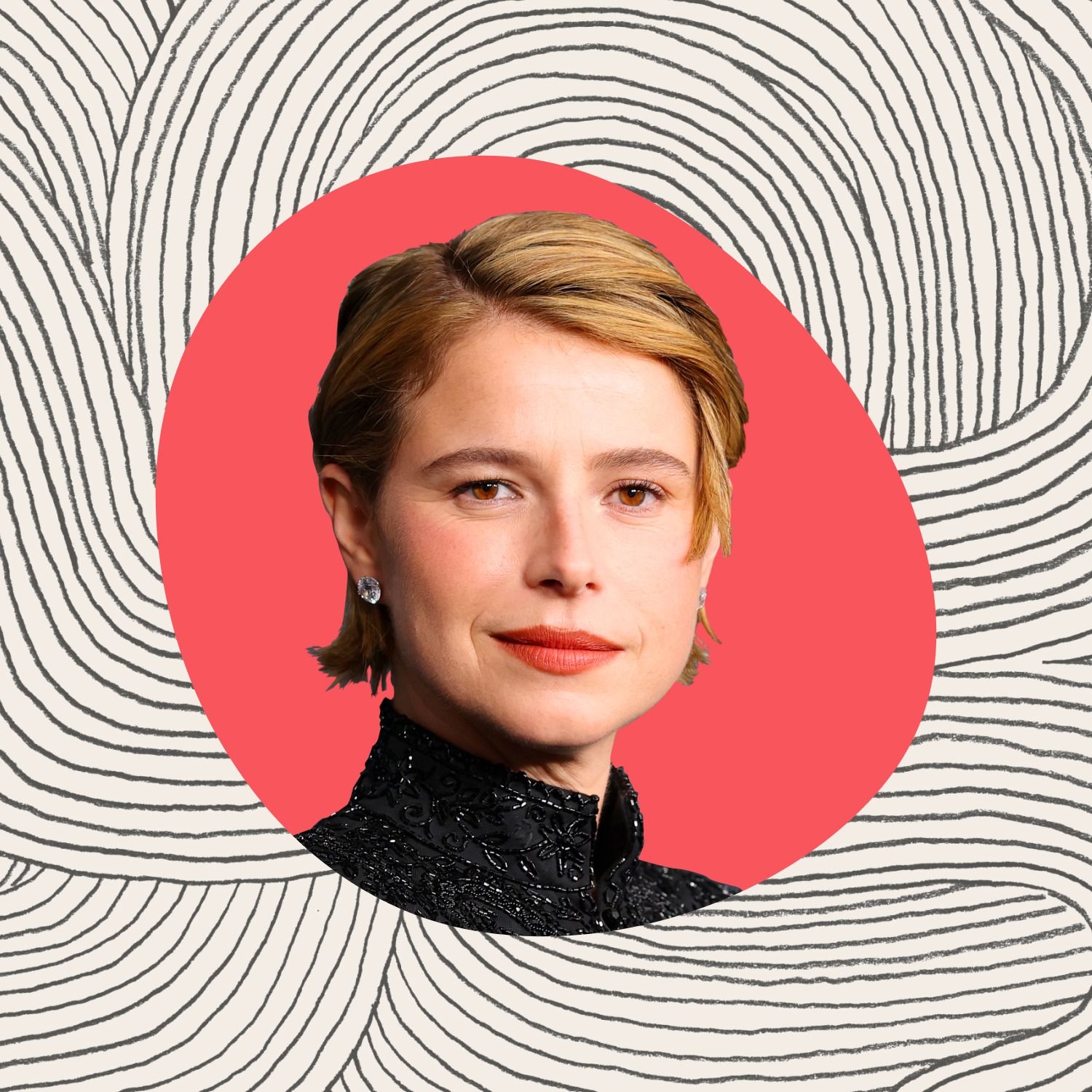
Modern Love
Jessie Buckley Became a Mother for ‘Hamnet.’ Then She Became One for Real.
00:36:11
The actor Jessie Buckley says she wasn’t surprised that she got pregnant right after she finished shooting “Hamnet.” The film — starring Paul Mescal as William Shakespeare and Buckley as his wife, Agnes — tells the story of a couple grieving the loss of their only son. “When I was filming ‘Hamnet,’ I deeply wanted to become a mother,” Buckley says. “And it was such a gift to move through this woman and her motherhood and her love and her loss before I became a mother myself.” On this episode of “Modern Love,” Buckley describes how she was able to access the vulnerability she portrayed onscreen. And she talks about how her life has changed since having her own child. Plus, she reads the Modern Love essay “The Wrong Kind of Inheritance” by Victoria Dougherty.
Loading summary
Transcript165 lines
- [00:00]
Narrator/Announcer
You know how every relationship has chapters. The good years, the hard ones, the nights. You almost call it, but don't. The New Year's from Spanish filmmaker Rodrigo Sorogoyan is about that. Ten New Year's Eves, one couple, and everything that happens between the kisses. It's tender, complicated, completely real. Stream the New year's exclusively on MUBI, the streaming service dedicated to great cinema. Get 30 days free@mubi.com NYT that's M u b I.com NYT for a whole month of great cinema.
- [00:34]
Anna Martin
Love now.
- [00:35]
Jessie Buckley
And did you fall in love last Fell. I love love, but stronger than anything for the love love.
- [00:40]
Anna Martin
And I love you more than anything.
- [00:43]
Commercial Voice 1
You're still up.
- [00:44]
Jessie Buckley
Love.
- [00:48]
Anna Martin
From the New York Times, I'm Anna Martin. This is modern love. I just saw the new movie Hamnet, starring Paul Mescal and Jesse Buckley. They play William Shakespeare and his wife Agnes, grieving the loss of their only son.
- [01:03]
Commercial Voice 2
And.
- [01:03]
Anna Martin
And while a movie is fiction, it's based on real events that might have inspired Shakespeare to write his play Hamlet. This is a devastating, brilliant movie. Jessie Buckley is masterful. I think she stole the show, which is why I was so excited to sit down with her to talk about this role. Her experience of playing a mother on screen, and then the experience of becoming a mother in real life. Plus, she reads an essay about the unbreakable bond between a mother and a daughter.
- [01:36]
Jessie Buckley, welcome to the show.
- [01:38]
Jessie Buckley
Oh, thank you. Thanks for having me.
- [01:40]
Anna Martin
You recently had a baby. Congratulations.
- [01:43]
Jessie Buckley
Thank you.
- [01:44]
Anna Martin
How is everyone doing?
- [01:45]
Jessie Buckley
Everyone's doing great. It's. I mean, everything's different.
- [01:50]
I remember one of my friends, when I was pregnant, sent me something that really resonated with me and was, like, such a little gift. But she said, just remember that you are also a new thing. Everything's new, you know, this little human's new, you're new, your relationship's new. The whole. Your whole relationship to the world is new. It's intense, but it's just. I just love it, love it so much.
- [02:22]
Anna Martin
You are also a new thing is a beautiful and wise sentiment. Can you give me a sort of specific way? And it can be really small that things are new now that you're a mother.
- [02:35]
Jessie Buckley
I think the thing that you get reminded of the most is, you know, a child is discovering so much so quickly at such, you know, when they're just born and they're incubating so much information. But the thing that I'm reminded of is awe. Like how is, like how much awe and discovery and that's what I feel. And awe can sometimes feel very vulnerable, you know, because you don't have kind of. It's so new and you don't necessarily have kind of control of this new discovery. You're just in relation to it. And it's such a kind of immediate, pure, very primal.
- [03:23]
Thing. And I guess as we get older, we think we, we think we have control. Yes. And yeah. Yeah.
- [03:31]
Anna Martin
I was on the train recently and I saw. I mean, I don't know, I'm not inside this baby's brain, but what I perceive to be the baby discovering it had a thumb. You know, I'm looking at my own thumb. I'm like, I don't even think about this thumb, which is sort of what you're saying. But it's like I saw this baby sort of looking at their thumb and being like, what the. And that's a beautiful to. To have so many thousands of moments like that with your baby. Thousands, hundreds, many moments with your baby a day. Must be remarkable.
- [04:00]
Jessie Buckley
God, yeah, it's. I really can see her little personality start to come through.
- [04:09]
I see this life force in her and determination. And.
- [04:18]
I hope she loves life as much as I do.
- [04:24]
Anna Martin
I'm so excited to talk about Hamnet. This is a story about the death of Shakespeare's 11 year old son Hamnet and how that inspired his play Hamlet. The movie does not focus on Shakespeare. The film is more about your character Anges, who's based on Shakespeare's wife. Can I ask you the first thing that strikes me when we see her on screen, you on screen playing her, is her wildness? Right. Like one of the first scenes, she's curled up in a tree. She has this sort of mystical connection with nature, with the wild. She's dirty, she's taming falcons, she loves herbs. Does that wildness resonate with you? And if so, in what ways?
- [05:11]
Jessie Buckley
Oh, no, it deeply resonates with me. I think it probably resonates with us all in some shape or form. We've just become so disconnected from our own wildness and our own relationship to the earth and to nature and to our own condition as humans and human nature.
- [05:33]
I grew up in nature. I grew up in a place called Killarney in southern Ireland, in Kerry. And.
- [05:42]
It'S surrounded by mountains and lakes. And.
- [05:46]
I started off my life living in the back of a shed of a guest house that my father used to own. And then we moved up to a house at the bottom of a mountain. And I very much feel like growing up in an environment where Things grew because they wanted to grow. And, you know, climbing mountains gave you an absolute respect that you're only a tiny, tiny thing in relation to a world that is.
- [06:16]
So big.
- [06:18]
Anna Martin
To me, that also resonates with the character of Agnes. Like, we see her have this wild, primal, innate nature, and in fact, you know, she gives birth inside of a tree. I mean, you just gave. Did you think of that scene when you two were giving birth?
- [06:35]
Jessie Buckley
Were you like, hell, no. I was like, okay, fucking.
- [06:39]
Commercial Voice 3
Get this.
- [06:40]
Jessie Buckley
Get out.
- [06:44]
Yeah.
- [06:44]
Anna Martin
No, no.
- [06:45]
Jessie Buckley
I. You know, I feel like what is deemed fearful about this woman is that she is uncompromising about where she actually feels alive. I think when I was filming Hamnet, I deeply wanted to become a mother in myself. And it was such a gift to move through this woman and her motherhood and her love and her loss before I became a mother myself. And I think even, you know, getting pregnant and throughout my pregnancy and how I was thinking about what kind of birth I wanted and how I would be autonomous in choosing that when as much as I could was very empowering. So I think I didn't give birth to the root of a tree. Okay, we've cleared that up. But I did want to be in my body as much as I could and be able to choose what kind of birth I wanted to have.
- [07:46]
Anna Martin
I mean, you're bringing this up that when you were filming Hamnet, you were not a mother yet, but you were able to. I mean, when I watched you in this film, you so embodied that kind of wild love as we're talking about, that, like, primal tenderness of motherhood. What did you draw on at that time? You weren't pregnant yet. What did you draw on?
- [08:16]
Jessie Buckley
Um, I think that was one of the things that I.
- [08:22]
I probably didn't realize it at the time, that this was the thing that I was looking for. But to step into tenderness as a strong woman was something that I. It was like the water that I wanted to drink the most. And until I kind of got to live it through this woman, I didn't realize it.
- [08:40]
And sometimes there's not a vehicle for that if you're strong, you know, and it's tenderness is such a. Like, it's actually incredibly strong to be tender, and it's also deeply vulnerable to be tender. And actually, to leave from a place of that softness was. I mean, it's changed me. It's changed my.
- [09:02]
Everything.
- [09:04]
Anna Martin
You know, you were embodying this tenderness, this character. As we said before, you were a mother yourself. And now, you know, the film is out you have a baby. And I wonder, as you watch this film, knowing what, you know now, being a mother now, is there. Do you think you got it right? Like, is there anything you would have done differently?
- [09:29]
Jessie Buckley
Um.
- [09:32]
I don't think. No, I don't. I don't think there's anything I would have done differently. I.
- [09:39]
I watched it for the first time when I was eight months pregnant, and.
- [09:45]
It was kind of.
- [09:47]
Anna Martin
What was that like?
- [09:49]
Jessie Buckley
Incredibly intense. Yeah. I don't know. I felt like.
- [09:57]
I'm not surprised. I got. You know, I got pregnant a week after I finished filming.
- [10:04]
Commercial Voice 3
Like.
- [10:06]
Jessie Buckley
I had coaxed, you know, it was.
- [10:10]
Anna Martin
Well, you said you wanted to be a mom, right?
- [10:13]
Jessie Buckley
Yeah. Yeah. It was also quite intense to have that need while I was in this place of absolute mother and it not be a real thing yet. You know, there was moments where it broke my heart because I was living this altered world where I was absolutely that. But, you know, just be patient. Yeah.
- [10:36]
Anna Martin
I mean, talking. We've spoken about.
- [10:42]
How motherhood is this kind of totalizing change for you. We've spoken about the kind of tenderness you weren't able to touch before you became a mother. In Hamnet as well. We watch as Agnes, you know, really falls in love with her children. I mean, it's just this pure, beautiful, tender love. And at the other end of the spectrum, in your film as well, we have this scene which everyone is talking about. Certainly.
- [11:10]
It left an impression on me. An impression is even too light a word. Anges does everything she can to keep Hamnet, her son, alive. He is sick. It doesn't work. He dies. And there's this scene where you.
- [11:29]
Do a scream, a primal scream. And I guess I would love to know what that was like for you inside of your body.
- [11:41]
Jessie Buckley
Um. Well, I didn't know that scream was gonna come. That was not in the script. Um.
- [11:48]
Anna Martin
Oh, my gosh.
- [11:51]
Jessie Buckley
Yeah. I don't. None of us knew that was gonna come. Um, and we didn't rehearse it. We just kind of opened up the day. And I guess.
- [12:03]
As a team, we're all going into a river, you know, but we don't know where that river's gonna take us. And.
- [12:14]
I guess at that point, we're probably midway through filming, and.
- [12:22]
I had got very close with little Jacoby Jupe, who plays Hamnet. And, you know, Paul and I were.
- [12:30]
In it, and I was deeply connected to all of them.
- [12:37]
And I guess, you know, when. When you get some. A story like this, it is kind of impossible to imagine where grief begins. And ends with a moment like that. And how to actually.
- [12:55]
What do you, you know, how do you express that? I can't even imagine the reality fully of that, but it was. I know grief, I know love. I know what I felt for that little boy. And.
- [13:12]
I feel like in some ways that scream isn't. It's very. It's ancient. It's kind of like a scream for a hundred mothers who've lost their children in some way. And with auto respect, I guess I just tried to go as far in that river as I could and let that come through me in a. As a vessel. And I don't know what it is. It just. That's what it is.
- [13:43]
Anna Martin
Stay with us.
- [13:56]
Narrator/Announcer
You know how every relationship has chapters? The good years, the hard ones, the nights. You almost call it, but don't. The New Year's from Spanish filmmaker Rodrigo Sorogoyan is about that. Ten New Year's Eves, one couple, and everything that happens between the kisses. It's tender, complicated, completely real. Stream the New year's exclusively on MUBI, the streaming service dedicated to great cinema. Get 30 days free@mubi.com NYT that's M u b I.com NYT for a whole month of great cinema.
- [14:28]
Commercial Voice 3
Don't just imagine a better future. Start investing in one with betterment. Whether it's saving for today or building wealth for tomorrow, we help people and small businesses put their money to work. We automate to make savings simpler. We optimize to make investing smarter. We build innovative technology backed by financial experts. For anyone who's ever said, I think I can do better. So be invested in yourself. Be invested in your business. Be invested in better with betterment. Get started@betterment.com Investing involves risk, performance not guaranteed.
- [15:00]
Commercial Voice 2
Tis the season of gifting and holes to deck. And the who's in Whoville were in love with new tech. Where can we find Sonos and Samsung and Nintendo? They shouted. Would they find it in one place? This they questioned and doubted when suddenly a who yelled, walmart's the place to start. And each who added headphones, TVs and games to their carts. With Walmart, their shopping was done in a flurry. They cried out, who knew? And ordered their gifts in a hurry. Shop the latest tech gifts in the Walmart app.
- [15:40]
Anna Martin
You've been talking about. You know, the transformational power, as it were, of motherhood that we certainly see in Hamnet and we also see in this modern love essay you're gonna read for us today. Before we get into it, is there Anything you want to say to tee up this story?
- [15:57]
Jessie Buckley
Tee up this story.
- [16:02]
It's no joke being born.
- [16:06]
It's a big old thing.
- [16:07]
Anna Martin
That's not what I thought you were gonna say. It's a big it is no joke being bo. I agree with you.
- [16:14]
Jessie Buckley
And how kind of beautiful and vulnerable. And you know it can give you the most surprising strength.
- [16:26]
The Wrong Kind of Inheritance By Victoria Daugherty.
- [16:32]
I always knew something would happen to one of my children. I never said it out loud. I didn't allow myself to dwell on it, but the feeling was there, a vague superstition that visited me on my paranoid days. The kind of day that would find me in my children's room at midnight making sure they were still breathing.
- [16:54]
Some of this superstition is in my heritage. I'm from a long line of Slavs from what used to be Czechoslovakia, where a lot of people believe in curses.
- [17:06]
But my fear is bolstered by the fact that both my mother and my mother's mother have lost children in devastating ways. Sixty years ago, my grandmother daringly escaped from post war Czechoslovakia to join her husband, only to be foiled by the Communists from reclaiming the three daughters they had left behind. My mother and two aunts, my grandmother wasn't able to see her children again for two decades. By that time, my mother had already lost her four year old son, Victor, when he died from the flu in their tiny Czechoslovak village.
- [17:44]
Months later, with my surviving brother in tow, she risked prison and the threat of machine guns to escape to the United States, where she gave birth to.
- [17:59]
Our tradition holds that curses come in threes, and while the change in geography was a definite improvement for our family, I feared that the curse couldn't be far behind. So I waited my turn. When it came, I knew it would be something of biblical proportions, on par with swarms of locusts or the earth swallowing me whole, something I wouldn't be equipped to handle. After all, I was no freedom fighter or border crosser. I was just a middle class girl from the Chicago suburbs. I was sure my soft American life would be my undoing once it was my turn to share some family anguish. It had already taken its toll on my relationship with my mother, creating a gulf between us we couldn't seem to bridge.
- [18:53]
My relationship with my mother seemed to consist mostly of awkward lunches that started with a bang of best intentions but quickly fizzled, often ending mid meal with her saying, well, got to go. I wondered if it was a cultural thing. As a child, I was embarrassed by everything about my Mother, her accent, her conservative political views, her va va voom beauty and the way she dressed me like an office the rack hybrid of Elizabeth Taylor and Ivana Trump. But it went deeper. Behind my mother's high pitched giggle and enormous rhinestone brooches under her Cleopatra style cosmetics and bold animal print pantsuits was a remove and sorrow I could never penetrate. It was a result of years of being stalked by the Czechoslovak secret police, of missing her parents, of being forced upon resentful relatives, and more than anything, of not being able to save my brother. I'd often tried to get her to talk about it. I wanted to know who my brother was and more important, to get closer to her. But she always shut me down. You have no idea, she would say, ending the conversation. And she was right. Because even after becoming a parent myself, I couldn't, wouldn't comprehend what it felt like to lose a child. Until last year.
- [20:29]
A little more than halfway through my third pregnancy, my husband and I learned that our baby had a rare tumor on her tailbone. In a matter of weeks, it grew so large and distinct within me that strangers asked if I was carrying twins. By my last trimester, the tumor was the size of a basketball and had begun to compromise the baby's kidney and liver function.
- [20:55]
Josephine was born by cesarean section seven weeks early. She was not breathing on her own. She was rushed into eight hours of surgery. Her surgeon was able to remove the mass and reconstruct her bottom, and we hoped that would be the end of it. But it wasn't. As it turned out, Josephine's tumour wasn't benign, as originally predicted, but aggressive and cancerous.
- [21:23]
In the months following her birth, she would survive five surgeries and several rounds of chemotherapy. The curse had arrived and it was a doozy.
- [21:38]
But the earth didn't swallow me whole. I was able to keep standing and be there for my daughter for one simple reason. My mother was there for me.
- [21:50]
When Josephine's tumor was discovered, I called my mother, not to ask for help, but just to tell her. She immediately packed, left her home and job in Chicago and drove through the night to our home in Virginia. As Josephine's tumor doubled in size weekly and her condition worsened, my mother's visits became more frequent. She helped me stir oatmeal when the pain in my back kept me from standing at the stove. She took my children to the park. When I had a hard time walking, she rubbed my feet at night. After her birth, Josephine had to be operated on and treated by specialists at the children's Hospital of Philadelphia, and my mother bunked with me at the Ronald McDonald House. When Josephine was transferred to University of Virginia Hospital, my mother moved in with us and stayed for months.
- [22:47]
She kept late nights at the hospital, staying with Josephine so that I could care for my two other children. She tended to Josephine's surgical scars and cared for her ostomy with the expert hands of a nurse. At times, she stared so fiercely into Josephine's eyes that I thought she alone was keeping my daughter alive.
- [23:11]
She cooked and cleaned our house. She laughed with us. She even told stories about my late brother.
- [23:19]
One night, after we caught my son playing target practice in the bathroom, aiming his urine at imaginary bullseyes and hitting everything but the toilet, she said, that's nothing. One time I found your brothers shooting the pee at each other like they were shooting the gun. Bang. Bang. Having two boys, there was always something funny.
- [23:43]
Later she told me that after Victor died, she couldn't even understand how the sun could be shining. It made no sense to her. It was the first time she had ever spoken to me this way.
- [23:58]
It sounds strange to hear myself say it, given the pain and turmoil of Josephine's battle, but my mother and I had a wonderful time. We cooked goulash together and spoke in our first common language, Czech. My mother got to know our friends, and our friends remarked on how similar we are for the first time. This observation didn't leave us looking warily at each other, perplexed and uncomfortable. The behind the back hand gestures I had once employed to signal to friends, don't mind her, she's a little crazy. Have been replaced by a desire to hold her hand as we walked along the street. I'm no longer embarrassed when my mother gives my friends the lesson in the life, as she puts it, by extolling her love for Richard Nixon, her favorite American president.
- [24:52]
Josephine's illness may well be part of a curse, but it is still the best, worst thing ever to happen to me. While robbing me forever of my peace of mind, it has given me my mother.
- [25:08]
I'm still too superstitious to declare victory, but it looks as if my daughter is going to make it. If so, Josephine will have broken the curse and at last brought a mother and her child together in her family. Instead of inserting a painful wedge.
- [25:28]
My mother and I were talking about my late brother a few weeks ago. It was near Victor's birthday, which has always been a difficult time for her, a time when she normally would have withdrawn and hid from everyone until the day passed. But not this year. She was too busy assembling my son's Millennium Falcon Lego brick by brick, and painting my three old daughter's toenails a tarty red. As she cut the tags off a hot pink leopard snuggly she had bought for Josephine, her eyes began to fill with tears.
- [26:04]
For 40 years I had a hole in my heart, she whispered.
- [26:12]
And now that hole is filled.
- [26:25]
Anna Martin
We'll be right back.
- [26:39]
Narrator/Announcer
You know how every relationship has chapters? The good years, the hard ones, the nights? You almost call it, but don't. The New Year's, from Spanish filmmaker Rodrigo Sorogoyan is about that 10 New Year's Eves, one couple, and everything that happens between the kisses. It's tender, complicated, completely real. Stream the New Year's exclusively on Mubi, the streaming service dedicated to great cinema. Get 30 days free@mubi.com NYT that's M u b I.com NYT for a whole month of great cinema.
- [27:11]
Commercial Voice 4
Healthcare can feel complicated. That's why Optum uses technology to connect the people and processes that make healthcare easier, more affordable, and more effective. We're making it clearer for you to know exactly what your benefits cover and to help you better manage your health. We're coordinating care between your doctors and your technology. We believe better, simpler health care is always possible. That's healthy optimism. That's Optum. Visit optum.com to learn more.
- [27:42]
Commercial Voice 1
Getting more is a Myloes Pro Rewards member is easier than ever with the Lowes app. Download it today and earn 500 points the first time you log in. Plus, your digital wallet helps you scan, save, earn and access what you need to manage it all in one place. Download the Lowe's app and take advantage of your Pro benefits. Today, Lowe's we help you save. Valid 12,125 1726 offer valid for first login per organization only Loyalty program subject to terms and conditions. Additional restrictions apply. Visit lowe's.com terms for more details. Subject to change.
- [28:22]
Anna Martin
Thank you so much for that reading, Jesse. While it's still fresh for you, what's coming up? What resonates.
- [28:31]
Jessie Buckley
Oh.
- [28:38]
So much?
- [28:42]
I've been thinking about my mother quite a lot too recently. And.
- [28:48]
You know, this curse, this kind of.
- [28:54]
Ancient curse that gets handed down through generations and how hard it is to dislodge yourself from that curse. Like something has to interrupt your life in some way to kind of wake you up and.
- [29:09]
Wake you up into yourself again and find your voice outside of the curse.
- [29:18]
And.
- [29:22]
I. I definitely have experienced my mother crack a curse for me and for Us as a family recently. And to see her be so brave and courageous as a woman has made her an even more incredible and human mother.
- [29:49]
Yeah.
- [29:51]
Anna Martin
When you say she broke a curse, your mother.
- [29:56]
What do you mean by that?
- [30:03]
Jessie Buckley
My first memory of seeing the effect of telling a story and the need to express something was seeing my mother sing in church.
- [30:17]
And she's a harpist and a singer, and she is a woman who's always had her two hands up at the world. Like she wanted so much.
- [30:30]
And didn't realize that she could choose so much more of her life than what she was being taught she was allowed to choose for herself. She spent a lot of the time.
- [30:44]
Kind of in the corner of her life. You know, this woman who was so hungry to be in the world spent a lot of her life in the corner, living a little bit of it or being heard in a little bit of it. And then I'd see her sing in church and it was like it was life and death. Like her need to feel.
- [31:09]
And put something out into the world, like from her corner. And I'd see this magical thing happen where by her courage to share her voice and her whole self in song, she would basically pulverize the defense system in the people that were listening around her. And I'd see these old men with like tears streaming down their face come up.
- [31:38]
I guess in the moments that she sang, she was so full that it couldn't help but touch even the people that were most afraid to be touched or feel something. And I know for many years in her life as a woman and as a mother and as a wife, she didn't really feel she had the capacity to live that fully in herself. And until a few years ago, she went back to university and retrained as a music psychotherapist, having saved 1250 since she was very young to go and get a third level education.
- [32:14]
My parents are no longer together. She now owns her own home. She now works in palliative care in neonatal, but also for elderly people. And.
- [32:26]
She'S in her 60s now, and she's just started a whole life for herself. And it's a very, very brave thing to do. And it's so beautiful what she does, like, in her work because, you know, for much of her life, people didn't listen to her. And now people who are at the right at the edge of their life or haven't got the capacity to communicate or, you know, tiny, tiny babies that are very sick that have never. She's waking something up in these people and has found in freeing herself and being as full in her life, this wild intimacy with things that might be just about to be lost. She's amazing. Amazing woman. Her name's Marina.
- [33:13]
Anna Martin
Marina. I was just gonna. Jessi, thank you for sharing that. I have the real privilege of watching your face as you tell this story. And the smile and the light that is coming from you as you talk about your mom is really beautiful. And I was gonna ask what's her name? Marina. And it makes me wonder, you know, this essay is a multi generational essay. It's not just about the author and her mom. It's also about the author and her daughter. And I guess I just wonder, to continue that thread, like, having watched your mom embody this kind of freedom, like, what do you hope your daughter sees in you as she gets older and as you get older as well?
- [33:55]
Jessie Buckley
Oh, God. Oh, I have. I. I.
- [34:04]
Just. I think the. The thing I can hope to impart to her, and I'm sure she's going to go on her whole own trajectory, and I. And she should.
- [34:17]
Is.
- [34:20]
We have one life and we're always going to be. There's always going to be things in our life that are going to make us doubt.
- [34:33]
Or be afraid or feel like we're to be. You know, it would be safer to be smaller in some way. And I see this little life that's so new, but so full and so on, kind of tarnished by an idea or a projection of what we're supposed to be. And I just hope that if I can pass anything onto her in the way that my mother's passed on to me, is that all the parts of you are not too much. You know, the world needs all of you. And that means incubating the struggles is like living through the struggles, the shadows, like the things that are going to challenge you. You have to metabolize it and incubate it and. And it's. You're not. There's no too muchness. It's only to be lived fully.
- [35:26]
Yeah.
- [35:30]
Anna Martin
To sort of close us and certainly actually, you know, bring us around back around to.
- [35:39]
Your own family. Being a mother, I saw recently at a. At a showing of Hamnet, you took your family and you also took your midwife. Is this true?
- [35:50]
Jessie Buckley
How do you know that?
- [35:51]
Anna Martin
We do our research here at the New York Times.
- [35:57]
And, you know.
- [36:00]
I mean, I wonder if you are the first person to ever bring a midwife to a red carpet.
- [36:05]
Jessie Buckley
Oh, my God. I wonder. I know.
- [36:07]
Anna Martin
I wonder, you know, why was it important to have Your midwife, at this point, at this film with you.
- [36:15]
Jessie Buckley
Because I love. I love women.
- [36:20]
I love my. I love them. I think they're amazing. And.
- [36:27]
She was this extraordinary woman who was part of a very, very.
- [36:33]
Important moment of my life. I think Agnes is an extraordinary woman.
- [36:40]
And I wanted them to meet, I think. Yeah. Midwives, women, births, life, death. You know, she knows what that is.
- [36:53]
Anna Martin
What did she think of the movie? What did she say?
- [36:56]
Jessie Buckley
Well, I think it's quite strange. You know, she saw me, like, growling like a buffalo on my bathroom floor for 26 hours, you know, like she saw every ounce of me. And then she saw the reality. Sure, sure, sure. And then I'm in a dress, and she's like, well, you look very glamorous.
- [37:14]
Anna Martin
That is so sweet.
- [37:16]
Jessie Buckley
And I'm almost like. I'm. I'm like, so. I'm. I'm like, totally. I'm more so embarrassed to be glamorous because she knows me in my most primal.
- [37:27]
Anna Martin
She saw the wild thing. She saw the primal thing.
- [37:30]
Jessie Buckley
She saw the primal thing.
- [37:33]
Anna Martin
Was your mom there at that. At that showing?
- [37:35]
Jessie Buckley
Yes, she was. Yeah.
- [37:37]
Anna Martin
And what did she think of the film?
- [37:39]
Jessie Buckley
I don't know.
- [37:43]
I think sometimes it's too much. You know, these things are too much for our parents to kind of. They know you so privately and intimately. And then my mom is in so much of my work, you know, in so much of me. And.
- [38:02]
I hope. I hope in all. I hope. I hope she recognizes that I'm trying to kind of keep.
- [38:10]
Something that I saw in her when I was very young, singing.
- [38:17]
I hope she can see that I'm trying to keep that voice going. You know, it's.
- [38:22]
Anna Martin
I was just gonna say, you telling me about watching her play the harp. I was like, wow, in that room, watching you in the film, I wonder if it was her experience of that. Your version of playing the harp. How beautiful if it was.
- [38:38]
Jessie Buckley
Yeah.
- [38:40]
Anna Martin
My gosh. Jessie Buckley. Thank you.
- [38:44]
Jessie Buckley
Thank you.
- [38:45]
Anna Martin
I really appreciate it.
- [38:46]
Jessie Buckley
Thanks so much. Thanks. It was so lovely.
- [38:55]
Anna Martin
The Modern Love team is Amy Pearl, Christina Josa Davis Land, Elisa Gutierrez, Emily Lang, Jen Poyant, Lynn Levy, Reeva Goldberg and Sarah Curtis. This episode was produced by Amy Pearl and Sarah Curtis. It was edited by Lynn Levy and Jen Poyant. Original music in this episode by Carol Savarrow, Diane Wong, Alicia Bi itup, Marion Lozano, Rowan Nimisto, Sophia Landman and Dan Powell. Dan also composed our theme music. Our mix engineer is Daniel Ramirez. The Modern Love column is edited by Daniel Jones. Mia Lee is the editor of Modern love projects. If you'd like to submit an essay or a tiny love story to the New York Times, we've got the instructions in our show notes. I'm Anna Martin. Thanks for listening.
- [39:51]
Movie Trailer Announcer
Twentieth Century Studios presents the upcoming comedy Ella McKay from Academy Award winning writer director James L. Brooks. Emma Mackey plays Ella McKay, an idealistic young woman who juggles her family and work life in a story about the people you love and how to survive them. Featuring an all star cast including Emma Mackey, Jamie Lee Curtis, Jack loudon, Kumail Nanjani, IA Debery, Julie Kavner. With Albert Brooks and Woody Harrelson. Ella McKay. Only in theaters Friday.