← Modern Love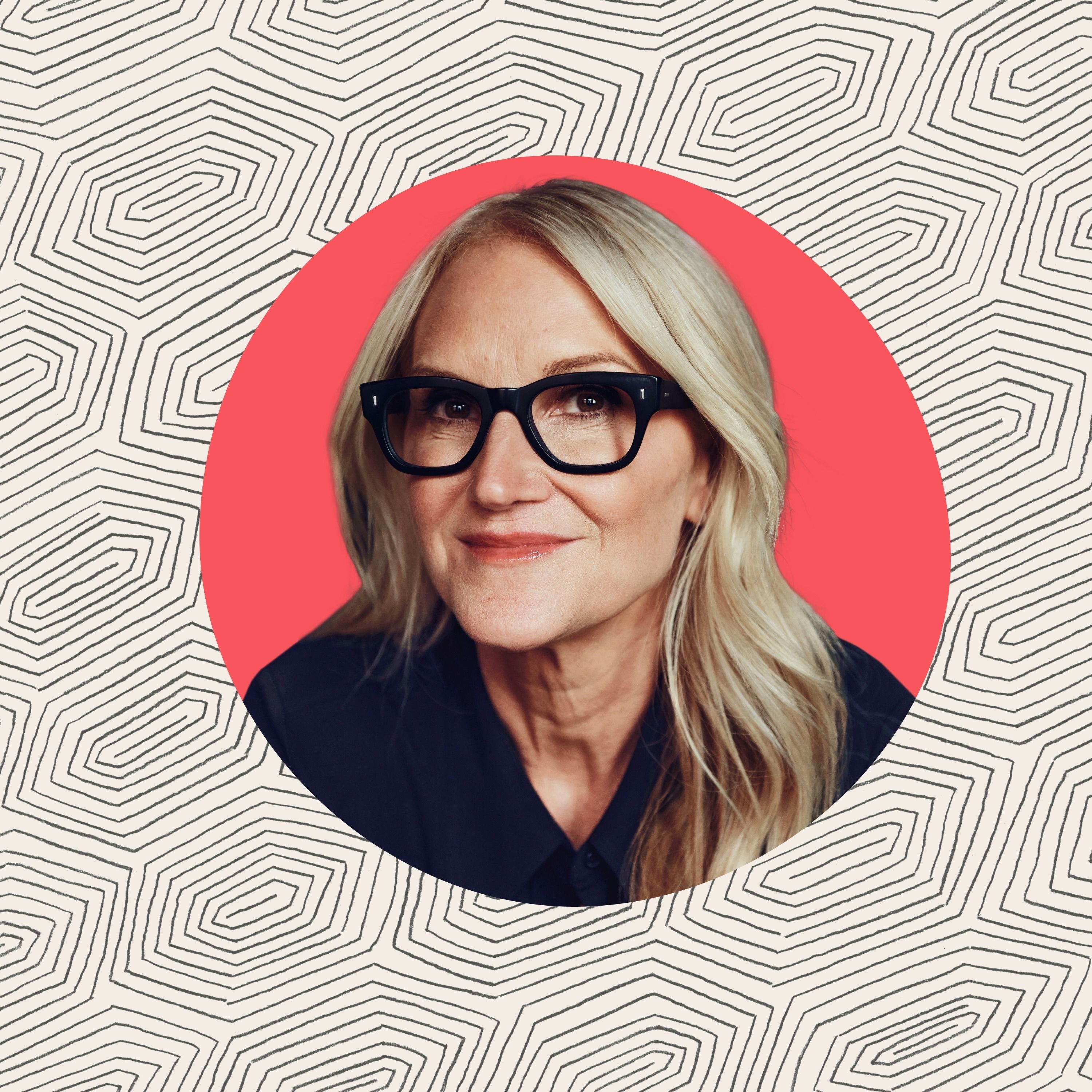
Modern Love
Let Mel Robbins Share Her 5 Tips for a Healthy Relationship
00:50:21
The best-selling author and motivational podcast host Mel Robbins is known for her blunt advice and viral wisdom, from The 5-Second Rule to countless proverbs on relationships, confidence and everyday stuck-ness. Her most recent book, “The Let Them Theory,” has given her readers a fresh perspective for navigating disappointment, rejection and uncertainty in life. Today, Robbins shares fives tips for letting go of control, and explains how these transformed her marriage and her relationship with her kids. She also reads a Modern Love essay, "You Have to Let Go to Move On,” about a woman who finally learns that real love doesn’t come from holding on tighter.
Loading summary
Transcript127 lines
- [00:00]
Amazon Healthcare Ad
When you're on hold with a doctor's office or pharmacy and the operator says your call is very important to us, after the tenth time, well, suddenly your call doesn't seem very important to them at all. AmazonOne Medical has 247 virtual care and Amazon Pharmacy delivers meds right to you fast without any horrible hold music. Thanks to Amazon Healthcare just got less pain.
- [00:26]
Anna Martin
Love now.
- [00:27]
Mel Robbins
And did you fall in love last fella? I love her love, but stronger than anything else. And I love you more than anything there's to love love.
- [00:41]
Anna Martin
From the New York Times, I'm Anna Martin. This is Modern Love. Every week we explore all the messiness of trying to love, trust and stay connected to other people. Our guest today thinks a big part of staying connected is accepting what you can and can't control in a For example, someone you're into doesn't text you back, let them. Let them not choose you. Let them cancel last minute on your date. Let them forget to ask how you're doing. Let them forget your birthday. Let them. I'm talking of course about Mel Robbins. She's a best selling author, speaker and podcast host and her latest book was an instant bestseller. It's called the Let Them Theory. It's not about giving up in relationships. It's about letting people show you who they are without chasing or fixing trying to manage them. Today on the show, Mel talks about how this idea has changed her own marriage and her relationship with her kids, even just in the past year or so since she wrote the book. She also reads a Modern Love essay about a woman who finally learns that real love doesn't come from holding on tighter, it comes from letting go, even when you're hundreds of feet up in the air. Stay with us Foreign.
- [02:03]
Mel Robbins
Do you own a business that's ready to thrive? It's time to let Intuit QuickBooks take things like unpaid invoices and tracking expenses off your plate so you can take things to the next level.
- [02:12]
Anna Martin
QuickBooks is an all in one business.
- [02:14]
Mel Robbins
Solution that can help with those day to day tasks like invoicing and expenses.
- [02:19]
Anna Martin
Manage and grow your business all in one place.
- [02:21]
Mel Robbins
Intuit QuickBooks your way to money. Get 90% off for 3 months limited time Only terms and conditions apply.
- [02:37]
Anna Martin
Mel Robbins, welcome to Modern Love.
- [02:39]
Mel Robbins
Well, thank you. Thank you for inviting me. I'm really excited to talk to you.
- [02:43]
Anna Martin
We are so happy you're here. I am personally so excited to see these glasses in person, Mel. They have a fan base of their own. They really do.
- [02:54]
Mel Robbins
Well, I love my glasses because I Have horrendous vision. And this is gonna go too TMI to start, but that's sort of how I roll. I am not a candidate for contact lenses. I have really small eyeballs that are deep set, and I've had two different doctors try to fit me. And they literally, when you try to take them out and you look toward your nose and then you go to grab them, they go into the back of my eye. Oh, my God.
- [03:22]
Anna Martin
That is my true nightmare. Something getting caught in the eye back into the brain. Even though that's not how the body works, that's my true nightmare.
- [03:29]
Mel Robbins
I have had two doctors literally go, I've never had this happen. Oh, my God, I'm so sorry. And then they have to take something and pull it from the core. Oh. Oh. It has been so that you're stuck with the glasses, basically.
- [03:43]
Anna Martin
Okay, okay. Now I understand it's not okay for people that are listening. Can you describe your glasses? How would you describe this accessory?
- [03:53]
Mel Robbins
Think 1960s space engineer. Ooh, right. They're like the black. Not sexy, just utilitarian, nerdy glasses.
- [04:05]
Anna Martin
Did it make you feel like a different Mel when you put them on, or was it the same Mel? You just saw yourself more clearly, literally, figuratively.
- [04:13]
Mel Robbins
That's a great question. I had always when I. When I. You know, when you're in your late 40s and you realize that you're not a candidate for that surgery and you are going to be stuck with glasses, and you can't cheat it with the readers anymore. I started out with very thin glasses. I was in denial. I think that this was gonna be a thing. And so I had always sort of put glasses on that felt very limp, you know, very wiry, trying not to be there. And when she just put them on my face, there was like, this just felt. Feels right. Sort of like the right relationship. You can force it, Anna, but when you are with the right person, something just fits.
- [04:59]
Anna Martin
All right, so you have this scene in the book that I think explains your theory very well. It's also very apt because it's summer, people are going on vacations. You write about this one time where you realized your friends were on a trip together. You weren't invited to it. Tell me about that experience.
- [05:15]
Mel Robbins
It sucks. I mean, have you ever, like, who hasn't had the experience where you're on the couch just scrolling through social media and all of a sudden you stop on an account and you start flipping through the carousel and you're like, wait a minute, wait, wait. They went away on a Beach trip. They went away and saw a concert. They went away on a golf trip.
- [05:37]
Anna Martin
And wait, this happened? Tell me exactly your experience. You'd like, were you on the couch? Were you flipping through Instagram? Like, how did it happen?
- [05:43]
Mel Robbins
That's exactly what I said. I was just on the couch. And honestly, I saw this group photo, and somebody's outfit was terrific. So I took my pointer finger and thumb and sort of did that motion to expand to try to figure out what the dress looked like. And as I expanded in, I'm like, I know everybody in this photo. Wait a minute, did they go away? Because that doesn't look like our neighborhood. And in those moments, first of all, it's a mentally healthy response to feel that sting. Because of course you want to be included. It hurts when you're not included. And for the first 54 years of my life, in those moments when I found out that I wasn't included or somebody was gossiping behind my back, or somebody did something that hurt my feelings, I didn't know how to process that in a way that was healthy. I either started trashing myself and saying, you're a loser, nobody likes you, blah, blah, blah, blah, or you start trashing the other people. And what ends up happening is all of that negative emotion separates you both from people that you want to be connected with, and it also separates you from the power that you have in that moment. And that's what the let them theory is about. Like, a lot of people don't understand that the let them theory is a modern tool that summarizes ancient wisdom. It's how you apply stoicism and radical acceptance and detachment theory and Buddhism. In a moment in modern life where you feel hurt or overwhelmed or worried, I realized, wait a minute, you can let other people go away. Let them. And for me, sitting on the couch, Anna, the tone was like this. Let those bitches go away. You can add a little. You can add a little attitude, because when you say, let them, let them do construction. Let them have a long line today at the grocery store, let my mother be in a bad mood, you typically feel a little attitude, like, well, I'm superior to you totally. And that superiority helps you detach from the emotions that normally make you feel terrible.
- [08:01]
Anna Martin
Huh?
- [08:01]
Mel Robbins
Tell me what you mean by that's how it works.
- [08:03]
Anna Martin
Yeah, yeah, yeah. The superiority of it.
- [08:04]
Mel Robbins
That's how it works.
- [08:05]
Anna Martin
Yeah.
- [08:06]
Mel Robbins
Yes. Well, because typically, in a situation where your friends have gone away without you and you feel excluded, you feel like the loser.
- [08:14]
Anna Martin
Yes.
- [08:15]
Mel Robbins
And so you, in that moment of seeing it feel like they're above me and I'm some loser. That's not included.
- [08:22]
Anna Martin
I see what you're saying.
- [08:23]
Mel Robbins
When you say let them, something fascinating happens. Because the let them theory is about power and control. What's in your power and what's in your control and what's not. And so when you say let them, it's like a cue to say, this is beyond my control. I am recognizing that this is beyond my control. Therefore, if it's beyond my control, why would I spend time and energy torturing myself over something I have no power to change? Because your power is not in managing other people. Your power is in the second part of the theory where you say, let me. And so I in that moment said, well, let me remind myself, first of all, they're allowed to go away. Second, I'm responsible for my friendships. Like, when's the last time I invited them anywhere?
- [09:16]
Anna Martin
Right?
- [09:16]
Mel Robbins
When's the last time I had them over? Why do I expect to be invited? Like, maybe if I want to be included, I should actually be making plans more and not in that creepy passive aggressive way where you're like, hey, saw y' all went away. You know, like, not like that, but say, I'm throwing a dinner party in two weeks, I'd love to see you guys. Or hey, I would love to go for a walk this week. And you know, are you around on Saturday? And so that's within your control, what you do or don't do. And then the final thing is, the third thing that's in your control is how you respond to the emotions that rise up. Cause the emotions are valid. It is a sign that you're normal, if you're hurt, if somebody doesn't include you. But you get to choose whether or not those normal emotions run you over or whether or not you let them rise and fall. And then you choose how to respond.
- [10:10]
Anna Martin
Is that where the, is that where the. I'm like still thinking about this word you used, which is superiority, because generally there's like a negative valence to that. Right. But I'm, I'm, I'm trying to understand. Yours is not so much like a superiority over others or like a negative interpretation of it. Can you explain that piece of the let them theory a bit more?
- [10:30]
Mel Robbins
Yeah, yeah. It's superiority over your own emotional response to what's happening.
- [10:35]
Anna Martin
That's what I was. Yeah.
- [10:35]
Mel Robbins
See, not. We're all, we're all basically eight year old children. Every single adult that you meet and that you deal with every day. Is an 8 year old in a big body. None of us know how to manage our emotions because that is a skill that you have to want to learn and you have to practice it because people are really annoying and life is really stressful. But that doesn't mean you have to allow other people's opinions, moods, expectations and beliefs to drain your time and energy. And when you then say, let me, you then take the power back and you cue yourself to say, let me choose if this is worth worrying about. Let me choose if this is a conversation I want to engage in. Let me choose whether or not I'm gonna spend seven hours reading the headlines and feeling freaked out and powerless, or if I'm gonna take all that power back and go focus on making the changes happen that I wanna see that I'm worried about in this world or in my family or in my community. And it was a huge wake up call for me to realize how much power I had been unknowingly giving to other people's opinions, to their behavior, to their rudeness, to their moods, to all that stuff.
- [11:54]
Anna Martin
I kind of hate this word. But as like a true control freak, it is deeply tough, right, to like, loosen the vice grip of my idea of control, my impulse to control. I guess I wonder, like, where do you land? Are you a similar kind of control freak? And if so, kind of know that.
- [12:16]
Mel Robbins
I can't believe you even have to ask.
- [12:18]
Anna Martin
You know, you got to pose the question, where do you think that impulse comes from in you?
- [12:23]
Mel Robbins
Well, I know where it comes from. And by the way, everybody's a control freak. The range is how we express it on the outside, huh?
- [12:33]
Anna Martin
Yeah.
- [12:34]
Mel Robbins
And here's the good news. The let them theory isn't going to force you to stop controlling things. The let them theory teaches you what you can control. So it makes you way more effective at how you use your time and energy and how you direct it at what's actually in your control instead of burning through your time and energy trying to change and manage other people. And so, yes, I'm a control freak. I'm also married to a Buddhist, which is super annoying because he's like, very chill. And I have been studying stoicism. I've been trying to stop gripping the wheel of life. But the bottom line is, is that every human being has a fundamental hardwired need for control, which is not going anywhere. Anna, if you do something that really upsets me, your behavior now makes me feel out of control, right? And the mistake that I made for 54 years and this is automatic wiring. Is because your behavior. Anna's not motivated enough in school. Anna's not texting me back when I think she should. Anna's not working hard enough at her job. Anna's not eating what I think she should eat. Yeah. Anna's wearing the wrong thing to this, that, and the other thing. Anna's behavior is now bothering me, so I feel out of control, and then I. And everybody makes a fatal mistake. I actually cross a line and I try to motivate or change or pressure or guilt you, or I tell you my opinion, and guess what? You have the same need to be in control of yourself as I have to be in control of myself. And that means the second I start telling you what to do or I've got an opinion that you don't care about, I'm not motivating you. I'm actually creating resistance to change because you're now gonna fight to be in control of yourself.
- [14:28]
Anna Martin
Totally.
- [14:29]
Mel Robbins
Therein lies Anna, the source of all problems in every relationship right there. We're not accepting each other and loving each other. We're controlling each other. And that's not love. That's judgment.
- [14:44]
Anna Martin
I wonder if you could share, too, a story where you felt very out of control.
- [14:51]
Mel Robbins
Of course. I can give you two great examples. So the first one is our son, who's 20 now, when he was in kind of middle school to, like, right before high school. God, I wish I had the let them theory because he was really struggling. We had just figured out that he had dyslexia and dysgraphia and adhd. And he bounced from the public school to a school for language based learning disabilities. Then he bounced to a small private school for seventh and eighth grade. He was miserable. The poor kid was so lonely. All of this had just taken the spark right out of him. And he gets to high school and, you know, it's a huge mistake that parents make, and it's thinking, you know best. Your kids know when they're not doing well in school, they don't need you Clydesdale ing up the stairs and yelling at them because they're on the video games.
- [15:50]
Anna Martin
Right?
- [15:51]
Mel Robbins
What I've come to realize, and this comes from a lot of the research in building the case for the let them theory, is that everybody wants to thrive. Like, if your kids are not doing well in school, it's not because they don't want to do well. It's not a lack of motivation. It is either skills that are missing or worse, it's a sense of discouragement that they won't be able to. To do any better. And so a huge mistake that I made as a parent is thinking that you can force someone else to change or force someone else to care or motivate somebody by being Captain Obvious. So just like a lot of parents, like, he would get home from school in early high school, and I would hear him upstairs talking to his friends, playing Fortnite or whatever it was that they were playing. And I'd be like, what is he doing up there? And I would then stomp up the stairs, and I would fly open the door, and I'd be like, you know, dude, you gotta be stud. You don't think he knows that in order to get better grades? So now I'm applying pressure, which is the exact opposite of what he needs. Because here's what I want you to consider. Do you know how hard it is to know that you're doing the worse of anybody? Do you know how much pressure that is? Don't you think that if they could snap their fingers and change this, they would? Of course they would. Same thing with your friends or your family members that are struggling with their health or their weight. You don't think they know that they need to go for a walk? And so now here you come in with the new sneakers and trying to be all, like, motivational. It just is like, okay, yeah, I've never thought about going for a walk. Thanks for the suggestion.
- [17:43]
Anna Martin
Right. It pushes somebody out.
- [17:44]
Mel Robbins
That's not what people need. Yes, yes. What people need is for you to be with them. And so when you say, let them. Let him play the video games. Let him do the thing that actually comes easy for him. That's why he's doing it. And then you use. This comes from Dr. Stuart Ablon with adult kids, but it works with adults, too, is you take this with them approach, you go upstairs and you have a different conversation. You say, hey, I'm really sorry. I've been putting a lot of pressure on you. I have a lot of opinions. That must be a pain to constantly have me nagging you. I'm really sorry about that. You know, I haven't bothered to ask you, how do you feel about school? And even if somebody's like, oh, I don't know, you're stirring up this conflict between what's actually happening and what they'd like to be happening.
- [18:42]
Anna Martin
And that belief is what's coming to mind is like, I trust you. Right. I trust that you are, you know, in this case with your son, a person who is thinking and aware and trying and wants to get better. And it really does remind me of the modern lovessa you chose to read today, which is an incredibly high stakes, exciting, extreme sort of version of letting go of control, of trust. I guess I want to, you know, before we get to it, I would love to know, considering everything we've been talking about, what drew you to this essay specifically.
- [19:22]
Mel Robbins
It's interesting, Anna, that you said these things are complicated, because one of the reasons why I love the let them theory is it makes things very simple. It's gonna turn what you think trust is on its head. And because the topic of control is actually very simple. And when you recognize that, it's very clear where your power is and where it isn't. And it's also very clear where you have handed power to other people. And so one of the reasons why I picked this particular essay entitled you have to Let Go to Move on is because I felt that this essay was so, so relatable, it was so honest, and it was full of these subtle moments that I think anybody can find themselves in when it comes to the things that you really want in life and how you stop yourself from fully going after it because it feels like you don't have control.
- [20:37]
Anna Martin
After the break, Mel Robbins reads the essay, you have to Let Go to Move on by Jasmine Donahay. And she gives her own advice on letting go to find love, stay with.
- [21:03]
Amazon Healthcare Ad
Have you ever been so sick that even the thought of standing up to go to the doctor made you even more sick? Amazon One Medical has 247 virtual care so you can get help while horizontal. And with Amazon Pharmacy, you can get medicine delivered fast right to your door. You just have to make it to your door. Thanks to Amazon, Healthcare just got less painful.
- [21:56]
Mel Robbins
You have to Let Go to Move on by Jasmine Donahay. My dating profile picture, blurry, distant figure in a desert landscape, suggested a great deal about my ambivalence. I wanted and I didn't want. At 47, divorced for nearly two decades and with my daughters grown, I cherished my solitude. But sometimes, when I heard the mice rustling in the attic, I thought of the newspaper story I'd read about a man not far from where I lived who had been found dead in his flat, partially eaten by rats. Sometimes I tired of my own company. Occasionally, I was lonely. I had forgotten what it felt like to touch someone or to be touched. When I held my own hand in the dark to remind myself, my hand seemed small and cool, as if it belonged to someone else. I wanted connection, but I didn't want what it always seemed to cost. The men who turned me into the sole focus of their lives. You're the only thing worth living for. The men who told me what I wanted and didn't want rather than what they wanted or didn't want. The men whose expression of concern for my safety revealed itself to be a mask for control and coercion, whose words moved from you shouldn't to you can't as they stood blocking the door, preventing me from leaving. If the profile picture I chose suggested my ambivalence, then the fact that I chose Edinburgh for my location drove it home. Edinburgh lies two national borders and a seven hour train journey from where I live in a rural part of Wales. At the time, one of my daughters was studying at Edinburgh University and I visited regularly. I was flirting with the idea of moving to Scotland and it struck me that it might be a good idea to get to know some people there before making the decision to move. In reality, trying out online dating at a distance of 350 miles seemed like a good deal safer than trying it out near home. Doing so could let me test the water without really taking a risk. And even if online dating was only a modern version of my widowed aunt matchmaking at an 18th century barn dancer ball, it seems so artificial, so antithetical to the spontaneity and accident that creates romance, that I thought it would be safe. There were the usual suspects who ignored my photo and what it said about my ambivalence. The plump accountant who told me I was beautiful despite not knowing what I looked like. The purported US Marine in Iraq who used all caps and would no doubt be sending me some scammer message about needing me to transfer money. A slightly alarming New York banker wanted me to meet, had to meet me, and would get on a plane to come meet me the minute I replied. I looked at the profile of a man at sea. He seemed safely distant. And there was a climber with a kind face who was good at chopping wood. He lived in Carlisle, a five hour drive away. I'm fair with an axe but terrified of heights, so he seemed safe too. I didn't answer the accountant or the marine or the banker, and the man at sea didn't reply to me, but the climber did. Soon we were writing to each other regularly across the shortening days of early autumn. Our correspondence reminded me of having a pen pal. We told each other little details of our day to day lives, of things we had seen or done, but we never mentioned meeting. I asked him about climbing, but I really didn't want to know. I experienced vertigo at the top of a flight of stairs and the pictures of him inching along a crag above a hundred foot drop gave me palpitations. Even if we were to meet, I knew we wouldn't get beyond that first coffee in a cafe, or his preference, a pint of real ale in a pub. Ten months later, I'm stepping up to the foot of a crag. Everything has left my mind but fear. In my peripheral vision, a nightmare of nothingness beneath me. A black slab descends steeply to a limpic crusted causeway of broken columns. I tamp down the fear, but halfway up this sea stack of the coast of Mull, I lose control of it and I get stuck. My feet are wedged into a vertical crack. There's a foothold to my left a bit higher up, but my left foot is pinned beneath my right and I can't move. I can't move my right foot either. There's nowhere else to place it. I can't shift my weight so I might free my left foot and I can't step back down because that way is the void, the nothingness. I'm stuck and I cannot see a way that I can ever move. My brain toys with me, tells me it's insoluble. Even supposing my right foot finds a foothold beneath me, where can I put my left foot but back in this crack? My feet do a little dance in the crack but only end up wedged in more tightly. I've got you. He calls down from above, out of sight. You're safe. He has me secured by a rope, but his words just sound like meaningless noise. My heart races, I can't breathe. I have only the jangled sense of catastrophe. He takes in the rope a little so that I can feel he's there at the other end, holding me. But I'm frozen, panicking. My hands grip the rock convulsively and my left leg begins to cramp. Somehow, though, remembering being in labor, I get my breathing under control. My heart slows from its mad race to a fast, painful pounding. I tell the disembodied voice above me to shut up, stop making noise. I swear out loud that if I ever get out of this, I will never, ever do it again. I jiggle my feet, lodging my right foot a little higher in the crack and I manage to slip my left foot out from underneath it. Then I jam it in, somehow scabbling and slipping as I bring my right foot back down and in under the left, my left foot is free to move, but now I have to lunge upward to get it onto the foothold to the left, and that means letting go of what I'm gripping so tightly, I don't know what I'll be able to grab hold of higher up when I lunge. I can't let go, and I know I have to let go to be able to move on. And this seems both a profound truth and, at the same time, the most trite and redundant thought I've ever had. I mean, this isn't some personal growth seminar, I think, enraged at myself. This is a disaster. And then, because in the end I have to, though I might have nothing to hold on to, I launch myself into the unknown. Miraculously, my left hand finds a great lumpy protrusion, and then there's a hold from my right, and suddenly everything is possible. The rest has its own logic, almost as though the hand holds and footholds appear as I need them, a known thing before it's known. And with a kind of exquisite economy, I'm lifting myself from one hold to the next, and I'm at the lip and at the top, and there he is, the man who all along has been keeping me safe, whose voice has been carrying me even though I told him to shut up, while I took the time to find my way and keep going. Trust, I say, gabbling in the release of endorphins and in a delirium, lying on my back on the wide flat rock. Trust. It's all about trust. I watch him, this man who's not afraid of being afraid, who does not need to keep me from taking risks. I watch him coiling the rope with which he kept me safe, shaking his head resignedly over the slimy puddle of guano he landed it in. And I realized that, remarkably, he trusted me too. He placed his trust in me to keep him safe as he climbed first, even though I hardly knew what I was doing. Where next? I say, euphoric at having overcome fear. And now he's looking at me with something like pride and delight in my delight and warm affection and deep recognition of me that has nothing to do with words, and I think, so this is what love is. Wow.
- [31:14]
Anna Martin
I mean, I really feel like you were. I don't want to take you too far like you were. So, in the world of that essay, what are your immediate reactions to having read that piece?
- [31:26]
Mel Robbins
There are kind of four things that really struck me about that essay, and the first is how much we resist the Thing that we want most, you know, as she was going through the details of how hard she was making it to meet somebody.
- [31:53]
Anna Martin
The picture. Yeah. The putting her location, not where she.
- [31:56]
Mel Robbins
Yeah, all of it. And she used the word ambivalence. And it's very hard to get what you want in life and in love if you're ambivalent about whether or not you're gonna get it.
- [32:10]
Anna Martin
Huh? You mean, like, we must believe we will?
- [32:15]
Mel Robbins
Meaning, why make it harder for yourself? Why cross your arms and lean back and kind of say, you gotta prove it to me?
- [32:28]
Anna Martin
Huh?
- [32:29]
Mel Robbins
I think it's easier in life if you open your arms and lean in and you not only go for the things that you want, trusting in your capacity to understand who's right and who's wrong for you, but also there is this, I believe, energetic exchange that happens when you open your arms to the world. I believe it opens its arms back to you. And so one of the things that really struck me, and I think it's very, very relatable, is that if you've been alone for a long time or if you've been through heartbreak or you had a very turbulent relationship, it is normal and explainable and understandable to be nervous about, quote, putting yourself back out there.
- [33:25]
Anna Martin
Totally. Yeah.
- [33:27]
Mel Robbins
But if you really do want to meet somebody to share a life with, what option do you have?
- [33:39]
Anna Martin
I hear what you're saying. It's like the sort of half in, half out is not going to likely will not get you what you want if you are truly looking for a connection, a partner. Yeah, yeah, yeah.
- [33:52]
Mel Robbins
Correct. Because you're always going to be handing the other person power. I'm worried about getting hurt. So I'm going to let you have all the power, and then I'm going to sit here and assess and be managing whether or not you're gonna hurt me. And I think there's a very different way to go about, quote, putting yourself out there and being open to somebody entering your life. And this brings me to the second theme that was very strong in this essay, which is about control. I think in today's world, when it comes to love, there is so much power that people give to the apps. And there's a huge narrative about how creepy and scummy people are on the apps. And here's what I'm here to tell you.
- [34:37]
Anna Martin
Tell me. Cause I need help.
- [34:39]
Mel Robbins
You can't just blame the apps.
- [34:42]
Anna Martin
Yeah, yeah, yeah.
- [34:43]
Mel Robbins
The apps are a way to meet people. And the purpose of dating is not to find the one. The purpose of dating is for you to learn more about yourself. What you like, what you don't like, what your biases are, what they're not. And one of the things that happens is people kind of put their toe in the water by getting on the apps, and then they're super frustrated because the people that they're introduced to on the apps, they don't like. But if you look at what's in your control, what's in your control is how you go through your day. If you really want to meet somebody. When you stand in a line, are you talking to people? When you go out with your friends to a restaurant or a bar, are you waiting for other people to approach you as if it's an app, or are you seeing somebody who's interesting and you're talking to them? There are people all over the place. There are people all around you. There are people that your colleagues know. But if you're not open to meeting somebody and trusting in your ability to know when to lean in and when to lean out, then you're going to narrow the field by only going on the apps and then being upset by the fact that of the 50 people you get matched with, only two people are interesting. Well, guess what? You were matched with 50 to meet the two.
- [36:04]
Anna Martin
Hmm. I know you're kind of doing, like, the universal you, but I do genuinely feel like you're saying you as in Anna and I need to hear this. So that is really.
- [36:14]
Mel Robbins
It's good to.
- [36:15]
Anna Martin
It's good to know. I mean, yeah, it's. It's really interesting. It's like the. The things very often we hear, you know, anecdotally, whatever, with my friends, we certainly hear, you know, when we've had people on the show who are on apps, like, yeah, this lack of control. It's like this app is feeding me people that I don't like.
- [36:33]
Mel Robbins
I don't like it. Hold on a second. Here's the thing, though.
- [36:35]
Anna Martin
Yeah.
- [36:36]
Mel Robbins
Have you looked at your filters?
- [36:37]
Anna Martin
Yeah.
- [36:38]
Mel Robbins
Like, everybody loves to sit back and complain about the apps feeding you people, but have you actually looked at your filters? Because I guarantee you, you Frankensteined a person that doesn't exist. You're like, okay, I'll take it this tall. Only within five miles. They gotta make this kind of money. They can't possibly smoke. They have to be like this and that and the other thing.
- [36:58]
Anna Martin
Yeah.
- [36:59]
Mel Robbins
And you have so narrowed to the same biased point of view, the exact person that doesn't exist that everybody else is looking for. If you were to get rid of the filters. Any height.
- [37:12]
Anna Martin
Yeah, That's a tough one.
- [37:16]
Mel Robbins
25 miles away. 50 miles away.
- [37:19]
Anna Martin
Yeah.
- [37:20]
Mel Robbins
If the love of your life that was going to build an incredible life with you, lived 50 miles away, wouldn't you want to meet them?
- [37:26]
Anna Martin
Definitely. I mean, this is what the essay. The essay is like these people were what, you know, like hundreds of miles away. Although this person that she ultimately did match with or started talking to, the climber did live closer to home. But even what you're saying, like, she saw his profile, she saw that he was good at chopping wood. That was awesome. But she's terrified of heights, so it's like the climbing aspect almost disqualified him. And. And the essay does a really interesting thing where it.
- [37:50]
Mel Robbins
Hold on. Did it disqualify him?
- [37:53]
Anna Martin
Yeah.
- [37:53]
Mel Robbins
Or did she disqualify herself?
- [37:55]
Anna Martin
Yeah. Boom.
- [37:56]
Mel Robbins
See, that's the other thing that I think that is problematic is that we disqualify ourselves because we are afraid that somebody's not gonna choose us. I mean, the beautiful thing about love is you get to choose who and how you love. And the process of finding somebody not to date, because you're not put on this earth to be somebody's wife or husband. You have a big, beautiful life and the person that you're going to meet is somebody that you are going to share. Share that life with. So you gotta be choosy. The process of finding the right person for you is a process of saying no. And the wider the net that you put out, the faster you're going to have no's to get to a yes. And the thing that is really sad about love is that we have such a vision for what it should be, that we close off the possibility of what it. It could be. And the other piece that I'll say about this is that I think the thing that we chase is that sizzle and that spark and that love at first sight. I personally prefer the slow burn. I say to my daughters and my son all the time, the person that is your person. And I don't believe there's only one person for you. I think there's lots of people that can be your person. They need to feel like home base. You know, life is hard enough. Looks fade, people get fat, people get out of shape, people get cancer, people lose their hair. All kinds of things are gonna happen to you. But the one thing that won't change if you're with the right person is that when you get home at the end of the day and you walk in the door, being with them Feels like an exhale. That's what you're looking for. And what I love about this story is that she almost opted out of this because she was saying, I can't be with somebody who climbs because she said yes and met him. Look at what he has opened up in terms of what's possible for her and what she's learning about herself and how her life is changing, because this is a person who does something that she never thought she could do. And so, you know, my main thing that I would say, if you're somebody who's putting yourself back out there, is it is normal to be nervous. It is normal to see all of the frogs before you, like, find somebody who's a fit. It's all about saying no and opening yourself up to meeting all different kinds of people. And you need to keep saying to yourself, what if it works out? That's an act of trust, by the way. And when you recognize you can trust yourself, then you're not in danger, you're not gonna get hurt, because you know that your control and the power is in you and your capacity to recognize situations that are worth continuing and situations that are worth ending. And the final thing is, in order to be loved and to have love in your life, you have to allow love in. And that's, to me, what the climbing story represents. She is roped up. She is safe. She is panicking. She's bitching at the guy who's telling her that she's safe, resisting the support and love that's there. And we all do that. How often do you cross your arms? How often do you hold up the sword? How often do you block it? Learning how to allow it in will create more love in your life.
- [42:00]
Anna Martin
I guess. I wonder, like, is there an example from your life? You know, we're sort of locating this within the world of the essay. But to move it to your experience, like, can you share a moment from a relationship where you had this kind of experience where you had to trust yourself? Can you share something that has happened to you like this?
- [42:24]
Mel Robbins
Well, I found myself in that exact position because my husband Chris, is a huge outdoorsman. And even though I grew up in western Michigan and we camped and we fished and did lots of fun things, like, Chris did it on a whole different level. I mean, he's, like, living in the Rocky Mountains and building igloos and all. So I have found myself in multiple situations with him, whether it's salmon fishing in Alaska and while he's casting for the King Salmon run. I'M holding a fricking rifle that I barely know how to use because the grizzlies are coming down to feed. And I'm thinking, what on earth have I gotten myself into? And so, in any great relationship, I hope you find yourself in these moments where you're doing something you never thought possible, where you are trying things that you've never done before. Because that's the beauty of being with somebody.
- [43:31]
Anna Martin
How did you learn to do that? Was there a moment like this woman on the side of the mountain, or was it more gradual for you?
- [43:40]
Mel Robbins
I think it's one. I think it was 1000% gradual because I handed it over to everybody else. Oh, you're gonna break my trust now. You gotta earn my trust back. Blah, blah, blah, blah, blah. And all of the kind of pretending in a relationship so that the person likes you. I was the kind of person that when I was in a relationship, I literally became like a human anemone that would change into the environment that I was in. If you liked rock music, I liked rock music. Country. Oh, I'm a country girl. Oh, Grateful Dead. Deadhead all the way. Oh, you like rap? Me too. Ska. Oh, I'm there. Yes. Let's go. And so I feel that for me, I wish I had had the let them theory a long time ago, because one of the most important things in dating and love is being very clear that the other person is who they are. And their behavior tells you exactly how they feel about you and whether or not you're a priority. And it would have helped me very clearly to let people be who they are. Let people like me or not like me, and not cross that line and try to just be near somebody. And if I hang out with them all the time. Yes. Or be in a relationship with the fantasy instead of recognizing the reality that I'm in.
- [45:15]
Anna Martin
You know, when I listen to you talk about this essay, about your own experience, about the let them theory, I feel so, like, reared up to go, to trust myself, to let them, to let me. But I also know that, like, when I get out of this room and I unsilence my phone and all the notifications pour in, whatever, I'm gonna still feel that deep impulse to control or to mold or to, you know. It's gonna be tough. Do you ever find it difficult to follow your own advice? Of course you do.
- [45:51]
Mel Robbins
Always. Oh, my God. I invented a trick for getting out of bed. I have trouble getting out of bed. Like, I. Just because I've found shortcuts that help me, doesn't mean I'm not human. And I think the biggest mistake and the most dangerous place to be in when you're dating is when you're first in it and you're putting yourself out there and you're seeing a million people and you're like, okay, gotta say a lot of no's to get to the yes. No, no, no, no, no, no, no. Okay, yes. When you have a few yeses and you're fooling around, and then all of a sudden you realize, you know, this isn't just a yes, this is a hell yes. That's when things get scary. Because now you want it to go from something casual to something that is more permanent and more solid. And that makes you feel a little more in control. And this is the first moment where you have to trust yourself. Because the second you get to the point where you know you want more, you want to put a label on it, you want to be exclusive, you want to move in together, you want to get engaged, you want to have kids, you want to get married, whatever that more is, you owe it to yourself to actually ask for it. And there's an important way to ask for this. You go to the person that you've been a yes with and you basically say, I really think you're amazing. I love hanging out with you. I would hang out with you all the time. And I've gotten to the point where I just know myself. I really wanna be exclusive or I wanna be your girlfriend, or I'm ready to get engaged, or I need to know if you wanna have kids too. And you may not want these things, but I just know myself. Because if you don't want the same thing that I want, then I don't wanna spend any more time and energy in this.
- [47:51]
Anna Martin
That's so interesting. It's almost like let me is first in this instance, and then let them is next.
- [47:57]
Mel Robbins
Yes, because you're not saying you've been leading me on and we need to get. Then you're not putting in. It's not about them. You respect your own time and energy. That's where the trust and the control comes in, is you knowing when I get to the point where I need to be exclusive or it needs to go to the next thing. It is a waste of time to spend time with somebody who doesn't want that.
- [48:20]
Anna Martin
Mel, I'll really close with this. What is the last.
- [48:23]
Mel Robbins
Well, I wanna ask you one thing.
- [48:24]
Anna Martin
Hold on, please. Okay. Yes.
- [48:26]
Mel Robbins
Let me ask you this.
- [48:27]
Anna Martin
Okay.
- [48:28]
Mel Robbins
I'm scared. Not ready. If you knew no. If you knew the love of your life was literally nine months away, like the person that you're gonna build a beautiful life with, the person that you're gonna walk in the door at the end of the day and just exhale.
- [48:42]
Anna Martin
Yeah.
- [48:42]
Mel Robbins
If you knew you were gonna bump into that person nine months from now, how would you spend the next nine months?
- [48:48]
Anna Martin
Yeah. Are you really asking me that?
- [48:50]
Mel Robbins
Yeah.
- [48:51]
Anna Martin
I mean, it's funny. My therapist asked me literally the exact same question. I think I would just feel so much lighter, like there would be such a pressure off. And I'm really trying to channel that, even though no one can guarantee me that, which is tough.
- [49:09]
Mel Robbins
Who says? I don't know.
- [49:12]
Anna Martin
We can't guarantee the key to it.
- [49:13]
Mel Robbins
We can't guarantee you that.
- [49:13]
Anna Martin
Really?
- [49:14]
Mel Robbins
Why not? Why not? I don't know.
- [49:16]
Anna Martin
Cause will that happen in nine months?
- [49:19]
Mel Robbins
Why do you. Like, this is where the faith comes in that if I were to open up my arms and I were to trust myself and I were to go about my life in a way that makes me happy and I feel like myself, and I'm not trying to jam a square peg into a round hole, and I'm not gripped about when this is happening and everything else, but I just open up my arms and I believe and I go about my life. You are now shifting the energy and you're focusing on what you can control, and that shift alone will actually pull in the right person.
- [49:50]
Anna Martin
You're right. Opening the arms, as you said to the world. Listen, Mel, we can circle back in nine months, and I'll let you know if I found that person.
- [49:58]
Mel Robbins
Oh, I'm gonna be right. I know it.
- [50:00]
Anna Martin
I honestly believe you, which is exciting for me. My God. Mel Robbins, thank you so much for this conversation today.
- [50:09]
Mel Robbins
Well, thank you. And thank you for being open to everything we talked about. I really want that for you. You deserve that. Thank you, Mel.
- [50:22]
Anna Martin
The Modern Love team is Amy Pearl, Christina Josa Davis Land, Emily Lang, Jen Poyant, Lynn Levy, Reeva Goldberg and Sarah Curtis. This episode was produced by Emily Language. It was edited by Davis Land and our executive producer, Jen Poyant. The Modern Love theme music is by Dan Powell. Original music in this episode by Amin Sahota and Rowan Nimisto. Our video team is Brooke Minters, Felice Leone, Michael Cordero, Sawyer Roque, Rachel Wynn, Dave Mayers, Alfredo Chiarappa and Sophie Erickson. This episode was mixed by Sonia Herrero with studio support from Mattie Masiello and Nick Pittman. The Modern Love column is edited by Daniel Jones. Mia Lee is the editor of Modern Love Projects. If you'd like to submit an essay or a tiny love story to the New York Times, we have the instructions in our Show Notes. I'm Anna Martin.
- [51:18]
Mel Robbins
Thanks for listening.
- [51:34]
Amazon Healthcare Ad
You've learned so much from your loved ones. Now it's your turn to learn for them. If you notice changes in your loved ones, such as trouble with familiar tasks or confusion with time or place, that's not normal aging. It could be Alzheimer's. Some things come with age, some don't. Learning the signs of Alzheimer's can help with early detection, which can lead to better care and support for your loved one. Learn the Warning signs at 10signs.org brought to you by the Alzheimer's association and the Ad Council.