← Modern Love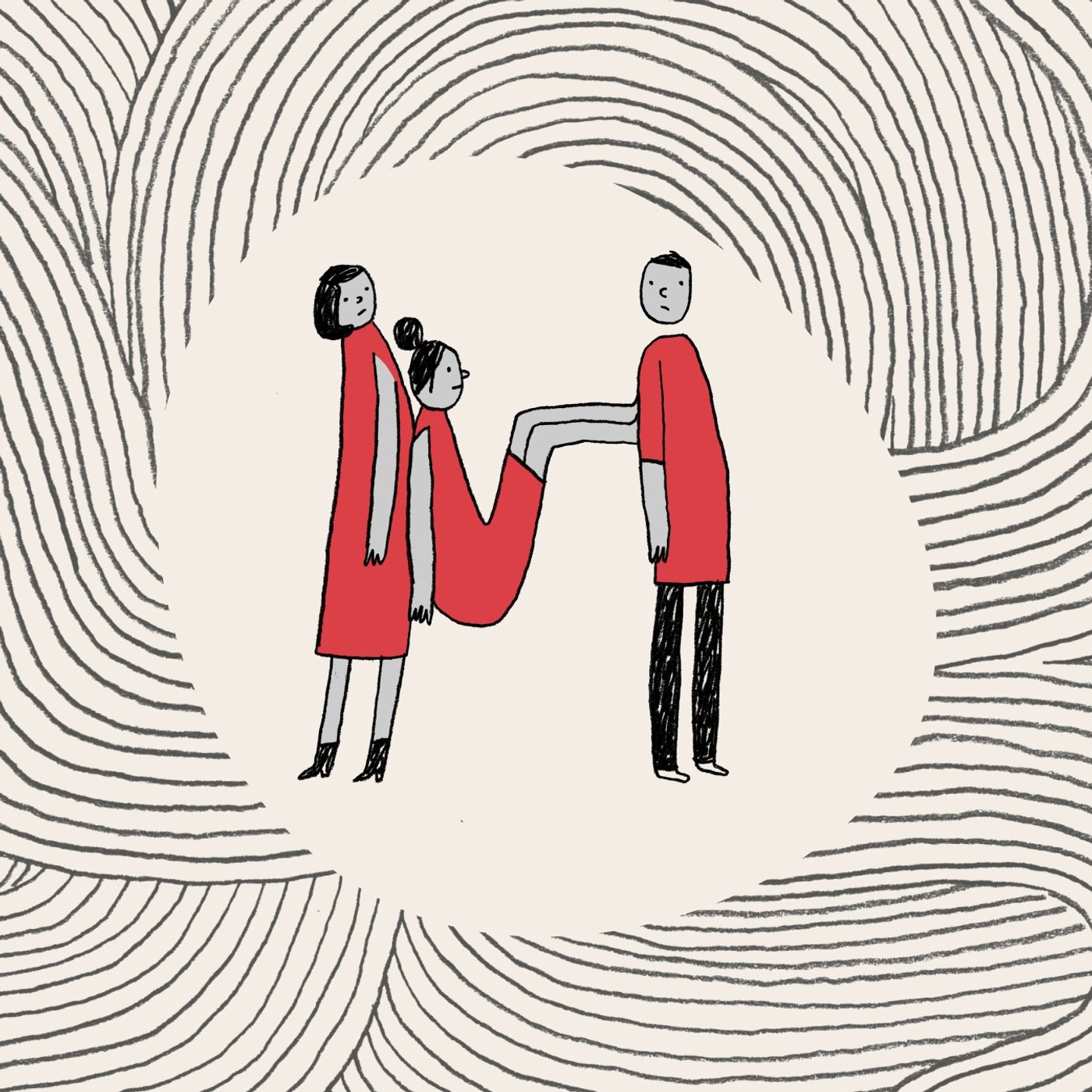
Modern Love
The Woman Who Can Make Affairs Disappear
00:31:53
In cities across China, there’s a special kind of consultant you can hire if you find out your spouse is cheating. They’re called “mistress dispellers,” and their job is to work their way into your spouse’s life, get close to their lover and convince the pair to break it off. When all goes according to plan, the cheaters end up believing it was their idea to end the affair. In this episode of “Modern Love,” the filmmaker Elizabeth Lo tells Anna Martin what it was like to embed herself with a mistress dispeller over the course of three years. Lo explains some of the secrets to the mistress dispeller’s success, and why working on the project played a role in her own breakup. Lo’s documentary “Mistress Dispeller” is in select theaters today.
Loading summary
Transcript140 lines
- [00:00]
A
For 140 years, MultiCare has been in Washington prioritizing long term solutions, partnering with.
- [00:07]
B
Local communities, and expanding access to care.
- [00:10]
A
Together, we're building a healthier future. Learn more@mycare.org hey everyone, it's Anna. Before we start the show, I want to ask you a question. And please don't be offended if it sounds a little direct. Okay, here goes. Are money issues affecting your relationship? Money can be awkward and sensitive to talk about how much to save, how much to spend, who makes the decisions about what. But if you're not talking about money, it can cause even bigger problems. We have an episode coming up soon where I'll be talking to Ramit Sethi. He hosted the Netflix show How to Get Rich. He's written books on personal finance, and he's especially good at helping couples resolve their differences around money and start to actually enjoy talking about it. If this sounds like something you want to be a part of, please send us a short voice memo. Tell us about a moment you and someone you loved had tension around money. It could be your partner, it could be a family member. Tell us what happened to set it off, what you said to each other or didn't say, and how you felt about all of it. We might play your voice on the show and hear Ramit's advice on what you can do differently. Please email your voice memo to modernlovepodcastytimes.com by November 3rd. There's instructions in our show notes. Please check those out. All right, here's today's episode. Love now and did you fall in.
- [01:33]
B
Love Last fell I love was stronger than anything for the love love and I love you more than anything there's to love love.
- [01:45]
A
From the New York Times, I'm Anna Martin. This is Modern Love, and on our show, infidelity comes up a lot. So much so that I gotta be honest, I kind of thought I'd heard it all. But I recently learned about a way to handle getting cheated on that was totally new to me. It involves hiring a highly specialized professional who claims they can make an affair just sort of disappear and make the cheaters think it was their idea to end it. It's called Mistress Dispelling, and it's become popular in cities across China today. I'm talking to Elizabeth Low. She's a filmmaker from Hong Kong who spent three years following one Mistress Dispeller. When this Mistress Dispeller is working on a case, she lies, she manipulates. But she's also remarkably compassionate to everyone involved. After I saw this film I could not stop thinking about it. So I asked Elizabeth to sit down with me to share what she learned. And she told me how her own heart got broken along the way.
- [02:45]
B
I remember thinking, why did I let this woman, whose entire job is to orchestrate breakups, influence my own belief in this relationship?
- [03:03]
A
Elizabeth Lowe, welcome to Modern Love.
- [03:05]
B
Thank you so much for having me.
- [03:06]
A
Thank you for being here. Your new documentary is called Mistress Dispeller. I want to jump right in and ask you, can you explain what a mistress dispeller is?
- [03:19]
B
Yes. So it's this industry that's emerged in the last decade in China, and it's a service that you can hire if you find out that your spouse is cheating on you. But instead of directly confronting your spouse, as most people might do, you outsource this crisis to a woman whose job is to infiltrate your family, befriend your partner, likely a husb under a false identity, and then, through her friendship with him, then gains access to his mistress. And over the course of two to three months, the mistress dispeller gains their trust, gains their ear, and slowly and very subtly influences them to want to end the affair.
- [04:01]
A
Her goal is to insert herself into your life and really into your cheating spouse's life without him knowing who she really is.
- [04:10]
B
But she often positions herself as someone slightly distant enough outside of their, obviously, their immediate friend circle.
- [04:17]
A
Gotcha.
- [04:17]
B
So that she's both insider and outsider to their family affairs. So she's in the most neutralized, least threatening position. In mainland China, therapy is still very much stigmatized among middle classes or upper middle classes, because in China, there's this concept that, you know, domestic shame should not be made public. To air your dirty laundry to a total stranger would be unthinkable. And to preserve every party's dignity, even in a conflict is deeply ingrained in Chinese and Asian culture. And so a mistress dispeller is a fixer, slash therapist, slash family counselor, slash private eye.
- [05:03]
A
Let's talk about the mistress dispeller you focused on in this documentary, known by Teacher Wang. And teacher is because that's just a.
- [05:11]
B
Literal translation of Wang Laoshi in Chinese, which you might translate that into Mrs. Wang. But we felt Teacher Wang set her apart in the subtitles and gave her this sense of authority which people treated her with.
- [05:23]
A
Certainly they did. Her real superpower is gaining trust, and in doing so, kind of convince the parties that ending the affair is their idea.
- [05:37]
B
Almost.
- [05:38]
A
Right?
- [05:38]
B
That's her whole. Yeah, that's her whole mo. Ending the affair has to be their own idea.
- [05:44]
A
That's a lot of work. I will say. That's a lot of. I mean, it's so many mental.
- [05:49]
B
It's almost like Inception.
- [05:51]
A
Does she have a notebook where she keeps track of everything she said to everyone, or what's the.
- [05:55]
B
Yeah, she does have a system of documentation of all her cases so that she. Cause she has, like, to us, it felt like she had at least 100 cases per year incoming that she was dealing with. And constantly when we were filming with her, she was always on the phone. 12 hours, 15 hours a day on the phone, managing different crises that were cropping up from wives who are desperate husbands or mistresses who are suicidal. And she's talking them down somehow. She has this remarkable ability to keep all of their stories in her head, I think, mostly. Wow. Yeah.
- [06:30]
A
The case Teacher Wang focuses on in your film is with a family, the lee family. The Le's Mrs. Lee discovers that her husband is cheating on her, hires Teacher Wang to dispel the mistress. How does Teacher Wang insert herself into Mr. Lee's life without him knowing what she's up to?
- [06:56]
B
So Mr. And Mrs. Lee are known within their community to be this model couple who have been playing badminton with each other for 30 years.
- [07:05]
A
They love badminton.
- [07:06]
B
They love badminton. Like, actually, when we were editing them, they were called the badminton couple.
- [07:10]
A
Of course.
- [07:11]
B
Yeah.
- [07:12]
A
They love tossing it over the net or whatever. Yeah.
- [07:15]
B
And because the husband loves badminton, is really proud of his skill, Wang figured out, like, what is your husband most passionate about? What is something he would be excited to share with someone else? And obviously badminton was the first on the list. And so they figured out that she would pretend to be a friend who's wanting to learn badminton.
- [07:34]
A
A friend of Mrs. Lee's.
- [07:36]
B
Yeah, a friend of Mrs. Lee's. So that's the setting in which she ingratiates herself into his life and positions herself in this way where she's very endearing. Cause she's so bad at badminton.
- [07:47]
A
She is bad.
- [07:48]
B
Yeah. And he's, like, trying to teach her.
- [07:50]
A
Was she amping that up?
- [07:51]
B
No. I mean, maybe, but I don't think so.
- [07:55]
A
Okay.
- [07:56]
B
Yeah. I think she was just genuinely bad. But her, like, you know how sort of demure she is and like, so how do I do the. How do I hold the racket? That's, I'm sure, all calculated. And she's laying almost this trap that he's inevitably gonna fall into, in which he will then feel compelled to confess. I don't wanna divorce my wife, but I just also can't bring myself to give up this young woman that I've become entangled with.
- [08:28]
A
We'll be right back.
- [08:34]
C
It's easy to know you want to make a change, but it's harder to actually do it. How to Be a Better Human is a podcast from TED for the Self Help Skeptic. Host and comedian Chris Duffy admits he doesn't have it all figured out, so he invites various experts to share fascinating, heartwarming stories and actionable tips to help you improve your life. Learn to face your fears, set boundaries, throw great parties, and more. Listen to how to Be a Better Human wherever you get your podcasts. As the holidays approach, get prepped for all your hosting and decorating needs with Wayfair. From dining tables and chairs that bring the whole family together to extra sheets and towels that make guests feel comfortable, Wayfair is your one stop Shop for everything home this season. Transform your space into an entertainer's dream. Get everything you need to host all in one place at Wayfair. Plus, Wayfair ships everything fast and easy right to your door. Shop all things home today@wayfair.com that's at w a y f a I-r.com wayfair every style, every home.
- [09:38]
A
It's Cybersecurity Awareness Month and Lifelock is.
- [09:41]
B
Here with tips to help protect your identity.
- [09:43]
A
Use strong passwords, set up multi factor authentication and report phishing scams. And for comprehensive identity protection, Lifelock is your best choice. LifeLock alerts you to suspicious uses of.
- [09:54]
B
Your personal information and also fixes identity theft, guaranteed or your money back. Stay smart, stay safe and stay protected.
- [10:02]
A
With a 30 day free trial@lifelock.com Specialoffer terms apply. So in addition to getting close to the cheating husband, Mr. Lee, Teacher Wang has, I would argue, maybe an even more difficult job of getting the mistress herself to open up to her. Can you describe how she sort of breaks down the wall with this mistress whose name is Fei Fei in the film?
- [10:41]
B
So she has convinced the husband that you have to introduce me to your just so I can see what's going on with her. Not to say that I want to get rid of her because he might be resistant to that. And he agrees to that.
- [10:55]
A
And so that was wild to me that he agreed to it. I mean, were you surprised that he so readily agreed to introduce his mistress to this new friend of his in his understanding?
- [11:05]
B
Because she has convinced him that she is someone who can help him in his life. She's positioned herself as this guiding light in his life that I will help you through this complicated situation, we don't know how it will turn out, but just let me get to know everybody involved.
- [11:22]
A
So she's pain and I can help you.
- [11:24]
B
Exactly, exactly. And she probably, you know, in the process of talking to him, is drilling down on what are his resentments in his marriage, helping him feel heard, and then also making him begin to see the mistress as sort of an interloper in what is precious his family. And so then he introduces Feifei, the mistress, to Wang. And the guys that they come up with is that Wang wants to learn business and entrepreneurship from the mistress.
- [11:58]
A
Wang is really neat, wanting to learn a lot. First she wants to learn badminton, which is how she gets to know the husband. Then she wants to learn business from the mistress.
- [12:06]
B
But. So she's a sponge. And you can tell that the mistress is a little skeptical, like, I'm not good at business. Why would she want to learn from me? I'm not worth learning from. But Wang already has built in that on the way to the badminton game, again, where they are going to meet, this is their. You know, this is their infrastructure, the social infrastructure in which they will.
- [12:27]
A
The alternate title of this could have.
- [12:29]
B
Been the badminton game that not only are they gonna be playing badminton together, but she has orchestrated it so that the husband is going to be called away by work and will abandon her at the badminton game 10 minutes in. And the thing that she has already achieved is that the mistress feels. Is made to feel unimportant by the husband. And in this way, in those moments, Wang slowly sort of gains her trust or at least plants those seeds of doubt in Fei Fei's mind about this relationship. And how worthy is it for you to struggle for a relationship that's not even taking you seriously?
- [13:13]
A
And it's there that we can. In those sort of intimate conversations that they begin to have, that's where I think we really see Teacher Wang's theory approach to infidelity become very clear. And she has this idea about who suffers the most in infidelity. I wonder if you could speak about that.
- [13:36]
B
Yeah. So in the most striking moment in the film that people always come to me and say, that was a revelation when I heard that, because it completely turns the issue of infidelity on its head. She basically asks, who do you think is in the most pain in a love triangle? Is it the wife or is it the mistress? And she says, while the wife may be hurting, it's actually the mistress who is willing to put herself in a situation where she is not deserving of A complete love that she is actually suffering the most because she doesn't love herself enough to be in a complete relationship out in the open. And she's both hyper compassionate. On one hand, I think that she can recognize, okay, these are young women often who need some degree of therapy and she talks about it as I need to help their cognition about themselves. But on the other hand, in terms of her strategy, she's very ruthless and brutal towards what she's doing with the young woman's emotions in the moment that are painful in the moment, but maybe for a greater good.
- [14:39]
A
I mean, so her idea is that it's the mistress who's feeling the most pain. Do you buy this? Like, was that borne out from the couples that you saw?
- [14:49]
B
I think it makes a lot of sense in Wang's approach to these cases. And it's a philosophy that helps her approach these mistresses in a way that is hyper compassionate and non judgmental and so easy for the mistresses to trust her. But I don't necessarily think on the whole it's that simple. I think when you see a woman such as Mrs. Lee, who's been betrayed by her husband after 30 years, I think that kind of heartbreak and betrayal is really profound as well. Maybe you know, betrayal by another human being who's so close to you, I think that is probably as profound as being betrayed by yourself, which is in the mistress's case, it's herself that's betraying her. But which maybe, maybe Wang is right as I'm talking through this. Wang is right that when you yourself betray yourself, that is far worse than if another human being betrays you. Wang always 10 steps ahead. Wow.
- [15:49]
A
Yeah. I mean, it is exception. It really is to betray. The mistress is betraying herself. The wife is being portrayed by someone.
- [15:59]
B
Else which you cannot control in life. Wow.
- [16:02]
A
In a way, it seems like Teacher Wang sees her job as helping a mistress open her eyes or understand her worth 100%.
- [16:11]
B
That's totally what it is. But I think she's doing it with all three parties. And that's why I was so compelled to this premise, because I saw in each of these three characters in each corner of the love triangle these really classical, classically heroic journeys that they're going on. The wife, she has to set aside her pride to save her family. She has to bite her tongue to save her family. The husband is at this fork in the road which Wang makes him see. You either have to choose your commitment and love for your family, or you choose this life where you are pursuing Your own individual desires. And then with the mistress, she is, like you said, helping her see her own value enough to extricate herself from this love that is not satisfying.
- [16:57]
A
And where does that leave the Lys and Mistress Fei Fei? I mean, what is the ending? Is the happy ending even the goal?
- [17:09]
B
I think the ending of the film, and I don't know how much I should be giving away. You decide. Bittersweet. But as Wang would say, each of them is somehow where they belong in the track that they belong. When you ask her, you know, what is your success rate? She'll say, 99% success rate. Because she says she's very clever. She says that no matter what happens in the outcome of a case, she is always helping all three parties go back to or go to whatever tracks they belong in in life. And if that sometimes does lead to divorce, she'll say, that's the track that is best for each of your lives. That is sort of business.
- [17:50]
A
A shrewd. It's like a handyman being, like, I will try to fix your sink, but if the sink stays broken, that's how the sink was meant to be.
- [17:58]
B
100%. Yeah. And because her powers of persuasion are so strong, she can convince, you know, the wife figure or the husband figure that however their love story turns out is in their best interest.
- [18:14]
A
You know, I think often, at least, I think about infidelity in terms of retribution. Like, I'm gonna find you out. I'm gonna end this relationship. You're gonna pay. But the approach we see in your film avoids that confrontation. But at the same time, as we've spoken about it does involve a lot of deception. And I'm curious how you sort of calibrate those things.
- [18:44]
B
I think the huge blind spot or downside of this approach to solving a marital crisis is that there is no accountability. Nobody has to take responsibility because everything is swept under the rug. And I don't know what the consequences of that is exactly, but I do, you know, just instinctually see that as a. As a. As an issue. All the emotional labor, so much of it is taken on by the women in the case. Now, that is. That feels true to me.
- [19:21]
A
Yeah.
- [19:21]
B
But I think that that is just a symptom of the way our world is, in which women around the world are doing so much emotional labor on behalf of all relationship.
- [19:34]
A
Did immersing yourself in this world of mistress dispellers, did it change your own perspective on love or commitment or infidelity?
- [19:46]
B
I will say I think the takeaway that I have drawn from this experience, which for a long time was very muddled. And, you know, there's a lot of cynicism that you can derive from witnessing case after case after case of this betrayal. But for me, it is a testament to love and enduring love and struggle for love and people failing to communicate. But there's this, like, idealistic part of me that still very much believes that these people love each other. There's a lot of love between all these people, even if they're transgressing and even if they're failing in their marriages. I think I've always been kind of a romantic and an optimist, and I went in with that feeling. I had met someone that I felt very much in love with right before embarking on this project. Wow. And I remember over the course of the three years of making this film, we got engaged, but it fell apart by the end of the process of filmmaking. Sorry. Yeah. And it's interesting because for the longest time, I actually blamed Teacher Wang, the mistress dispeller, for playing a hand in sort of dispelling me from my own relationship.
- [21:19]
A
We'll be right back.
- [21:29]
C
Mass General Brigham in Boston is an integrated hospital system that's redefining patient care through groundbreaking research and medical innovation. Top researchers and clinicians like Dr. Pamela Jones are helping shape the future of healthcare.
- [21:42]
B
Mass General Brigham is pushing the frontier of what's possible. Scientists collaborating with clinicians, clinicians pushing forward research. I think it raises the level of care completely.
- [21:53]
C
To learn more about Mass General Brigham's multidisciplinary approach to care, go to nytimes.com MGB that's nytimes.com MGB.
- [22:03]
B
Limu Emu and Doug.
- [22:06]
A
Here we have the Limu emu in its natural habitat, helping people customize their car insurance and save hundreds with Liberty Mutual.
- [22:17]
B
Fascinating. It's accompanied by his natural ally, Doug Limu.
- [22:22]
A
Is that guy with the binoculars watching us? Cut the camera.
- [22:25]
C
They see us.
- [22:25]
A
Only pay for what you need@libertymutual.com Liberty.
- [22:28]
B
Liberty. Liberty.
- [22:30]
A
Liberty Savings Very unwritten by Liberty Mutual Insurance Company Affiliates excludes Massachusetts. Elizabeth, you told me that you went through your own breakup when you were filming this documentary and that you blamed Teacher Wang. Why?
- [22:54]
B
She had somehow planted the seed in the first year that I met her, when I first revealed to her about my kind of new relationship. Yeah, my new relationship. My new relationship that I felt very confident about.
- [23:11]
A
What did you tell her? You were like, I have this boyfriend and okay, yeah.
- [23:15]
B
So it was like after a long shoot day and we were eating Takeout in her office floor. And fun. Yeah. You know, of course, naturally, the conversation would turn to our own love lives. And I said, oh, I have this boyfriend. And, you know, we were friends at first, and then, you know, I started to fall for him before he started to fall for me. But eventually he's reciprocated, and now we're in love.
- [23:45]
A
And.
- [23:45]
B
And I showed her a picture of the two of us. Classic. And she looked at that picture in which we were sitting a meter apart because we were still friends at that point. And he was sitting in a relaxed, confident way, but I was, like, sitting in this really, like, shy, coy way with my shoulders kind of, like, up by my ears. And she was like. She was, like, repulsed by this image and was like, oh, why'd you show her that pic, my friend?
- [24:12]
A
I don't know.
- [24:12]
B
I didn't think there was anything wrong with this picture. And I thought it was cute. And then she goes, oh, no, no, no. This is doomed. This will never work out. And I was stunned because that's such a prescriptive, gigantic statement to make about someone's new relationship.
- [24:29]
A
Yes, it is. Stunned. I would have felt offended.
- [24:32]
B
I was very offended. But I also grew up in a household where criticism is love, so I was curious. I wanted to understand my world. Yeah, that's probably why we do what we do.
- [24:43]
A
Totally.
- [24:44]
B
And I was like, oh, why do you say that? What would lead you to say such a thing?
- [24:48]
A
And you are also a documentarian. So instead of just being offended, you say, well, why?
- [24:52]
B
Yeah, I'm open. I'm constantly porous to a fault. And I said. And I said, why? Why do you say that? And she said, because he didn't. And this sounds so harsh. Yeah.
- [25:07]
A
Yeah.
- [25:08]
B
She said. And I think because I was not one of her clients, she's no filter with me. Right. She says, because he didn't like you at first. He didn't value you. He couldn't see your value from at the beginning. But he was moved by how good you were to him, and that's how he fell for you. So in the future, the moment that you stop giving, then he will leave.
- [25:35]
A
Holy shit. You're like.
- [25:37]
B
You're, like, eating noodles.
- [25:39]
A
And then you're like, what? I just showed you a picture of my boyfriend.
- [25:43]
B
Yeah. And, you know, we had just started dating. We were deeply in love. And I was like, but he respects me so much. Like, he cares about my work. He's the one who pushed me to come here to find you. And she says she's quips. She's like any man who's okay with their partner leaving them for such an extended period of time. There's a problem there.
- [26:07]
A
Whoa. I mean, it's so. It's so. Well, okay, let me just say before I editorialize, like, did you think what she said had some merit? Did you brush it off?
- [26:18]
B
I brushed it off because I was so in love at that point. And I told my boyfriend about this and he said, you know, why are you letting a stranger diagnose our relationship? And I agreed. Yeah, right, of course. But obviously those kind of profound statements can, like, sink into you.
- [26:35]
A
Oh. They become embedded into your consciousness in a way that is almost impossible to erase, in my humble opinion. Yes.
- [26:40]
B
Because it's predicting a future that hasn'. But it's a doomed future that may come at any point. Right. And then. So a year later, you're still making the film. I'm still making the film. I return to China and this time I return engaged. Wow.
- [26:55]
A
You're like, look at that rock Teacher Wang.
- [26:57]
B
And I tell her, you know, feeling kind of triumphant, like, look, I proved you wrong. Yeah. And she says congratulations quietly. But I can tell in her congratulations that it's a little bit skeptical. You know how when you can tell when someone's not queer? Totally genuine. But she's holding her tongue. Right. And I also decided I don't want to reveal too much to her anymore. I don't want her opinion. Yeah. Her negative opinion.
- [27:20]
A
Yeah.
- [27:21]
B
So I am quiet about it. But I also notice in myself, after a summer in which we've had a lot of turmoil in our relationship, despite being engaged over, you know, where are we going to live, how are we going to raise children? Yeah. What the next 20 years are going to look like. We had, you know, fundamental disagreements about that, but I was still hanging on. But I noticed in myself, I was like, why is it that a year ago I could be so vocal in my defense of our love, but a year later I'm more quiet and not able to bring myself to defend it?
- [27:58]
A
Even despite having taken this next step in your relationship.
- [28:01]
B
Yeah, yeah. So, you know, that started to disturb me. And then over the course of shooting in China, and we're in a long distance relationship, we're getting into all these fights, you know, jealousy, fundamental disagreements about what our future looks like. And we weren't able to resolve the fights in long distance. And at one point he asked for a break. And in response, I impulsively said, let's break up then. And then 10 days later, I quickly regretted it, but then by the time I got back to him, he said he couldn't trust in the relationship anymore. And in that moment, I. I thought, oh, God, Wang was right. That once things got tough, once you stopped giving, that the relationship would end or that he would leave. And I remember thinking, oh, my God, Wang is right. But then I got really angry, and I was like, why did I let this woman, whose entire job is to orchestrate breakups, influence my own belief in this relationship in which I knew there was a deep love?
- [29:12]
A
Did you tell her, by the way, like, we broke up, or did you keep it up?
- [29:15]
B
Yes, I told her. I told her.
- [29:16]
A
And how did she react?
- [29:18]
B
I actually don't remember her reaction, but probably just like, yeah, she. That probably she's not gonna say more. And she never said anything else, but it's just her quiet reads, her presence, and how she really knows people that lingered and had this long staying power. And in the film, the mistress says something like, wang's influence is like a quiet and soft drizzle. You barely feel it. You barely hear it, but it's there. And I really feel like that was her influence. And I don't think she actually influenced the outcome of my relationship. I think in reflection, what I realized she was doing was just spotting something that I didn't spot myself, which is that I was a young woman who hadn't come into herself yet, who didn't really know what she needed or wanted from a relationship and was chasing after a love that was completely untethered to reality. You know, pragmatics, lifestyle, values. And so in that way, it's this incomplete love, even though emotionally it felt like love. And I think that. And this realization that I've gone through, which has taken me a lot of time, is probably the same realization that these mistresses go through.
- [30:45]
A
She just flashed you this little truth, and that truth was a seed that grew and grew and grew.
- [30:51]
B
Yeah. And I don't want to denigrate the relationship that we had, and I don't think it says anything about his capacity to love or how he behaved in the relationship. I think it's just that she spotted the immaturity that we were at at that point in our lives, and it was not going to serve either of us well.
- [31:12]
A
May I ask, are you. Are you single? Are you in a relationship now?
- [31:18]
B
I'm in a very happy relationship now.
- [31:21]
A
Nice. Have you told me, Teacher Wang, about it?
- [31:26]
B
No. Yeah. No, no, no. But I would very confidently. But I would very confidently tell her about it.
- [31:34]
A
And you know what you'd do? You'd show her a picture of you two hugging embracing with you looking so confident.
- [31:42]
B
I do. I don't want to be overconfident. Yes, totally. Ever the optimist and idealist that I am. But I. I do feel like if I came to her with the relationship that I am in now that she would have a more positive response. Hopefully.
- [31:59]
A
Do you think her voice will always be in your head?
- [32:03]
B
I hope not. No, I mean, well, it's funny because that. So when I say I hope not, that was the past me, the resentful, childish me. Just knee jerk reaction. But thinking about it, I think what she does for her clients is a remarkable thing. And I think what stays with me is her ability to help people see their worth. The mistress, the wife and the husband and what priorities they have in life. And obviously with Fei Fei the mistress, she helps her realize her ultimate priorities that she wants to be a part of a love that's complete, not in the shadows.
- [32:54]
A
What did Teacher Wang help you realize was your priority?
- [33:04]
B
I think much like probably the advice that she slowly imparts to the clients that she works with, that you are deserving of a complete love that can withstand the pressures of time and life.
- [33:25]
A
I am so happy for you that you feel like you found that. Thanks. I genuinely am.
- [33:31]
B
No, no, I'm full.
- [33:33]
A
Stop. I just am. Elizabeth Lowe, thank you so much for this conversation.
- [33:39]
B
Thank you. This was a lot of fun.
- [33:45]
A
Elizabeth Lowe's film Mistress Dispeller is in theaters starting today. The Modern Love team is Amy Pearl, Christina Josa Davis Land, Elisa Gutierrez, Emily Lang, Jen Poyant, Lynn Levy, Reeva Goldberg and Sarah Curtis. This episode was produced by Reeva Goldberg. It was edited by Davis Land, Lynn Levy and Jen Poyat. Original music in this episode by Rowan Nimisto and Dan Powell. Dan also composed our theme music. This episode was mixed by Daniel Ramirez with studio support from Matty Masiello and Nick Pittman. And we had research help from Vivian Wang and C. Yi Zhao. The Modern Love column is edited by Daniel Jones. Mia Lee is the editor of Modern Love Projects. If you'd like to submit an essay or a tiny love story to the New York Times, the instructions are always in our show notes. I'm Anna Martin.
- [34:39]
B
Thanks for listening.
- [34:47]
C
Mass General Brigham in Boston is an integrated hospital system that's redefining patient care through groundbreaking research and medical innovation. Top researchers and clinicians like Dr. Pamela Jones are helping shape the future of healthcare.
- [35:00]
B
Mass General Brigham is pushing the frontier of what's possible. Scientists collaborating with clinicians, clinicians pushing forward research. I think it raises the level of care completely.
- [35:11]
C
To learn more about Mass General, Brigham's multidisciplinary approach to care, go to nytimes.com mgb that's nytimes.com mgb.