← Modern Love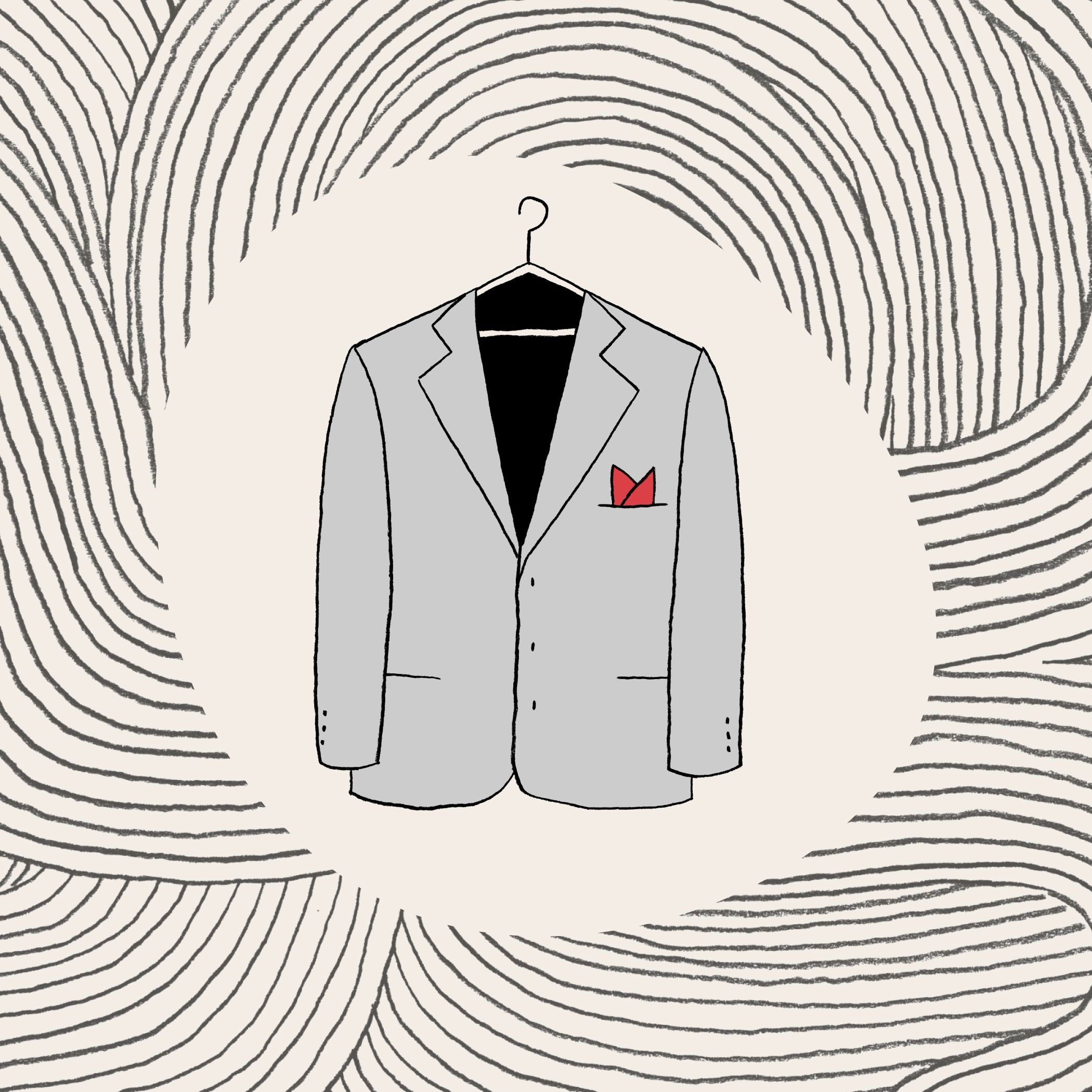
Modern Love
What Happened When My Dad and I Came Out to Each Other
00:37:53
Julia Stoller loved her dad. But she never wanted to be him. He was a rule follower, he was so serious, and he was so straight. Then, when Julia was in her 20s, she got a phone call that completely changed her idea of who her father was. And as he opened up to her, sharing secrets he had been holding onto for decades, she was finally able to open up to him, too. This week on “Modern Love,” Anna talks to Julia about what happened when she had to get to know a whole new version of her dad, and what she learned about herself in the process. You can read Julia’s original story in the Modern Love column.
Loading summary
Transcript168 lines
- [00:00]
Sponsor/Ad Reader
This podcast is supported by McDonald's hot honey sauce. You'll want to make sure you're on time for the McDonald's breakfast menu now that it has the hot honey sausage egg biscuit. And for later in the day, try the hot honey snack wrap. It may beat what you thought was your fave. Hot Honey Sauce is at McDonald's for a limited time only.
- [00:20]
Anna Martin
Love now. And did you fall in love?
- [00:22]
Julia Stoller
Last lover than anything for the love can I love you more than anything Anything there's to love Love.
- [00:37]
Anna Martin
From the New York Times. I'm Anna Martin. This is Modern Love. Growing up like a lot of kids, Julia Stoller thought her dad was just kind of a square. He was polite, always on time, very Midwestern, that sort of thing. She loved him, but she didn't think they had much in common. But after she grew up and went to college, her dad made an announcement that shocked their family. And suddenly Julia realized she didn't know her dad at all. Today I talked to Julia about what it was like to build a relationship with her dad from scratch. And what happened when they were finally honest with each other. Julia Stoller, welcome to Modern Love.
- [01:20]
Julia Stoller
So happy to be here.
- [01:21]
Anna Martin
Julia, I'm gonna hop right in with you and I wanna start with a phone call you had with your dad that changed pretty much everything you thought you knew about him. Take me there. Where were you? What happened?
- [01:34]
Julia Stoller
I'm unlocking my bike outside my apartment and then my phone rings and it's my mom. Out of nowhere, she says, your father's a bisexual and he's leaving me.
- [01:46]
Anna Martin
Wait, hold on. She says this to you? Where's the bike? Like, what's happening in your body?
- [01:50]
Julia Stoller
Yeah, I dropped my bike lock and I. I sink to the floor. I remember I can hold my body up. I think I'm like, wait, should I go inside? Should I? So then I just sink down. It's like slow motion. I feel like I'm in a video game where the world is kind of moving around in front of me, but I'm barely paying attention to it. And I'm sitting on the ground, but I don't really feel the ground. I'm hearing this voice, but it's not computing that. It's my day.
- [02:16]
Anna Martin
Disassociating.
- [02:17]
Julia Stoller
Yeah, really disassociating. And my memories of it actually are of looking at myself on the ground. Kind of an out of body experience. So I'm down, sitting down on the ground. Call my dad. I said, mom just said you were bisexual. And then he Said that was true. And he was talking very quietly, and I was talking very quietly.
- [02:41]
Anna Martin
Did his voice sound different?
- [02:43]
Julia Stoller
Yeah, it sounded like a different person. Huh. And I think the whole phone call was in slow motion because I was hearing my dad's voice, and I was understanding his words, but I kept thinking, who is this man?
- [02:57]
Anna Martin
Yeah. Because it just didn't compute.
- [03:00]
Julia Stoller
It was 180 degrees away from who my father was. I kept having to say, this is my dad on the phone. I'm talking to my dad.
- [03:07]
Anna Martin
To yourself?
- [03:08]
Julia Stoller
Yes. The words he's saying, it's coming from my dad's mouth. And he describes how he had been out before he had met my mom and had gone back into the closet, but now he felt dead inside, and he couldn't take it anymore.
- [03:23]
Anna Martin
I mean, that language is really strong.
- [03:28]
Julia Stoller
Mm.
- [03:29]
Anna Martin
How did he say those words? I mean, I know that you're saying his voice sounded different. There's, like a different texture, different tone. When he said dead inside, did he say it plainly? Did he say it? I mean, I just. It's such a strong declaration. I'm curious how he. How that sounded to you.
- [03:47]
Julia Stoller
He never talked to me about how he was feeling. So the fact that one of the first times in our relationship, he's opening up about how he's feeling, and the feeling is that he's dead inside. Oh. Was hard.
- [04:00]
Anna Martin
He tells you this. You're processing this, and then. And then what?
- [04:03]
Julia Stoller
I tell him that I'm bisexual, which is something that I had never told him because I thought he wouldn't understand. And turns out we had this in common. But the reason I felt like I could never tell him was because he had been burying this thing in so deep that he became a person who you couldn't confide in, who you couldn't really talk about your sexuality with, and someone I just figured was the straightest guy who ever lived, who would think it was kind of weird and confusing and wouldn't get it. And instead, the exact things that made me not want to tell him were the things that were hiding the thing that he was. Which we had in common.
- [04:51]
Anna Martin
I mean, how did he react when you said that?
- [04:54]
Julia Stoller
He said, really? Oh, my heart is. Really? Yeah. And I think he was like, wait, why didn't you tell me? And I was like, there's so much underneath that of, well, so many things about you. And our relationship made it so that I wasn't telling you that stuff. And actually, it feels crazy to talk to you about this, because this is not the mode we've ever been in before.
- [05:20]
Anna Martin
He's like, hey, come on. Why were you holding that secret in for so long?
- [05:23]
Julia Stoller
You're like, dad, right? Exactly.
- [05:26]
Anna Martin
With a phone call like this, I'm curious how you know when it's done. I mean, I'm sure there's. Your mind is racing, your body feels disembodied. How do you know when to hang up and say, okay, I love you? Like, what's the. How do you end something like that?
- [05:40]
Julia Stoller
I felt like there we could either have talked infinity or been over at any point, because this was. We just opened up this huge cavern of unexplored territory in our relationship. And this one first phone call was just scratching it. And I didn't know, should we just stay on the phone for the rest of our lives and discuss all the things that we've never talked about? Or I guess now's a pretty good time for us to say goodbye. I love you. And when's the next time I'm gonna call you and see you in person and actually really keep talking about, what is this?
- [06:15]
Anna Martin
So you hung up. How are you feeling when you sort of come back into the world?
- [06:21]
Julia Stoller
I am like, my dad is gay. And I have to keep saying the words out loud. Like literally out loud. I'm saying them out loud because it is so unfathomable to me. I have this whole part of my brain that. Where my dad lives and the part of my brain where there's gay. They're not connected at all. And so I'm quickly trying to, like, make the neural pathways connect, but it's not. It's such cognitive dissonance. My dad is gay. I'm just muttering it to myself.
- [06:49]
Anna Martin
I mean, for anyone. I think this would be a shocking call to get for you specifically. This seems completely unfathomable for the man that you know as your father. The. The. The dad that raised you. What was he like when you were a kid, when you were growing up?
- [07:09]
Julia Stoller
He was such a warm and loving dad who worked a lot. So I, during the week, didn't see him so much.
- [07:19]
Anna Martin
What'd he do?
- [07:19]
Julia Stoller
He owned a property management company and he had meetings, often late. And then also he served as our synagogue president. So if he didn't have meetings for work, he had meetings at the synagogue. But on the weekends, he'd spend time with us doing things like riding bikes and going to museums. And he cared about me so much, he wanted to make sure I was getting my math homework done and sleeping, going to bed early. He's obsessed with Us going to bed early.
- [07:41]
Anna Martin
Classic dad things. I'm like, dad, dad, dad.
- [07:43]
Julia Stoller
Oh, yes. Couldn't leave the house without eating breakfast. Breakfast had to include a protein. Working very hard. Just a businessman.
- [07:49]
Anna Martin
Yeah.
- [07:50]
Julia Stoller
If you go into his closet, it's like those cartoons where they have the same outfit, the whole rack long. It's like suit, suit, suit, suit, suit. And he wore a lot of beige. And I would get annoyed when he'd wear beige on top, beige on bottom. I'd say, dad, you can't do that. Even though I think now that's trendy to wear beige on beige. But back then, the way my dad was doing it, it was not trendy.
- [08:10]
Anna Martin
What would you say?
- [08:11]
Julia Stoller
Say, dad, you can't wear that.
- [08:15]
Anna Martin
And what would he say back?
- [08:16]
Julia Stoller
He's like, this is just what I wear. I'm not trying to look cool like you. He always did what was needed to be done. He did what was what other people needed from him. So he. He actually. He was an architect, and he switched to property management because he wanted to make more money to support his family. So he gave that up because he wanted to have a more reliable job.
- [08:42]
Anna Martin
Did you know that when you were a kid?
- [08:43]
Julia Stoller
Mm hmm. And I always felt sad because his current job seemed to not make him happy and he worked such long hours, but it was always because he was making money for us. And then the synagogue, he always. He worked so much, he didn't have any time. But then the synagogue needed a president, and they asked him and he said yes. And he was just always doing what was needed.
- [09:04]
Anna Martin
Did you feel like your dad understood you?
- [09:07]
Julia Stoller
I think I thought of dads as people who loved you and took care of you, but I didn't think of a dad as someone who's supposed to, like, know you like a friend did. So I think he. The fact that he took care of all my material needs before I even asked, even more than I needed, like, wanting me to go to bed earlier than I needed to go to bed. That's what dads were for. Dads didn't. Weren't there to really understand you so deeply. Mm.
- [09:36]
Anna Martin
I understand this distinction. And it's not. You were very loved, but this is. This is not like a confiding relationship. It's like your roles are quite set. It sounds right.
- [09:47]
Julia Stoller
Yep. He's the dad. He provides for the family, and I'm the daughter, and I find other people to talk about how I'm feeling with.
- [09:56]
Anna Martin
Yeah. I also wonder, and I mean, you tell me, but realizing that you were maybe attracted to women. Like, did that start when you were at home or when was your sort of realization of that?
- [10:10]
Julia Stoller
It was a really slow, long realization. So I was dating a guy in high school and I remember thinking and even telling him like, oh, I'm also attracted to girls, but I think all girls are attracted to other girls. And he's like, yeah, yeah. And he was like, oh, well, I'm not attracted to other guys, but cool. And I still just thought I was straight and that that was just a normal thing. I didn't question it. I think all of society steers you if you're a woman, to date guys. And the fact that I could made me not pause at all.
- [10:41]
Anna Martin
You know, you head off to college, which is classically a time of self discovery and also sexual self discovery. What were you discovering about yourself at college?
- [10:53]
Julia Stoller
First I was realizing that there were so many ways to be. I was just surrounded by all these out queer people who were so confident in who they were and I had never seen anything like it. And everyone is just so out there hooking up, talking about it. And I felt like a deer in headlights, like, whoa, what is happening? Where am I? And also cool. Love this. Then I started dating Caleb, who's in my freshman dorm. And we meet because I'm doing my art homework in the basement lounge and he just sits down next to me and he starts drawing with the pastels and we start talking. One of our first dates, I remember I needed to do my art homework at the art building and I had totally lost my voice. So Caleb asked if he could come and I communicated like, yeah, sure, but I can barely talk. And he came. Talking is so painful, but we just can't stop. We're just talking and talking. I keep saying, I can't keep talking. I'm losing my voice. I really can't. This is so painful. But then we just talk and talk and talk. And that really made me realize, like, oh, he's really a person for me.
- [12:02]
Anna Martin
Love hurts, man. Love actually physically hurts sometimes. So it's during you are dating, you're dating Caleb for the rest of college, but in the background you're discovering and sort of deepening your understanding of yourself as someone who is attracted to women as well.
- [12:20]
Julia Stoller
Right. But I think I feel weird about taking up so much space about it because I.
- [12:26]
Anna Martin
Because you're in a straight presenting relationship.
- [12:27]
Julia Stoller
Yeah, exactly. I'm imagining everyone else looking at me like, she's dating a guy. Why would she need to talk about being bi? And is she really bi? Is she Just doing it to be trendy.
- [12:37]
Anna Martin
At the end of school, were you identifying to yourself or to your close people as bisexual? Was that something you could claim out loud?
- [12:45]
Julia Stoller
So I actually. I was identifying to myself and to some people, but I actually hadn't told Caleb.
- [12:51]
Anna Martin
Huh.
- [12:51]
Julia Stoller
That I identified as bi. He knew I was attracted to women and that I'd hooked up with women, but I hadn't owned that explicitly. And actually, the moment I told him was, if I jump forward a few years after college, we're dating, we move in together, we're folding laundry. And out of nowhere, he says, julia, we need to get married before my grandparents die. And the thing I respond with is, I'm bisexual. And because that's my first feeling is, oh, my God, he wants to get married and I'm bi. I haven't really told him that. And actually, now I don't know what road I want to go down. Because if we get married, I felt like I had a choice between two roads. One was with a man living a heteronormative, conventional life, and the other road was with a woman. And I didn't know. Was this equivalent to, let's say I was just straight deciding between man A and man B, or was this actually a more fundamental I had to make? But I hadn't really. I kind of put that on the back burner. I hadn't really grappled with it. I was kind of coasting.
- [14:04]
Anna Martin
But then when he said, we gotta get married, you know, for my grandparents, this is what surfaced. Cause this had been sort of latent underneath the surface for you, this feeling like you maybe weren't honoring a part of yourself.
- [14:17]
Julia Stoller
Exactly.
- [14:18]
Anna Martin
And what. What did he say back to that? Let's get married for my grandparents? You know, di, I'm bisexual.
- [14:24]
Julia Stoller
Oh, okay. And like, oh, do you want to do something about that? And I was like, I need to just pause this conversation about marriage. That's the thing I need. And so then I did a lot of soul searching about what does it actually mean? What is the difference between being with a woman and being with a man? So, of course, a huge difference is how the world perceives you. But what would it mean for me? Because I would be the same person. It's still me in both cases. But is it true that one life would be very different from the other in a way that's different from just having married one person versus another person? Like, what does it mean to marry a man versus to marry a woman? And I really thought it was a binary that I had to choose between, and I felt really stuck. And I didn't know how to make that decision. And I couldn't pause my life to go try seriously dating a woman long term and then compare it to my life with Caleb.
- [15:18]
Anna Martin
Of course. Right? Yeah. How could you do that? Like, hey, can you go wait as I explore this other side? I love you.
- [15:24]
Julia Stoller
Bye.
- [15:24]
Anna Martin
Bye. You can't do that.
- [15:25]
Julia Stoller
And then in the middle of this decision paralysis is when I get the.
- [15:30]
Anna Martin
Phone call from your father. From my father telling you that he's bi?
- [15:34]
Julia Stoller
Yes.
- [15:36]
Anna Martin
Oh, my gosh.
- [15:38]
Julia Stoller
And it, on one hand, seemed to confirm my biggest fears.
- [15:43]
Anna Martin
Huh?
- [15:43]
Julia Stoller
Which is that if I picked this conventional life with the opposite sex, that there would be no room for my bisexuality.
- [15:56]
Anna Martin
You turn out like your dad, and.
- [15:57]
Julia Stoller
I'd turn out like my dad, and it wouldn't work.
- [16:00]
Anna Martin
Let's just say that's a lot to deal with. You are grappling with what it means to get married, what that means for your identity, if you're forsaking, you know, a part of you, if that's not true to you. And in the middle of being very confused about this, you get a call from your father that basically reveals you don't know him at all. Okay. And then you just. What? I mean, what do you do? Your head must have been spinning.
- [16:36]
Julia Stoller
Totally. I was like, okay, I need to know every single detail about my dad and who he is, because I think I'm gonna turn out like him. And I wanna know, is that avoidable? And how did he get to be in this place? And is it the same as me? And who is he? Even this person who I thought I knew, but turns out I don't.
- [17:09]
Anna Martin
Stay with us.
- [17:19]
Sponsor/Ad Reader
Modern Love is supported by My Mochi ice Cream. It's the month of lovers of rich, creamy My Mochi ice Cream. My Mochi is a premium ice cream wrapped in soft, chewy dough like a sweet ice cream dumpling. It comes in delicious fruit flavors like strawberry and mango and classic favorites like cookies and cream. Every box of My Mochi has six mochis, so it's fun to share with the people you love most. Grab a purple box of My Mochi ice cream today and feel joyfully chill.
- [17:50]
Anna Martin
This podcast is supported by FX's Love.
- [17:52]
Julia Stoller
Story, John F. Kennedy Jr. And Carolyn Bessette. The new limited series from executive producer Ryan Murphy explores the complex courtship of the iconic couple considered to be American royalty. Their fairytale romance would become a national obsession. Unfolding in front of The Public Eye, FX's Love Story, John F. Kennedy Jr. And Carolyn Bessette. Watch now on FX, Hulu and Hulu on Disney for bundle subscribers.
- [18:16]
Drake May
Listen up, guys. It's Drake May here to help get your finances into shape. You want to feel confident about your money. You need Betterment. Their automated tools help you grow your wealth and save on taxes. You don't even have to call an audible. They handle it for you. Take it from me, when you know your money is doing what it should be, you become full of that. We got this energy. That's the Betterment effect in action. So get up, sign up and start investing like a pro. Get started today@betterment.com investing involves risk performance.
- [18:40]
Julia Stoller
Not guaranteed paid client ad views may not be representative.
- [18:42]
Drake May
See App Store and Google Play Store reviews.
- [18:44]
Julia Stoller
Learn more@betterment.com Pursuit Better partners.
- [18:57]
Anna Martin
I want to return to something you said, which is you were afraid of becoming your father. Were you also afraid of your marriage, a potential marriage becoming like the marriage between your dad and your mom?
- [19:13]
Julia Stoller
100%? I think when I was worried about should I choose this life of marrying a man versus marrying a woman? I felt like if I choose either path, does that mean having to give up or hide or silence a chunk of myself and will that therefore lead me to not being able to be fully in this relationship and for it to combust somehow down the line in.
- [19:34]
Anna Martin
The way that you were witnessing your parents marriage combust right now?
- [19:36]
Julia Stoller
Yes. It proved the story I had been telling myself would happen.
- [19:41]
Anna Martin
You have so many more questions for your father for all of these reasons, these layered reasons that we're talking about. So what do you do? Another phone call?
- [19:49]
Julia Stoller
I fly home to Chicago.
- [19:51]
Anna Martin
That makes a lot of sense. These conversations should probably happen in person. Okay.
- [19:54]
Julia Stoller
And I find my dad and I literally say, dad, we need to have a gay talk. So I wait, did you really say that literally we need to have a gay talk. So what did he say? That he's like, okay, so we go sit on the porch swing and we're rocking back and forth and I'm like in prosecutor mode. So when did you realize you were bi and why did you decide to get married? And what did your friends think? And when did you have regret and when did you realize you felt dead inside?
- [20:28]
Anna Martin
You asked him that when you were like, when did you realize you were gay? What did he share with you?
- [20:33]
Julia Stoller
He said, I always knew. And he dated men and women and both were suspicious when he dated the other. And when he decided to marry a woman, he lost some friends. He moved out into the suburbs and some of his gay friends, he said, stopped talking to him. Not maybe because they for taking a stand against what he did, but just they kind of fell out. They were in different worlds. But he wanted to have a family, and this is what he wanted. And he said he had the most amazing relationship in marriage and family, and it was what he wanted until it wasn't. The main thing he reiterated was, I. For so many years I felt so happy, and this was the relationship I wanted and the family I wanted. And then recently this has been building up inside, but he couldn't tell me exactly when or exactly what. And there was more I don't knows than I could handle. Hmm.
- [21:29]
Anna Martin
Did you feel satisfied at the end of that conversation?
- [21:31]
Julia Stoller
Definitely not. Every time he said, I don't know, I would just try and ask the question in a different way.
- [21:36]
Anna Martin
Did you ask him, like, where do we go from here?
- [21:38]
Julia Stoller
Yes, I asked him that. What's next for him? And he said, I want to be alone for a while.
- [21:44]
Anna Martin
Hmm. You know, we talked about how you were asking these questions to get to know your dad, but you were also in the middle of intense confusion about your own life, your own identity, and whether you wanted to get married. I wonder having these conversations with your dad in Illinois. At some point you will have to fly home, right? But I, I assume you continue to talk, continue to learn more. But how was that, how was what you were learning about your father influencing how you were thinking about your own situation?
- [22:18]
Julia Stoller
I thought of getting married as a binary. You could marry a man and have a conventional life, or marry a woman and have a queer life. And what I realized from seeing my dad was that it's not being in a straight passing relationship that's the problem. It's not being your full self is the problem is having to tuck away a part of you, which you can do in any type of relationship. If you have to tuck away a part of yourself and you can't fully be it, then it takes a cost because it can seep into other parts of you. If you feel like you have to hide something and that what you want isn't allowed, a part of you isn't accepted, then you might try to downplay other parts of yourself. And I think that is what took the toll for my dad. And that that doesn't have to be how it is, that in any relationship you have to work to make sure you, your full self is out there and accepted and loved for your dad.
- [23:19]
Anna Martin
He was hiding this part of himself. And you're saying it Took a toll. Tell me more about that toll. Even though I understand. I want to. What was the toll on. We're talking about the toll on him. What was the toll on his relationships? What was the toll from your point of view? What was the toll on his relationship with you?
- [23:36]
Julia Stoller
I feel like he didn't spend time accessing how he was feeling because he didn't have time for it. He kind of put it in a box. And because he wasn't really thinking about how he was feeling, he was. He. Distract. Really focused on more material things like going to bed on time, eating breakfast, things that were easier to talk about, but how you were really doing was a place you didn't want to go. And then it made it hard for me to want to share how I'm really doing, because I think kids learn to talk about that stuff when it's modeled to them, of course. And I didn't really see it modeled from my dad. And so we never got to talk like that. And as a result, I ended up withholding a lot of stuff from him, including the huge fact that I, too, was bisexual. This crazy thing that we're both secretly holding these pieces of information, and we built up this artifice where we're not talking to each other.
- [24:37]
Anna Martin
It pushed you apart. You weren't even aware of it, but it prevented you from closeness. Right now that you share this thing. Being bi, being queer, did that bring you closer together? Did you feel like you were. Yeah. Did you feel closer?
- [24:56]
Julia Stoller
Yeah. I think once my dad came out, he started telling me much more about himself. He talked about his friends. I got to actually understand who his friends were before. He really was mostly friends with, like, the husbands, sure. My parents, my mom's friends, straight people, the people at synagogue, like, lovely, lovely people. But he didn't have many of his own friends, and he started forming new friends. He joined a support group for gay dads. And he made a lot of friends in that support group. And he actually. His social life really blossomed. Like, he. He has more fun than I do. He's. He goes out on the town, like, much more frequently than I am. And he would tell me about it in a way that. That's not how we used to talk. And I think by learning about his friends, I was like, oh, my dad can have friends. I didn't think of dads as people who had friends. And all of a sudden, I was. This whole world about who my dad was was opening up. So he moves into an apartment in Chicago. And this is also another phase Where I learn a lot about him by seeing this new apartment of his. It's. For the first time, I see his aesthetic. And turns out he has great aesthetic. It's beautiful. It's modern. Lots of orange. Like, orange chairs. I was shocked. And not beige.
- [26:14]
Anna Martin
Orange.
- [26:15]
Julia Stoller
Oh, orange, yes. Bright, bright orange.
- [26:17]
Anna Martin
But why orange?
- [26:18]
Julia Stoller
He said, I like orange. Dad. What? Who is this person? And I actually, I use his apartment as another way to learn more about him. He's out of the closet, and I'm inside his closet trying to figure out who is this person.
- [26:31]
Anna Martin
And you mentioned the suit. Suit. Suit before.
- [26:33]
Julia Stoller
Oh. And it's totally different now. I see in his sock drawer, neon socks with crazy patterns on it. And I see he still has his dress shirts, but they're squashed over, and there's all these tropical short sleeves. And we'll be FaceTiming him. And he comes out in this bright orange muscle tee. I'm like, oh, my God, who is this? Dad taking a screenshot. Like, who is this person?
- [26:58]
Anna Martin
How do you look, though?
- [26:59]
Julia Stoller
He looked great. He was swole, and he's rocking this muscle t. I'd never seen him in anything like that.
- [27:05]
Anna Martin
Did you say something like, dad, muscle tee, or.
- [27:10]
Julia Stoller
No, he just kind of kept it pushing. It was. It was hard for us to just name the thing that was happening in front of us, which is that he is totally transforming in front of our eyes. I couldn't. I don't know, it felt weird to talk to him about it because he was still. Even if I would try to go directly there, he would kind of be like, oh, what do you mean? I don't know. He was still not.
- [27:32]
Anna Martin
I don't wore this shirt. You're like, no.
- [27:34]
Julia Stoller
Yeah, exactly. Like, he couldn't. He wasn't so comfortable still talking about the thing that was so blatantly in front of us.
- [27:39]
Anna Martin
What about sort of, like, emotionally, what was changing with him? Could you sense anything there?
- [27:46]
Julia Stoller
He laughed and was funny and Was that new? Yeah. And he. I mean, there was, I should also say, like, parallel to this is a deep grief of the family splintering. Of course, this is just another thread of the many threads that emerged from this. But he also is funny and lighthearted, and he. He's kind of playful, and he wants to have fun. He's doing a lot of fun things.
- [28:15]
Anna Martin
Would you guys do those fun things together?
- [28:17]
Julia Stoller
Yeah. We went to a drag bar.
- [28:21]
Anna Martin
What was that like?
- [28:22]
Julia Stoller
That was. I mean, again, I still. That little voice in my head like, my dad is gay. My dad is gay. Like, I'M at a drag bar with my dad. Weird. Like, it's not computing, but it's happening. So I'm rolling with it.
- [28:34]
Anna Martin
What was that like?
- [28:36]
Julia Stoller
So once my dad has one drink, he switches from dad mode to gay mode.
- [28:42]
Anna Martin
What does that mean?
- [28:43]
Julia Stoller
He starts flirting with the waiter. He starts telling me about hookups, and I'm like, oh, dad, no, too much, too much, too much.
- [28:52]
Anna Martin
That is so far from the man you told me about before. So it seems like there's. He's switching into this, like, game mode. And then does he switch back to the dad boat?
- [29:04]
Julia Stoller
Oh, yeah. Like, the moment we leave the bar, it's back to huh. It's like, I think the lighting and being in that space and having a drink kind of switches him. But then when the bright lights come back on, he's like, oh, I'm dad.
- [29:16]
Anna Martin
Is that difficult for you to navigate? I mean, that's a big context shift.
- [29:19]
Julia Stoller
Yeah, because when he's in dad mode, I still have all these gay questions, and I'm trying to pry, and you can be really reluctant to talking about it, but over time, I've seen him merge these two identities.
- [29:38]
Anna Martin
We'll be right back.
- [29:56]
Sponsor/Ad Reader
Modern love is supported by My Mochi ice cream. It's the month of lovers of rich, creamy My Mochi ice Cream. My Mochi is a premium ice cream wrapped in soft, chewy dough like a sweet ice cream dumpling. It comes in delicious fruit flavors like strawberry and mango and classic favorites like cookies and cream. Every box of My Mochi has six mochis, so it's fun to share with the people you love most. Grab a purple box of My Mochi Ice Cream today and feel joyfully chill.
- [30:27]
Drake May
Listen up, guys. It's Drake May, here to help get your finances into shape. You want to feel confident about your money. You need Betterment. Their automated tools help you grow your wealth and save on taxes. You don't even have to call an audible. They handle it for you. Take it from me, when you know your money is doing what it should be, you become full of that. We got this energy. That's the Betterment effect in action. So get up, sign up, and start investing like a pro. Get started today@betterment.com investing involves risk performance.
- [30:50]
Julia Stoller
Not guaranteed paid client ad. Views may not be representative.
- [30:53]
Drake May
See App Store and Google Play Store reviews.
- [30:55]
Julia Stoller
Learn more@betterment.com PursuitBetterPartners.
- [30:57]
Anna Martin
This break is brought to you by Adobe Photoshop. Here to help you make that thing only you could make here for when you've got an amazing idea you can't wait to share. And you need it to look exactly as you imagined. Photoshop gives you the ultimate image editing and design tools, so you can dial in your creation perfectly, down to the last pixel, make epic images for zine covers, posters, brand graphics, social posts, or anything else you can imagine. It's your vision. Go all in. Get started@photoshop.com. In this time, were you still trying to figure out if getting married was something you wanted to do?
- [31:54]
Julia Stoller
The more I got to know my dad, the clearer it became to me that I definitely wanted to get married to Caleb and I was not my dad. And the more I saw who he was and how separate it was from dad mode, I saw like, oh, if you keep those things separate, that is what hurts you. And if you can integrate yourself and be your full self, that's the thing that matters in a relationship. It doesn't matter who you're with, being with a man or being with a woman. You can be queer in either relationship. And if you take the stance I had taken before, which is like, oh, I'm dating a man, so what's the point of talking about being bi? There's actually a problem with that, which is that that isn't who you are. And maybe it doesn't feel like a big deal, but maybe over time it can add up. The more I saw how different my dad was, the more I realized how much he had been hiding and that the problem was the hiding, the problem wasn't who he ended up with.
- [33:04]
Anna Martin
Identifying that as the problem made you realize you wanted to marry Caleb because you could be your full self with him, right?
- [33:14]
Julia Stoller
Caleb didn't make me feel like I needed to hide anything. Not just the parts of my sexuality, but all the other parts of myself, my messy self, anything. My evolving, changing self. That if something about me were to change, I could still reveal that part to him and that he could do the same with me. And that also that our relationship was in our own hands, to make it as we wanted, that it didn't have to fall to a script, that we were in control. And that if we set it up so that we could really intentionally think about what we wanted and make it really clear and not feel like we had to do what was expected of us, then we could make it what we wanted. Like, one example is a small one, but I ended up proposing to Caleb.
- [34:03]
Anna Martin
Oh, my God. Tell me the story of that.
- [34:05]
Julia Stoller
Which, well, we decided together that I should be the one to do it because I was the one who was more reluctant to getting married. And I think it makes sense that the person who's more reluctant initially should be the one to make the grand gesture.
- [34:16]
Anna Martin
Sure.
- [34:17]
Julia Stoller
So I made the planned. The big grand gesture. We went back to our college dorm where we met, and I made him a anatomical heart. I welded it and I got down on one knee and I gave it to him. And I said, like, there's so many things I'm not sure about, but you're one of the things I feel the most sure about. And that's a small example, but that's.
- [34:39]
Anna Martin
Actually not small to me. You welded a damn heart and you proposed to the love of your life. That's not so small to me.
- [34:45]
Julia Stoller
Right? Small in that, like, by doing what wasn't the gendered expectation, of course. But just in general, seeing every decision as, what do we as two human beings want to do? And I think in every healthy relationship around me, no matter the sexuality, that's what I see people doing, is, we're two humans. What do we each want? What do we each need? Let's make these decisions for ourself and not center what the outside world is going to expect from us.
- [35:12]
Anna Martin
Looking in, you propose with this wonderful welded heart. At your wedding. Were both your parents there?
- [35:21]
Julia Stoller
Yeah, they walked me down the aisle on either side. I think I was worried about that moment. But actually, if you're hooking arms with them on either side, they are both there supporting you, but they're not having to interact with each other. So it was a perfect setup. Felt really great with them on my side, and they were both there and supportive and not really not interacting with each other.
- [35:44]
Anna Martin
Did either one of them bring a date or.
- [35:46]
Julia Stoller
No. They actually, at that time, both had boyfriends, and we decided the simplest thing would be if neither of them brought their boyfriends. So no boyfriends allowed.
- [35:54]
Anna Martin
I understand that choice. No, no boyfriends at this. Okay. Interesting. I mean, I am genuinely happy to hear about your dad's blossoming. And I don't think that that's. I think that that's what it sounds like. He's wearing his orange, he's going out. He's engaging with friends and community. He's like. He's finding himself again in a lot of ways. But at the same time, as you said, you're also navigating this experience of real grief and real pain. And I guess I wonder, for you, those are two very different emotions, right? The sort of grief of it and the joy of watching your father. Does it feel like split loyalties?
- [36:35]
Julia Stoller
Almost Totally. And I really see the price of his new life now. What it cost, what it cost my family. And I. I feel so sad. And I wonder, how could this have been avoided? Was there a way? And I think that's not a productive place to go. But it is confusing to think, like, did all this pain have to happen for him to feel how he feels now?
- [37:03]
Anna Martin
That's a big question. And I think, as you know, you're right, you might not get an answer to that. But I would say cheesy but true. You're kind of living out an answer by being your full, true self in your marriage with Caleb and preventing in a lot of ways, something like that from happening.
- [37:27]
Julia Stoller
I hope so. I can only hope. But I think the more I see him, the more I feel affirmed. Because I used to, as I was saying, feel hesitant about being. Talking about being bi and feeling like, why should I take up space about this? And will people think I'm just trying to be trendy and that actually know that there's a reason for me and for Caleb, for this not to be a secret. That if I don't talk about it, that if I act like I'm straight, that's not who I am and that's gonna end up having a cost.
- [37:57]
Anna Martin
It's been a few years since you found this out about your dad. What's he up to now?
- [38:03]
Julia Stoller
He's living in Palm Springs.
- [38:04]
Anna Martin
Oh, my gosh, of course he is.
- [38:07]
Julia Stoller
He having a great life. He has a boyfriend and he, as I said, he is out on the town. I'll call him from Saturday night. I'm on my couch and he's like bar hopping with his friends, having fun. I think there's also the sadness that we're not all together as a family. My mom's in Chicago and we are all splintered. But I think he has chosen, given the splintering, that I'm gonna move to the place I wanna live and be with the person I want and have fun.
- [38:43]
Anna Martin
You and Caleb, you have a kid. I know this. How will you talk to your kid about your dad when your kid gets a little older?
- [38:55]
Julia Stoller
I mean, one thing I want for my kid is that all the different ways of being are just in the air around him from the moment he's born, that it's no big deal to be anything. And it's very matter of fact. Yep. Your grandpa, he has a boyfriend. He used to be with your grandma. Your mom is attracted to men and women. Your dad's just attracted to women. You get to be whatever you want. I want it to be really normal. And maybe when he's older, I guess talking about the pain that went into his grandpa's life and how that was a function of the time that he was in and that I hope that my kid doesn't ever have to make a choice like my dad did, about having to choose between his family and his sexuality.
- [39:50]
Anna Martin
Julia, thank you for this conversation.
- [39:53]
Julia Stoller
Thanks for having me.
- [40:00]
Anna Martin
Julia Stoller's Modern Love essay that inspired this conversation is called From Bi to Beige and Back Again. You can read it at mytimes.com modernlove the Modern Love team is Amy Pearl Davis Land, Elisa Gutierrez, Emily Lang, Jen Poyant, Lynn Levy, Reeva Goldberg and Sarah Curtis. This episode was produced by Elisa Gutierrez. It was edited by Lynn Levy and Jen Poyant. Our mix engineer was Daniel Ramirez. Original music in this episode by Marian Lozano, Alicia Be Itup, Roman Nimisto and Dan Powell. Dan also composed our theme music. The Modern Love column is edited by Daniel Jones. Mia Lee is the editor of Modern Love Projects. If you'd like to submit an essay or a tiny love story to the New York Times, we've got those instructions in our show Notes. I'm Anna Martin. Thanks for listening. Foreign. USAA knows dynamic duos can save the day like superheroes and sidekicks or auto and home insurance. With usaa, you can bundle your auto and home and save up to 10%.
- [41:20]
Julia Stoller
Tap the banner to learn more and.
- [41:21]
Anna Martin
Get a'@usaa.com bundle restrictions apply.