← Money Rehab with Nicole Lapin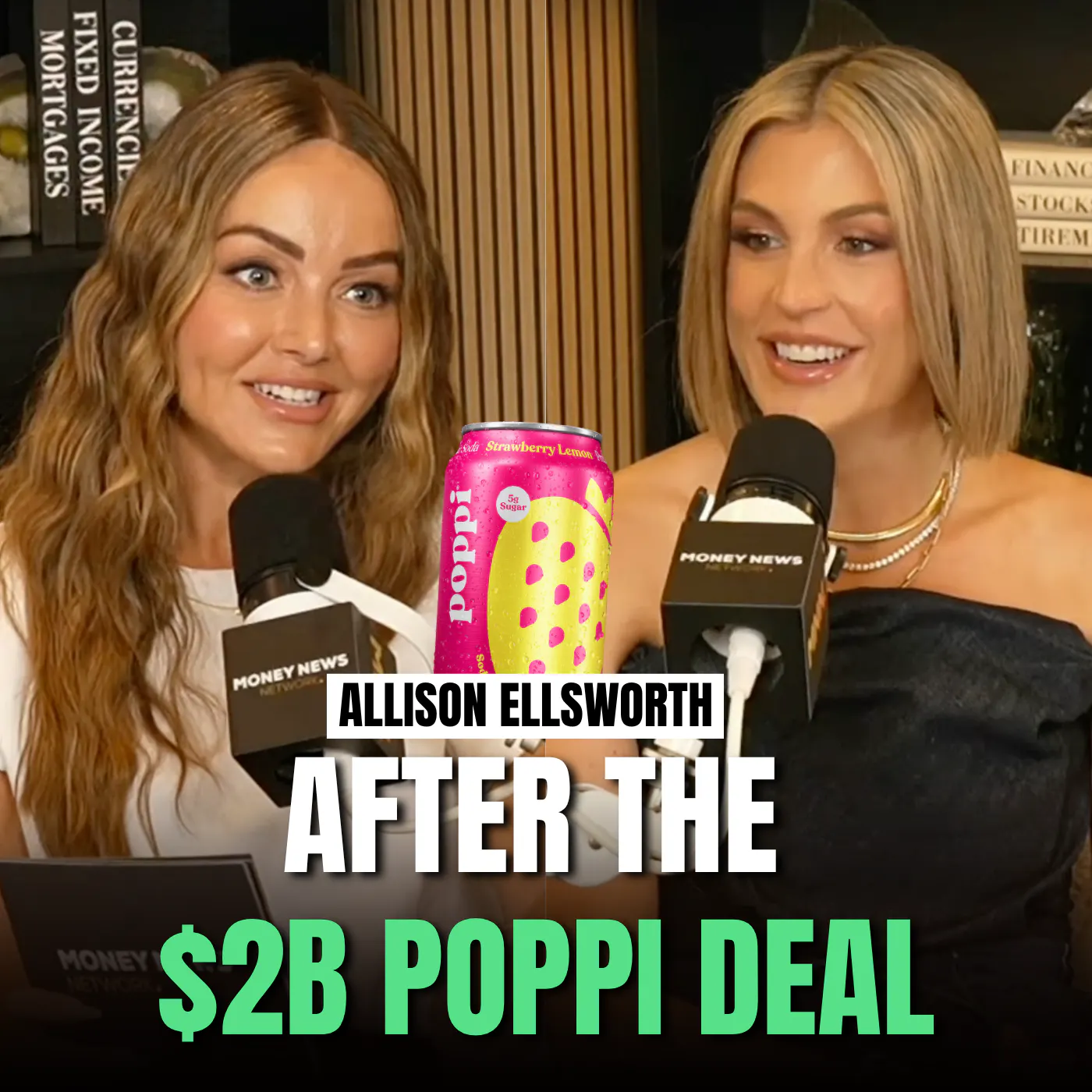
Money Rehab with Nicole Lapin
Allison Ellsworth Sold Poppi for $2 Billion. Here's What Happened Next.
00:49:41
Loading summary
Transcript127 lines
- [00:00]
Nicole Lapin
Pop quiz.
- [00:01]
Cash App Advertiser
Do you know when Bitcoin was invented? In 2008? That's right. It's late Gen Z and grew up with an iPhone. It was not easy to get Bitcoin in the early days unless you mined it yourself. It took a few years before the first exchanges even launched, if people had heard of it at all. Most had no idea how to buy bitcoin. Thankfully nowadays the process is much easier. When you buy Bitcoin on Cash App, they hold real bitcoin for you one to one and you can withdraw it anytime. No extra steps, no restrictions, just access and control when you need it. For a limited time, new customers can get $10 added to their balance. Just use code CASH APP10 when you sign up. And don't forget this part. Send at least $5 to a friend in the first two weeks Terms apply. Cash App is a financial services platform, not a bank. Banking services provided by Cash App's Bank Partners. Bitcoin services provided by Block Inc. Brand for additional information, see the Bitcoin disclosures at Cash App Legal podcast.
- [00:58]
Alison Ellsworth
This little kindergartner ran up to me. She hugged my leg. She's like, hi Mommy. Poppy, are you a billionaire?
- [01:03]
Nicole Lapin
Alison Ellsworth founded Poppy, grew a cult following around the brand and then sold it to pepsi for about $2 billion. But you know all that today. She talks about parts of this story that you don't know. She really opens up about the emotional side of ending a chapter of your career.
- [01:20]
Alison Ellsworth
There's also a lot of loss that I think a lot of founders don't talk about.
- [01:25]
Nicole Lapin
Advice for partners who have polar opposite money mindsets.
- [01:27]
Alison Ellsworth
He won't buy things if I buy things because he feels like he has to hold back because I'm spending. Well, then that creates resentment and how
- [01:35]
Nicole Lapin
to talk to your kids not just about money, but about work.
- [01:38]
Alison Ellsworth
And at the end of the day when we leave to go somewhere, they're not screaming, crying as we're walking out. I know I'm doing good because my kids will say, hey mom, where are you going today? I'm like, new York. They're like, when are you coming back? I'll be like, Friday. And they're like, have fun. Like they're okay.
- [01:55]
Nicole Lapin
I'm Nicole Lapvin, the only financial expert. You don't need a dictionary to understand. It's time for some Money Rehab. Alison Ellsworth welcome to Money Rehab.
- [02:11]
Alison Ellsworth
Thanks for having me.
- [02:13]
Nicole Lapin
So excited to talk. You have been so open and honest and really helped a lot of entrepreneurs about your origin story, which I Love so much. But I would love to dig into what happened after you sold the company.
- [02:23]
Cash App Advertiser
Can you remember.
- [02:24]
Nicole Lapin
Remember when the Wire hit?
- [02:26]
Alison Ellsworth
Oh, man, we're hitting hard right from the beginning. I'm obsessed. You know, it's funny what a lot of people don't know is obviously me and my husband, we were co founders. And so half of the equity as of ours was in my name and half was in his name. And I'll never forget hitting refresh about every five minutes, then 20 minutes, just waiting all day for the bank account to change the number. And we're like, calling our financial advisor and. And then finally mine hit first. And it was so funny that I got mine first and then his didn't hit for, like, two more hours later. Cause it was just paying out people, and it didn't. Didn't know when the Wire was going to come. And it was weird because it hit. And then I got back to work. I was on Zooms. It was a crazy day. We were having to go full integration into the Pepsi system. And it's such a weird feeling to be like, okay, well, now what?
- [03:19]
Nicole Lapin
So it was, like, anticlimactic.
- [03:20]
Alison Ellsworth
It was very. And not that I am not so blessed and that it didn't change my life, but I think what was really important was we still had a job to do when it came to, like, getting poppy integrated and making sure the employees were good. But I remember me and my husband, we wanted to make a moment of it. And he was like, clear your calendar. Let's go to lunch. And I was like, I can't. Said, clear your afternoon. Let's go to yoga. He was like, I can't. And we ended up getting into a big fight. Like, why aren't we celebrating this? Why are we taking this moment? And the next morning, we both woke up and we're like, that was the dumbest thing to get in a fight for. And we ended up finally clearing our schedule. We got some breakfast and went to a yoga class.
- [04:02]
Nicole Lapin
A lot of people probably saw the headline, and they assume you have $2 billion in your bank account. I have a lot of friends who have gone through other exits and, you know, through different raises, they'll have a smaller and smaller percentage of ownership. So while that headline number is really big, they just assume that you have that in your bank.
- [04:18]
Alison Ellsworth
Yeah, Everyone thinks we're like these mega, mega billionaires. And it's so funny of my favorite things, because you just said it was so public, and it was. And I remember the next week I went to My kids school, and it's kindergarten through fifth grade, and I'm pretty well known within the school as Mommy Poppy. And this little kindergartener ran up to me. She hugged my leg. She's like, hi, Mommy Poppy. Are you a billionaire? Oh, my God. A kindergartener. So it's so interesting because it is so public within it, and, like, having those conversations with my kids, it's. It's a lot to navigate, and then there's a lot of joy. There's also a lot of loss that I think a lot of founders don't talk about. You exit. You're working towards something for nine years of your life, and then all of a sudden you're like, oh, I. I need to take a step back. We sold the company. You don't sell the company, or you don't, like, sell your house and tell them where to put the couch or how to paint the walls. And you're here just to kind of advice, give advice. And it's been an interesting transition. Once you get the money, you have to, like, go to work. Put the money to work.
- [05:17]
Nicole Lapin
And how did you put it to work?
- [05:18]
Alison Ellsworth
Nobody's just good at investing overnight. And I would say we even made some really bad investments towards the beginning that kind of, like, scared us a little too. Kind of like maybe that's not quite for us right now.
- [05:30]
Nicole Lapin
Like what? Like a private investment.
- [05:32]
Alison Ellsworth
One of our first investments, it was just like a. A fun one. It was $50,000 into a grocery store chain called Foxtrot. They were out of Chicago, and I remember just being really excited. They were growing. You know, you see, like, the erewhons of the world, and you're like, oh, it could be the next Air1. No, it went bankrupt, and we lost our money overnight. And it was like, a really good lesson of. I think it was within six months of investing in them, of just, like, $50,000 gone overnight to be like, okay, there's a few things we want to look at here. The founders, Right. I think that's really important. How much is this founder willing to take advice? Because most people don't start companies and they want to be told what to do. I was even that way. Like, I didn't really want anyone to tell me what to do. My ego was really big. And so I look at the founder, like, are they willing to, like, take my help? At the end of the day, a lot of people don't want it, but I can. I know I can give some good advice. And then, is it a good product? That's Kind of more proven. Is it, you know, something that people want or need? And then I think at the end of the day, is it mass, is it niche or is it mass? And it's so funny because within that investment, it hit all those buckets, but it still went bankrupt. So kind of like scared us a little bit. And knowing that, you know, not all investments, good investment.
- [06:47]
Nicole Lapin
You bring up so many interesting points that I don't think enough founders talk about. And the first one is that the skills of running any kind of piano, even a huge PNL or having a huge exit, don't actually translate into personal finance or investing. Did you find that there was like a learning curve and how much are you into the investments now?
- [07:07]
Alison Ellsworth
The beauty is my husband, he used to work at like Wells Fargo Financial. He like understands that world, but the problem for me is I'm not that interested in it until I was. And so I would say for the first eight months he was setting up the family office and getting all of the planning and like where we were doing it. And I was like, kind of not paying attention because I was like, ugh, that's so boring. And then one day he was out of town, I was trying to pay a bill and I didn't even know how to log into our credit cards. And I called my financial advisor and I was like, I think that we need to start having one on one weeklies. Just mean you and I need to learn this.
- [07:41]
Nicole Lapin
Without your husband?
- [07:42]
Alison Ellsworth
Without my husband. Just because I need to know what's going on with our money. I was kind of just like that, willy nilly trusting and I trust my husband. It wasn't, I absolutely could have not been involved, but I was like, I actually feel like I need to know these things. So it kind of took me some time to get into it and once I started learning about it, it was really fun. We now have weekly meetings, all three of us. I want to live well below my means so I don't have to think about it. Right. I think that's like the nice comfort that we wanted to be and we just didn't know. So it's been a lot of meetings up until this point. Now I feel like we're in a really good groove and it's kind of moved quarterly. But I think you do kind of have to act like you're a business more so than just, you know, trusting that it's doing what it should be. And so I love it.
- [08:26]
Nicole Lapin
Well, you mentioned being under budget. You guys have a budget?
- [08:29]
Alison Ellsworth
We do. We put Together a one year plan, a two year plan, three year, five year, ten year plan. And our financial advisor is amazing. You can model all of these out where you're living below your means, where you want. And then if you're spending way over and you just look at it and it's once again like our, like our a budget within a business. And you look at these things and you're just readjusting. And so within it we're just making sure that we're staying positive with I still have income coming in on my end as well and not just living. People just love to get rich and like spend all their money. And I just think that that's actually crazy.
- [09:07]
Nicole Lapin
Well, I think anyone at any level has anxiety around money. And the antidote for that is transparency. Just seeing your numbers, whatever they are. Because we make up so many stories in our head about what could happen or what they could be.
- [09:19]
Alison Ellsworth
You need purpose, you need values, you need friends, you need family, you need life that is rich and full. Right. And I think that without purpose it can create a lot of chaos. And so for me, I'm absolutely going to continue to work. We're already working on our next project and you'll have to tune in to find out soon.
- [09:39]
Nicole Lapin
I can't wait to hear more. I'll always say that money without meaning is just paper. And I think that really rings true. Like you can have all the money in the world, but if you don't have meaning your purpose, what is it for something else that you brought up that I wanted to dig into that not a lot of founders talk about, we had the founder of Equinox on who talked about the depression she went into when she sold her company. And so people didn't, she said, feel bad for her because they're like, you just had this insane outcome and you're depressed. Did you go through any of that?
- [10:11]
Alison Ellsworth
Yeah. And I think it's really common. At the end of the day, we're all human beings and with any goal that you're working on for so long for then there to be change. I mean just think of like Olympic athletes. They're going, they're going to the Olympics, they're four years over, they know they're never gonna go out. It's anybody working towards a goal, right. And the change now it's okay to be depressed and it's okay to have that moment of sadness and change, but is what you need to do to work through it. And so for me, I've always been very proactive in Understanding that this is the moment in life that I feel this way right now, but, like, what am I going to do about it? Because I don't like that feeling. And so I got an incredible business coach that focused on the future, and she worked with me and my husband because we were both going through change. And then what does our relationship look like post exit? Right. Because we were working towards one goal, and it was to sell Poppy to create this generational brand, to revolutionize soda for the next generation. Now, what are our goals? We've been on one goal. Now he has goals and I have goals. How do we work through those and have that common purpose? I absolutely cried. I absolutely cried. Got mad. I was sad. And I think those feelings are all completely normal. And it took me about, I would say, almost six or seven months to really kind of feel like myself again. And I think the biggest thing was creating separation from Poppy that I intentionally did. So I miss the team immensely. I think that's been the hardest piece of the loss is, like, the collaboration and the team of it, rather than just Poppy. It's the people. And so I had to intentionally pull back because I would find myself going into these moments. I'd go into a brainstormer, I'd see them and it bring up so many emotions. And so I think it's. It's just like, how you handle it now. I can be around them and I'm, like, cheering them on, and I'm just so proud. But I had to do the work to get to that moment.
- [12:06]
Nicole Lapin
Or how do you think about identity with your company? A lot of people talk about it like a baby or like a relationship. Did you have to separate your identity from Poppy, too? Like, if you look at your life as a portfolio, how much of that is allocated to Poppy?
- [12:22]
Alison Ellsworth
Well, it was so different on my end because it was such the face of Poppy, and I feel like the culture piece and just everything about it. But I do know at the time that we sold it, the brand was standing on its own and it wasn't so heavily dependent on me to be successful. And I absolutely still advise. I was in the office two weeks ago creating content. I'm still here cheering them on or helping work through the team and talking to people. And so I think I had to do that, like, separation to get my identity separated from it. But I'm still always going to be known as the founder of Poppy, and I think celebrating that is really amazing, while allowing it to be on its own and living on its own. And I think that's more of like a me thing rather than like a poppy thing. Poppy is going to be just fine without me. It's the me being like, oh my God, is Poppy going to be okay without me? It's such an emotional roller coaster. So I think that I need to look at it through kindness and like joy versus sadness and like loss and like, that's a huge shift that I feel like I've kind of gotten to in the last, like three or four months.
- [13:30]
Nicole Lapin
I've heard you talk about it. And it's really important too that, like, it's okay to work, that you don't have to have that balance necessarily. Or if you want it great, or if you want to be working because you love it great. So do you think it's necessarily bad to have your company wrapped up in your identity if you love that?
- [13:48]
Alison Ellsworth
I don't. And I think that if you are not doing that nowadays, you're gonna fall behind your competitor because. Let me guess, let me tell you, they're doing it. So to be founder led, to be digital first, to be online, talking about your brand and about you and connecting on authentic, authentic, real human level, it's like crazy not to do that. But I will say everybody's doing it now. The smart ones are doing it now. So you have to do that and, and other things. What's the next thing that's going to be big? You know, we're all about lo fi, founder led, authentic. Everyone talks about the word authentic constantly. Real content should be a drinking game. It's so annoying, you guys. Like, that's just part of the job now. So what's next? I actually think that there's going to be a really big shift. If someone can figure out long form content on YouTube as a brand, it'll be breakout. Like, how do you create like a reality show within the office? How do you think differently on more highly produced content? We moved away from it, but I feel like people are like bored with like, oh yeah, another founder in the office skipping through Whole Foods. Like back then I was like one of the only people doing it. Now everyone does it, so you have to do it. And. And I'm excited to see what brand figures out what's next.
- [15:04]
Nicole Lapin
Totally. Because the next Poppy is not going to copy the playbook of how Poppy was created.
- [15:09]
Alison Ellsworth
And culture moves so quick. So if you're trying to do what someone did five years ago, like, you're going to get left behind.
- [15:15]
Nicole Lapin
You're working on something new. I know you think about Poppy as Like your first baby, you have three actual babies? I have one baby. I can't even think that I could love another human baby as much as I love my current baby. Do you think you could love your next business baby as much?
- [15:35]
Alison Ellsworth
It's really hard to even think about it because, you know, I have three boys at home, four, seven, and nine. And then I always wanted a girl and I was like, well, I never got one. So Poppy was like my girl. She was my fourth child. And now I just look at it as, okay, she's off at college, I'm here to help, but she's thriving. And then someday she's gonna like, have her own family and be in like every country and just thriving everywhere, right? So I think I can, because when I do have multiple kids and you can split your heart and love them fully and equally. But what I do know this time is just how much easier in certain ways it'll be, but so much harder in other ways. Cuz when I first started Poppy, I didn't know anything about the beverage industry. Now I know a lot. And so am I going to be as willing to take those risks and, and do those things? That's the thing that like, scares me the most. But I'm not worried about loving it. I think one big thing that I'm going to do is bring in such an incredible team. Earlier when we first started Poppy, it was like I did everything, my husband did everything. You do 38 jobs, you're trying to, you know, survive. It's that work, life, balance. Now I actually feel like I will still work as hard, but I don't have to because I know there's smarter people out there that can probably do a better job than me killing myself. And so it's funny, this time we actually started like the first thing we did before we had a name or really anything was an org chart. We really looked at like, how do we professionalize this business and bring in baller people to surround us to allow us to maybe not have to be so exhausted all the time and that's okay.
- [17:14]
Nicole Lapin
Do you think that's what goes along with anyone's second act? Maybe operationalize more to delegate more? I mean, as we think about your second act and I can't wait to hear more about it. What should people think about in that transition period before, between the first and the second act?
- [17:32]
Alison Ellsworth
I think something that second time founders fall into is they grow too quick. Right. We can get easier meetings with the retailers, the manufacturers, ingredient suppliers. The problem is, is if you Grow too quick. You're not truly building a grassroots brand and you don't want to go so far and wide that you're just kind of everywhere. No one really knows the why they're eating, consuming your product. Right. So that's something that we're very like hyper focused with that. I think sometimes second time founders just go everywhere really quick and everyone's like, whoa, where is this showed up? It's everywhere. So I think also there's a huge problem with like celebrity backed and influencer backed brands right now that it works really good at the beginning, but then they don't know how to run a business. They don't know how to professionalize a business. And so what I love what I can bring is I've kind of created my own brand for myself, but I've ran a business before and so if we can combine the two, I think it'll be great. Also the pressure for like Exit is not as like intense. Right. So we can have a little bit more fun. I absolutely would be remiss to say I would not start another company, not Exit. Like that's crazy to think that you wouldn't do that. I absolutely would. But it takes a little bit of the pressure off to allow us to do it right. Build the brand correct and kind of do it again.
- [18:53]
Nicole Lapin
You don't have to bring on investors, but would you bring on.
- [18:57]
Alison Ellsworth
Yes, I think that's a great question. So absolutely. We're going to self fund probably for the first year and that's really because we want to protect our equity through it. You want to have like a proven concept. We have so many people willing to give us money, but we want to be smart about the right time. But I do think you should take on investment just de risks, any kind of, you know, possibility of something going wrong, that it's not all your money, but on top of it, it brings in other smart people to sit at the table with you with other resources that we might not have. So I think versus just taking on like friends and family money, which is what we did before, we might not have to do that. I think I would bring in like other creators or influencers or people that can really help blow it up culturally and that can actually make impact and they want to help versus you know, I love my sister, my dad, they're our first investors at Poppy, but I'll let them invest through our family fund. But you know, you don't need that $20,000 check anymore. And so I think it's kind of fun we can kind of control that narrative and kind of just like, have fun and do it our way this time. Even though last time it was amazing. But you know what I mean?
- [20:05]
Nicole Lapin
And you brought on a lot of those influencers who helped you get the word out, but you brought on your sister and your dad and that money that you gave back to them, which I don't think we talk about as much. When you are able to give meaningful money back to earlier investors, what was that like? I mean, because some of them didn't need it, of course. Like, they got a return, and that's so lovely and incredible and a great investment for them. But for some people, that return is life changing.
- [20:33]
Alison Ellsworth
It was life changing. You know, we talked about my sister, who was our first investor. She was able to. They're still doing a few things. She has, like, a side hustle. She's always been. My family's very entrepreneurial. My dad's an entrepreneur, my sister is. But she was able to quit, like, her day job of like, 14 years, buy her dream home with her family in the town. So now she can, like, work on her side hustle full time, too. And it is wildly becoming successful. And it's so fun to see that we gave that opportunity to do that. And on top of it, what I also think is really important is we gave everybody equity at Poppy and we changed people's lives. I think we made over 44 people millionaires, which is so cool. I'll never forget the day when people were calling us, crying that they bought houses, paid off their student loans, cars, you know, bought their mom a car. Like, real change, I think, is really cool within it. And so I. I do remember the night we kind of got the sheet of the return on some of those early investors. I mean, Steven are like, calling them and telling them how much and we're crying. It is very emotional. It's. And it's pretty cool to kind of see that happen.
- [21:38]
Nicole Lapin
That is more than pretty cool. Can you tell us anything more about what the next act is? Is it going to be in the food and beverage space?
- [21:47]
Alison Ellsworth
It's 100% going to be in CPG. It's what we know. Not ready to talk about it yet because we're still working through some stuff within how and when we're going to launch it. So it'll definitely not be this year.
- [22:01]
Nicole Lapin
I remember watching it. I don't know if you've seen it. Elizabeth Gilbert's. I think it's her second TED talk where she talked about the pressure after Eat Pray Love came out and what it was like and how scary it was to follow up such a big success. Do you feel any of that kind of pressure for your second company?
- [22:20]
Alison Ellsworth
I do, and it's almost. It's scary. And I think me and my husband look at each other almost daily and like, are we really doing this again?
- [22:26]
Nicole Lapin
And you're doing it together?
- [22:27]
Alison Ellsworth
We're doing it together, yeah. We constantly look at each other. Are we doing this again? We're doing this. Are we doing this again? We're doing this again. And it's like a daily thing of like, oh, my gosh. But things are really falling into place with it. And it's really fun to kind of just see how much confidence everyone has in us, so why not do it? And I do think, yeah, there's a lot of pressure, but I also believe in myself. Like, I've always been a pretty confident woman, and when I set myself towards a goal, I'm going to do everything to get there and succeed. And I'm investing in myself and I believe in myself. And it's funny because I was a shark on Shark Tank this season and I started investing in other founders and I give a lot of my time to mentor other female founders and give back. And it's so funny because throughout all those processes, I just keep telling myself, like, I just want to do this again. Like, I love helping and mentoring, but, like, I miss operating. And so I think it's been a lot of affirming, just thoughts and emotions throughout of it that I feel good about it.
- [23:29]
Nicole Lapin
So when you guys look at each other, the answer is yes, it's a go and together.
- [23:34]
Alison Ellsworth
I would never do it without my husband. We're so different. I think with any co founder, you need to find someone that is opposite of you, that can respect your lane. So he ran our innovation supply chain and I did like our creative and brand at Poppy. And so we do things very differently. And I just so respect what he does because I can't do that, and he respects what I do and he can't do that. And so when he gets in my lane and tries to pitch some fun, like, marketing campaign, I'm like, honey, that's cute. Same thing. While be like, can we make this? He's like, honey, don't worry about it.
- [24:10]
Nicole Lapin
Of course, you have always been the face of the brand. But I had Emma Greed on the show last week and I asked her if she gets different questions than her husband about the business. Like, do you hear questions that you like, don't like, I don't know, you tell me about balance and being a female founder versus the questions that he gets asked in a business capacity.
- [24:35]
Alison Ellsworth
You know, I think everyone gets annoyed of the do you have mom guilt? You know, they don't get that, but I don't. It doesn't bother me necessarily so much because I think that I have set such an incredible example for other females to be in my shoes. And sometimes you need to say those relatable things for them to be seen. So, like, we do all have mom guilt when we're working, and that's okay, but it's also okay just to work and live in chaos and travel and work just as much as men. Both can coexist together. And so, yes, absolutely. I wish people would stop asking women those questions. But I also feel like there's so many times I've gotten DMS from mom saying, I didn't think I could do it. I couldn't have kids in a business. And I listened to you talking about that and now I've started xyz. So I think there's a little bit of a balance on, on those questions. And it's always easier if it's coming from a female versus, like a man on stage asking those questions. I also feel that feels a little bit icky. So I think it just matters within the moment. But, you know, work, life, balance, I don't think. I think it's like, once again, a buzzword, like the authentic and the real. I think if you're doing anything that you love and you're working eight hours a week and you're doing spreadsheets in the bed sheets after the kids go to bed.
- [25:56]
Nicole Lapin
Spreadsheets in the bed sheets.
- [25:57]
Alison Ellsworth
I mean, come on, who doesn't put their kids to bed?
- [26:02]
Nicole Lapin
You work.
- [26:03]
Alison Ellsworth
You a reality show on you pour
- [26:05]
Nicole Lapin
a glass of water, baby, get in my sheets. Get in my Excel sheets.
- [26:08]
Alison Ellsworth
It's so true, right? Like, everyone's working in bed after the kids go to bed. And I think that it's like, okay to do that. And it's like, chaos is fun and it's, you can do it or, or you can't. But if I'm here to tell you if you want to be successful, you do have to do that. I had a founder the other day say to me, I closed my computer at 5 o' clock and I sauna and I call plunge. And I'm just really protecting my mental state right now. I was like, oh my gosh, when was your exit? And he was like, oh, I haven't had one yet. And I was like, yeah, no, like, obviously you haven't.
- [26:45]
Nicole Lapin
Tell me you haven't had an exit without telling me you haven't.
- [26:47]
Alison Ellsworth
Literally. I was like, huh? Yeah, scary. And it's just like, I love it. But I think it goes back to if you're doing that, it's called passionate. If it's stressing you out, it's called stress. And you gotta find your own journey within that.
- [26:59]
Nicole Lapin
So no one's asked Stephen if he has dad guilt?
- [27:02]
Alison Ellsworth
No, I don't. I don't think so. But I will say he would say yes. He feels way more guilty being away from the kids than I do. And it has nothing to do with me versus him, but it's more. So I was the face of the company for the longest time. For the last five years, he's been working full time and actually at home more with the kids. And so he's really taken on this like protector role with them. And so he has a little bit harder time leaving them than I do. Not that I don't love my kids the same as him, but I do think this, it's an interesting balance that he's trying to work through. So he, I think, has more dad guilt than I have mom guilt. Interesting. Yeah.
- [27:39]
Nicole Lapin
You've also talked about how you and Stephen have different approaches to money. Of course, we're money rehab. So you've said that he leans more frugal and you like to spend and enjoy money. Do you compromise or how do you compromise or what's the conversation when you guys disagree on something?
- [27:56]
Alison Ellsworth
You know, honestly, I really feel like I made this money too. At least half of it's mine. But we're married, so all of it's mine and all of it's his. And because he's uncomfortable spending money, let's say clothes, for example, he won't buy things if I buy things because he feels like he has to hold back because I'm spending well, then that creates resentment. He should go be able to buy things as well. He's made the money. And so these are the conversations we're having is like one does plus one doesn't equal two. He's just like so black and white within it. And so I think it's just been really hard having and navigating those conversations and then having conversation of those big one time purchases that you were just so excited about post exit, like buying jewelry or clothes or vacation that aren't going to be forever. Things like we are not going to go Spend a month in Europe again this summer. Right. That was so expensive. We took 20 of our family, my mom and his parents and cousins and like all of these things, like that's a one time cost, like get over it, the cost of that. And he, it's really hard for him. And I think he's getting better now with time and seeing our spending over a year and understanding with our financial advisor that we've never once gone over budget. And so I think he's starting to pull back. But it's just like kind of, of. It's just his nature. He's. He's very frugal. So I kind of just have to buy stuff for him.
- [29:22]
Nicole Lapin
I mean, my husband and I, we do like a scale. So when we disagree on something, we say like, how important is it to you? And so, because I think that puts it into perspective and it quantifies it so we disagree on something. And I'm like, how important is this to you? It's a seven. To me it's a four. And it's like, okay, you win. You know, that's smart.
- [29:44]
Alison Ellsworth
So I also feel like, I don't, I don't know if you've read the book, like Die with Zero. No, I gave it to him. So it's basically like, spend your money in your lifetime.
- [29:53]
Nicole Lapin
Is that what you're planning to do?
- [29:55]
Alison Ellsworth
No. And it was funny. I just gave him the book because I was like, I think you need to read just how other people think about money. That's not always about planning and financial futures and estate planning. And I'm like, what would it be like if you spent money? And it was an interesting. I saw like a shift in him afterwards. Now I absolutely do not want to spend all my life our money. I want to leave money for my kids. But I also don't think I should leave so much to them that I didn't get to live the life that I worked hard for. So it's a conversation, it's a balance. It's also a conversation yearly that can change. You might have a great year, you might have a down year of the stock market was crap and you made really bad investments or you could have gone, you know, three years from now. We could have a couple exits in some of our investments. So I think it's fluid and I think he'll get more comfortable as we sit into it over the next few years.
- [30:48]
Nicole Lapin
I would say that the sweet spot is somewhere between thinking you're going to live forever and thinking you're going to die. Tomorrow. It sounds like you guys are on kind of both of.
- [30:57]
Alison Ellsworth
I would be like, if we die tomorrow, like, I, I genuinely would go have fun and just do whatever I want responsibly.
- [31:04]
Nicole Lapin
If someone has a different mindset than their partner and they're watching, what advice would you give so that it doesn't cause tension?
- [31:12]
Alison Ellsworth
I think conversate daily about it. I think it's like, hey, I want to buy this or I want to invest in this. Don't do it the day it needs to be done. Start that conversation if you can. A month, two weeks, three weeks ahead of time. That time of people get really resistant to something that's not their idea. This is in life and this is in business. And every day if someone tells you something and it wasn't your idea, your first reaction is to say no. And I've learned that over time with a lot of people. People need time to process stuff. So the more space and time and it's like, hey, I want to do this. I know I need to make a decision in the next two weeks. You don't have to answer now. Just think about it and like, let's chat about it tomorrow. That can go so much further than I want to buy this. And I'm going to. And you have nothing to say. Like, it can come across very wrong.
- [32:05]
Nicole Lapin
Yeah, you're saying the same thing. You're saying it differently or you're giving time, but it also depends on the risk tolerance of the receiver. Right. So you hearing that, you might just say yes. Maybe your husband would need time. Correct?
- [32:18]
Alison Ellsworth
Yes.
- [32:18]
Nicole Lapin
And a lot of people too are more risk averse after they have kids. You went on Shark Tank when you were nine months pregnant. You've talked about it. Your family being feast or famine. Sometimes your dad would have huge swings, like millions of dollars up, millions of dollars down. Do you think some of your fearlessness came from that?
- [32:35]
Alison Ellsworth
Oh, absolutely. I don't know. Like, I sometimes like worry like if something's wrong with me because I just don't have that emotion of I, I just, I literally could lose everything tomorrow and I'd just be happy as long as my family is there. And I think that would freak a lot of people out, that would freak my husband out and we'd have to totally change. But I think the difference is, is we have an incredible network and I would build that wealth again. And that excites me so much. I love the build, I love the chaos. I love making money. And my dad, to your point, he did make a lot of Money. He's lost some money and he's built three businesses since and now he's retired. So I think I have seen that horrible swing to nothing, to, to the rebuild. And I think it's, it's not as scary if you've seen it, but you have to be built differently to handle it.
- [33:27]
Nicole Lapin
Yeah. What gene do you not have?
- [33:29]
Alison Ellsworth
I don't know. My husband's like, do you need to like go to therapy to work there? I'm like, what is there to work through it? I'm happy all the time.
- [33:37]
Nicole Lapin
And when you think about how you want your kids to think about money, is that a different way than you grew up?
- [33:48]
Alison Ellsworth
So something that I think was really important and what I was raised with was I was always told, yes, I was always loved, always loved. And we have incredible values and we're God fearing people. So we go to church every week, we pray with our family, we study the Bible and we have such a clear path to philanthropy. So I educate my kids on give back. We give back at our church. I show them what we do when it comes to give back. And I think that that's really important throughout this. To grow, create good humans is for them to, yes, they get to go on the vacation, but what else can we do to give back in the world? And it's been really fun throughout this process. My dad, I said, just retired. We've been able to fund him going on over seven mission trips this year. And he's sending pictures and he's building schools in Africa and Thailand and all of these places. And I'm just like, look what papa's doing. And next summer we're going to take them and do that. So I think as long as they're getting that grounding ness in their, in their lives as well as it's my money, it's not their money. Like, we're very open with that. They have to do chores. They have to understand that like they don't get everything they, they want. But something that I think is really fun is we just recently opened up three Fidelity investing accounts for our kids. And we, they were asking about it and I was on Shark Tank. It was this whole thing. They're like, how do you invest? And I was like, well, let's let them. We made them sit down with our financial advisor, learn about it, think about what stocks and what bonds and all these things they want to invest in. And it was so funny because they lost 65 last week and they were just like, wait, what, what just happened? And I'M like, yeah, it's not so easy, is it? So we're just having these conversations. I'm sure we'll fail along the way, but as long as we're just like really open about it, I think we'll create not horrible children, hopefully obsessed with that.
- [35:45]
Nicole Lapin
So how do you, how do you talk to them about money?
- [35:48]
Alison Ellsworth
Look, they're very little, 4, 7 and 9. So I think you have to have those conversations at the level that they can understand. And I also think not overly talking about money is important. Not everything has to be about it. I think it's about experience and give back and working hard. Me and, me and my husband Steven are some of the hardest workers I know. And I think that that's such a core value that if we can instill in them, they're like kids, they're lazy. You know, we were at the baseball game this week and my middle child was like playing in the sand and I'm like, pay attention, the ball's coming towards you. Like they're just kids. So at the end of the day also just letting them be kids and not making them grow up so fast and all this pressure of, of life and you know, we'll get there as, as they get older.
- [36:37]
Nicole Lapin
Age appropriate conversation. But also like that kindergartner who asked you about being a billionaire.
- [36:42]
Alison Ellsworth
I know.
- [36:43]
Nicole Lapin
So two different questions. First, how do you talk to your kids about money, which we talked about. And second, it sounds the same, but how do you talk to your kids about work?
- [36:52]
Alison Ellsworth
I think they see how hard we work. One of the number one questions I get from them recently is why are you guys doing this again? Why? Why are you working?
- [37:02]
Nicole Lapin
Great question.
- [37:03]
Alison Ellsworth
Why are you doing this again? And it goes back to that purpose piece of we like to work hard. Do you see this house that we're living in? It's not something that just comes by lightly. And I do think in them visually seeing us continue to work hard will instill hard workers. But we're, we're actually pretty tough on our kids. So they are have a strict like after school activities, sports, you know, the pianos, the homeworks of the world. But I think normalcy, hard work and them just seen by example. But at the end of the day you never know. Like their kids are unpredictable. So we're just going to try to do our best.
- [37:43]
Nicole Lapin
I mean, I've heard some parents say it's important to tell their kids that they enjoy their work. But then how do you do that without making them feel like you're choosing your Work over them. Yeah.
- [37:58]
Alison Ellsworth
I don't think you have to choose. I think you can have both. And I think I was really big with Poppy. I mean, I breastfed on Zooms. I brought my kids to all of our big events I like, allowed to do where we would be in New York for a pop Up. I'd bring my kids, they'd go to the pop Up. They could see what we were doing, and it would kind of like coexisted. I think, like, family values within the company was really big. And so I think that just that transparency and allowing them to ask those conversations. I think the biggest hack that I've actually learned is when you're home, you are present. I think a lot of working parents come home. They've worked for five days on the road. They've been at dinner meetings and early meetings, and they come home and they're exhausted and they start yelling at their kids because they want them to go to bed. Instead of putting your phone down, saying, sitting with your kid on the couch, popping popcorn and snuggling. Like, you'd be so surprised how many working parents don't take time to be present with their children. And I feel like those micro moments that I'm extremely present with them makes up for me being on the road for five days. And at the end of the day, when we leave to go somewhere they're not screaming, crying as we're walking out, I know I'm doing good because my kids will say, hey, mom, where are you going today? I'm like, new York. Like, when are you coming back? I'll be like, Friday. And they're like, have fun. Like, they're okay. Right. And so I think that just be present, put your phone down, hang out with your kids when you are home, and they'll be okay.
- [39:27]
Nicole Lapin
Yeah. Be wherever you are. It's hard because then, you know, the guilt can go both ways. You're like, oh, I'm, you know, guilty. I feel guilty that I'm not, you know, doing this spreadsheet in the sheets, or, you know, I'm not doing this work thing that I need to, and I'm here with my kid, and vice versa. When I'm at work, you know, I'm guilty that I'm not with my kid.
- [39:47]
Alison Ellsworth
Well, it's funny because, like, you know, we're talking about money and. And wealth. I think what comes with that is I'm actually buying back a lot of my time just so I can spend it with my kids. And an example is I'm obsessed with Cooking, it's one of my favorite things to do in the entire world. But recently we've brought in a chef to come in, cook two to three times a week. And I'm buying back my time of me cooking for two hours for the three nights I'm home a week to. Now I'm outside throwing the ball at the kids or playing play doh or painting. And it's actually been harder on me. I want to be cooking because it's something I really enjoy, but I've allowed myself to buy back that time. It's same with, you know, hiring a housekeeper or a nanny. Sometimes people look at that as like a really bad thing. Like, oh, you have a nanny. Are you not raising your kids? Actually look at it different of like, we have a nanny to allow me to maybe do one on one things with my kids. And so it's. It's a big thing that I think we've made. Also part of our life is like this buying back of time to allow us to kind of be more of a family unit.
- [40:49]
Nicole Lapin
Yeah. And you talked about the breastfeeding on Zoom and after your second kid going back two weeks after you gave birth, do you feel like you had to do that or is that something that you wanted to do?
- [41:02]
Alison Ellsworth
I think success looks very different in the early years of say, mother beverage and poppy and success. Now, back then we had to do that, that there was no, there was no choice. Right. We, Stephen, was working a second job. We were. Could barely pay our mortgage. We didn't know sometimes if we could buy groceries. We sold our cars to buy bottles. We were all in. And so we had to do that then. We don't have to do that now. And that's the difference. And so your success level of what you have to do at different stages, it can change and it can evolve. And I love that we did go through that because it just taught us just so much hard work and how willing and how passionate we were about Poppy.
- [41:44]
Nicole Lapin
And then you secured the bag, which brings us to our game. Secure the bag.
- [41:48]
Alison Ellsworth
That's so fun. Okay, what's the best piece of money advice you've ever given someone else? I think that if I'll speak through an entrepreneurial lens, go as long as possible without paying yourself. If you're truly building a business, really hire other people, surround yourself with other people that can take things off your plate. Now, I know some people can't do that, but for example, post Shark Tank deal, I actually still did not pay myself almost the first six months of Poppy launching. And when I did, we started me and my husband's starting salary for the first year, Poppy, was $50,000. I think some people take on investment, pay themselves too early versus hiring someone else and getting stuff off your plate.
- [42:33]
Nicole Lapin
I mean, so many people say pay yourself first.
- [42:35]
Alison Ellsworth
I know. I think it's.
- [42:36]
Nicole Lapin
I think you have to pay yourself something. So I started my company bootstrapped with my life savings and didn't want to pay myself and didn't for a while. You can't go crazy, but the bare minimum feels like you're putting your oxygen mask on first.
- [42:51]
Alison Ellsworth
So my husband got a second job that he worked nights and weekends for like two years paying our mortgage. So, yes, you do need some kind of income, but I do think don't put as much back into the business as you can until you can't. So yes, at some point you do have to pay yourself to put food on the table and a roof over your head. But if you can't, or if you don't need to, like, go as long as possible. Okay. Have you ever felt embarrassed by your bank account balance in a good way
- [43:21]
Nicole Lapin
or a bad way? I guess could be interpreted.
- [43:23]
Alison Ellsworth
So. I've always made really good money. I worked in oil and gas research and made good money working previous to starting Poppy. And then even in college, I was like a hustler. So I'd work my summers doing oil and gas. I would do work for service fires making like 2 to $300 a day at like 19 years old.
- [43:43]
Nicole Lapin
In oil and gas?
- [43:44]
Alison Ellsworth
Yeah, oil and gas. When I first stop, I was in Landman, I was being like 500 bucks a day. So like, I've always made good money. I've never been embarrassed. But what I was not good at was saving. So I never saved a single dollar until I met Steven. So I was making like $200,000 a year and spending all of it. So maybe more on that side of things, but never by the amount that was in the bank account. But maybe not that I wasn't fiscally responsible. Okay. Is there something rich people buy that you think is ridiculous? I'm 39 years old. I feel very blessed to have some kind of wealth earlier on. One cringy thing that I think is when you see like a 65 year old guy in Miami at a club, like with girls and a table, like, I'm just like, that is so gross. And you know, like those type of things, like, really give me the ick. Because one, I. I don't want to be at a club ever in Miami with like a bottle service unless I'm at a bachelorette party. But I do think that they see the value in buying people's time and people around them versus having true friendship and true relationships. Cuz I think people sometimes don't know how to act around people that don't have money. Like I could care less if my friends have money and they can't do things and I'm just going to do what they can do.
- [44:57]
Nicole Lapin
Do you pay for your friends or have people asked you to borrow money post exit?
- [45:01]
Alison Ellsworth
I think I've had like two people asked me for money. I was actually surprised at how little that happened. One, it was a friend from college that asked me for $20,000. It was very awkward and we don't speak anymore. And it was okay. I hadn't really spoken to her in 10 years post college anyways.
- [45:19]
Nicole Lapin
So you gave it to her?
- [45:20]
Alison Ellsworth
I did not. Oh no. But I just.
- [45:22]
Nicole Lapin
You don't speak because she asked?
- [45:24]
Alison Ellsworth
Yeah, it was weird. I think if someone came to me and they were truly hurting in life and you wanted to have a conversation, I would have that conversation. I think giving back is important and valuing people. But it was like, hey, you're rich, give me 20 grand. You know, I think that that is like very weird and crude of like just asking like, hey, I need this money. Like that's. It's just like a. Like that's just weird to ask anybody that ever. Right?
- [45:49]
Nicole Lapin
But you would never lend a friend money.
- [45:51]
Alison Ellsworth
I don't know if I wouldn't. I think under the right circumstances, if someone wants to invest in like their business or their dream or something. I probably would if it was like a good idea. Like why not give someone else a chance to live their dream if it's like a good idea. If it's like a really bad idea. They're like, I want to make candles. And I'm like, it's kind of been done before. Let's talk about this. But let's get to the what we should do. Let's work. Shop it. Exactly.
- [46:16]
Nicole Lapin
So we end all of our episodes by asking our guests for a tip that listeners can take straight to the bank. An investing tip. I want to get your thoughts actually on oil and gas because you worked in this space. Do you have investments?
- [46:29]
Alison Ellsworth
No.
- [46:30]
Nicole Lapin
Oil. I mean, it's been wild lately.
- [46:33]
Alison Ellsworth
We looked at it post exit and like how we wanted to work in that. But it is such a different world of you have to know it and you have to know the right resources and it's highly risky. It's very capital intensive. And it's. Yeah, it's just very expensive. I wouldn't say we wouldn't ever. I think we're more interested in, like, if we want to do something, it would be like a real estate side of things. But oil and gas, I think I would, but not right now.
- [46:58]
Nicole Lapin
But your oil and gas was not like you trading oil futures. You were like landman.
- [47:05]
Alison Ellsworth
I was a layman. So I worked for seven years on the road, like, going out to these small, teeny towns of like 3,000 people. And I would be negotiating with the landowners and the Indian reservations and the local. Just community on. Can we come in? You work with, like, the water resource and the environmental stuff, and it was just like, so fun. So we basically would go into the courthouse and you'd open up the big books and you'd go back to the 1800s when the United States gave the patent to that settler at the time, and then you would just track it forward. Who owns the oil rights? Who owns the land rights? And so I would live in these teeny towns for, like, two years. And I remember, mean, Stephen, our. We lived in a motorhome our first year of marriage in a town of 3,000, doing this together, so. But it makes good money and it was fun. You could work like eight months out of the year and travel the rest of the time. And so I look fondly on it, but I didn't. I wasn't passionate about that. Like, it. That. I think that's a good example of making good money without passion. And so I know now working hard and having passion, making money is way more fun.
- [48:06]
Nicole Lapin
Did you see the show?
- [48:07]
Alison Ellsworth
It's not true. The show really, like, there's nothing. No. What do you mean, no? You're. There's no explosions, there's no drama. Nobody's like. I will say something that is true with the show is like, they do have, like, the worker places where all the workers are, like, living in, like, Fargo, North Dakota, and like, all of the motels, like, they do take over the towns and do that type of stuff, but all the drama. But no, there's no people.
- [48:31]
Nicole Lapin
But the money.
- [48:32]
Alison Ellsworth
There's a lot of money. Yes. Yeah. But I mean, I worked on, like, the landman side. I wasn't like, the oil company getting the money. So unfortunately,