Loading summary
Transcript7 lines
- [00:00]
A
I recently snuck off to Cabo with my husband for a quick beach reset. We sat in the sun, drank margaritas and did absolutely nothing. For the first time in almost a year, my shoulders dropped and my jaw unclenched.
- [00:13]
B
I'd love to do it again.
- [00:14]
A
Of course, the reasons not to pile up fast My daughter, my jaw, my dog. But you'll notice there's one reason that's not on that list. Money. That's because I have a cost cutting secret. I know that hosting my home on Airbnb can help offset the cost of travel, making that dream vacation less of a dream and more of a reality. But it's not just me. While you're away, you could host your home on Airbnb. And now hosting is easier than ever. With Airbnb's co host network, you can hire a local co host to take care of the hosting for you. A co host can create your listing, manage reservations, message guests and provide on site support so the stay runs smoothly even when you're away. You get to share your space with someone traveling to your area while you're off making memories somewhere else. If you've considered hosting but need a little help, find a co host@airbnb.com host. You've heard me talk about Bilt as the loyalty program that lets you earn points on rent wherever you live, and they just leveled up even more. As of 2026, homeowners can also earn up to 1.25x points on their mortgage payments. This is thanks to Bilt's three new credit cards, the Palladium Card, Obsidian Card and Blue Card. All three turn your housing payments, rent or mortgage into flexible rewards so you can choose the card that fits your lifestyle without missing out on points and exclusive benefits. Built points can be redeemed at top airlines and hotels, Amazon.com purchases, future rent payments, and more. Built points have also been ranked by top publications as the industry's most valuable point currency. Your housing payment is already your biggest expense. Make it your most rewarding. Find the card that fits your lifestyle and Apply today at joinbilt.com moneyrehab that's J-O-I-N-B-I-L-T.com moneyrehab Make sure to use our URL so they know we sent you. Terms and limitations apply, subject to approval and eligibility. BILT cards are issued by column NA member FDIC pursuant to license from MasterCard International, Inc. I hate banking fees. They cost customers billions every year. But there are other ways your bank could be costing you money. If you're still banking with a traditional bank. The chances are that you aren't getting the best interest rate on your money. In fact, you're probably only getting a few pennies a month. CHIME is changing the way people bank earn up to 3% APY on savings, seven times higher than a traditional bank. This is built for you, not the 1%. Chime makes your everyday spending work harder by delivering real rewards and financial progress. And when you get qualifying direct deposits, you get 1.5% cash back on eligible CHIME card purchases. CHIME is not just smarter banking. It is the most rewarding way to bank. Join the millions who are already banking fee free today. It just takes a few minutes to sign up. Head to chime.commnn that is chime.commnn Chime.
- [03:18]
C
Is a financial technology company, not a bank. Banking services A secured Chime Visa credit card and MyPay line of credit provided by the Bancor Bank NA or Stride Bank NA. MyPay eligibility requirements apply and credit limit ranges $20 to $500. Optional services and products may have fees or charges. See chime.com feesinfo advertised annual percentage yield with Chime+status only. Otherwise, 1.00% APY applies. No min balance required. CHIME card on time. Payment history may have a positive impact on your credit score. Results may vary. See chime.com for details and applicable terms.
- [03:40]
B
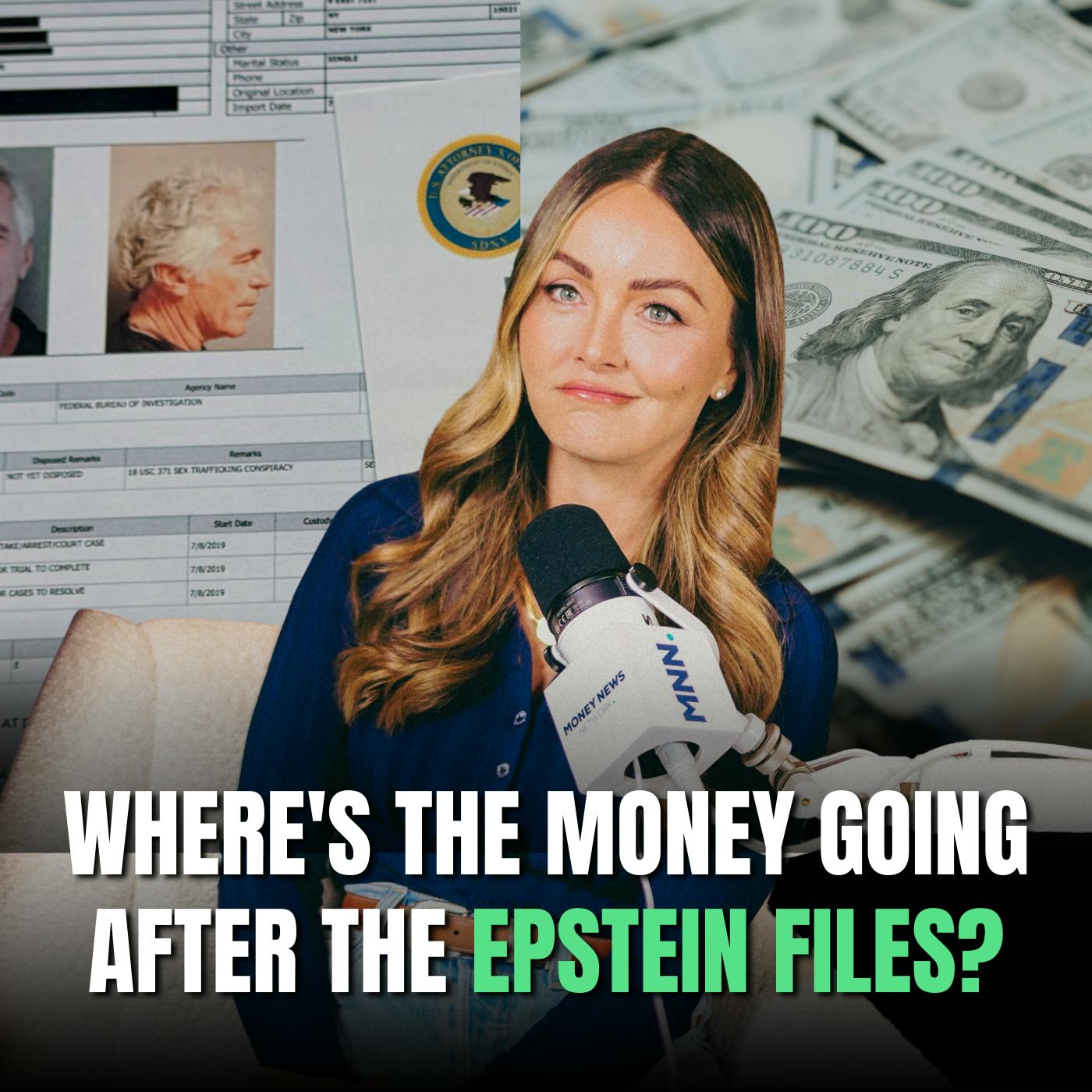
I'm Nicole Lapvin, the only financial expert. You don't need a dictionary to understand it's time for some money rehab. A few weeks ago, millions of never before seen pages of the Epstein files were released. And the DOJ says this is the final installment of the files. I will say that Attorney General Pam Bondi did say that there were 200,000 pages that were, quote, redacted or withheld based on various privileges, end quote. So other materials could be released in the future. But what we've seen so far reads like a who's who of power and influence from Wall street to Washington to Silicon Valley. These files show that Epstein was in contact with Bill Clinton, Bill Gates, Jay Z, Richard Branson, Elon Musk, Mark Rowan and President Donald Trump. So today we're following the money trail of the Epstein files. I'll be telling you what we know about how Epstein made his money and what we don't know. I'll also be unpacking the financial fallout of the Epstein files being unsealed. And lastly, the theory that Jeffrey Epstein himself was secretly the creator of Bitcoin. When Jeffrey Epstein died in 2019. His estate was worth an estimated $600 million. So how did he actually make his money? It's a question even prosecutors struggle to answer. So let's start at the very beginning. Jeffrey Epstein was often described as a financier. But when you actually follow the receipts, things get a little fuzzy. Epstein started out teaching math and physics at the Dalton School in Manhattan. Then in the 1970s, he got hired by Bear Stearns as a junior trader. Despite not having a college degree, he climbed the ranks, but then left in 1981 after Bear Stearns opened an investigation into Epstein's sketchy financial behavior. In 1980, Epstein spent $10,000, allegedly on jewelry for his girlfriend and then charged it to the company. There were some other bad money moves. Like for example, before a company goes public, investment banks give shares of that company to favored clients. But instead of clients, Epstein gave some of those coveted shares to girlfriends. The SEC then interviewed Epstein. After some insider trading suspicions, Epstein resigned, saying that he was officially offended by Bear Stearns allegations. After that, we know that Epstein branded himself as a financial consultant offering services to the ultra, ultra wealthy. There's no actual evidence that he managed money in a way that any legitimate wealth advisor would. He never registered with the sec, and his firm had no public facing structure. We only know about a handful of clients. Les Wexner and Leon Black are the most prominent.
- [06:32]
A
2.
- [06:33]
B
Of the $800 million in revenue brought in by Epste, around 490 million were for fees. And Wexner and Black provided about 75% of all of Epstein's fee based income. Wexner was the CEO of L Brands. That's a collection of companies that at the time would have included Victoria's Secret. Wexner granted Epstein an insane amount of financial control. He even gave Epstein power of attorney. Leon Black is the co founder of Apollo Global Management, a $500 billion private equity giant. Black found to have paid Epstein at least $158 million for financial and tax advice between 2012 and 2016 alone. Which is really, really odd considering Black already had an entire army of elite advisors in his own office. Of course, this payment was revealed during an investigation into Black's scheme to avoid paying over a billion dollars in federal taxes. This is what we know about his work. We also know that he invested about 40 million bucks in Peter Thiel's venture capital firm, but that's about it. And yet, at the time of his arrest in 2019, Epstein was estimated to be worth upwards of $577 million. With no clear trail for how most of that was made. Many investigators have speculated that Epstein's true business was blackmail and trafficking influence and people. His properties were wired with surveillance equipment, and there is evidence that he collected compromising material on high profile guests. Whether that was used for extortion, intelligence work, or some combination of the two is still unknown. Fast forward to January of 2024, the initial unsealing of the Epstein files. Then a federal judge initially released over 900 pages of court documents from a civil defamation case brought by one of Epstein's most prominent accus. Names in the unsealed files included billionaires, political powerhouses, former presidents, celebrities, and yes, major figures in the business world. And no, just being named in the documents does not equal guilt. But the court of public opinion does not always wait for due process. The financial fallout began almost immediately when Leon Black's name appeared again in the unsealed documents. In 2024, Apollo stock dropped over 4% in just two days, even though Leon Black had stepped away from the company three years before. Similarly, Victoria's Secret had worked hard to distance itself from Wexner and the Epstein scandal. But the renewed attention in early 2024 rattled investors anyway. The company stock fell more than 5%, with analysts citing reputational overhang. It did recover in Q2, but the reaction made one thing clear. The market was watching. Universities weren't spared either. Epstein had donated millions of dollars to elite institutions, most controversially Harvard. In March of 2025, Harvard announced that it would redirect all of Epstein linked funds into survivor support initiatives and promised greater transparency into future donor vetting. So even without formal charges, just being associated with Epstein has become a massive reputational and financial liability. Now let's pivot to the theory that Epstein was secretly Satoshi Nakamoto. This is not new. It has been floating around Reddit and TikTok since at least 2020. But it did get revived in mid-2025 when tech journalists resurfaced Epstein's documented interest in cryptography, privacy technology and digital finance. There's a fake memo floating around. Maybe you've seen it. That looks like Epstein sent Ghislaine Maxwell an email saying the satoshi pseudonym is working perfectly and the subject line is Project Bitcoin Funding and white paper. Again, this is an AI fake. But could Epstein have actually created Bitcoin? Almost certainly not. While he may have been interested in the ideas that led to blockchain, the technical skills required to write the original Bitcoin white paper and launch the protocol are extremely advanced. And Satoshi's writing style, political ideology and code structure are wildly inconsistent with with Epstein's background. So that is probably not how he built his wealth. Most of Epstein's known estate has been liquidated. His private island, Little St. James, was sold in late 2025 for $60 million to a private equity group that plans to turn it into a retreat. Meanwhile, civil suits against the estate are ongoing. As of this taping, there are still active cases seeking damages from Epstein's former partners and enablers. And more names could still be revealed in pending document releases tied to Maxwell's appeals. For companies, the message is absolutely clear. Reputational risk is real. Money boards are now moving faster to cut ties, investors are pushing for more transparency, and brands are not willing to bet their image on anyone with a shadowy past. It is beyond disappointing to see terrible stories about people who have historically been well respected. On one Wall street, there are emails from Epstein that claim that Bill Gates came to him to try and broker relationships with married women and to get medication to treat an std. And that Gates wanted to try and give that STD medication to Melinda Gates secretly. But a spokesperson for Bill Gates has said that these are false and were Epstein's attempt to entrap and defame Gates at the time. But there are also documented cases of sexual exploitation of young women by powerful men, men. And some people online have wondered, these men are some of the most powerful men in the world. You would think they could have a relationship with any adult woman they ever wanted to. So why in the world would they ever, ever participate in human trafficking? It's absolutely horrible and it is not a question that I can answer. The closest I can possibly come is that power can corrupt, but power can also be a catalyst for justice and change. The reason we have millions of pages of Epstein files is because of the power of the survivors. Their stories moved markets, which is the strongest message the financial world can possibly hear. And not only are those the types of stories that move markets, but those are the types that change the rules. For today's tip, you can take straight to the bank. It is not a money tip. It is just a life tip. Please be a good human. It pays dividends.