
Podcast
More Perfect
Hosted by WNYC Studios · EN
We’re taught the Supreme Court was designed to be above the fray of politics. But at a time when partisanship seeps into every pore of American life, are the nine justices living up to that promise? More Perfect is a guide to the current moment on the Court. We bring the highest court of the land down to earth, telling the human dramas at the Court that shape so many aspects of American life — from our religious freedom to our artistic expression, from our reproductive choices to our voice in democracy.
15episodes
Episodes
Newest firstAll episodes
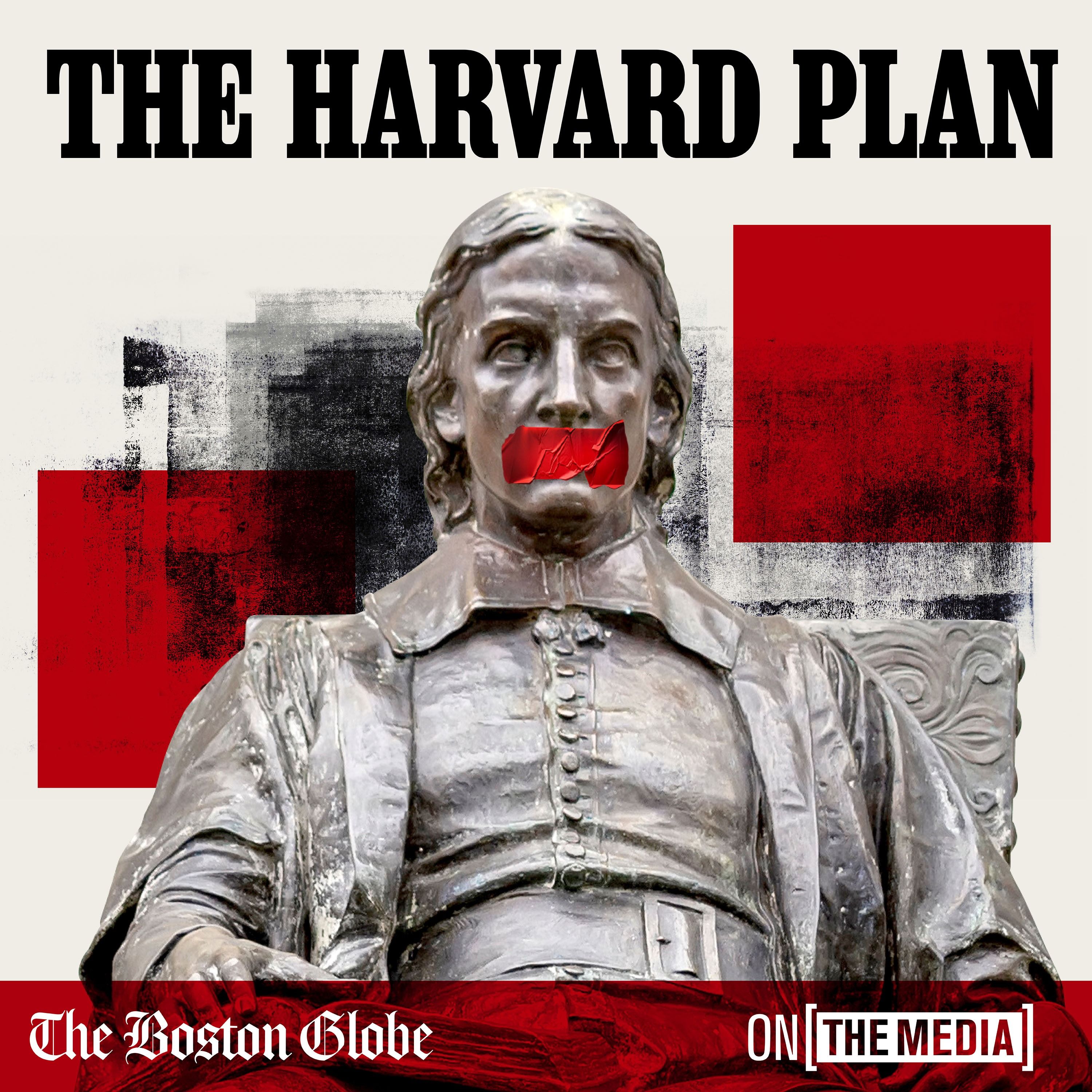
The Harvard Plan
Nov 1800:47:01Tap to summarizeReporter Ilya Marritz—a longtime fan of More Perfect—drops in to share a new series he’s made with The Boston Globe and WNYC’s On the Media. The Harvard Plan investigates how the Trump administration’s pressure campaign is reshaping American universities through memorable characters, thorny moral and ethical questions, and high stakes. Preview the first episode here.The whole series is available to listen at https://www.wnycstudios.org/podcasts/otm/harvard-plan
Transcribe →No More Souters - Revisited
May 9, 202500:49:07Tap to summarizeJustice David Souter has died. Souter was one of the most private, low-profile justices ever to have served on the Supreme Court. He rarely gave interviews or speeches. Yet his tenure was anything but low profile. Deemed a “home run” nominee by Republicans, Souter defied partisan expectations on the bench and ultimately ceded his seat to a Democratic president.As we reflect on his legacy, we wanted to share this episode again. Produced two years ago, this episode tells the story of how “No More Souters” became a rallying cry for Republicans and inspired a backlash that would change the Court forever.Voices in the episode include:• Ashley Lopez — NPR political correspondent• Anna Sale — host of Slate's Death, Sex & Money podcast • Tinsley Yarbrough — author and former political science professor at East Carolina University• Heather Gerken — Dean of Yale Law School and former Justice Souter clerk• Kermit Roosevelt III — professor at University of Pennsylvania School of Law and former Justice Souter clerk• Judge Peter Rubin — Associate Justice on Massachusetts Appeals Court and former Justice Souter clerk• Governor John H. Sununu — former governor of New Hampshire and President George H.W. Bush’s Chief of StaffLearn more:• 1992: Planned Parenthood v. Casey• 1992: Lee v. Weisman• 2000: Bush v. Gore• 2009: Citizens United v. FEC
Transcribe →Andy Warhol and the Art of Judging Art
Aug 3, 202300:41:12Tap to summarizeThe law protects creators' original work against copycats, but it also leaves the door open for some kinds of copying. When a photographer sues the Andy Warhol Foundation for using her work without permission, the justices struggle not to play art critics as they decide the case. More Perfect explores how this star-studded case offers a look at how this Court actually makes decisions. Voices in the episode include: • David Hobbs — known as Mr. Mixx, co-founder of the hip-hop group 2 Live Crew • Jerry Saltz — senior art critic and columnist for New York magazine • Pierre Leval — judge on U.S. Court of Appeals for the Second Circuit • Jeannie Suk Gersen — More Perfect legal advisor, Harvard Law professor, New Yorker writer • Lynn Goldsmith — photographer • Andy Warhol — as himself Learn more: • 1994: Campbell v. Acuff-Rose Music, Inc. • 2023: Andy Warhol Foundation for the Visual Arts, Inc. v. Goldsmith • "Toward A Fair Use Standard" by Pierre Leval • The Andy Warhol Foundation Shadow dockets, term limits, amicus briefs — what puzzles you about the Supreme Court? What stories are you curious about? We want to answer your questions in our next season. Click here to leave us a voice memo. Supreme Court archival audio comes from Oyez®, a free law project by Justia and the Legal Information Institute of Cornell Law School. Click here to donate to More Perfect. Support for More Perfect is provided in part by The Smart Family Fund. Follow us on Instagram, Threads and Facebook @moreperfectpodcast, and X (Twitter) @moreperfect.
Transcribe →The Original Anti-Vaxxer
Jul 27, 202300:40:57Tap to summarizeIn 1902, a Swedish-American pastor named Henning Jacobson refused to get the smallpox vaccine. This launched a chain of events leading to two landmark Supreme Court cases, in which the Court considered the balancing act between individual liberty over our bodies and the collective good. A version of this story originally ran on The Experiment on March 21, 2021. Voices in the episode include: • Rev. Robin Lutjohann — pastor of Faith Lutheran Church in Cambridge, Massachusetts • Michael Willrich — Brandeis University history professor • Wendy Parmet — Northeastern University School of Law professor Learn more: • 1905: Jacobson v. Massachusetts • 1927: Buck v. Bell • 2022: National Federation of Independent Business v. Department of Labor, Occupational Safety and Health Administration • 2022: Biden v. Missouri • "Pox: An American History" by Michael Willrich • "Constitutional Contagion: COVID, the Courts, and Public Health" by Wendy Parmet Music by Ob (“Wold”), Parish Council (“Leaving the TV on at Night,” “Museum Weather,” “P Lachaise”), Alecs Pierce (“Harbour Music, Parts I & II”), Laundry (“Lawn Feeling”), water feature (“richard iii (duke of gloucester)”), Keyboard (“Mu”), and naran ratan (“Forevertime Journeys”), provided by Tasty Morsels. Additional music by Dieterich Buxtehude (“Prelude and Fugue in D Major”), Johannes Brahms (“Quintet for Clarinet, Two Violins, Viola, and Cello in B Minor”), and Andrew Eric Halford and Aidan Mark Laverty (“Edge of a Dream”). Shadow dockets, term limits, amicus briefs — what puzzles you about the Supreme Court? What stories are you curious about? We want to answer your questions in our next season. Click here to leave us a voice memo. Supreme Court archival audio comes from Oyez®, a free law project by Justia and the Legal Information Institute of Cornell Law School. Support for More Perfect is provided in part by The Smart Family Fund. Follow us on Instagram, Threads and Facebook @moreperfectpodcast, and X (Twitter) @moreperfect.
Transcribe →Not Even Past: Dred Scott Reprise
Jul 20, 202300:35:24Tap to summarizeDred Scott v. Sandford is one of the most infamous cases in Supreme Court history: in 1857, an enslaved person named Dred Scott filed a suit for his freedom and lost. In his decision, Chief Justice Roger Brooke Taney wrote that Black men “had no rights which the white man was bound to respect.” One Civil War and more than a century later, the Taneys and the Scotts reunite at a Hilton in Missouri to figure out what reconciliation looks like in the 21st century. Voices in the episode include: • Lynne Jackson — great-great-granddaughter of Dred and Harriet Scott, and president and founder of the Dred Scott Heritage Foundation • Dred Scott Madison — great-great-grandson of Dred Scott • Barbara McGregory — great-great-granddaughter of Dred Scott • Charlie Taney — great-great-grandnephew of Roger Brooke Taney, Chief Justice of the Supreme Court who wrote the Dred Scott v. Sandford decision • Richard Josey — Manager of Programs at the Minnesota Historical Society Learn more: • 1857: Dred Scott v. Sandford • The Dred Scott Heritage Foundation Special thanks to Kate Taney Billingsley, whose play, "A Man of His Time," inspired the episode; and to Soren Shade for production help. Additional music for this episode by Gyan Riley. Shadow dockets, term limits, amicus briefs — what puzzles you about the Supreme Court? What stories are you curious about? We want to answer your questions in our next season. Click here to leave us a voice memo. Supreme Court archival audio comes from Oyez®, a free law project by Justia and the Legal Information Institute of Cornell Law School. Support for More Perfect is provided in part by The Smart Family Fund. Follow us on Instagram, Threads and Facebook @moreperfectpodcast, and Twitter @moreperfect.
Transcribe →No More Souters
Jul 13, 202300:48:37Tap to summarizeDavid Souter is one of the most private, low-profile justices ever to have served on the Supreme Court. He rarely gives interviews or speeches. Yet his tenure was anything but low profile. Deemed a “home run” nominee by Republicans, Souter defied partisan expectations on the bench and ultimately ceded his seat to a Democratic president. In this episode, the story of how “No More Souters” became a rallying cry for Republicans and inspired a backlash that would change the Court forever. Voices in the episode include: • Ashley Lopez — NPR political correspondent • Anna Sale — host of WNYC Studios' Death, Sex & Money podcast • Tinsley Yarbrough — author and former political science professor at East Carolina University • Heather Gerken — Dean of Yale Law School and former Justice Souter clerk • Kermit Roosevelt III — professor at University of Pennsylvania School of Law and former Justice Souter clerk • Judge Peter Rubin — Associate Justice on Massachusetts Appeals Court and former Justice Souter clerk • Governor John H. Sununu — former governor of New Hampshire and President George H.W. Bush’s Chief of Staff Learn more: • 1992: Planned Parenthood v. Casey • 1992: Lee v. Weisman • 2000: Bush v. Gore • 2009: Citizens United v. FEC Shadow dockets, term limits, amicus briefs — what puzzles you about the Supreme Court? What stories are you curious about? We want to answer your questions in our next season. Click here to leave us a voice memo. Supreme Court archival audio comes from Oyez®, a free law project by Justia and the Legal Information Institute of Cornell Law School. Support for More Perfect is provided in part by The Smart Family Fund. Follow us on Instagram, Threads and Facebook @moreperfectpodcast, and Twitter @moreperfect.
Transcribe →Off the Record, On the Stand
Jun 29, 202300:33:23Tap to summarizeRecently, On the Media’s Micah Loewinger was called to testify in court. He had reported on militia groups who’d helped lead the January 6 attack on the Capitol. Now the government was using his work as evidence in a case against them. Micah wanted nothing to do with it — he worried that participating in the trial would signal to sources that he couldn’t be trusted, which would compromise his work. As he considered his options, he uncovered a 1972 case called Branzburg v. Hayes. It involved New York Times reporter Earl Caldwell, who was approached multiple times by the FBI to testify against sources in the Black Panther Party. His case — and its decision — transformed the relationship between journalists and the government. Voices in the episode include: • Micah Loewinger — correspondent for WNYC Studios' On the Media • Earl Caldwell — former New York Times reporter • Lee Levine — attorney and media law expert • Congressman Jamie Raskin — representing Maryland’s 8th District Learn more: • 1972: Branzburg v. Hayes • Listen to On the Media's "Seditious Conspiracy" episode. Subscribe to On the Media here. Shadow dockets, term limits, amicus briefs — what puzzles you about the Supreme Court? What stories are you curious about? We want to answer your questions in our next season. Click here to leave us a voice memo. Special thanks to the Maynard Institute For Journalism Education for allowing the use of its Earl Caldwell oral history. Supreme Court archival audio comes from Oyez®, a free law project by Justia and the Legal Information Institute of Cornell Law School. Support for More Perfect is provided in part by The Smart Family Fund. Follow us on Instagram and Facebook @moreperfectpodcast, and Twitter @moreperfect.
Transcribe →Adoptive Couple v. Baby Girl Reprise
Jun 22, 202300:46:23Tap to summarizeLast week, the Supreme Court upheld the Indian Child Welfare Act in a case called Haaland v. Brackeen. The decision comes almost exactly 10 years after the Supreme Court ruled in Adoptive Couple v. Baby Girl, which planted the seed for last week’s big ruling. To mark the new landmark decision, More Perfect re-airs the Radiolab episode that tells the story of two families, a painful history, and a young girl caught in the middle. Voices in the episode include: • Allison Herrera — KOSU Indigenous Affairs reporter • Matt and Melanie Capobianco — Veronica's adoptive parents • Dusten Brown — Veronica's biological father • Mark Fiddler — attorney for the Capobiancos • Marcia Zug — University of South Carolina School of Law professor • Bert Hirsch — attorney formerly of the Association on American Indian Affairs • Chrissi Nimmo — Deputy Attorney General for Cherokee Nation • Terry Cross — founding executive director of the National Indian Child Welfare Association (now serving as senior advisor) • Lori Alvino McGill — attorney for Christy Maldonado, Veronica’s biological mother Learn more: • 2013: Adoptive Couple v. Baby Girl • 2023: Haaland v. Brackeen • "Baby Veronica belongs with her adoptive parents" by Christy Maldonado • "Doing What’s Best for the Tribe" by Marcia Zug • "The Court Got Baby Veronica Wrong" by Marcia Zug • "A Wrenching Adoption Case" by The New York Times Editorial Board • National Indian Child Welfare Association • In Trust podcast, reported by Allison Herrera Supreme Court archival audio comes from Oyez®, a free law project by Justia and the Legal Information Institute of Cornell Law School. Support for More Perfect is provided in part by The Smart Family Fund. Follow us on Instagram and Facebook @moreperfectpodcast, and Twitter @moreperfect.
Transcribe →Part 2: If Not Viability, Then What?
Jun 15, 202300:35:24Tap to summarizeNow that the “viability line” in pregnancy — as defined by Roe v. Wade — is no longer federal law, lawmakers and lawyers are coming up with new frameworks for abortion access at a dizzying rate. In this second part of our series, More Perfect asks: what if abortion law wasn’t shaped by men at the Supreme Court, but instead by people who know what it’s like to be pregnant, to have abortions, and to lose pregnancies? We hear from women on the front lines of the next legal battle over abortion in America. Voices in the episode include: • Mary J. Browning — pro bono lawyer for The Justice Foundation • Dr. Shelley Sella — OBGYN (retired) • Greer Donley — University of Pittsburgh School of Law professor • Jill Wieber Lens — University of Arkansas School of Law professor Learn more: • 1973: Roe v. Wade • 2022: Dobbs v. Jackson Women's Health Organization • Listen to Part 1: The Viability Line Supreme Court archival audio comes from Oyez®, a free law project by Justia and the Legal Information Institute of Cornell Law School. Support for More Perfect is provided in part by The Smart Family Fund. Follow us on Instagram and Facebook @moreperfectpodcast, and Twitter @moreperfect.
Transcribe →Part 1: The Viability Line
Jun 8, 202300:44:37Tap to summarizeWhen the justices heard oral arguments in Dobbs v. Jackson Women’s Health Organization, the landmark abortion case, one word came up more than any other: viability. The viability line was at the core of Roe v. Wade, and it’s been entrenched in the abortion rights movement ever since. But no one seems to remember how this idea made its way into the abortion debate in the first place. This week on More Perfect, we trace it back to the source and discover how a clerk and a couple of judges turned a fuzzy medical concept into a hard legal line. Voices in the episode include: • George Frampton — former clerk to Justice Harry Blackmun • Judge Jon Newman — Second Circuit Court of Appeals • Khiara Bridges — UC Berkeley School of Law professor • Alex J. Harris — lawyer, former member of the Joshua Generation Learn more: • 1973: Roe v. Wade • 2022: Dobbs v. Jackson Women's Health Organization • Listen to Part 2: If Not Viability, Then What? Correction: An earlier version of this episode stated that Justice Blackmun was the first to define pregnancy in terms of trimesters. Upon further review, he seems to have been the first to apply that framework to abortion law specifically, but it appeared in at least one medical text earlier, in 1904. We have updated the episode to address this error. Supreme Court archival audio comes from Oyez®, a free law project by Justia and the Legal Information Institute of Cornell Law School. Support for More Perfect is provided in part by The Smart Family Fund. Follow us on Instagram and Facebook @moreperfectpodcast, and Twitter @moreperfect.
Transcribe →