Podcast
Mormon.ish
Hosted by Rebecca Bibliotheca and Landon Brophy · EN
A podcast for post and nuanced Mormons seeking a joyful life as they navigate their faith journey outside of orthodox Mormonism.
Donate to Mormonish Podcast here: https://www.mormonishpodcast.org/support
This podcast uses the following third-party services for analysis:
Podcorn - https://podcorn.com/privacy
55episodes
Episodes
Newest firstAll episodes
Ep341: The Real Story Behind LDS Missionary Ads
4d ago01:29:37Tap to summarizeWe've all seen the increasing number of ads from LDS missionaries on social media. You know, the ones that don't mention they are from the LDS church until you find yourself filling out a contact form. The ads that ask if you're lonely, or having a hard time, or want a friend to take you to church, or invite you to wipe away your sins with baptism. Mormonish is joined by former LDS missionary ad specialist Julianna Lane to shine a spotlight on the secret world of LDS missionary advertising. There's been a lot of discussion and interest recently about missionary ads. You won't want to miss this episode! (This episode was originally aired in October 2025)This podcast uses the following third-party services for analysis: Podcorn - https://podcorn.com/privacy
Transcribe →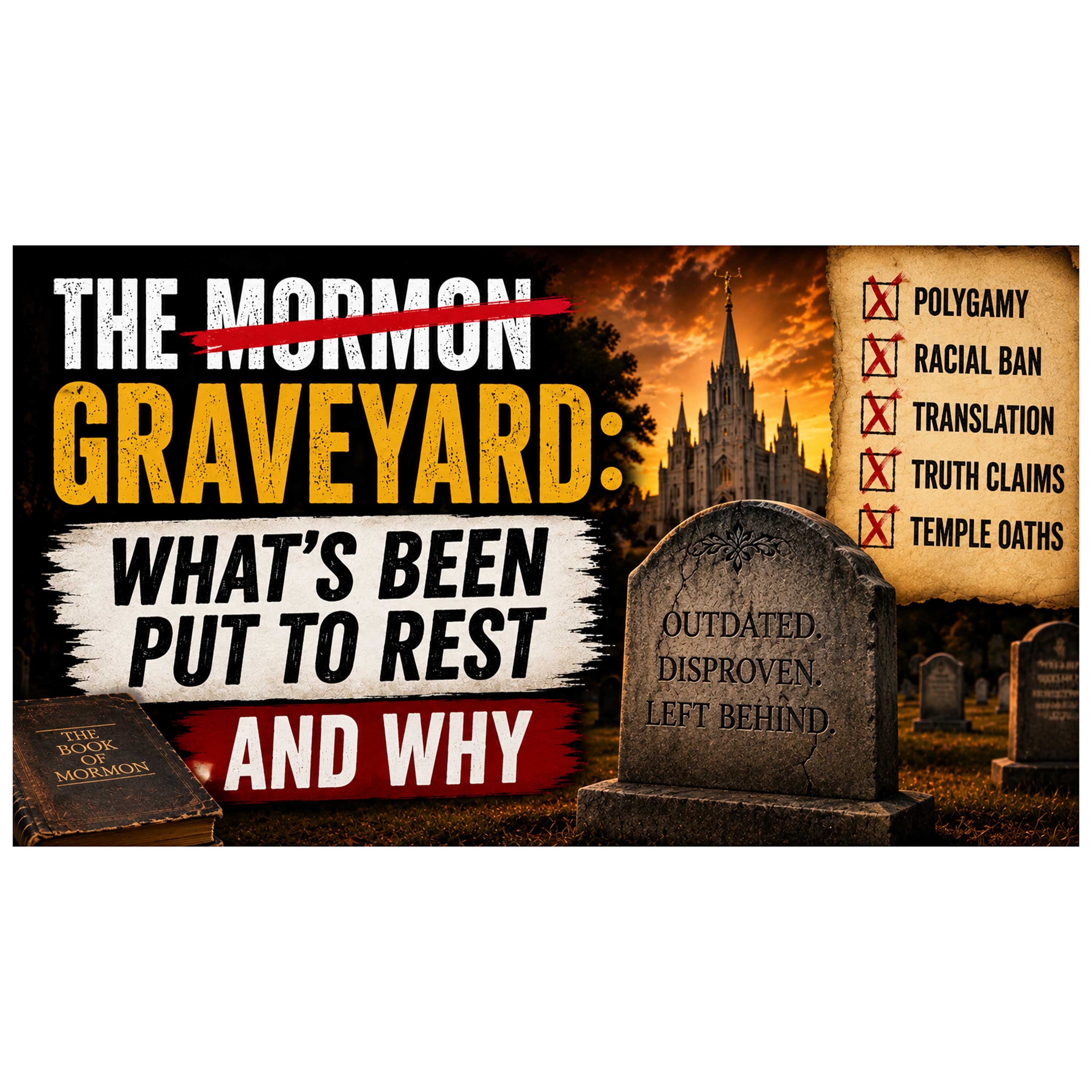
Ep340: The Mormon Graveyard: What's Been Put to Rest and Why
5d ago00:59:59Tap to summarizeOver nearly two centuries, Mormonism has changed in ways both large and small. Doctrines once taught with conviction, policies once defended as divinely inspired, and practices once considered essential have quietly—or sometimes dramatically—been left behind.In this episode, we explore The Mormon Graveyard, a website that catalogs the beliefs, teachings, policies, terminology, and practices the LDS Church no longer embraces or follows. From polygamy and the racial priesthood and temple ban to changing temple ceremonies, abandoned truth claims, and evolving teachings, we examine what has been “buried” and what those changes tell us about the evolution of Mormonism.What gets remembered? What gets reinterpreted? And what simply disappears?Grab your shovel—we’re taking a walk through The Mormon Graveyard with creator Aran.Website link: https://sites.google.com/view/mormongraveyard This podcast uses the following third-party services for analysis: Podcorn - https://podcorn.com/privacy
Transcribe →
Ep339: Two Top Book of Mormon Word Print Studies Demonstrate Multiple Authors: What Does This Mean?
2w ago01:34:34Tap to summarizeIn Episode 5 of this series, Patrick begins by responding to a recent podcast episode illustrating twenty 19th century non-Biblical phrases that are found in the Book of Mormon. These phrases point to a non-ancient text. But do they point to Joseph as the author? Or better yet, to Rigdon? Patrick then addresses the question of conspiracies in early Mormon history! Are we conspiracy theorists and we don't even know it? After a brief review of the first four Book of Mormon wordprint studies presented in prior episodes, we move on to the heart of this episode which focuses on two wordprint studies that both show compare the text of Nephi to that of Alma and then Mormon. Both present well-constructed studies for the determination that there are multiple authors of the Book of Mormon. Both also avoid comparing Rigdon! Why??? Patrick also reviews two LDS-authored summaries of the various wordprint studies and shows how there is a lot of mis-direction and spin. Finally, we present a chart reviewing the findings of the first 6 wordprint studies showing surprisingly consistent findings. Join us for a thoughtful look at the evidence behind one big question: who authored the Book of Mormon?This podcast uses the following third-party services for analysis: Podcorn - https://podcorn.com/privacy
Transcribe →Ep338: Joseph's Pet Rock: The Seer Stone That Started It All w/ Ganesh Cherian
2w ago01:40:16Tap to summarizeJoseph's Pet Rock" may be a tongue-in-cheek title, but behind the humor lies one of the most important—and fascinating—objects in early Mormon history. Long before the publication of the Book of Mormon, Joseph Smith used a small seer stone while participating in treasure-seeking activities in upstate New York. Over time, that same stone became closely associated with some of the most significant events of the Restoration. In this episode, we explore the history of Joseph Smith's seer stone, its role in early Mormonism, and why it remains such a controversial and misunderstood artifact. How did a stone once used in folk magic and treasure digging become intertwined with sacred scripture and divine revelation? What do historical sources tell us about how Joseph used the stone, and why has its story been emphasized at some times and downplayed at others? Join us as we separate myth from history and examine the remarkable journey of the "pet rock" that helped shape a religious movement. Ganesh Cherian joins Mormonish Podcast again as we dive into this fascinating topic!This podcast uses the following third-party services for analysis: Podcorn - https://podcorn.com/privacy
Transcribe →
Ep337: Holy Disobedience: Where Seventh Day Adventism and Mormonism Intersect
3w ago01:32:32Tap to summarizeWhat was it like growing up as a girl in Mormonism? What about in Seventh-day Adventism? You might be surprised by how much these two very different religions have in common. In this episode, Melissa Duge Spiers joins Mormonish for an honest conversation about purity culture, modesty, dating, shame, and the expectations placed on women in our respective faith traditions. Melissa shares her experiences growing up Seventh-day Adventist, while I reflect on my own upbringing in the LDS Church. Along the way, we discover striking similarities in the messages we received about our bodies, our worth, and what it meant to be a “good” young woman. This isn’t about comparing which religion was “better” or “worse.” It’s about exploring the lasting impact of these teachings, sharing our stories with empathy, and talking about what healing and growth can look like on the other side. Whether you were raised Mormon, Seventh-day Adventist, or in another faith tradition, we think you’ll find plenty to relate to in this heartfelt conversation. We’d love to hear your own experiences in the comments! SUBSTACK: https://substack.com/@melissadugespiers BOOK: https://www.lakedrivebooks.com/books/holy-disobedience/ INSTAGRAM: https://www.instagram.com/the.glory.whole/ TIK TOK: https://www.tiktok.com/@theglorywhole YOUTUBE: https://www.youtube.com/@theglorywhole3831This podcast uses the following third-party services for analysis: Podcorn - https://podcorn.com/privacy
Transcribe →
Ep336: Green Eggs & Ham: An Ancient Temple Text
4w ago01:53:05Tap to summarizeCan Green Eggs and Ham really be read as an ancient temple text? Dr. John Lundwall takes on that challenge—using the very same interpretive methods often employed by LDS apologists to argue for ancient origins in the Book of Mormon. By intentionally applying those techniques to Dr. Seuss’s Green Eggs and Ham, Dr. Lundwall demonstrates how flexible assumptions, selective parallels, and creative pattern-finding can make almost any text appear to support an ancient religious narrative. This episode isn’t an argument that Green Eggs and Ham is actually ancient. Instead, it’s a thought-provoking exploration of methodology: How do we distinguish between genuine evidence and imaginative interpretation? Where is the line between scholarship and apologetics? Join us for a fascinating—and surprisingly funny—conversation that challenges listeners to think critically about the arguments used to defend ancient scripture claims. Cohosted by Ganesh Cherian.This podcast uses the following third-party services for analysis: Podcorn - https://podcorn.com/privacy
Transcribe →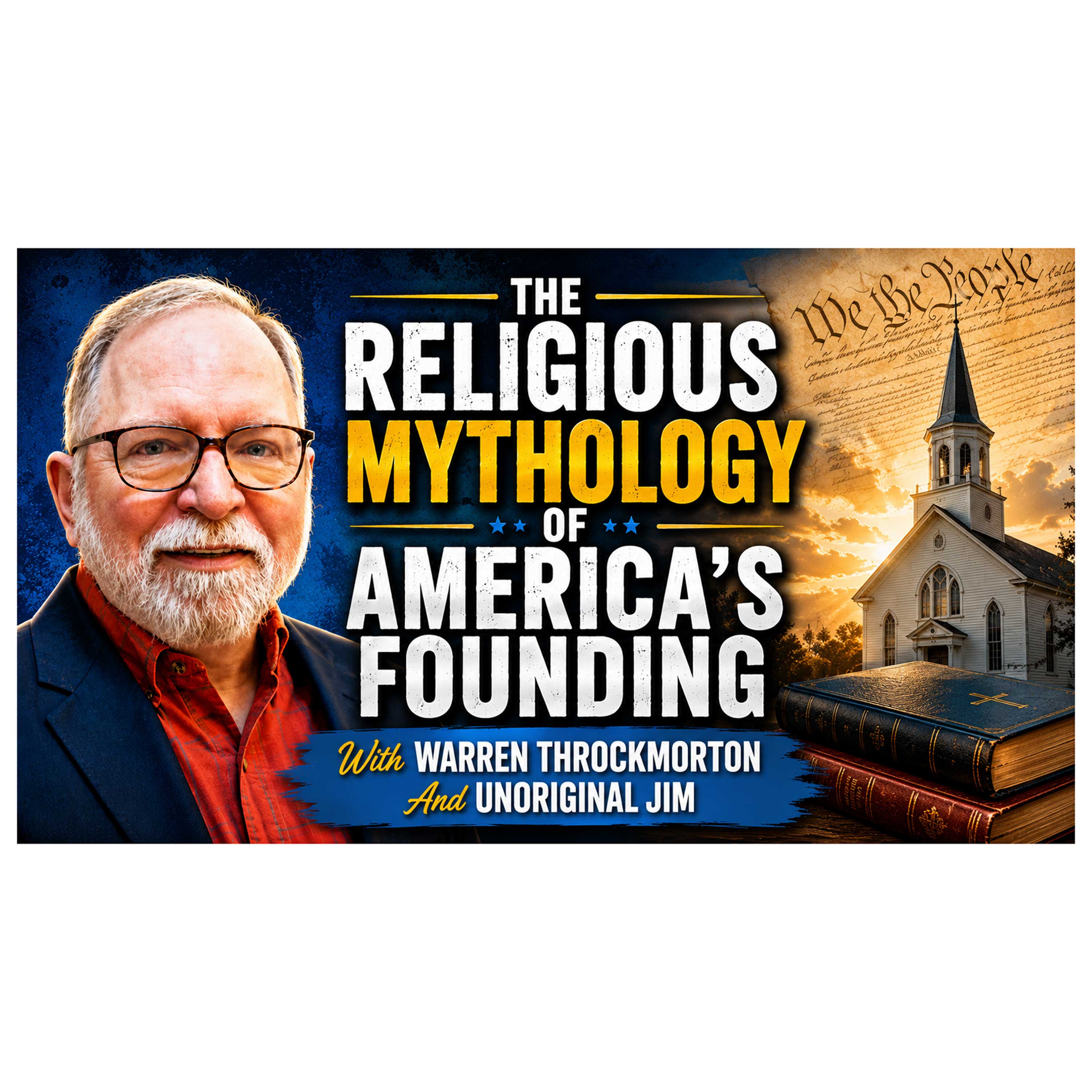
Ep335: The Religious Mythology of America's Founding /with author Warren Throckmorton
Jul 1701:33:07Tap to summarizeGrowing up in the LDS church, we experienced a lot of mythologized history. A lot of this was tied to the founding fathers and the origins of America. We heard stories about Moroni appearing to Christopher Columbus and George Washington. Mythology narratives about Washington’s prayer or the founding fathers appearing to Wilford Woodruff at the temple. All of these ideas were narratives designed to push a very specific idea of American identity and Mormonism’s place inside that identity, many of these ideas are directly tied to ideas of Christian nationalism. Promoted by people like a Benson, Skousen, Tim Ballard, Glenn Beck many others these mythology became part of our religious identity. Over the past two decades, Warren Throckmorton has become one of the leading voices examining the historical claims behind Christian nationalism. Through books such as "Getting Jefferson Right and The Christian Past That Wasn’t," he has carefully documented how influential activists and organizations have reshaped American history to promote the idea that the United States was founded as an explicitly Christian nation with a unique covenantal relationship with God. In this interview, we’ll explore how these narratives developed, why they remain so influential, how they compare with similar ideas found in Mormonism and other religious traditions, and what the growing influence of Christian nationalism could mean for American democracy, religious liberty, and the relationship between faith and political power.This podcast uses the following third-party services for analysis: Podcorn - https://podcorn.com/privacy
Transcribe →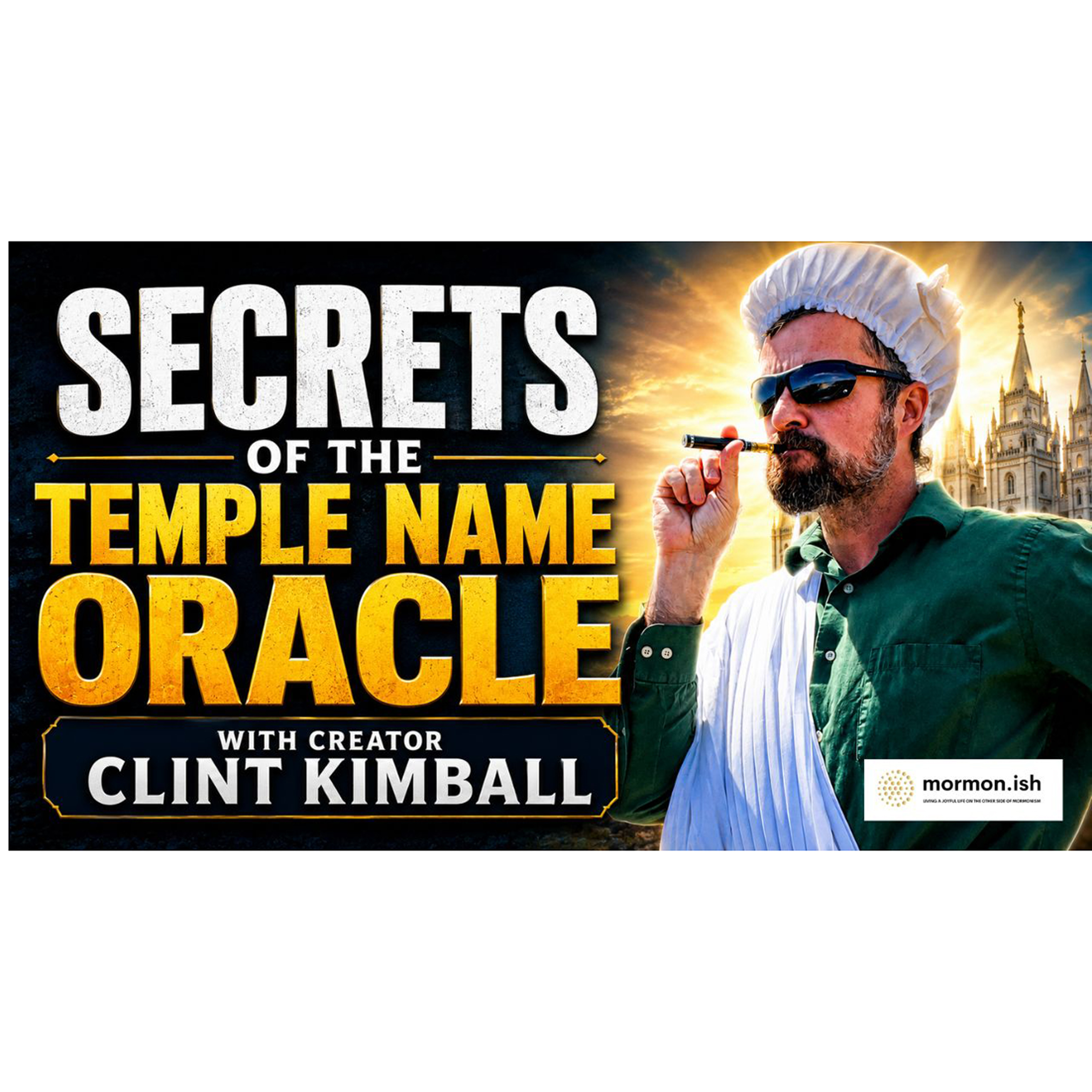
Ep334: Secrets of the Temple Name Oracle, And More!
Jul 1502:14:33Tap to summarizeHave you always wondered who is behind the Temple Name Oracle? After experiencing cognitive dissonance from his mission in 2003 and discovering the truth about LDS church history in 2010 from a simple Google search, Clint Kimball experienced the sudden loss of his entire social support structure and began reconstructing his belief system by collecting a trove of facts. This led to the creation of his website, Fuller Consideration, a repository of information used by researchers around the world. Join Mormonish as we take a fascinating deep dive into the creation and impact of some of his notable projects, including: Better Information: A collection of original source documents on church history. No commentary. No analysis. The Temple Name Oracle: The popular database that unlocked the rotation system behind how New Names are given out in temples. The Patriarchal Blessing Revelator: An archive that helps us understand whether patriarchal blessings tell us more about the recipient or the patriarch. Unit Tracker: A live list of where wards, branches, stakes, and districts are being opened and closed around the world. The Deseret Demographer: A large data-driven analysis that shows how many of the church's reported membership actually consider themselves members, and how many are showing up to church. You can visit his website here: https://www.fullerconsideration.com/ Other websites mentioned during the interview: https://exmormon.org/ http://wivesofjosephsmith.org/ https://returnandreport.org/ https://thewidowsmite.org/ You won't want to miss this episode!This podcast uses the following third-party services for analysis: Podcorn - https://podcorn.com/privacy
Transcribe →Ep333: More Intriguing Information on Book of Mormon Authorship from BYU Word Print Studies
Jul 901:21:55Tap to summarizeIn Episode 3 of this series, Patrick begins by responding to excellent audience feedback on the overview of stylometry; he presents a chart that shows when in the Book of Mormon each anomaly first appears. He then reviews the usable Book of Mormon wordprint study from Episode 3. The heart of this episode focuses on the first two wordprint studies, both from BYU academics. Patrick explains how the authors of these first two studies make the clear claim that their studies show—in two different types of analysis each—that there are multiple authors of the Book of Mormon! The second of the studies did what no other study does—compare the wordprint of the primary authors “narrative” text voice separately from their “sermon” text voice. What conclusions should we draw from this well-designed study about the two voices? Patrick reviews the critiques of the studies and discusses limitations and most reasonable conclusions to draw from the studies. Join us for a thoughtful look at the evidence behind one big question: who authored the Book of Mormon?This podcast uses the following third-party services for analysis: Podcorn - https://podcorn.com/privacy
Transcribe →Ep332: Myth and Religion Re-examined w/Dr. John Lundwall
Jul 801:40:19Tap to summarizeIn this special Mormonish/ The Good Book Club episode, we sit down with Dr. John Lundwall to discuss his thought-provoking book Mythos and Cosmos and explore what its ideas might mean when viewed through the lens of Mormonism. Drawing on comparative religion, oral tradition, mythology, and the development of sacred narratives, Lundwall challenges readers to think differently about how ancient religious texts emerge, evolve, and function within believing communities. Together, we examine some of the book's most intriguing arguments and consider their implications for Latter-day Saint scripture, history, and religious identity. How do oral cultures preserve and transmit sacred stories? What distinguishes myth from history, and must the two always be in conflict? How might Lundwall's framework reshape conversations about the Book of Mormon and other sacred texts?This podcast uses the following third-party services for analysis: Podcorn - https://podcorn.com/privacy
Transcribe →