← Motivate Me; Inspirational Speeches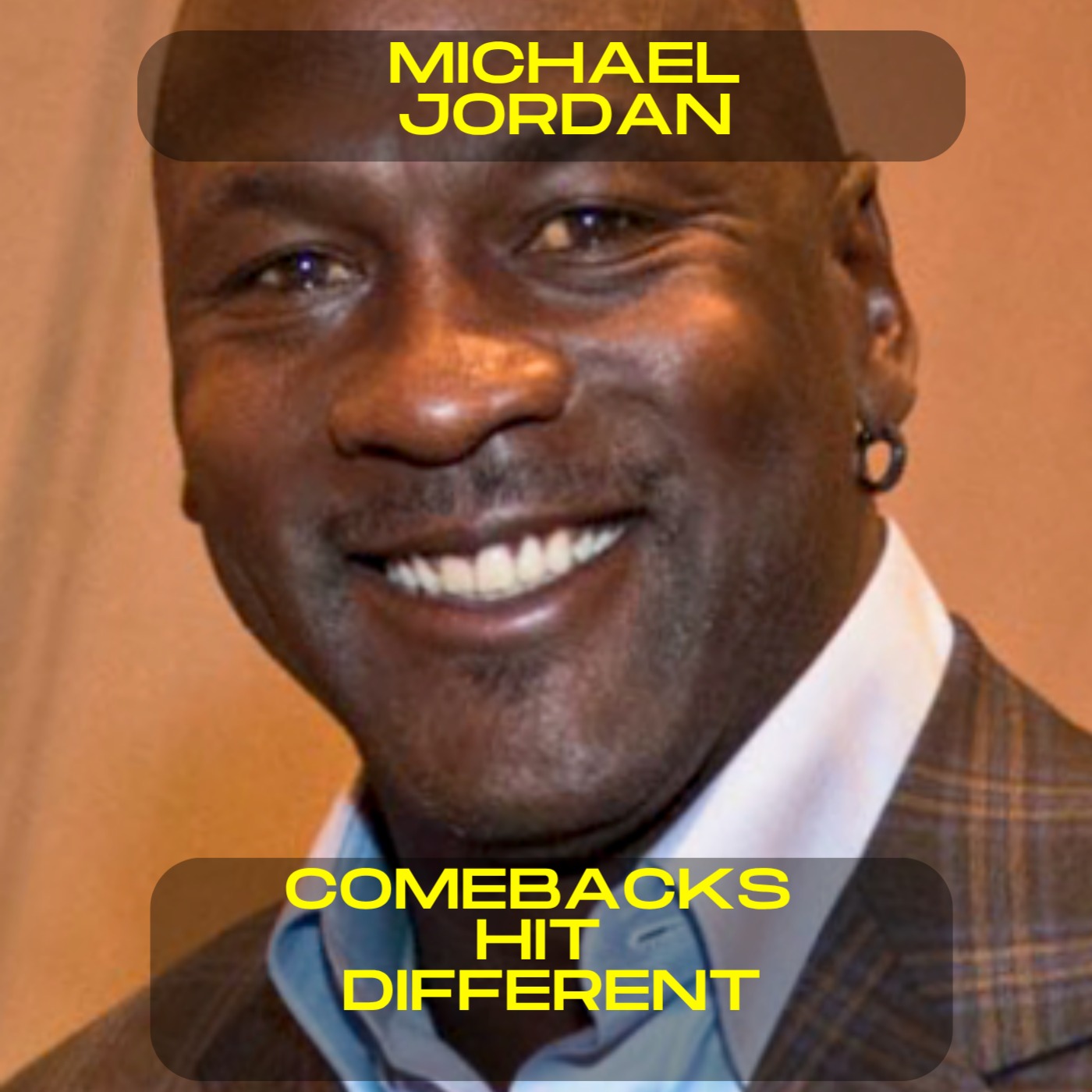
Motivate Me; Inspirational Speeches
Michael Jordan - You Need to Come Back and Win | Motivational Speech
00:06:31
Loading summary
Transcript15 lines
- [00:00]
Identity Theft Victim
I cashed out my entire 401k thinking someone stole my identity. A fake email cost me my dream home. After I sent my personal information to
- [00:08]
Michael Jordan
a scammer, my AI agent wired thousands
- [00:11]
Identity Theft Victim
to an account I'd never seen.
- [00:12]
Aura/Gen Digital Narrator
When billions of people feel unsafe, that's no longer a security problem. It's an economic one. At Gen, we're building the trust layer for a more fearless planet with products and technologies from our global brands, Norton, Lifelock, Avast and Money Lion. See it in action@genndigital.com Most people don't
- [00:31]
Identity Theft Victim
realize how much their personal information is being bought and sold every day. Data brokers are making billions, pulling details about you from public records and the Internet and then packaging and selling it, usually without your consent. That's how your information lands in the hands of scammers, spammers, even stalkers. It's why you get endless robocalls and why ads seem to follow you everywhere. That's where Aura comes in. Aura actively removes your data from broker sites and keeps it off. They also instantly alert you if your information shows up in a breach or on the dark web. But Aura goes beyond data protection. With one app, you get a vpn, antivirus, password manager, spam, call protection, dark web monitoring, and even up to $5 million in identity theft insurance. All backed by 24. 7 US based fraud support. Other companies might sell just credit monitoring or just a vpn. Aura gives you all of it together at the same price competitors charge for just one service. Start your free trial today@aura.com remove protect yourself now. And@aura.com remove when I started with the
- [01:32]
Michael Jordan
Bulls, you know, it was 5,000 people in the stands. So, you know, it was like playing to an empty arena. My mindset was to go, you know, try to get back and win, you know, anytime that, you know, when I left in 93, I left on top in terms of winning. I was coming back in 95, halfway in the season, and still my mentality was about winning. Now, granted, physically, I wasn't prepared for winning at that time because I had a baseball body. But it took me a while to understand my teammates, understand, you know, their motivations. If I can put it in the most simplest terms, is that, you know, you have to give up bits and pieces of who you are for the benefit of the team. And that can be, you know, something so simple as either, you know, response, you know, support, spending time having lunch, dinner, either way. I learned that later in my years because initially in basketball, I was so focused in my craft that that's what mattered the most. But to win, you have to give parts of yourself to other people and look at people in a different manner and come to accept them. I really don't have regrets. I am the person that says, you know, as soon as you look back in your history and you come up with something that you feel like you want to change, something else has to change disappointment. To me, to win, you got to lose. To be successful, you got to have something that's not successful. To be happy, you got to have disappointment. I think all of those things have evolved and happened to make me who I am and understand the benefits and the privileges I have and not to wear it on my sleeve. Be very humble about it. That's one thing my parents taught me very well is, you know, don't wear your reputation, don't wear your accolades, don't wear your personality on your sleeve. Let it happen. Let it be you. It is who you are. Don't hide from it, but don't wear it and rub it in people's face. The thing that I remember the most about my father, and, you know, I had him for 32 years and I never look at it from a negative sense, obviously he was murdered. But the thing that I do remember all the time, and I think about him practically every day. For a person like myself who live in the spotlight and it's so critical. The thing he's always said, take a pause before you make a decision and say, what if? And the purpose for saying what if is that whatever decisions you make always either going to have consequences. You think about the consequences, pro or con. You make the right decisions that you feel is the right decision.
- [04:23]
Identity Theft Victim
So why, at the age of 31, is Michael Jordan playing minor league baseball for $5 an hour? With all he could be doing with his life, why is he in right field for the Birmingham Barons, traveling by bus to play games in places like Greenville, South Carolina?
- [04:43]
Michael Jordan
That's an unfair shot.
- [04:45]
Identity Theft Victim
You know, most people don't realize how much their personal information is being bought and sold every day. Data brokers are making billions, pulling details about you from public records and the Internet and then packaging and selling it, usually without your consent. That's how your information lands in the hands of scammers, spammers, even stalkers. It's why you get endless robocalls and why ads seem to follow you everywhere. That's where aura comes in. Aura actively removes your data from broker sites and keeps it off. They also instantly alert you if your information shows up in a Breach or on the dark web. But Aura goes beyond data protection. With one app, you get a vpn, antivirus, password manager, spam, call protection, dark web monitoring, and even up to $5 million in identity theft insurance. All backed by 24, 7 US based fraud support. Other companies might sell just credit monitoring or just a vpn. Aura gives you all of it together at the same price Competitors charge for just one service. Start your free trial today at aura.com remove. Protect yourself now@aura.com remove.
- [05:46]
Michael Jordan
I felt they felt I was disgracing the game. The game is not a game. It's not a religious game. It's a game. It's America's game. And I think everyone treated it like you're not supposed to play it. If you don't play the game your whole life, I mean, that's not the way it should be. 1990, 2005, they voted me as most popular athlete. It was ironic that I'm the youngest of the three. So in essence it's all relevated on who is watching now. If you ask 20 years from now, I'm pretty sure LeBron may beat me. I say that to understand that, you know, it is what it is. You know, I don't wear it, I don't showcase it, I don't rub it in other people's faces. Someone else's opinion. If you ask me. I can never give an opinion about things like that because as an athlete, all you want to do is be the best athlete. To now say that, you know, one's greater than the other is being a little bit unfair. I think when you can see the similarities and you understand this is one way you can judge the two. How much impact did each change or, or evolve the game? That's how people are judging certain things. I won six championship. Bill Russell won 11. Does that make Bill Russell better than me and make me better than him? No, because we play at different eras. So when you try to equate who's the greatest of all time, it's an unfair parallel. It's an unfair choice. But for me, I would never say one is greater than the other. Now all the decisions I made, other people may view to be not the right decisions from their perspective. But for me to go play baseball and everybody says, oh, it was a, it was a failed opportunity to play baseball, you know, that's what they think. For me, it was the best thing that could have happened for me because it allowed me to go back to the game with a stronger passion. At the same time, I was able to understand the love that these minor league baseball players have making fifteen hundred dollars a month, which is nothing but for them. It was big to me to see that helped me put things in perspective, to understand the platform that I was on in 93, that when I went back to it in 95 and 96, I appreciated even greater. So when we won those championships and we went through those, those things mattered to me far greater than what I did in 91, 92, 93. People don't see that. People will never understand that to be success. You know, all they think about, well, he batted.202, you know, and he struck out certain number of times. Yeah, okay, you know, but the effort was there and the learning curve and the passion was there. That has transcended not just to me, but to other people who are afraid to do things because they're worried about the perception that may come from other places. To me, that's more gratifying than anything.
- [09:02]
Identity Theft Victim
I cashed out my entire 401k thinking someone stole my identity. A fake email cost me my dream home. After I sent my personal information to
- [09:10]
Michael Jordan
a scammer, my AI agent wired thousands
- [09:12]
Identity Theft Victim
to an account I'd never seen.
- [09:14]
Aura/Gen Digital Narrator
When billions of people feel unsafe, that's no longer a security problem. It's an economic one. At Gen, we're building the trust layer for a more fearless planet with products and technologies from our global brands, Norton, Lifelock, Avast and Moneylion. See it in action@genndigital.com Most people don't
- [09:33]
Identity Theft Victim
realize how much their personal information is being bought and sold every day. Data brokers are making billions, pulling details about you from public records and the Internet and then packaging and selling it, usually without your consent. That's how your information lands in the hands of scammers, spammers, even stalkers. It's why you get endless robocalls and why ads seem to follow you everywhere. That's where Aura comes in. Aura actively removes your data from broker sites and keeps it off. They also instantly alert you if your information shows up in a breach or on the dark web. But Aura goes beyond data protection. With one app, you get a vpn, antivirus, password manager, spam, call protection, dark web monitoring, and even up to $5 million in identity theft insurance. All backed by 24, 7 US based fraud support. Other companies might sell just credit monitoring or just a vpn. Aura gives you all of it together at the same price competitors charge for just one service. Start your free trial today at aura.com remove protect yourself now@aura.com remove.