Loading summary
Transcript50 lines
- [00:01]
Alicia Graf Mack
Hey, listeners, it's Alisha.
- [00:02]
David Krauss
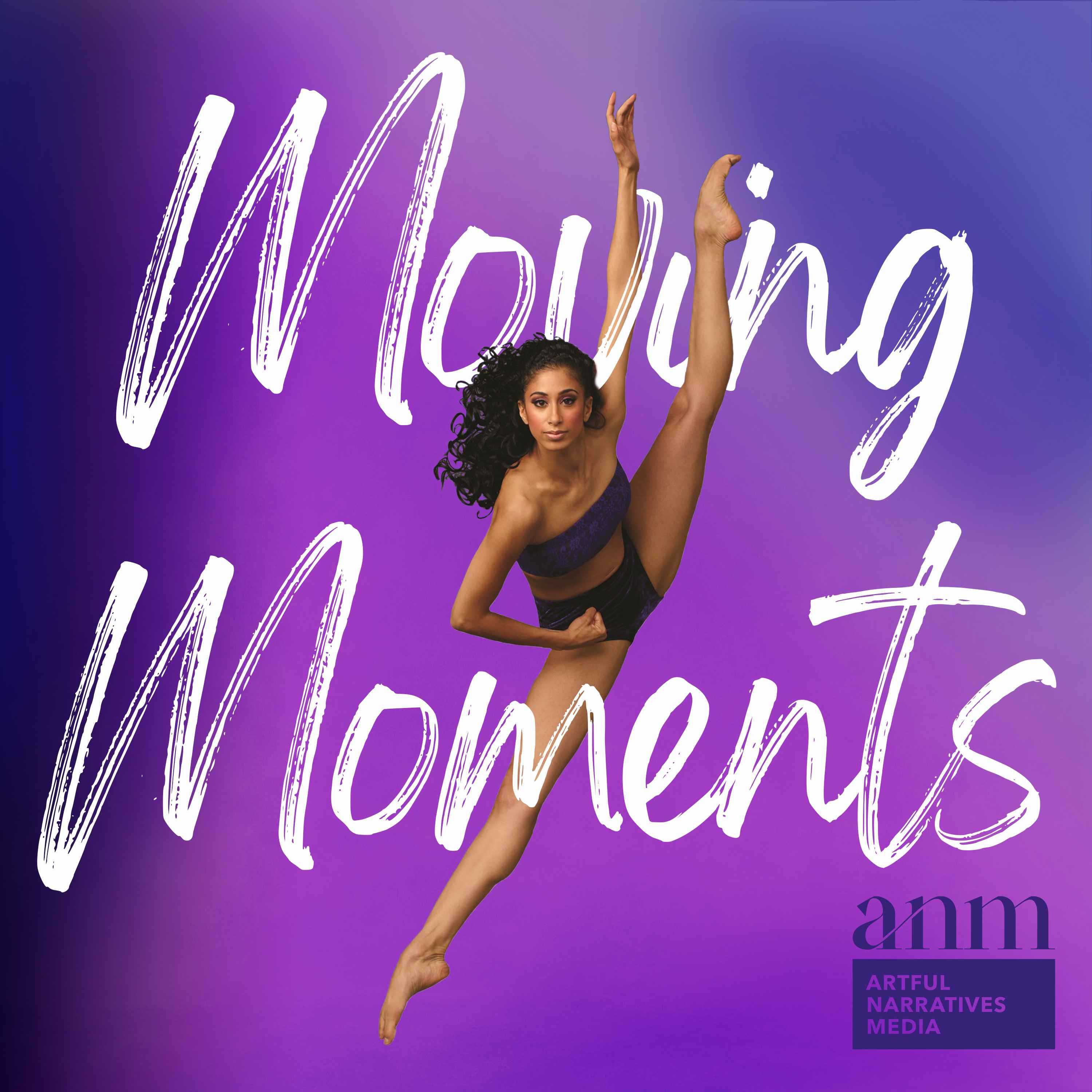
In this half hour, we're going to do things a little differently today. The tables are turned, and I'm in the guest seat. I'm going to tell you all about my moving moments. I was interviewed by my friend Met Opera principal trumpet David Krauss. You might know him better as the host of the Speaking Soundly podcast from Artful Narratives Media. I think you're going to love it. So stay tuned now for my interview with David and find more Speaking Soundly episodes wherever you get your podcasts. Thanks for listening.
- [00:35]
Alicia Graf Mack is making an indelible impression both on stage and off. After a distinguished career as a leading dancer for Alvin Ailey and the Dance Theater of Harlem, she is now shaping the future of the dance world as the youngest and first woman of color to be dean and director of the Juilliard School's Dance Division. Her love of dance is infectious, and she encourages her students to embrace their individuality.
- [00:59]
Alicia Graf Mack
When I work with young people, it's all about recognizing the beauty in each person. And because I work in dance, literally, you're taking space in a room. I always say to the dancers, there is power in your presence. This moment wouldn't be the same without you in this room.
- [01:18]
David Krauss
You're listening to Speaking Soundly, a backstage pass to today's biggest stars of the music world. I'm your host, David Krauss Prince of the Metropolitan Opera. During each episode, you'll hear me speak with inspiring performers about their creative process and the personal journey that led them to the stage.
- [01:37]
When did you know you wanted to be a dancer? Was there a moment that you can pinpoint?
- [01:42]
Alicia Graf Mack
Well, I was told that I danced in the womb, and from the time I think could move, I danced. And my mother recognized that I had a joy for movement. And by two and a half years old, I was in dance class. She said that I would imitate her when she would do her exercises, like in the morning at home. And she thought it was amazing that a two and a half year old could mimic movement with precision. And so I started my journey at two and a half, and from the time I could speak, I said, I want to be a ballerina.
- [02:24]
David Krauss
And were your parents taking you to performances?
- [02:27]
Alicia Graf Mack
I was really lucky because my grandmother, who lived on the Lower east side and my dad grew up on the Lower east side, she was a ballet lover. And so when she had the money, she would buy tickets to New York City Ballet. And so when she learned of my love for Daniel, she would send pictures and Just like, fuel that passion. And by the time I was 11, I knew for sure. I understood what the profession was and what it required and the level of proficiency that it required. And so I was already on that track to become a professional dancer. When I was 11, a woman named Donna Pidel saw me in a class and she was starting a school, and she asked me, do you want to be a ballerina? Do you know what type of sacrifice it's going to take over the next few years to become ballerina? And I said, yes.
- [03:35]
David Krauss
I think at that age, it's rare to see a child that has their sights so firmly set on a career already. Did you feel like with your friends growing up that they had these similar kind of focused aspirations? Did you feel different somehow?
- [03:48]
Alicia Graf Mack
Yes, I definitely felt different. While other kids had a social experience at school by participating in after school activities or sports, I left right away at 2:30 or 3, whenever dismissal was. And I was, you know, wrapping my hair up in a bun in the car and sometimes changing my clothes in my mom's family van in the back of the car so I wouldn't be late for class because I was so disciplined that I had to be there half an hour early because I had to give myself time to stretch and warm up and be ready. And I wanted to be prepared the moment the teacher walked into the room. So I was. I was obsessed.
- [04:29]
David Krauss
And where do you think that drive came from? Is this something you saw reflected in your parents and your grandparents?
- [04:36]
Alicia Graf Mack
Yeah, absolutely. I think all of my great characteristics, whatever those may be, definitely came from my parents and my extended family. My parents are extraordinary people. They are my heroes. They are of different races and different religions, and they had to fight through a lot of adversity to have their union and to support their children. It was not normal to see biracial kids where we grew up. And so we grew up with a real sense of support and pride and a generous way of thinking. Both of my parents come from families that grew themselves from the ground up, not from privileged backgrounds. And so we understood the value of hard work, but also of loving the thing that you do. The idea that if you find something that you love, you'll never work a day in your life. That was very clear in our family. My brother played basketball, and I idolized him. I still do. And he was a very competitive basketball player and one who had a lot of potential. And so he would practice really hard. Like he always had a basketball in his hand. And so I was like, I need to be like that with my dancing. So we both really took the deep dive with the things that we enjoyed.
- [06:03]
David Krauss
Well, you just have an amazing family. And another example of that is how your white Jewish grandmother insisted that you had a place on stage, even though you didn't see your own skin tone represented in the ballerinas that you were watching. Can you talk about growing up in this culturally diverse background and what your grandmother meant to you?
- [06:24]
Alicia Graf Mack
Well, growing up. I grew up in a predominantly white community. Um, Columbia, Maryland, is very diverse now. But when I was growing up, I really didn't see a lot of kids of color. I really didn't see race so much when I was growing up. I just was very naive to the whole idea. I don't know. I just. I never had experiences that colored or shaped how I thought about race. When my parents were first married, they were really not accepted. And so it wasn't until I was about three years old when I met my grandmother for the first time. I don't remember any of this because I only remember her being the most loving, the most dedicated to her grandkids and someone who always bragged about us. You know, we would go visit them once they retired in Florida. We would walk down the street and they would say, oh, you must be Gertrude's granddaughter. Of course, because I was the only, like, black kid walking around this retirement community. You must be Gertrude Graf's granddaughter. We've heard all about you. We know you love ballet. We think that's amazing. We've heard that you've been to New York, you know, so she was. She was such a loving grandmother to me. And I think once she let go of some of her guards that had been built because of the time in which she lived and the experiences that she had. Growing up first generation Jewish immigrant was hard, but once you let that go, it was gone. So I never experienced anything but love from her. And I think she also knew, because she loved ballet, that she didn't see people who look like me on stage. She loved to needlepoint, and she made this ballerina artwork. And I'm sure that the instructions for the stitching did not say, use brown thread for the skin, but she did. And so I had that image growing up on my wall, and now it's in my daughter's room on her wall. And it wasn't until I was 12 years old that I actually saw a brown ballerina perform. And it was life changing.
- [08:52]
David Krauss
Do you remember that specific moment and who the dancer was?
- [08:56]
Alicia Graf Mack
I do. I'll never forget. I remember sitting in the audience. And the speaker announced Dance Theater of Harlem performing the pas de deux from Le Corsair featuring Christina Johnson and Donald Williams. I thought I knew what was going to happen when the curtain went up, because I knew that duet. And the curtain went up and I saw brown pointe shoes, brown tights, this beautiful yellow tutu, and this beautiful woman. Boring, which means like little runs across the stage. And I just weeped because I had never seen anything so beautiful. And I think in that moment, I made some real impactful connections to. Oh, my gosh, she's like a unicorn. I've never seen this before, and she is me. So I saw them perform, and then Donald Williams and Christina Johnson taught a masterclass at my studio. And so I got to take the class. And afterwards, I had Donald Williams sign my pointe shoes. And he said, hope to see you at DTH one day. And, yeah, eight years later, I joined the company. I showed him those shoes, and he was like, never show anybody those shoes. Is showing how old I am. And he became my dance partner and my mentor. And we still are close today. So, yeah, it was a really beautiful connection.
- [10:30]
David Krauss
That's incredible. In your development, you talk about many different stages of it, but was there a particular moment where you felt like you had become the dancer that you were aspiring to be?
- [10:42]
Alicia Graf Mack
I've had a couple of moments like that in my life. I think a couple years into my career at Dance Theatre of Harlem, under the tutelage of Arthur Mitchell, he was a consummate coach. He was the first person who really gave me permission to live in my body. I'm 5 foot 10, which is very tall for a ballet dancer, and more so than my race, that had been a source of poor, I guess, self confidence as a dancer, because I just stood literally heads over everybody. And on pointe, I'm six two. So I would say, am I too tall? You want me to join your company? And he said, right off the bat, I hire tall dancers, and I'll find a tall one for you. And for two years, he called me Ms. Minimal School. And I said, what does that mean? And he said, you're 6 foot 2 on point, and you dance like you're 5ft tall. And you need to take up space, own the space, own your body. You can't hide, so you may as well live in your body. And so he really taught me how to be large and live authentically in my own frame. You know, ballet is really about the aesthetic of line through space. And he kept saying, well, you have longer lines, so you know, you can do more than anyone else with that. So how are you going to embody that idea? And he really taught me how to do that and love the skin that I'm in. Also, being around so many dancers of color, it was like, wow. I don't have to think about how different I look because everybody looks different in this room. There were so many shades of brown represented in the company that everyone was honored.
- [12:37]
David Krauss
In a way, when you're dancing, you are listening to the music, you're reacting to the music, you're interpreting, all while remembering and executing the ch. Plus you're engaging with maybe somebody else who's on stage and dealing with that. While all this is happening at once, where's your head as you're performing?
- [12:58]
Alicia Graf Mack
There are so many things happening in my mind. It's like the ultimate process of multitasking. I think like any performer, I'm sure a musician as well knows that you are so disciplined in your practice and know your body so well that the hope is that your muscle memory just kicks in in terms of the technical aspects and the actual steps. There's a certain point where I just hear music and it dictates what comes next. So hopefully this hasn't happened all the time because sometimes it's like a last minute cram trying to figure out what is a choreography. But if it's well rehearsed, I don't think about the steps at all. And usually we learn movement by counts, where the steps fall on the count. But also by that time, the hope is you're not counting either. You're just moving with the music. And so most of the time what's happening in my head is that, that coach, okay, reach further or make your mark on the stage so that you anticipate arriving before your partner gets there. Or I am trying to embody the character as an actor would. So actually the steps fall away. And really it's just living in the moment and telling a story and trying to translate something to an audience.
- [14:36]
David Krauss
And are there times when you're dancing when you just can't get there? Or is it always the state of euphoric creativity?
- [14:45]
Alicia Graf Mack
I wish. I wish it was always euphoric. But you know what, if that were the case, dancers wouldn't work as hard as they do. And I think that we are one of the most dedicated to the technical aspect of the art form out of most of the performing arts. Most dancers take an hour and a half or two hour class every day for their entire life. And then we usually rehearse for about six hours, the movement, and then you perform. And I performed a lot. There were some days where it felt like a job or something was hurting. I've had a lot of injuries, so I've danced through a lot of pain. Sometimes that pain speaks louder than anything else in the body.
- [15:38]
David Krauss
And you said also that you were just really connected to the music. Do you think that connection makes you a better dancer? Do some dancers feel the music more than others?
- [15:48]
Alicia Graf Mack
Absolutely. Some dancers are technically brilliant, but there's something lacking in the artistry that doesn't take their movement to the next level. And usually it's a sense of musicality that creates that ease of transition from one thing to the next. I've always connected to music, and even before I had training, I was dancing and choreographing, and before I'd even know what that word, you know, was, that's what I was doing. And the hope is when you find kids like that, when you train them, you don't train that innate ability out of them.
- [16:40]
David Krauss
You became Director of Dance of the Juilliard School in 2018. And it might seem like a natural progression for a world renowned dancer such as yourself, but your career path there was anything but a straight line. What was this journey like coming from being a principal dancer for companies like Alvin Ailey and Dance Theater of Harlem to where you are now?
- [17:00]
Alicia Graf Mack
Okay, I'll give you the whole kind of the trajectory in a nutshell. I joined Dance Theater Harlem when I was 17 years old and toured around the world and started to make a name for myself and performed all these incredible ballets in lead roles. And when I was 20 years old, I started having pain in my knee. And it took us some time to figure out what was happening, like extreme swelling, but no tears or accidents. I would go to the doctor, he'd drain the knee and be like, I don't know. I don't know what's going on mechanically. If you're not in much pain, just keep on going. Maybe it's growing pains, I don't know. So we did that a couple times, and then I did start feeling pain. I eventually had my first surgery, and after I had the surgery, my knee blew up even more, to the point where I couldn't even walk. And that was strange for having a simple, like, arthroscopic surgery where they were just cleaning up small tears. And so I became very depressed. I couldn't dance. And for a year I just kind of sat in my apartment trying to figure out how I could get back to dancing. And after a while, I realized I'm working against myself and I'm losing myself and I need to do something about this. Like, I'm not going to be dancing anymore, so what am I going to do?
- [18:32]
David Krauss
Okay, you just said that very casually, but I know it was anything but a casual experience. What was that moment like, when you realized that you would have to pivot and dance, wouldn't be part of your life anymore?
- [18:43]
Alicia Graf Mack
Yeah, that was. That was by far the hardest period of my life. I remember my dad came up to take me to the doctor with my mri, like the post surgery MRI that showed that everything was clean. There's something wrong. There shouldn't be that much swelling. I remember getting on the train after the appointment where the doctor was just like, I don't know, I think you need to go see some more rheumatologists or specialists or something. Uh, and just I. We got back on the train and it was dancing of Harlem's 30th year anniversary with my image on the picture. And I sat right under my poster and I cried like a baby. Like big tears, like convulsing sort of thing. And I remember my dad just, like, holding me, like in a. I was in fetal position. He was just holding my back. Like, it was just like a cruel joke to do to, like, sit right underneath that poster.
- [19:44]
David Krauss
Oh, God, that's a movie.
- [19:46]
Alicia Graf Mack
Yeah, that's like a movie. And it was really hard. You know, my whole identity was wrapped up in myself as a dancer. If somebody asked me, who are you? I'd say, I'm Alicia Graff. I'm a ballerina. You know what I mean? So I was rock bottom. And luckily, my brother had just graduated from college and had taken a job with an insurance company in New York. And so we lived together. And that was a lifesaver to have family, you know, be there, and he would be silly or have friends come over and watch TV or, you know, things like that. And I did not want to move back home because I would feel like a failure if I had to move home. So I decided, I'm going to apply to school. And where I lived, I lived on the 20th floor on 123rd Street. I could see Columbia University campus. And I had a few friends who attended Columbia, so I was familiar with the campus. And on the days that I felt like I could walk, I would walk on campus. And I always felt really good being there. It was like an oasis. I would see young people engaged in whatever they were doing or just walking to class. And somehow I felt just good. It made me feel better being on that campus. So I ended up applying to the School of General Studies. And I just, I literally prayed on this application every night. I just hope I got in. And I did. I got in. And I think that was the beginning of me coming back into myself. Like, you actually can be more than a dancer. What that will be, who knows? But there's a future out there. And once I started school, I also found a rheumatologist who figured out what was going on. Uh, and I was there at Columbia for three years. I finished in three years. And by the time I graduated, my body was healed, Healing. And I started dancing a little bit again in school.
- [22:00]
David Krauss
And what, what were you studying there at Columbia?
- [22:02]
Alicia Graf Mack
I was studying history and I ended up taking an internship on Wall street for J.P. morgan. And I, I worked in corporate marketing for them for three years. And I landed in a department that was also associated with their philanthropic giving for education arts initiatives as part of their corporate social giving and sponsorships or program. And I knew that's, that's what I wanted to do when I graduated. And I actually, I had a signing offer and everything for a full time job when I graduated, but I had started dancing a little my senior year and I think the bug bit me. So I ended up rescinding that offer and not taking it and returning to Dance Theater Harlem after I graduated.
- [22:51]
David Krauss
Wow, that must have taken a big leap of faith.
- [22:54]
Alicia Graf Mack
Yeah, it took. It took a lot to get back into shape and like, trust my body that I was going to be okay.
- [23:00]
David Krauss
No, I meant to walk away from a full time job offer.
- [23:03]
Alicia Graf Mack
Oh.
- [23:03]
David Krauss
I believe to turn away from that solid kind of opportunity.
- [23:07]
Alicia Graf Mack
Yeah.
- [23:07]
David Krauss
After having already faced injury, that's. That's huge.
- [23:11]
Alicia Graf Mack
Yeah. And you know what? I was really, really nervous to tell my managers that I was not going to take the job. And what I. They said, go and pursue your dream. I wish I had done da da da da da da da or whatever it was. They say you can always return to this sort of work. You have your degree. I'm like, that's right. I do have a degree. I can do this again. You know. And so that's what happened. I danced for six more years and then I had a really bad flare up of my autoimmune disease and another tear in my knee. And something happened with my foot because of all of the inflammation. And so I ended up going to Washington University in St. Louis studying nonprofit management. When I finished a job, opened up at Webster University to teach. And when that job opened, I thought, there are so few full time tenured track positions in dance. I have to take this job. And so I did, and I fell in love with dance and higher education. And I taught at Webster University for a year. And being in the studio so much, I had to warm my body up to be able to teach. And Judith Jameson was retiring, and she asked, can you come and perform for my celebration, my last celebration at City Center? I said, yes, absolutely, of course I'll come. I'll come and perform for you. And Robert Battle, who was taking over the company, saw me dance and looked at me square in the face and was like, you are not finished. And I was like, what do you mean? I've just gotten married. I have my degree. I have this great job. I think I'm finished. And I saw my husband afterwards, and he was like, alicia, what you just did out there, you're not finished. Robert invited me to come and join the company. After having left for three years, I went back to Ailey. I danced for three more years, did long distance marriage, and then finally, When I was 35 years old, 2014, maybe 36, 35, I finally retired after another really bad back injury. So I went back to Webster. I worked there for three years. I had my children, and we moved to Houston for. I was there for six months and then ended up interviewing for this job at Juilliard. So looking back, all of it makes sense, but going forward, none of it made sense at that time.
- [25:50]
David Krauss
Your story must be of tremendous inspiration to all of your students. This kind of dedication and fortitude, is it a teachable quality?
- [26:00]
Alicia Graf Mack
I am not certain that it's teachable, but it is showable. I've learned that you can't do that by preaching to them. You have to do that by doing the work and then inspiring someone through the work. I've seen a change, like a shift in the atmosphere since I've arrived. Students who may have felt that they weren't good enough or felt like they were judged to students who are empowered to say, I can do this, well.
- [26:34]
David Krauss
This just sounds like a seismic shift from the pressure cooker, competitive nature of Juilliard or any top conservatory. And to hear that you've changed the environment, that you could still strive for artistic excellence, but you can get there in a healthier way, is really amazing.
- [26:51]
Alicia Graf Mack
Yeah. Thank you. I think there's some messaging that we really like to give when the students are accepted into the program, and that is you're already talented, you Already have the tools. They could choose not to go to school. Many of them could become a trainee or an apprentice in companies, but they want to earn a degree. They want that four years of refinement and finding more information and maturing their artistry before they are in the field, which I think many companies are also looking for. So that's a positive. The students are everything, and they're so incredible. I just love being around them. I love the youthful energy. So I feel very blessed to be. To be here in this position.
- [27:44]
David Krauss
When I used to take auditions for orchestras, the audition was behind a screen, so it was automatically unbiased, and everybody was judged solely on their music. When selecting dancers, your body is your instrument, and you're being judged on your size, shape, gender, and color.
- [28:01]
Alicia Graf Mack
This is so hard because dancers, based on the look, we all know classical ballet or traditional ballet is based on line, and so certain body types are not even considered. But what I know, because I came from companies whose dancers had been told, it is not the right thing for this. I've danced with all those dancers who were not the right thing for, you know, 15 years of my life. And they're superstars. So I know bodies can dance. And so typically, the first thing you do in a. In a dance audition is you take a ballet class. And it's so easy to look around the room and cut. Disregard the dancers who may not fit into a certain aesthetic or mold. And I said, I don't want you to look at body type. I don't want you to look at, like, how great their feet may point. I want you to look at qualities. I want a sense of understanding, of strength in their body. We're looking at a coordinated way of moving across the floor, and we're looking for a spark, something that makes your eye go to them or makes you curious to see more of their movement. If you're not curious to see more, then that's not the type of dancer that we want here at Juilliard. We're not a company that has to, like, cast by a certain look. That's not our job. Our job is to train these dancers so that they can populate the field in all different ways. And so I think that takes away some pressure, but also it takes away an expectation that everybody has to look a certain way.
- [29:57]
David Krauss
What has living an artistic life meant to you? And why are the arts so important?
- [30:03]
Alicia Graf Mack
Well, we think about, oh, how hard it has been through the pandemic and what people have leaned on in their times of trouble. It's our arts and our music. But when I work with young people, it's all about recognizing the beauty in each person. And because I work in dance and literally you're taking space in a room, I always say to the dancers, there is power in your presence. This moment wouldn't be the same without you in this room. I feel that if you set that expectation and you show them that you are going to be there to support them through this journey, they will rise to the occasion and then you'll start to feel pride in the things that you do and you start to feel affirmed. And oh my gosh, I thought I could only do a double pirouette and I hit that triple. And what does that feel like? I worked two years to get that triple pirouette and finally I did it. And that's a moment. And when I get to see my students perform and I see them take flight, I know what that feeling is. It's the greatest. It's just so special.
- [31:22]
David Krauss
I hope you enjoyed this episode of Speaking Soundly. Be sure to follow rate us and leave a review wherever you get your podcasts. To keep up on future episodes, follow us on Instagram at Speaking Sndly and visit our website, artfull narrativesmedia.com Tune in next week as we hear another inspiring artist Speaking Soundly.