← Murder, Mystery & Makeup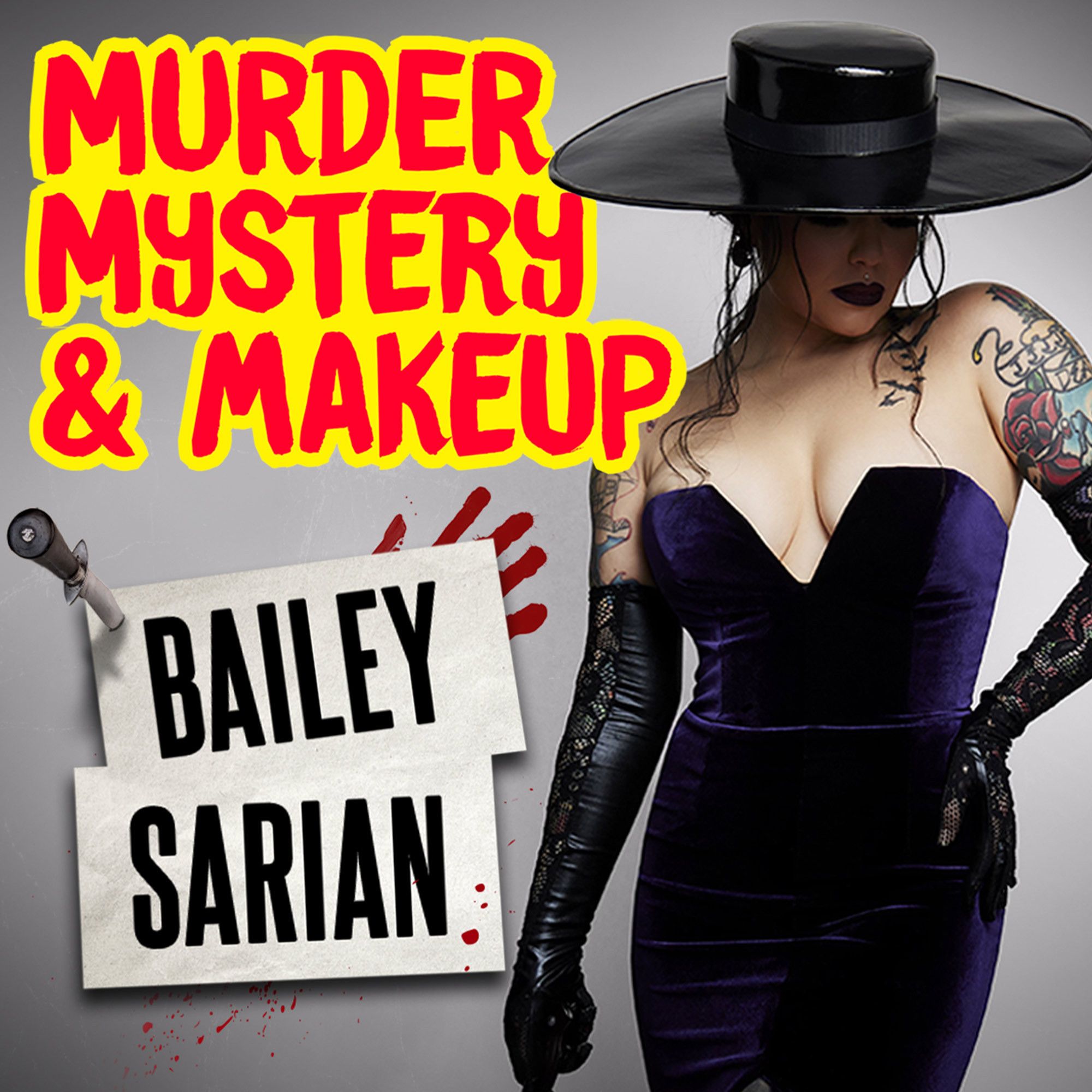
Loading summary
Transcript89 lines
- [00:02]
Lowe's Advertiser
Lowe's helps refresh your garden in time for Mother's Day. Right now, get five bags of one and a half cubic foot Scott's Naturescapes mulch for just $10. Plus select one and a half gallon annuals. Hanging baskets make the perfect gift. Now two for only $15. The best garden starts with great deals. Lowes. We help you Save. Valid through 5, 7. Selection varies by location while supplies last. Discount taken at time of purchase.
- [00:30]
Bailey Sarian
Hi, friends. How are you today?
- [00:32]
I hope you're having a wonderful day so far. My name is Bailey Sarian, and welcome to the Murder Mystery and Makeup podcast. Today we're going to revisit one of the most infamous true crime stories I've ever covered. The story of Charles Manson and the horrific murders carried out by members of his cult in the summer of 1969. Now, I want to reshare this with you guys because there's a new documentary that just came out on Netflix that offer some very intriguing theories on what could have been up with old Charlie and his followers. It's called Chaos. The Manson Murders. Did you watch? It's crazy how after five decades, people are still so fascinated by Manson and his cult. Something about Los angeles in the 60s, the eeriness of his devoted followers, the brutal murder of a, you know, pregnant movie star. It's equally as captivating as it is terrifying. So let's have a little refresh on the story of the Manson murders and then stick around to the end of the episode and I'll fill you in on the theories from this new documentary and if I think there could be any truth to them.
- [01:40]
Yeah. Sound good? Okay, circle back, you guys. Let's get into it. Hi, friends. How are you today? I hope you're having a wonderful day so far. My name is Bailey Sarian, and today is Monday, which means it's murder mystery and makeup Monday. Sha na sha sha na sha sha sha sha sha na sha. If you are new here. Hi, welcome. My name is Bailey Sarian, and on Mondays, I sit down and I talk about true crime story. That's been heavy on my noggin and I do my makeup at the same time. If you're interested in true crime and you like makeup, I would highly suggest you subscribe because I'm here for you on Mondays. This week, I fell down a huge rabbit hole with the story. My brain has turned to mush. I never want to talk about Charles Manson ever again. Ever again. There are so many layers to this damn story. There is so much to this story. I am I felt like I was losing my mind at some points, but I'm here, so I don't know how long this is gonna be. I'm gonna try and keep it short because editing is a bitch, but. But I did, like, simplify it as much as I could. There's a lot of names that are going to be thrown your way, so get ready. Get ready to catch them. You get it? I had to simplify it a little bit as best as I could without losing the overall story. Charles Manson. Here we go. Charles Maddox was born November 12, 1934, so he's a scorpio in Cincinnati, Ohio, to his mother, Kathleen Maddox. Madd was just 15 at the time of his birth. Charles wouldn't have a relationship with his biological father. His mother, Kathleen, she ended up marrying a man by the name of William Manson about four months before she gave birth to Charles. So Charles took the name Manson. Then when the couple separated in 1937, Charles kept the last name, tarnished that name, that's for sure. As a way to make money, Kathleen worked as a sex worker and participated in petty crimes. It was said that Charles mother wanted nothing to do with him. That at one point when he was a baby, his mom tried to sell him as a baby to a waitress in return for a pitcher of beer. To some people, that's considered a fair trade. In 1939, Kathleen was sent to prison for five years for armed robbery. And during this time, Charles was sent to live with his aunt and uncle in West Virginia. If I call him Charlie and Charles just know it's the same person, I. Whatever. Charlie seemed to bounce around a lot. He didn't really have a stable home, but he would visit his off the grid uncle who lived in the Kentucky mountains from time to time. This uncle seemed to have, like, a lasting impression on Charles. Okay, this uncle, he was an outcast and would tell Charles not to go to those schools because they brainwash kids and stuff, you know, that uncle. But Charlie said that he really liked him. He was different. He was off the grid, man. When Charlie was nine, he tried to set his school on fire, and that's when they sent him to reform School. Between 1942 and 1947, Charles, mom, she was out of prison and he would stay with her, which he said was like one of the happiest times from his childhood. Then she couldn't and she wouldn't take care of him anymore. And then she was arrested again. She wasn't able to put him in a foster home. So the court stepped in and and placed him in a school for boys in Indiana. The school was very strict and often abused the boys. And after about 10 months he ran away to find his mom. But she really wanted nothing to do with him. And when Charles found her, she was like, shit, you found me, damn it. So as you can probably gather, pretty loveless childhood. Okay, great. He spent a lot of his childhood in different schools for boys. He went to the famous boys town, which we could do like a whole story on this place alone. Okay, but not today. But he went there and Charles would run away, he would commit a robbery, then he would be sent back. He would go a different school for boys and repeat like it was just this cycle. Then he got sent to another terrible place. It was the Indiana Boys school where Charles said that he would be beat and raped by people in charge. He was heavily abused throughout these schools he attended. He tried to run away here, but same thing, he would run away, commit a crime like armed robbery, theft, he robbe a gas station. He was caught a couple of times trying to rape or molest boys. Then he would get arrested and get sent back to a different school. It was just like a hot mess. When Charles reached 20 years old in 1955, he married a 17 year old waitress named Rose. Not long after she was pregnant, the two of them stole a car and drove to Los Angeles. When he was there, he was caught and he was sentenced to three years in prison. While Charlie sat in prison, Rose, she had her baby. She moved in with her family in Los Angeles. Then she met another man and moved on and they separated. Charles Manson had a baby, which is super sad because later on in life.
- [07:09]
Co-host
I think he committed suicide.
- [07:10]
Bailey Sarian
So when Charlie got out of prison, he just found odd jobs like pimping 16 year olds, stealing cars, forging checks, stealing where he could. He ended up getting another 10 year sentence for violating his probation. This time though, he would only serve seven and a half years. So this time though, when he was in prison, he learned how to play guitar. And that's when he started to become really into playing music. Music is my passion. Prison was rough, but it was like a home to Charlie. And he was raised in there. And it's really where he formed his outlook on life. I mean, based off of what he said, he refused to be programmed by the world or go along with the expectations of what was considered being a functioning normal adult. Instead, he would just sit in his jail cell, play his guitar and write music. That's not me trying to make him sound all peaches. And cream, nay, nay. Rumor has it prison is like, super rough. And you don't play around there, okay? There are rules to be followed. So growing up in prison and being in constant fight orf flight mode, I think just really, like, made him freaking psycho, I'm sure. I mean, how do you come out normal in this situation? In 1967, Charles was released from prison and he actually asked if he could stay. He didn't want to go. I mean, what the hell was he gonna do? But this time when he left prison, it was actually a lot different for him. Okay? He was in San Francisco in the mid-1960s, babe. Things had changed. Things had changed. It was the time of the flower child. Hippies were thriving in the Haight Ashbury district of San Francisco, Francisco. Tons of young adults were coming from all over the place, just coming out to the area to advocate for peace and love, grow their hair out long, join a commune and just like, go on a spiritual journey, man. But then LSD was introduced to the scene, and now people were not only going on their spiritual journeys, but they were just straight up tripping balls. That's when it started to turn more aggressive because drugs and money and there was just like lots of journeys happening. Anywho. So Charles enters the scene and he actually liked this because these people were all about peace and love. We don't need the system. Sleep on the streets, play music, do drugs. He had long hair and a guitar. It was just like Charles, cup of tea. He fit right in. He would play music on the streets, people would gather around. Anyone who met him said that he had this charisma about him. He just knew how to talk to people and make them feel special, important, and, like, heard. I'm on a little bit of a.
- [09:57]
Co-host
Vacation, you could call it. Now, I don't want to read anything.
- [10:00]
Bailey Sarian
Like, work related, or like true crime.
- [10:03]
Co-host
I'm trying to, like, you know, take a break from the true crime just for a little bit to clear my mind. But now it's got me kind of like, I still want. I still want something. So I was like, what if I listen to some spicy audio romance pieces? Oh, Bailey, that could. Ooh, that could be fun. That's a fun way to relax and enjoy some time off. Well, that's where Dipsea comes in. Oh, I've talked about Dipsea. Passionate about it. Okay. Dipsea is an audio app made for romance lovers with short, spicy stories that immerse you in the fantasies you've been craving. Dipsea is great because it was created by women for the female gaze. Their app has over 1000 juicy audiobooks, all crafted by a team of professional writers and top tier narrators. I want to narrate one of their stories. One of my goals in life anyways. So whether you're looking for a beefy God of the underworld or a sensual story about a menage a trois, then you'll find characters you love on Dipsea. With their easy to explore app, you can search for your favorite romance genres like contemporary historical, dark sports. Maybe you want some basketball fantasy western. Yee haw. Yee haw. Cowboy romantic. See?
- [11:28]
Bailey Sarian
Oh, they got.
- [11:30]
Co-host
They got everything. Any kind of fantasy you, you have thought of in your mind, they got it. Okay. New chapters are released every week, so you'll always find something new to enjoy. Giddy up cowboy. Right now, listeners of this show can get an extended 30 day free trial. Oh, you're gonna love it. So you're just gonna go to dipsystories.com.
- [11:54]
Bailey Sarian
Makeup to start your free trial.
- [11:56]
Co-host
That's Dipsea D I P s e a stories.com makeup for 30 days of full access. For free visit dipseastories.com makeup.
- [12:16]
Bailey Sarian
So Charles, he really just started making friends. One of his first followers was Lynette Fromm. And she met Charlie early on and said that he was just easy to talk to and his mind just really intrigued her. Then soon after that, he met Pat Krenwinkle at a mutual friend's house. Charlie was there playing guitar. People came over to hang out and Pat and Charlie ended up like really hitting it off and involving in some sexual relations. She said that she just felt very loved by him. The way he gave her attention was fulfilling. She was young, she ran away from home. She was desperate for love and attention and Charlie just gave that to her. And he seemed to do that with a lot of different women. So Charlie also had a man named Tex Watson who joined the growing family. A way to get a man to stay with the group and join in on the fun. Charlie would offer women to the men in hopes to gain their trust and get them to stay. Charlie would like round up more women, sell, trade them for sex. He was really good at manipulating people and he mentioned that it's just something he learned or like picked up in prison. The prettiest girls he called the Front street girls. And these were the one that he thought were the most attractive out of the bunch and would lure others to join their group. Like, hey, you should come meet my friend Charlie. He's super cool and like you would really love it and then we can like do stuff. Over time, Charles was attracting more and more people into his group, or what he called his family. He gained their trust, gave them drugs, had sex, played music. It was just like somewhere all they lost was best kids wanted to be. Most of the followers left home. They had like nothing to their name. In search of a new life, anti system, peace and love. So finding a family of people with similar interests really kept people there. I think that's how a cult starts. In the summer of 1967, Charles and his family, they left San Francisco, got too much. They left San Francisco in a bus and they drove up and down the coast, just going from place to place, which kept everybody entertained. You know, they weren't getting because it was like, new location, cool. Haven't seen this rock before. Eventually they made it to Los Angeles, where they spent most of their time. Plus Charlie really wanted to like make a name for himself playing music. In March of 1968, two of the family members to the girls, they were walking along Sunset Boulevard in Los Angeles. I don't know what was going on, like what they were doing. Maybe they were trying to find new family members, but either way, they're just walking and they're hitchhiking. Cause they're trying to find a ride to where they were all staying at. And Dennis Wilson ends up picking them up. He's from the Beach Boys, who were a very popular group. Still pretty popular, right? You hear the Beach Boys everywhere. Sometimes, especially like when you're shopping, they always have the Beach Boys playing. But they were very popular. So, yeah, like, yeah, small world. But he picks these two women up who belong to the Manson family. To make a long story short, the women tell him about the man that they're staying with. A spiritual guru of some sorts. You know, spiritual guru. His name's Charlie. You should meet him. And then Charles actually ends up going over to Dennis Wilson's home. They really seem to hit it off. I mean, they became like BFFs. Okay? So then they end up spending like more and more time together. And then soon the whole Manson family ended up moving in with Dennis Wilson in like his nice ass place. They are living with him, doing drugs, playing music, writing music, recording music together. It seemed like Charles Manson was on his way to becoming a Beach Boy. Dennis Wilson really, really wanted him to be a part of the group. But some of the other Beach Boys, they just didn't like him. They refused to work with him. Some members of the Beach Boys were telling Dennis, like, hey, you need to get rid of this, this guy, like he's not good. We're just getting all sorts of bad vibes. You need to drop him. All he wants to do is party, do drugs, like it's just not good for you. The Manson family ends up getting kicked out of Dennis's house and they end up cutting ties with one another. It's more complicated than that, but for the most part, that is what happened. The Beach Boys song Bluebirds over the Mountain was originally a song written by Charles Manson that the Beach Boys recorded and didn't credit him on. But Charles says that was his song, okay. And they didn't credit him on it. So Charles is pissed, obviously. While they were living together, Charlie met a well known music producer named Terry Melcher. Charles knew that this producer had altered his music and honestly just hated him. He hated Charlie because he just didn't like him. They had issues. And then he ended up stealing his music and altering it and using it and not crediting him. So Charlie is obviously very pissed off and held a very nasty grudge against this producer and there really wasn't anything he could do about it. Terry is important. So remember Terry. August of 1968, Susan Atkins, who was like a longtime family member at this point, found the family a new home. It was an old western movie set which had been turned into a writer stable. It was owned at the time by an 80 year old half blind man named George Spawn. So they find this place, they think it's perfect, great. The whole gang moved in. Great location for a cult, honestly. So soon after, a woman by the name of Leslie Van Houten, she joined the family and they all stayed in that old torn down movie set, Spahn Ranch. It was said to be all like fun and innocent. They spent time play acting movie roles, kind of like summer camp with your friends. So it was said when they were there, it was like time didn't exist. There was no time. They were all just living in the moment. The now. They would pretend every day was Halloween and they would dress up in costumes, play different roles. And it was just a way for them to get out of themselves, let their ego go and their worldviews. And by removing their egos, it would allow Charlie in and change their views on the world. Charlie would tell family members that society was corrupt and that they needed to forget everything they've ever learned. If I can talk, Charlie would tell them that like he was the noble one, the one with all the answers, and only he knew the truth. So the family, they would drop Acid all the time, and they would do different exercises together while tripping balls. You know, he would make everyone sit around, like, in a circle, and he would be in the middle, and he would have everybody focus on him. He was the focal point. He would also tell them to get rid of their past, forget their mothers and fathers, and that they needed to die in order to be rebuilt. Some of the members said that it's funny. We can laugh, but it's not funny. It is funny because some of the members said that, like, he even reenacted the crucifixion while they were on lsd. And because they were tripping, it was like, oh, my God, Jesus is melting. That's Jesus, bro. So this group, they're cut off from society, in the middle of nowhere, doing drugs every day with the same people. Brainwashing seemed to happen. Charles, his philosophy was the notion of oneness and the power of love. But over time, he got more and more paranoid. His messaging would become darker. There was no right or wrong in life. Death and life were the same thing. Not to fear it. Death was actually a welcoming to a better life. This is what he's telling them. It was said. It got to a point where, like, Charlie stopped letting anybody leave the compound without his permission. They weren't allowed to listen to any music except for the Beatles, the Moody Blues, or Charles's own music. In 1966, there was, like, a bunch of riots going on protesting against the war in Vietnam. So Charlie was following this, but wouldn't allow his members to know about what was going on. But he seemed to be becoming paranoid that there was going to be a race war happening soon. Now, this is where things get tricky, and people have different versions for what happened next. There's the Helter Skelter version, which I'll explain, and then there's, like, the drug deal gone wrong version that I personally think is what really happened. I don't think the Helter Skelter doomsday cult thing was a thing. I'll explain. I know. Controversial. Oh, my God. So July 1969, one of the followers was Tex. His name was Tex, remember? Okay, cool. So he was also a drug dealer. While living on the ranch, it was said that Tex went to go do a deal with another dealer named Bernard Crow in Los Angeles. Tex was buying a lot of drugs from this guy, like twelve hundred dollars worth. Tex didn't have all of the money, but he told Bernard, hey, I'll take the drugs, get the rest of your money, and then come back and pay You. Because, you know, that always works. Bernard was like, how do I know you're gonna come back? And text was like, here's my girlfriend. I'll have her stay with you. She'll stay here with you as collateral. He agrees. And then Tex takes off. Tex never comes back. Yeah, I know.
- [21:25]
Co-host
What a douche.
- [21:26]
Bailey Sarian
So his girlfriend is probably like, yeah, don't worry, he's coming back. He's a man of his word. He would never just leave me here. And then like 12 hours go by, and she's like, yeah, maybe he got sidetracked or something.
- [21:36]
Co-host
He loves me.
- [21:37]
Bailey Sarian
He's coming back. He's not coming back, is he?
- [21:40]
No.
- [21:41]
Okay. So some time passes. Bernard still has the girlfriend hostage, mind you. And then he calls up Tex. Now, Tex, his real name was also Charles, but everyone called him Tex. So Bernard calls the number to reach Tex at the compound or whatever. Bernard asks for Charles because he means Tex, but it was actually Charles Manson that was on the other end. Yeah. So Bernard is like, I want my money. Where's my money? Bernard then said that if he didn't get his money, he was going to burn down the ranch and rape all his women. So Charles Manson then decides to take matters into his own hand. He goes down to meet with Bernard, walks in, they fight. Charles shoots him. Charles grabs the girl, and then he leaves him behind. Bernard actually survives, but Charlie doesn't know that he thinks he's dead. Charlie starts to get really paranoid because he believed that Bernard belonged to the group Black Panthers and that they were going to come after him and his family for what he did. I mean, this guy Bernard was like a big wig drug dealer. Once someone got word, it was like it was going to be over for him. So Charlie starts warning the family members that the Black Panthers are going to kill them and that they need to learn how to fend for themselves. But he's just getting really paranoid and hopes that nobody finds out what he did. He decides that he needs to get the family members to commit crimes and then make them complicit in the crimes that he had committed. I feel like criminals always over complicate things. That's just a personal opinion, though, but I feel like it's very true.
- [23:17]
Co-host
Do you guys remember the where in the world is Carmen Sandiego? The game and then also, like, the TV show? Oh, I loved it. It also made me feel really dumb because I could never figure out where she was. But I loved how fun it was to, like, follow Carmen on all of her, like, secretive journeys. And kind of, like, solve the mystery. Constant theme in my life, it seems.
- [23:40]
Bailey Sarian
Huh. I really like solving mysteries.
- [23:42]
Co-host
Anywho, one of my favorite mobile games that gives me kind of that same feeling as, like, you know, the whole Carmen Sandiego thing. It's called June's Journey. Now, if you've been a viewer of mine or a listener, whatever, for a long time, you know that, man, I was all about June's journey for a minute. Like, really?
- [24:02]
Bailey Sarian
Yeah.
- [24:02]
Co-host
And now I'm back in it. Okay, so listen, this game, it's a mobile game, okay? And it's all about using your, like, observational skills to find hidden clues and uncover dark secrets. The main character of the game, her name's June. She's on a mission to uncover the truth behind her sister's mysterious death. You step into her shoes as you uncover, like, shocking family secrets at the sister's estate. Yeah, they got, like, money, and I'm.
- [24:28]
Bailey Sarian
Like, what is going on here?
- [24:29]
Co-host
The game is, like, set in the 1920s, so essentially, you're looking for hidden objects in these really gorgeous scenes. Visually, this game is really beautiful. It's so fun. I love gathering clues along the way because each clue in the game actually brings you closer to the truth.
- [24:49]
Bailey Sarian
Oh, June's Journey.
- [24:50]
Co-host
I get it.
- [24:51]
Bailey Sarian
It is a journey. It's so fun.
- [24:52]
Co-host
And each chapter reveals just, like, ooh, juicy mysteries and interesting new characters. I sit on the toilet and I just play, baby. I really do. So in the game, you can, like, collect scraps of information to fill your photo album, and then you start learning about all the characters, you know, just.
- [25:11]
Bailey Sarian
To, like, solve the mystery.
- [25:13]
Co-host
Plus, I was a little late to this party, but there's, like, a whole community around the game, so you can join a detective club within the game to chat and play with other people or compete in the detective league, is what they call it, to test your skills against, you know, fellow sleuths.
- [25:31]
Bailey Sarian
Oh, it's so fun.
- [25:33]
Co-host
I like to do it just to be like, meh, I got it before you. I was right.
- [25:36]
Bailey Sarian
Meh.
- [25:38]
Co-host
June's Journey just lets you escape reality for a bit and join just a really visually exciting world of murder, mystery and romance. Listen, can you unmask the truth? Well, download June's Journey for free today on iOS and Android.
- [25:59]
Bailey Sarian
Due to his growing paranoia that the Black Panther group was coming after him, Charles enlisted a motorcycle gang called the Straight Satans for protection over the compound. In exchange for protection, Charlie promised him or them all the girls they wanted. Here's where I'm gonna throw some names at you, but it's fine. Just follow it. So one day, the biker guys wanted drugs. They want to do some drugs. And one of the family members, his name was Bobby, he said that there was a guy named Gary Hinman who would be able to supply them with some goods. So the biker guys give Bobby some money, and he goes and he gets drugs from Gary. So the biker guys, they do the drugs afterwards. They're pissed. They're pissed because the guys from the Straight Satans said the drugs were bad and they wanted their money back for being ripped off. Off. These guys were growing more and more angry, threatening to kill people if they didn't get their money back. So Charlie told Bobby and two other family members, Mary Brunner and Susan Atkins, to go with Bobby and get the money back from Gary Hindman because he didn't want any problems with the biker guys. Like, you didn't want to be on their bad side. Charlie already believed that the Black Panthers were after him. He didn't want the Straight Satans after him either. So the three of them head out, and when they get to Gary's house, they have, like, a gun and stuff. They're threatening him. They're like, we want our money back. The drugs were fake. Whatever. Gary refused to give them the money back, saying that the drugs were good and he didn't even have the money because he already spent it. And then things seem to escalade. Escalade. Things escalated. And then Bobby, Mary, and Susan stayed at Gary's house for, like, two days. They had him tied up. They're trying to reason with him to give up the money or give them something valuable that he could give to the Straight Satans in lieu of the money. At some point, there was, like, a bit of a struggle that happened, and one of the girls ends up calling Charlie Manson to let him know that Gary wasn't cooperating. And then Charles was like, okay, be right there. Bobby regained control. And then soon after, Gary agreed to sign over his cars, which were worth about a thousand dollars. He could use the cars and the little money. So they're making this agreement. Cool. Then. This sounds like a cheesy movie, but this is yes. Then Charlie comes busting through the door. He has a Confederate knife bust through the door, cuts Gary across the face, starts threatening him. Bobby was like, okay, that was really unnecessary, you know, but what. What do we do now? We can't just let him go. He'll rat us out. Bobby ends up killing Gary because that was really his only option. So he takes the knife and he just kills Gary. So before leaving Gary's house, Bobby wrote on the walls in Gary's blood. He drew a black panther paw print along with the words political piggy. And he did this because it was recommended to him by Charles Manson, because he wanted to throw off investigators and make them believe that the murder was related to the Black Panthers tying back to the Bernard Crow shooting. Like maybe they would tie those two together. Not long after, though, Bobby was pulled over and arrested in one of Gary's cars. And he was being charged with the Murdy Murdy. And he was being charged for the murder of Gary Hindman because he did it. Yeah, you know, so, yeah, it makes sense. Bobby was a family member though. Okay. The group stood up for their family members. So when he was arrested, Charlie started getting really paranoid that things were going to lead back to him. He knew that they had to get Bobby out, so the group decided to kill again. They would stage it to look like a copycat murder, leading investigators to believe whoever did it also probably committed the Gary Hindman Hinman murder, which meant Bobby wasn't involved because he was in jail. So it would make them think that they had the wrong guy and then Bobby would be set free. Flawless plan. Totally makes sense. Nobody will know again. Criminals always over complicate things, but this is what they're thinking. So back at Spawn Ranch, Charlie and Tex, they were like trying to come up with a plan. Who do we hate that we can kill and create, like this copycat scene? Hmm. Terry Melcher, Remember the music producer? Yeah. So Charlie had been to Terry's home at one point when they were living with the Beach Boy. So he knew where Terry lived. August 9, 1969, in a big old house on Celio Drive in Los Angeles is where actress Sharon Tate, who was eight months pregnant, and her movie director husband Roman Polanski, were renting Terry Melcher's home. Talk about wrong place, wrong damn time. Now, on this night, Roman was in the UK and Sharon was at home with her friends having like a little get together, just hanging out. Along with Sharon was her ex boyfriend or fiance and friend, hairstylist Jay Sebring. Iconic hairstylist, also coffee heiress Abigail Folger was there. Yeah, Folgers in your cup Queen. Yeah, she's there. Abigail's boyfriend was also there, Wojciech Frykowski, he was there too. There was also a man named Steven Parent who was visiting the home, taking care of the property. So the family members, Tex, Pat, Linda and Susan, get into the car and they drive out to the home. Charles tells them to do everything that Tex says but doesn't tell them, like, what it is they're doing. Except for Tex, he's the only one that knows. When they arrive late at night, Tex went onto the property first. That's when he came across Steven Parent, who was, like, literally in his car. Like, it looked like he was just put the keys in or something because he was about to leave and go home. Poor Steven. He was shot by Tex four times. So then after that, Tex goes back to the car and told the girls, like, come on, come with me. We're going inside. Now, Texas. Tex was able to get into the house through an unlocked door and let the others in. And then in the living room, Tex was trying to deal with Jay Sebring, who he came across first. And he had him on the floor. He was trying to tie him up. Tex asked Susan to go and check the back rooms and, like, bring everyone into the living room. So Tex and Jay are in the living room, and they're starting to fight because Jay's trying to run away, escape. But sadly, Tex shot him and killed him. It was said that Texas was the one who killed most that night, but, like, they all participated in their own ways. It was just a really gruesome scene. There was blood everywhere. Everyone was brutally murdered. It was just horrifying. Then in Sharon Tate's blood, there was the word pig written on the front door. They were trying to tie it back to the previous murder. In total, the victims had been stabbed 102 times, and they had gunshot wounds. So it was. It was like, a little much like, they're dead. We get it now. Many believe that this was some kind of satanic ritual type of killing. And when the media got a hold of it, it was a massive story. Hollywood was terrified. Celebrities were thinking that, like, someone was gonna come to them and kill them next. It's believed Charlie had the family members involved in the Tate murders to prevent them from talking to police about the Bernard and Gary murder, because now their hands were dirty. 32. So they were hoping that back at the crime scene, the police would be making the connection between the two murders. Unfortunately, the police never made that connection. They didn't connect the twos. So great plan. Worked great. So the next night, another murder was in the works. This time, it would be at the home of a grocery company executive named Leno and his wife, Rosemary LaBianca. Now, this would be in, like, a very different section of Los Angeles. This night, though, Leslie Van Houghton, she went along to, like, prove her loyalty to Charlie and the family. She said that before going, she knew people were gonna die, but she, like, wanted to prove herself. Charlie, Leslie, Pat, Tex, Linda and Susan all crammed into a car and they drove around for a while before they stopped at the house that they were going to hit next. Charles went in first and tied up the La Biancas. Then he left. So the rest of the gang, they came in, they're struggling with the labiancas. The two girls were going to kill the labiancas, but I think they chickened out and they asked Tex to come in, kill them. So he killed the husband and wife. And then the girls took the knives and stabbed them and, like, cut them up and carved in their body because Tex said that they needed to do something. It again, it was a pretty brutal and awful scene. Anything bad you can imagine, that was it. Okay? That was the scene. It was not nice, nice. The La Biancas had been stabbed a total of 67 times. Once again, they used their blood and they wrote Death to Pigs Rise and Helter Skelter on the walls and the fridge. Helter Skelter, which they spelled wrong. First of all, Great was referencing the Beatles song Helter Skelter from the White Album. The only thing that they were allowed to listen to on Spahn Ranch. Charles believed the music incited a race war and murder because the Beatles were. Were huge. They thought that investigators would make this connection because they are trying to make it look like a copycat murder. So they wrote in the blood again, they'll connect it with the Sharon Tate. Once Sharon Tate connects to the Gary ones, Gary one leads back to the drug dealer. So it was said that the reason they killed again was because they didn't realize that the Tate murders were going to become so big. Because it wasn't supposed to. It was just supposed to be see Terry Melcher there. But it was all over the news and everybody was talking about it, and that wasn't the plan. So they needed to hit again. The reason that Charlie picked the LaBiancas home, because it may seem super random, but it wasn't random. Not at all. Nay, nay, like mentioned earlier, Charlie, he held a grudge and he never forgot when you did him wrong. The labiancas, they lived next door to a guy named Harold. True. We don't need to know him, but he was there. Harold was a friend to Charlie and the family. They actually stayed at Harold's house for a bit of time. The family again, they, like, moved in to Harold's house and were living there for some time. But I guess they were causing a bit of a ruckus and the neighbors called the cops, which led to Charlie and the family having to move out. Who were the neighbors? The labiancas.
- [36:27]
Co-host
Of course.
- [36:28]
Bailey Sarian
That's why he decided to kill them that night, because he remembered that and because they needed another copycat murder. Also, Charlie remembered that the LaBiancas liked to gamble and had lots of money. Money that he needed to pay back the Straight Satans. That's his plan. So over the years, Charlie had said that, like he was never there at the La Bianca's in interviews and whatnot. But everyone said he was the one who drove to the La Bianca house and that he went in for a bit for a period of time. While inside, after tying the La Bianca's up, Charlie went and grabbed Rosemary LaBianca's wallet, then waited for the gang back in the car. Once the murders were complete, Charlie then took them to a house in Venice beach, which was right next to the Straight Satan's clubhouse. Mind you, it was like 4am and there's many speculation as to why they went there. Some say it was to commit another murder, but many believe it was actually because Charlie went there to give the Straight Satans the money owed and regain their protection over Spawn Ranch. Which makes sense because he just got the money from the La Bianca. Back at Spahn Ranch, there was a ranch hand named Donald Shea, who was a Hollywood stuntman actor, but also helped out around the ranch. Now, he didn't like the family. He thought they were trying or they were taking advantage of the old man who owned it. And on August 16, 1969, 26 members of the family were arrested on suspicion of auto theft. It didn't last long though. Due to like some. Some paperwork airs, they were all released. But because of this, Charlie thought that the ranch hand Donald tipped them off to police. And when they got back to the ranch, Donald Shea was never seen again. Just vanished.
- [38:12]
Co-host
Poof.
- [38:13]
Bailey Sarian
Gone.
- [38:17]
Co-host
You know what I love? I love a makeover montage in a movie. Ugh.
- [38:24]
Bailey Sarian
I live for a makeover montage.
- [38:26]
Co-host
Clueless Princess Diaries, Miss Congeniality.
- [38:32]
Bailey Sarian
I just watched that the other day. I love it.
- [38:34]
Co-host
It just always seems so fun, right? And like, kind of low key. You're like, I want a makeover. You know, someone doing all my. The shopping and put me together, you know? You know, because for me, like, I freaking hate shopping. I hate shopping. I hate shopping. Because for me, shopping can sometimes just be a struggle. But that's why I decided to give Stitch Fix a try. Stitch Fix is an online personal styling service that takes the stress out of shopping. When you sign up for an account, you get assigned a stylist. Now, their job is to learn all about your style, your budget, what you're looking for, whatever. And then once they have all that information, you know, they go out and they find personalized pieces for you in your size, in what you're looking for, what they think would actually look good on you. And you're like, your body type and everything. I love that.
- [39:25]
Bailey Sarian
Just tell me what to wear. The stylus feature is such a huge.
- [39:28]
Co-host
Help for me because they're essentially doing all the shopping.
- [39:31]
Bailey Sarian
They're doing all the shopping for you, you know?
- [39:33]
Co-host
Plus, thankfully, Stitch Fix doesn't force a subscription service on you. So you can order boxes when, whenever you want, how you want, no subscription required.
- [39:44]
Bailey Sarian
It's nice.
- [39:44]
Co-host
You can keep what you love and send back the rest. It's very easy. And on top of that, a major bonus. They even send you outfit recommendations and styling tips.
- [39:56]
Bailey Sarian
With Stitch Fix, you get to skip the stores, the crowds, the stress of shopping, you know, and it all comes to you, babe.
- [40:05]
Co-host
Thank you. Personal styling for everyone.
- [40:08]
Bailey Sarian
Get started today@stitch fix.com makeup.
- [40:11]
Co-host
That's stitch fix.com makeup.
- [40:18]
Bailey Sarian
Now that they're on police's radar, they wanted somewhere else to live. And the group ends up moving to Barker Ranch in Death Valley, which was like an old mining property that was pretty cut off from the world. So they were there for a bit. Then on October 12, 1969, officers raided the Barker Ranch on suspicion of auto theft theft. Again, 24 members were arrested this time. Now, they didn't even know that these people were involved with the murders going on. They were just there, you know, Auto theft. You're arrested. Auto theft. Let's go. Now, this time, though, while in jail, one of the family members, Susan Atkins, she blabbed. She told her cellmates that she and the family were involved with the murder of Sharon Tate.
- [41:05]
Co-host
I don't know why whispering, but I am.
- [41:07]
Bailey Sarian
She was kind of bragging about it, like, oh, you're looking at her. I'm the one who was involved. Based off interviews with the cellmate. Yes, I, like, went down a rabbit hole. Anyways, the cellmate tells investigators this information because, hello, I want a lesser sentence. I'm gonna rat on you. Which they did. And this, my friends, is where it all just falls apart. Goodbye. December 1969. Four months after the crime. Oh, a lot of Things happened in between here, but it's like nothing that really makes a difference. It's just bullshit. Charles Manson and five members were being charged with the Tate and LaBianca murders. On June 15, 1970, the trial starts. Charles, Charlie. Mr. Manson. He asked for permission to serve as his own attorney, but he was denied. They should have let him. No, they shouldn't have. He was denied. Susan Atkins gave a testimony and described in great detail what happened the night of the Tate murder. She had, like, little to no emotion and showed not a lot of remorse. It was very awkward. They didn't want to use her as a witness because they thought it wouldn't help the Helter Skelter story that prosecutors were going to focus on, which we will get into. So they ended up not using her. They're like, you're a bad. Look, get out of here now. The main problem was that Charles Manson was not at the murder scene during the Tate murders and did not participate in the LaBianca murder murders. So they had to get him with circumstantial evidence and by the law of conspiracy. I know, confusing. They didn't have any proof that he did a damn thing. So prosecutors had to get creative and come up with a storyline that would convict Charles Manson. Now Hollywood was going crazy over this trial. And day after day, Charlie would come into court. All of this was like being filmed for TV news. And just. He would just spew some wild. He was playing to the courtroom. He knew it was a circus and he was feeding into it. Charlie would have, like, constant stare offs with the camera because he knew that people would be like, oh, my God, what a freaking weirdo. And then he would also do it to the jury members. He would just stare at the jury, and it just made them feel extremely uncomfortable. He was just aggressive, intimidating, and very strange. But the media was loving it. They're like, oh, this is just bizarre. We're in. So every day, Charles Manson and the three girls, they would meet and they would discuss, like, what they were gonna do in court that day. For example, one day he wanted them all to stand up and hold hands in some symbols. Another day, he wanted them to get up and scream or he wanted them to sing his songs when they were walking into court. It is creepy. It is weird, and. And I think he just loved that. It was just a weird performance that nobody asked for. So the rest of the Manson family members were banned from court proceedings for disrupting the court. So they moved out to the hallways and they also kept a vigil outside to show their support, Charles carved an X into his forehead at one point to symbolize his removal from society. And then the three girls did the same as well. Eventually down the line, he turned that X into a swastika. So that's great. Seems like a real hoot of a guy. Wow. So again, TV news went wild. Everyone went wild. Girls gone wild. It was just all wild. So here's where the Helter Skelter story came into play and is what Charles Manson is really remembered by nowadays. They go hand in hand. The prosecutor, his name is Vincent Bugolowski, Whatever the hell. Now, Vincent was said to be a very great prosecutor. He was a known womanizer and he loved attention. He brought in another guy with him during the court proceedings who everyone thought was like his assistant or extra help. But really the guy was there to help Vincent write a book on the case which he didn't mention to anyone until after the fact. So he brings in the sky. The sky is taking notes. Gonna help him write a book. The Helter Skelter story that was presented in court was that Charles Manson formed a cult filled with people who didn't want to be a part of society. Okay, facts. Charles wanted to be a rock star. He was obsessed with the Beatles, the Beach Boys. Through the Beach Boys is how he came to meet Terry Melcher, who stole his music and represented the establishment to Charlie. Charlie hated the establishment. He believed that the Beatles were predicting a race war through hidden messages in their songs. And he needed to prepare for this race war. Charles brainwashed his members in believing that there was a race war about to take place. Ordered them to kill Gary Hindman, then ordered them to kill white people and frame black people by telling his followers to kill whoever lived at Terry's house. Then Charles picked another house at random to attack the La Biancas and ordered everyone to be killed. The plot was to frame black people by having him, his followers, leave messages and lines from the Beatles white album at the crime scene. This would then lead to a race war. Once the race war started, Charles and his family would hide in the desert until it was over. Then Charles would come out of hiding and become leader of the black army and rebuild the world. This, in summary, is the story that convicted Charles and gained Vincent fame and fortune for selling his best selling book, book Helter Skelter. But we'll get into that too. This whole story was created, which I think there are bits and pieces correct in there. Like Charles Manson. Do not be mistaken, he was super freaking racist, disturbed man. This reason as to why Charles Manson committed these crimes made for a shocking story. But most of all, it set Charles up for first degree murder and conspiracy. Under California law, without the Helter Skelter storyline, there was no evidence that Charles wanted to make these murders happen or even participated in them. So the only way to get him convicted was by enhancing what happened. Charlie's plan to start a race war would make him responsible for all crimes committed. If the prosecution mentioned to the court the auto thefts, the drugs shit, the Bernard killing, then the Helter Skelter story or whatever, it just wouldn't make sense. So they didn't even introduce any of that. They didn't even try to explain the whole Gary killing either. They really didn't. Because how does that fit in with the doomsday cult mentality? It didn't. Which in court could lead to reasonable doubt, possibly leaving jurors to think, hmm, maybe it had to do with a drug deal gone bad and not a cult. Maybe Charlie technically didn't do anything and the prosecution did not want that. Their job was to get Charlie arrested. Plus he is a danger to society. So they needed to like, how do we make sure he gets locked up? So this whole story just blew up. Everybody was talking about Helter Skelter, how terrifying it all was. And then that became the story that really defined this whole everything Charles Manson. And many believe that it really wasn't even true. The court hearings were a hot mess. Just gonna glaze over it. They were a hot mess. In the end, though, on March 29, Charlie was charged with was seven counts of first degree murder and one count of conspiracy to commit murder for the deaths of Abigail, Wojciech, Steve, Sharon, Jay Leno and his wife Rosemary. Guilty. Goodbye, Pat, Leslie and Susan. They were also charged with murder and the jury had called for the death penalty for all four defendants. The three girls were like, I'm not trying to say that there wasn't like brainwashing happening, a cult mentality. Charlie's followers were like ride or die for him. These girls were like loyal to him. They were like, he is everything to us. And they just did everything that he said. I just don't want that to get lost, because I think that's very true. So they go to prison. Goodbye. Now. In 1972, the Supreme Court overturned the death penalty, so sentences were turned into life imprisonment. Charlie said at the end of the trial, all they really accomplished was was sending him right back to where he started and he really wasn't wrong there. Now, throughout the years, most of them have done interviews behind prison walls or whatever where they have showed great remorse for what they've done. Except for that one girl. She was, like, really weird. Who was it? Susan? I think it was Susan. I think as they got older, they just kind of came to their senses. Not so much Charlie, though, he never, never owned up to his part in the choices that they made. He would say over and over again until his dying day that he never told them what to do, that they made their choices on their own, and he had nothing to do with any of it. And I think that's why Charles Manson remains so infamous, because he never actually did anything. He got these other people to commit the crimes for him. He never got his hands dirty. But he did shoot the Bernard guy, so he did technically. Sorry. Also, the whole, like, Helter Skelter doomsday cult story added to it. People just love cults. So it just took him to this iconic, infamous being, I guess in 1974. Vincent Boogali, the prosecutor, well, he was now an author because he released his book Helter Skelter, which was based off of the Manson case, and it became the best selling true crime book in his story history, selling over 7 million copies. So it brought him great success. Vincent was just riding the wave. A lot more things happened. But this video is already super long, so. Yeah. But everyone remained, and some still to this day remain in prison. Leslie Van Houten, she was sentenced to life in prison. She's 68 now, and she's been denied parole numerous times. Susan Atkins, died in prison of brain cancer in 2009. Pat Krenwinkel is now 73 and still in prison. She's been denied parole numerous times as well. Tex Watson, Tex was like, the most up out of all of them. Okay. Like, he was really crazy. But he's 75 now and he's still in prison. He's been denied parole numerous times as well. But he. He has become a born again Christian and runs a Christian outreach site from prison. Linda Kasabian. I didn't really talk about her that much, but she was involved. I'm assuming that she came from money because she got a good attorney. Okay. She was charged with nothing. She was there the night of the Tate murders as the lookout. And she also helped, like, clean and dispose of the weapons and whatnot. But she was charged with nothing because she was considered a star witness for the prosecutor's case against Charles Manson. She told them everything they wanted. And then afterwards, she disappeared, changed her name. She's like, bye, Linda's done a couple of interviews since this whole thing, like, later in life, and you can find them on YouTube. And her face is always, like, blacked out because she doesn't want anyone to know what she looks like. She kind of has meth face. And that's not me trying to be a dick. I don't really blame her for doing meth. Like, come on, just tell your truth. It's been 100 years, Bobby. Remember Bobby in the very beginning, he killed Gary Hyneman. He's 71 now and he's still in prison. Yeah, he was convicted. Did for murder for killing Gary. So he's still in prison. Another family member, Steve Grogan. We didn't talk about him, but he was charged for the murder of Donald Shea, the Spawn Ranch hand that went missing. Yeah, well, Steve was charged, but Steve was granted parole after serving 15 years for Donald's murder. He was allowed his freedom after telling authorities where Donald's body had been disposed. Lucky him, I guess. You know, Charles Manson remained behind bars and until the age of 83. And then he died on November 19, 2017, in prison. Oh, my God. Not long after his birthday, like a full circle. But he had a heart attack or something. I don't know. He needed to go. Goodbye. He was just exhausting. I watched so many interviews with this dude. He just talks in circles, but people find him absolutely fascinating. He says nothing really. He just talks. I couldn't take it anymore. More. Charles Manson wasn't a God or Jesus like figure. He was just an odd little man who was abandoned by his parents, who wanted attention and validation and was just filled with hate and did terrible things. Charles Manson has so many fangirls and guys. Or did. I mean, people love the guy and they believe that he was 100% innocent and didn't need to be in prison. But what I don't think these morons realize is that maybe, maybe he wanted to be in prison. Maybe it was his home. I mean, look what happens when he's out. Nothing good. Like, they were fighting so hard for him to be proven innocent. It's like, babe, babe. No, we don't need that.
- [53:58]
Co-host
No.
- [53:58]
Bailey Sarian
There are so many people out there who idolize this guy. I just will never understand it. It's so bizarre. I've said this before and I will say it again. Get better idols. There are so many great people out there who have done amazing things. Why idolize someone who's is weird with a swastika on their forehead, you morons. I think it is fair to say that Charles Manson had a very difficult life and now he's dead. The end. That is the story about Charles Manson. I told the other version, drug deal gone bad, but there's a lot of people and a lot of stories and versions about the Helter Skelter where it involves a doomsday cult. After this week of binge watching, freaking everything that had to do with child, I just personally believe that the doomsday cult wasn't the thing. I think it was just a drug deal gone bad. Either way, they needed something to prosecute him on and they had to create some kind of story to get him because if they didn't, then he would have been out and they didn't want that. If they did do that, is that morally right? I don't know. Anyways, it's still all sad though, because they were like, really murdered. Like, really, really murdered. If you made it all the way to the end, congratulations. I love you and appreciate you. You're the best. Wow. You're my best friend. I hope you guys have a wonderful rest of your day. My voice hurts. I think I lost it. But other than that, I hope you have a wonderful rest of your day. You make choices and I'll be seeing you next week.
- [55:22]
Co-host
Bye.
- [55:32]
Bailey Sarian
Hi, friends, it's me, Bailey, popping in here again. Thank you for listening to today's podcast. What a wild ride, right? The Manson murders have become so ingrained in American culture, you almost forget that it's not just creepy legend and like, this actually happened. Okay, now this new documentary is based on Tom O'Neill's 2019 book. It's called Chaos, Charles Manson, the CIA and the Secret History of the Sixties. Now, Tom wanted to find more potential answers to the age old question when it comes to the Manson murders. Just how exactly did this little weirdo, who had broken dreams of making it big as a musician, manage to control the minds of so many people and get them, like, get them to do his bidding, no questions asked. So I guess Tom did some digging and found out that when Charlie was living in San Francisco, he would repeatedly visit the same free health clinic, often because his wives, quote, unquote, wives, had a lot of pregnancies and, you know, different situations to take care of. Turns out that this clinic is where a psychiatrist named Lewis Jolly west was recruiting hippies to study their lifestyle and observe their drug use. Specifically lsd. And apparently this was all done for the CIA. Jolly described the office he and his.
- [56:53]
Researchers set up as a laboratory disguised.
- [56:56]
As a hippie crash pad. Wow. Groundbreaking.
- [57:00]
And what was the big government program.
- [57:02]
That Jolly was most known for being closely tied to MK Ultra. Do you watch Dark History or listen.
- [57:09]
To it at all?
- [57:10]
We did a whole episode on MK Ultra, but the rundown, it's a secret government program where the CIA experimented with different drugs and mind control techniques in order to force like confessions from people. But also they, I think they just wanted to see what it could do, you know. So in the documentary, Tom O'Neill poses the question, could Charles Manson have picked up some of his mind control techniques from the CIA?
- [57:36]
I mean he was living in that.
- [57:37]
Exact area where the experiments on the hippies were taking place and constantly in and out of the same medical clinic where they were finding their test subjects. You know, it could be possible he.
- [57:48]
Could have been recruited.
- [57:49]
I don't see why not. It's also interesting because Tom brings up how Charlie repeatedly violated his parole and yet there were no consequences for him. And there were also multiple raids done at Spahn Ranch. But again, Charlie just always seemed to get by unscathed. Many believe like maybe he was getting.
- [58:09]
This like get out of jail free.
- [58:11]
Card because he was still under like.
- [58:13]
Maybe government observation, huh?
- [58:17]
Maybe he was being protected and he didn't even like know it.
- [58:21]
I don't know.
- [58:22]
People like mysteries, huh? That's why we're here. So yeah, these are some interesting ideas, but is there any actual evidence?
- [58:30]
No.
- [58:31]
And at least Tom O'Neill seems pretty willing to admit that, that this is just a theory and there's no proof it really, it really even happened. Maybe Charlie was just super paranoid about the loyalty of his followers and he wanted to like, he wanted them to prove their devotion to him in the.
- [58:46]
Most extreme way possible.
- [58:48]
Also everyone was on drugs, so period. I think that says a lot. Well, let me know your guys thoughts, you know, but that's all I got today. Thank you so much for hanging out with me. I hope you have a good rest of your day. You make good choices.
- [59:00]
Please be safe out there.
- [59:02]
Don't fall for these long haired bad boys who are gonna take you down a bad path and ruin your life. Don't do it.
- [59:12]
Okay.
- [59:13]
All right, I'll be seeing you guys later.
- [59:16]
Goodbye.