Podcast
Museum Minute
Hosted by WTJU 91.1 FM, The Kluge-Ruhe Aboriginal Art Museum & The Fralin Museum of A · EN
Is radio a visual medium? Henry Skerritt, Margo Smith and Matthew McLendon say "Yes!" Every week these Charlottesville-based curators take us on a quick audio tour of one of the works in their museum. Henry Skerritt is the Curator of the Indigenous Arts of Australia at the Kluge-Ruhe Aboriginal Art Museum and Margo Smith is the Director. Matthew McLendon is the Director and Chief Curator at the Fralin Museum of Art at the University of Virginia.
10episodes
Episodes
Newest firstAll episodes
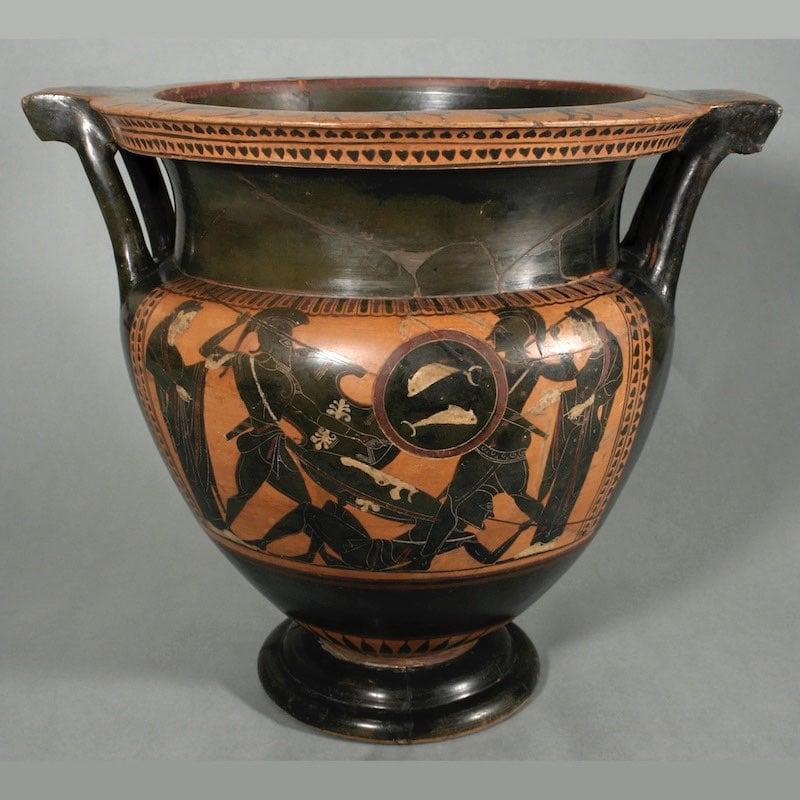
Black Figure Column Krater
Jun 10, 202100:02:28Tap to summarizeThis krater is highly decorated with both designs and figural groupings in the Black Figure technique. It is a complicated process, but put simply, the main decorative elements and figures are painted with a slip that turns black in the firing process. On one side, a wedding scene is painted with bride and groom in a four-horse chariot, accompanied by two women attendants and a musician playing a lyre. One of the attendants holds a torch. The other side has a battle scene, two warriors fight over the body of a fallen third. Again, two female attendants look on. Greek Artist (6th century BCE) Black Figure Column Krater, ca. 510-500 BCE Earthenware 14 x 15 ½ x 13 inches Museum purchase with funds from the Volunteer Board Endowment Fund and the Curriculum Support Fund, 1988.6
Transcribe →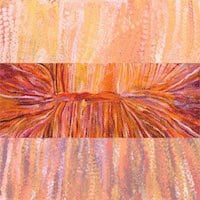
My Country by Emily Kame Kngwarreye
May 20, 202100:02:37Tap to summarizeEmily Kame Kngwarreye was one of the first celebrated female Aboriginal Australian Desert Painters. Entering the national art market well into her seventies, Kngwarreye paved the way for female Aboriginal artists to express women's specific cultural relationship to the Dreaming and their ancestral lands. In My County, Kngwarreye uses a vibrantly colored dotting technique, popularized in Papunya. While only she knows the true stories and secrets that lay hidden within the canvas, all viewers can appreciate My Country for its immensely beautiful and imposing presence. Emily Kame Kngwarreye Indigenous Australian, b. 1910 My Country, 1994 Acrylic on canvas, 150.5 x 485 x 4cm (h x w x d) Kluge-Ruhe Aboriginal Art Collection of the University of Virginia, Gift of John W. Kluge, 1997 Episode produced by Sydney Pulliam.
Transcribe →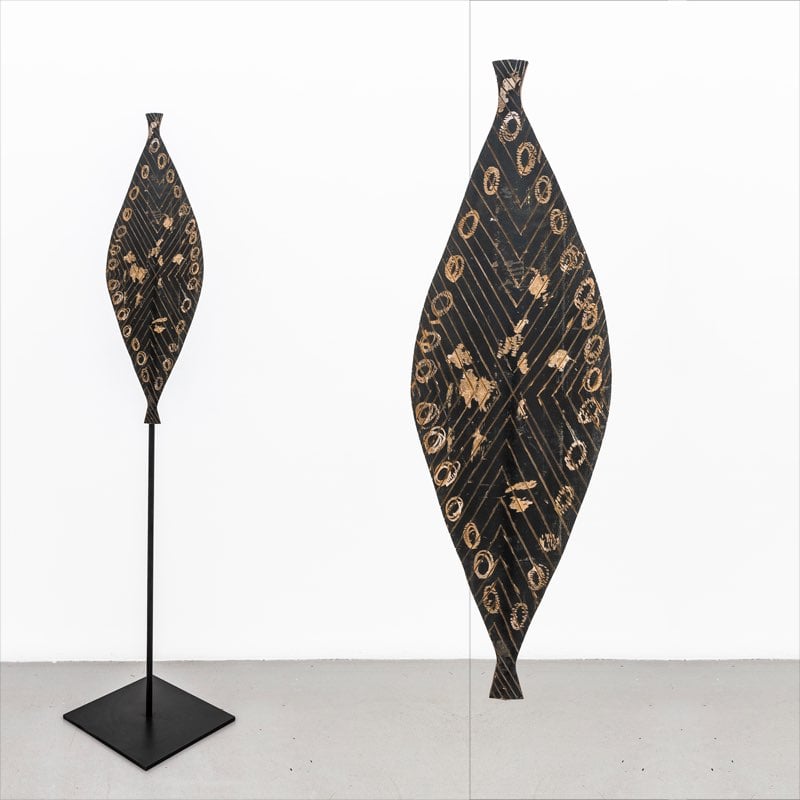
Nullius in Verba III by Steaphan Paton
May 13, 202100:02:18Tap to summarizeStanding at six feet tall, the sculpture “Nullius in Verba III” is intentionally the same height and weight as its sculptor, Steaphan Paton. The metal, diamond-shaped shield, mounted on a long pole, confronts the viewer. The shield’s surface is scratched, evoking the centuries of violence and dispossession faced by Paton’s ancestors. Among closer inspection, however, the sculpture is made from modern materials, asserting that this violence against Indigenous Australians is not an historic anecdote but a contemporary issue. Steaphan Paton Gunai and Monaro-Ngarigo language groups, Indigenous Australian, b. 1985 Nullius in Verba III, 2019 Etched steel, acrylic paint, nanotech clear sealant Episode produced by Addie Patrick.
Transcribe →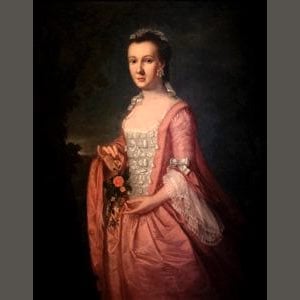
Portrait of Miss Rhoda Cranston by John Singleton Copley
May 6, 202100:02:15Tap to summarizeMiss Rhoda Cranston looks out of her portrait and slightly to her left. Painted by John Singleton Copley around 1756, we see the artist relying on current English traditions of portraiture to establish the status of his subject. Copley studied contemporary portraits in England and Europe available to him in Boston through prints and is learning from them trends in both placement and background as well as the necessity of outfitting his sitters in the latest fashions. John Singleton Copley American, 1738-1815 Portrait of Miss Rhoda Cranston, 1756-58 Oil on canvas, 50 x 40 inches Gift of Mrs. Alan Cunningham 1978.27
Transcribe →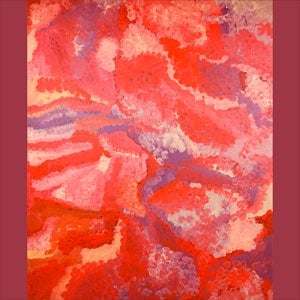
Awely by Emily Kame Kngwarreye
Apr 29, 202100:02:14Tap to summarizeIn deep reds, pinks, and yellows, Emily Kame Kngwarreye's "Awely" is an embodiment of her connection with her Country. Kngwarreye began painting late in her life, when she was already an elder in her community, Utopia, in Australia’s Northern Territory. The artwork’s title refers to women’s ceremonial knowledge of song, dance, medicine, and designs painted on the body. As Kngwarreye applied heavy blotches of paint to her canvases, she would sing ceremonial songs, replicating the act of painting on skin. In this way, “Awely” is both a painting of Kngwarreye’s homeplace and a conversation with it. Emily Kame Kngwarreye Anmatyerr language group, Indigenous Australian, c. 1910-1996 Awely, 1992 Acrylic on canvas Gift of John W. Kluge, 1997 Episode produced by Addie Patrick.
Transcribe →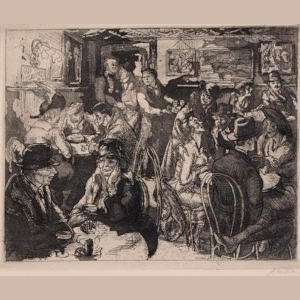
Hell Hole by John Sloan
Feb 18, 202100:01:57Tap to summarizeJohn Sloan American, 1871-1951 Hell Hole, 1917 Etching and aquatint, 10/10 9 7/16 x 12 3/8 inches Museum Purchase, 1977.5 © Estate of John Sloan/Artists Rights Society (ARS), New York Hell Hole is a 1917 etching by the American Artist, John Sloan. We see the cramped, claustrophobic interior of bustling bar. We know this is the Golden Swan, frequently referred to by its regulars as the Hell Hole, hence the title of the print. Located at West 4th and 6th Avenue in New York City’s Greenwich Village, the Golden Swan was frequented by both working class patrons and the artists for whom the area became known in the 20th century.
Transcribe →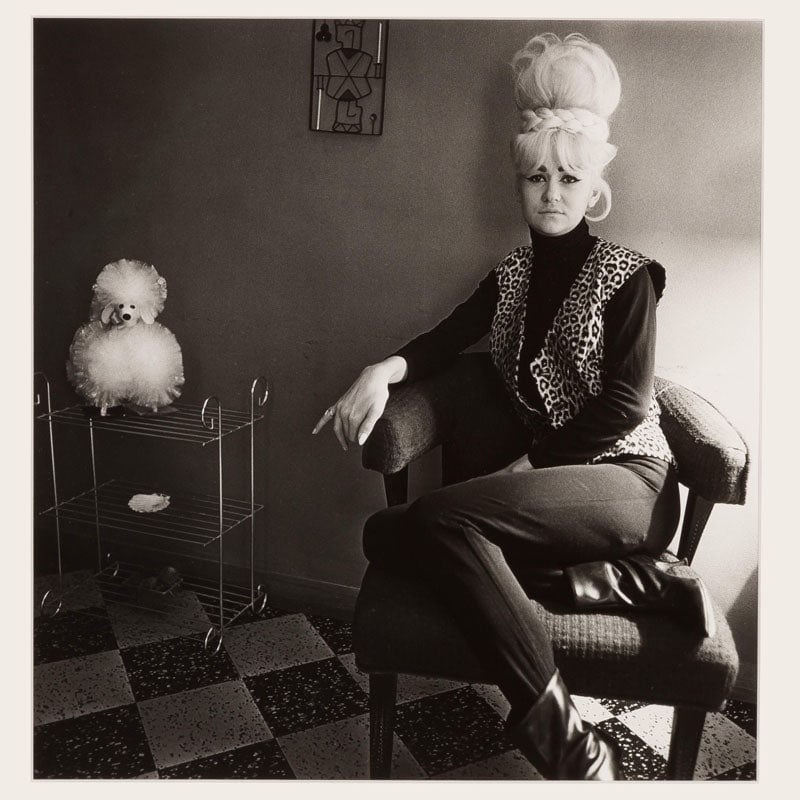
Lady Bartender At Home with Souvenir Dog by Diane Arbus
Jan 28, 202100:02:03Tap to summarizeDiane Arbus American, 1923-1971 Lady Bartender At Home with Souvenir Dog, New Orleans, 1964 Gelatin silver print, 7 7/8 x 7 1/8 in. (20 x 18.1 cm) Museum purchase with the Curriculum Support Fund, 1988.7 © Estate of Diane Arbus | Fraenkel Gallery (San Francisco, CA) A woman wearing a leopard print vest, black turtleneck, and black pants is seated with one leg bent under her on a chair; she has on black, high heel boots. She looks forward, out of the photograph, but not quite directly at the viewer. What is most striking about her appearance, is her hair. A high, teased white blond bouffant, bisected by a thick blond braid wrapped around it.
Transcribe →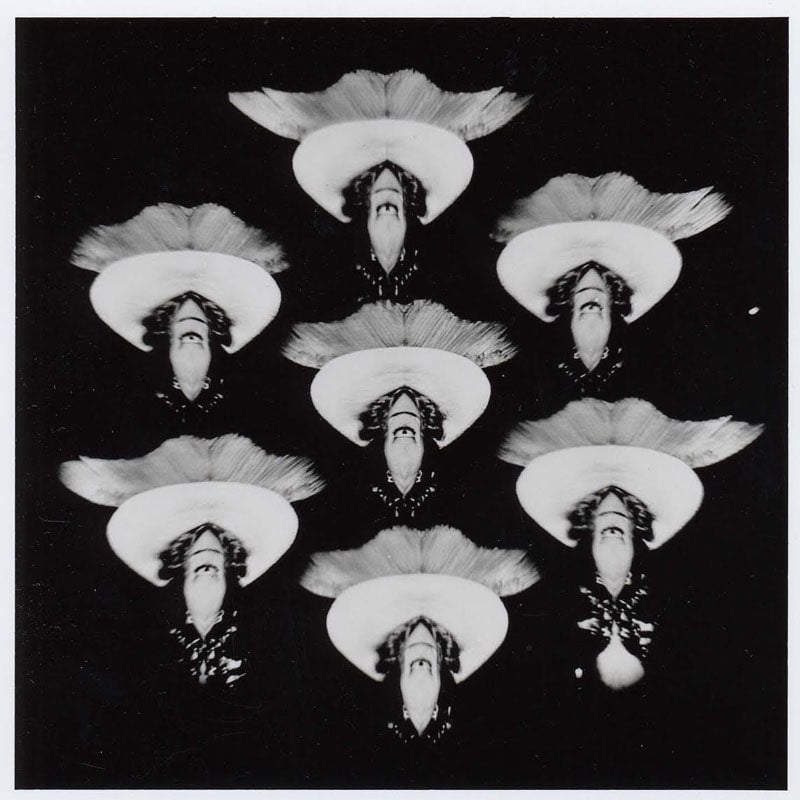
Untitled (Hedda Hopper, Distortion) by Weegee
Dec 15, 202000:02:10Tap to summarizeEpisode Notes This photograph of gossip columnist Hedda Hopper by Weegee is an example of what he called his distortions. After working as a photojournalist in the gritty Lower East Side of Manhattan in the 1930s and ‘40s, he moved to Hollywood where he began photographing celebrities and experimenting with dark room techniques. Arthur Fellig, known as Weegee American, born Ukraine, 1899-1968 Untitled (Hedda Hopper, Distortion) ca. 1950 Gelatin Silver Print 1995.30.65 Gift of Dr. Revels Cayton ÓWeegee (Arthur Fellig)/International Center of Photography/Getty Images
Transcribe →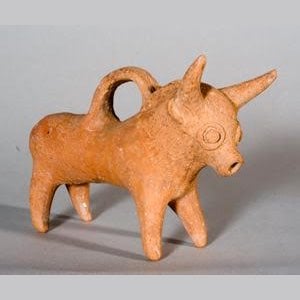
Cypriot Base Ring II Bull Rhyton
Dec 15, 202000:02:01Tap to summarizeEpisode Notes Though small, this Cypriot rhyton in the form of a bull has a lot of personality. He’s a favorite with many visitors to The Fralin Museum of Art, particularly our UVA students. A rhyton is a vessel, usually with an animal head or, in this case, a depiction of a whole animal, that is meant to hold liquid for drinking or pouring. This may have been used in funerary rites or in acts of commemoration. Cypriot Artist Base Ring II Bull Rhyton, ca. 1475 BCE - 1225 BCE Terracotta 3 1/8 x 2 x 4 1/8 in. (8 x 5.1 x 10.5 cm) Gift of Hon. George C. McGhee 1983.2.54
Transcribe →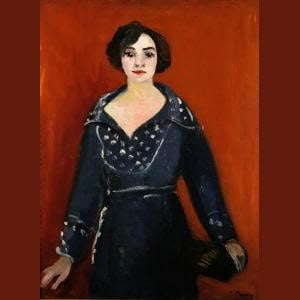
Self-Portrait with an Album by Émilie Charmy
Dec 15, 202000:01:58Tap to summarizeEpisode Notes This powerful self-portrait in The Fralin Museum of Art’s collection is by the French artist, Émilie Charmy. She was influenced by Post-Impressionism and acquainted with the Fauves, both clearly evidenced in her compositional structure, passages of loose brushwork, and choice of strong colors. Émilie Charmy French, 1878 - 1974 Self-Portrait with an Album, ca. 1907 - 1912 Oil on canvas 45 3/4 x 35 1/16 in. (116.2 x 89.1 cm) Gift of Pamela K. and William A. Royall, Jr. 2011.17.2 ©Artists Rights Society (ARS), New York / ADAGP, Paris
Transcribe →