
Podcast
My History Can Beat Up Your Politics
Hosted by Bruce Carlson · EN
Since 2006, this podcast has been using history to elevate today's political debates. "The perfect antidote to bloviating talking heads, My History is thoughtful, nuanced, and highly engaging." -Columbia Journalism Review
19episodes
Episodes
Newest firstAll episodes
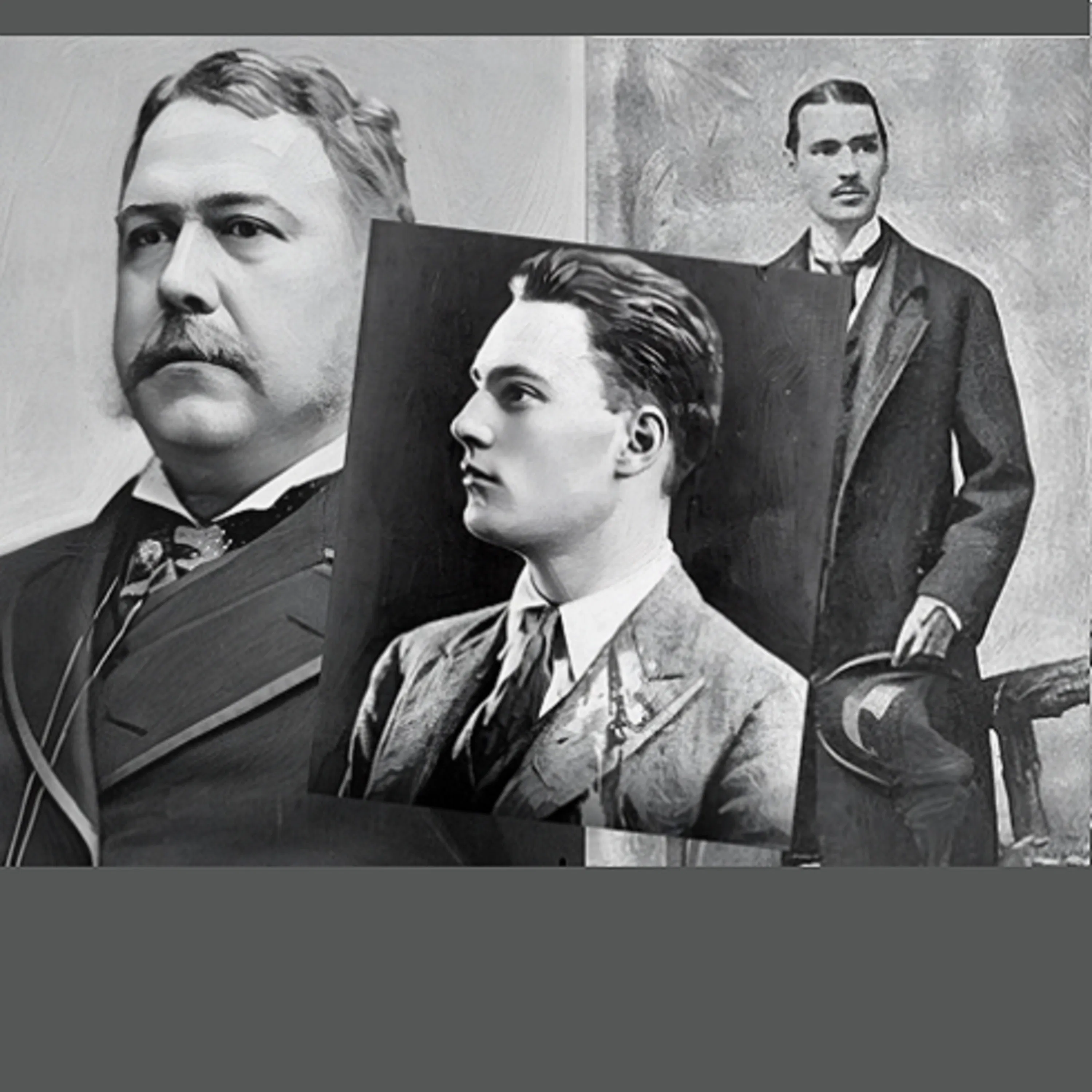
CHESTER ARTHUR'S SON AND GRANDSON
4d ago00:23:18Tap to summarizeA brief look at the family legacy of Chester Arthur, his son and grandson. From the White House to San Francisco's hippie scene. Learn more about your ad choices. Visit megaphone.fm/adchoices
Transcribe →
CHESTER ARTHUR TAKES AIM AT TARIFFS
1w ago00:18:08Tap to summarizeMany know of President Arthur's work on civil service reform. Less known is that he also sought to change his party's position on the use of tariffs. He had been a customs official, the nation's highest. In that job he learned to work with businessmen and merchants. When he became President, he turned his attetnion on the high taxes on imports of his day. As a 19th century Republican this was near heresy. His effort was only partially successful, but it would stoke discussion on tariff reform for the next half century. Learn more about your ad choices. Visit megaphone.fm/adchoices
Transcribe →WHAT HAPPENED TO THE GOLD STANDARD?
1w ago00:21:35Tap to summarizeOfficially, as any part of US policy, tiny room in 1982. We tell that story. Learn more about your ad choices. Visit megaphone.fm/adchoices
Transcribe →NATIONAL VAHALLA: ALL ABOUT STATUES, MONUMENTS, STATUE REMOVAL
2w ago00:57:29Tap to summarizeFrom the early attempts to depict Washington, to the first Congressional attempts to block Confederate statues, to today's debate. In this episode Bruce examines the history behind statues in America, and Bruce looks at every debating point and angle he can think of regarding Confederate statues, the dates of their construction and their removal. Learn more about your ad choices. Visit megaphone.fm/adchoices
Transcribe →SCOTUS BIRTHRIGHT CITIZENSHIP DECISION - Trump v. Barbara, Decision and Kavanaugh and Gorsuch's Takes
3w ago00:24:09Tap to summarizenot a surprise in my book, but the SCOTUS recently ruled on Trump's executive order of 2025 denying citizenship by birth in the United States. We look at the arguments, and the two takes by Kavanaugh (on the concurring side) and Gorsuch (on the dissenting side, but not fully with the Trump position). Learn more about your ad choices. Visit megaphone.fm/adchoices
Transcribe →
"WHY BRITAIN LOST" Whitelaw Reid 1906 London Speech Explaining The American Revolution
3w ago01:00:05Tap to summarizeForgotten but once famous, Whitelaw Reid was a top journalist and politician of his time. In 1906, as ambassador to Britain, the former vice-presidential candidate was asked by Cambridge University to explain why the British lost the American Colonies. Although he shuddered and thought he would rather speak on any other subject, he gave that speech and it serves a good history of the events that led up to history. Learn more about your ad choices. Visit megaphone.fm/adchoices
Transcribe →WHAT HAPPENED TO THE DECLARATION after Signing? Also: Playing Cards With the Signers of The Declaration w/ Jason Petri
4w ago01:11:57Tap to summarizeFirst - The history of the Declaration -- the actual document, and how it was saved from British capture. Then we speak with listener Jason Petri about his Signers Playing Card project. Learn more about your ad choices. Visit megaphone.fm/adchoices
Transcribe →
A SECOND LOOK AT THE EVENTS of 1776 w/ Tom McMillan, Author of "The Year That Made America"
4w ago00:41:22Tap to summarizeWith Tom McMillan, we take a look at some of the assumptions of 1776 in the history books. First of all, why July 4th and Not July 2nd? And what about May 15th, when Adams got delegates to move and issued his own Declaration-like preamble? And a second look at Jefferson's authorship of the Declaration: writer or draftsman? We are part of Airwave Media. Learn more about your ad choices. Visit megaphone.fm/adchoices
Transcribe →
SNACK, Dessert, Dinner, Supper: The Vietnam War Negotiations
Jun 2201:11:06Tap to summarizeNixon's first bombing campaigns had the names of mealtimes which seem to also correspond with the years of his first term: 1969, 1970, 1971, 1972. In this ( 2021) episode we look at Nixon, Kissinger and the Paris Peace Accords that ended the Vietnam War. In addition to providing some additional context for the Saigon 1975 situation so much in the news today, we revisit whether the accord was a sham peace or a true deal. The deal left hundreds of thousands of enemy troops in South Vietnam as U.S. troops exited. Could a better deal have been etched? Or could the same deal have been made sooner. And what about those leopard spots? The great debate over the negotiating table? and the dingy carpet? All this and more. Learn more about your ad choices. Visit megaphone.fm/adchoices
Transcribe →
WATERGATE PASTRY: Part III: Grand Jury Anger
Jun 1700:33:49Tap to summarizeAverage Americans, in the form of a DC jury, get the evidence. They hear the tapes, and they are shocked. But what will shock them more is what happens when Nixon testifies. Learn more about your ad choices. Visit megaphone.fm/adchoices
Transcribe →