← My Momma Told Me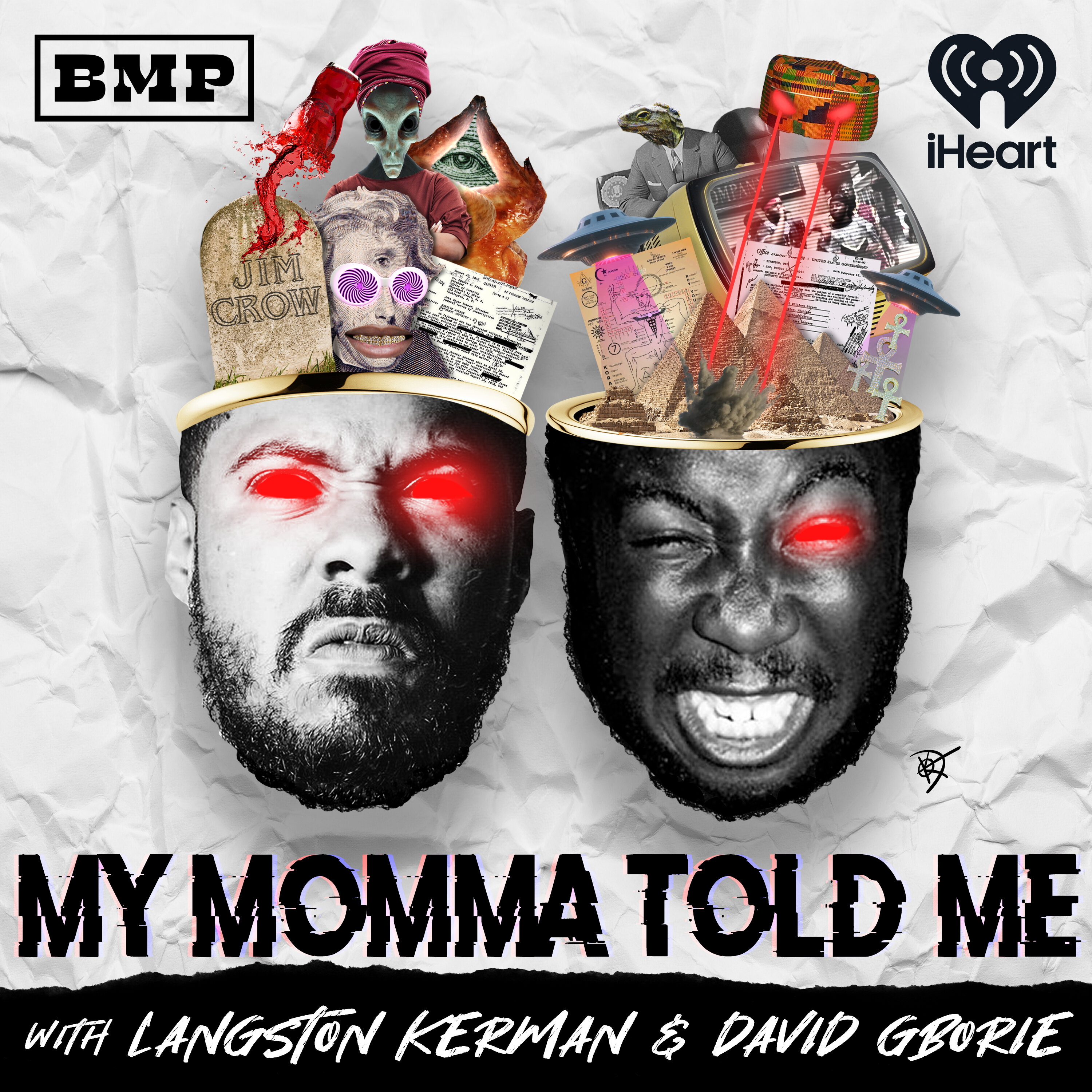
My Momma Told Me
Lil' Momma Voicemails & The Greatest Dookie Story Ever Told (with Langston Kerman and David Gborie)
00:49:10
Loading summary
Transcript476 lines
- [00:03]
Langston Kerman
You know what makes me sad? That's always gonna be in the back of his head.
- [00:06]
David Borey
He'll never forget today.
- [00:08]
Langston Kerman
He'll be like, damn, I did I shit myself.
- [00:11]
David Borey
April 12, 2025. He caught a bad one.
- [00:14]
Langston Kerman
People are gonna, like, ask him, like, what's the worst thing you've ever done? And he's gonna know the answer is, shit himself that way. But then he's gonna have to be like, oh, I stopped talking to my mom before she passed.
- [00:24]
David Borey
You know, and he was old, so it feels like that might be, like, what gets him to stop driving.
- [00:30]
Langston Kerman
Yeah, like his.
- [00:32]
David Borey
You know, you can't have a car after you shoot yourself on the brake. Dad. Dad.
- [00:38]
Langston Kerman
You know.
- [00:39]
David Borey
Dad, you know you can't drive anymore. Remember when I had to come get you because you shit your pants on the brake? You got. We can't have this happen. I had to call out of work. I was at work. I'm a doctor.
- [01:13]
Langston Kerman
They put him in a home.
- [01:15]
David Borey
That was what got him in the hole. You can't look after yourself. You're shitting yourself on the side of the road.
- [01:23]
Langston Kerman
You're shitting yourself, and you didn't even.
- [01:25]
David Borey
Know how to clean.
- [01:27]
Langston Kerman
Dad.
- [01:28]
David Borey
I miss mom, too.
- [01:31]
Langston Kerman
Look, it's too much house for you. You can't get to the bathroom safely anymore.
- [01:39]
David Borey
It's too much house.
- [01:40]
Langston Kerman
You're going to have to live. We'll figure it out. But you got to live somewhere else.
- [01:44]
David Borey
You got to live somewhere else, or you got to let Rick move in. That's it. That's it. We cannot have this again.
- [01:51]
Langston Kerman
And he's like, I'm fine.
- [01:53]
David Borey
That's fine. Look at the Accord. Is the Accord.
- [01:59]
Langston Kerman
Yeah. Your car smells like there's everywhere.
- [02:02]
David Borey
Dad, is this how you want to live?
- [02:11]
Langston Kerman
The government growing babies? Microchips in your Annies? All koala bears are racist.
- [02:22]
David Borey
The ozone layer owes me money, marching.
- [02:26]
Langston Kerman
To bed and turkey stuffing.
- [02:28]
David Borey
Y'all can't tell me nothing. You've got to lick it before you stick it. You got to grab it before you stab it. Welcome Lil Ma, mamas and gentiles alike, to another phenomenal episode of My Mama.
- [02:43]
Langston Kerman
Told Me, the podcast, where we dive deep, deep into the pockets of black.
- [02:47]
David Borey
Conspiracy theories, and we finally work to prove whatever the fuck we want. We have autonomy.
- [02:55]
Langston Kerman
Whoa. We can do it. We can do it.
- [02:57]
David Borey
We can do whatever we want.
- [02:58]
Langston Kerman
We can do it. Put your back into it.
- [03:00]
David Borey
We run this us And Will Ferrell.
- [03:04]
Langston Kerman
Who is a constant and close collaborator of ours.
- [03:07]
David Borey
Truly a great friend. I called him today.
- [03:12]
Langston Kerman
If you Think these episodes happen without old Willie knowing about it. You're wrong.
- [03:16]
David Borey
Oh, he edits. He's our editor.
- [03:17]
Langston Kerman
He's our editor. And he's our confidant.
- [03:19]
David Borey
Him and Justin. Shout out to Justin. You know what I've been thinking?
- [03:24]
Langston Kerman
Yeah.
- [03:24]
David Borey
I think the amount of black people on television peaked in the 90s, and I don't think we're ever gonna get it back. Oh, I think that the amount of black content, of quality black content that they were looking for then. I don't. I don't think it'll ever be up to those numbers, do you?
- [03:42]
Langston Kerman
Don't think we're ever getting a UPN run again?
- [03:46]
David Borey
I don't think the way television works. I don't even think we're getting a night again.
- [03:51]
Langston Kerman
Whoa. Yeah, we had a night.
- [03:53]
David Borey
Every. Every channel had a night.
- [03:55]
Langston Kerman
Yeah.
- [03:56]
David Borey
Everybody had a WB Sundays or whatever.
- [03:58]
Langston Kerman
Yeah. You could like look forward to like, oh, this is going to be Waynes Bros. And it's going to be that.
- [04:03]
David Borey
The Parenthood.
- [04:04]
Langston Kerman
Parenthood. This is going to be that one white guy, White Mike, who got his own show or whatever on upm. But that's neither.
- [04:13]
David Borey
Diverse. Dei.
- [04:14]
Langston Kerman
Yeah. There were some DEI hires in there for sure. Yeah.
- [04:17]
David Borey
Veronica Mars or whatever. But overall, I don't think we ever get back to that. And I think it's interesting because I think people from our generation hyper fixate on that because that really helped us out. That really helped us out a lot.
- [04:32]
Langston Kerman
It really.
- [04:33]
David Borey
There was no lack, like, I think about it as a kid, there was not really a major lack of positive representation.
- [04:41]
Langston Kerman
This is the first time I've ever really thought about it the way that you're framing it. But I think that's so true because there's a part of me that's always taken issue with this argument of like, we need more representation. I've never seen myself on TV and it's like. But I have.
- [04:58]
David Borey
You grew up in a wealth of it.
- [04:59]
Langston Kerman
I grew up so wealthy with like representation, in fact, that I didn't. I never thought of not having it at all. And I suppose if you are a black woman, maybe you don't feel like you've had as much of the wealth. It was primarily men that. That were sort of flush with the shit. But we were flush with the shit. Yeah.
- [05:20]
David Borey
And I mean, even for women, the idea of like Girlfriends, the Parkers, Moesha.
- [05:26]
Langston Kerman
Like all the, like, it was just like living single. Yeah.
- [05:30]
David Borey
We grew up with such a wealth of it that now we're like, it's not that Important. But it's like. No, because the generation before. That's why, regardless of what you did, what the man did, that's why the Cosby show was so crazy. Such a leap forward. Right. You know what I mean? And that kind of like, kicked the door in for all the. A different world and all this shit. But, like, we grew up, I think maybe the biggest representation of, like, the idea of, like, prosperous black people on television.
- [06:00]
Langston Kerman
Yeah.
- [06:00]
David Borey
And also sister sisters or whatever, where it's just like some people in a house having some. Having a life. Yeah.
- [06:07]
Langston Kerman
I think even, you know, the previous iterations of what the black experience were before the Cosby show were in the framework of, like, Norman Lear, where it's like. Yeah. Where it's like the extremes of blackness. It is either ultimate poverty or in the case of the Jeffersons, it's like supreme wealth. But it is still a commentary on, like, the black experience as a poor person. There was no. Just to your point, a regular ass group of people hanging on Mr. Cooper. Yeah.
- [06:38]
David Borey
Yeah.
- [06:39]
Langston Kerman
Damn.
- [06:40]
David Borey
Yeah, it's tough.
- [06:41]
Langston Kerman
Even the Fresh Prince, like, the Fresh Prince came from the hood, but he was like, framed as, like, a regular ass dude who didn't want to. He didn't want to sell drugs. He wasn't even trying to rap in the show.
- [06:53]
David Borey
No, no, no, no. He was not rap adjacent. He wasn't trying to be an entertainer.
- [06:57]
Langston Kerman
No. I mean, he was down to be the fucking. He worked on Ashley's. On Hillary's show.
- [07:03]
David Borey
Yeah. He wanted to be Ashley's manager.
- [07:05]
Langston Kerman
Yeah. He was just trying to be in production.
- [07:06]
David Borey
Yeah, he was trying to. He was really just trying to get on.
- [07:11]
Langston Kerman
He was trying to not go back to Philly.
- [07:13]
David Borey
Yeah.
- [07:14]
Langston Kerman
By any means necessary.
- [07:15]
David Borey
That was the whole point of this.
- [07:17]
Langston Kerman
He's like, bro, they beat the fuck out of me.
- [07:20]
David Borey
They ran me off my. Yeah.
- [07:23]
Langston Kerman
I managed my little cousin. I don't care. I let her talk down to me. I don't care.
- [07:28]
David Borey
I don't give up.
- [07:29]
Langston Kerman
Go back to Philly, bro.
- [07:30]
David Borey
Ashley Banks, make up your mind is going platinum. Remember, she had a real song, too.
- [07:37]
Langston Kerman
Yeah.
- [07:38]
David Borey
Daydreaming.
- [07:39]
Langston Kerman
Mm. You remembered the name.
- [07:40]
David Borey
Oh, yeah. Do you. Do you remember? Did you ever think Tatiana Ali was Muhammad Ali's daughter?
- [07:46]
Langston Kerman
I had heard that said, but I think my mom had corrected it early.
- [07:50]
David Borey
Okay.
- [07:51]
Langston Kerman
I think. I don't think that I genuinely believed that ever.
- [07:54]
David Borey
All right, moving on. None of us thought that. None of us believed she was a nepo baby until two years ago.
- [08:03]
Langston Kerman
The nepotism being. Getting punched in the head and then.
- [08:07]
David Borey
No, no, no, he didn't. I didn't think he hit her.
- [08:10]
Langston Kerman
I'm talking about the act of getting punched in the head somehow leading to acting opportunity.
- [08:15]
David Borey
Yeah, that's. I think you're really reducing Muhammad Ali.
- [08:19]
Langston Kerman
I don't think I am.
- [08:20]
David Borey
I beat you 100, you know, are you not. Oh, are you not an Ali guy?
- [08:24]
Langston Kerman
Oh, I'm a huge Ali guy. But I don't think his job becomes more elevated because of who he is.
- [08:29]
David Borey
Oh, yeah. It was what he did with it.
- [08:30]
Langston Kerman
I think he, the human being is the elevation he was. He was so far more exceptional than the work that he did. Which is why even when he. I mean, we lost him and his career in his prime years.
- [08:44]
David Borey
Yeah.
- [08:44]
Langston Kerman
And we still were like, now we're rooting for this person because he represents something much greater than all of this.
- [08:52]
David Borey
Right, right, right, right. I mean, he was exceptional, though. I mean, the work that he. You're saying he was more exceptional than the work that he did in the ring or in general?
- [09:00]
Langston Kerman
I'm saying the work that he does in the ring is of no consequence to me compared to what he ultimately did as a human being.
- [09:09]
David Borey
I get that. But you can't deny he was also. I guess that to me is what makes him so exceptional, is that he was also this incredible athlete.
- [09:16]
Langston Kerman
No, I'm not saying that he's not a great athlete. I'm saying that the work. Its just punching someone.
- [09:22]
David Borey
Oh, yeah.
- [09:23]
Langston Kerman
I'm not, I'm not going to pretend like it's not that because.
- [09:27]
David Borey
No. Fighting for money is the craziest thing.
- [09:29]
Langston Kerman
Yeah. It's still. Every single one of them has suffered like life changing brain damage because of their experience. And that can't go away simply because he was an exceptional person.
- [09:42]
David Borey
Right, right, right. I mean, I think you got to be kind of a wild person to even think that that's the way. But you get in a fight and you're like, I could get money for this.
- [09:50]
Langston Kerman
Yeah.
- [09:52]
David Borey
You know, you're like, what if I. Yeah.
- [09:55]
Langston Kerman
Hey, you watching across the street?
- [09:57]
David Borey
Give me a dollar, I'll beat his ass right up.
- [10:03]
Langston Kerman
What if I did that on tv? Yeah.
- [10:06]
David Borey
Yeah, man. Thank God. Did you ever have like a boxing phase? Did you ever think you could, like, get into it?
- [10:12]
Langston Kerman
I. I tried in college to, to join up with like the boxing club, and when I showed up the first, like three weeks, they just wanted you to run where they're like, no, we're for real, for real. Training to like, build something here.
- [10:29]
David Borey
Okay.
- [10:29]
Langston Kerman
And so we're gonna get in shape before we even start touching bags and like hitting each other and shit. And I was like, oh, bro, this isn't what I signed up for.
- [10:38]
David Borey
No, you just wanna be able to look good shadowboxing.
- [10:41]
Langston Kerman
Yeah, I just wanted to like get. Get a different way of like being active and healthy and y'all are for real trying to like build. And I'm going to be mad at you and you're going to be mad at me. I'm walking away.
- [10:53]
David Borey
Yeah, it is like a lot of work. It doesn't seem like a casual hobby.
- [10:57]
Langston Kerman
No.
- [10:58]
David Borey
At all.
- [10:59]
Langston Kerman
And I'm not, I'm not convinced I was good at it.
- [11:03]
David Borey
That's fair.
- [11:03]
Langston Kerman
Do you know what I mean? Like, you're not even giving me a chance to find out if I got like some sort of like innate ability.
- [11:10]
David Borey
Yeah, maybe there's an aptitude there, but they tried to run it out of you.
- [11:14]
Langston Kerman
Yeah, you're going to make me. You're going to make me train five miles a day to find out I'm about to get my ass whooped.
- [11:21]
David Borey
Yo, that is honestly. Maybe you saved yourself because that would be hard.
- [11:24]
Langston Kerman
That would be crazy. I couldn't take that. I was trying to get hoes.
- [11:31]
David Borey
Cause it does seem like the best thing to take up to get hoes. Cause you can't. You don't have to prove it. Really.
- [11:37]
Langston Kerman
It's awesome.
- [11:37]
David Borey
You just tell it like, oh, I box a little bit.
- [11:39]
Langston Kerman
Yeah, I box.
- [11:40]
David Borey
Yeah, that is. It is a good. That's a good hog getting sport. I think it's like probably top tier.
- [11:46]
Langston Kerman
You seem like a strong guy.
- [11:48]
David Borey
Yeah.
- [11:48]
Langston Kerman
Just off grip. I go, all right, I'm going to be respectful around this person.
- [11:52]
David Borey
Right. And it's like, it's like difficult enough that it weeds out a lot of people.
- [11:57]
Langston Kerman
Yeah.
- [11:57]
David Borey
Like I don't think saying that you hoop is nearly as attractive as it used to be. No. Because like every. There's a lot of people who play basketball regularly.
- [12:07]
Langston Kerman
Because Hoopers also are so far removed from the human form that like if I tell you I'm good at basketball, you go, okay, you're good at basketball for a 37 year old man who 6ft tall who at best is 5 11.
- [12:23]
David Borey
Right.
- [12:23]
Langston Kerman
Like you are what you are. I know what your peak is. No matter how good you are at basketball versus with boxing. If I tell you I could fight.
- [12:35]
David Borey
You could be sneaky. You could be bro.
- [12:37]
Langston Kerman
Till you put Floyd in front of me. Yeah, I might be able to take Floyd.
- [12:41]
David Borey
You might be low key.
- [12:42]
Langston Kerman
Nice yeah.
- [12:43]
David Borey
Yeah. You can't. Like, I don't think. If you saw Tank, you would think. You know what I mean?
- [12:48]
Langston Kerman
No.
- [12:48]
David Borey
Yeah. Yeah. Yeah. Damn. Yeah. Cause boxing. And it does seem like. I can't prove this, but it does seem like dudes who box get the best pussy.
- [12:58]
Langston Kerman
Mm.
- [12:59]
David Borey
I think it's top tier.
- [13:01]
Langston Kerman
I think for. For a period it is. And then it gets complicated.
- [13:04]
David Borey
Oh. Yeah. I think. Yeah. On the back end.
- [13:07]
Langston Kerman
I think the way their brains work. It don't. It don't stay healthy relationships throughout.
- [13:11]
David Borey
It's not like a guy you want to anger.
- [13:13]
Langston Kerman
No, no, no. And tells its own story with that.
- [13:17]
David Borey
Anyways.
- [13:20]
Langston Kerman
We got voicemails.
- [13:21]
David Borey
Yeah, we got voicemails. You guys keep sending voicemails. We keep listening to voicemails.
- [13:25]
Langston Kerman
It's cool as shit.
- [13:26]
David Borey
We got a lot this time.
- [13:27]
Langston Kerman
We got a lot. This one piqued my interest. And I don't know what it. We. We don't listen to them ahead of time.
- [13:34]
David Borey
Have not heard it. Is that a great strategy for creating content? Who knows?
- [13:39]
Langston Kerman
It's all a surprise for us. And we'll find out if that's worth the surprise. But here we go. This one seems exciting. So let's find out. What's up, little freakies? I'm calling because I realize that you all forming a parasocial relationship with me.
- [14:00]
David Borey
Pause. Hold up a God damn minute. This nigga.
- [14:05]
Langston Kerman
Relax.
- [14:06]
David Borey
All right? I don't even love that we gave this credence.
- [14:09]
Langston Kerman
Who is this to say that we have a parasocial relationship with this person? I don't. Who are you?
- [14:16]
David Borey
I think it's the first guy who called us Lil Freaky.
- [14:18]
Langston Kerman
I don't like that at all.
- [14:19]
David Borey
I don't like it either.
- [14:20]
Langston Kerman
This isn't a real relationship. You abused us.
- [14:23]
David Borey
Yeah. We took it. But not anymore.
- [14:26]
Langston Kerman
You did a nasty thing. You don't get to take ownership of this.
- [14:30]
David Borey
We're gonna cut our hair and move to a new city and take a spin class.
- [14:35]
Langston Kerman
J. Lo, Enough.
- [14:36]
David Borey
Yeah. Maybe finally get back into painting.
- [14:41]
Langston Kerman
Is solving the male loneliness epidemic. And you're trying to do that for other people. And you're trying to do that for other men. So thank you for your service. Yeah.
- [14:52]
David Borey
I'm willing to look directly at the camera and say we do not do this for men at all.
- [15:00]
Langston Kerman
Wasn't thinking about you one bit.
- [15:03]
David Borey
We are men who were raised by single mothers. And we have those tendencies. Quite frankly. When we're alone. We often talk about how men make us uncomfortable in large groups.
- [15:15]
Langston Kerman
If. If you thought for a Second that I wake up in the day and I want to. I go, how can I please the fellas? You're wrong.
- [15:22]
David Borey
This was for the dogs. Oh, man.
- [15:25]
Langston Kerman
That's when I started to hate Drake, was when he was like, I'm making music for men. I was like this.
- [15:32]
David Borey
No, I want to hear nice. For what to these niggas you gotta.
- [15:36]
Langston Kerman
Lie to me about how you treat women is my position on everything.
- [15:41]
David Borey
I mean, even joking aside, I don't really think about. I don't think about sex when we do this, though. Really?
- [15:50]
Langston Kerman
You don't think about sex in what sense?
- [15:53]
David Borey
I don't think about it being directly for women or men. I kind of just like.
- [15:59]
Langston Kerman
Oh, you mean like gender?
- [16:01]
David Borey
I feel like we're just shooting shots. But it does. Olivia told me recently. It does. We're pretty even, I think. She said it's like 56% women, 44% men or something like that.
- [16:10]
Langston Kerman
That's right. She just texted me 56% female, 43% male. I don't know what that missing percentage is meant to be, but.
- [16:19]
David Borey
Yeah, you do. And you guys have a right to exist as well. And I will fight for you politically and physically.
- [16:25]
Langston Kerman
That's fair. Shame on me. Shame on me. I'm regretting. I'm sor. I'm so sorry. I really didn't think about it. I just responded to the information I was given and I'm so sorry.
- [16:49]
David Borey
Oh, man.
- [16:52]
Langston Kerman
Yeah. I don't think that I think about this in a gendered sense, but I am interested, I guess, in hearing maybe this continues for a little bit and hearing more about what we're doing for this loneliness epidemic.
- [17:07]
David Borey
I am. I do think we do. If I were to really think about it, I do think we scratch maybe an itch for the non hyper masculine black men that you don't hear about as much.
- [17:22]
Langston Kerman
Sure, sure, sure.
- [17:23]
David Borey
Right. I think a lot of podcasts, specifically, it's a lot of dudes telling you. Because we don't even talk about sex that much. Maybe we do. Cause we're little freakies or whatever. But like. But like we don't talk about. I don't think we talk negatively about women or sexual. I just don't think. I think that there's like so much of the podcast space and the black podcast space is like that. And I feel like we don't do that.
- [17:50]
Langston Kerman
We're not teaching men to be men.
- [17:53]
David Borey
Yeah. Or like how to.
- [17:54]
Langston Kerman
In this sense, or how to hack.
- [17:56]
David Borey
Women or whatever that other shit's got going on.
- [17:59]
Langston Kerman
And I Think in that way, we are jetting a little bit of the standard, but I am curious to hear a little bit more from this person as to what they think we're doing, because it's interesting. Thank you for forming a parasocial relationship with me and other dudes so that we're not so lonely anymore. I love you, David. I love you, Langston, so much. Okay, that's.
- [18:26]
David Borey
It sounds like the voicemail you play at the beginning of a rap song. Like that last spot. I love you, Langston. I love you, David, so much.
- [18:42]
Langston Kerman
And then the beach. I'm glad.
- [18:49]
David Borey
I'm glad, bro. I'm glad. I'm. I'm glad that you like it.
- [18:53]
Langston Kerman
Yeah, we didn't. We certainly didn't step out of our houses with that plan, but we're glad that you feel that way.
- [19:01]
David Borey
And honestly, to hear your voice, you don't even sound like the kind of guy I thought was involved in that loneliness epidemic.
- [19:08]
Langston Kerman
Yeah. And frankly, let's talk a little bit about the loneliness epidemic. I think in some ways, and this is just my feeling, I think some of that loneliness epidemic is man made. It is a lot of things that while you may feel alone, you may feel like you're disconnected from community. There is always community to build, to have to find. That doesn't have to just be tethered to a podcast that you enjoy listening.
- [19:35]
David Borey
To a hundred percent. I also sometimes feel like a lot of what the idea of the masculine man was tethered to, the idea of women being subservient or less than. So it's just people dealing with women being equal and okay, and all of a sudden they're like, I don't know how to be a man anymore. And it's like, no, she could. She could do whatever she wants. You can still be a man, bro.
- [19:56]
Langston Kerman
Yeah, you can still.
- [19:57]
David Borey
You can still carry all that masculine energy and all that. You just don't also have to fucking have women seem below you.
- [20:04]
Langston Kerman
She's not gonna cook for you, and that's okay.
- [20:06]
David Borey
Yeah, but you could still be a man within that. You can still lift weights or whatever.
- [20:10]
Langston Kerman
Yeah, you can. You can be whatever you want to be, and you can find a community of people who also feel exactly the way that you feel. You just have to step outside of yourself and frankly, this podcast enough to be able to find those individuals.
- [20:26]
David Borey
Yeah, man.
- [20:27]
Langston Kerman
Come to a live show.
- [20:28]
David Borey
No.
- [20:28]
Langston Kerman
Yeah. Buy.
- [20:29]
David Borey
Give us your money. Yeah.
- [20:30]
Langston Kerman
Yeah. Please don't leave us.
- [20:32]
David Borey
Yeah, we want your money. Keep listening.
- [20:33]
Langston Kerman
Yeah, we.
- [20:34]
David Borey
I love you, but I appreciate Your support. I ain't begging for it.
- [20:41]
Langston Kerman
Yeah. I want you to find your special community and not only need us, I guess.
- [20:47]
David Borey
Yeah, yeah, yeah. That was weird though. Because when I think about male loneliness epidemic guys, I never think it's somebody who would be listening to this podcast, but maybe it's bigger than, maybe it's bigger than I imagine it.
- [21:00]
Langston Kerman
You know what it is? I think that as we grow, we stretch our arms further and further and then you start to just touch people that weren't originally aiming for you. Do you know what I mean? If you reach your arms out far enough. And I'm sorry that this is making you uncomfortable.
- [21:16]
David Borey
I don't love the way that you were doing your fingers. I did not like.
- [21:19]
Langston Kerman
Okay, well, I apologize.
- [21:20]
David Borey
No, it's okay. Keep going.
- [21:22]
Langston Kerman
Nah, it really makes it hard to keep going when you hate it that much. But I'll say.
- [21:26]
David Borey
Was it that embarrassing?
- [21:28]
Langston Kerman
I watched you look at my hands with an act of disgust that made me self aware even as I attempted to land what I thought was a pretty thoughtful idea.
- [21:40]
David Borey
What I thought was a, A well.
- [21:43]
Langston Kerman
A well shaped perspective.
- [21:44]
David Borey
It is. It is a good idea.
- [21:46]
Langston Kerman
And then I watched you.
- [21:48]
David Borey
Katui2 that was, bro. That was my toxic masculinity is not. I was like, I know. I thought we were. You were like this. I was like, I don't. That's really what I was. Do you. Sometimes that flares up to me. I, that's how you know toxic masculinity is inherent. Because that's not like a learned behavior. That's, that's just, I just felt that way about that for some reason.
- [22:12]
Langston Kerman
Right. You haven't seen enough people wiggle their fingers to even know if that, like, is something that bothers you. But then you found out today it does.
- [22:18]
David Borey
Yeah, yeah, yeah, yeah, yeah.
- [22:20]
Langston Kerman
Damn. I'm sorry to be the person.
- [22:22]
David Borey
No, it's okay, man. It's about growth. We gotta learn ourselves.
- [22:25]
Langston Kerman
I, I, I do think that maybe we are just expanding in a way that we are touching people who did not originally plan to be touched. And I think that that's, that's kind of nice. Sorry. I'm gonna move on.
- [22:39]
David Borey
I want to be good.
- [22:41]
Langston Kerman
We did be good together, man. I don't even know what I'm trying.
- [22:47]
David Borey
You know, that makes me think about when I said pause when I texted you the other day. Like, I'm trying, but sometimes.
- [23:05]
Langston Kerman
Should we do another one?
- [23:06]
David Borey
Oh, can we talk about this? Doo doo. We just have to get it out.
- [23:10]
Langston Kerman
Yeah, we didn't talk about It.
- [23:10]
David Borey
We just have to get it out.
- [23:11]
Langston Kerman
That's fair. David and I went driving to the studio today, witnessed something you don't witness often.
- [23:20]
David Borey
It was incredible. It was incredible because we were riding a high. Because you had gotten in that altercation with that lady. I did, and I laughed in her face. Langston was very funny. A woman yelled at him on the street for driving into the intersection to.
- [23:35]
Langston Kerman
Make a right turn when she was very far from the actual.
- [23:40]
David Borey
Too far to have any opinion on what he was doing.
- [23:43]
Langston Kerman
Would not have made it in time to cross the street either way, but was just angry at the concept of me having crossed the crosswalk before the green light.
- [23:52]
David Borey
And she said, what?
- [23:54]
Langston Kerman
And she said, you asshole, you're not supposed to do that.
- [23:57]
David Borey
You were like, how did you say? You have to just recreate what you said.
- [24:03]
Langston Kerman
It was so funny. She said, hey, asshole, you're not supposed to do that. And I rolled down the window, I poked my head out, and I said, you talk nice. Yeah, you talk nice to me. You be nice. You're talking nasty. You're being mean. You're a nasty lady. And then she kept cursing. She said, fuck you. Fuck you. You're not supposed to do that. You're a piece of shit. And then she got afraid of, I think, the interaction, even as I just kept screaming, you be nice. You be nice.
- [24:30]
David Borey
He didn't raise his tone either, which was. That was the coldest part about it. That was the best part.
- [24:34]
Langston Kerman
And then she got so afraid of just me, I guess, sort of doing whatever I was doing, that she decided to move in a different direction. But then as she also yelled out, though, she yelled out, as I pulled off, I said, you be nice. You work on yourself. As I pulled off, she said, I hate you. I hate you.
- [24:55]
David Borey
So we were riding that high.
- [24:57]
Langston Kerman
We were doing great.
- [24:58]
David Borey
We were in the car. We were so funny. We were riding that high. It's hilarious. What a funny confrontation. And we drive fast, I believe. A white Honda Accord.
- [25:09]
Langston Kerman
Yeah.
- [25:09]
David Borey
With the door open, a man leaning over, and it's like, you know when something awesome is so awesome, you can't compute? Immediately, it took me like two seconds past, and we both kind of were like, I think that guy just shit himself. He was covered in doo doo. He was covered in shit.
- [25:31]
Langston Kerman
He had dookie so far up his back like an infant. Like an infant child. He had shit through his underwear. It was all the way up his back. And we had have to be clear, because some of you are going to be thinking to yourself, well, maybe this was an unhoused person. Maybe this was a person in need. And you guys are laughing at a person at their own. At their own expense. That is not the case.
- [26:06]
David Borey
That's why he was so good. This was just a guy.
- [26:08]
Langston Kerman
This was a regular man.
- [26:10]
David Borey
It was a guy who has a.
- [26:11]
Langston Kerman
Car who was driving down the street, lost control of his anus.
- [26:19]
David Borey
It was shit everywhere. The shit looked like a new continent. And he was wearing white underwear.
- [26:26]
Langston Kerman
He had white underwear and you could just see it up his fucking back. It was a nightmare. It was the worst shit I've ever seen a person have.
- [26:37]
David Borey
And I've seen somebody shit on the street.
- [26:39]
Langston Kerman
I have two children.
- [26:40]
David Borey
Yeah. Oh, that's a good one.
- [26:42]
Langston Kerman
I have two children. I've never seen anything. I've seen things like that on children. I've never seen that much dookie per capita, so.
- [26:50]
David Borey
Bro, mid back.
- [26:51]
Langston Kerman
Dookie mid back was covered in it. I wouldn't be surprised. We pulled up here at what, noon? I wouldn't be surprised if he's still there cleaning.
- [27:01]
David Borey
No, they had to call the fire department. He couldn't save himself. And I think the best part was we had seen the beginning of it.
- [27:11]
Langston Kerman
Yeah.
- [27:11]
David Borey
So he was still in that. Oh, no, what do I do? He was doing the discovery stick.
- [27:21]
Langston Kerman
He was still there like this. What have I done?
- [27:35]
David Borey
Oh, man.
- [27:36]
Langston Kerman
Oh, me.
- [27:37]
David Borey
Oh, my. The worst just happened. What do you do? You gotta call your wife.
- [27:45]
Langston Kerman
That's the thing. He's thinking about who he has to call. Cause it's camera. He's like, can I keep this private? And it's so much that he can't. He needs help.
- [27:54]
David Borey
Would you call your wife if you. You're that man, bro, I don't know.
- [27:58]
Langston Kerman
What I would do.
- [27:59]
David Borey
Me either.
- [28:00]
Langston Kerman
I think. Okay, if I'm being honest, I think what I would do is I would fuck, man. I think if I were that man, I would get back in my car.
- [28:11]
David Borey
Yes. Cause we could see. Everybody could see.
- [28:16]
Langston Kerman
I would not be cleaning myself outside my car. I would get back in my car, and I think I would just sacrifice my car to my cleanliness.
- [28:25]
David Borey
What do you mean?
- [28:25]
Langston Kerman
Meaning I would, like, figure out a way to remove as much dookie from myself inside of my car and then go to whatever close place where I can maybe, you know, shower, wash myself, anything, Right?
- [28:40]
David Borey
But you saw it. It was so much.
- [28:42]
Langston Kerman
It was so much that, like, here's. His car is ruined.
- [28:45]
David Borey
Here would be. The worry for me is that like. Like, I almost feel like, you gotta go home. You got. I don't know where he lives, but you gotta, like, just drive home. Because if you're trying to. You can't. Where are you gonna put. You can't peel it. It was everywhere, y'all.
- [29:02]
Langston Kerman
Yeah. No, he's not. Let me be clear. I don't believe him to be going to wherever he thought he was going now.
- [29:10]
David Borey
Right, right.
- [29:10]
Langston Kerman
You know what I mean? Like, I don't think he's still gonna be able to, like, hit the spot and. And play it cool. I think that's a day's work he's got ahead of him one way or the other. But I'm saying that, like, ultimately, I would feel a need to clean myself before I even step foot in my own home.
- [29:28]
David Borey
That's fair.
- [29:29]
Langston Kerman
I could not arrive to my family with that much dookie on me.
- [29:34]
David Borey
You wouldn't call like, nikki, get the hose.
- [29:40]
Langston Kerman
We gotta still love each other, man. That's true.
- [29:42]
David Borey
She gotta touch you again.
- [29:43]
Langston Kerman
I still need. I've committed to life with this person. I can't risk that.
- [29:49]
David Borey
Yeah. Wow. I like that you put the stakes. It's life stakes.
- [29:54]
Langston Kerman
This is life stakes for him. We drove past giggling like bitches.
- [30:00]
David Borey
Oh, my God. I haven't laughed that hard in a minute.
- [30:03]
Langston Kerman
That was crazy because it's so funny.
- [30:04]
David Borey
Cause we both realize it the same.
- [30:06]
Langston Kerman
Exact same.
- [30:08]
David Borey
It was amazing.
- [30:09]
Langston Kerman
He shit himself.
- [30:10]
David Borey
He does so much shit.
- [30:13]
Langston Kerman
But we also realized that we weren't even laughing at the first.
- [30:16]
David Borey
He, like.
- [30:17]
Langston Kerman
We weren't. We were just like, oh, he himself. And then it wasn't until like a block later that we were like, yo, that was crazy. That was insane.
- [30:31]
David Borey
Oh, man.
- [30:32]
Langston Kerman
All right, we need.
- [30:33]
David Borey
We probably gave too much time to that, but I just had to get it out.
- [30:36]
Langston Kerman
No, you. You were right to. To bring it up. We need to take a break. We're going to come back. We're going to do another voicemail. More. More David, more language than more. My mama told me. But we're going to do this respectfully. Otherwise, we'll end in a duel. And I mean a duel. Real life duel where only one person walks away. We can meet with guns, bottles, knives, or books and equations, but. But we're gonna do this like men. So get ready.
- [31:13]
David Borey
We are back with a clip that is in no way foreshadowing here to listen to another voicemail after a long, long talk about dookie.
- [31:26]
Langston Kerman
We talked about dookie for longer than we probably should. But that's not our problem. We're enjoying ourselves.
- [31:32]
David Borey
It's just what we were going through at the Time.
- [31:33]
Langston Kerman
Yeah, yeah. We a tell you to sell dookie.
- [31:37]
David Borey
Yeah, just. What happened?
- [31:39]
Langston Kerman
All right, here we go. We got another voicemail. Let's listen to this one.
- [31:44]
C
Hi, David. Hi, Langston. I want to say I appreciate the podcast. Very enlightening. And I do want to say, Langston, I know that you do read and also research a lot. I know that you also read and I've been fans of you. Not really known it until I've actually, like, started to watch.
- [32:07]
David Borey
Pause, turn it down. This is too much.
- [32:11]
Langston Kerman
Yeah, you don't know what we read and don't read.
- [32:14]
David Borey
I trust you. It's not as much as you think.
- [32:18]
Langston Kerman
I'll tell you this. I read a lot at a point. Yeah, I haven't done that in a while.
- [32:23]
David Borey
It was summer going into eighth grade. I wanted free pizzas.
- [32:26]
Langston Kerman
Yeah, I got smart. I got smart for a time, and then I really checked out after that.
- [32:31]
David Borey
I think you could kind of just front load it, though, to be honest. Like, smart shit. You just. I think if you go real hard on the smart shit till 27, you probably all right.
- [32:41]
Langston Kerman
I think you can be just sort of smart enough for the rest of your life and not have to really worry about too many things.
- [32:50]
David Borey
I've gone very far on a high school education.
- [32:56]
Langston Kerman
I'm on college, but I ain't do the work. I was like, nah, I worked hard in high school.
- [33:02]
David Borey
You drawing box.
- [33:03]
Langston Kerman
I got it. Yeah, I was at the intramural gym a lot.
- [33:09]
C
All right, well, excusing. Watch and listen to the podcast. Anyway, my mama told me, please do organize it, that typically people that are late boomers in high school, specifically the loner black ones who are just not very social and unattractive during that awkward time, typically tend to be the social butterflies. Pretty attractive when they get older. I mean that by personally for myself. Very awkward. Didn't talk to a lot of people. But as I've gotten older, I feel as though I have become much more of a gay practice.
- [33:56]
Langston Kerman
I like that. She's like, speaking for myself, I had a hard time, but now I'm fine as shit.
- [34:02]
David Borey
Yeah, I grew up. I don't believe this. I think this is a big. This is a lie. Big ugly is pushing out. They want you to think that there's some secret virtue to being ugly. I can't even get it out. But I understand wanting to think this, but I think it might just be some people are just sour and don't like people, and some people are not social, and some people never grow into that. I don't think we gotta stop caring about what happened in high school, bro.
- [34:33]
Langston Kerman
I do think. I think sometimes we put a lot of stock into what people were in high school in a way that probably isn't true. Even for the people that lived the experience.
- [34:43]
David Borey
Yeah.
- [34:43]
Langston Kerman
Even the people who we were like, man, he fucking. He was the best in high school. He was so cool. Like, how much of that was that person also experiencing as, like, the championship we're framing it as? And how much of it was, like. I don't know, they had their insecurities and their shit they were working through and not really, like, celebrating the way we think they were.
- [35:03]
David Borey
They were 14 to 18.
- [35:05]
Langston Kerman
Yeah.
- [35:06]
David Borey
And if you were the greatest that you were from 14 to 18, you blew it. I'm sorry.
- [35:11]
Langston Kerman
I was pretty cool in high school, but I wasn't. No, but I just mean, like, I wasn't. Like, I wasn't the king of the school by any means, but I was cool enough that everybody fucked with me. I didn't have any of, like, that weird shit of being bullied or, like, outcasted in any way. I got along with everybody. Everybody was like, no, Langston's a cool dude, but also, you know what I mean? It's not like I looked at the people who were being bullied, and I'm like, now those are the sexy ones. Now.
- [35:42]
David Borey
Y.
- [35:42]
Langston Kerman
Like, now the N that were sexy in high school still kind of are.
- [35:46]
David Borey
Yeah. Yeah. I mean, are you. Are you going to go to your 20th?
- [35:52]
Langston Kerman
I'm tempted. It's. It feels also, like, a complete waste now that I, like, have a family.
- [36:01]
David Borey
Oh, interesting.
- [36:03]
Langston Kerman
Just in that.
- [36:04]
David Borey
Oh, because you're not going to. You're trying to go clean up unfinished business.
- [36:08]
Langston Kerman
No, it's not that. Although that would be nice. I'm saying, like, I'm thinking more just like. Like, the idea that I would have to, like, bring my whole family to Chicago so that I could go to my high school reunion feels like excess. It feels like, what am I doing that for?
- [36:26]
David Borey
Yeah.
- [36:26]
Langston Kerman
But on the flip side, maybe I'm doing it because those people did make a meaningful imprint on a major part of my life for a long time. You know what I mean?
- [36:35]
David Borey
Yeah.
- [36:37]
Langston Kerman
Are you gonna go?
- [36:38]
David Borey
I don't think so. They're pushing it right now. I don't really.
- [36:42]
Langston Kerman
Did you go to your 10?
- [36:43]
David Borey
No, I just don't. I think that I went to. So I went to two high schools, but the one I went to mostly was a smaller school, so they all went to school with each other. Cause it was in a small area. They all went to school with each other, like, their whole lives.
- [37:00]
Langston Kerman
Yeah.
- [37:01]
David Borey
I got there halfway through 9th grade, and I left home halfway through 12th grade. So it's like, I think sometimes they kind of group you in as having grown up with them forever. And it's like, oh, I wasn't really around as much as you thought, because sometimes I'll talk to a buddy from high school, be like, remember in seventh grade? I'm like, no, I wasn't.
- [37:22]
Langston Kerman
Oh, you're like, oh, I thought you were more a part of our community than you actually are.
- [37:27]
David Borey
Or not that. Or maybe. And maybe that's me, too, just having a very transient life. Maybe it doesn't have as big an impact on me either, that, like, the.
- [37:37]
Langston Kerman
Things that could have meant something would. Would maybe you know, not as important to you as you thought.
- [37:43]
David Borey
Yeah. I don't know.
- [37:45]
Langston Kerman
Damn. I. Yeah. Huh. Let's keep listening because I feel like, you know, maybe she. She has. She's saying she. She had her glow up. Let's see if there's other examples, what.
- [37:58]
C
I've been told also, and, you know, pretty popular, but that comes with strange stereotypes and things like that and something that are made.
- [38:09]
Langston Kerman
Here's my issue. I don't.
- [38:12]
David Borey
She sounds fine as hell.
- [38:13]
Langston Kerman
She does sound fine.
- [38:14]
David Borey
I can tell. She fine as hell.
- [38:16]
Langston Kerman
But I don't like grownups being popular. You know what I mean? Like, what is that?
- [38:21]
David Borey
You don't like it, but that's real.
- [38:23]
Langston Kerman
Is it? You think they're popular grownups?
- [38:25]
David Borey
Yeah, nigga. What are we trying.
- [38:27]
Langston Kerman
Yeah, yeah, yeah. I'm saying there's.
- [38:29]
David Borey
There's. There's popular people in every single social situation.
- [38:31]
Langston Kerman
You're saying regardless of celebrity. Celebrity, to me, is a different thing.
- [38:35]
David Borey
Yeah, I think. I think that there's popular people at work. You never had a job where there's just, oh, everybody love Rick.
- [38:40]
Langston Kerman
Yeah.
- [38:41]
David Borey
I don't think it ever changed.
- [38:42]
Langston Kerman
You think that continues to exist? Yeah.
- [38:44]
David Borey
And I think. Whereas a lot of people don't maybe get more successful in their life, I think a lot of people who. There's a lot of people who are naturally popular who stay not naturally popular. Yeah, I think that. That. I think. Yeah. I don't think that ever changes.
- [38:57]
Langston Kerman
Whoa.
- [38:58]
David Borey
I don't think that ever. I think you can change your trajectory and how you fit in it. Like this fine ass lady. Right. I think that that's. And I think that's why high school is such a bad barometer, because you're literally a kid.
- [39:13]
Langston Kerman
Right.
- [39:13]
David Borey
You're 14 to 18. So. Yeah, of course you could flip how you. What your dynamic is. But yeah, I think there's. I don't think I ever been in a situation. There's popular people in prison, bro.
- [39:23]
Langston Kerman
That's true.
- [39:24]
David Borey
You know what I mean?
- [39:25]
Langston Kerman
You're right. I'm maybe being a little shortsighted when I question the use of popularity. I think it, to me, rings of a childishness, I guess is maybe the most pejorative way to say it. But like, that I don't love. But I also recognize to your point that regardless of whether or not it is child brain, it is the way that we live as people.
- [39:47]
David Borey
Yeah, I think that. And I think one reason maybe that people. I'm just thinking this now. I think one reason maybe that people put so much emphasis on who they were in high school is high school is like the roles that are defined. There are kind of the roles that you will see throughout life. What your role is. Like, you could move around because you're 14, 18, and you're figuring yourself out.
- [40:13]
Langston Kerman
But the role still exists.
- [40:14]
David Borey
But the actual that there's always gonna be a class clown. There's always gonna be a popular kid. There's always gonna be a classroom slut. There's also, you know what? Like all that, all that, the jocks.
- [40:25]
Langston Kerman
The all the things exist. Whether you buy into it for yourself is the question.
- [40:30]
David Borey
And who you ultimately end up being. Maybe you are a popular kid, but then you didn't have the confidence or whatever. But those basic, like, kind of social archetypes. I don't know why I said classroom slut. That wasn't nice. But those archetypes.
- [40:43]
Langston Kerman
I don't think slut has to be just girls.
- [40:44]
David Borey
That's true.
- [40:45]
Langston Kerman
I think there were boy sluts. Yeah.
- [40:47]
David Borey
A lot. Yeah.
- [40:48]
Langston Kerman
I think it can be everybody.
- [40:50]
David Borey
But the point is like, I think that that's when those kind of stick around forever. And I think because people constantly see those, that's why they tie so much of their high school identity to themselves, where it's just like, nah, it's just who you were then. You could be whoever. But it's like that is kind of who people are.
- [41:06]
Langston Kerman
Yeah.
- [41:06]
David Borey
You know what I'm saying?
- [41:07]
Langston Kerman
I get that. Let's. Let's keep listening.
- [41:10]
C
But yeah, the weird pro black girl, well, not socially pro black during that time, became super radicalized without needing to go to college. Specifically for me, based on the death of Trayvon Martin. And with that social awareness as I got older, have become extremely radicalized, super pro. Black and super social. But because I live in Atlanta, sometimes time some don't hear this. So organism.
- [41:48]
Langston Kerman
Yeah.
- [41:49]
C
Like to hear y'all. Just me about it. Hey, Adios.
- [41:56]
Langston Kerman
K. Adios.
- [41:57]
David Borey
It's crazy that Trayvon got you fine.
- [42:00]
Langston Kerman
Yeah. Not gonna rip on it. Yeah.
- [42:06]
David Borey
No, no, no. As soon as it came out of my mouth, I was like, this is a mistake.
- [42:10]
Langston Kerman
Yeah. No, you did. You did the best job joke that could come out of that.
- [42:13]
David Borey
It was the best joke that could come out of it. It's not. Because that's the thing. There's no hum. There's no morality in humor. Sometimes we're just gonna say bad stuff.
- [42:20]
Langston Kerman
Yeah. That's why I cut myself off. I was like, nah, everything I'm thinking is not good.
- [42:26]
David Borey
And you were smart, because I think we could get away with just that part. Had it expanded, that's when it would have been real, brother.
- [42:32]
Langston Kerman
We've been doing this art the same amount of time. I felt it, you felt it. We all walked away clean.
- [42:38]
David Borey
Yeah. We're getting good. We're getting good at podcasting, boy. Uh, no, man.
- [42:47]
Langston Kerman
Yeah.
- [42:49]
David Borey
I don't know. I feel like she seems like maybe there's a lot going on.
- [42:55]
Langston Kerman
I will say that the addition of the Trayvon Martin sort of, like, information inside of this feels like you became more activated in a community that learned to love you as you.
- [43:07]
David Borey
Oh, that's a good point. Yeah.
- [43:08]
Langston Kerman
You know what I mean that, like, previously, maybe you were sort of like, not. Not fully activating your voice or not fully inside of your skin the way that you wanted to be, and then as you became more in your skin, you became more beautiful because of that.
- [43:24]
David Borey
Right, Right.
- [43:24]
Langston Kerman
Like, this isn't.
- [43:25]
David Borey
But, you know. Yeah. Like.
- [43:27]
Langston Kerman
And more people who look like you, or at least, like, connect to you, are able to now see you as beautiful, whereas previously, maybe you felt like, well, I'm. I'm. I don't know who I am, and I'm. So I'm surrounding myself with a bunch of people who don't see me the way I want to be seen, and boom, here I am.
- [43:45]
David Borey
I get that. Cause that's how I felt like, in high school. Right. Because I went to a regular school, and then I transferred to a super rural, mostly white people school, and it was like, I was, like, in my, like, the last half of high school, I had my friends from my old school still, but, like, I was the only person who, like, listened to the music that I did. It was like. Like, really, like, cultural touchstones that I kept and I think that caused me to be very confused on my place within blackness. So I get that. But also I understand being radicalized. I, I, I never thought about the idea of what if all that stuff happened when you were in high school. Yeah, that's crazy. Like there were kids who went, were in high school, like during the Floyd protests.
- [44:27]
Langston Kerman
And like, yeah, we didn't have any, we didn't have any crazy black stuff in our high school years. We had national shit. We had national, yeah. Which was jarring in a multitude of ways.
- [44:41]
David Borey
But it did not feel personal though.
- [44:44]
Langston Kerman
No. And it was the first time I would say as, as a kid where I truly did feel like there, that patriotism worked. Do you know what I mean? Like every other time that patriotism got presented as like, we're all coming together as a country, it was like big swaths of the country. It'd be like, no, not us.
- [45:03]
David Borey
Right.
- [45:04]
Langston Kerman
We're not a part of that. But like, like 911 was like everybody was into America for a little bit.
- [45:10]
David Borey
Did that make you nervous though? Cause I always felt othered on that. I remember that 911 happened and then this kid, Mohammed, this is at my first high school, this kid got hit, he got hit by a car in the school parking lot like a week later. Wow. And I remember he didn't even think it was anything. I was like, I don't know, man.
- [45:27]
Langston Kerman
You know what I mean? Yeah.
- [45:29]
David Borey
Cause why?
- [45:29]
Langston Kerman
Because that was white people got timing just so crazy.
- [45:33]
David Borey
Yeah.
- [45:34]
Langston Kerman
Yeah. I never thought it would move, move to in my favor, but I'd be lying if I said that it immediately scared me. The day, you know what I mean? The first day people were being like, we gotta fuckin we gotta do something. There was a part of me that was like, maybe we do. I was 14, I don't know see what's crazy?
- [45:54]
David Borey
I didn't rally around. I just was able to see the shift. And I was like, this is crazy. Like it was like. Cause I remember I never really heard the word patriot before that shit happened. And then all of a sudden everybody was saying it. You could tell people were scared.
- [46:09]
Langston Kerman
Yeah.
- [46:09]
David Borey
That shit made me feel. That was the fear of 911 for me.
- [46:13]
Langston Kerman
No, that, that I think I felt far more fear than I felt activism is my point.
- [46:18]
David Borey
Okay.
- [46:18]
Langston Kerman
But I'm saying that I believed the uni, the unity for a moment. There was a moment where it did feel unified.
- [46:26]
David Borey
Right.
- [46:27]
Langston Kerman
And then you spend, you know, a few weeks, frankly, sort of like watching the new interpretations of whose responsibility this is and how we should treat the people who we claim to be responsible, and you go, oh, no, no, this isn't that. This is not unity. This was just a reaction to, frankly, one of the more horrifying things that could happen to a country.
- [46:51]
David Borey
Yeah, I mean, ultimately, we're glad you got fine as hell.
- [46:55]
Langston Kerman
Yeah, congratulations on that. That's really good. I don't know. Keep doing the good work.
- [47:02]
David Borey
Keep on keeping on.
- [47:04]
Langston Kerman
Keep on being fine and popular and looking out for Trayvon Martin.
- [47:10]
David Borey
Adios. You want to tell people what you're doing and where they can find.
- [47:17]
Langston Kerman
Oh, yeah, you can. That's. That's the whole thing. We're done. I don't know. You can find me at Langston Kerman on all social media platforms. You can watch my special, it's called Bad Poetry. It's on Netflix. You can watch Everybody's Live with John Mulaney on Netflix every Wednesday, 7pm Pacific time. And then more importantly, what do you have before I get into that other.
- [47:41]
David Borey
Cool guy jokes87 on Instagram. April 25th and 26th, I will be at the Dallas Comedy club in Dallas, Texas. June 15th, I will be at the Littlefield in Brooklyn, New York, doing standup comedy. Please come out and see that patreon.com davidborry to purchase my special Birth of a Nation.
- [48:01]
Langston Kerman
Hell yeah. And follow us on all social media platforms. And send us your own drops, send us your own conspiracies, send us your fine ass journey. Send it all to mymamapodmail.com, give us a call at 8-44-LIL-Moms. We would love to hear hear from you. Like subscribe rate review, buy the merch, buy bonds. Bye, bitch. You raggedy. My Mama Told Me is a production of Will Ferrell's Big Money Players Network.
- [48:35]
David Borey
And I Heart Podcast, created and hosted by Langston Kerman.
- [48:40]
Langston Kerman
Co hosted by David Bore, executive produced.
- [48:42]
David Borey
By Will Ferrell Hansani and Olivia Aguilar.
- [48:46]
Langston Kerman
Co produced by Bay Wayne.
- [48:48]
David Borey
Edited and engineered by Justin Cotton.
- [48:50]
Langston Kerman
Music by Nick Chambers.
- [48:52]
David Borey
Artwork by Dogon Krieger.
- [48:54]
Langston Kerman
You can now watch episodes of My Mama told me on YouTube, follow at my Mama Told Me and subscribe to our channel.