
Podcast
Mythopia
Hosted by Konlan Mikpekoah · EN
Mythopia Podcast Africa’s Ancestral Voices
Drift into African bedtime stories, folklore, and myths from every corner of the continent
from Zulu tales of Southern Africa to Anansi and Ashanti stories of West Africa, and legends from East,
Central, and Northern Africa. Weekly immersive storytelling with rich soundscapes, culture, and timeless wisdom.
Listen on all platforms or at Mythopia.io.
13episodes
Episodes
Newest firstAll episodes
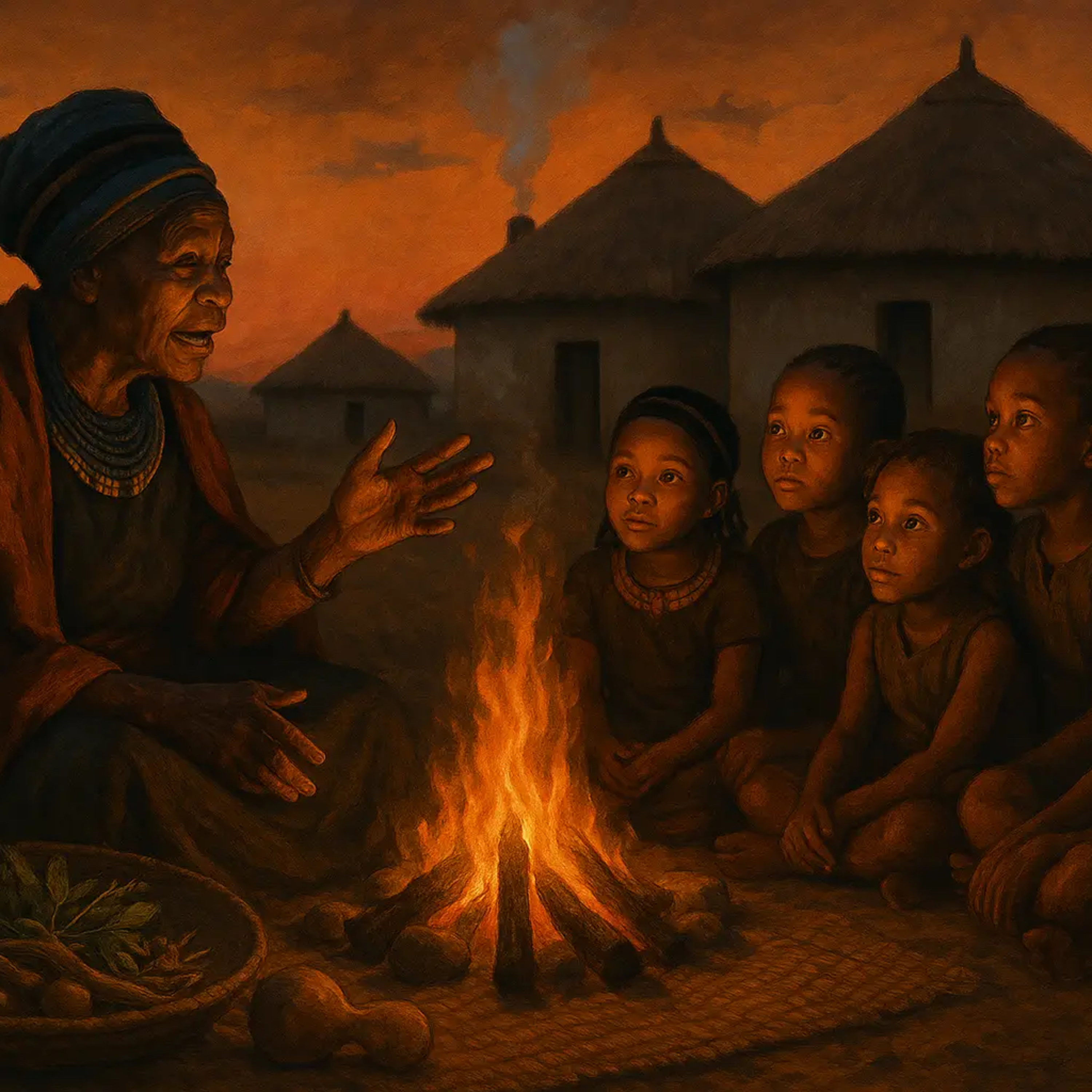
The Smoke of Two Worlds
Oct 1900:02:45Tap to summarizeThe Healer’s Trial: Where Two Worlds Meet”A traditional healer stands accused before a colonial magistrate, her calabash and leather bag emptied onto a woven mat—roots, herbs, and powders that carry the voices of ancestors now subject to the judgment of a man who does not understand the ways of the land. When fellow healers are summoned to testify, they speak without fear or shame: this herb heals stomachs, that one draws out poison, this one cools wasp stings. But others serve deeper purposes—protecting travelers from water spirits, winning favor before judges, bridging the world of flesh and the world of spirit.This quietly powerful story captures a moment of cultural collision, where indigenous knowledge meets colonial law, where medicine is inseparable from spirituality, and where what one culture calls superstition another knows as sacred wisdom. Told with the rhythm and poetry of oral tradition, it reveals the dignity of healers who refuse to diminish their craft, even when explaining smoke rituals and spirit-speaking roots to those who see only primitive belief.A meditation on respect, understanding, and the survival of ancient knowledge in a changing world—where the woman returns to her hut, lights her fire, and continues singing to ancestors while the wind carries the scent of herbs that will outlast empires.For those who understand that some wisdom cannot be judged, only honored.https://mythopia.io/story/1305/the-smoke-of-two-worlds
Transcribe →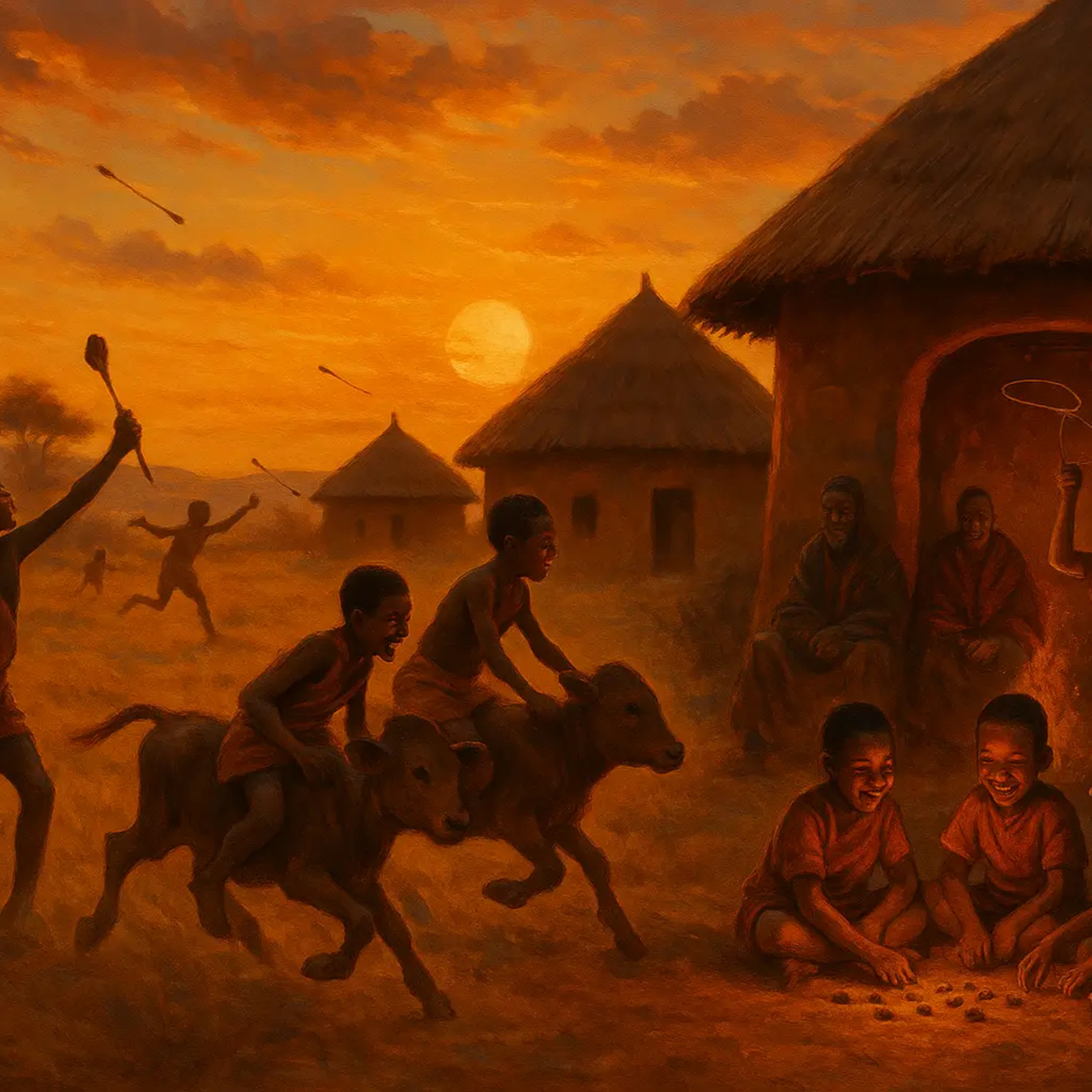
The Games of the Children of the Wind
Oct 1800:04:49Tap to summarizeGames of Our Fathers: Traditional Play in Pre-Colonial South Africa”Long before cricket fields and organized sports, the children of South African villages played games that shaped warriors, taught wisdom, and connected them to their ancestors. This rich account preserves the traditional games of indigenous youth—Iceya, Imfumba, and Cumbelele—each carrying its own songs, lessons, and spirit.From throwing knobbed sticks at ant-heaps while crying out battle songs, to racing bareback on calves, to intricate hand games played by firelight that lasted until the rooster crowed, these weren’t mere pastimes. They were training grounds where boys learned accuracy and courage, where patience was practiced through herd-watching duties, and where tricksters honed sleight-of-hand skills that earned comparisons to Hlakanyana, the legendary deceiver.Through clay cattle sculpting, string puzzles, the hiding game of Imfumba, the stacked-hand pinching of Cumbelele, and the wind-calling nodiwu that spun overhead like singing spirits, children absorbed the skills and values their communities held sacred. This nostalgic remembrance captures a vanishing world where play prepared children for life, and every game connected them to “the spirits of the veld.”A beautiful preservation of cultural memory and childhood joy, told with the warmth of an elder sharing treasured stories with the next generation.https://mythopia.io/story/1306/the-games-of-the-children-of-the-wind
Transcribe →Why the Cheetah Has Tear Stains
Apr 22, 2025Tap to summarizeA lazy, wicked hunter sat under a tree watching springbok graze, wishing he could obtain meat without effort. He observed a female cheetah skillfully stalk and kill a springbok to feed her three cubs. Envious of her hunting prowess, the hunter devised a plan to steal her cubs and train them to hunt for him. While the mother cheetah went to drink at the waterhole, he stole all three cubs. Returning to find her babies missing, the mother cheetah wept inconsolably, her tears staining dark streaks down her face. A wise old man heard her cries, learned what happened, and reported the hunter's dishonorable deed to the village elders. The villagers, outraged at this violation of hunting traditions, banished the lazy hunter and returned the cubs to their mother. The cheetah's tear-stained face remains forever marked, serving as a reminder to hunters that honorable hunting requires using only one's own strength and skill.https://mythopia.io/story/52/why-the-cheetah-cheeks-are-stained
Transcribe →