Loading summary
Transcript313 lines
- [00:00]
A
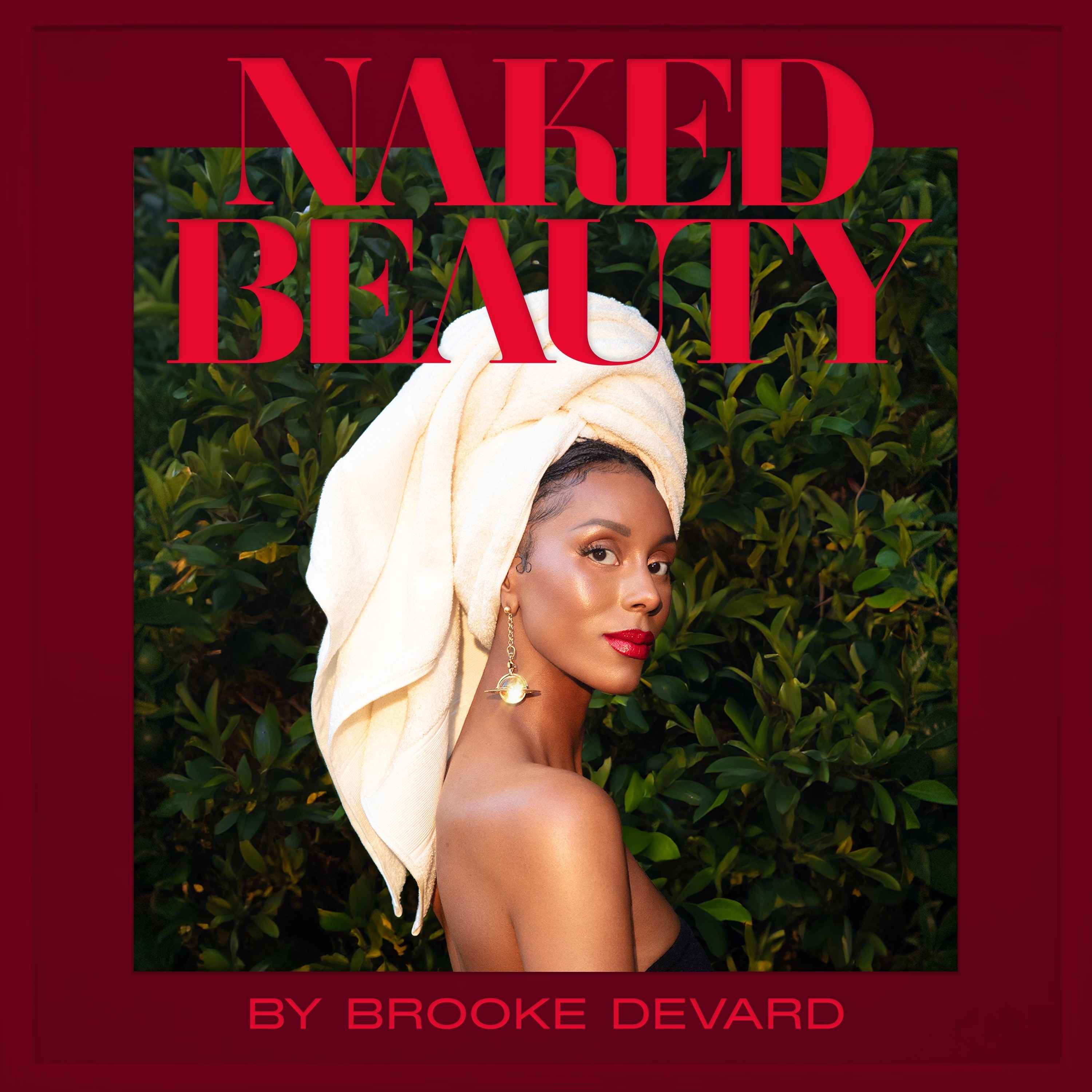
Hello. Hello. This is Brooke Devard and you're listening to the Naked Beauty Podcast. And if you're joining us on YouTube, you are watching the Naked Beauty Podcast. Today, I am honored to be joined by none other than the Ruth E. Carter. Welcome to Naked Beauty. I am such a fan of your work.
- [00:16]
B
Thank you.
- [00:17]
A
And you've just done incredible, incredible stuff. I'm going to read your bio. That's not too much while you're sitting here, because, I mean, people just, people need to know the depth of your career. It's just been incredible.
- [00:29]
B
Thank you.
- [00:30]
A
Ruth E. Carter is a trailblazing costume designer whose work spans decades of our most treasured on screen moments. Ruth has been awarded by the Academy, BAFTA and Critics Choice Awards and the Costume Designers Guild Awards, and she was the first black costume designer to receive a star on the Hollywood Walk of Fame. I would imagine one of very few costume designers, period, to get a star in the Hollywood Walk of Fame.
- [00:53]
B
Well, the one before me was Edith head.
- [00:54]
A
Okay.
- [00:55]
B
Who's 1960.
- [00:56]
A
Yes. Edith Head. Okay. So you and Edith Head, you're in great company. Ruth is the force behind some of the most important visual moments in American film history, including do the Right Thing, Bapst, the Five Heartbeats, Sinners, Black Panther, Love and Basketball, and so many more. Ruth is known for her incredibly well researched historical designs, perfectly capturing the visual experience of fictional and actual characters. Like the residents in Rosewood, the Five Heartbeats, Tina Turner, and Malcolm X. Ruth's boundless creativity shines through her work in the Black Panther universe. Employing Afrofuturism, a multidisciplinary mode of expression that blends black history, science fiction, and technology to imagine otherworldly futures. Ruth has developed the visual identity for Black Panther and changed the world. It is my pleasure to welcome Ruth E. Carter to Naked Beauty.
- [01:47]
B
Thank you for saying I changed the world.
- [01:49]
A
You have. You have come off of a huge, huge, just awards season. So you are now the most Oscar nominated black woman in the history of the Oscars, with five Oscar nominations for costume design.
- [02:03]
B
True.
- [02:04]
A
Which is incredible.
- [02:05]
B
Thank you.
- [02:05]
A
And you know, you've done the awards circuit, but did this specific awards season with Sinners feel different?
- [02:11]
B
Oh, yes, completely different. Usually when you're nominated, it's you and maybe the director. It's rare that it's such an ensemble that we had 16 nominations, which was also historic.
- [02:25]
A
Yes.
- [02:26]
B
So to have made that film as an ensemble, as a team, as a filmmaking family, and then to have the nominations that we had across the board editing, hair and makeup, it was so wonderful. To share the awards and just the recognition with everyone, because we really did make this. Make the film together. Every film is made, you know, as a. As an ensemble, but that one really had to be.
- [02:58]
A
Yes. And did you have a sense, because you've been on so many film sets throughout your career, did you have a sense while you were down in New Orleans making that film that this was going to be as nominated and loved and just celebrated as it was?
- [03:10]
B
Well, Spike Lee said to me when he called me to tell me about Malcolm X that he had written the screenplay and that we would be starting embarking on the making of Malcolm X. He says, don't think about winning awards. Don't think about Oscars. Just think about doing the best job that you can do. And I think that's how you think when you're working. I mean, I think if we. If we lose our focus and think about what if, that's when it's not gonna happen.
- [03:39]
A
Yes. Yes. And you said that it was a quick shoot, like, you didn't have that much time.
- [03:43]
B
Yeah, we started in prep in March, and we were finished shooting by July.
- [03:49]
A
Wow.
- [03:49]
B
Yeah.
- [03:50]
A
And you had to build this whole world set in the 1920s with vampires and blood.
- [03:55]
B
Right.
- [03:56]
A
And magic and.
- [03:58]
B
Yes. I was on Blade before, and Blade was a vampire film, and it was a period piece. We were doing it as a period piece with Marvel, and after the actors and the writers strike, it was shut down, and we had to kind of return everything. But we had a huge amount of clothing and costumes that we had created and made for the 1920s, Louisiana. And then here comes Ryan after the strike, saying that he'd written a 1931 story about Mississippi and vampires. So I kind of brought all that, you know, made a deal with Marvel and brought all those costumes. So it really did help us. It wasn't like, you know, it was the same story, but when you think about, like, you know, the African. African American diaspora, you know, the stories are similar. You have sharecroppers, you have the South. You have workwear. So a lot of that was, you know, reconstituted and brought into sinners. So I was really happy that that happened because it was like, I wasn't really prepping Blade. I was prepping for sinners.
- [05:15]
A
Yes. Okay. I want to talk about where you grew up in Springfield, Massachusetts, because there's a very rich black history there.
- [05:21]
B
Sure.
- [05:22]
A
And I'm curious how growing up in Springfield, Massachusetts, just made you interested in history in general.
- [05:27]
B
Oh, wow. That's an interesting question. I grew up in A small town, Springfield. We knew that the Underground Railroad was, you know, part of our. Our town. Frederick Douglass was, you know, part of it. You know, basketball hall of Fame, hall of Fame, you know, is right there. The. The birthplace of basketball. But I wouldn't say that that's where it came from. I think my. My, you know, days of a child be reading Langston Hughes, Nikki Giovanni, Sonia Sanchez, you know, all the poets and playwrights. And having access, you know, there's great access in Massachusetts to just, you know, Black studies is very strong in Massachusetts. And I was always at Amherst College or University of Massachusetts in the summers as a high school student in programs, and we were all enrichment programs. And that's what sparked kind of my interest in knowing more about, you know, our origin story.
- [06:29]
A
Yes. I love hearing about all of the time you spent reading and in the library, because it's always the things that make you different as a kid or what makes you interesting as an adult. I always say that, you know, you talked about preparing for Malcolm X and you saw that he was. That Malcolm X was in this correctional facility in Massachusetts, and you said, I'm going to write to this correctional facility and ask if I can go in and see his records, see his health records, see all of the records from. From when he was there as you were preparing for the Malcolm X film.
- [06:58]
B
Yes.
- [06:58]
A
Now, most costume designers don't go that extra mile, do they?
- [07:01]
B
I really wanted to be able to make, you know, the right decisions about, like, what he would choose in those times where it wasn't photographed. And so I thought that the best way to do that is to really understand, you know, really personally his story. And the Department of Corrections, like, gave me a date. I went to, you know, the 37th floor in Boston, Mass. And they sat files and files and files in front of me and said, there's a copy machine down the hall if you want to make copies of anything. And I knew I didn't have time to sit there and read it all, so I just brought the whole stack over to the copy machine and just copied and left with a treasure trove. Honestly. Yes.
- [07:44]
A
I mean, that's the thing that's so interesting about costume design and why I'm so personally drawn to it, because I love film. My three favorite things. Film, fashion and beauty.
- [07:51]
B
Okay.
- [07:52]
A
And I think what's interesting about costume design is you're seeing the person at the specific time in their life. So everything communicates. You get to understand their emotions, emotional state in terms of their health journey. Like, I think I'M wearing this Oura ring.
- [08:03]
B
Yeah.
- [08:03]
A
I'm so not that girl that wears an aura ring. But I'm like, I have to, because I'm trying to monitor your health thing. So if someone sees me and they don't know anything about me, even just having this little aura ring on. It's part of you, says one. You know, it's a little bit of information.
- [08:16]
B
Yeah, it is.
- [08:17]
A
As you're. The costume is such a big part of telling the story, isn't it?
- [08:21]
B
Yeah, it is. I always ask the actors when they come into the fitting room, you know, why are you there? What makes this time, this place and time important to this character? What's happening around their lives? What's the backstory? Have they done any work? Sometimes the actors have done a lot of work, sometimes they haven't. And they're interested in the conversation. They're always interested in the conversation about the why. And it also helps me because I'm able to, like with Annie in Sinners, I'm able to really bring her community into kind of her life and her existence. And maybe it's me that is. I'm the only one that sees it or the actor feels it, but it accomplishes a great deal for them in terms of portraying that character. And so, you know, you really want to tell the story. Like the Oura ring, You know, you add those little details.
- [09:21]
A
Yes, yes. So growing up, were you interested in beauty and fashion? Were you interested in movies?
- [09:28]
B
I was the anti fashion. I came up during Madonna. Mismatch earrings.
- [09:33]
A
But that's fashion.
- [09:34]
B
Yeah. Lisa Bonet asymmetrical haircuts and Jordache jeans. And I really liked grunge and punk, and, you know, I kind of went about it with a pair of scissors and some safety pins. So I rebelled against the fashion as, you know it. Like, you know, the Chanel and the Dior. A lot of people think that I got into costume design because of a love for that kind of fashion, but it was actually the other way around. You know, I wanted to be creative, and I was always, you know, they call it repurposing, but I was always repurposing things and turning my jeans into skirts and, you know, using my imagination.
- [10:21]
A
That kind of punk DIY aesthetic of the 80s. I miss it so much. But even if you go back to red carpet photos, even from, like, the early 90s, before celebrities had these huge teams that got them all together and got them glammed, there was a sense of, like, personal style that I feel like we've Lost a bit. Right. I mean, for celebrities, we don't really know what their personal style is.
- [10:41]
B
Yeah, well, it has become a business. The business of who are you wearing? And that, you know, allows actors to not necessarily have to pay to have all of that work done. It's done by the brands.
- [10:59]
A
Yes.
- [10:59]
B
So that really does paint where we are and where we are in time right now. But then, yeah, we were in the 80s putting loads of shoulder pads in our jackets.
- [11:10]
A
I love a good shoulder pad. And I feel like it's back now. I saw the Saint Laurent show and
- [11:15]
B
I was like, yes, shoulder pads, square shoulders.
- [11:17]
A
You know, people think the 80s is the worst decade for fashion. And I kind of disagree because I feel like it was so fun.
- [11:24]
B
It was fun. I think it was fun. I lived it. I mean, that was my college years, and I just remember doing all kinds of stuff. I was the costume designer even at Hampton.
- [11:33]
A
Okay. Cause I wanted to get to Hampton. So you go to Hampton University and hbcu. What was being immersed in that world, like, for you?
- [11:43]
B
Well, you know, the HBCU experience was definitely a brainchild of, like, the Southern college experience. And I had come from the north, so I come from, like I said, Amherst College, UMass. My sisters and brothers went north to schools. And so I was the first one to actually go to our family school, which was. My uncles were there, my cousins were there. I went down south to go to school. And so it was definitely what. It wasn't what I expected. I. I went to Hampton with like a Bob Marley T shirt and my 10 speed bike. And I. And it was like, dark and lovely.
- [12:23]
A
The women were coif. Oh, they were quaffed when I went to Stanford, but I did an exchange program with Spelman College. The stark difference between the Stanford campus of the flip flops and the sweatpants and the old T shirt. I got to Spelman. Those girls were so together.
- [12:41]
B
Yeah. They were carrying briefcases to class. And that just kind of blew my mind. I was expecting to, like, have my brother and sister's experience. And so I had to adjust. And I think during that adjustment period, I found the theater.
- [12:59]
A
Yes. Yes. Because you worked on the theater productions there.
- [13:02]
B
Yeah.
- [13:03]
A
And I would imagine that your experience there helped you for school days, which was your first project with Spike Lee.
- [13:08]
B
It was. And Spike had written this, you know, screenplay that he gave me in, like, January, and I was living in California in a little studio apartment, and I quit my job right away and I started working on his scre. And I didn't get Hired until, like, September. But I was so committed to it, and I went to my brother's studio, and he helped me break down the script and do a budget and things like that.
- [13:38]
A
I was gonna say, how did you know how to do those things?
- [13:41]
B
Well, because I was in theater in Hampton, I kind of knew how to break down a script and, you know, what the character arcs were, because I was into acting as well. And so I was making choices like that within the script that Spike gave me, and character arcs for each character. And he enjoyed the kind of work that we put into his script. And he was always asking us to do a synopsis or something of the story that he could send out to breakdown services or something like that. We were doing it. It was me and Robbie Reed doing these synopsises for him. So we were definitely a filmmaking family and a team.
- [14:20]
A
Yes. I'm curious to hear more about your relationship with. With Spike Lee, because. So my mom was at Spelman. She was homecoming queen, Miss Maroon in White, which is like the Morehouse. And he directed her homecoming film that, like, helped her win in 1979.
- [14:33]
B
That's amazing.
- [14:34]
A
I know. I'm like, mom, you have to find this film.
- [14:36]
B
She has to.
- [14:37]
A
I know. I keep telling her she has to find it. So I've had a chance to meet him over the years, but my mom always says the way he is now is the way he was back then in college, totally fully realized, had creative vision. And one of the things that you have done throughout your career is you've had collaborators. What do you think it is about identifying these, like, creative collaborators and working with them that you do so well?
- [14:58]
B
I guess I'm a person that they see as a good collaborator. I feel like I never really sought them out. They sought me out. I was working on Lula Washington's Dance Studio. I was doing Oda Salid's Night for Dancing here in la, and Spike came to see a performance and started talking to me about becoming a filmmaker. And John Singleton was at a panel that Spike and Robert Townsend were talking at. And I went to listen, and he caught me in the escalator and said, hey, I want you to do my film. And he was still a student at usc, Ryan. He invited me to Marvel, and I'd never done a superhero film before.
- [15:47]
A
How did it feel seeing the Marvel boys for costume?
- [15:50]
B
Actually, we gave them the budget.
- [15:51]
A
Oh, period. Okay.
- [15:53]
B
Yeah. We have to give them the budget. And then they say, that's too much. And then we go on the journey together. But, you know, These were people that I think looked at me like I had something to offer. I knew I had something to offer. Ryan Coogler, when he said he studied Spike's films in school, he was a huge fan of his work, and he was really happy to meet me. And. And it didn't matter anymore that I had never done a superhero film. I knew I had something to offer this young man, and I knew that he wanted some world building from me.
- [16:26]
A
In terms of being a good collaborator, you strike me as someone that is a good listener and someone that is thoughtful. Like, you don't just speak without thinking. What role do you think listening plays in good creative collaboration?
- [16:40]
B
Oh, for sure. So because I'm like a person who dresses people, I have to listen to you. I have to hear a lot about, like, what your insecurities are.
- [16:55]
A
Do you think people sometimes are too in their head about their. Sometimes I hear from people, they're like, oh, my torso to arm length ratio. And I'm like, no one's looking at that.
- [17:04]
B
Yeah. I listen. It doesn't mean that I follow.
- [17:08]
A
Yes.
- [17:08]
B
But I listen because I need to kind of make you feel comfortable with what we're gonna do together.
- [17:14]
A
Yes.
- [17:15]
B
So I want you to feel comfortable telling me those things, whether or not we dispel them or we use them as a part of the character. And also, I think that directors, sometimes we want to impress them with our ideas, and it's a collaboration, so we have to kind of take pause and let them kind of ingest what we are presenting and comment on it. It's really difficult to hold back. And you do need to sort of give them the floor and let them tell you what the creative ideas are, that they're. Because they're building the world alongside you, you know, and it's really important that you understand where we're going and they're the person to tell you.
- [18:05]
A
Yes. Now, do you have a line in terms of if an actor tries something on and they're like, I just don't like the way this looks. I look. You know, I don't look as good as I could look in this. Will you adapt and change the costume based on their feedback?
- [18:17]
B
Well, I don't like to. I don't like to spiral.
- [18:20]
A
Yes.
- [18:21]
B
And sometimes I will stand next to you in the. In the mirror, and we'll look in the mirror together. And I might say, think of it as outerwear. Think of it as a coat. Or think of it. Look at how it skims the body. You know, look at. Think about how she has worked so hard to buy this dress and that sometimes things that are imperfect are perfect. So I will come next to you. I won't just turn around and flutter to the rack and find something else.
- [18:57]
A
Right.
- [18:58]
B
I really want you to kind of breathe.
- [19:02]
A
Yes.
- [19:02]
B
And think about it a little bit, and then I'm open to trying other things.
- [19:07]
A
Yes. I would imagine actors feel very safe with you. You're doing the technical skill, the artistic skill, but also kind of some, like, psychology work a little bit.
- [19:16]
B
Oh, my mom was a psychologist.
- [19:18]
A
Okay. So that's where it comes from.
- [19:20]
B
She was for the city of Springfield. She knew everyone, and she knew their kind of their problems. So she'd see people and say, you know, look at. There's, you know, Mr. Brown. He's got a nice shirt on today. And we would. My brother and I would be really embarrassed, but she had great empathy for people.
- [19:40]
A
Malcolm X, I think one of the best films made of all time. The costumes are so incredible. And it spans the 1940s, 1950s, and 1960s, an era of fashion that we have very much lost. What do you think, looking back at that time, and, you know, I've heard you talk about how important it was that black people were presented with dignity and respect and just capturing that elegance. What do you think we could take from that time of fashion? The 40s, 50s, early 60s?
- [20:10]
B
I think that people took so much pride in the way that they dressed. You saw more suits on the street. You saw tailoring. Men wore hats. It was very sophisticated. And we've kind of lost a little bit of the sophistication of the 40s and the 50s. During civil rights, there was formality to the teachers strike and Martin Luther King's marches. They wore the trench coats, they wore the hats. They sat at the lunch counters, you know, completely dressed. Yes.
- [20:51]
A
As part of their political statement.
- [20:53]
B
As part of that.
- [20:54]
A
You are treating us like this, but look at how dignified we are in us.
- [20:58]
B
Pride of self.
- [20:59]
A
Yes.
- [21:00]
B
And I think that's what was reflected in the clothing choices during those times. And we've gotten away from it.
- [21:07]
A
Yes. For people today that want to capture that, sometimes I think price becomes a barrier. Right. It's expensive to buy a suit. Have you. What do you think about thrifting?
- [21:18]
B
Oh, I've always thrifted. Oh, my God. The thrifting isn't even as good as it was when I was, you know, coming up in college and. And I knew all the places, all the spots. In New York, there was Domsey's. That was on the east side. And it was like a warehouse that you could find all kinds of vintage and anyone from New York. And when you say Domsey's, they go, oh, wow. Yes, I remember.
- [21:40]
A
Is it still open?
- [21:41]
B
It's. I'm not sure. I doubt it. I doubt it.
- [21:44]
A
So.
- [21:44]
B
And, you know, all of the places around New York City, when I was working with Spike, we would thrift, and, you know, we always felt like a good fashion statement was having a little vintage mixed with a little modern.
- [21:57]
A
Yes, yes. I always encourage people to go thrifting, but it does take. You have to have that hunger to
- [22:03]
B
hunt or go know the good places
- [22:05]
A
or know the good places. Yes, yes. I'm going to go back to process, because you've talked about going to museums as part of your process. How. How do museums inform your creative approach to costume design?
- [22:20]
B
Well, museums have everything to offer. I mean, the sky is the limit. If you look. Think about it. It gives you color palette. It gives you composition. When you look at art, it gives you great costumes. When you look at some of the great masters and you see the work, you see the velvets and the lace and the gorgeous colors, and, you know, it's always something that I'm influenced by. You know, sometimes it's, you know, subconscious, but I keep myself abreast. I just was at the. At LACMA touring all of the beautiful textiles, and I saw the kuba cloth there, and, you know, I want to do a kuba cloth inspired piece for the project I'm on. And, you know, it's just like, sometimes you just need a little inspiration to bring something unique to your film or your project, and the museums will do it. And sometimes even looking at other artists and say, wow, you know, I'm sure everyone has said, wow, I think I can do that. You know, you look at a clothesline with clothespins and a clothing basket, and it's all vintage, and that's in the museum. Like, wow. Something as simple as that, that's telling a story about a time. You know, I can do that, and that's what the inspiration is for me.
- [23:47]
A
Yes, I know you've been spending some time in Rome for your most recent project. Do you go to the museums when you're traveling?
- [23:53]
B
Oh, yeah. I've been to the Bolognese. I've been to the Vatican. I've been to the Prad.
- [23:58]
A
You can spend the whole day in the Prado and only see half of it.
- [24:02]
B
Yes, exactly.
- [24:03]
A
There's just so much. Do you have a favorite museum? If you had to Pick.
- [24:08]
B
I actually like moma here. I love the Met, of course. And I think, you know, if they weren't so crowded, right. I would say the Vatican, because you can go to Egypt in the Vatican. You can see Raphael. You can go all over. And then they have contemporary there, too. If it wasn't so doggone crowded, I
- [24:35]
A
feel like they could open up the Vatican for a day. We've got Ruthie Carter coming in here.
- [24:39]
B
They need a day on my own. I need a week of my own.
- [24:42]
A
Yes.
- [24:42]
B
Yeah.
- [24:43]
A
A museum that I recently discovered. The last time I went to Paris, the Musee du Quay, Branley. Do you know this museum?
- [24:49]
B
Is it small?
- [24:50]
A
It's by the Pompidou. It's all indigenous and African.
- [24:54]
B
Oh, I've heard of it. And I actually have images from it.
- [24:57]
A
It is incredible. And so. And it's. You just realize how much Western civilization is held up as, like, the ideal and how much we're missing out on by not focusing on all of this incredible indigenous art, style, and culture.
- [25:12]
B
You're reminding me that that's where I have to stop on my way back.
- [25:16]
A
Yes. Oh, my gosh. Well, I'm so excited to see what that trip sparks for you. How much do you think about. Cause we're gonna talk about baps. We're gonna talk about some of your incredible movies. But I'm so curious what your relationship is with hair and makeup. Right. Because the beauty looks really informed the characters as well. And BAPST is like kind of the extreme version of that. But for every movie you've done, right, the makeup choices, the hair choices, they tell so much about the character. So what's your relationship like with hair and makeup? Do they take cues from you? Do you work together?
- [25:48]
B
I think we work together. I don't claim to be a hairstylist, and there's some great ones. We had a really great hairstylist on centers who knew how to work with natural hair.
- [25:58]
A
Who was the hairstylist on center?
- [25:59]
B
Shanika.
- [26:00]
A
Shanika, yes. Oh, she was doing grooming for Michael B. Jordan for many years, right?
- [26:07]
B
Yes, probably so.
- [26:08]
A
Yes. Okay. Yes. Yes.
- [26:09]
B
And her team was, like, expert at natural hair, and they did some incredible things, but we're all watching each other's back. So when you have big days and you have a lot of people coming through, and sometimes the people that are hired in, they don't necessarily know what. What's coming, what costume's coming. So everything is out of order. You know, they are getting their hair done before they get dressed. And we're all watching to make sure that everything is in sync and so that the person who puts on the indigenous tribal costume isn't in a 20s bob.
- [26:46]
A
Right. They all have to be in conversation.
- [26:48]
B
They all have to be in conversation. So I'm hyper vigilant where that's concerned. And. And I'm nice about it. I'm having fun, but I'm a watchful eye. A lot of times I miss what's happening on set because I'm making sure what's going to set is right, and that's where I can make a difference. When everyone's getting ready. By the time we get to set, it's a rush. It's way too late. So I like people to come to set and really feel like they're prepared.
- [27:24]
A
As you're doing your sketches and thinking about the costumes, do you have hair in mind?
- [27:29]
B
Oh, we do sketches with hair. Hair ideas. And sometimes it's funny when hair makeup does come to the table, they've done their own research and they have a different idea about the hair. And you're like, hey, let me think about that. That's interesting. And so you adjust the sketch to the new hairstyle. It's good to sort of see a visual of how you can transform someone's look through hair, makeup and costume.
- [27:55]
A
Yes. Okay, I'm gonna ask about some specific looks. We're gonna start with Sinners. I'm so curious. The gold grills that Smoke and Stack wore, how did those come about?
- [28:05]
B
How did that come about? I'm not really sure. The gold grills were probably the brainchild of Michael B. Jordan. I would say that sounds like something he would add to his character.
- [28:17]
A
Yes, yes. One of the things that I saw
- [28:19]
B
you talking about, what are the gold grills? Just like the gold, the grills and the teeth? Yes, exactly. I forgot about them.
- [28:27]
A
The thing that I heard you talking about that was so interesting was you were saying, I think it was Smoke's clothes fit a little bit tighter.
- [28:33]
B
Yeah, well, Michael started saying that and, like, I really don't give actors clothes that are too small or shoes that are too small because that'll work for one scene, one take, and then after that it's downhill. But I think what he's feeling is that Stack's clothing was more tailored, much more self conscious, much more body conscious. His shoes were Italian. They were a little more narrow, a little more pointy. He had a real hugging body, contoured fit. Smoke, on the other hand, he was a brawler. He was every man's man. He. He had all kinds of weapons under his jackets. And so his clothes had to be a little bigger so that when you. Even though we do movie magic, he's not wearing all that stuff all the time. But you have to believe that when he pulls back his jacket and there are two guns under his armpits, that they plausibly could have been there. So I can imagine when Michael changed, and he did that several times during the course of shooting, from Smoke to Stack. He got into Stack's clothes. He said, these are too tight. These are too small. And also, our contemporary brains are not accustomed to tailoring. Sometimes I think he more than most, but we still like things to fit loose. And that just was not a deal in the 20s. That was kind of what his gangster style kind of dictated.
- [30:09]
A
And even the distinction between Italian shoes versus spending more time with the Irish versus spending more time with the Italians and how that all came through.
- [30:17]
B
Yeah. And Smoke wore a boot. You know, he had a bigger toe box. It made even his walk different, you know. And that's what Michael is talking about. He's talking about how the fit, how it felt. It felt like it was a half size too small.
- [30:33]
A
Right. And for Michael B. Jordan playing the two different characters, I would imagine that costume became so important for him. Right. To kind of inhabit and live in. Had you ever done anything like that where you had someone playing two different characters?
- [30:48]
B
Well, I feel like when I work with one actor a lot, like Sam Jackson, I've dressed him, like, in five different movies. Like, I am dressing them as several characters. Denzel in the beginning days with Spike, dressing them as several. Know Wesley and Angela Bassett. And I repeat, a lot of actors. And so, like, you're not gonna have the same kind of thoughts about it's a different character. So you're really trying to help them transform.
- [31:21]
A
So you kind of thought of Michael B. Jordan just playing two separate characters in the movie.
- [31:26]
B
Yes. Well, when he came into the fitting room, I had. One side of the room was all blue. The other side of the room was. Was all red tones, some burgundy, some cherries, all the reds, all the blues. And we started with Stack, and once he got the red hat that he wears, he was putting it on his head and looking at himself in the mirror. And Ryan walked in and he just was like, that's the hat. That is it. That's Stack. And I think it did help the way Michael kind of carried himself with that hat. And it was really important to me that the brim was always perfect. We had a Special case that we bought for it so that his dresser would keep it in that case. So it never buckled, it never wobbled. It was always perfect.
- [32:16]
A
Yes. And the intention around the color red representing being more kind of fiery and.
- [32:23]
B
Yeah, all the things that red represents, but also heaven and hell.
- [32:29]
A
Oh, okay. That's a new layer that I didn't even, because Wumi's character wore a lot more blue as well.
- [32:35]
B
Yeah, the blue was definitely the spiritual colors of sinners. The haint blue, the warding off of spirits, the connection between Smoke and Annie and love, you know, but the red was the vampire.
- [32:51]
A
Yes, yes. Such. I mean, such incredible work. I'm sure you've seen. Have you seen all of the breakdowns that people do?
- [32:57]
B
Oh, I love those breakdowns.
- [33:00]
A
My work appreciated all the details.
- [33:03]
B
And, you know, they came up with a lot of things that we hadn't thought about.
- [33:07]
A
Like, what. What's something that you heard in a breakdown where you were like, ah, interesting, but not our intention?
- [33:13]
B
Yeah. Well, they really leaned heavily in on the Irish Italian. And, yeah, they did work for the Mob in Chicago, and that's the Irish and the Italian. And they really took that and, like, you know, like, down to the houndstooth suit that Smoke wore was just like, you know, an Irish tweed. But, no, it was pretty much me getting in the world of blues and the period.
- [33:41]
A
Yes. Okay. Angela Bassett in what's Love Got To Do With It? So that black leather dress, which, from what I understand, Tina Turner showed you the album cover.
- [33:54]
B
Yes, her CD cover.
- [33:55]
A
Her CD cover. And said, I need you to make this.
- [33:57]
B
Can you make this for Angela? I was like, yes, ma'. Am. It's working tomorrow, but yes, ma', am. I'll be making that tonight.
- [34:04]
A
You had one day to make this leather dress.
- [34:06]
B
One evening.
- [34:07]
A
One evening. And working with leather is not easy either.
- [34:10]
B
No, you can't make a mistake.
- [34:12]
A
Wow.
- [34:13]
B
Yeah. So I had a team, and they made. Seemed like it wasn't a problem. They got no sleep. But we did it. And, you know, there were a few issues with it. And I remember being really nervous about it. But that morning, Tina was so excited. She had her wig that she wore during the what's Love Got To Do With It? Tour. And she was walking towards Angela's trailer. And, you know, I shouted out to her that I got the dress, and she told me to meet her over there. And then when I got there, I opened the door, and Angela was sitting on the floor in her trailer, and Tina was sitting behind her, plaiting her hair.
- [34:51]
A
Wow.
- [34:52]
B
And I remember thinking for a second, like, I should run and get a camera. You know? Then you had to run and get a camera. You didn't have it in your pocket. Yes, and I didn't. But Angela and I talk about it all the time because sometimes we can make up stories that we believe, and, like, did that really happen? So when I see Angela, I'm like, you remember that? She's like, I totally remember that.
- [35:14]
A
Yes. What was it like seeing Angela Bassett really become Tina Turner?
- [35:19]
B
I feel like I shepherd the actors to the stage, and I'm part of the transformation, and I make sure that, you know, when they are embarking from their trailer to the set or to the stage, that it's my last opportunity to get it right and make sure that they feel good and it's perfect. And Angela was committed to playing the role of Tina Turner. She was so committed, and I was committed right alongside her. We had many moments in the trailer of, you know, changing something at the last minute or really just kind of like, understanding the scene and what she needed to feel like and look like, you know, together. And I think it bonded us. As costume designer, actress, I really wanted her to not focus on the clothes so much, to let me take care of it. And she really did. And so there's some moments in what's Love Got To Do with it? That I cherish because I can feel the synergy between us and I can feel the magic. I can actually see the magic happening in the film.
- [36:26]
A
Yes. Such a special movie. Teyana Taylor at the Met Gala. Now, I told you, Ruth, when you came in, I said, we needed you this year because they were slacking. They didn't bring it like they needed to bring it.
- [36:37]
B
But there was some really great moments. But I feel that they were so curated that you didn't see them on the carpet. You only really could appreciate them completely when they did the photo. The photographs. So you saw the wings emerge, you saw that amazing cape that Beyonce wore, but you saw how it was meant to be photographed.
- [37:02]
A
Right.
- [37:03]
B
And it's hard to appreciate it when it's walking up the steps.
- [37:07]
A
Well, when Teyana Taylor, she was one of the first people on the carpet walk, we appreciated it from the moment she hit the carpet in that zoot suit. I mean, that it was truly leaning into that theme of black tailoring. Super fine. The dandyism of it, the exaggerated proportions. What was it like creating that look?
- [37:24]
B
I knew exactly where it should go from the start, but I feel like the theme was so obscure in a way. There was criticism about the theme, like, oh, it wasn't supposed to be dandyism. It's supposed to be, you know, diasporic identity. And those are two different things.
- [37:47]
A
Very different.
- [37:47]
B
And I actually was a little bit disappointed that I didn't see more of the African American experience in America with dandyism. With regards, There were some breakouts. There were some really wonderful ideas there. But then there was just more leaning into tailoring.
- [38:08]
A
Just a suit.
- [38:09]
B
Just tailoring. Yeah. And I was like, well, that's not a theme.
- [38:13]
A
Yes, Well, I mean, you could see your, like, cinematic background and that lens of costume design. It is a costume ball. It's a costume ball, which I feel like people forget. It's not about wearing a beautiful gown. It's a costume ball.
- [38:27]
B
Yeah. And I think a lot of people got it, though. Paul Tazwell. It was just amazing.
- [38:34]
A
Yes.
- [38:35]
B
So it was a good year nonetheless. And I was on Thomas Crown Affair with Michael B. Jordan. So I flew back from London to get that together. And we had, like, two hotel suites. One was a workroom, and the other one was where we had our fittings. I also did Jasmine Sullivan.
- [38:54]
A
Oh, wow.
- [38:54]
B
Okay. And so the two costumes were getting their final bits right there in Manhattan.
- [39:01]
A
Could someone convince you to do Met Gala again?
- [39:05]
B
No, I think because it has to come from so much. You have to have a corporation behind you, and I don't really want to share the credit, so I enjoy doing it with Teyana Taylor because it was just her and I.
- [39:22]
A
Yes.
- [39:22]
B
And she kept piling things on. I want a durag, but I want my durag to also be the train of the. And, you know, we were there. We were ready. We were making those adjustments, and it was fun to do it with her.
- [39:34]
A
Yes. Yes. Seems like, again, a great creative collaboration. People seek you out to create these things. Okay. Bapst 1997. Not the most critically acclaimed film, but for me, in terms of, like, black beauty culture and fashion in such a moment. 1997, BAPST. These two women leave Decatur, Georgia. They come to Los Angeles to realize their dreams. You know, the looks and baps were so iconic. What was it like working on that film?
- [40:02]
B
Oh, that was also really fun. The late Natalie Desale and Halle Berry. We were just, like, having fun. Robert Townsend wrote it and directed it. And we weren't thinking about, you know, fashion statements. We were just thinking about comedy. And they arrive in Los Angeles to go to an audition for a video. So they're actually, like, their idea of, you know, getting in and Having, like, this outfit, this costume on. And so, you know, you read the script and you kind of reverse engineer and, you know that she gets to the mansion and she's in the bathroom and the bidet and the water is spewing everywhere. And so I thought, you know, it would be great if she had, like, a rubber catsuit on and just couldn't get her balance right. And so reverse engineering. We came up with that catsuit for them for her first hat for Halle. And just, you know, it was a fun time. There were hair wars during the 90s where they would have hair competition competitions. And Kim Kimball.
- [41:07]
A
Oh, did Kim Kimball do the hair in the.
- [41:09]
B
Kim Kimball did the Bow Wow.
- [41:11]
A
Iconic.
- [41:12]
B
I think she won one of those hair war competitions and she had, like, a helicopter propeller in, like, the hair. So, you know, that was a creative time too.
- [41:23]
A
Yes. And just the nails and again, the big hair and the leopard and the. Just there. But you know what? I think it's really interesting.
- [41:31]
B
Kind of very cardi b.
- [41:33]
A
It's very cardi b. I agree. It's very cardi b. And I think that there's this also interesting underlying story with bapst, which is around dressing for the life you want. Right. Like using clothing as a way to identify and realize, actualize what you want in life.
- [41:52]
B
Yeah. And they tried, you know, they have that montage where they trying on their classy clothes and they go to a restaurant and they see Leon and they just lose it. So it's a fun film. It's very relatable. People actually dress up as baps for Halloween?
- [42:08]
A
Oh, yes. I need to do that one year, actually. So do you get to keep any of the clothes? Like, do you have any of the BAPS archive?
- [42:16]
B
I don't have them in the archive, but I'm recreating them because I have an exhibition. So I've had the opportunity where it's an exhibition. It travels around the country. Right now it's in Philadelphia, a museum there. African American museum in Philadelphia. It's called Ruthie Carter Afrofuturism and Costume Design. And it's at its eighth museum. It goes every six months to a different place. And it's a great family experience. But it's my collection. And, you know, people didn't care about costumes or seeing them in museums. And I always felt very close to my costumes after I did the zoot suits in Malcolm X. I didn't want them to just go into obscurity or be donated to a church. I really wanted to save them because they Were kind of part of my artistic thing. And so I started doing that and asking at the end. And so for the Butler and. And other films, I looked up one day and I had an exhibition. So I got together with Scad Atlanta and they helped me mount it.
- [43:23]
A
Yes. Oh, that. I must see that when it comes. Yeah.
- [43:26]
B
It has the Marvel costumes in it. We borrow the Marvel costumes. The Panther suit, Chadwick's panther suit is in it.
- [43:33]
A
Incredible.
- [43:33]
B
It's pretty nice.
- [43:35]
A
You're often looking back or current day for costume design inspiration, but for Black Panther, it was really about this idea of looking into the future, understanding Afrofuturism. What was that process like?
- [43:47]
B
Well, I grew up understanding Afrofuturism, reading Nikki Giovanni and my siblings and my best friend siblings. They were always telling us about, you know, the revolution will not be televised. We was always looking forward to the future. And I think our diasporic identity, you know, does stem around us having a connection with Africa in a positive way. And yet we were not seeing that, you know, depicted cinema in television and so many. In so many ways. And then coming up with Spike Lee, you know, he was always trying to change the way we saw ourselves in film, you know, and always thinking about, you know, the great colors and beautiful things we could put on our actors and, you know, what would show them the best. And also, Ernest Dickerson was known for knowing how to light black skin, and he used gels and things. And so that was just always a part of my coming up and my identity. And so finally landing on Black Panther with Ryan Coogler, who had parents who had diasporic identity and imparted that on him as well, there was an unwritten language of what we wanted to see in that film and what Afrofuture really meant. And then coming together with Hannah Beechler and understanding, like, the sets and how Africa could look and using the Marvel lens for technology and moving the needle forward, if there was no colonization, what would that look like? So we were all kind of groomed to do that picture. And so by the time we came together, you know, it was like, you know, boom, boom, boom. I got this. I got that. What about this? Look at that. We could do this.
- [45:45]
A
Yes.
- [45:46]
B
And that's what made it really exciting to make, but it made it very confusing for a lot of other people who didn't understand it. They were like, what are they doing? What is this? You know, step aside, let them go. And, you know, the birth of Black
- [46:01]
A
Panther, which were you prepared for? The. The way it changed the world?
- [46:08]
B
No, I Remember when the trail. The first trailer dropped? It was during the NBA All Star game. And at intermission, they dropped the trailer. And I remember then there were. People were tweeting a lot, and I tweeted something about the Himba tribe as an inspiration for the Dora. And then I started getting a fluttering of responses and other people retweeting and saying. The costume designer just said that she was, like, inspired by the Himba tribe. And then I knew, this is gonna be big.
- [46:46]
A
It's gonna be big. And seeing especially just young people around the world say Wakanda forever and.
- [46:52]
B
Yes. And do the crisscross.
- [46:54]
A
It just like gives me chills to think about what it meant for us to. To see our people represented that way.
- [47:00]
B
And it made a connection. I think I went to Africa right before the film was actually released, and I would say, have you heard of Wakanda? They were like, you know, Zamu. You know, they'd say, Zamunda. I was like, nope, not coming to America. Oh, Uganda. No, not Uganda. Wakanda. And they hadn't. Some of them hadn't. And then when the film came out and they saw themselves and then we saw ourselves, it connected African Americans and Africans.
- [47:30]
A
Yes. In a special way that I don't
- [47:32]
B
think we've ever dealt with.
- [47:35]
A
Yes.
- [47:35]
B
Yeah.
- [47:36]
A
Yes. Yes. And since the film's come out and, you know, there's been this whole movement around Black Panther, what have conversations been like when you're on the continent?
- [47:47]
B
It's, to me now, has opened up so much beauty for designers. I've met so many fashion designers. I think the world has opened up a little bit more to them. I think the creativity is really flowing. I know Palisa Mokobang and Max Gosa and, you know, so many talented African designers. I think it elevated fashion for them.
- [48:17]
A
Yes. I want to talk about your personal style because you are always in a fabulous look. I look forward to seeing what you're going to wear on the red carpet, what you're going to wear for every event. How has your experience in costume design influenced your own personal style? And the way you show up at these, you know, because you're not really a behind the scenes person anymore. Like, you are your own identity, your own brand. So how does. How does the work influence your personal style?
- [48:43]
B
Well, you know, when Divine Joy Randolph came into my fitting room and she was in tears, and I was like, why are you crying? And she said, because I know you're not gonna just, you know, throw a caftan on me. You're gonna actually Give me curves, show my curves and make me feel like a woman and make me feel sexy. And that's how I feel about myself. And I go about my own personal style in ways that make me feel good, to make me feel good about me, make me feel confident. And, you know, I use the same tricks of the trade on myself that I do on anyone and everyone, but that's where I think it stems. I really want to feel good about myself.
- [49:35]
A
Yes. I'm so happy that you brought up just fit and tailoring because I've had the experience. My daughter is about to be two years old, but I've, you know, in the past year and a half, like, gone up and down, like £80, just being pregnant, postpartum, and then coming back to. But what I have noticed is I don't feel good or bad at a particular size. I don't feel good when my clothes don't fit.
- [49:57]
B
Yes.
- [49:58]
A
And even at any size that I'm at, whether that's a larger size or a smaller size, fit is probably the biggest thing thing to make you feel good and to look good in your clothes. Does it fit? So I'm now like, okay, me and my tailor, like, we're locked in.
- [50:13]
B
Yeah, you're locked.
- [50:14]
A
We have a deep. So do you think that the average person just should invest in seeing a tailor because.
- [50:19]
B
Oh, for sure. Your local tailor, your local dry cleaner, whomever it is, it does make a big difference. I mean, everything that you get off the rack is not necessarily made for you. And we're not all blessed with, you know, the perfect size sample size that we can just throw something on. And even then you still have to a tailor. Everyone can't afford it. So sometimes the choices that you make are a little bit more harder to get to. But I just remember doing television, and I did a television series because I wanted to prove to myself that I could think that fast.
- [50:55]
A
Which TV show did you do?
- [50:56]
B
I did Jimmy Woods. It was called. What was it called? It was like a lawyer show. And everyone had, you know, you can't solve a case in just one courtroom. So you had several courtrooms, blah, blah, blah. And what I learned was tailoring. Yes. And I could make the cheapest suit look like a million dollars if I tailored it.
- [51:19]
A
Yes.
- [51:20]
B
And I had some incredible. It really showed me how many actors there were in California. In Los Angeles, I met the most amazing actors, and we came up with all kinds of ideas about their costumes. But it was the tailoring that I learned on that, on that series.
- [51:37]
A
I got A pair of jeans from H and M, not expensive. But then I got them tailored.
- [51:41]
B
Yeah. And they're fabulous.
- [51:42]
A
And they're fabulous. Cause the fit is just perfect. So I feel like tailoring is a good tip. What's another? Like you said, you use tricks of the trade. What are other tricks that people should think about?
- [51:53]
B
Yeah, I think foundations, like, you gotta have a foundation drawer.
- [51:57]
A
Okay. So I hear about foundations from my friend Sir John, who spent many years working with Beyonce.
- [52:02]
B
Yes.
- [52:03]
A
And he's always like, what's the foundation?
- [52:04]
B
What's the foundation?
- [52:05]
A
And I'm like, I don't know what the foundation is.
- [52:06]
B
You'll get your shoes shape right first.
- [52:08]
A
Yes. So what are the foundation pieces? Is this, like, a Spanx situation?
- [52:11]
B
Well, yeah, there's Spanx or all different kinds. There's some that have bones. There's some that have, you know, built in bras. There's some that are like body suits. You know, it all depends on what you need and how you actually even want to feel underneath the clothes.
- [52:24]
A
Yeah.
- [52:24]
B
There's some that come below the knee. There's some that are, you know, like a bodysuit. You definitely need to know your body's needs.
- [52:35]
A
Yes. I find that I get, like. Claustrophobic's not the right word. But when I have on, like, really tightly compressed shape we wear, I can't enjoy myself. Can't breathe.
- [52:43]
B
Yeah. That's the hard part. Some of us just sacrifice that.
- [52:48]
A
Yes. For the look.
- [52:49]
B
We don't need to breathe, but. Yeah.
- [52:52]
A
And what do you think about color?
- [52:54]
B
I love color. Color is definitely a factor. Huge factor. Color evokes mood. It evokes, you know, a feeling. It's part of composition. When the audience is looking at a scene, they're not only looking at the color that you're wearing, how the color is immersed into the environment. There's, like, all of these factors surrounding color that you have to take into consideration. You have to make decisions about color. Color theory is huge with Ryan. As you know, we. We did Smoke and Stack in red and blue, but also in all the Marvel films, the river tribe was green, and, you know, the Border tribe was blue. So we made sure that we had a division, because the emotions that come up when you look at color is part of what the magic of filmmaking does.
- [53:45]
A
Yes.
- [53:46]
B
So color theory is something that you'll always be a student of.
- [53:50]
A
Yes.
- [53:52]
B
It's never the same twice. You have different skin tones. And that's also a part of, like, the factors that you take into account when choosing colors for people yes.
- [54:03]
A
We were talking about color analysis, and I was asking you, is there truth to this? Because I feel like sometimes every color can. You can kind of make any color work. But the way that color analysis is done now, it's like you absolutely can't wear these specific shades.
- [54:19]
B
I think that you have to understand color a little deeper. Like, there's a blue, red, and then there's an orangey red.
- [54:26]
A
Right.
- [54:27]
B
There's a navy, you know, and then there's a royal. So you just have to understand the colors and also the undertones. So the undertones help you understand why you can wear any color, because you have other colors, too.
- [54:42]
A
How do you know your undertones, though?
- [54:44]
B
It's difficult. Well, I can see your undertones are yellows.
- [54:48]
A
Okay.
- [54:48]
B
And so that's my consideration with wearing, with giving you color. I would look at, at, you know, some of the colors that are compatible with this, you know, your. Your brown skin tone with the undertones of the yellow. So you probably can wear, like, army greens.
- [55:05]
A
Love an army green.
- [55:06]
B
Yes. And blues like you're wearing. But yellow could. Can be tricky because it has to
- [55:13]
A
be like a very, like, warm, like saffron, turmeric.
- [55:16]
B
Yes, exactly. Because it's giving you the red. And red is probably amazing on you.
- [55:20]
A
Yes. Oh, thank you. Thank you. Do you have your go to colors?
- [55:24]
B
I like greens.
- [55:25]
A
Brings out your eyes.
- [55:27]
B
Oh, yeah, maybe so. I do love greens because greens are compatible. It's like nature. You can wear all kinds of greens. But I really, you know, I'm just one of those people who I'm always looking at, like, what the best color is for, you know, a scenario for a movie. And, you know, I'm wearing whatever comes out of the dryer. Black and white. There it is.
- [55:50]
A
Do you have a specific approach for your own beauty choices that you really like in terms of how you like your makeup done, how you wear your hair?
- [55:57]
B
Yeah. You know, I try to have a routine every morning. You know, a little concealer, a little mascara.
- [56:04]
A
We need the brands here on Naked Beauty.
- [56:06]
B
Oh, you're kidding.
- [56:07]
A
I need the details. I need to know your.
- [56:09]
B
Oh, my gosh. I have so much stuff. Like, I have so much stuff. Stuff. I use Chanel.
- [56:16]
A
Oh, okay.
- [56:17]
B
I like Armani's foundations.
- [56:19]
A
Beautiful.
- [56:20]
B
I like the luminous silk foundation number six. I like a little bit of powder. I use the Chanel pressed powder. My mascara is a little looser. You know, I'm like, I got four or five mascara brushes in my. In my kit. I use a lot of Mac lipsticks. I Also like nars.
- [56:42]
A
Yes. I love your lip liner. Whose lip liner is this?
- [56:44]
B
Thank you. That's a Chanel pencil.
- [56:46]
A
I need to get into Chanel Beauty.
- [56:47]
B
Yeah, I like their pencils too. Yeah, their pencil has a nice coal grayish. Because sometimes I don't like to use black liner. I'll use a gold gray.
- [56:57]
A
Yes. And I love the blonde and the color in your hair. I feel like it's your signature.
- [57:02]
B
Yes, that's by Devonte. He's my guy.
- [57:05]
A
I love it. I love it. Film set sets are chaotic at times and you seem like you were just like so calm and you're so unflappable is the term I would use. Where does that come from? How do you find your peace in your center?
- [57:20]
B
You know, I've always been told that about myself in film and I think it comes from like one my mom having a really calm demeanor with people because she was a counselor and she worked for, for the city. So she couldn't let people see that they ruffled her at all. And I learned that from my family. And then I really like the challenge of solving problems in the moment because I'm always thinking through like the pro, the what if, you know, I always have the plan B in my mind whether it's in action or not. And if there comes something that sets, hopefully not. That's not really what I want to see happening in the moment when holding up camera. But I'm always, I'm a solution based kind of a person.
- [58:10]
A
Film sets are also very taxing, demanding in terms of how long you are away working on these projects. There's the pre production, there's the actual production. How do you pour back into yourself? What do you do for your own self care?
- [58:22]
B
Well, I don't stay on set the whole time. I cannot take it. I cannot take a take after take after take. The actors, they get to go to their trailer while the camera turns around or they relight. I go to a yoga class.
- [58:37]
A
Oh, I love that.
- [58:38]
B
Or I will do some breathing. I have a coach that I work with and we do somatic yoga and I have a few days a week that we get together and you know, we breathe and you know, we roll around and you know, get into the energetic space of, of letting the energy flow. And sometimes you need a lot of static energy to flow from you. You have to breathe it out, you have to pose it out, you have to hold a pose so that you can really feel that energy moving and you feel so much better afterwards. And you're, you're not only you're stretched, but you're also clear.
- [59:18]
A
I love that you have that practice. How long have you been doing it?
- [59:22]
B
I started doing it. Got me through Wakanda forever. So maybe at the end of Black Panther, I started it. I didn't have any of that practice, so Black Panther just killed me. If you look at any of the pictures of me, don't think I was doing yoga, because I was not. But I needed a practice, and it took me, what, 35 years to figure it out, But I feel like I have found it.
- [59:46]
A
It's very powerful to hear you say that, and I'm sure very powerful for young creatives to witness on set, to see you have that practice, because it's like sometimes you just get so focused on the work, but taking care of yourself is the work.
- [59:58]
B
It is. It really is part of the work. It actually helps you be more creative and to. You know, we're all in this thing together, and we have to get along. We have to be patient with each other, and it's really hard to do when you're stressed. So you gotta work on that stress.
- [60:16]
A
Absolutely. My final question for you. When do you feel most beautiful?
- [60:22]
B
Oh, that's nice. I feel most beautiful when I am aligned. And that alignment happens after a film is completed and I'm. And I'm home with my loved one. And I. I'm able to walk to the corner and get a coffee, and I'm in my loose clothes, and I feel healthy, wealthy, wise.
- [60:57]
A
Oh, I love it. I love it. Ruth, it's been such a pleasure hearing from you. You were, like, just such a gem. I'm so grateful that you were able to share more of your story with us, and. And I just can't wait to see what's next.
- [61:10]
B
Thank you. Thanks for a great interview.
- [61:12]
A
Of course. All right, thank you all so much for listening.