Loading summary
Transcript221 lines
- [00:00]
A
Who should be hurt? Who should be hurt?
- [00:03]
B
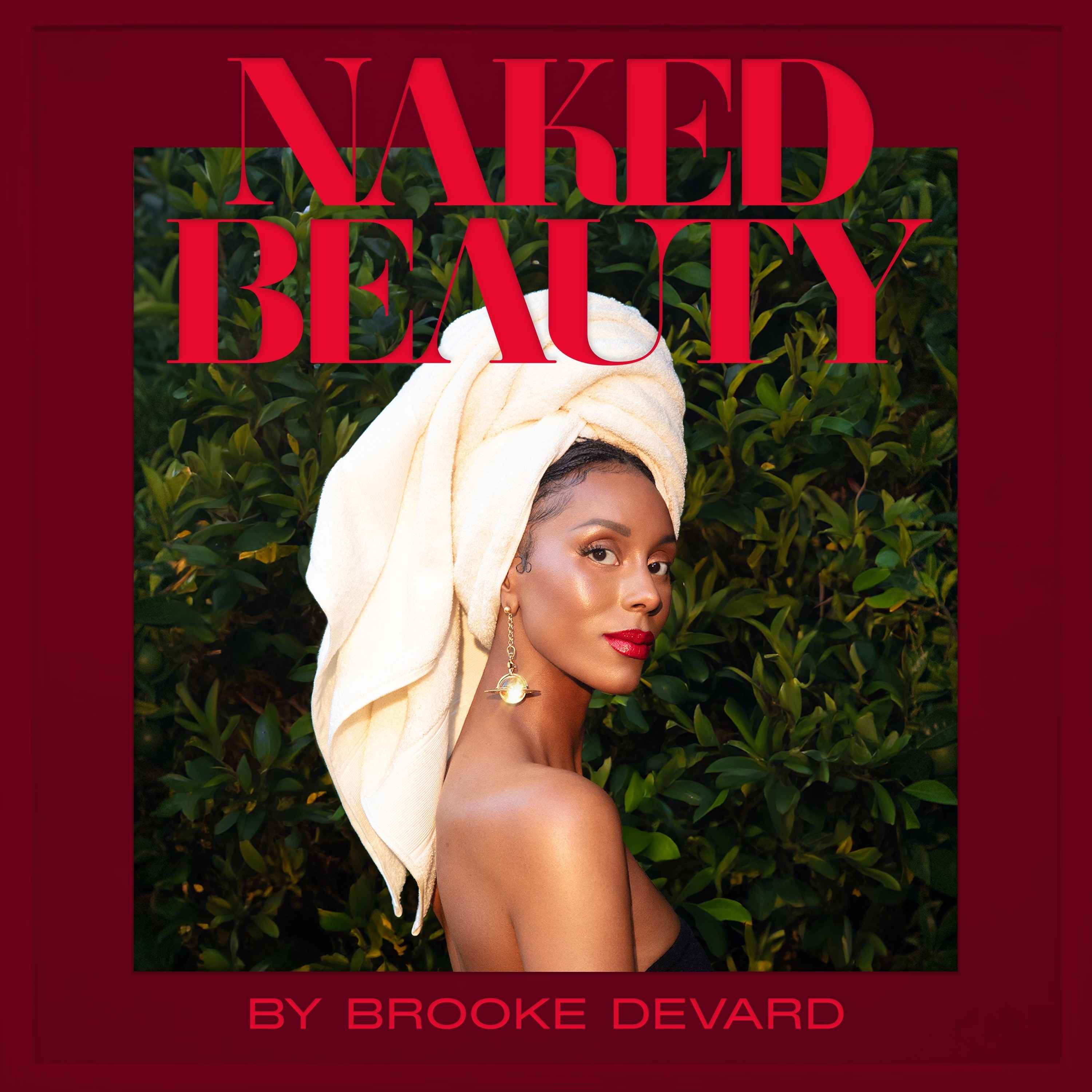
Hello. Hello, it's Brooke Devard and you're listening to the Naked Beauty podcast. I have been thinking so much about beauty and self expression and adornment since I've had this conversation with Keshe. Now, if you don't know Kesh, Kesh is to me, and I think to a lot of other people, truly an icon. I discovered her on Tumblr in the mid 2000s and I've just been following her ever since. She's an artist, she's a musician, she's a very deep thinker. She's a photographer, a creative director. I mean, she's worked with some of the biggest brands. I just had an opportunity to see her DJ an event at the Prada store on Rodeo Drive. And she is just the definition of creative in the sense that her self expression really shows up through her beauty choices. And Kesha is also someone who really adorns every part of her body. And I've been thinking a lot about beauty that goes beyond the kind of one dimensional male gaze. Like, I just want to look like myself, but better. Like, when I get into a makeup chair, the first thing I say is, like, I want to look glowy and natural. And I'm just trying to accentuate my existing features. If I think about someone like Keshe, what they're doing is they're really taking beauty and pushing it beyond that to a new space where they're saying something and using the face as a canvas. Right? Like, sure, we all know how to do different color lipstick. But one of the things that you'll see if you go to the YouTube and watch some video clips from the show, Kesh really uses her entire face as the canvas. And that's something that we talk about. But she's got crystals on her nose bridge. Why not? And when we really get into the references about why she chooses certain colors, it may be like an obscure Korean film that inspired her. So I was really, really blown away by her thoughtfulness. And she is just an overall very thoughtful person, a very soft spoken person. And there are things that she shared in this conversation that have really stayed with me. Like, I think about this phase of my life that I'm in now where I do feel this excitement about sharing and doing storytelling and making videos and sharing those on TikTok and Instagram and. And really leaning into that. While it's something that you enjoy, this episode is a real treat. I hope you all love it. Kesh does not do interviews often. It is Rare to get a sit down interview and conversation with her. She's very particular about who she shares her story with. So I'm very honored that she came to all of us, the naked beauty community, to share. And I hope you're as inspired by hearing from this incredible artist as I was. Let's get into it.
- [02:28]
A
Who should be hurt? Who should be blamed?
- [02:33]
B
All right, beauties. I am honored to be joined by Kesh, who rarely does interviews, but is such an iconic person overall, but just like the beauty. I'm very excited for this conversation.
- [02:44]
A
It's so nice to meet you finally.
- [02:46]
B
I know, I know. I've been. I've been watching you and admiring you from afar for such a long time now. Before I got here, I was like, I need to know what Kesh is going to wear, what the look is going to be giving. Have you always been the person that people are like, what's she gonna wear?
- [03:00]
A
I think that's always been away for me since school, probably. I've definitely expressed myself through my clothing since a young age, for sure.
- [03:07]
B
Young age. And did that come from your parents? Like, where did that come from?
- [03:11]
A
You know, it's hard because my parents don't really. They're not really extroverted in that way. So for me, I think it's just a natural expression and just something that came to, like, exploration and just, you know, living within my own skin and experiencing the world in the way that I did.
- [03:26]
B
Yes. Well, you grew up in Croydon.
- [03:28]
A
Yes.
- [03:29]
B
Tell me about the beauty culture there. What was, what was your early life like?
- [03:34]
A
I think for me, the beauty culture in Croydon, it's. It varies so much because there's so many different communities. It's a very multicultural space. So I think it's hard to, like, pinpoint one kind of, like, identity of it, of it. But for me, I think Croydon culture has influences of, like, very much like Jamaican culture and Indian culture, Pakistani culture, Eastern European culture, traditional British culture, like, all mixed together to like, just create one kind of blended, like, coexistence, expression. So I think for me, that's what it was growing up. And you kind of pull from your own family history and your own, you know, your own kind of, like, cultures, and then blend it in with what was happening in England at that time. So it was a little bit of like a rude girl expression is what we like to call it, which really has, like, a lot of roots within, like, Jamaican culture. So, like slicked back baby hair, like tracksuits that can come from, like, anywhere from, you know, British, like football culture to kind of Eastern European working culture. And I think just blending all of those together together creates this very, like, distinctive British look. And that's what was like. That's what I was doing growing up.
- [04:44]
B
Is there anything that I would know from Croydon, like any people or like, I'm trying to, like, imagine it, like, are there any signifiers or people from that area that I would know?
- [04:53]
A
And I think two people that people. Two people that come from Croydon or from South London. Croydon's just next to South London is Naomi Campbell.
- [05:00]
B
Oh, yes, of course.
- [05:02]
A
And Kate Moss. Oh, so two of the biggest supermodels.
- [05:06]
B
What's in the water over there?
- [05:07]
A
I know, I wonder.
- [05:08]
B
Right.
- [05:09]
A
So both of them, I believe, are from. I believe Kate's from Croydon and I believe Naomi's from South London. So it's interesting. I think those for me were two pretty big beauty icons growing up, knowing that, you know, they just came from like 15 minutes away from where I'm from.
- [05:24]
B
Yes. So you're a teenager, you're figuring out your self expression and how you want to self present. What about that process was empowering and what about that process was frustrating at times?
- [05:36]
A
I think growing up in a place like England, as a young black slash brown girl, you know, I think there was frustrations in that space because you're not necessarily appreciated for who you are fully. You're facing a lot of obstacles just in your daily experience. And it's kind of harder to find your truth in that space when you're constantly up against kind of these negative experiences that make you question, you know, your beauty and your identity and your sense of self. So I think it was really hard to kind of navigate within those landscapes at first. But, you know, from all of those experiences of pain, there comes so much beauty as well. And it allows you to kind of defy what is expected of you because you're kind of existing within your own space. So I think for me, I was able to experiment a lot more and kind of find the version of myself that made the most sense for me because of, you know, those experiences.
- [06:33]
B
Now you are an artist. Yes, first and foremost. And that art takes various forms. Visual art, design, music, of course. Have you always identified as an artist? Have you ever had a boring corporate job?
- [06:48]
A
I had two jobs.
- [06:50]
B
Really? Tell me about you working a job. I'm so curious to know what the jobs were.
- [06:54]
A
Oh, my gosh, it's so funny. I was 16 years old, I was plotting to leave my town because I'd had enough and I needed to get out, but the only way I could get out was if I had money to do so. So I eventually said, fine, I'll get a job. I don't want to do this, but I'm gonna do it. And in my town, it's a small town, there weren't very many opportunities. My first job, I was a cleaner.
- [07:14]
B
Oh, wow.
- [07:15]
A
I used to be a cleaner for a gym. So every day after school, I'd Finish School at 3:35, I'd go home, I'd watch Dragon Ball Z for 15 minutes. I amp myself up and be like, okay, I'm gonna go clean this gym. And I'd go to the gym and I'd work my three hour shift and I would clean. And it's fun. Like, I'm really not that great at cleaning.
- [07:37]
B
I was gonna ask, are you good at cleaning?
- [07:39]
A
No, not really. I like, don't like to do it, but obviously you have to do it, but.
- [07:43]
B
Right, yeah.
- [07:44]
A
For a job. I was cleaning this gym and I would clean the lockers, I'd clean the bathrooms, I'd clean the toilets, I'd clean. I know, it was like, to think back on it, it's quite funny, but I was cleaning this gym and I was cleaning it with such intention of being like, this is my way out. And it was like, I think it was worse than minimum wage at this point. So it's like the money that I was actually saving, I don't know where I thought it was going to get me, but I did end up doing that job. My first job, I was a cleaner. Then I got fired because I wasn't a good cleaner and I wasn't mad. And then I went on to work at a company where I had to sell windows. Like, I know, so random. I was like at the call center basically, and there was like 20 people at a table called like cold calling people trying to convince them to like buy windows for their house. Obviously I was terrible at that. You got. That was the worst pay I've ever had. But you would get a commission if you could get like a lead or get someone to, you know, like buy a new set of windows for the house. I didn't make one sale. I couldn't do it. I can like commit. I couldn't like commit to like fake selling, you know. So yeah, Those are my two jobs at 16 years old. And then at that point I realized, wow, I cannot do this. This is like, not for me. I got like, I got to get out. I was already side hustling by drawing people's names on their clothes in school. And, like, that's cool. Yeah. In school we wear. In England, we wear school uniforms, so we would have, like, blazers with collars. And after school, we thought it was so cool. You, like, pop your collar after school and, like, walk home. And I would, like, graffiti people's names on the back of their collars and things like that for money. So I already had, like, the two experiences of, like, I'm making money like this and I'm making money like this. Which way do I really want to do it?
- [09:35]
B
Right. And I want to make money through my creativity.
- [09:38]
A
Yeah. So I, like, this stuff's not for me. Like, I'm gonna go this way. And then, you know, through kind of a chain of events, I got myself to London. And then that's how I started to, like, exist and make money and support
- [09:51]
B
myself and really get into the creative community. And this whole time. What are your parents. Are they encouraging you to do this?
- [10:01]
A
Yeah, I'm really lucky, actually. Like, my parents are immigrants. The parents that raised me are from Trinidad and the Caribbean and then Malaysia, so.
- [10:12]
B
Because you were adopted?
- [10:13]
A
Yes. So I was adopted at, like, age 4. My mom and dad, who. Who I consider to be my mum and dad. You know, in those cultures, it is very much the norm for. For your parents, especially immigrant parents, to want you to have, like, a stable job. Stable job, Like a guaranteed job. Like, if you go and you study at medical school or, you know, to be a law or an accountant or any of these things, you're almost. If you can pass, then you're guaranteed to have a job. Right. So it's more of, like a guaranteed job. But my parents. My mother worked in the medical field. She's, you know, a midwife. And my dad worked within, you know, accounting and financial advising and things like that. So it's like both of those jobs they had to study for and go through the system, and they had really, really hard challenges and hard lives to get to where they were. And I was lucky enough for them to not put too much pressure on me.
- [11:13]
B
That's a beautiful thing.
- [11:14]
A
Yeah, I'm really, really lucky for that. There's not much that they could offer me in terms of, you know, me and my mum were talking about this the other day. She. She was like, you know, there wasn't much we could give you in terms of your career choice, but we always have, you know, believed in you in some. Some way. They. They knew I was an artistic child and a creative child, so they kind of just stood back and said, you know, whatever's going to happen is going to happen.
- [11:38]
B
I discovered you on Tumblr, as I'm sure many people did, and it's so funny because you were such an originator of so many trends and you were so ahead of your time and you're still like. I feel like you're like living. It's like we're in 2023. Which year do you think you're in? You're like in 2033, 2043.
- [11:55]
A
I can't say what year I'm in. I think at this point I'm just like transcending space and time and just existing within whatever it is in this
- [12:05]
B
current moment, you know, that feels absolutely right for you. Transcending space and time. When you were on Tumblr and putting your work and your images on Tumblr, what was that early experience like for you and what drew you to the platform?
- [12:19]
A
I think that Tumblr was, you know, just another kind of place to express myself. I think that, you know, Tumblr is a while ago. It's like at that point I was just in such a hyper expressive state. It's like no matter where it was, I just wanted to put that out into the world, world and, and connect really, you know, I really wanted to just connect with like, like, like minded people or other creatives or just really get things off of my chest. Because creativity is my form of therapy in a way. It's really a way for me to just get things out of my head and get things out from my heart.
- [12:58]
B
And yeah, I just had a light bulb moment as you were speaking about that. I feel like I'm kind of in that phase now of just wanting to create content all the time. And I'm just kind of like. Because maybe there's going to be a time that I don't want to turn an afternoon into like a little mini vlog. But for right now, something is like pushing me to do that and put that out on the Internet.
- [13:18]
A
Yeah. And I think, yeah, I can, I can see that. I see your content, I see the stuff you do and it's, it's really beautiful what you're doing. I think, you know, a lot of us are enjoying that expression, like your, your beauty of your life and your perspective. I think it's cool. And I noticed that, you know, that
- [13:36]
B
impulse to share comes from inside and then you.
- [13:39]
A
Yeah, ye, absolutely. And I used to have that. I don't have that anymore.
- [13:44]
B
You're much more private now.
- [13:46]
A
I Am.
- [13:46]
B
Yeah. Which we'll talk about.
- [13:48]
A
But, yeah.
- [13:49]
B
So in that time, you were really feeling like, I want to put myself out there, share things. It was like this. You had to do it.
- [13:55]
A
I had to. It was just coming straight from the source of, like, this is what I'm doing. This is what I'm sharing. This is what I'm doing. This is what I'm sharing. And I think that maybe a day will come where you do become a little bit tired of it, or you do decide to step back a little bit and just focus on things and in a different way. And I think that really served its time and its purpose for me. And it was in that state of connection, and it was in that state of. I think the landscape of the Internet and social media was very different then.
- [14:24]
B
Very.
- [14:24]
A
I think we weren't really relying so much on algorithms. And I think for me, the algorithm has also made me step back a little bit and realize that. Not realize, but question how safe these spaces are. For me, you know, as a woman, as a woman of color, as an artist, as somebody that's independent, as somebody that is not necessarily fueled by the machine, it's like I'm. I'm existing within a very independent space. So I question how I share now.
- [15:01]
B
Yes.
- [15:01]
A
And I think I'm just very much in my phase of questioning. I still do stories and I still post. I'm still there, I'm still present. But I just think for me, it's like, how present do I necessarily want to be until the next project?
- [15:16]
B
Yes. Yes. Using it as a tool for a larger piece of artwork that you're. That you're sharing now. I would also imagine as a creative who is so ahead of trends, there also must be the sensitivity towards putting out something and then someone, you know, you're on the mood board, but it's not inspiration. It's like a direct copy. And I know you in your own career have dealt with, like, IP issues. Are you open to talking about that?
- [15:42]
A
Yes, I am.
- [15:43]
B
Yeah.
- [15:45]
A
So for me, at first, it was difficult because as a young artist, as an independent artist, you really want to have visibility. You want to have your moment. You want to have the community, you want the support. And I think when you hear that you're on the mood board for these artists, I wouldn't say bigger artists. I would just say more mainstream, more miserable. You know, I think that it can become frustrating because ultimately, what you're doing as an artist is like you're expressing your heart in that moment. For me, anyway, I Mean, everybody's different. But I think personally, I think true art is expressing your heart, your soul, your spirit, and the things that you want to say in that moment. And everything that you're doing is a reflection of that. So when you realize that, oh, well, that part of my conversation or that part of my expression or that part of the thing I'm trying to say right now is being utilized for shock factor or financial gain or as some sort of just calling card without actually the thought behind can be frustrating. But now I made peace with it, you know, because, I mean, I couldn't be more happy with the way that I. I create my work. Yeah, I think that way of creating is like, there's a lack of spirit to it.
- [17:14]
B
Sure.
- [17:14]
A
And I think creativity is a very divine experience and that can be forgotten, especially as we move into this, like, hyper, hyper corporate landscape. And I'm not opposed to corporate because I have worked within corporate spaces before.
- [17:28]
B
I mean, your American Apparel collaboration was probably one of. It was everywhere. I mean, it was huge. What was the scale of that collaboration?
- [17:37]
A
It was much bigger than I. Not that I expected, but what we intended, we intended to just do one release during the summer. And I think because it just. It sold out within, like, the first day, of course. So then the company wanted to do more, and I felt, well, if people want it. And, you know, I was getting such positive feedback from the community and, like, from, like, other artists and people and supporters and, you know, fans. And I just thought, okay, let's do another, you know, we can do another run. And that ended up turning into seven, you know, seven, like, releases of it. You know, that was a corporate collaboration, but it really came from a place of love. You know, it's like everybody that I did it initially because of my price points of my fine artworks were not affordable to the average, you know, student or working person. And I wanted to. I wanted to offer something that allowed just my fans and my supporters to collect something that was in, like, an affordable price point. So everything around it was like, from a place of love. I'm not opposed to corporate, and I think that existing within those spaces can. Can work if you do it with real intention. Because ultimately we are all consumers, you know.
- [18:55]
B
Yep.
- [18:55]
A
We all. We all have our favorite products, our favorite things that we use to exist or enhance or amplify or feel. So, yeah, I like to exist in those spaces sometimes. And yeah, I think I'm not opposed to that.
- [19:12]
B
Well, we're going to get into your favorite beauty products, but before we do I want to talk a little bit about this archetype of the black brown, alt girl in terms of that kind of, like, alternative style. When you were doing it, did you see anyone else doing it?
- [19:27]
A
I saw it before me. I saw it in the generations before me. I saw it with tlc. I saw it with Missy Elliot. I saw it with Aaliyah. I saw it with, you know, all of the different kind of, like, old girls of, like, the 90s.
- [19:43]
B
Yeah.
- [19:44]
A
And the times that I was doing it, I didn't see it as much. And I remember a lot of people questioning me and being like, what's going on? What are you doing? This is weird, you know, which is funny because it's like we're all inspired by that music. So it's like the visuals on that were so strong. So I think that I have to give credit, you know, where it's due. It's like the women that came before me, I saw it in them as a very young child.
- [20:09]
B
Khalees, also Khalees.
- [20:10]
A
I saw it in Khalees. I saw it in these women that came before me. And I attribute my weirdness to elements of them. You know, I think I've already always had, like, a weirdness to me, but I think that seeing it in them allowed me to be also alternative and maybe my way, like, growing up in England and being influenced by, like, the Cure and influenced by kind of, like alternative British culture and like, within more of a rock and roll space, more of a punk space, having, like, knowledge of people like Susie sue and just these kind of, like, alternative spaces within the black community and the white communities and, you know, throughout different spaces, I think that allowed me to just be like, oh, I can express myself. Even though in my town, that's not the way we grew up. We're very, like, chavy, like, football culture, like, you know, rude girl culture, tracksuits, trainers, like, like, slick baby hair and, like, you know, a little bit of gold tooth, a little bit of that kind of style. But being a bit more, like, on the side of punk and alternative rock and roll, that wasn't really there. But when I look at those who came before me, and I recently did a shoot actually with TLC for Good America, and I did the photography in the creative direction for that. I think one thing I had to say to them is, like, without you, there would be no me, because Baby Me saw you doing, you know, all that kind of like, black, futuristic, like.
- [21:38]
B
Yeah, that. What was album called? Fan Mail?
- [21:40]
A
I think so, yeah.
- [21:41]
B
Fan Mail has that campaign come out yet?
- [21:44]
A
It's out. It's been out for a while. I think it came out about six months ago.
- [21:47]
B
Okay, I'll send it to you. I need to revisit it. I saw the skims work that you did.
- [21:52]
A
Yes. Yeah. That was also really, like. I got to really explore, like, futurism in there as well. And within, like, a very, like, diverse cast, I got to cast the campaign
- [22:02]
B
as well, and it was really making skims cool.
- [22:05]
A
Yeah, you know, it was.
- [22:08]
B
And I love Skim's product, but in terms of the creative, like, pushing it, your. Your, you know, talent there is really felt.
- [22:14]
A
Thank you so much. Yeah. I mean, shouts to the team, like, we pushed it, and. And we got an amazing result. I think, you know, the. The team there, they're already. They already have, like, such their own specific identity, you know, and I think bringing their identity and mind together to just really create a conversation. It was cool.
- [22:33]
B
Yeah. So your beauty look, I mean, incredible. And the reason why I'm personally so inspired by your approach to beauty is because it's beauty beyond looking pretty for the male gaze. Right. It's beauty as art, essentially. Could you break down your look for us? Like, just. Like, even. Just what you've got going on today? Because, I mean, I've always loved the way that you do your lip liner. I love the way you do your eye makeup. But just. Even. Just what you've got going on now is so interesting.
- [23:03]
A
Thank you. I mean, for me, it's never really planned. It's always in the moment. I'm just, you know, I usually do my own base, and I usually do my own, you know. But today we did the interview, so I went to my favorite makeup artist, Jaime Diaz, and we did the base. So I always do the base with Jaime when I have, like, in a show or an event or an interview or something. But when it's just me, I'll do everything myself. And I love to play. That's my thing. It's like, how do I feel today? What mood am I in? And I'll, you know, build out the eye, and I'll do an eyeliner, or I'll do some sort of, like, you know, I might play with a jewel or two if I feel like.
- [23:44]
B
These jewels on your face are amazing.
- [23:46]
A
Thank you so much.
- [23:46]
B
And then you've got, like, two sparkly decals across your nose, which, like, looks so beautiful.
- [23:52]
A
These are actually Simi Hayes. Yeah. You know who else they've got? Yes, they. I'm really enjoying their stuff right now.
- [24:00]
B
Really. Cool.
- [24:01]
A
Yeah, I love them. And these are actually supposed to be for the lid. They're supposed to be liners. I think it's like the rave culture. I can't remember the actual name of it. So maybe not rave culture, but it's like an ode to rave culture. And they have, like, special liners, but I use them in different places. Sometimes I use them for the cheek, or I'll use them for the nose or the eyebrows or the eyeliner, however I'm feeling that day. So that's just me, like, playing, you know.
- [24:29]
B
So are you kind of just like, look? Because I would get this eyeliner thing, and I would just put it right above. Right by the lash, and I wouldn't even think about it, you know? And I think most people. People would do the same. What do you think it is about your approach to beauty that allows you to, like, almost look at your face as a canvas? Right. Like, because I don't. I don't think about my nose. It's just there. I don't think about adorning it with interesting things.
- [24:51]
A
I think adornment is a beautiful. Like, a beautiful word. Yeah, I think adornment is a beautiful word, and I think that it's very fitting. I think that growing up within a very multicultural experience, I saw a lot of the kind of gods and goddesses and deities of, like, Hinduism and Buddhism and. And, you know, like the ancestral kind of expression from even all the way originating back to Africa. There's so much adornment. And I think that for me, this is probably like, an extension of that. It may not have, like, necessarily the spiritual kind of, like, you know, like the night rose adornment or the eye adornment doesn't necessarily, like, resemble a certain ritual or spiritual aspect, but it's just more, for me, like an honoring to, you know, like my ancestral. You know, my ancestors and my ancestral cultures, basically. So I think that's really what I'm doing. I'm. I'm playing and I'm. I'm working throughout, just, like, my artistic expression. Because this is really how I see the world. Like, the way that I dress, the way that I make my work. You've seen my work. So it's like hyper color, hyper abstract, like, existing within multiple dimensions. It's not necessarily quiet, you know. So I think for me, it's like I'm doing the same thing here, just with, like, my expression. And I just. I just play a lot with different kind of ways of being even this,
- [26:21]
B
like, a little bit of red you have under the eyeliner on the bottom. It's so unique and interesting. Did you just think, like, let me just try some red here? Like, what I'm, like, trying to get to, like, what's the thought process?
- [26:32]
A
I think a lot. So it's not like, as much as I play, I also utilize inspiration. I also utilize just like. I don't know, like, I think a lot about what I'm doing. The red actually comes from a movie I watched, like, many years back, actually. I think it's called Lady Vengeance. But I remember in that film she applies the red to her eyes and there's a conversation about why she does it. And I think she says something along the lines, I'm afraid that people will think I'm too good.
- [27:06]
B
Just as you were telling the story. I feel like I can see a lot of parallels. Before today, before we met and spoke, I didn't know how you were going to be. And you're so just delicate and soft and kind and quite gentle. But your exterior is so strong. So I can kind of see how it's almost like an armor or this kind of, like, protection to let people know I'm kind and gentle and sweet. But also, don't try it.
- [27:35]
A
Yeah, yeah, I think that that's true. I think that there is a form of armor to it. I think there is a form. Yeah. A lot of people say that when they meet me, they. They're like, oh, wow, I thought you were going to be, you know, like, quite intimidating and.
- [27:50]
B
Yes, yes.
- [27:51]
A
You know, I can be if I need to be, you know, is what it is. Like, we need to turn up. Let's go. But I think really my natural state is very, very, very soft. And, yeah, I'm like. It's probably like one of those creatures you find in nature where it's like they have the kind of colorful wingspan or they have the, you know, the big, like, headpiece to kind of push away predators. It's maybe something like that, but I am very half and half. It's like I can give what I need to give, you know, within safe and loving environments, my true natural state comes out. I'm soft, I'm loving, I'm kind. But, yeah, if I need to protect myself, then absolutely will and can.
- [28:34]
B
Yeah, sure. I love the way you do your lip liner.
- [28:36]
A
Thank you.
- [28:37]
B
It's so interesting. What sparked this? What was the inspiration?
- [28:41]
A
I don't know. I think that it's probably coming back to just experimenting and playing. You know, I think usually we're kind of Using more neutral lip liners and, you know, shaping the lip and making it pouty and cute. And I think that I do love a cute moment. I do love to be cute, cute, but I think it's just more of, like, stepping into that area of extremism and just probably more of an ode to goth culture. And I don't necessarily suit, like, an all black lip, even though I do love that look when I. When I do, like, all black lip, it doesn't really. Well, in my opinion. All my friends are like, oh, it looks good. But I'm like, it's not quite like what I want, you know, So I think that maybe it's just an ode to, like, goth culture in that sense of, like, we have the black line there, but. But we're also still, like, cute and pretty as well.
- [29:34]
B
Yeah. With the gloss in the middle. I love it. Now when you take off your makeup and you do your skincare routine, what are your, like, must have products like, what's the skin. Skin care like?
- [29:45]
A
I'm learning.
- [29:46]
B
Okay.
- [29:47]
A
Yeah. It's been a process. It's been a journey. I used to be one of those girls back in the day that would sleep with my makeup on and just wake up and then wash my face with, like, a bar of soap.
- [29:58]
B
Oh, gosh.
- [29:59]
A
Yeah. I didn't really learn. I didn't. My mother's very, like, natural and neutral, and she didn't really teach me anything about that because she didn't know. So for me, it was all been a learning experience through my adult life and just like, through friends and. And now obviously online, you can learn so much. So I'm still learning, but, you know, I go home. I. I know that I. I double climb cleanse. Okay. Yes. I'm double. I'm a double cleanser now from.
- [30:27]
B
From a bar soap the day after sleeping in makeup to double cleansing. You've come a long way.
- [30:32]
A
Come a long way. And you know the results. We're making progress.
- [30:35]
B
Thank you. Beautiful skin.
- [30:37]
A
Thank you so much. I think it's just really been a journey for me, and I'm still learning. I'm experimenting and I'm trying, and I have great people that I'm working with that are just, you know, you've always got to give credit. You are kind of people that are doing your facials and. And. And so on, and I'm working with a couple of really great women that are helping me and guiding me and mentoring me and, like, finding what that looks like for me.
- [31:04]
B
So who do you work with?
- [31:05]
A
Here in la, I work with Lisa Kardashian. She's an amazing, amazing esthetician. She. She's been great for me and we've been on such a beautiful journey with the skin. I've been working with Mina Khorram in London. Both of those women, I really love to just give credit because I don't get to see them that often because I'm always traveling, but they'll always be mentoring me and telling me, you know, Kesh, this doesn't work for your skin. Don't. Don't do the oil, don't eat dairy. You know, those are the things that don't work for me. And just removing things like that has been such.
- [31:42]
B
Yes.
- [31:43]
A
Such a great help.
- [31:44]
B
I mean, you mentioned that you've stopped drinking coffee and you're now full time matcha drinker. Matcha girl. And your skin has been so much better since cutting out caffeine.
- [31:54]
A
Yes. I think I saw like something online that was like coffee cortisol levels and I was just like, wait, I really am the girl that will get up in the morning and just drink, like coffee straight away and just like get into the day.
- [32:08]
B
Yeah.
- [32:09]
A
But you have beautiful skin, so I don't think you need to cut it.
- [32:11]
B
But maybe it could be better.
- [32:13]
A
No, it couldn't. You're at peak level. Don't worry, you're there for me. It was bad though. So I. As soon as I cut the coffee and I don't know if it was the cortisol, it's just like I wasn't doing, like, I was just not probably being as healthy as I should have been. And then with that, I just noticed changes. I cut dairy at the same time, so everything just changed. And from there I've kind of been like, oh, this works. Let me see what else I can do.
- [32:40]
B
Yeah. Are you a fragrance wearer?
- [32:41]
A
I am, but I'm living in different spaces with fragrance right now. I'm like, experimenting with a lot of essential oils.
- [32:48]
B
Yes. I love that.
- [32:49]
A
I know. I'm really feeling that right now.
- [32:51]
B
Yes.
- [32:52]
A
But then also I have a really beautiful Jean Paul Gaultier fragrance and I've been wearing that one quite frequently and it's beautiful.
- [33:00]
B
I saw you were at the Jean Paul Gaultier event and that, like a very early work from Jean Paul Gaultier was an inspiration to you as you were creating. And then to just be there with Jean Paul Gaultier, I mean, that's incredible.
- [33:12]
A
And now it was such a full circle moment for me to have that actually. It was just, it was so beautiful to be able to just stand there in the fitting room with the whole team and just picking the dresses and picking the iconic print and knowing that, you know, when I really, like, as I was very much beginning my journey, this was one of the key moments for me of, like, inspiration and knowing that I didn't have the passion for school or the traditional school system, but when it came to a designer or an artist that I actually truly admired and felt like their work was something that made me feel something. It was like I was able to produce a project that had enough power in it to bypass all of the like systems of, like, not having the grades to get into school and not having, you know, that was just such a full circle moment for me. And it felt was very rewarding because baby me never even began this journey with the intention to, like, stand in those rooms or to, to do those things. It was just like, I just want to do my thing and make what I can. But coming where I come from, if you could see it, I don't think any of us ever thought that we would be able to do anything at all.
- [34:27]
B
Right. Do you have advice for people listening that are at the beginning of their creative journey and maybe feeling discouraged for either not having their work recognized or just the struggle of trying to finance your life while also trying to make money as a creative?
- [34:43]
A
Yes. I think that the first thing I would say is just beyond anything. It's like, take it easy on yourself. You know, it's like this world that we're living in, it's. It's not easy, just in general.
- [35:00]
B
Yeah.
- [35:01]
A
You know, it's like, I think we have to kind of be kinder to ourselves and just take it easy. Like, don't put too much pressure on yourself. Whatever is meant for you will be, will come come to you. And it might not be tomorrow, but it's coming. And I think that if you just continue on with your heartfelt passion for your work and you take time and you take it easy and you find ways to support yourself maybe outside of the creativity, if you don't have it like that, if, you know, you don't have that external support from other places and you need to be the person putting food on the table, maybe try and find a half and half way to do it. Because now that I look back, I think that's something that I probably wished that I did because I struggled so much, probably to the point of, like, unnecessary struggle. You know, there were times that I was starving, like, I was so hungry, and I Was like, covering rent, but I couldn't feed myself and I was like, losing weight. And like, when you don't eat, you can't think. And when you don't, you know, like, I was like, putting myself through, like, unnecessarily love, unnecessary levels of struggle.
- [36:15]
B
It's kind of romanticized, though, for artists in a way, isn't it?
- [36:18]
A
It really is romanticized in so many ways. And now that I can put food on my table and my family's table, I look back on that in a way of like, yeah, I got through it and I did it. But actually, as a young person trying to survive in a. And I live in this. I. I lived in this country and live in this country with no family or support. So it's like, everyone's in England, you know, so it's like being out here and just trying. I think for me, it's like, I look back on that and I think about it and I'm like, you could have maybe just gone and got like a little side hustle job or something, like, and made sure that you were good as well as did this. Because I think. I think especially as landscapes have changed and the economy is changing and the way things are now, it's like, make sure that you're good. Good. That's my advice. Make sure you're okay and like, do what you got to do. You know, if you want to, like, go work at that cafe, go work at that little place, do that job. Because actually there's beauty in that too. And there's inspiration that too. And actually you might make like a little. You might have that, like, social interaction that you might be lacking when you're holed up in your studio and like, really trying to find all the answers. Like, the answers are everywhere. So, like, go. Go take care of yourself and find inspiration in everything you do. Because there's beauty in all of these different aspect aspects of life. And I think from that it's like, one, make sure you're good. Make sure you're taking care of yourself. And then like, yes, allocate time to your passions and like, give yourself the grace of making mistakes. And like, don't worry if things can be perceived as a failure to the outside world. Like, be okay with trying because trying is key. Doesn't matter, like, what you're doing, as long as you're not, like, hurting yourself or hurting other people or making anyone feel bad, bad, like, it doesn't matter, like, do your thing. Like, whatever's coming from your heart, stay true to Yourself and just like, do what you gotta do to like, get out that expression. Because I think a subject that's coming up a lot nowadays is like, cringe, you know, like the cringe factor.
- [38:17]
B
Right, right. And specifically that part of being successful, the path to being successful means you will be cringe at some point. You're gonna be cringe and embrace it.
- [38:26]
A
Like, be cringe. Like, if you've been cringe, like, that's. That's cool.
- [38:32]
B
But I feel like you have never been cringe. I mean, do you. Do you ever look back at moments in your career or even beauty choices you've made and think, like, this was a mistake. I shouldn't have done this.
- [38:42]
A
There's no mistakes and there's no regrets.
- [38:44]
B
Right, right.
- [38:45]
A
But I have been cringe. Like, I look at a lot of my stuff, I'm like, wow, you really pushed it. Then, like, God, what were you doing?
- [38:52]
B
What did you think was cringe? I'm so curious.
- [38:54]
A
There's so much. Really. There's so much cringe.
- [38:57]
B
I'm like, so surprised by that because I feel. I feel like you've all. You've like. I would never associate you with that term.
- [39:03]
A
I know. And like.
- [39:04]
B
But you know what it is? I think cringe is kind of like, try hard, you know, And I've never.
- [39:09]
A
That's true.
- [39:09]
B
Seen you as that.
- [39:10]
A
No, I've never tried hard. Like, I don't care.
- [39:13]
B
You're always yourself. You want to show up as yourself.
- [39:15]
A
I'm always going to be myself.
- [39:16]
B
Yeah.
- [39:17]
A
Or not. Like, there's times I haven't been myself to try and, like, not necessarily fit in. But there's like, I think what's cringe to me. I think what really stands out as cringe to me is the times that I was trying to. To really, like, limit myself and pull back from who I really am. I feel like my true expression has always been pretty extreme. Like, you know, I'm just. I'm left field. I'm avant garde in many ways. I'm just like, weird. You know, I'm different in that sense. But I think that when I see pictures of myself where I'm feeling like, oh, that's so cringe. Is when I was trying to, like, not be that.
- [39:56]
B
Yeah.
- [39:57]
A
So it's like the times that I was trying to wear like a denim short and like a bare face moment and be like in, like in LA and being like, oh, I'm trying to, like, limit myself. Because maybe at those times some people made me feel bad about being so extreme.
- [40:12]
B
Right.
- [40:13]
A
Whereas like in London, like, you can kind of do what you want.
- [40:16]
B
Yeah. LA beauty. I mean LA beauty and fashion culture is sort of boring. I mean, it's. I feel like that's fair to say. Is that. Is that rude of me to say?
- [40:24]
A
It's definitely not rude.
- [40:25]
B
I've only been here six months.
- [40:26]
A
That's your opinion. Like, I think you came from New York. Whereas, like, everything is just so, like,
- [40:32]
B
so much more dynamic, so interesting.
- [40:35]
A
But I think that's just a higher concentration of people in one place.
- [40:38]
B
That's also.
- [40:39]
A
I think there's a lot happening behind closed doors. And here in la, where it's like, I don't leave the house.
- [40:44]
B
Yeah. All you cool people stay inside.
- [40:46]
A
We do. We're not.
- [40:48]
B
You're not hanging out in West Hollywood?
- [40:49]
A
No.
- [40:50]
B
Eating lunch?
- [40:51]
A
No, I'm not there unless like a couple friends in town or step out and whatever. But I think there's a lot of things happening behind closed doors that maybe like in New York, I just got back two days ago, so for me, I'm like, it's like a visual feast. Like you're seeing everything and it's so cool. And I would say L. A is definitely more of a different expression, but I can agree it's definitely not. It's not New York and it's not London.
- [41:16]
B
You don't get as much visual stimulation by way of like eye candy. You know, you can just be anywhere in New York and you'll see people walking through by, like teenagers, kids, like anyone. And you're like, that's cool. Like you get inspired. Whereas in la, I feel like I don't get that like visual. Like if I'm walking around the Grove,
- [41:32]
A
it's like, girl, not the Grove.
- [41:34]
B
I know I might have to take like the least. The least cool place. Yeah. Okay. I'm like, I need to see like LA through. Through Ken.
- [41:41]
A
Yeah. I'll show you where it's at. Like, cuz where I go. They're turning it. They're turning it.
- [41:46]
B
Really? Okay, I need to hang out with you.
- [41:48]
A
Yeah, yeah. Come out, we'll show you something.
- [41:50]
B
Yes. Now I feel like I would love if you did more in the beauty space.
- [41:53]
A
Yeah.
- [41:54]
B
I feel like you've done so much in fashion, really cool stuff in fashion, whether it's designing or creative directing. If you were to do something in beauty, like create a product, what would you want to create?
- [42:03]
A
It's an interesting question. And I think that for me, I'm very interested in the eye, obviously. So I think anything that's kind of existing within the space of the eye. I would love to do something with. With eyeliner, probably. And we've had some talks. There's been some conversations about, you know, potentially doing kind of eyeliner collab.
- [42:29]
B
And I could so see that, like, Byredo. I feel like it's killing it right now. I feel like I could so see like a keshe Byredo.
- [42:35]
A
Okay. I'm gonna have to check it out for sure. I think I'm always interested in that space. I think just like I said, you know, coming back to that kind of sympathy for lady ventions red, you know, existing within kind of like maybe some palettes, maybe some stuff for people to create more of, like an extreme look. I think that I'm definitely interested in, like, doing something within that space. It just has to be right because I'm. I'm super careful about my collaborations. You know, I don't do many because when I do them, I do them.
- [43:06]
B
How do you relax? Like, how do you recharge?
- [43:10]
A
I meditate. Yeah.
- [43:11]
B
Do you use an app? Is it like self guided?
- [43:15]
A
I do different techniques. I go through variations, variations of different techniques. I learned a certain technique from a humanitarian in India called Amma. She's known as, like the hug, the hugging saint. So I've learned one of her techniques that I utilize. I would love to do it on a daily basis. I'm not quite there yet, but it's the place that I go to when I'm really trying to find my center again. Because my life is so busy and chaotic. It's like I'm just always, you know, on the go. I think for me, when I go back to Amma's, like, I am meditation, it's called, I really find a sense of relief and peace. And I find myself coming back to myself when I do that.
- [44:03]
B
So you're not binging on reality TV and like, eating chips at home to relax?
- [44:08]
A
I mean, yes, but not reality tv. Like anime.
- [44:11]
B
Anime is your thing.
- [44:12]
A
Anime is my. You know, there's the one way of, like, self and meditation and yoga and that stuff. And then it's like, you know, when it's that time to like, really veg out and switch off, it's like, yeah, I'm gonna order some food and I'm gonna watch anime or I'm gonna watch Powerpuff Girls. I'm gonna watch something and just chill in my house and just like, I love cartoons.
- [44:36]
B
Yeah, just like, turn your brain off.
- [44:39]
A
Yeah, you need it.
- [44:40]
B
It's so important.
- [44:41]
A
You can't Always be on the go.
- [44:43]
B
Well, you're. You're so inspiring to me and to so many other people. I'd love to hear if you've met people that have been inspired by your work. Like, if supporters come up to you, like, what's. What if there's an interaction that stood out to you of someone that you've inspired.
- [44:59]
A
Hmm. I mean, this.
- [45:01]
B
Or like, how it feels even just to be recognized, Because I'm sure it happens. You know, people probably recognize you and come up to you. Does it feel strange? Does it feel natural? Does it feel.
- [45:10]
A
I think it feels natural at this point, just because it's been.
- [45:13]
B
You're used to it.
- [45:14]
A
Yeah, I'm used to it. You know, I started my career, like, when I was 16. I've just been. I'm just used to it by now. I think it's always an honor, you know, I think that to be able to provide some kind of. I think it comes down to, like, if you're. If you're inspired or if you are admiring or whatever, it's a good feeling. I think you to be. It's an honor to create a kind of good feeling for somebody else by them, you know, receiving my work or the work that I do. I think for me, it's always an honor. Sometimes, you know, I. You know, I am also quite shy as well. So it's like being approached at certain times, I can tend to just. I'm very introverted in sense, so it's like sometimes I'm like, oh, okay. But. But for me, it's always an honor, and I always value every single person that comes up to me and approaches respectfully and just has, you know, says what they have to say. Because for me, once again, it's like, without you, there's no me. I create art for myself, but I also share that art, and that art is then received by other people. And to have a positive feedback from somebody is just always such a beautiful experience and feeling. And, yeah, I'm always. Always just. I'm always grateful for that.
- [46:40]
B
I love that final question for you.
- [46:43]
A
Yeah.
- [46:43]
B
When do you feel most beautiful?
- [46:46]
A
I feel most beautiful when I am making somebody else smile or feel happy or feel good in themselves or I'm offering some sort of support, or I'm just, like, uplifting. I think for me, that is, like, when I feel the most beautiful. I think that. I think there's nothing better than, like, kind of offering love in some sort of way, you know, I think for me, that's when I feel most Beautiful. I also feel beautiful when I create and I listen to the music I'm making or I look at the art that I've created or the piece that I'm working on, or I'm thinking, feeling inspired by the kind of process I feel beautiful then. But I think the most beautiful I feel is when I am like uplifting another person or helping another person. Because I think we're living in a world right now where it's like so many of us are like individuals, you know, and it's like we're living in a very like, individual state. And I think that offering like, love to another person and like seeing that love being received and seeing someone, someone's spirit's being uplifted and like real love, not fake love, I think that always makes me feel beautiful because it's like, well, I know that that person feels better in some way or shape or form now. And that for me is like, that's when I feel the most beautiful.
- [48:13]
B
Yeah, I love that. Being in service to others.
- [48:15]
A
Yes, exactly.
- [48:16]
B
Well, thank you so much for sharing so beautifully on in this conversation. It's been such a pleasure to just get to know you and your inspirations. So thank you, thank you, thank you for having me.
- [48:25]
A
It's such a pleasure to be on the show.
- [48:29]
B
Okay, beauties, thank you so much for listening. Today's episode was produced and edited by MBA Kasanga. The music that you hear at the beginning of the show. I asked my guests to pick their favorite early 2000s jam or late 90s, but I always love hearing what people pick. And make sure you're subscribed to Naked Beauty wherever you listen to podcasts. Because there's a section of my conversation with Keshe that I'm saving for a mini bonus episode episode about intentional brand partnerships and what that looks like. Whether you're someone that works in the industry or you're just a skincare shopper or consumer, I think you're going to find it really interesting. It's something that has been heavy on my mind as I approach who I engage with from a thoughtful perspective. It's a great conversation. So make sure you're subscribed because that's coming on Thursday of this week and then we'll be back on Monday with a regular full length episode, one that I think you're also going to really like. So. So again, make sure you're subscribed. Share the podcast with others. If you love Naked Beauty, text an episode to a friend. Share it to your stories. Tag me at Naked Beauty Planet. Thank you all so much for your support. Today's episode of Naked Beauty is sponsored by Kohler. And I never thought I would be this obsessed with the toilet, but here we are. Whenever I travel, I am always blown away by how elevated the bathroom experiences abroad are. In Tokyo, the smart toilets are truly next level. In Europe, bidets are just a part of everyday life. When I go to Turkey, the same thing. And every time I traveled, I came home wondering, why aren't bathrooms like this in the evening us? So when I was renovating my bathroom, I decided to invest in the Kohler Vail smart toilet. And honestly, it has been a complete game changer. The heated seat, hands free opening and customizable bidet functions make such a difference in your everyday routine. It's one of those luxuries that very quickly stops feeling like a luxury and just becomes something you genuinely can't imagine living without. But beyond the technology, the design itself itself is stunning. The veil has this beautiful curved silhouette that feels sleek and modern and incredibly intentional. It really changed the feeling of my entire bathroom and made this space feel more elevated and spa like. I love that Kohler approached this as both innovation and design because it really shows how thoughtful design can transform even the most unexpected objects, like a toilet. Now every time I step into my bathroom, I get that same feeling of luxury and innovation that I experience while traveling. Discover the Kohler Vail smart toilet and learn more@kohler.com and let's get back into today's episode. Hey, it's Paige from Giggly Squad and I want to let you know that if you want the newest and hottest beauty products, you have to go to Sephora. I'm obsessed with the one size liquid blotting paper spray. It's the first of its kind. Blotting spray that mattifies for up to eight hours. It's unreal. There's also the Summer Friday shade drops SPF 50, which basically lives in my bag at time the same point. Oh, and the Kayali Eden plush pear smells so good. It's sweet, warm and addictive. Like people literally stop me and ask what perfume I'm wearing, which, you know I love. So if you want the makeup, skincare, hair and fragrance products everyone's about to be obsessed with, shop only at Sephora.
- [51:59]
A
Acast powers the world's best podcasts. Here's a show that we recommend. Hello, American podcast listeners. Max Rushton here from the Guardian Football Weekly, which I think you should give a listen. It is good. It comes out three times a week.
- [52:13]
B
And the podcast delivers you analysis, news,
- [52:15]
A
both the good and the bad from the Beautiful Game and maybe even the occasional laugh. He's angry about everything.
- [52:20]
B
He doesn't have a great poker face, does he?
- [52:24]
A
I would like to play cards with Bruno Fernandes.
- [52:28]
B
You can listen to the Guardian Football Weekly wherever you get your podcasts.
- [52:31]
A
Hopefully see you soon. ACAST helps creators launch, grow and monetize their podcasts everywhere. Acast.com.