← Naked Beauty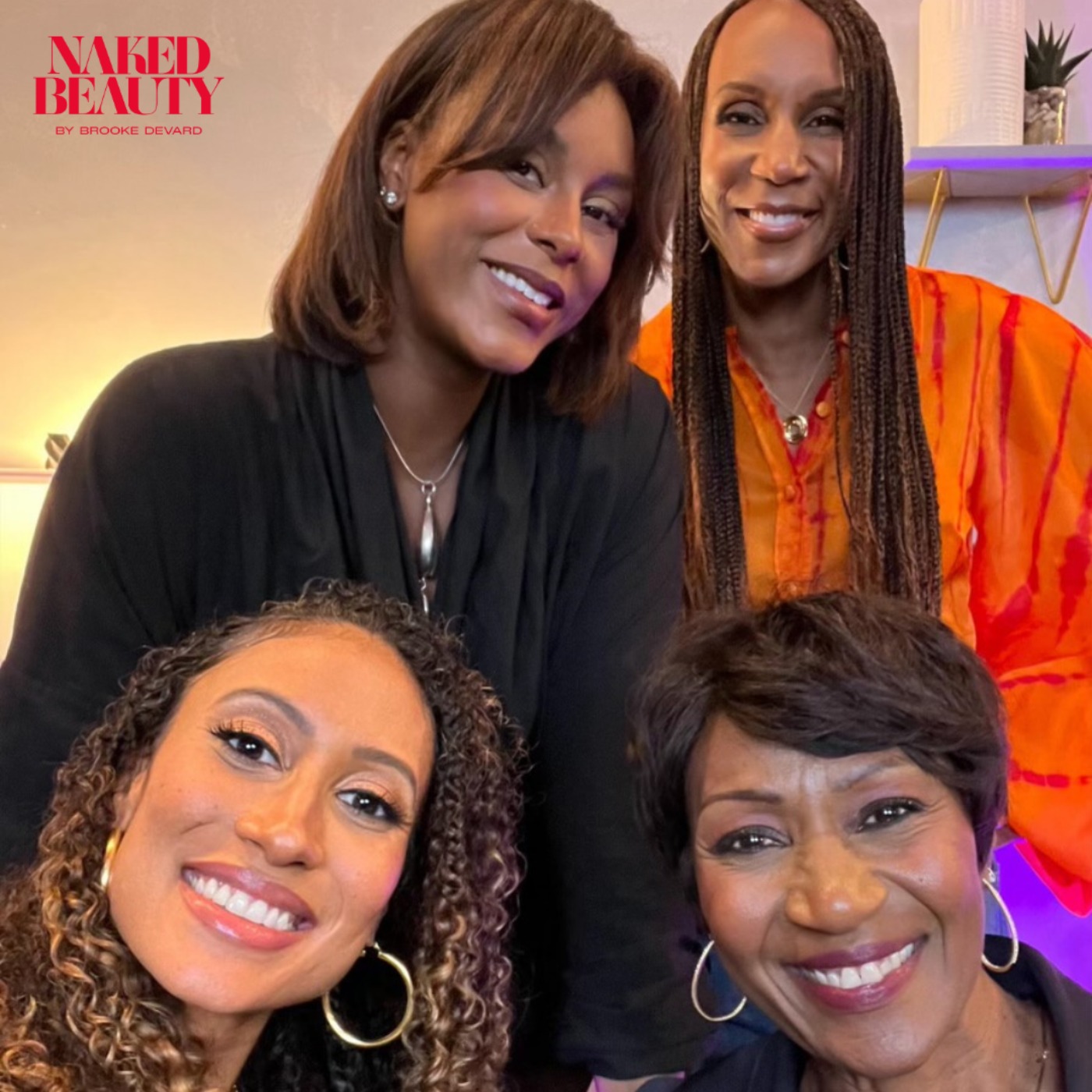
Naked Beauty
Four Black Moms on Love, Life, and Finding the Right Partner ft. Elaine Welteroth, Debra Welteroth, and Jerri Devard
00:58:33
Loading summary
Transcript168 lines
- [00:00]
Deborah
It won't take me far I'm living my life like it's golden Living my.
- [00:04]
Brooke Devard
Life like it's golden hello, hello, it's Brooke Devard, and you're listening to the Naked Beauty Podcast. Today's episode is very special. I first invited Elaine Welcheroth, who is an acclaimed award winning journalist, New York Times bestselling author, and now the founder of the Birth Fund, which is an incredible nonprofit working to address the gap in maternal care for families across the country. I invited her on to talk about our experience as moms. She is 35 weeks pregnant. I am 32 weeks pregnant. What that basically means is we're eight months into this nine month pregnancy. It's both of our second pregnancies. We're both about to give birth. So I wanted to have her on to talk about our pregnancy experiences. But then, as luck would have it, it just so happened that her mom was in town and my mom was in town. So we said, let's bring our iconic mothers on to have a conversation about motherhood, advice on motherhood. So we figured, let's make this a really iconic episode. Let's have our moms join us on the podcast. And I am so excited, excited to ask both my mom and her mom wisdom from their many, many years of experience both mothering and with career. If you all have been listening to Naked Beauty, you've heard my mom, Jerry Devard, on the podcast before. This is going to be such a treat, and I'm so looking forward to getting into it. So without further ado, I will welcome my guests and we will jump into the episode. Okay. We've got a lot of collective maternal wisdom on these couches, so I'm really excited about this conversation. Elaine, you were my initial guest and you've had such an incredible career across journalism, television, and now the work that you're doing with the Birth Fund. You moved to Los Angeles one four years ago now. Four years ago. Okay.
- [01:43]
Elaine Welteroth
By in a blur. It was in the pandemic. So time is a construct.
- [01:47]
Brooke Devard
And had a baby boy.
- [01:49]
Elaine Welteroth
Yes.
- [01:49]
Brooke Devard
Who's now a toddler like you. Yes, yes, yes. And now I've started this incredible organization. And your mother is in town. My mother is in town. And we are both like a month away. You're closer to your due date than I am.
- [02:05]
Elaine Welteroth
Yeah. Three weeks.
- [02:06]
Brooke Devard
Three weeks.
- [02:07]
Elaine Welteroth
It's go time.
- [02:08]
Brooke Devard
It's go time. It's go time. So when you pitched the idea of, okay, why don't we have our iconic moms join us on this? I mean, beauty I was like, this is why you were the editor in chief that you were. Because the brain is thinking of these brilliant ideas. So I'm so excited because as you all know, on Naked Beauty, we talk about self care and beauty, but so much of that comes from our mothers. And I would imagine that a lot of what you all learned was from your mothers. So I actually want to start with a question for the moms, which is about, I think most traditionally, I hear people ask, what beauty tips did you learn from your mother? And people talk about seeing their mother apply lipstick, but I actually want to hear what self care tips you learned from your mother. And did you see your mothers indulging in self care as a practice for them?
- [02:53]
Deborah
Oh, my goodness, no. I did not see my mother indulge in self care. I just remember her being a hard worker in terms of having to be at work at 6am Monday was her day off. And I remember when we'd be walking home from school, I could smell the Pine Sol from the corner. So her day off was not a day off.
- [03:16]
Brooke Devard
She spent it cleaning.
- [03:17]
Deborah
Yes, cleaning, ironing. And I mean ironing sheets. Okay. She really amazed me that especially now. But even then it was amazing to me. She'd make a full fledged meal. Of course, we wound up eating that meal quite a few days, but you know, it was like Sunday dinner. And I don't believe she started her self care journey until we were gone.
- [03:37]
Brooke Devard
Wow. And where did you grow up, Deborah?
- [03:39]
Deborah
I grew up in Rochester, New York.
- [03:41]
Brooke Devard
Okay. So she worked all week and then her day off, it was just home care. No bubble baths, Home care and us.
- [03:48]
Deborah
Oh, no, she was not a bubble bath kind of girl. But yeah, the most time that I felt like she spent any time on herself, probably Sunday morning getting ready for church. Yeah, that would be the most time that she would take. Time with her face and her clothes and outfit. Another thing I admired about her is her hips and legs and she would wear, if she wore close fitting things. And I was so thin, I just thought, one day I hope to have that figure.
- [04:14]
Brooke Devard
You have an amazing figure. You have the smallest waist. I'm sure people land you. People tell your mom all the time.
- [04:19]
Elaine Welteroth
Oh my gosh, all the time. I mean, I tell her, I'm like, do you know how many people pay for this BBL and exactly this hourglass situation though? She's so not about drawing attention to herself or her body. It always. Look at her, she's like, she wants to like die right now. She's like, stop talking about My body. But you probably inherit that from your family, too. Just that sense of modesty.
- [04:41]
Deborah
Definitely. Definitely. My mother, from my maternal line, for sure, the modesty. But and also my physique I primarily get from my father and grandfather, the paternal side. They were tall and thin, and I just remember my grandfather talking to me about his work day. There was none of these eight hours. It was sun up to sundown, and they were outside and they were hustling and they were using their body. And so to me, part of my modesty is they earned this body. I just inherited it because, as my husband said, I was a desk jockey. I worked for 43 years behind a desk. So I know that that contributes to my modesty about my body.
- [05:21]
Elaine Welteroth
I waited until I could have a baby to try to have this, like, hourglass. I was like, when is my booty coming in? When are my hips and thighs coming right?
- [05:29]
Brooke Devard
And it does change.
- [05:30]
Elaine Welteroth
It does. After that baby, I was like, yes. I feel like everybody was waiting for the Deborah Walter off gene to passed down. Yeah.
- [05:38]
Brooke Devard
Mom, what about you? What did you observe in terms of grandma and self care?
- [05:42]
Jerry Devard
Well, first I have to jump in on the Deborah Welter off body thing.
- [05:44]
Brooke Devard
This is not the topic.
- [05:45]
Jerry Devard
Right, right. Well, she doesn't have to talk about her body because other people are going to talk about her body. So. And it's beautiful because, you know, the thing about it is that I think a lot of people inherited good genes and parents that worked. But like you said, you have to take care of what you've received, and you're obviously doing a very good job of taking care of what you've received.
- [06:02]
Deborah
Thank you.
- [06:03]
Jerry Devard
I'm passing it on. So. Because, Elaine, you're holding it down, too. You're holding it down. And, you know, when you asked that question, Brooke, about what did I observe for self care, I had the exact reaction that Deborah had. Right. About. I never saw that. And I think it was. Maybe it's generational. I think it is because that was not something that you talked about. That was not something that you luxuriated in, was self care. You were about getting your kids out the door, getting sure the house was clean, there was food on the table. There was no time for, like, bubble baths and facials and eye masks and, you know, and all of that. But, you know, my mom looked good, right? My mom made sure that she looked good. And I would say the closest thing to self care that I saw was her using, you know, pond's cold cream, you know, at night or to take off her makeup, that was it. And she just found a way. She always cared about the way she looked when she left the house, as did my grandmother. Exactly. And that came from. I remember being a young girl, you know, born and raised in New York City and coming down south, which is what you do for the summer. And my grandmother would say, you are going to get dressed to go downtown because you have to look good because people treat you the way you look. So you couldn't roll in there with a T shirt or whatever the equivalent of that was Right. Back then. I mean, we were like dressed like Easter Sunday every time we left the house.
- [07:24]
Deborah
Yes.
- [07:24]
Jerry Devard
Socks were clean, shoes were, you know, sparkling, hair was laid. Yes. And so that was what I observed. And that's what my mom did and that's what my grandmother did. But my mom did take the time on her clothes. She was very particular about what she wore and what she bought and how she put it together. She had an amazing sense of style. But self care was not something that was even in the set of consideration of what you would do for yourself.
- [07:51]
Brooke Devard
Yes. And what was important for both of you about raising black and mixed race.
- [07:57]
Jerry Devard
Daughters, the thing about it is, is that I wanted, and you will recall this, we would sit around the dinner table and we would talk about the things that affected us growing up, like the things that affected even you. We would have. We would take a copy of the New York Times and we would look at what was on the COVID And invariably there was something that had something to do with race. And I would ask you and your brother, what do you think about that? And I was trying to invoke, your father and I were trying to invoke a sense of what you read and what actually happens. And a lot of that had to do with protection or lack thereof, police brutality or lack thereof. The representation of black people in media and trying to give you a sense of confidence in who you are, that you were not only good enough, but that you were more than enough because the world was going to tell you that you weren't. And so your father and I were always over rotating on how good you were. You know, that. That call and response that we always had. I'd say, brooke, what are you?
- [08:54]
Brooke Devard
I am special.
- [08:55]
Jerry Devard
You had to say that over and over again because I knew the world was gonna tell you or try to make you think that you weren't. So I think it was always instilling in you and your brother a sense of understanding that you were black before someone else made that something negative. About you wearing that as a sense of pride and understanding where your people had come from. And no one making you feel small about your skin or your life or what you loved.
- [09:21]
Brooke Devard
Yes. And, Elaine, one thing that we have in common is we both grew up in majority white environments from school. And in your book More Than Enough, you talk about struggling a little bit with that identity. So I'm really curious, actually, to hear from both you and your mom about how you instilled a sense of confidence in Elaine's identity. And then, Elaine, what that experience was like for you.
- [09:42]
Deborah
Well, I think that was very interesting that your point is. And my point with my children, first of all, with my children, I did not have the reinforcement of my family. My African American family was 3,000 miles away, and that was my biggest concern when my husband and I married. I wanted to make sure that they knew who they were and also how they'd be perceived when they got a little bit older, and that they would send the paper home about what race to sign. And I would always check this. And so when they could read, they're like, why do you check what, black? Yes, I check black. I'm sorry. And I said, because they're like, what about Dad? I said, what about dad? When they look at you, they're going to see me. So. And, you know, I'm like, well, then you fill out yourself. And they did. They filled it out themselves.
- [10:36]
Elaine Welteroth
We would check.
- [10:36]
Deborah
Both check back. That's right. I didn't know what you did. I just knew you took over. And I was like, okay, they'll figure it out. Sooner or later, real life is going to point it out to them. And it did. But back to the very beginning, one of the things that was important for me, my parents were raised in the south, you know, the segregated South. And unlike what I feel like some households did, my parents did not raise me to vilify white people. Their point was, you're as good as anybody. There are good black people, there are bad black people. There are good white people. They're bad white people. And you will know the difference. They kind of helped me get that radar and know that. You remember that song, Smiling Faces Tell lies. You can tell they don't know nothing about that.
- [11:23]
Jerry Devard
But I know, I know that song is Smiling Now.
- [11:26]
Elaine Welteroth
Just smiling. I know.
- [11:27]
Jerry Devard
I know that song. They Don't Tell Truth. There you go.
- [11:31]
Deborah
That's right. And so that matters, period. Whoever you're dealing with. So meeting my husband and his family, they were real. His mother and I had so much more in common. And I knew that these people were real in terms of truly not having race be something that was a negative for them.
- [11:48]
Brooke Devard
And what's his background?
- [11:49]
Deborah
His background is German, Irish.
- [11:51]
Brooke Devard
Okay.
- [11:52]
Deborah
My mother in law was Irish.
- [11:53]
Brooke Devard
Very white.
- [11:53]
Deborah
Yes. The bluest eyes you've ever seen. And I know, I remember, you know, Malcolm X. What did he say? The blue eyed devil. I'm like, what if I die? But you know, the heart wants what the heart wants.
- [12:08]
Elaine Welteroth
Sleeping with the.
- [12:10]
Deborah
And I did it was not my vision at all. I just remember when Diana Ross married a white guy and I thought, well, he is cute, you know, so maybe if I went with a white guy, he might look like that, you know, dark hair, whatever. And Jack comes along with the blonde hair, blue eye, surfer dude. Something that had never crossed my mind. But he's got a heart of gold. And it was really when we did get together and I was concerned about the race thing, he's never had to be concerned about that. And honestly, he was ignorant about it, really, you know, unrealistic even. But he said, you know, when we were going to have children, we will raise them with love. And it just, you know, melted my heart. He has a way of melting my heart. So that was true. Yes, we did raise them with love, but I also wanted to raise them with wisdom. And part of that wisdom involved knowing who they were. And I wanted them to make sure, just because they didn't have the cousins that I had to help me feel safe in my skin and confident in my blackness. I knew that it was going to be on me to make sure that they had that. So I did make the effort to raise them in an African American church. It wasn't always positive for them like I expected it to be. But I have had friends in California. As a matter of fact, my best friend. What was similar is she was raised in Florida and we had kind of the same background. And so she's got a very strong African American presence and her kids embrace my kids. And so it was important to me. I would talk to them, I would have Ebony magazine, Essence magazine, things like that that would encourage them. I even found through Essence magazine and Ebony I could get reading material and things that were available that had pictures of little brown skinned children. And I even found a book that talked about biracial children or whatever. But it was very important to me that they knew who they were and that both sides were equally good and positive and that they weren't to be put down by anybody, that they needed to have that self confidence that's beautiful.
- [14:18]
Elaine Welteroth
This is beautiful. I mean, as you talk about that, I reflect on this story that I have shared this before, but not in a really long time. I remember my first memory in preschool being othered and feeling like for the first time, oh, I'm different from everybody, and not feeling proud about that. And I remember it came through this preschool assignment where all the kids were asked to make a collage of their families. And they brought all these magazines out filled with all these white folks. And I'm flipping through the magazines, and I'm watching everybody else get to work. They're cutting out. They're going. And I'm like, I don't see anyone who looks like my mom. I don't see anybody who looks like me or my brother. I see lots of options for white daddies. And so I chose like. Like the, like, men's warehouse version of my dad. Like, briefcase, like, suit, suited, booted, slicked hair, which my dad was a carpenter. So, like, there was nothing truthful about that. But I remember cutting out my dad and then making the decision, after looking around and surveying the room, to just do what everyone else was doing, which is cut out white people.
- [15:26]
Brooke Devard
Wow.
- [15:26]
Elaine Welteroth
And so I made this family collage full of white people that the teachers then saw, and they were like, this is awkward. So I remember a teacher coming over and trying to, like, redirect me to this little black girl who looked nothing like me. I think it was like a pancake. It was like an Aunt Jemima, like, ad. And it was like a little girl with pressed hair, dark skin, you know, just nothing like me. And I just remember I froze her out. I just acted like I didn't hear her because I didn't want my difference to be highlighted. I just wanted to pretend to be white. I thought that I could get away with that on the paper. And then that collage came home, and this woman saw, took one look at that, and she was like, oh, her famous line is, houston, we got a problem. And so she, like, rounded up my brother and I, and we were told to sit down at the dinner table, and she whipped out a gang of Ebony and Essence magazines, spread them all over the table, and she said, we are going to redo this assignment together as a family. You will be replacing this little white girl and that little boy. And my brother had to do the assignment, too. And we did. And we. My mom taped our. She let me keep my little businessman dad, even though that was a lie, too, because he came home covered in dust as a carpenter every day, but she let me keep him. And then she put that collage on my wall next to my bed so that it was the first thing I saw every day and the last thing I saw every night. And she was like, this is who you are. This is who you will be proud of. And it really reinforced that sense of pride. I had that at home. I got that at home. It was instilled in me from an early age. There was, like, a counter narrative coming at me strong from my mom that really did challenge some of the messages that I was getting. Just intrinsically, it's like, you feel it in this country. It's not something that needs to be told to you. Eventually it will be in different ways. But it was a quiet sense of my inferiority, and my mom constantly countered that. And I just feel so grateful. I feel grateful that I have an example of black womanhood that I can reference from the time I was born.
- [17:41]
Brooke Devard
Right.
- [17:42]
Elaine Welteroth
One that is beautiful and elegant and sophisticated and smart and powerful and gentle and all these amazing things. Like, my mom is like, if I could be half the woman she is, then I've done something. So I just feel like I'm less vulnerable to allowing messages from the media to influence how I see myself when I'm raised with somebody like this, you know? But I do think about, like, as a black woman or as a mixed race person. If I had a white mother, would that be different? Would I be searching outside of my household for that sense of, like, identity? And I don't know. She was my mirror. I had that.
- [18:22]
Jerry Devard
Yeah.
- [18:23]
Elaine Welteroth
So I really feel blessed and I feel anchored by the kind of mom that I had. It's made such a difference in my life. And it's not to say that I didn't have, like, an identity crisis or two, you know, Like, I think those are inevitable.
- [18:38]
Brooke Devard
You know, I was going to ask about that inevitability because my son, like you, has an experience that's not my experience and it's not my husband's experience.
- [18:47]
Elaine Welteroth
Yeah.
- [18:47]
Brooke Devard
So in a lot of ways, neither of us can fully relate to what it is like to be truly biracial. Mixed race. Is there something isolating about that? And two, is there an inevitability that it will be something that he struggles with no matter what we do at home?
- [19:02]
Elaine Welteroth
It's hard to say. It's hard to speak for Mavi's generation, because I do think this is a very different world.
- [19:08]
Jerry Devard
Yeah. Yeah.
- [19:08]
Elaine Welteroth
For my generation, our generation, I think we were raised in a very black and white world. So you had to check a box.
- [19:16]
Jerry Devard
Yeah.
- [19:16]
Elaine Welteroth
And you had to pick a lane. Culturally, socially, which group are you hanging out with? Which table are you sitting at?
- [19:22]
Brooke Devard
Right.
- [19:22]
Elaine Welteroth
And I've always been a chameleon, so I feel like I was able to. My friends were predominantly white growing up because that was the pool that I grew up in. But when we got into high school and there were more black folks, I remember feeling like, oh, suddenly I'm like the black girl that hangs out with the white girls. Like, I'm the token black friend and like, they're not messing with me. Like, the black girls weren't trying to mess. And I would. I felt like I started to feel that conflict of, like, living between two worlds. But ultimately I joined the step team and that was my access point. But you know what's so funny? I was also a cheerleader. Okay. Yeah. This is like the epitome of code switching in a sartorial sense. I would literally, at, like, football games, basketball games, I would do my cheerleading thing with all the white girls. There were a couple of black girls on the team. Like, Victoria won, I think.
- [20:12]
Deborah
Yeah.
- [20:13]
Elaine Welteroth
And then I would run under the bleachers, change into my step uniform, and then run out to the middle of the field with all the black girls and do my. You know what I mean? And, you know, it's so funny. My. Of all the things I've done in my life, the thing that my dad will tell you he's the most proud of is that step thing you did that you have so much fun. He's like a good step. Yeah. Like, literally I could meet like Michelle Obama and have a conversation and he's.
- [20:39]
Jerry Devard
Just like, the clap and stomp.
- [20:40]
Elaine Welteroth
The clap and the stomp on the beats. Like, that was really good. So anyway, I feel in our generation there was like, you had to choose which lane you were going to be in. And for my brother, who's less interested in being a chameleon, he's a total rebel. He came out the womb as a punk rocker. He had a six inch green mohawk. He would wear chip black nail polish and Marilyn Manson shirts and leather jackets with, like, studs. And my mom and him would butt heads every Sunday because he wanted to wear that to church. And she was just like, you're not black. Church?
- [21:13]
Jerry Devard
Oh, yeah.
- [21:14]
Elaine Welteroth
No, like Southern Baptist church.
- [21:16]
Jerry Devard
Oh, yeah.
- [21:16]
Elaine Welteroth
He was not embraced by the black community because he did not conform to the norms of our community. But at the same time, he was like the only brown kid with a green mohawk in the mosh pits. Of the Bay Area. But as you said, you eventually, it doesn't matter what culture or community you feel more comfortable around, that you opt into. Ultimately, the world will decide and tell you who you are and how you're seen. And when my brother was followed by the police and pinned down to the ground violently because he was misidentified for a criminal a block from our house, it didn't matter they hung out with white people. It didn't matter that he listened to punk rock music. He is a black man in America.
- [22:05]
Deborah
Yes.
- [22:05]
Elaine Welteroth
And that is the wake up call that you get as a black person, as a person of color. And so I think those realities are still ever present. So I hope Mavi has a different experience also. I think socioeconomics plays a part as well. I mean, he's gonna grow up in a really nice neighborhood at a really. At a private school. You know, maybe he will be sheltered from some of that, But I hope by the time he's driving his car, he will be safer than we were, than our brothers were. And I hope that he has enough of a sense of pride instilled by his strong grandmother, his strong black mother, that he will never feel like he has to disassociate from his blackness in order to be accepted or to feel good about himself. I just can only say that I hope that for him.
- [22:52]
Jerry Devard
I was gonna say, Brooke. It's interesting listening to Elaine. I remember your father and I distinctly having conversations with your brother Alexander around hanging with his white friends and being in a store, and if one of them shoplifted, they were gonna come for him.
- [23:05]
Elaine Welteroth
Yeah.
- [23:05]
Jerry Devard
That if there was ever an altercation, that he was going to be the one that people were going to assume had done it. If they were out, if there were girl and something went down, it was always going to be him. And so I had to tell him, your father, that he was different and that there were things that were going to come to him that wouldn't come to his friends. And so that he had to walk around knowing that. And I'd like to think that that will change. I don't know. I mean, I think about Derrick Bell's book Faces at the bottom of the well, the permanence of racism and the fact that there will always be this class that wants to feel that for them to rise, they have to step on someone. And. But as long as we are armed with that and understand that that is not something that you can use against me, that I see you coming, I'm ready for it, and try Somebody else or something else, because that's not going to work, then I think we're doing our job.
- [23:53]
Deborah
Yes, I agree with that, because I do feel like what you said is something that we experience with my son. It's like I've never been a black male and my husband's never been a black male. And what he is going to experience, what he is experiencing, we can't closely identify with. But we can at least arm him with the security that we understand whatever he is going through, if he can communicate it to us that we. We've got his back. And I do remember one incident that I'll. I'll never forget. My son was called the N word at school, grammar school. And the principal called my husband, not me, thought that he was going to get washed over or whatever. I think they wanted to expel Eric or whatever. My husband went down to the school and said, oh, no. You see, I'm the one that told him if anybody calls him the N word, that he's to take them out if they come for him.
- [24:45]
Elaine Welteroth
That's white dad advice, by the way. That's not necessarily from a black man, but.
- [24:49]
Deborah
And he did teach him to defend himself, because my son's a gentle person. He's not violent. That's not his first thing. But you have to teach someone. You have to be able to defend yourself, number one. And the most important thing is for Jack. He's never been called the N word, but I made sure he knew one thing will not happen in this house. You know, some black households use that word. We did not, certainly. And we will not use that in my household. And so that's how, you know, it is a negative. I don't care who says it. So for this little white boy to say that to my son and for them to think that they were going to kick my son out of school and let the little white boy come back, My husband said, oh, no. If he goes, they both go. My son doesn't have to apologize for doing something. Exactly. And so it's something I hope your son doesn't have to deal with. But most importantly, make sure that he has the tools and the understanding.
- [25:43]
Brooke Devard
Yes.
- [25:43]
Deborah
That he is to be respected for who he is and who his people are.
- [25:48]
Elaine Welteroth
There's a measure of white privilege that my dad exercised for his son to go up to the school. To raise his voice at a white principal is not something my mom could have done. It's not something a black father could have done without having major consequences potentially. The way my dad, he's got a big voice. He's got deeper voices.
- [26:08]
Deborah
Yeah, that's what did it.
- [26:09]
Elaine Welteroth
It's interesting, though, to think about that dynamic. And if that is what manhood is being modeled to my brother, and my brother goes out in the world and tries to behave in some of these similar ways, he's going to be met with resistance in a different way. You know, they allowed my dad to talk like that. They conceded to his demands. He got my brother off.
- [26:29]
Brooke Devard
Yes.
- [26:30]
Elaine Welteroth
I just don't think that would have been the case if he were a black man in America defending his son in the same exact way.
- [26:36]
Brooke Devard
Well, this is a really interesting segue into my next topic, which is partnership and how important it is to choose the right partner. So you both have been married for how long? How many years?
- [26:48]
Jerry Devard
41.
- [26:49]
Deborah
42.
- [26:50]
Brooke Devard
Okay, 41 years of marriage. 42 years of marriage. So for young people listening that are trying to find a partner or find a mate, or people that have been or are married already and early in their marriage, why do you think it is so important to find a life partner and what did you look for in your partners?
- [27:08]
Jerry Devard
Why it's important to find a life partner is that, you know, we are meant to have people in our lives that really care about us deeply, unconditionally. And I think that. I think back to all the things that I've done that have been special in my life, and I can certainly trace it back to who I chose to marry and build a life with, and that I think that my life would have been very different had I. Well, it would have been different had I married someone else, because certain things would have come out. And I believe that for me, I think strongly back to my mom and the kinds of things. Even though my mom was married three times. Right. Yes. I learned a lot from watching what not to do, and she. And each time, she was very clear around what happened. Right. And so the first time my father. My mom wanted to go back to school, my father wanted to keep her in a box because she had moved to New York to take care of a very sick aunt. And she met my father, she'd only done one year of college when she was, you know, as the oldest girl tapped to come to New York, and she wanted to go back to school once she had my brother and I. And he said, no, you don't need to go back to school. You're my wife. That should be enough. She said, I want to go back to school. And so that kind of created a rift. Also, my mom was A victim of domestic violence, Right? So my father, to keep her in her place because my mom was beautiful and smart, and he was very intimidated by that. He was very, very jealous. Didn't want her to leave the house. And he just kind of preyed on all of her insecurities around being Southern. Her beauty was used as a weapon against her. And her brains were like, you got enough? And so once she kind of came into her own and summoned the strength to say that I deserve more than this, she left. And my brother and I went and lived with my grandparents. And she went back to school and she got her undergraduate degree, her four year degree. She got her master's degree, her edd and her PhD.
- [28:57]
Elaine Welteroth
That's wonderful.
- [28:58]
Jerry Devard
And she did all that without a partner, Right. With all of. Just her energy to say, for a better life for myself and my children, this is what I need to do. And so, you know, leaving my father, she met someone when she was in graduate school that she thought would be perfect. He wasn't. And I remember, you know, that Waiting to Exhale, which put all his stuff out in the garage. She didn't light a match to it, but all his stuff was, you know, outside. And then she met my stepfather, who she's been married to now, like 50 years. And they've got a great relationship. He is 101 and still active and smart and sharp as a tack. My mother will turn 90 in a few months and she is amazing. So it was really, for me, the partner. And the joke is, in our family, it's not a joke. It's actually the fact that my mom picked my husband. We were at a function, he was there. I kind of had on some stiletto heels, you know, this outfit. I'm tripping along the deck and my heel got caught and I went to fall back and he caught me. And then he sat me down. He said, are you okay? It's very romantic, very romantic. Are you okay? And my mom comes over. She's still in everybody's business. I always say that. Who's that? She's like, he's a nice guy. He's really nice guy. Because he was very attentive. And, you know, as I got to know him and I was young, I met my husband when I was very young. So I don't know. But I think that. Back to your original question, Brooke. I think it's everything. I think where you are in your life has everything to do with who you choose to share it with, because your parents can instill in you great values. You know, my grandmother used to say, do right, fear not. Which is very true. I say that to this day, if you're doing the right thing, you don't have anything to worry about. But who's in that day to day? Your kitchen cabinet when something's going down, it's like I come home from work, I said, do you know what they did? He'd be like, okay, Jerry, now wait a minute. Now you know how you are. This is a better thing to do. He was like a better angel. He's just an amazing human being. I married a guy that I never would have met had I not been in the situation with my mom. Because he's such a great guy. And I always thought I'd marry like a Nathan Detroit kind of. It's an old analogy.
- [31:02]
Elaine Welteroth
I know.
- [31:02]
Jerry Devard
Nobody knows Nathan Detroit is a character in Guys and Dolls. He walked into the room, he looked good. Everybody thought he was handsome, wanted him, but he was no good. And when I was in college, I dated a lot of good looking guys that were not good for me, but everybody else wanted them. And so when you found someone that was handsome and smart and kind and cared about people, that to me was the juggernaut. And so I lucked out. But my point is, is that when you find someone that you do have that relationship where you can align on values and interests and ambition and kindness and goodness and in religion, it was just the perfect match. And I'll say that I didn't think that I would. I'm Devard. Because I didn't want to change my name in case it didn't work out. So I didn't go into this thinking that it would last this long. I was like, well, he's a good guy, let's see. And then along the way, I realized that, yes, I loved him more today than I did yesterday. And it's a good thing that.
- [31:57]
Brooke Devard
So sweet.
- [31:58]
Elaine Welteroth
Love that love story.
- [32:00]
Deborah
Me too.
- [32:01]
Brooke Devard
Deborah, what was important to you about picking a partner?
- [32:03]
Deborah
Well, as you mentioned, I too married young. And at the time, there's also another thing that you said was important. The values where you are. At that time, Jack was so open and honest and it encouraged me because he was just such a free spirit. I found that to be so attractive and freeing for me because I was raised in such a closed manner. And I kept myself in that closed manner until he just walked on the wild side, you know, and he was just so much fun. And he always, we. We could laugh. And yet the things that were important to us, like faithfulness Being true to one another, being honest. And he's caring and nurturing and loving and warm. And we can disagree in ways that I remember my mother coming and visiting and saying, you told him whatever. I'm like, yeah, because it was the truth. You know, they were the Southern belles. Like, whatever their husband said, it was like, no, I knew I wasn't going to do that. I was raised by a chauvinistic father, so I was definitely not going to get involved with anyone who was, I'm up here and you're here. And my mother always had an attitude when there was a problem that as far as being physically abused, that wasn't going to happen to her. So in my mind's eye, it's not going to happen to me. So I wasn't worried about any of that. And he wasn't that kind of person, you know, the name Welch Roth, we were told, meant World of Fire. So he can be a little spicy sometimes. But we ultimately always come back to the fact that we really love each other. His mother is very nurturing, and she used to talk about him all the time. I gotta say, she sold him very well.
- [33:48]
Elaine Welteroth
She worked with my dad's mom for years before my grandma. My dad's mom introduced them and matched them up. Yeah.
- [33:57]
Deborah
I would have lunch with her and tell her all these things that I was going through. And then one day she's like, well, Deb, you know my Jackie. I'm like, pat, I've got enough trouble in my life. I don't need a white boyfriend. Thank you very much. I love you, honey, and everything, but you got to be kidding. And here we are 42 years later. Thanks, Ma. It's. As I mentioned earlier, she was so easy to love. And turned out he was as easy to love his sisters. I was just embraced by them with such a honest and clear mutual respect and also the same values. I wasn't raised Catholic, but I went to Catholic school.
- [34:37]
Elaine Welteroth
School.
- [34:38]
Deborah
My mother in law was a devout Catholic person, Catholic school teacher. For a minute there, she taught Jack. And she would tell me how all the other 8th grade boys would come over and he would help them with their math. He hates that story, but she loved it. But, yeah, the other thing that got me is my parents and pets. We would have a pet, and the next thing we know, they disappear. You know, no big deal. Jack, as a bachelor, had these two cats, Lumpy and Blondie Rutherford. And we were dating, wasn't even a year yet. And he called me at like midnight. He goes, I'm a grandpa Blondie had kittens.
- [35:10]
Brooke Devard
How could you not love that?
- [35:12]
Deborah
That's exactly how I felt. I'm like, he is such a sweetheart, sensitive soul. It was too cute. And, you know, he just kind of carried that into our. Our relationship and then especially with our children. My husband lost his dad when he was 17 or 21. His dad died at 54. It's the short story. Now I realize how young that was. Lost his brother. His brother was 31. So when I gave birth to Eric Charles, it was like his whole new opportunity to have his male bonding situation. He would come home from work, that job as a carpenter, take a shower, put on his pajamas and just hold his little son and talk to him. And I'm just like all over again, you know? And whenever they got sick, there's only certain parts of nursing that I can do. The heavy hitting parts, like, oh, is there vomit involved, Jack?
- [36:07]
Jerry Devard
Liquids. You don't do liquids.
- [36:08]
Deborah
No. He was such a good caregiver to them when they were little and when they were ill and when I'm ill, he takes care of me in many, many ways. I love him more. And it just started from that. That's the best part of him. We're opposites, but in the things that matter most. That's what I would say. You would look forward to laughing.
- [36:30]
Brooke Devard
Laughing together.
- [36:31]
Deborah
Yeah.
- [36:32]
Brooke Devard
And Delane, I have two questions for you. One, how did you know that Jonathan was the one for you and the person to build your life with? And then my second question is, I'm curious how your relationship has changed, for better and worse since having a child.
- [36:47]
Elaine Welteroth
I think that, like you, I kissed enough frogs, AKA bad boy. What was the reference?
- [36:54]
Jerry Devard
I said Nathan Detroit.
- [36:55]
Elaine Welteroth
Nathan Detroit. I had a couple. Nathan Detroit.
- [36:57]
Jerry Devard
Right. Okay.
- [36:58]
Elaine Welteroth
And Jonathan is so the opposite of that. That. And so Jonathan and I met when we were 12 in church. And I remember seeing him, he has like glass that he used to wear these big glasses. He was going to an all boys prep school and he was like going to go to Stanford. He was going to be a doctor. And I was just like, oh, what a nice guy. Like, he's gonna make someone else such a nice husband one day.
- [37:22]
Jerry Devard
You know, we called those NGB nice guy, but he was a nice guy.
- [37:25]
Elaine Welteroth
But so I just wasn't checking for him or that type, you know what I mean? He was just more square in my mind. And I was over here dating. Yeah. For a really long time. My first love. We were together from 9th grade all the way through like half of my college. Years. And let's just say I was a ride or die chick. And at some point I was like, do I really have to die? You know what I mean? Like, I think I'm going to get off here. Yes, there was a jail stint. There was a lot that went on there. And so by the time I think I matured and was, like, in the world, I was looking for very different things. And I had my heart broken by the archetypes that I was told to go after or to feel, like, excited about, you know, Like, I think we were raised in the sex and the city generation, so we were raised to be looking for the big, of course, like the money bags, like the banker, the guy in the suit, like the men's warehouse version of my dad.
- [38:22]
Brooke Devard
You know what I mean?
- [38:24]
Elaine Welteroth
And I got that. And it was not all that it was cracked up to be. And so by the time Jonathan came around, I think I had been humbled enough, my heart had been broken enough for me to see what really matters in a partner to me, right? And I think all of that I had inherited about what to seek out in a partner. I tried it. It didn't work. And when I re met Jonathan as adults, we were like, 26, and he came to New York for a job interview and had just hit me up on Facebook, which is so random, I never even checked my Facebook messages. But he asked it, do we want to get drinks? I remember, like, going and being like, oh, yeah, that NGB from church. All right, what else did my dog. We'll have a drink with him and then do something else the rest of the night. And then when I sat with him, I felt like I was at home in his company. I felt this ease. I felt like my nervous system was instantly calm. And I found myself laughing and telling jokes and being the version of myself that I am with my best friends and just more colorful, more sparkly, big. And he could not just handle it. He was like. We had such an incredible dynamic and banter. And so, like, those drinks became dinner. The dinner became dessert. The dessert became, you want to go across the street and have another drink. And then it was like we ended up, you know, being invited to the same party that we thought we were going to split ways and go to two different parties. And we looked at the invitation. We're like, this is the same party. Let's go together. By the way, was a ghetto gastro party. And to this day, I have to give John Gray credit because that night turned into one of those 3am New York City nights where we went after that to hookah and karaoke, and it was just like, wow. And I remember sitting there being like, I cannot believe that you are the same guy from church. From church with the glasses. We were 12 years old. Our moms have been in the same church choir since we were 12. They stand next to each other, literally, for the last 25 years, they have stood next to each other in this. In the church choir. And here we are smoking hookah, singing at the top of our lungs in New York City at 3am like, this is crazy. And I'm just like. I went so far away from home to find something so different, only to find exactly what was there for me at home the whole time. And he just brought that sense of home to my life, which was just very different than. Than the life that anybody lived from where I came from. You know what I mean? So it was nice to have a piece of home with me. And I still feel like that with him. I. I feel that that is that intangible X factor that sets your heart at ease, and it's something you can't even articulate, but you know it when you feel it. And there's nothing performative about our love. There's nothing that I feel like I need to do to earn his love. It's just built in. And it's a friendship. It's a best friendship, really. That's what it is. It's at the core of it. It's like, that's my guy. That's my people. He's my favorite human on the planet. You know, for me, marriage was sort of like, okay, if we have to, I'm not changing my last name. Okay, that's going a little too far. You know what I mean? And I think I'm a modern woman. And so for me, marriage didn't sit in the same place that it did when I was maybe 25. And. And I still was, like, very much in the Carrie Bradshaw era, where it's like, you want to be chosen and you want, like, the big ring and you want the big Oscar de la Renta or Vera Wang. Like, I was just not in that mindset. Like, what I want is to feel like this in my body.
- [41:49]
Brooke Devard
Yes.
- [41:50]
Elaine Welteroth
For as long as possible. And if it's because of you, with you, let's ride this as long as we can. But I don't ever want to feel trapped by, like, golden handcuffs. I don't want to feel like I've committed to the commitment. I want us to always be Evolving. And I want us to help each other evolve. And if at any point we don't feel like we can do that together, I want there to be an out. Like, this is the least romantic thing I can say. And a lot of people are going to be like, skirt. What? This was going in such a romantic direction. But for me, the most romantic thing that I needed from Jonathan before he proposed to me, I was like, I need to know that divorce is on the table. Do not propose to me unless divorce is on the table. I'm not saying I want to get divorced. I'm not saying I think we would get divorced. But I want to feel married to myself and my growth. And I want you to feel like that, and I want that to be the North Star. And so I just don't want to feel trapped ever. And he was like, I love you enough to let you divorce me. If you feel at any point that I can't make you happy or that we're not making each other happy, but I'm pretty confident I can keep you happy. And I was just like, that's like, the most romantic thing I've ever had to ever say. So, like, that. Honestly, that conversation was pivotal for us. Like, that really made me feel like we're not just two kids in love floating into this fantasy of marriage where our feet are on the ground, our eyes are open. We've lived life. We know who we are, we know what we want, and we know that if at some point it doesn't work out, we can have the. We can be that honest with each other. And I think because of that, we'll never get divorced.
- [43:27]
Brooke Devard
I think the common thread between all of these conversations is finding someone that values you, sees you, appreciates you, and is kind. And I talk to my single girlfriends that have this checklist like, he's got to be over 6ft tall. And I'm like, literally none of that matters. And it's totally not important to finding a life partner. You want someone that you can build a life with. And I think that all of your stories really highlight that. It's interesting, even. I've heard Michelle Obama talk about how challenging it was the years that they were raising their daughters in the White House. And I think parenthood makes your relationship stronger in a lot of ways. But it's also, if we're going to be very honest, it puts a lot of strain and challenge on relationships as well. And I feel like. I don't know. I think we're starting to have more conversations about it. But you don't hear about it as much.
- [44:11]
Elaine Welteroth
Yeah, I'm like, ask me after baby number two.
- [44:14]
Brooke Devard
Well, that's. Yeah. Because I'm thinking, okay, we figured it out with one and we take turns. I'm sure maybe Jonathan is with your son now. Like, we figured out our balance. But then you introduce a second child. Yeah, that's more stress.
- [44:27]
Elaine Welteroth
Yeah.
- [44:28]
Brooke Devard
Yeah.
- [44:28]
Elaine Welteroth
I mean, I do have concerns about what's going to happen when you add another human to this equation. I think we are in such a great flow. We with our one baby and we actually thought we were going to be one and done. So this is an adjustment for us, one that we're, like, excited to explore. Almost feel pressured to say it's harder with the kid because that seems like the thing people say. But in my experience, and I don't want to set people up for failure, which is why I hesitate to be, like, dishonest about it. But I really feel like our partnership, maybe because it was so fully baked before we got married and then before we had a child, that there was such a sense of partnership already that it really felt and feels like, throw us anything and we'll figure out how to manage it in a way that ultimately even makes us closer. And that's what parenthood has been like for us. I was nervous about that, though, when I was pregnant the first time. I didn't want to share him with anyone. And I was like, we could not have a better life together. Why are we gonna go mess it up and, like, have a baby? Like, oh, man. Like, are these, like, the end of our good days? But then it got even better with the baby and we have someone that we both love more than anything.
- [45:41]
Brooke Devard
Right.
- [45:41]
Elaine Welteroth
That's a piece of both of us. And as cheesy as it sounds every night, all we do is just recap what the baby did and compare notes and giggle about him. And, like, we get glassy eyed over how much we love him. It's the most beautiful extension and expansion of our love. And so I can't say that it's been a bad thing for our relationship to have a baby. It's been a beautiful thing and I feel really grateful. If anything, I feel like I love him even more because I see how his love is nurturing the thing that matters more to me than anything and how this child is going to be forever shaped by this man's love. And how lucky is this child to have this man as his father. I'm so grateful to see him as a dad. And I think he's going to be an amazing dad of two. But you know, I guess the challenge would be time. But even that, like we put the baby down and then we laugh together or we catch up, we talk. And I think his commitment to self care, he's better at it than I am. Like Jonathan will get up at 5am and go to the gym.
- [46:47]
Brooke Devard
Wow.
- [46:47]
Elaine Welteroth
Because he needs his time and he needs to do what he needs to do to stay feeling good for the family. So he does those things. I'm not as good as that. I don't really have a great balance with my work life. I'm curious what your experience has been though with this. Did having a baby shift your dynamic in a way that was challenging in any way?
- [47:03]
Brooke Devard
I think it strengthened our dynamics. I definitely relate to that. But I do think that it is challenging. Especially you brought up work and career.
- [47:11]
Elaine Welteroth
Yeah.
- [47:11]
Brooke Devard
You and I both love to work. We do. We're both hard working women. And even as I've been traveling, I get DMs from people. I don't know if this happens to you, people will be like, you need to sit down, like you're about to have a baby. You're doing a lot. And I'm like, as long as I feel good, I'm going to work and I'm going to continue to work. But I think that when you enjoy working and there's sacrifices you have to make since you've got to call nannies more often, sometimes it's hard and it's difficult to balance. I'm curious what you observed from your mom growing up about work balancing career and family. Elaine, you have a very strong work ethic and we're going to also talk about the work you're doing for birth fund. But you are a hard worker and I think that's one of the things that I really admire about you and I see a lot of myself in you and that sense. But working hard and having a family is not always easy.
- [47:57]
Elaine Welteroth
Thank you for saying that. And it comes down to your partner who you chose.
- [48:02]
Brooke Devard
Right.
- [48:02]
Elaine Welteroth
I totally relate to what you said and I think back to some of those like Mr. Big characters from my past. And I go, thank you, God. I didn't choose that because there's no world in which I could work the way I work if I had somebody who was half in and obsessed with himself in the mirror and just not as present as Jonathan is as a partner. So thank God, yes, that I chose well in marriage. And I don't think I have a great sense of balance. And that's something that I'm gonna have to continue to work on for the rest of my life. I. And I'm grateful that I have a partner who will mirror to me when maybe I need to take care, better care of myself for the family. And because he's so respectful of my relationship to work, when he rings the alarm, I honor it and I listen, and it means something to me, and it gets through. So I feel challenged. This is an area of my life where I feel really challenged. Like, right now, I'm about to go into my last week of work before I take maternity leave. And as a founder, that's something that's really hard. I feel like I gave birth to a baby already this year. I birthed Birth Fund six months ago, and I feel, thankfully, I've done the work to put the right folks in place and the right systems in place to where this baby will be in good hands so that I can give birth to the actual baby inside me right now. But it's tough. It's tough when you've built something, you've poured yourself into something you feel like you're the steward of that thing. To have to reprioritize and let it go, to be present for your family is. It's not an easy switch. And I actually wish more working moms talked about that, especially when you're an entrepreneur and it's up to you to give yourself maternity leave. I feel extra pressure now as, like, the founder of an organization called Birth Fund that's about keeping women birthing people in their pregnancy healthy and alive through childbirth. Like, I have to practice what I preach. I have to model what we represent. And so I feel, like, added pressure to really figure out how to take care of myself in this season. But it makes me emotional, honestly. Like, the day that I sent the email to my team, which was a mandate from my midwife, to say I'm going to have limited work hours starting on this date. You would think I would feel, like, emancipated and liberated. This is on my terms. I'm deciding this. But I wrote it, and I was like, am I getting choked up? So then I held off. I, like, left it in my drafts for five days, and then when I finally sent it, I was like, I need a hug right now. I don't know why I'm so emotional about this. And it's not that I feel stressed about the. I feel great about the people that I'm leaving it with, but there is something tied to my identity and Something tied to the way I live, the way I operate. I wake up, I'm in it, right? Until I go to sleep, and then I take windows to be present with my family. But that's part of my engine. That's, like, part of my makeup. And I've always been that way. This isn't. And some people think of, like, women who are hard working and productive in the world as professionals, as, like, workaholics, and it's. There's this negative connotation. No one says that about dads ever. Right. So there's this guilt or this judgment even that you feel within, and you have to combat that. Like, I get to work, right? I.
- [51:24]
Brooke Devard
And you're passionate about the work that you are doing, which I think motivates you so much more. Question for the moms, how are you feeling about welcoming a second grandchild?
- [51:34]
Deborah
I'm looking very forward to it, first of all, because I never thought it was gonna happen. We were so grateful for the first one. Thank you, Lord. We weren't sure we were gonna get one, and then there's two. Oh, thank you. I was. I'm overjoyed. I am. I can't wait. I'm looking very forward to it. Very forward to it.
- [51:52]
Brooke Devard
Like, I think about how much I love Mavi, and then I think about if he has a child. How different is it? Loving your child versus your grandchild? Is it just like a totally different thing?
- [52:02]
Jerry Devard
It's totally different. I mean, it's totally different. And I never thought I'd be that woman that, you know, you saw me and you ran the other way because you knew I was gonna start talking about my grandchild because I got stuff to do. I got a full life. But Mavi just is, like, my joy. And a lot of people, because people know Mavi, he's like a phenom in and of himself. He's got his own little following of people. It's amazing. The human capacity for love is limitless. And the question I always get is, like, how are you going to be able to love, spoil, spend time with another grandchild like you have with Mavi? And because I have two children like you, Deborah, you understand that the heart's capacity, it just expands for the things that matter to you. And because you were born and then Alexander was born, and we love you all both. And if I had another child, I would have loved them as well. And so it's different for me because there's so much pride that I have around the way you're raising him. The Time, the attention, the love, the respect. You give him that. I think when I was growing up, you just did things because people asked you, didn't question it. You didn't have a choice. You weren't consulted. And I watch how you and, um, manage that, and it's beautiful. And I think that for me, it's one of me learning from him. I learn when he says, why didn't you know that? Why didn't you know that? He asked me that on sex. Yeah, Mavi, I should have known that.
- [53:30]
Elaine Welteroth
Oh, yeah.
- [53:30]
Jerry Devard
Why you didn't know that? Why you didn't know that? It's like, yeah, Mavi, let me get on my job. Yeah, I should have known that as your grandmother. And I'm so looking forward to the birth of what we call ice cream, because that's the nickname that Mavi has given her. When someone said, there's no way you're going to have the time to spoil. Oh, watch me. I am already in love with this ice cream. And she will be a very special part of our lives. Like Mavi.
- [53:55]
Brooke Devard
Yes. What's changed about parenting since you both were parents versus what you see your.
- [54:00]
Deborah
Daughters doing the consulting, furring with the little human. Like it's a little human. We were not treated as little humans. We were to be seen and not heard.
- [54:10]
Jerry Devard
That's right.
- [54:10]
Deborah
Okay. And he is actively involved. It's amazing. Also, her level of patience. Absolutely. To me, is award winning. I just. He's a doll. But the way we dealt with 2 year olds versus the way she deals with 2 year olds are different. And I realize I'm talking about learning. I'm going to have to stretch some of my skills. Thankfully, my precious grandson is so communicative. And after paying attention to how she handles him, it's easier for me to adopt some of that and then some of that. He's gonna have to learn that this is Lala. And when Lala says something a certain way, you need to pay attention to Lala, because Mama's not here. But right now, it's wonderful. This is my first week here, so I'm like, I feel like I'm in training to get this dynamic because between him and her, but so far, so good. And it's something I look forward to. It's a part of growth for me. I look forward to extending my knowledge as a mom and a grandmother in a new direction is because I do respect her opinion because she knows this is her child. You do innately know your child, and I give her that. We were bulldozed Our parents were like, there was no question if my grandmother came in and said something to my dad and we loved it. But this is different. We have a different dynamic, and it's one I'm looking forward to trying to work within. I also hope that when I offer my side of the thing, that it'll be considered as well. But we were working through it.
- [55:41]
Jerry Devard
I'm just trying to get invited back. My thing is, if that's what you want me to do, if that's what he eats, if that's what I'm gonna do it. Because I'm just trying to get invited back. And when I was growing up, we talked about the look. All my mom had to do was look at me a certain way and I knew to come correct. It's like, don't be out here embarrassing me or you are going to listen to me. And I remember when you were in Schoolbrook and I would hear how some of the girls. Because you went to an all girls school, Spencer, New York, and I would hear how they would talk to their mother. And I was like, I would not have any teeth. I would not be able to walk the next day.
- [56:12]
Brooke Devard
I remember the first time I went to someone's house and I heard them tell their mom to shut up. I was like, what, are you going to be alive after this? She was like, mom, shut up. And she slammed her door. And I was like, oh, my God. People have very different.
- [56:25]
Jerry Devard
Right.
- [56:26]
Brooke Devard
Home dynamics.
- [56:27]
Jerry Devard
We never hit you or anything like that. Said, you're going to be alive. I just want to make sure that making.
- [56:32]
Brooke Devard
Yeah. Basic level of respect.
- [56:33]
Jerry Devard
Yeah. And like Deborah said, we were not consulted. You were told. And you also felt that people had your best interest. You knew you wanted to comport yourself in a way that would make your parents happy. You didn't want to be a problem. You didn't want to be getting shouted at and things like that. But it now I am learning about when I'm with Mavi and what he wants. And I love this because he doesn't abuse it, he uses it. And it helps him be a critical thinker about what's important to him and how someone can't control him and make him do things. He has an ability to give consent.
- [57:07]
Brooke Devard
Yes, absolutely. Okay, final question for everyone here on the couch. When do you feel most beautiful?
- [57:14]
Jerry Devard
You know, you ask that question and I hear people say, when I'm getting out of the shower, when I feel beautiful. When I look good. Like when I got on makeup and clothes and heels and my hair is laid. I feel beautiful. That is when I feel the most.
- [57:27]
Deborah
I second that emotion. I absolutely do. I enjoy makeup, I enjoy hair, and I. I love all that. And yes, that is when I feel most beautiful.
- [57:37]
Elaine Welteroth
Also when my daughter says so same what they said. I really think, I don't think I've ever actually sat and considered that question. It seems like a common question, but the most truthful answer is with these two dynamic women that we came from, they telling the truth. That's true. I really think when my hair is done, when I have a nice little outfit on a cute, my makeup is done today. Thank you. Thank you. So, yeah, that's my answer.
- [58:02]
Brooke Devard
Yes. Thank you all so much for sharing so openly. I feel like I learned so much from just this one conversation and I think this is going to be a great episode for everyone listening at home just to get this, like, motherly wisdom across generations.
- [58:14]
Jerry Devard
Thank you for the generosity of your questions. This was fun. I can't believe it's over.
- [58:17]
Brooke Devard
All right, thank you all so much for listening.
- [58:36]
E
I'm Jen. And I'm Jess. And we're the hosts of the beauty podcast Fat Mascara. We fell in love with the brand Violette FR after we had its founder, French makeup artist Violette Seurat, on our show. I need a minimalist but effective skincare routine, so I love Violette fr's Boom Boom Milk. It's multipurpose rebalancing spray that protects your skin's natural microbiome and improves overall skin health. The main ingredient, fermented birch SAP, is a miracle worker. Use it alone or as your first step. You can also sandwich it between your active topicals. A French secret for less reactive skin. Visit violafr.com to discover Boomba Milk, a French skincare essential that will bring your skin to its healthiest state.