Loading summary
Transcript189 lines
- [00:00]
Calvin Kemp
Foreign.
- [00:06]
Brooke Devard
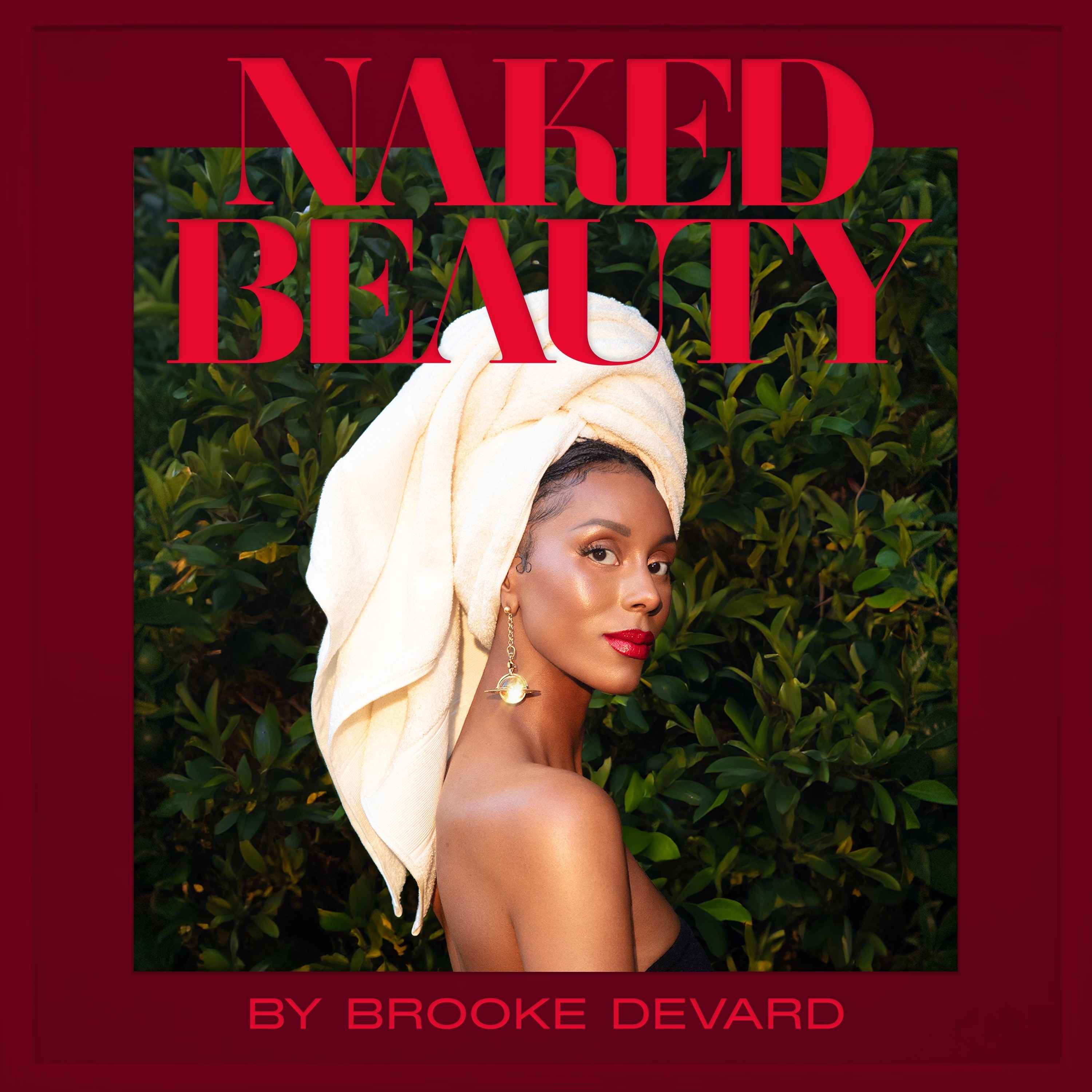
Hello, this is Brooke Devard and you're listening to the Naked Beauty podcast. If you're listening, on Monday, release day, it's Memorial Day here in the US Memorial Day is a holiday that's dedicated to honoring military personnel who died serving in the United States Armed Forces. The holiday dates back to the years after the Civil War. It was originally known as Decoration Day. Families would decorate the graves of fallen soldiers with flowers. So over time, that evolved into the Memorial Day that we know today. So now it's become a big commercial holiday that's been co opted by like sales and barbecues. But the true meaning of Memorial Day and learning more about the history of this holiday made this conversation feel even more meaningful. Because today's guest is my grandfather, Calvin Kemp. We call him Papa. By the time many of you are listening to this, he is either just about to turn or has officially turned 103 years old. June 2, 2026 is his birthday. So happy 103rd birthday. Given that today's guest is 102, nearly 103, I also wanted to take this point that I have realized and I'm guilty of this, of course. As someone that has a platform and interviews people, we live in a relatively like youth obsessed culture. Youth meaning we don't spend a lot of time hearing from people in their 70s, 80s, or 90s, when arguably these are the people that have the most life experience, that are the wisest in our culture. For someone who has built their perspective over decades and decades and decades and decades just has a level of wisdom that you're just not going to get in like your average banter between two, you know, millennial, Gen X, Gen Z, people chatting, you know, like there's just a, there's just a different depth and perspective that you gain over time. I've wanted to sit down and interview Calvin for a very long time. Growing up, my brother and I would spend summers in Atlanta with our grandparents. And those were truly some of our favorite summers of our entire life. Like, we were so happy. My grandmother let us drink Coca Cola like we were in heaven. We went to zoo camp in Atlanta. Like, it was amazing. But we also got to spend a lot of time with Papa in the kitchen. He taught us how to make chicken and dumplings. He golfed like he always had cool cars. Like, there was just something always very cool about him. He's been someone that I've always associated with this level of elegance. The way he carries himself, the way he dresses, the way he moves through the world. I think about his Hands. He always had these, you know, gorgeous gold pieces of jewelry, like a ring on his finger or a bracelet. Always very sharply dressed. And honestly, if you're going to stand next to my grandmother, you kind of have to be. They are absolutely that couple. They're always coordinated, always very glamorous, always winning best dressed at the senior center. Like, they are an it couple. But beyond style, Calvin is also just a people person. He's someone that thrives in community. He loves joy. One of my favorite memories, it's something that my husband and I always return to. We had our engagement party in Istanbul. We were, like, on the Bosphorus on this boat. It's, like, where everyone's on the dance floor now at this point. Calvin is in his 90s, and he used, like, a walking cane for assistance at this point. And he kind of dramatically, like, threw his cane down on the ground and, like, did a spin on the dance floor. And, like, all of the guests were so delighted, and everyone was, like, cheering and clapping and, like, dancing around him in a circle. All of my Turkish relatives, like, to this day, are always like, how's your grandfather doing? Like, he was amazing on that dance floor. Like, it's become a cherished family memory. So he's someone that loves a good time. He loves a good time. He loves to play games. He loves cards. That's something that he and I share in common. But again, someone that really knows how to embrace Joy. For this conversation, I really wanted to go back to the beginning, to his childhood, his early adulthood, his experience serving during World War II. So I will say the first part of the episode may be a little bit more historical than what you're used to hearing on Naked Beauty. But I really encourage you to sit with this full story because, like, with every guest on this show, I start at the early years for a reason, like hearing him talk about serving this country. As a black man born in the 1920s, a lot of this conversation with my grandfather forced me to really reckon with the hypocrisy of America. I, like many of us, have very complicated feelings about America. But just imagine a century ago, being a black person actively living through segregation, living through discrimination, then serving your country and then having to face that same segregation. It's just. It's like there are so many layers to it. I was excited to hear him talk about, you know, what he thinks about politics today, but then just to get into his love story with my grandmother and I get some longevity tips as well. Don't worry, don't worry. In honor of Calvin, we've got a little Frank Sinatra in the intro and outro today. And I'm just really excited for you all to hear this conversation. So we're gonna. We're gonna jump into it. Thank you so much for doing this interview. Are you. Are you used to people being surprised at. At your age and treating you?
- [05:31]
Calvin Kemp
Yes, very much so. I think my activities makes it appear that I'm not as old as I really am. I'm 102 years old, and I play bridge three days a week, and most of my friends are not able to get around as much. So people generally think I'm a bit younger.
- [05:49]
Brooke Devard
Yes. Before yourself, did you meet people that were 100 or over 100?
- [05:55]
Calvin Kemp
I never. I met one person who was over 100 years old, and that was after I turned 100, and this was a female. I met her at the senior citizen home. In fact, I went over to sit at a table to have lunch with her, and I was kidding around with her. I said, do you mind a young man sitting down with you? She said, yes, you're welcome. She said, I'm 105. I told her, congratulations. And by the way, she was getting ready to go to the gym to take her exercise, so that kind of shut me up.
- [06:23]
Brooke Devard
Oh, wow.
- [06:24]
Calvin Kemp
That closed me down immediately. Yeah.
- [06:28]
Brooke Devard
I want to know, when you think about your 20s, what was your life like in your 20s? I guess it was the early 40s, so.
- [06:37]
Calvin Kemp
Oh, yeah, sure.
- [06:38]
Brooke Devard
What do you remember most clearly about that time?
- [06:42]
Calvin Kemp
I got out of high. In fact, they bombed Pearl harbor in 1941, and I got out of high school in June 42. They drafted us immediately right after that. And I was. I think I was 19 years of age. And from that, it was all military.
- [06:58]
Brooke Devard
From that point on, before you were drafted and you started that chapter of your life in the 40s, what were people wearing? What were people listening to? What was happening in pop culture then?
- [07:10]
Calvin Kemp
Prior to 1941, I lived in a reasonably ghetto, I guess you'd call it, and people was reasonably poor. In fact, everybody in the ghetto was poor, but people were wearing very normal type clothes. We had what we called tennis shoes at that time, but there was no gym shoes. And practically everybody in the neighborhood was reasonably poor, living on a very low salary. So we were just right on the master, people. That was pretty much the same. In fact, the area I lived in was now known as Vine City in Atlanta, Georgia, so.
- [07:46]
Brooke Devard
But people now wear sweatpants, sneakers even when they're not going to the gym. But People then I feel like really got dressed.
- [07:55]
Calvin Kemp
Yeah, more than that. We didn't have sweatpants and gym shoes. There was no gyms to go to at that time.
- [08:01]
Brooke Devard
Right. Who were the musicians that were popular then and the movie stars that were popular?
- [08:06]
Calvin Kemp
Oh, the movie star popular were Robert Taylor, Clark Gable, music with Duke Ellington, Count Basie, Arthur Prysock, Ella Fitzgerald, Sarah Vaughn, and right after that came Nat Kinkos and the Drifters and Dominoes, which was group singer and modern day music of that time. We don't even hear that anymore.
- [08:32]
Brooke Devard
I feel like I always hear stories about people going to the movies and paying like $2 to go to a movie. How much was it to go to the movies then?
- [08:39]
Calvin Kemp
Well, when I was a kid, you went to a movie for 25 cents and you stayed all day. We was kids. That was a neighborhood we had at that time. We had a very strong segregated design. So we had movie. A small movie theater in the black neighborhood. In fact, I remember seeing Fat Waller at the movie for 25 cent. And that was above average pay to go in the movie was like 15 cents in 1938 and 1939.
- [09:09]
Brooke Devard
Wow. Now, you mentioned being in a black neighborhood and going to the black movie theater. Back then, was everything segregated? The doctor you went to, the school you went to, Everything was separate.
- [09:21]
Calvin Kemp
Everything. I had no dealing with whites at that time. The only white people I was associated with was the possibility of a police officer. But I never had any conflict because the older black people protected us from the white society. We lived on the other side and we stayed on our side of town. I didn't even. I lived in Atlanta, Georgia, and I didn't hardly go downtown. Peachtree and Buckhead was out of, kind of out of, bound for me. We lived right in Alvin Meadow. And whenever I went out, my father would always protect me from any type of conflict with the country. Segregate the segregated society where you sit on the back of the bus without any country we didn't complain about. And if you. If a kid got out of line in any way, an adult will usually control him. Don't do that because of the possibility of getting them in trouble. That was pretty nationally known in all of the black community. And there was no white people in the community whatsoever. Where I live. I hardly ever seen a white person.
- [10:20]
Brooke Devard
And I know that changes with your military service, but we're going to get to that.
- [10:24]
Calvin Kemp
Oh, yeah.
- [10:25]
Brooke Devard
So what did the elders in the black community tell you about white people? And were people talking about slavery? Were people talking about sharecropping Well, I don't know.
- [10:38]
Calvin Kemp
I don't know a great deal. I know very little of nothing about. Atlanta was a upscale city, more than less so I knew nothing about sharecropping or farming. Slavery. And they didn't talk about this. Black people didn't talk about slavery very much at that time. No one never sat down and discussed slavery directly. But I knew there was some strong opposition in that. So we never really discussed it.
- [11:04]
Brooke Devard
Interesting. You mentioned the attack on Pearl Harbor. What year was that?
- [11:08]
Calvin Kemp
1941, when the bombed Pearl Harbor. I don't want to get the years mixed up because my daughter was born in 1942 and I went in the military in 1943.
- [11:19]
Brooke Devard
1943, wow. With a one year old at home.
- [11:22]
Calvin Kemp
Yes. That's when they started drafting 18 years old and I think I was 19 years old at that point.
- [11:28]
Brooke Devard
Wow.
- [11:28]
Calvin Kemp
So I went in the military and that was shifted from that point into the military. Now the rest of my life was military until four years later.
- [11:37]
Brooke Devard
Were you scared at 19 years old?
- [11:39]
Calvin Kemp
I was wild. I was a buck rabbit. I had never been much of any place. I never had the occasion to do much travel. Like I said, most of the people was poor people, basically poor. So we didn't travel wildly like we do today. But. But I was excited and I accepted what I was told to do. So. And we knew that was going to be a drafting. We had to go down to the register for the draft and we knew that we were younger people would be drafted and then the younger 18 and 19 year old were drafted immediately. I was drafted in early 43.
- [12:11]
Brooke Devard
Where did you go? Where were you sent to?
- [12:13]
Calvin Kemp
I went to Fort Benny at Induction center about 90 miles out of Atlanta. And it was a very poor inspection. They told you open your mouth and say ah and bend over and check your urine and see. That was about it. And I didn't know what branch of service I was. I think at that time they needed so many men in the army, so many in the Navy, so many in the Marines. So as they come down the line, they just stamp you whatever time you happen to come through the line. So I happened to come through the line when they were stamping Navy and they stamped me Navy.
- [12:51]
Brooke Devard
And when did you find out you were going to be assigned or where you were going?
- [12:56]
Calvin Kemp
Well, let me tell you what. My brother had already volunteered. He was in the Navy at that time and I didn't know a great deal about that. I was a rookie in a sense, but I stayed at Fort Bennett for A couple of three days and then we were shipped out to what you call basic training, boot training. And I went to Chicago, Illinois. I went out to Great Lake Illinois to pump my booster train. And as you know, many people probably don't know this. And up until 1942 All Blacks and Hispanic in the navy were stewards or either cooks. The stewards was officers servant and the cooks were. So when I went in, we went in as seaman's and most trained in a different capacity. So I was sent to Chicago, Illinois and was sent out to Great Lake Illinois for boot training camp and stayed out there for about. Well it was only about a 6, 8 week training program and we took an IQ test to find out. I guess I'm thinking in terms of your intelligence is what you ranked to be in. The marks that I made entitled me to go to an aviation ordnance at school that was to work on the P51 Mustang and put the bomb racks and 50 and 30 caliber guns on the P50. That was the hot airplane at that time. So I went to Middleton, Tennessee and this is where I really hit segregation pretty hard because when we left out of Chicago I was with a seven man crew. This is where there was no, we didn't ride in airplanes back then. It was seven man crew going to military Tennessee to take this training. There was six white boys and I was one black. And which was very unusual because blacks were not being trained for seaman prior to that time.
- [14:41]
Brooke Devard
And was this because of how you did on the IQ test?
- [14:45]
Calvin Kemp
They just call you, you go in and take it?
- [14:47]
Brooke Devard
Yeah. But you scored well on the IQ test?
- [14:50]
Calvin Kemp
Oh evidently I did. I never did really see my test. I think they looked at the test and decided where you should go from your test.
- [14:57]
Brooke Devard
Right.
- [14:57]
Calvin Kemp
They made all the decisions and we got to Milverton, Tennessee and I definitely remember this with this crew of seven people and all of us was in the same bracket. There was six white boys and I was the one. We stopped in Memphis, Tennessee and we had one boy in our group that had our orders with him. He was supposed to turn them over when he got down there. And the government at that time gave you tickets where you could give it to the owner of a cafe and they would give you service and you didn't have to pay. We stopped in Memphis, Tennessee and we went to a cafe and the man immediately told me we're not going to serve you. So what he did, he got a taxicab to carry me down to the black community. I ate my food and tearing me Back then brought me back so I could continue on with those six white boys. And that's when I really realized how bad the situation was. And we went from that point out to Millerton, Tennessee, about 30 miles outside of Memphis, where we was put into A training program. G22A was white. G22AA was black. And we all took the same course. We didn't live in the same barracks. We ate in the same chow hall. And we did not live in the same barracks. We lived separate. We were trained as separate units. I found out some of the most embarrassing situation was we were standing inspection and the commanding officer said, you people standing on this side, referring to the blackness you sell us, stand on this side, referring to the white. And up until that point, I didn't realize how dangerous that was. I thought it was such an insult. But we didn't rebel against anything. We did exactly what we was told,
- [16:48]
Brooke Devard
probably for your safety.
- [16:52]
Calvin Kemp
I come out of a segregated society, so I had no other choice. We did exactly what. In fact, in the Navy, as it goes, they always have two ways to do anything. The Navy went the wrong way, so that was the Navy way. And they would tell you things like the officer tell you to jump out of one, you jump out the one and put them on report tomorrow. You don't even question them, because that's your best decision. But I stayed there for. I think that program was 20 by 22 or 20, 26 weeks. I figured out how much it was, by the way, I finished in the top 10. If you didn't maintain the right grades, they would put you in those outgoing units. They called it that. Make it just building bridges or whatnot. But if you figured grades were right, they would send you to a training base. I was shipped from militant Tennessee to Copper Christian, Texas, with Air Force Navy. Air Force training base. That's why I run directly head on into segregation.
- [17:54]
Brooke Devard
When were you shipped out to? I guess the Pacific.
- [17:57]
Calvin Kemp
Well, let me tell you how that happened. When they sent me the copper crates of Texas, I'm still involved with the situation. I'm the only black with a semen rape. Anytime I walked into an area, they thought I was a cook or he's a steward, just automatically. But when I got down there, they put me in a and all assembly and repair. And I worked in there two days and then they took me out. I guess that was some complaint. And I was in a barrack, I think they said, with 73 guys in there, 72 of them was white. And I ran into segregation. There Again, these are some of the things that is embarrassing. And I in the past I never talked about this too much, I guess because I was a bit of a. So we went to the movie one night. Oh, the bunks were bottom and top bunk, up and low. So I'm the only black boy in the back. They put me in this barrack because of my rate, not about cause of my color. They put all the AOM was here cooks and bakers in. So we went to the movie.
- [19:00]
Brooke Devard
You were with all of the people in your rank?
- [19:03]
Calvin Kemp
All the people in that barrack was in the same rank that I was in. But I was the only black. That's the. Made it so bad. Went to the movie one night, came back from the movie at 10 o' clock and I was on the lower bunk. And when I flopped in my bunk, my bunk was soaking wet with urine.
- [19:21]
Brooke Devard
What happened there? They all just urinated on you?
- [19:24]
Calvin Kemp
On my end of my mattress, it was soaking wet. And so I admit this, I was angry. I hit this boy standing there. We got in a fight and you didn't fight the separator. They locked me up for disorder conduct. Kept me two days in, turn you loose. They knew I hadn't did anything wrong. Kept me in the break two days in. Turn you loose. Then at that point they took me out of the NRS where I should have been. Seminar and repair. They took me out, put me in the barrack with the cooks and stewards. But they made me the barrack ma and I accepted that I shouldn't have. All I had to do was rebel. But I didn't. As Martin Luther King said, how to straighten up and you can't rise. But I was a kid. I didn't know any better. So they made me the barrack. I was in charge of getting them out to their different units. So this lasts for. Until I shipped out. And I guess I shipped out because of an incident that had happened. We was playing cards or something one night and two of the boys got in a fight. One struck the other with a bottle. Coca Cola Colas came in a bottle in it. And first thing they asked where was your barrack? On me. And they say he was standing right there. Look. Which I was. I was playing with him. So I immediately shipped out from that point and from there I went to Pearl Harbor. And that must have been early 40, 1944.
- [20:53]
Brooke Devard
Were you? Were you. I mean that's very far away. Were you scared? Pray, Were you afraid?
- [20:59]
Calvin Kemp
No, I wasn't scared. I was just, you know, it was all new experience for me. I never did much basic traveling. I wasn't in any danger whatsoever. But when I got to Pearl harbor, there again I was the only sailor with a black sailor with the rake that I had. So when I got to Pearl harbor, all I did was sit down in the barrack. They didn't ship me out. And I said, I guess I sat down in the barrack maybe two, three weeks a month, I don't know. They sent me to Saipan. When I got to Saipan, that's where the pilots and whatnot were. I didn't do anything there but sit down. I did exactly. I did nothing of what I was trained to do. Then they sent home, I guess this guy got tired. He sent me to Guam. And I believe it was on Guam where the officer called me. He said, we don't know what to do with you. And that was the most I had realized then how badly this is. All they had to do was put me in the position that I was. I went Sapan, Guam, Anahueta and Okinawa. I did exactly. I did exactly nothing on any of those islands for what I was trained to do.
- [22:11]
Brooke Devard
Right, because you were black.
- [22:12]
Calvin Kemp
Only reason I was a trained sailor. They spent their money. I was trained to do this particular job.
- [22:19]
Brooke Devard
When you were the only black sailor with all of those other white men, did you feel. How did that make you feel?
- [22:27]
Calvin Kemp
I don't know that number did particularly bother me. I don't know why, but I was. Well, actually, when I got out of that barrack with those seminars and most of the time I was associated with blacks because they put me with the cooks and stewards. They put me with them, but just in their barracks. But I didn't have to do that. I never did any KP duty, which is kitchen police. I never did. I had to stand guard duty. I remember I was a pretty fair athlete. So we had a basketball team on the call on the naval base. So I went down to the office to try out for the basketball team. And I'd forgotten what he told me. But he said, I want to talk to you in my office. Meet him in the office after practice. So I didn't know what he wanted. I didn't even think about that when I went in his office. He was a officer. I don't know what his rate was. He said, I was talk to you and said, if you repeat anything we said, I'm going to tell him that you are lying and you will be locked up with an incriminating officer. I'm still excited. He said, if I put you on this team. All white basketball team. He said, if I put you on this team. Oh, by the way, that's what he told me. He said, I got a wife and a child on this base. And he said, I'm living a good life. He said, if I put you on this team, they'll call me a nigger lover and ship me out of him within a week's time. He says, so I cannot do. He said, you can organize a team of your own with the black boys. So I went down and organized a team. Some of them was Cooks Stewarts. And we got a black team and played to other black teams in the general fit singing wow, wow, wow. That. Those was some of the things that really turned me. That's when I became bitter towards the United States.
- [24:11]
Brooke Devard
Yes, I can imagine so.
- [24:13]
Calvin Kemp
So prior to that time, I was always taught to respect the flag and all glory and national anthem. I thought that was a project. I've always felt like I was a true black American. I don't know, maybe other people didn't think that. The only thing I know is America, Right?
- [24:32]
Brooke Devard
Well, you're serving your country, and then they won't even serve you lunch. Hearing some of those stories from my grandfather, stories that were honestly just straight up harassment and cruelty, was really difficult. I was careful not to ask leading questions. I really wanted to, like, sit with him in these moments and just ask, how did that make you feel? What did that do to you emotionally? And you'll hear him talk about how those experiences made him bitter at times. And something I found really interesting was asking him what it feels like to now be celebrated as a veteran by people who back then very likely would have been prejudiced against him while he was actively serving his country. You shared something interesting with me about how it feels so many years later to be celebrated, you know, from your time serving in World War II, seeing all of these older white people clap for you, knowing the history of racism in this country.
- [25:27]
Calvin Kemp
Oh, that was. That's probably one of the greatest things ever happened to me since I've been. Since I've been an adult. I didn't even talk when I. When people began to recognize me. The war was over 70 years ago. The same thing they did to the Tuskegee Airmen.
- [25:43]
Brooke Devard
Tuskegee Airmen, yeah.
- [25:44]
Calvin Kemp
They were celebrated 50 years after the war. But I was blessed. We had what we call. I don't know what kind of a program was, but there was a black unit of pilots, Black pilots with black planes. Black Everybody on the plane was black, but one person, he was white, and he was in charge. We had all the military people and I was the only one for World War II. Most of them were for the Korean War. And at my age, when we got to Washington, they were going to select one of the members to place the wreath on Unknown Soldier's grave. So they selected me. And that was quite a thrill. They walked out there. You can't explain what it's about. And to put that brief on that grave, I really realized it really meant something to me. And tears began to go. I looked in the stands and I'm back to. This is. This is where your bitterness shows up. I'm not bitter today. I looked in the stand. That must have been a possible 12 or 1500 people. They gave me a standing ovation for five or 10 minutes. And I thought it in the back of my mind that same group of people would ran me out of town. Even one of the. If you ever been watched to see that Unknown Soldier grave thing.
- [26:56]
Brooke Devard
I haven't seen it.
- [26:56]
Calvin Kemp
No, It's. It's unbelievable. They. The soldier walked like almost 10. So one of the soldiers was on duty when I put it on there. So he couldn't do it. We got on the bus. He ran down to the bus to congratulate me. That's a thrill.
- [27:14]
Brooke Devard
Yes.
- [27:14]
Calvin Kemp
Yeah.
- [27:15]
Brooke Devard
Yes, yes. When you told me, you said. Well, now you're saying they would have ran you out of town. I think when we talked about it before, you said they would have lynched you.
- [27:23]
Calvin Kemp
Oh, sure. Well, they don't talk about that in that day and time. I remember in Atlanta what they call reckless eyeball.
- [27:31]
Brooke Devard
And you could get lynched for that,
- [27:33]
Calvin Kemp
possibly locked up or beat up. I do remember in Atlanta, an incident occurred out in East Point, right outside of Atlanta. It was a deaf mute that made some strange noise of that nature. And a woman, white woman, said that he was picking at her. And they found out that when they locked him up for this, they found out they had to turn him loose.
- [27:57]
Brooke Devard
That's just crazy.
- [27:58]
Calvin Kemp
Oh, it was ridiculous.
- [27:59]
Brooke Devard
Do you remember the news of Emmett Till? Emmett Till. Do you remember the news of Emmett Till? The boy from Chicago that whistled at the woman.
- [28:10]
Calvin Kemp
Oh, yes, I lived through that. I tell you what I don't remember, they didn't teach. American history to me is a phony anyway. The town that they burned down, they call it Black Wall Street. I didn't know anything about that until I was an adult.
- [28:26]
Brooke Devard
Yeah, they don't teach you that. They don't teach you that.
- [28:28]
Calvin Kemp
I was never taught in school.
- [28:31]
Brooke Devard
So in this next section of the conversation, I really wanted to talk more about black history and the civil rights movement specifically, which I think is often taught to us in a very oversimplified way. But my grandfather was living in Atlanta during the height of Martin Luther King Jr. S influence, and I really wanted to hear his firsthand perspective. And one thing that stood out to me so deeply from this part of the conversation is how much institutionalized racism relies on social conditioning. Institutionalized racism does not work unless there's a certain amount of social conditioning done to the population at large to accept these forces. Because we. We start talking about segregated buses, and he says, like, we were not forced to sit in the back. We just knew black people sat in the back, so that's where we sat. It was just what you did. And the elders reinforced it. And I think that that's. That's really a key part of this conversation because it's how normalization works, how human beings, social media, slowly adapt to the systems around them, even harmful ones, until they just stop questioning them altogether. Over time, social conditioning makes people passive. It makes injustice just feel ordinary. So I've been sitting with that juxtaposed against our political landscape today. And of course, I had to hear his thoughts on Obama, you know, President Barack Obama, and what that felt like. And honestly, this is. This is one of my favorite sections of the interview. So black history, the civil rights movement. So seeing Martin Luther King, seeing the civil rights movement. How old were you in Atlanta when all of that was happening?
- [30:07]
Calvin Kemp
I was an adult when Martin Luther King came along. Martin Luther King was much younger than I. He died at 39, I believe it was. I must have been. See, that's. I don't know the exact age. Let's see, from. I got in the military in 46. I was 23 years old, so that's how. I'm in the 50s. So I was about 30 years of age.
- [30:30]
Brooke Devard
Okay.
- [30:31]
Calvin Kemp
I never did participate in that. I donated money for some cause, but I had reached the point of being a military at that time, so I didn't get involved in that.
- [30:43]
Brooke Devard
What changes in the country have surprised you the most in your lifetime?
- [30:50]
Calvin Kemp
Voting Obama president. The biggest change I ever seen. I broke down in tears that night. Me and Jesse Jackson, I think, cried among all people. Tears came in my eye. I'm not really a crybaby, so to speak, but there's some things that really moves you. That night, when they elected him as president, I broke down in tears. I'll tell you the truth about it. I voted for him, but I didn't think he was going to win, to be honest, Frank, I thought the chance was almost impossible. That's the greatest change that I ever seen. Well, it was a big thing when they voted Maynard Jackson mayor of Atlanta too. Yes, that was a very new thing in our time and I can't remember the exact years that was, but Maynard Jackson did a great deal for Atlanta. He changed the airport name to Jackson and Hartfield.
- [31:42]
Brooke Devard
And now we have President Trump, which just feels like a big step backwards.
- [31:49]
Calvin Kemp
Unbelievable. I met a lot of, I met a lot of white people that I actually, I thought, if I hadn't said I thought I wouldn't, I don't know how to use what the exact word they were stupid or whatnot. I worked with a supervisor in construction. That was immediately over me and I, and he was very friendly and he called me in his office to talk to me as a friendship, which I thought was very kind of him. And he asked me, what is it that you guys want that y' all out in the street parading like y'? All?
- [32:22]
Brooke Devard
Oh my gosh, that's.
- [32:24]
Calvin Kemp
That was. In fact, you know, I enjoyed that because I could. He was open minded enough for me to talk to him direct.
- [32:31]
Brooke Devard
Okay. He wanted to know. Yeah, he wanted to know.
- [32:33]
Calvin Kemp
But I couldn't believe that he couldn't understand the mistreatment that we were going through. If you never lived, if you haven't worn half the shoes on, you wouldn't know anything about. And I told him, I said, can you imagine traveling along the highway and can't go to the bathroom, can't stop to get a hot dog? And he was shocked to hear that. Does that mean he's stupid?
- [32:56]
Brooke Devard
It means he lives in his own world. He's just ignorant.
- [33:00]
Calvin Kemp
Well, he was definitely not stupid because he was an intelligent man. He had a top job with the company I worked with. But like I said, he just probably never looked. He never looked around to see what was really happening. We got on the street when I started teaching school in 1973, the funny thing about it, all the boys was 18 years and above black boys. They said, Mr. Kimmel, how did you let those people force you to sit on the back of the bus? I said, it didn't force. We just got on the bus and sat back here. It was traditionally known to back set from the back to the front and the front white set from front to the back. We never, I never until what's the lady name and Rosa Parks. Rosa Parks broke that. I never knew anything about trying to break that. Lo.
- [33:44]
Brooke Devard
You just. Yeah. You begin to accept it as normal.
- [33:46]
Calvin Kemp
It bear my. It was a way of life. It was the way I was raised and where you was taught. And that would be the time that an adult black would. Hey, don't do that, young man. Go ahead and say. Trying to protect you from. Because let me tell you another strange thing. In Atlanta, you had all streetcar conductors with white. If you got in any kind of a problem, only he would drive that streetcar till he got to a policeman and lock you up right there. Same thing happened at Roosevelt. If you refused him, that's what he did with her, right?
- [34:20]
Brooke Devard
Yeah. She got arrested.
- [34:21]
Calvin Kemp
We were exposed to that. So we knew that was gonna happen. So we didn't violate the law. We did what we were told to do. In fact, the black. Older black people told us, agree with this, Said, I don't do that. Don't, don't. Don't go in there. Don't do that.
- [34:36]
Brooke Devard
Now, my grandparents have been married for 45 years. So of course I had to ask about the beginning of their love story. Hearing him describe what first drew him to my grandmother was so sweet. He talks about her glamour, her intelligence, her presence. And naturally, I also had to ask for relationship advice. We're going to talk about my grandmother. Your wife. What year did you all meet and how did you know that she was your person, the person that you were going to propose to? Because you were. You were married before you had had kids.
- [35:10]
Calvin Kemp
Yeah. Well, when I met Jean, she was a grandma girl, really. She always well dressed. She. Well, your mother, if you describe her and be honest frank about it, your mother really reminds me of. Of Jean when she was her age. She was tall, very attractive, dressed very nice and drew the attention from the room when she walked in. She had that. Some people have that flair.
- [35:33]
Brooke Devard
Yes.
- [35:34]
Calvin Kemp
And you know about how we met in the classroom situation? No.
- [35:38]
Brooke Devard
Sweet. Tell me the story. I don't know this. I don't know this.
- [35:41]
Calvin Kemp
I was teaching on the public school system at the time at a technical school and she was at university graduate school. Teaching the graduate school. Well, she was sent out to teachers. Teachers. A class I had to go to. My job was from 3 in the morning to 4:15. Then I had to go to class from 4 to 6. And I didn't want to go to class. So frankly, I was very attracted by her. So I said, I'll carry the teacher at lunch and maybe I'll get her that grade. And that's the beginning of. And from that I've kind of.
- [36:19]
Brooke Devard
Wait. She. She was your teacher?
- [36:21]
Calvin Kemp
She was. She was teaching the class. A teacher. We would. I was a teacher in a public school.
- [36:26]
Brooke Devard
Right.
- [36:26]
Calvin Kemp
And she was. We had about 35 or 40 people in the class. She was out of instruction four to six hours a week.
- [36:35]
Brooke Devard
Oh, amazing.
- [36:36]
Calvin Kemp
And I carried her to lunch. And after that I started channelizing. I was. I think one time I. Telephone was 10 cents. I called her. I had a secretary. They sent a dollar worth of dime so she could call me up. I was just kidding. And we.
- [36:53]
Brooke Devard
That's a very smooth move. I like that.
- [36:56]
Calvin Kemp
It was just a fun thing. And I was. I was single. Well, my wife had passed and I was single. I was a single man more. And she was single man lady proper time. And we just develop a small friendship. And she. She was such a glamorous. She was your mother. She was a glamour girl in her day. No question about that.
- [37:17]
Brooke Devard
Did she have her PhD then?
- [37:19]
Calvin Kemp
Oh, yeah, she was. She had a PhD when she came to Atlanta.
- [37:22]
Brooke Devard
So she was glamorous and smart.
- [37:24]
Calvin Kemp
Well, and both. And I wasn't even thinking about the Ph.D. so I was looking at the lady. I was. I was, I. And she had such a control over the class. And by the way, she had a slight problem. I would say not real serious problem. She was teaching a whole staffing from Atlanta Area Tech. And they kind of resented her, but she held it so well. I think what I liked about it, she could cut the people down when they got out of line. And she did. And her general appearance was so attractive. She was an extremely attractive woman. There are a lot of pretty girls in her life. And I wasn't thinking about getting married. I just really was trying to get get acquainted. And it developed into a good relationship.
- [38:08]
Brooke Devard
How long have you been married?
- [38:10]
Calvin Kemp
45 years.
- [38:11]
Brooke Devard
45 years. Okay. So what do you think a long happy marriage requires? Beyond loving the person?
- [38:21]
Calvin Kemp
I don't know what to say about that. Just being fair. One thing about it, sharing. Don't let one side run it. Sharing. Whatever you do, the two of you share. Because I think if you're living in a household and one person is in charge of everything, I think it was disadvantaged. I think just sharing everything. Foods that you buy, what you're going to put in the house and things you're going to do. Having a. Even friendship. My mutual friendship, I think has a lot to do with getting along.
- [38:51]
Brooke Devard
Yes.
- [38:52]
Calvin Kemp
So everybody get tired of being bossed around?
- [38:54]
Brooke Devard
Absolutely. Eventually, yes, yes, that's so true. And of course, we have to end on longevity, longevity, longevity. Because every single time I post any image or video of my. Of my grandfather at a family gathering, people are always asking, what are his tips for living such a long life? So we had to close out this conversation with his perspective on what it takes to live a long, active, meaningful life and live in gratitude each day. Okay, you're 102 years old and I need to know whenever people hear okay, that you're 102, they say, ask him what he eats. Ask him what he does. Ask him why he thinks he's been able to live to 102. So what habits do you think you've had that have enabled you to live such a long life?
- [39:51]
Calvin Kemp
I guess, honestly, if I had to say it, I said, it's God's will. There was nine in my family. I had nine. It was 10 in my family, brothers and sisters, all nine of them have passed. And I'm the only one left. So I figured that must be a reason. And I'm a church person. I go to church. I'm not a preacher now, but I do go to church and I believe God makes the decision. And I feel that I'm a child of God that's been given this privilege to live this long. And I was a good athlete, I think, and I worked in construction when I was young and I think being exposed at that early age developed my body to some extent, but I never had any problem. I eat any kind of food I want to eat. I was not a. I never used drugs. I drank a little wine, but I have no idea how I can manage to be at 102 years of age. And I play bridge three days a week as a. It's a surprise to me. And every time I sit down at the bridge table, people, they say, this old man sitting there, 102 years old, and it's just amazing. It's really. They seem to think or feel I'm some kind of a miracle sent child.
- [41:03]
Brooke Devard
And I love that you love playing cards and you travel and up until very recently, you were driving your car around, going to the grocery store.
- [41:13]
Calvin Kemp
Oh, to 100 years. I drove my car till I'm 100 years old and I had a small thunder bin and I turned left and I caught him and I. It was a mistake on my part. So I realized that I'm slipping. My. My reflexes probably wasn't too. I gave it up immediately.
- [41:30]
Brooke Devard
Yes, yes.
- [41:31]
Calvin Kemp
I didn't fight it. I just but that's, that's like locking in the back room. You know more than that.
- [41:36]
Brooke Devard
Yes. What, what do you think people don't really understand about aging?
- [41:42]
Calvin Kemp
I personally don't think they realize they're old. Oh, the ones that I, I never dealt with, they see it. First thing about it. I never dealt with anybody 102 years old. So I, but I, I really believe if you, if you have a young mind, you don't have to. I don't think you have to get old in mind. You get old in body. But my, I don't consider my mind as being old like conversation with you or generally speaking, I'm an average person even at 102 years of age. So I don't know exactly what. How to say. I was suggested they stay. I do not lay in the bed all day. I get up and get out and even here when I walk, I walk from here to the front door. I take a little exercise to some extent and I eat anything I want to eat and I maintain a decent weight. And I'm blessed. I am really blessed by God. I think I'm a blessed person to be here this long for some reason, whatever it might be. And I'm very thankful for that.
- [42:44]
Brooke Devard
Yes. And to spend time with your great grandchildren. Mavi is so excited to see you. Every day when he wakes up here, he asks, oh, is Calvin going to be at the house? And Jade to see you with Jade. You guys have 101 years between you. That's amazing.
- [43:01]
Calvin Kemp
He said, man. And I always hope they get a chance to see that picture we had made with a 12 year old man.
- [43:08]
Brooke Devard
Yes.
- [43:09]
Calvin Kemp
And a 5 year old boy and a 1 year old girl and a 6 month old baby.
- [43:15]
Brooke Devard
Yes, yes. Now I know you do. You love music. So I want to talk a little bit about your. Frank Sinatra is your favorite artist, right?
- [43:23]
Calvin Kemp
The greatest singer I ever lived. I do. He selected best music and to me he had. I think it's the greatest thing I ever lived personally.
- [43:33]
Brooke Devard
What is it about Frank Sinatra that really speaks to you?
- [43:36]
Calvin Kemp
The thing I think I like about Frank Sinatra, I think his music is really him. Particularly when he sang I Did It My Way. I think he only expresses in his life when he sang. Everything in that song reminds me that way he lived. And he was quite a guy according to the history. But I really. And then his music, the song that he selected was so good for me.
- [44:01]
Brooke Devard
Yes. No, I love that song. Did you, did you care about how you dressed when you were younger? I mean, you look Great. Always. But I have so many memories of you.
- [44:11]
Calvin Kemp
I thought I was a little sick. Atlanta, when I came along, Atlanta was noted for being well dressed and driving nice automobiles. After I became one of the. And I fell in love with cars. I bought a Jaguar and a towns car and a 225. I drove every big car and we bought clothes. I could have a suit made for about $35.
- [44:41]
Brooke Devard
Wow.
- [44:42]
Calvin Kemp
Three piece suit coat and dress. Two pair of pants. I was a playboy. I thought I was.
- [44:49]
Brooke Devard
I remember you always had beautiful gold jewelry that you would wear.
- [44:52]
Calvin Kemp
Yeah, that was another thing. Very, very popular. Would have a diamond ring. That was a popular. It was kind of a code like black. Black men want have the diamond ring on and nice wrist. Right. And I even do that today. It inflates your ego.
- [45:11]
Brooke Devard
But it's. It's nice to have a little style, a little something sparkly on the wrist.
- [45:16]
Calvin Kemp
Well, after I met Jean, she was. She. I had to kind of pep up because if I were gonna be with her, I had to come correct. I had to step up a little bit.
- [45:27]
Brooke Devard
Yes.
- [45:28]
Calvin Kemp
Yeah. I never shall forget when I met her I had a white suit with a blue stripe in it and oh, I thought I was really dressed out. And when that chick came in, she made me look bad. Yeah.
- [45:41]
Brooke Devard
It's nice to hear you talk about church. You talk about your senior community center, playing cards. It seems like community has always been very important to you.
- [45:49]
Calvin Kemp
Oh yeah. I would direct to my retired senior group for 15 years and I've always went to church. I worked on. I was always committed to a good social life and I think they paid over bridge is a good social outlet. Golf. I played golf, which was a good social outlet. Bowling. I was on a bowling team, a golf team and a bridge club. And that's where you meet people just for social entertainment. And you meet a kind of high grade of people.
- [46:23]
Brooke Devard
Yes, I think that's. And a lot of people are very lonely and they don't have that community now.
- [46:29]
Calvin Kemp
Without that I'd be lost. I would be. Well, I don't. I had to give up golf. I gave up golf when I was about 85 and I had to give up bowling too. And so I had to resort to something that I could play even I would stick to my card game. And I. My card club is a fantastic group. I mean old retired school teachers, more or less. And we are good social and we have a lot of respect for the game. We meet and get. We don't haphazardly drop in we meet every Monday.
- [47:03]
Brooke Devard
Yes. What does a beautiful life mean to you?
- [47:09]
Calvin Kemp
A beautiful life. By beautiful life, I mean friendship, have companion, companionship. I like people. I'm a people's person. I like to be in, not necessarily a crowd, but I like to. If I go on every party or whatnot, I go. If I go there immediately, everybody know me. When I come back, I go to the seniors meeting and I go around from table to. Gene said, oh, you're running for office. I said, no, I'm just running around speaking to the people. And I go from table to table and I'm very friendly, openly friendly. I'll go to how you old women are doing? And they would laugh about it because they realize I'm an old man. So I think it's communicating with the public, generally with people. I would not come in here and just sit here and do nothing.
- [47:59]
Brooke Devard
Yes. You were voted prom king, weren't you? At the senior center, weren't you voted prom king or king? You were. You got some.
- [48:06]
Calvin Kemp
Oh, yeah.
- [48:07]
Brooke Devard
I don't got some crown.
- [48:09]
Calvin Kemp
I don't got so many crowns lately. I forgot all about them. I got a crown the last senior place I was at. And at everywhere I go, I'm the oldest person in the house. That's another honor I get.
- [48:21]
Brooke Devard
Yes, yes. But I remember at our engagement party in Istanbul, you were on the dance floor and you were very popular. Everyone in Umut's family, the Turkish family, they still talk about it. You being on the dance floor when we was at.
- [48:34]
Calvin Kemp
On the boat.
- [48:35]
Brooke Devard
On the boat, exactly.
- [48:36]
Calvin Kemp
I'm on my thresh stick now.
- [48:38]
Brooke Devard
Yeah.
- [48:39]
Calvin Kemp
Oh, yeah. That's an old trick. And people love to see an old person do that.
- [48:45]
Brooke Devard
Good party trick.
- [48:46]
Calvin Kemp
Well, I like good music, though.
- [48:48]
Brooke Devard
You do. And you move well. What would you like people listening or people who hear about your life to
- [48:55]
Calvin Kemp
remember about you just remember I was a decent person. I never. I. Fortunately, I don't have anything that I regret. Any person that I mistreated, and that's. I don't know how big that is with other people, but I never. I never had the occasion to abuse anybody directly that I regret that I want to go to apologize. And I feel like I built a fairly decent life. I never been associated with police. I never was in drugs, didn't have drugs in my day, so that was not. I drank a little wine, but in fact, when I was young, I drank alcohol, but not to any great extent, But I don't know exactly how to put that in words, but just communicate with the general Public, be nice to people. Do unto others. You have them do unto you. More or less. Yes.
- [49:52]
Brooke Devard
That's a beautiful message.
- [49:53]
Calvin Kemp
And stay clean in appearance has a lot to do with it. I think it has a lot to do. I think it's pretty much important to maintain your basic appearance.
- [50:03]
Brooke Devard
Yes.
- [50:04]
Calvin Kemp
I'm not talking about no perfection show now.
- [50:07]
Brooke Devard
It's just basic. Well, this is, the podcast that I do is all about beauty and taking care of your skin and taking care of your hair and taking care of your body. So that's the perfect message.
- [50:17]
Calvin Kemp
Yeah. Well, I have to get a manicure and a pedicure every morning, at least every six, eight weeks. And you feel good about yourself when you go in and get a manicure and a pedicure?
- [50:26]
Brooke Devard
Yes, I agree, I agree, I agree. Do you do anything for your skin? Skin. You have such nice skin moisturizer?
- [50:31]
Calvin Kemp
No, I don't do a great deal for that, but I do use sometimes face cream, but nothing at extreme. I never had a facial, so I don't do very much along that line.
- [50:44]
Brooke Devard
But you do your manicure and pedicure.
- [50:46]
Calvin Kemp
Yeah, I get a manicure and pedicure every four to six weeks.
- [50:48]
Brooke Devard
I love it. I love it.
- [50:50]
Calvin Kemp
And you, you feel when you. It's the best when you come out, you feel like, I don't know, you inflict your ego.
- [50:58]
Brooke Devard
Yes. I, I, my nails and I know women.
- [51:01]
Calvin Kemp
I think women are more into that than men are, basically. But you find when I go to the saloons where the women's are, you find a lot of men's in there getting.
- [51:10]
Brooke Devard
Yes.
- [51:11]
Calvin Kemp
Manicures and piggies.
- [51:12]
Brooke Devard
And you still have all of your hair.
- [51:13]
Calvin Kemp
Oh, yes. That's a very bliss. That's another God's blessing. All. All of my hair.
- [51:18]
Brooke Devard
Yeah.
- [51:19]
Calvin Kemp
And I just saw some of them done with and it impairs my speech a little bit too. But I am extremely blessed and thankful to God that I'm alive and well and in reasonably good health. And I'm in outstanding health. Well, the strange thing about this island, I can't complain because every time I got somebody said, my God, you, I can't believe you're 102 years old and I'm sitting up here complaining about my backache and my shoulder arthritis and whatever. So I can't complain. I'm very comfortable along that line. In fact, everywhere I go, people really inflate. Sure, you go to a point.
- [52:02]
Brooke Devard
It is amazing though, the life that you've lived. All you've seen.
- [52:06]
Calvin Kemp
Oh yeah, I've seen the Whole ball of. I seen a turnaround in segregation, the school system, cafes. I never shall forget Holiday Inn Praise. Started letting people come in for lunch. In Atlanta, I carried my kids over. Chucky and Pat, I carried them over breakfast one Saturday morning. That was a big. That was a time when many black people in Atlanta would go to the place and look in to see whether there are any other black people there before they go in. But I didn't. I wouldn't. I carried them over and we still hadn't had lunch. And that was quite a thrill for them. And it was also a thrill. But I had been exposed. Exposed or something a little bit at that time, but my kids hadn't been broken in a little black neighborhood.
- [52:53]
Brooke Devard
Yeah. That's amazing. That's amazing. Well, thank you so much for sharing so much of your story. I'm going to cherish this interview and I'm excited for my listeners to hear it, too. Thank you so much for listening to this very special episode of Naked Beauty. I am so grateful I got to have this conversation with my grandfather. I initially recorded this back in December, December in Los Angeles during winter break when my whole family was together. We've kind of created this tradition where everyone comes to la. My mom, my dad, my brother, my uncle. Especially while Jade is so little, it's, like, hard for us to travel. So it's become this really beautiful week where my grandparents come in and we just all slow down and we spend this really intentional time together. And honestly, it ended up being the perfect moment to capture this conversation. So, Papa, if you're listening to this, happy birthday. I hope 103 is just as beautiful as 102 was. I'm honored to even play a tiny, tiny role in helping to tell your incredible life story. Thank you for your bravery. Thank you for your service. Thank you for reminding us what matters, what deserves protecting and what we should stand up for. And to everyone listening, thank you so much for spending time with us today. Today. For listening to this story, for sharing this story. I hope you enjoyed this episode and conversation as much as I did. And I'll see you back next week for a brand new interview.
- [54:15]
Calvin Kemp
When I bit off more than I could chew but through it all when there was doubt I ate it up and spit it out I faced it all and I stood tall and did it my way I loved I've laughed and cried.